3 Conditioning Workouts to Check Your… Conditioning.

Quick Tips


One of my favorite things to do when I am training in a commercial gym is to use machines for everything but what they are intended to be used for.

Take the infamous Smith Machine for example.  I have never performed a Smith Machine specific exercise on this piece of equipment, and I never will.

The Smith Machine

The $2,000 “coat rack”

Why?  Because…

1)  I am an able bodied individual and should therefore be working with free weights.

2)  I value moving the through a natural range of motion with and without external resistance. (Smith machine is guided on tracks)

Squats, lunges, curling (I don’t even know how this would work) rowing are not for the Smith Machine, assuming you are an able bodied individual.  A Smith Machine to me is a glorified Nautilus machine.  They make great coat racks and leaning stations for recovering trainees in most gyms.

However, I have used the Smith Machine to execute movements such as:

  • Inverted rows (2 arm and 1 arm)
  • Plyo-like Bench Throws
  • Lateral torso holds
  • 1-Arm Push-Up progressions
  • Mountain climber progressions
  • Hip mobility warm ups

I may have to whip up a post about how to leverage a Smith Machine for executing different movements, we’ll see.

But whatever, this post wasn’t intended to bash Smith Machines.

The goal here was to provide you with some non-traditional ways to use some common pieces of equipment.

Enjoy…

 Screen Shot 2013-03-26 at 1.36.00 PM

Better use of treadmills… Incline + MPH

—> Treadmill Hill Sprints:

  • Set the speed of the treadmill to 8-10mph.
  • Set the incline to 8-10 degree of inclination.
  • Sprint for 15 seconds, step off and rest for 15 seconds (this equals 1 round)
  • Perform 10-12 rounds.

Screen Shot 2013-03-26 at 1.36.23 PM

The greatest low impact conditioning tool of all time.

—>  Stationary Bike 20:10 Protocol (I will not refer to it as the Tabata Protocol!)

  • Set the bike to medium resistance (you should be able to pedal around 90-100 rpm)
  • Spin as hard as possible for 20 seconds, follow that will 10 seconds of rest (this is one round)
  • Complete 8 total rounds and check fatigue levels.
  • If you have more in the tank, complete another 8 rounds or modify as needed.
  • *** I have commonly modified this type of workout to 6 rounds x 2-3 sets with 2 minutes rest in between.
  • Stay seated the entire time.


—>  5 Mile Ride for Time

I have talked about this conditioning test before on this site, somewhere, but it deserves to be talked about again.  Here are the specs on this challenge:

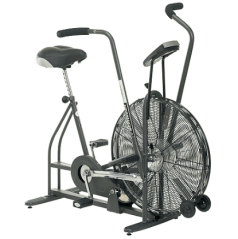
  • Ideally you’ll use a Schwinn Airdyne, but you can use any other stationary bike in a pinch.  Make sure that the bike has a mileage gauge on it, otherwise you won’t know when you’ve completed the 5 miles.
  • Set to light-medium resistance… and GO.
  • Again.. pedal pedal pedal and keep pedaling.  There isn’t much else to say here.
  • Chart the time that it takes to ride the full 5 miles, record it, attempt to beat it the next time around.
  • *** On the big fan Airdyne, my best is 11min30sec.  It was a bear.  I think my friend and fellow strength coach Joe Gorshe (Bemidji State Hockey) finished around 12:15-12:30min if I am not mistaken.


—>  Kettlebell Swing Breath Ladder

  • Grab a kettlebell that you know you can swing for at least 20 reps.  
  • Match the number of swings with the number of breaths for each round.
  • Set the kettlebell down after each round of swings and take an equal number of breaths.
  • Begin the next round of swings once you finish your breathing reps.
  • ***  This is high volume swinging, but shifting focus to calming your breathing really slows things down nicely
  • Focus on your swing technique.  Move from hips, stay tall and rigid at the top of the swing.

Kettlebell Swing Breath Ladder


—>  Closing thoughts…

A couple of these methods incorporate interval style training.  Go hard during the work sets of an interval training session.  Rest is coming don’t you worry, but go hard when it is time to work.

Always wear a heart rate monitor if you can.  It’s a great way to gauge your efforts and your ability to recover from those intense efforts.  It also keeps you honest during your training sessions.  Monitor your progress, how long it takes to recover, how high your heart rate reaches during each work set, etc.  You can learn a lot about your conditioning levels/progress by checking keeping an eye on this information.

On the treadmill conditioning workout, remember that the incline of the treadmill is going to require that you drive your knees all the way through with each stride.  If you get lazy, even just for one stride, you could catch your toe on the belt of the treadmill and get spit off and look ridiculous.  Avoid this.  Drive your knees, drive your arms, extends you hips with each powerful stride.

Use your head during these training sessions.  Don’t be afraid to scale the intensity down to suit your needs.  There is no shame in that.  It’s a process, you’ll get there.  If you have questions on how to go about doing this, just ask… I will field any and all questions…


Cheers to building up your conditioning!


KG

*** Coming up next:  The next Saga in the Coach Hacker series…***

Do More Push-Ups NOW: A Simple Technique to Increase Strength Instantly

Quick Tips

I really dislike the word easy, but this little trick of the trade is so easy a caveman could do it.

So easy a caveman could do it

Whoops, that’s not a caveman.  That’s Steven Tyler!

Creating tension in your body prior to moving weight, whether it be external loads (dumbbells, kettlebells, barbells, etc) or your own bodyweight, is a sure-fire way to make yourself stronger.

I know that this sounds like voodoo, but it isn’t.  Creating body tension before and during a movement will help all aspects of that movement.

*** Please note that this post will heavily quote and reference Pavel’s awesome bodyweight book, The Naked Warrior***

Take an exercise like a push-up.  Most of us can perform a single push-up with some kind decent form.  If you can’t, it doesn’t take much work to get there.  Some simple progressions and frequency of practice will get you performing push-ups in no time.

Screen Shot 2013-03-26 at 9.28.01 PM

But anyways, an exercise like the push-up provides one of the best examples of how creating total body tension can improve matters.  Whether you are a beginner aiming to increase your reps or an advanced trainee shooting for the single arm push-up, focusing on body tension during the downward and upward phases of the push up will make you feel stronger instantly.  When I first messed around with Pavel’s theories almost 5-6 years ago, I added close to 15 reps to my best on the first attempt.  This is no joke.

I was a fairly strong kid to begin with, but I didn’t know that I could squeeze even more strength out of my body, which in turn helps everything (body composition, performance, etc).

Creating total body tension was the game changer, because lord knows I didn’t get that much stronger overnight.  It doesn’t work that way.

The first lesson was quite simple actually:

IMG_0737

You will get stronger by contracting your muscles harder.

I know, it sounds bogus at first.  I felt the same way when I read it initially.  But I figured that messing around with the concept certainly wouldn’t hurt anything.  My results were great.  Your’s will be too.

So, first things first.  Let’s use the push up example and apply the tension technique.

Follow my lead here…  seriously… follow my lead…

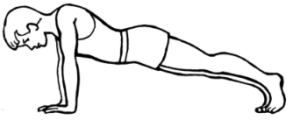
1)  Get down on the floor and set up for a traditional push up.  It should look like this:

Screen Shot 2013-03-26 at 9.29.51 PM

2)  Once you are in the start position, do the following and don’t laugh… this is serious shit… 🙂

  • Grip the floor with your fingertips, until they turn white.  (Grip hard!)
  • Tense your lats by attempting to twist both hands outward statically.  (To clarify your hands should not move at all, creating a corkscrew effect)
  • Squeeze your butt hard.
  • Brace your stomach hard as if you were going to take a punch.
  • Maintain your ability to breathe through pursed lips.

3)  As you begin to descend to the floor, actively pull yourself deep into the push up, versus “falling” loosely into it.

4)  Now perform 5-10 push ups without losing this muscular tension.

Stay tight!  Stay tight!  Stay tight!

What do you feel?

Do you feel a difference?

Really focus on all of the above tension techniques, especially gripping the floor with your finger tips and squeezing your ass.  Also, the concept of actively pulling yourself into the eccentric (downward) phase of any movement is a great way to keep tension.  It’s help my training immensely over the last few years.

The concept of creating tension can be applied to any exercise.  That is the pure beauty of the technique.  Once you stop approaching your strength training with a loose body and begin contracting hard before and during any movement, you’ll improve your lifts.  Improving your lifts will improve your performance and body composition over time.  It’s great.

Stop Sign Warning

Here’s the stop sign again…

Please don’t do what I did.  I messed around with one small set of push ups, felt “kind of” different, than ditched the technique for a few weeks.  Big mistake.  Once I re-focused on it, and applied Pavel’s teachings, it provided an instant improvement.

Lesson?  Don’t even try it if you’re only going to try it once.  Keep working at it.  You’ll feel a major difference once you connect all of the dots.

If you want a perfect example of an athlete that has to perfect the art of creating total body tension, look no further than the gymnast.

As gymnastics coach Christopher Sommer mentions in The Naked Warrior, “One of the main advantages to these advanced bodyweight exercises is that they require a complete, full body contraction.  In fact, at the advanced level, they are so demanding that it is simply not possible to complete them any other way”.

Exhibit A to make Mr. Sommers point:

Screen Shot 2013-03-26 at 8.51.37 PM

There are very few people on the planet that can execute this move.

The gymnast has mastered the art of bodyweight control.

I trained a former college gymnast for a while, and these guys are strong as hell.  His bodyweight-to-strength ratio, even after being 20+ years removed from competitive gymnastics, was incredible.  I could tell that he “set up” before all of the lifts that I was having him do.  His grip set up was especially noticeable.  No lift was done with a loose body, everything was tight.

Go and try this… tonight.  Don’t sit on it and waste time.  Try it out, apply it, then come back and learn something else that can help your workouts…

Cheers to the good kind of tension!

KG

P.S.  Check out my post about single arm push ups and pistols if you want more advanced bodyweight training.


Is Aerobic Training Bad? (a completely non-evidenced based discussion)

Quick Tips

Screen Shot 2013-03-23 at 1.30.41 PM

Aerobic Training!

Aerobic training was a hot topic a few months ago, and it will continue to be talked about topic for years to come.

First it’s bad, then its’s good, then it’s bad, then it’s good.  Back and forth, back and forth.

There is a thought process among many fitness professionals- mainly strength coaches and personal trainers- that striving to improve aerobic conditioning is a bad thing.  Actually, some magazines and websites have almost labeled it as sinful.

—>  The Most Useless Exercise Ever for Fat Loss

Activities like biking and running are the probably the most popular methods used to improve aerobic fitness, with running taking the cake for popularity it would seem.

I’ll just come out and say it:  Aerobic training is not bad.

It isn’t!  It’s just not the optimal choice for certain goals.

In my humble opinion, fat loss is one of those goals, along with sports performance.

There are other methods, depending on your goals, that would be a much better fit for moving your closer to those goals, especially if you are in the market for dropping useless tissue like fat and uncovering your abdominals.  If you’re aiming at fat loss, there are better methods to choose from than just steady state cardio.

A simple (but smart) strength training routine will crush aerobic training if you’re shooting for body transformation.

You may have seen this side by side comparison between these two athletes.  One athlete races in an aerobic dominated sport and the other races in a sprint (anaerobic) dominated sport:

sprinter versus a marathon body

Some time ago, aerobic training was labeled as a junk method of conditioning for athletes who play fast-twitch sports.  The premise was that if you train slow, you’ll be slow.  There is some truth to this I must admit.  For athletes that need to be fast, aerobic training should make up far less of the off-season training pie than other more effective training methods like strength and power training, sprinting, anaerobic conditioning.

—>  Admirable goals, wrong vehicle 

Again, the problem is that most people say that they want to lose weight (or fat) and put on some lean muscle, then all they do is participate in aerobic activities in an effort to burn calories.  Over time, they see the weight scale move, but quickly become confused because they still don’t like what they see in the mirror.  Frequently aerobic training will cause an “atrophied” look over time.  If all you did was train aerobically, you’d get skinny, decrease muscle mass and lose strength.  I’ve seen it happen time and time again.

Confused by the image in the mirror, these people then panic and jack up the duration and frequency of their aerobic training, pushing harder and harder in hopes of seeing positive changes in the mirror.  It still doesn’t happen.  Weight is dropping, but they look like they haven’t eaten in days.

When all they see is weight loss and muscle atrophy, they become discouraged and render exercise ineffective.

It’s not aerobic exercise’s problem that you didn’t achieve your goals, it’s your problem.   You chose the wrong vehicle to get you to your destination.  So choose another vehicle.  It’s not the end of the world, but you’ve got to adjust your training habits to get your body back where you want it.  Just don’t point the finger at aerobic training.  The bodily changes that occur from high frequency, long duration steady state exercises are quite predictable.

Here is a great article from Jason Ferrugia about why he avoids aerobic training:  10 Reasons Why I Don’t Do Aerobics

—>  Aerobic training has a place in my workout regimen, absolutely…

Personally, I engage in an aerobic training session- usually riding the Schwinn Airdyne or jumping rope- about 1-2 days per week.  It fluctuates depending on my workout schedule, but aerobic training is still very much a part of my training routine.  I throw on my heart rate monitor to keep my efforts measured- not too high and not too low on the bpm- and I get to work.  The aerobic effort will last anywhere from 30-45min depending on how I feel.  The goal is to flush my body from the previous days of hard training, increase blood circulation and just sweat.

In all honesty, sometimes I train long and slow just to sweat.

Schwinn Airdyne

Awkward lady not included.

I never try to set records, although I have ridden the Airdyne frequently enough to know how far I should be riding (mileage-wise) for a give time period.  If I am training aerobically, I am ALWAYS wearing a heart monitor, keeping my BPM (beats per minute) within my aerobic range.

This is what my typical training week looks like right now:

Aerobic, Anaerobic, Strength Training

This chart changes depending on what my goals are…

Remember, I can change these efforts based on physical needs for races/events/hockey season, the time of year (Summer, Winter, etc) or if I am simply interested in pursuing a different body appearance.  I am my own guinea pig.  Self-experimentation with physical effort has always been an interest of mine.

One of the biggest concerns I have with aerobic training is overuse.  Especially folks who run or bike for hours and hours every week.  The risk for overuse injuries skyrockets for those people who long duration exercisers.  These injuries can develop for a number of reasons, including:  impact of activity (running is high impact), muscular imbalances, poor fitting footwear (causing compensations), poor cycling mechanics (poor set up, posture), pre-existing imbalances that begin to surface as chronic pain, etc.

There’s an old saying:  You can’t run to get fit, you have to get fit to run.

Consider what that means for your situation.  Is your body fit enough to begin training for long durations?  Are your joints primed to withstand the ground impact forces from activities like running?

It’s well known that running is great for increasing bone density, yet conversely running with poor form (aka: slapping the pavement) is nothing more than repeated high impact stress.

Check out this snippet from a comparative running study:

Screen Shot 2013-03-26 at 8.47.52 AM

“During each foot strike the body is exposed to repeated impact forces of estimated to be two to three times the body weight of a runner”.

Again, I am not singling out running or saying that it’s a sin, I just want you to consider your training vehicle.  It might be something that you need to consider seriously, especially those of you who are battling aches and pains like shin splints, hip strains and or knee pain.

Aerobic Training Sucks!

Before you bash aerobic training, consider what results you want from your training efforts.  At the very least, aerobic training initiates rapid circulation in the body, which is a benefit that you cannot put a price on.  Rapid circulation helps promote proper internal functioning of your body.  It’s a really great thing to get the blood pumping as much as possible.

Screen Shot 2013-03-26 at 8.52.41 AM

Rapid circulation is a crucial reason to exercise in the first place.

Is this a bird’s eye view of aerobic training?  Yes, but you have to keep an open mind.  Training should be customized to you and you only.

While a lot of people do have the same training goals, you should take the time to investigate if your workout methods are in fact the right fit for your goals.

If they aren’t, switch them.  Easy as that.

Don’t over-complicate something that should be kept simple.

Cheers to accepting the red headed step child of fitness… aerobic training!

KG

*** Coming up next:  Creating stakes to create incentives for getting into shape…

Workout Injuries: Get Hurt and You’ll Learn Quickly

Quick Tips

In the mid-90’s there was a band called Marcy’s Playground.  Marcy’s Playground had a hit song called “Sex and Candy”, which turned out to be their only hit song (name me another one if you disagree).  Marcy’s Playground is what most people would refer to as a One Hit Wonder.  There’s nothing wrong with being a One Hit Wonder, but I bet if you were to ask the band how they feel about being a One Hit Wonder, they would probably tell you that they had wished their career have lasted a little bit longer than it did.

Screen Shot 2013-03-25 at 8.24.26 AM

It would be a great gig spinning One Hit Wonders all day long.

Marcy’s Playground, and other One Hit Wonder music groups, remind me of the first time that you experience a traumatic injury in the gym as a result of working out.  Your relationship with physical exertion should be a lifelong experience, not a one year experience.  We often forget that there building a body (that looks, feels and functions properly) is a process.  There is no instant gratification in training, although the “hardcore” training seen would have you think otherwise.

It doesn’t have to be an immediate injury (acute pain), like dropping a dumbbell on your foot from waist height, but more of a nagging lower back pain that’s built up over time (chronic pain).

Acute pain = sudden injury like a broken bone (maybe from bombing that dumbbell on your foot)

Chronic pain = persisting pain such as low back pain or

Here is a nice definition of both types of pain from a world-renowned hospital.

I picture acute pain as the classic weight drop on the foot, or the overhead snatch that goes terribly wrong, nearly ripping your arms from their sockets.

Not funny, but a reality in a lot of gyms.

Acute pain hurts right away and you know exactly where it came from.  There is no guessing as to what caused the pain.  This is my own definition.  I speak from experience.  It’s the kind of pain that you kick yourself for causing in the first place.

I commonly think of chronic pain as a type of gym injury that is the result of months or years of build up.  Maybe poor technique, lack of rest or something else contributes to the pain.  Squatting didn’t hurt your back initially, but suddenly you’ve developed low back pain.  Maybe you woke up one day and you felt a shooting pain while you bent down to tie your shoes.  You didn’t have that pain the day before, but you sure as hell have it now.

You’ll never appreciate how stupid a workout injury really is you experience it first hand.  Again, I speak from experience.  When I was in college, the hockey team was handed a poorly designed training program that required us to bench press about 3x the amount that we pulled (causing muscle imbalances), along with boatloads of sit-ups, bicycles, hanging leg raises, machine work, etc.  I followed the program down to the last rep, and by the end of the Summer, I could hardly bend over to put my socks on.  My lower back was shot.

Sure, I got strong in the lifts, but I also wrecked my back and spent at least a month sidelined.

It sucked and it cost my parents money to fix it.  Lucky for me, my parents supported me financially, but you?  Chances are quite high that your injury treatments are coming right out of your paycheck.  Ever consider that?

That’s why I preach about the importance of safety.  I want you to push it to your limits, but I also want you to clearly define what your limits are.  If you step over those boundaries, an injury might be lurking nearby.

The first time that you hear your back pop while attempting a “hardcore” workout, or you tweak your knee on the 200th jump of your “Craziest Most Insane Warrior Workout”, you’ll immediate appreciate the message that I was trying to project to you.

I am all about getting people up off their butts and moving, but not at the expense of blowing out joints and causing pain.

Screen Shot 2013-03-25 at 8.55.04 AM

Workout injuries remind me of when a parent recommends you to avoid hanging with the troublemakers in high school .  At the time, you can’t figure out why your parents could  just label and mis-understand your “friends”- you’re just trying to be cool-  but the second you’re found to be guilty by association when alcohol or cigarettes start appearing and you’re under-age, you immediately understand the message they were trying to teach you.  It’s a hard lesson to learn, but a lesson that is learned never the less.

Screen Shot 2013-03-25 at 8.45.44 AM

If you’re a retired athlete and now a professional in something other than sports (career, Mother, Father, etc), I highly recommend that you avoid killing yourself in the gym for no good reason.  It’s not worth it, especially considering that some of the injuries in the gym are completely preventable and can have lasting affects.  Yes, some injuries will be severe enough to cause permanent damage to your body.

Do you really want that?

I’m not here to scare you, I am here to get you to think.  Maybe re-think is the right choice of words.  If you find yourself awkwardly hoisting a fully loaded barbell overhead as your knees shake, back begins to cave and your lungs feel like their about to pop out… it might be time to take a step back and try and justify that experience.

Often, you’ll find that going “extreme” isn’t all it’s cracked up to be and certainly not necessary to sculpt a body that looks as good as it feels.

You should not have to donate your body  in order to consider a workout to be effective.  It’s not necessary.  It’s a big misconception in the training world right now.  The funny thing is that often times, your body will give you various clues when something’s not right, even before you experience the hurt.

*** On the flip side, you can get hurt doing anything physical in life.  Tripping down the stairs, stepping on a tack or burning your hand on a hot pan will all cause pain.  Please do you best to leave those comments in your back pocket, because that isn’t the point of this article.

Train hard, train smart.  Don’t be Marcy’s Playground, be U2.


Cheers to avoid unnecessary injuries!

KG

—> Coming up:  My Glutes are Weak!!!

How Many Box Jumps in a Workout?

exercise

Screen Shot 2013-03-23 at 7.02.06 PM

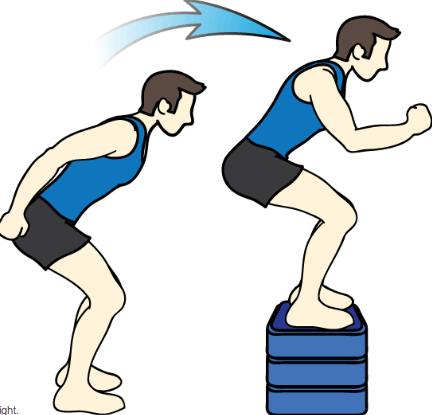
The Box Jump

Box jumps are a lower body (primarily) exercise used to build explosiveness, landing mechanics and force absorption.  Box jumps are a valuable addition to any workout regimen, but they must be progressed according to fitness level, goals and experience.

In short, the average number of box jumps per workout should be 20-40 repetitions.

A person can do more or less, as this is by no means the law of the land.  

This is my opinion deeply rooted in personal experience with athletes, my own training and my observation of modern evolution of box jumps.  

The Details…

  • Primary Muscles: Glutes, Quadriceps, Hamstrings, Calves
  • Secondary Muscles: Hip Flexors
  • Body Area: Legs
  • Modality Types: Body Weight
  • Equipment: Plyometric Boxes

Training intent:  Reinforce jumping and landing mechanics OR leverage as exercise to increase work-capacity in a different movement pattern.

I personally do not use (or recommend) box jumps as primary method (or as a part of) of enchancing cardio or as a vehicle to lose fat.  There are more effective, not to mention safer alternatives available.

Box jumps (like any exercise) have advantages and disadvantages, risks and rewards.  

The risks…

There’s risk in stepping out the front door every morning, I get it.  But let’s take an honest look at things that can happen during box jumps…

The biggest risks are slippage, landing incorrectly or missing the box completely.  All carry have a unique consequence, or potential of injury.  Nobody works out with suffering injury as the goal, but shit happens.  It does.

Murphy’s Law:  Anything that can go wrong, will go wrong.

Every repetition of box jumps has a risk of acute injury or if overdone, chronic pain.  

Speaking from experience, not every box jump is textbook perfect.  As stated before, shit happens.  Whether it’s leaving shin skin on the box, mis-judging foot placement and stumbling or hitting the deck after landing on an unstable box, something is likely to happen at some point.   

Acute pain would be… leaving shin skin on the box, mis-judging foot placement and stumbling or hitting the deck after landing on an unstable box, something is likely to happen at some point.   

Chronic pain is most commonly anterior knee pain, or irritation in the front of the knee.  High rep box jumps are incredibly predictable for causing anterior knee pain.  Sometimes it’s the landing force contributing to this pain, but I’d say most frequently it’s caused by not stepping down from the top of the box but the impact from jumping down and poor absorption.  

The impact force exceeds the tissues capacity to handle the force, pain appears.  

This likeliness increases exponentially as physical fatigue accumulates.  I’ll argue this point with anyone, anytime.  If you’re jumping onto a box with heart rate at 80-90% max,  short on breath, in an altered state… the risk of a failed box jump attempts increases.

Especially factoring in that box jumps are landing onto a surface, a target.  Each attempt must successfully clear the height of the box along with the horizontal distance, finishing with foot placement reasonable enough to stabilize the landing mechanics.  

Doesn’t always happen and it gets progressively more sloppy with fatigue.  The attention to detail drops.  Reps and time (finishing the workout) become the most objectives, not technique and safety.  

Again, when tired, distances and heights can look different, body positions are perceived differently and in general, poor decisions are common (versus being fresh).  

Perception of body position in a fatigued state is an interesting topic.  The gist is, are you in the position that your mind’s eye thinks your in?  

Often times, you’re not.  Your brain thinks you are, but you’re not.  

Scare tactics, right? So, the moral of the story is to boost awareness that there are risks in jumping onto a box. the risks we’re talking about pertain to perception of the purpose of box jumps. My belief is box jumps are a tool for developing explosiveness and landing mechanics in a low-volume (less reps) controlled environment.

The reward…

Finally, the good stuff.  

Box jumps are great training method for building lower body explosiveness.  

Improving, or at least maintaining the ability to produce muscular power is vital to  sport performance, but probably more important to the aging general population.  

As we age, our ability to produce power declines.  Sad, but true.  In fact, one study found power to decline nearly twice as fast as muscle strength…

Screen Shot 2017-06-09 at 6.42.58 AM

Therefore, the velocity component of box jumps crucial for everyone.  Another study drew several other conclusions about power training… 

Screen Shot 2017-06-09 at 7.12.28 AM

As a part of a training regimen, improve power generation has great transfer into strength training, overall athleticism and movement capacity.

Box jumps are a plyometric (aka: “jump training”) involving rapid stretching and contracting of muscles.  The goal is to produce a large amount of power in the shortest amount of time possible.  

Based on this description, it’s reasonable to position box jumps early in a workout, when the body is fresh and able to exert at the highest level.  

Jumping when fresh, ensures we can maximize effect of each box jump, the simultaneous extension of the ankles, knees and hips (triple extension).  It also gives us the best chances to practice landing mechanics and force absorption.  

Aim to land on the box in the same position you took off from.  A box height that is too low won’t challenge the velocity of the jump, but a box that is too high will alter the landing position.  Landing hunched over with the knees in the armpits is not a desireable position.  

It’s one thing to test out the maximum box jump height where you’re attempting to get onto the box by any means necessary, and another to repetitively practice deep squat landing positions.  It’s difficult to make an athletic move when the knees are buried in the armpits.  

Landing in a position that gives the advantage to the next move (whatever that move might be) is desirable.  

Of course, life is not perfect, so it’s not far fetched occasionally familiarize the body with unideal landing positions, to better accomodate the unknown.  

Simple cues for box jumps:

  • Counter-swing the arms/hands behind the body as the hips/knee flex the body lowers.
  • Drive the arms/hands aggressively upward as the hips/knees recoil and begin to extend.
  • Actively force FULL extension of the hips, knees and ankles during take off, EXPLODE.
  • Land soft and quiet with feet flat on the box in a similar position as the lowest point of the take-off.  

That’s it.  Not rocket science, just gentle reminders of exercise technique.  

https://www.youtube.com/watch?v=KX-8e06pGuI&list=PL5A09BB0D766BE510


The premise of this article is to get people thinking on a deeper level about why we do what we do inside of a workout.  There should be purpose and intent behind everything. If you cannot justify or it’s causing harm to one’s body, it might be time for an audit of training methods.  

All of my opinions are subject to change.  However, what I will say is my opinion on the purpose of box jumps is one that hasn’t seen a shift.  I do still believe in the value of training a body to first understand and recognize the technique of jumping and landing.  

Once a person can demonstrate physical compreshensive of a basic box jump, sure, progress out as needed.  But not before.  


Screen Shot 2013-03-23 at 7.17.19 PM


https://www.youtube.com/watch?v=3586susSSfY


Cheers to box jumps, not too much, not tool little, just the right amount.  

KG

SaveSaveSaveSave

Why You’re Not Fit: We’re All Busy, We All Have A Lot of Things That We’d Love to Do, Movement is Optional

Quick Tips

ladder of success

I love to study the psychology behind why we humans do or don’t do the simplest of things to propel ourselves to better situations in life.

This post is easy for me to write because I write it as a person that ISN’T EVEN CLOSE TO PERFECT.  I’m not.  I have a lot of personal growing to do, habits to establish and higher levels of work ethic that I could stand to settle into.  It’s an uncomfortable feeling knowing that you can push it way harder than you are, but at the same time it’s exciting because you know that taking your efforts to the next level is going to reward you in even bigger ways.

Exceptional effort will always bring about exceptional rewards.

It’s funny how it seems that the only people who are truly holding us back from greatness (whatever greatness means to you), is ourselves.  There is rarely an instance where someone else is to blame for our problems, shortcomings or disbelief in our abilities.  It’s nearly all in our head.

We created the barriers.  Amazing to think about.

The thoughts circulating around inside of our skulls will either catapult us to great achievements, or drag us down for the rest of our life, leaving all of our potential on the table, unused.

Image

There’s another truth that I would like to talk about today- it’s more of an observational statement- and it goes a little something like this:

  • We are all busy with work, family, chores, other responsibilities and we all have a lot of things that we would sure love to do.

Now, I am going to be the first to step up and say that I have leaned pretty hard on this excuse myself.  I have.  I still catch myself saying it or thinking it almost daily.  I’ve figured out that life shouldn’t be all work and no play, but if I find myself mindlessly watching TV, getting sucked into the black hole that is Facebook or reading ignorant YouTube comments, well, than I am wasting my own time and I could be focusing that time on something that I love to do.

Something valuable like writing more and pushing myself through the growing pains of finding my voice and tone.

How about you?

As it relates to fitness and achieving a higher state of fitness, are you really too busy?

I have found that if I say that I want to achieve something, I shouldn’t talk about it unless I am dead fucking serious about achieving it.  It’s so easy to just “kinda” want to achieve a goal.  Soooooooo easy.  Everyone just “kinda” wants to own their own business, or just “kinda” wants to travel more or just “kinda” wants to learn that second language or develop that other skill.

“Kinda”.  Because that’s what it really is.  It’s a half ass effort that we put forth to trick ourselves into thinking that we are really “going for it”.

–>  Leading by poor example

3 years ago I tricked myself into thinking that I could write the book I had always wanted to write because I felt like I had so much to say as it pertains to building performance and getting people back on track with smart strength and conditioning interventions.  I felt like I had a unique voice that people could relate to because my writing style wasn’t filled with science heavy jargon terminology to make myself sound intelligent.

Shit, little did I know, I was right.  My old blog was growing in popularity faster than I ever thought it would.  I actually had a fan base. I was contacted by a few fitness companies- who had products that I used and wrote about using- to set up some fees for advertising on the site.  But I just “kinda” wanted it to happen, I hadn’t reached a level of maturity inside of my head that was willing to sacrifice anything to achieve it.  I wasn’t even close.  It just seemed like a good idea.  I wasn’t ALL IN.

Belief systems control what happens to you.

So I will ask you again… if you say that you want to build fitness or eat healthier… are you really too busy to make it happen?  Or does it just seem like a good idea in the present moment.  Are you just saying it?

Are you convincing yourself that you’re too busy?

Image

Stop selling yourself the bullshit.  

We are all too busy to pursue higher levels of fitness.  We are all too busy to block off a few minutes to cook that nutritious meal that we consciously know will do some good for our health.  We would all love to be frolicking around on Miami Beach in the sun sipping on Pina Coladas and building sand castles.

Image

Yes, I want to be there too, frolicking.

You can’t go half-way and expect anything to happen.  That’s the reason you’re not fit.

You tricked yourself.  Trust me, I am just one voice among millions on the internet.  If you found me on here, well thank you for sticking with me, but I am a needle in a haystack.

Just for shits and giggles, go and type “Best Workouts for Fat Loss” into the Google search bar and see how many hits you come up with:

Image

12,500,000 results for the search of “Best Fat Loss Workouts”.

Most of this information is free and if it isn’t free, you can find enough free information from that search to throw together a pretty decent little program.  This is what the professionals will never recommend to you.  You can make your own programs, and if you spent about 30-60 minutes researching what exercises to include, I bet you wouldn’t be too far off from an effective workout.

At the very least, you’d be taking action, which is more than you did yesterday, right?

Are you too busy to workout today?  Too busy to learn how to prepare a decent breakfast that will help you lose fat and get some nutrients into your system?

You aren’t.  I know you aren’t.

You just haven’t made it a priority yet.

Cheers to ruffling feathers and crushing excuses!

KG

Simplicity: What If you Just Tried to Improve? At Something? Anything?

Quick Tips

It’s a simple question really… 

What if you just tried to improve?

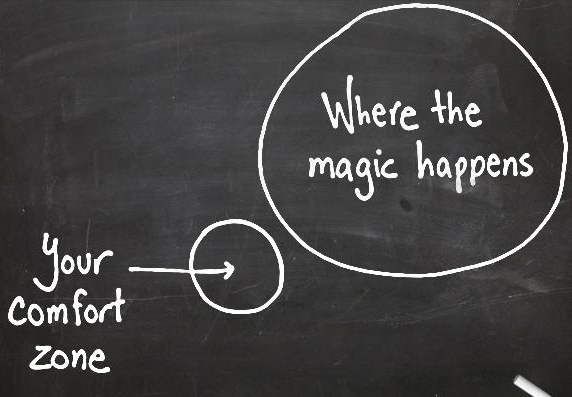
What if you shut off all of the mental barriers that you use as excuses every single day as a crutch to not push forward in your life?  

What if… you just put your head down and aimed for improvement of some kind at some level of intensit

ImageNike got it right from the get go.

Because of the general theme of this blog, of course I am going to be mostly referring the improvement of your movement and eating habits. 

But what about your career?  What about your ability to say hi and smile at people? What about your effort to make friends? Be a better husband, wife, father, mother, son or daughter?  

What about all of those things?

What if you just stopped over-analyzing everything and compulsively planning your approach to your action plan, and you just… did it? (see massive Nike picture above for reinforcement)

I was talking with a good friend tonight who is also physical therapist, and we got to talking about geeky things like squatting.  Ha, squatting.  

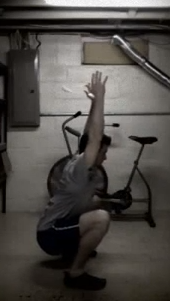
We both agreed that a person’s ability to perform a simple body-weight squat is probably the most important example of healthy and free flowing movement.  We spend so much time on our feet, standing in a vertical posture… moving from a low to a high position then back down to a low position, it’s actually crazy to think about how often this happens throughout a day, week or year.  (How about that for a run on sentence!)

Image

Maintain your ability to squat deep.

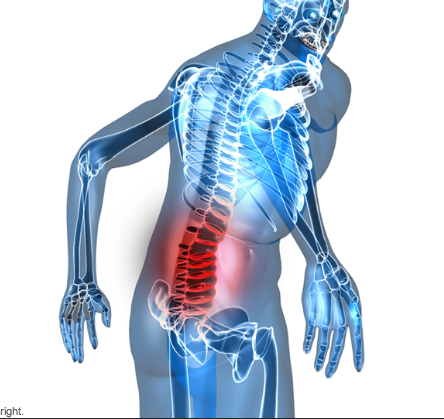
It’s no wonder have an epidemic of lower back injuries.  

Image


Low back pain sucks.


Everyone knows someone that has had a lumbar strain.  Everyone.  

The second part of our conversation shifted to some of the questions that I randomly receive throughout a given week about working out:

– Kyle, what exercises are best for weight loss?

– Kyle, how many reps are ideal for an exercise?

– Kyle, how many times per week should I be working out to maximize my fat loss?


I love the questions, because for a split second it makes me believe that the person that I am talking with is actually interested in pursuing improvement in their health habits.  

Over time, experience has proven that most of the answers I give to those questions end up sliding into one ear and then right out the other ear.  Nothing sticks.  Rarely does it stick.  

But honestly, what if you just picked one thing and you relentlessly worked to improve at it?

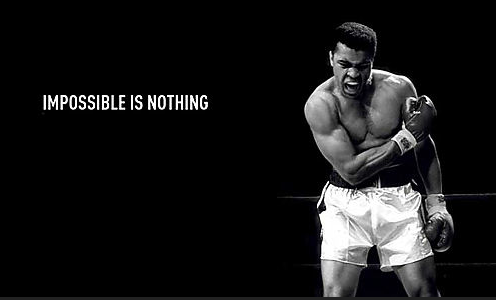
What doors would open?  Where would you find yourself that you once thought impossible?

Image

Take something like building fitness or eating habits for example:

–  Try eating only earth grown foods and animal meat for 7 days.

–  Add 3-5 reps to all of your exercises (squats, push ups, kettlebell swings, inverted rows, etc)

–  Run .5 mile farther than your last run.

–  Shave a minute off of your last mile of your last run. 

–  Drink two full glasses of cold ass water when upon waking.

Do something.  Anything.  You’ll be better for it.  It will build character, and despite what you consciously are aware of, it will inspire others who see you taking action.  It’s a domino effect, and quite honestly, taking time to improve yourself is taking time to initiate positive change in other people also.  Be a leader.  People want to be around leaders because it’s infectious.  

I really don’t know where or when it happens, but at some point in life, a lot of us tend to lose our motivational drive.  Our desire to improve diminishes to all time lows and we settle in to our current situation.  We render ourselves unable to do any better than we are right now.

It’s negative self-talk bullshit and it’s called complacency.

Complacency is a word that my Dad dropped on me when I was 24 years old, making a three month pit stop in between jobs in Detroit and my next career.  I had offers from an employer for a great gig and was in waiting to hear back one way or another.  I was half-assing everything outside of that one offer.  I was stuck in rut and it had only been about 90 days of living at home.  

One night right before heading up for bed, my Dad dropped the bomb on me, “Kyle, you’re getting complacent”.

I’ll never forget it.  It sucked more than anything to hear him say that, but shit, it is exactly what needed to be said at the time.  It sparked forward motion in my life.  It sparked my pursuit of improving my situation.  

So I ask you again… What could you improve about yourself right now?  

You can wipe your slate clean and start fresh, so what are you willing to give to make change?  Don’t be afraid of change.  Change can be great.  But you have to give some effort to make sure that change is great.  

On this blog, my goal is to spark a shift in how you think about working out.  Smarter movement that is focused on accelerating your training efforts.  I want to get you to think and re-think your gym habits and what’s possible for you to achieve.  

Shit, anything is possible, but you have to believe that.  And there is a major difference between just “thinking” that and believing that.  Understand this.

Image

So I will close out to enjoy my craft beer (New Belgium- Rampant by the way) by asking you again…

What are you going to do about it?  

Sit and feel sorry for yourself?  That’s lame.  The easy way out.  

Take some action, build some character and set sail to improving something about your life… 


Cheers to the average person realizing their ability to achieve greatness…


KG

(On deck… Coach Hacker)

A Simple Kettlebell Swing and Jump Rope Workout for You to Try

Quick Tips

I love simplicity and this workout doesn’t disappoint on that front.  

When I am not training to build raw strength, I love work capacity style training sessions to improve cardiovascular performance, maintain my strength and probably best of all… stay lean.  I don’t have to sacrifice muscle with work capacity training sessions that use resistance-based exercises.  This is important to me as my goal is to keep bodyfat low, not lose muscle mass.

Keeping muscle mass is the reason that most people stay lean in the first place, it is a calorie consuming tissue.  It takes more calories to sustain muscle than it does to sustain fat.  Keep trying to build more muscle at all costs.

I will never deny that work capacity training is unreal for people who seek fat loss or those who have already lost fat and just want basic maintenance training.  I hold the opinion that we can organize these work capacity workouts to be just as effective without all of the risk of injury.  Choose exercises and the variables wisely (rest periods, work periods, load, etc)  

That is an idea worth pursuing in my humble opinion.  Keep people safe and while getting rid of fatty tissue at a rapid rate.

You get the vibe.   

Let’s get into the workout.

So here is what you’ll need on hand for this workout:

–  Small space (8x8ft or so)

–  Jump Rope

–  Kettlebell that you can swing 20 times with no problems (lighter than your best)

–  Interval Timer or any other timing device


Here is how the workout will be structured:

1)  You’ll be working in 2 minute segments, alternating between the following drills w/o rest in between:

  • 1 minute of jump rope
  • 15 Kettlebell Swings

2)  After your last rep of kettlebell swings, rest for the remainder of the 2 minute block.

3)  Catch your breath, towel off, grab a drink and set up for jumping rope once again.

4)  Once the clock reaches the 2 minute mark, you’ll begin jumping rope for 1 minute followed immediately by 15 kettlebell swings.

*** There is NO REST between the transition from jumping rope and kettlebell swings.

 ***Just so I can make sure that you understand the structure of the rounds, you’ll begin the next set of jumping rope (after 20min) at:  18min, 16min, 14min, 12min, 10min…etc.  Does this make sense?  


Why do I love workouts like this?

Because I can get the cardio training effect that I want while staying vertical and using a movement like kettlebell swings to elicit a near total body muscular contraction.  Kettlebell swings are notorious for being a great method for decreasing body fat, and jumping rope is a skill that everyone could stand to get better at.  Vertical cardio work like this is highly functional if I do say so myself, especially when you compare it to other forms of cardio that involve fixed machines like elipticals, treadmills and recumbent bikes.  

Staying on your feet while working through fatigue has great carryover to the demands of life.  

I value this aspect of a workout like this.  

Holding posture during the later rounds of the jump rope will be challenging, but it’s important to control your breathing patterns as you fatigue.  It’s not as bad as you think it is, so relax, stay vertical and let the air flow in and out.  Focus hard on technique with the kettlebell swing.  If it gets sloppy, stop the set and rest until the next bout of jumping rope arrives.  


—>  Beginners

If you’re a beginner, you can scale the workout back a bit to better suit your abilities.  Try jumping for 30-45 seconds and swinging for 8-10 reps.  You could even knock off a few rounds, and work through say 8 rounds instead of 10.  It’s up to you how you want to work it out.


—>  Advanced

If you want to ramp it up beyond the original workout listed above, your best bet is to add a few rounds or increase the weight of the kettlebell.  I have done as many as 15 x 2 minute rounds (30 minutes total work) which got a little long I must admit.  

This is a great workout that can truly breathe fresh air into your currently training schedule.  If you are sick of boring ass cardio, give this a shot.  A workout like this will have a far greater impact than jogging or biking for the same about of time.  It’s important to know that you have alternatives to traditional cardio training.  

Trade the treadmill for a kettlebell and a jump rope.  Then get to work. 

Simple training tools, simple exercises and simple workout structure… Enjoy!


Cheers to swings and jumps!


KG


The Coach Hacker Files: It’s Time to Go “Ballistic” on Kettlebell Cleans + Presses

Quick Tips

I’ve got to lighten up on this blog.  The tone has been stuffy lately.  I want to distribute applicable information that is bullshit-free, but I also want to keep things light.

After all, it’s just a workout.

However, I would like to start an intermittent series on a gentleman that I was recently introduced to via my friends at Edge Fitness in Sun Prairie, WI.

I use Facebook extensively to keep up with my friends and family, and I typically make one or two scrolls down the news feed every day just to make sure that I know what all of my friends are up to.  So what? I like to creep!  So does everyone else who has Facebook!  Don’t you dare judge me.  It takes a man to admit something like that.  I feel better now.

Anyways, I came across a Facebook posting by Edge Fitness that had a video attached to it.  I watched and nearly wet myself.  The guy in the video is superstar.  I plan on blowing this guy up for the world to see.  He’s that good.  The best part is that he doesn’t even know that he is that good.

Ladies and gentleman… I present to you… the one… the only…

Coach Hacker

Coach Hacker

I believe the right thing to do here is waste no time and transition straight to the video (one of the many videos) that sparked my interest in this guy.  You’ll see in the video that he’s a real modern-day warrior.

Take a quick look at this guy in action…

Blowing up the kettlebell clean + press

As you know by now, I am a fan of kettlebell training.  Kettlebells and suspension trainers are by far the best pieces of equipment to outfit a home gym with.  However, apparently Coach Hacker is a die-hard kettlebell fan also, so we share that in common.  I am also a big fan of multi-segmented moves.  Exercises like Turkish Get-Ups, Clean+Press, Squat to Press, etc.  Again, apparently so is Coach Hacker.

I think that our technique is may be slightly different, but that could just be who we trained under, what books we read and the conferences that we attend.  Different strokes for different folks.

I also see that he is from the Northeast (Oregon).  This could be another reason for the difference in our training styles.  I am from the Midwest, (aka: Paradise) (aka:  “God’s Country”) Eau Claire, WI.  I see this as a point that could be influential in each of our training styles and philosophies.

I have to admit, once I played the video, I felt like I had met the guy before.  He looks like that “someone” from “somewhere”, you know?  “What’s his face” from the next town over.

Then it all came together.  The light bulb went off.

He’s a hybrid…

Coach Hacker Hybrid Picture

 Micheal Douglas—>  Coach Hacker —>  David Hasselhoff

Coach Hacker’s resemblance to these other two superstars is uncanny.  Micheal Douglas mated with David Hasselhoff which gave birth to Coach Hacker.  Based on Hasselhoff’s physique in that photo, I suspect that Coach Hacker was the on-set personal trainer for BayWatch also.  Good for him.  Job well done.

Now, before you think that I am ripping too hard on this guy, please know this.  He’s got about 100x the views on his kettlebell YouTube video than I do on my own kettlebell clean + press video clip (seen below)…

It’s just not enough apparently…

So, I am thinking that maybe I should reach out and make contact with Coach Hacker and figure out how to market myself better.  His display of raw strength and intensity throughout the video clip is something to be marveled at and also something that my video clip lacks big time.

The Intensity of Coach Hacker

Intensity.

I also noticed that he has great commentary.  My video is more like a mime performing kettlebell drills.  I could definitely work on this.

Technique-wise, “The Hack” is also really going for it.  I mean, he ramps it up from rep #1 into rep #3-#5.  No doubt about that.  Me?  I am way too calm and collected.  Not enough ramp up.

Proper kettlebell clean technique

Technique is everything.  Neutral spine, arm reach, drive through the hips.

Along with technique, I also couldn’t help but notice the size of Coach Hacker’s kettlebell.  He’s the founder of Kettlebell Madness, which seems to be aimed at kettlebell enthusiasts.  Every strength and conditioning book or research study that I have ever come across says that the weight of the object being lifted needs to be heavy enough to initiate gains in strength, build muscle, etc.  Basically, the weight has to be challenging to move.

Light Kettlebells

Kettlebell, or paperweight?

Coach Hacker is a pioneer, he’s going against the grain, he’s going light.  Light weight.  I would suspect that he’s using a 8-12lb kettlebell, where as I am using a 44lb in my video clip.  Maybe he’s on to something.  Body’s a sculpted from dialing back the load.  If this is the case, we have got to re-write and re-think hundreds of physiology books.  Nobel prize for The Hack?  Wouldn’t surprise me.

So ladies and gentleman, I hope that you are buckled in for a wild ride because as long as Coach Hacker is updating his YouTube videos, I am going to be writing about them.  Be sure to check in from time to time so that you don’t miss ANYTHING related to this guy’s activities.  He’s got exactly 17 videos on his channel, and I fully plan on doing a full break down and recap of each and every one of them.  I want to miss NOTHING on this guy.

He’s a real gem… a diamond in the rough… he’s Coach Hacker.

Coach Hacker Crunch Pose

Please, help me make this guy a world sensation!

Cheers to Coach Hacker!

KG

How to Choose Exercises for a Time Efficient Total Body Circuit Training Workout For Strength and Fat Loss

Quick Tips

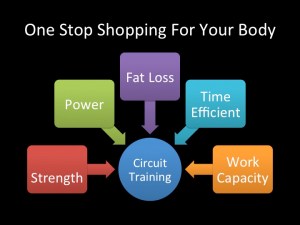
If you’re in the market to lose a little fat, circuit training is for you.  The bonus is that you’re going to build some strength and work capacity in the process.  Or maybe it is the other way around, maybe the bonus is that you’re going to burn some fat while you make an effort to build strength and work capacity?

Benefits of Circuit Training

Either way you look at it, you’re circuit training is going to kill multiple birds with one stone.  This is time leverage for a workout.  If you’re going to make the time to workout, you should really be utilizing a training method that is going to continue to work for you even after you finish the last rep.  That’s smart training.

When I say “circuit training, I’m not referring the kind of training where you move from one machine to the next.  There will be no use of machines- at least not how they were designed to be used- on this blog.  I can confidently say that.  An able-bodied human needs to move about their joints freely, not sit on a machine.

I guess I don’t mind fitness machines… for hanging my jacket on them when I arrive to the gym.

Total body circuit training should fatigue just about every single muscle in your body by the end of the training session.  That’s why we call it “total body”.  In fact, I will make the argument that just about every circuit training workout should be total body.  I guess am just not a fan of training the upper body on one day and the lower body on the next, or splitting sessions up by body parts.

The total body approach builds athleticism.  Circuit training using the total body approach will allow you to perform more work using heavier loads for each movement pattern while remaining as fresh as possible.

That’s a mouthful.

The most effective circuit training in the world involves strength based (or resistance based) multi-joint movements.

If you aren’t familiar with the terms “multi-joint movements”, I am referring to exercises like:

  • Squats
  • Lunges
  • Push-Ups
  • Chin-Ups
  • etc…

All of these movements require freedom of movement about multiple joints and recruitment from multiple muscles.

Total body muscular fatigue.

Just because I keep saying total body, doesn’t mean that you’ll be performing 20 different exercises in a training session.  Don’t confuse that.  The goal with exercise selection is to keep it simple and focused.

When selecting exercises to incorporate prior to the workout, there is a simple format that you can follow to help you along.

You can literally plug any exercise into the following categories and whammo!… You’ve got yourself a quality training session.

Here are the movement patterns that I would like you to address during the session:

1)  Total Body Explosive  (Kettlebell swings, thrusters, etc)

2)  Upper Body Vertical Pulling (Chin ups, pull ups, etc)

3)  Lower Body Pushing (squats)

4)  Core/Pillar (ab wheel rollouts, body rocks, suspension trainer pendulums)

5)  Upper Body Horizontal Push (Push-Ups, bench press, etc)

6)  Lower Body Hip Dominant (Lunge, deadlift, hamstring curls, etc)

7)  Cardio Filler (Schwinn Airdyne, mountain climbers, jump rope, etc)

Exercises for Circuit Training

Seven categories of movements that will build you a lean athletic body: burn fat, develop strength and power, improve performance and save you time in the gym or at home.

Here is how the exercise would be ordered for the training session:

Effective Circuit Training

A workout like this is what I call a leveraged training session.  Time is leveraged and the training effect of the workout is leveraged.  Just about any workout is to elicit a metabolic response, but an aggressive workout like this done 3-4 times per week will really shake up your system.

A workout like this combined with some sensible food choices will send a body transformation into overdrive.

Where people fail, is they fail to take action.  Or, if they take action, the motivation to stick with the program begins to fizzle out.

Stay with it for at least 4-6 weeks and you’re going to see some amazing changes take place.  Trust me here.

But you have to stay with it.


Cheers to DIY circuit training!

KG