The Prone Plank

Quick Tips

The Prone Plank

The prone plank is a classic core stability drill that gets no love.  The mainstream has moved on the to the fancy stuff and skipped the essentials.  Planks have low entertainment value and high reward.  They are easily progressed for an increased challenge, but the picture above is “ground zero”.  The abdominals are stabilizers first and foremost.  Train them for success now that you know that.

Use these tips for execution…

  • Pressurize your torso musculature as if you were going to take a right hook.
  • Breathe against your now pressurized stomach.
  • Straight posture from shoulders to heels.  You’re a pillar.
  • Put your mind somewhere else and dig in.

15 minute Workout: Why I Don’t Give a Sh*t About the Tabata Protocol

15 minute Workouts

The Tabata Protocol is a simple and sinister conditioning protocol, possibly  more classified as a raw test of will-power.

The original structure of the Tabata Protocol looked like this:

Round 1: 20sec work/10sec rest

Round 2:  20sec work/10sec rest

Round 3:  20sec work/10sec rest

Round 4:  20sec work/10sec rest

Round 5:  20sec work/10sec rest

Round 6:  20sec work/10sec rest

Round 7:  20sec work/10sec rest

Round 8:  20sec work/10 sec rest

4 minutes in hell.

What is the Tabata Protocol?

The Tabata Protocol was conducted in 1996 to observe the effects of moderate-intensity endurance and high-intensity intermittent training on anaerobic capacity and VO2max.  That’s a mouthful.  Using a braked cycle ergometer, participants worked through 7-8 sets of 20:10 (work:rest) at 170% VO2max.  This training protocol was performed 5 days per week for 6 total weeks.

[youtube=http://www.youtube.com/watch?v=PCl9Z2Q_cvs

Who is the Tabata?

Yes, Tabata, is actually a person.

Profesor Izumi Tabata is a former researcher at the National Institute for Health and Nutrition and is currently a professor and researcher  at Ritsumeikan Unversity.

I thought you should at least know what the guy looks like…

Why is it NOT relevant to YOU?

110% effort.

I know you work hard in the gym, but trust me, there is another gear that everyone can tap into.  110% exertion is beyond the governor that most of us are calibrated with.

A lot of us will never know what 110% effort is like.

The original Tabata Protocol involved training at an effort that would left nothing at the end of the 8th round.

You can work “hard” during your Tabata, but you won’t touch the intensity the subjects in the study put forth.  Sorry.  That doesn’t mean that you won’t get some kind of training effect from it!


How to make the Tabata Protocol Work for you…

You can start by calling this type of training what it really is… negative work to rest ratio or maybe a “20:10 workout”.  Meaning, the amount of time you are going to spend in your work sets is longer in duration that you rest periods during each rep/round.

Don’t take this the wrong way, but you’ll never touch the 170% VO2 max.

170% of your VO2 max looks something like this…

170% VO2 max = Eyeballs popping out of your head + lungs being vomitted


Tabata protocols is an advanced conditioning workout.

You are going to find that your fatigue levels are going to increase beyond what you are accustomed to, draining your energy reserves rather quickly, which means that your output in the later rounds is going to be shit.

The Tabata Protocol never looked at fat loss, and the actual subjects who were engaged in this type of training actually used a 5th day of aerobic exercise during the study.

This is what happens sometimes when research hits the mainstream.  Magazines need something to write about and trainers need a way to set themselves apart, so new modalities are formed, and the general population bites on the hype.

What we do know is that high exertion/intensity exercise is effective as hell for jarring our system and creating an environment that is more likely to burn fat.  There is no question about that.

But picking up heavy things and building muscle will also get you lean, so don’t get tunnel vision on interval training.

I would use the Tabata as a finisher if you are short on time at the end of a workout.

Get your strength training in, rest a few minutes while you set up on the bike, then rip out 8 rounds of hell.

I know that you will get a positive training effect assuming you put forth an effort that is way out of your comfort zone.


Personally…

I have used the 20:10 protocol a lot.  I can tell you that I have never touched the 170% VO2 max effort that the subjects put forth in the study.  Mentally, I am not even there.  Most times I am pressed for time after my resistance based work, and the 20:10 method is quick and effective solution. 8 minutes is all you need.

I always use 20:10 type work on my Schwinn Airdyne.  There is nothing like an Airdyne.  I found mine on Craigslist from an old lady, best investment ever for low impact cardiovascular work.

Do I find the Tabata structured protocol difficult?  Hell yes.  Like anything, try it for yourself.  Make your own decisions.  Negative work to rest ratios leave a person gasping for oxygen.  I don’t care how well-trained you are, oxygen depletion in that short of a time is going to leave you “well-done”.


Let your heart guide you…

As always, I encourage you to wear a heart rate monitor and see where you end up.  You’ll notice the lag time between the end of your last 20:10 round and your heart rate, as your heart rate will continue to creep up.  This is normal with anaerobic work.  See where you get and chart it.  How long does it take you to recover to 130bpm after your last rep?  Chart that.  If you used a bike (which I encourage) how far did you go during your work sets… chart that too.  Aim to increase your distance each time.


Give it a shot and let me know how it goes in the comments section…


Cheers.


20 Minute Workout: “Country Jam” Training

20 minute Workouts, Bodyweight Workouts

In honor of our local Country Music festival here in Eau Claire, WI, I decided that I would throw together a workout.

The template for designing a crazy effective workout is simple.

My rule has always been… Keep it simple.

Simple means big bang movements using minimal equipment while closely considering loading (weight), rest period(s) and total time of workout.

Avoid complexity at all costs.   Complicating a workout with fancy technical lifts only moves the risk versus reward pendulum deep into the RISK category.

I equate HIGH RISK with HIGH INJURY.

Enough babbling, start training.


Give this a go…


Country Jam Training

The Details…

—> Time:  14-20 minutes

—> Work-set:  2 minutes

—>  Rest:  Remaining time after work is completed

—>Rounds:  7-10

—>Equipment:  Bodyweight + Suspension Trainer, Gymboss interval timer or equivalent


Procedure:

15 Push Ups

30 Mountain Climbers

15 Squats

30 Jumping Jacks

15 Full Burpees or 15 Inverted Rows (if you have a suspension trainer)


*  Complete full reps of each movement for the set amount of reps.  Pay attention to full range of motion and technical perfection.  Your rest period is determined by the speed with which you complete the final rep of burpee.  Rest begins then.  Each round starts at the top of EVERY 2nd minute.

An example of what I am desc is seen below:

Minute 20… Start set

Minute 18… Start 2nd set

Minute 16… Start 3rd set

Minute 14… Start 4th set

… and so on.


Customize the workout to your training level…

  • Beginners/Intermediate:  Start with 5-7 rounds of this (10min-14min total work)

—–>  If it is easy, add more rounds of work.

  • Advanced:  Go for the full 10 rounds (20min) and don’t look back.

—–>  If it is easy, add load to the movements or add rounds (12-14rounds… 24-28 minutes)


Did you get your heart rate monitor yet?

Don’t underestimate the power of a bodyweight workout.  No excuses, just get the work done and get on with your day.

Remember the equation:

 Intense physical exertion + clean eating = Ramped up fat loss

See you soon… let me know how it goes…


*****  Did you see this girl?  She knows how to put a kink in the obesity hose*****

Don’t Read or Watch This If You Are Fragile Inside

Food/Eating

Childhood obesity (and overweight) is parental problem and a school system problem.

image credit: Mark Young Training Systems

Why a parental problem?

Parents buy the food in the house and prepare it.  The child eats what is prepared.  Parents also provide the encouragement to either sit inside and play video games, or get outside and run around and do what kids should be doing… exploring, playing sports, walking, riding bike, climbing, swimming, etc.

Why a school problem?

Schools are providing 1 of the 3 meals per day.  If a child is eating 3 square meals per day, this means that 33.3% of the meals kids are consuming per day are being eaten at school.  That percentage can increase more  if the child is also eating an early morning breakfast.  Anyone who has been through school knows that most times you have no choice but to eat what is being served.  Shame on the school system.

An alternative to being forced to eat at school is packing a lunch.  However, think about this situation for a second…

Who packs the lunch?… The parents.

Do you see how this comes full circle and becomes a parental problem again?

Take some pointers from this girl.  She is Martin Rooney’s daughter and this video was staged, but the point is that kids are heading down the wrong path.  1 out of 3 under the age of 12 years of age is overweight or obese!

That is sickening…

Enjoy the video…

I am passionate about keeping kids healthy.

As an adult, it is your choice to live a slow death of being overweight, which may escalate to obesity causing a whole host of preventable issues for you later on.  You have knowledge, ability, and responsibility to take care of yourself.

A child does not.  They rely on parents and our school system for direction.

What sort of direction are you giving your child?  Good direction?  Poor direction?

Take responsibility for you and your family, and pretty soon you know what will happen?  Our nation will shrink in size and our health will increase.  The overweight/obesity line will reverse itself, flatline for a bit, and then move back downward in a positive direction.  Small changes, big results.

If you think that I am just using this blogging platform to pipe off my opinion…  

Check your facts here:

Centers for Disease Control and Prevention

In health and tough love…

P.S.  I welcome all logical objections, it would make for a great discussion.  Post your comments.

A 10 Minute Non-Traditional Treadmill Workout

10 minute Workouts, 15 minute Workouts

If I absolutely had no choice but to run on a treadmill, which I have been forced to do before, I have a plan.

But there are some important things I would do before, rather than just jumping on cold.  They are:

1)  I would self massage using a foam roll and lacrosse ball on my feet thoroughly.

2)  I would work my corrective exercise and pre-hab

3)  I would mobilize the hell out of my joints to deliver nutrients.

4)  I would turn on (activate) on musculature that will be engaged in my running efforts.

5)  I would work through a series of dynamically oriented stretches.

6)  I would make sure my inexpensive heart rate monitor is properly placed around my torso and the watch is reading the signal clearly.

7)  I would begin at  a slow running pace focusing on arm swing, breathing and smooth strides.

8)  I would begin jogging on the treadmill, progressively increasing the speed of the treadmill until I reached about 80-85% of my max run speed (about 5 min), then I would step off and get ready for the following workout…


Heart Rate Based Treadmill Conditioning:

Details/Rules

  • Set the treadmill at speed and incline that requires a full stride (7.5-9.5mph @ 2.0-8.0 incline)
  • I prefer increasing incline over speed.  Reason? Increased heart rate and forced knee drive and emphasis on arm mechanics.
  • Practice stepping off a couple of times, face plants are hurt and are embarrassing.
  • Get a heart rate monitor. I use the Polar FS1, the most simple/inexpensive model they make.
  • Stay tall when you sprint.  Core engaged and vertically tall.
  • “Cheek to cheek” on arm swing (butt cheek to face cheek).


Procedure

*  Complete 8-15 rounds depending on your current conditioning & peri-workout fatigue level.

  • Sprint 30 seconds.
  • Step off and rest until your heart rate recovers to 130 bpm (beats per minute).
  • Sprint 30 seconds.
  • Step off and rest until your heart rate recovers to 130 bpm (beats per minute).
  • etc…

Why so much emphasis on heart rate?

Let your heart rate monitor, your body’s natural physiology, tell you when you are ready to go again.

How hard are you working?  Let your heart rate monitor tell you.


A few words on treadmills…

I have to admit that I am not completely anti-treadmill.

What bothers me about treadmills is that they remind me of hamster wheels, and people use them like hamster wheels.  Same workout, same speed, same incline, same distance, same music, reading the same magazine… Same same same.  “Same” is the enemy of progress.  Trust that.

image credit: movnat


Also, recognize that there is an incredible difference between:

1)  Running on a treadmill where you are simply keeping up with the speed of the belt and

2)  Running on a real world landscape where you are having to put true force into the ground to create movement.

If it is nice outside, and right now it is, get your ass outside and perform a similar workout.

If you do head outside, be prepared for the intensity to be jacked up ten-fold if you are shooting for the same structured workout as I described above.  Real world sprinting is fatiguing, especially when organized as a timed effort combined shorter than normal rest periods.


Is aerobic training bad?

There is nothing wrong with aerobic training assuming you are progressing, moving toward your goals and avoiding overuse injuries.

But why not challenge yourself a bit, melt some fat, preserve the lean healthy tissue you worked so hard to develop, and increase aerobic AND anaerobic pathways all in one shot?

Did I mention how time effective this type of training is?

Here is a great visual depiction to support my case…


What is so non-traditional about my workout you ask?

Well traditionally, a)  Most people don’t use heart rate monitors (they guess) and b)  Most people coast or “relax” on the hamster wheel for a few miles for a light sweat.

That being said, my workout is non-traditional.  I am asking you to let your heart be your rest/work indicator along with requesting that you put forth an effort that is unfathomable for a lot of the population.


See you soon…


Just getting warmed up.


(P.S. As an end thought… if you are able to read any book or magazine comfortably while training, you aren’t working nearly hard enough)

Video: Long Circuit Kettlebell Training for Fat Loss

10 minute Workouts, Kettlebell Training, Pure Fat Loss

I have to admit that the circuit in the video below has been adapted over the last few years to serve as a warm-up for me before my higher work capacity/short bout training sessions.

I use it for two reasons:

  • It gets my brain and eyes focused on what’s about to happen (hand to hand exchange helps this).
  • Physically, I warm-up every muscle in my body in one shot (after foam rolling/static/dynamic stretch)

In the video below, I am using my trusty 20kg kettlebell, that’s 44lbs for all of the Americans reading this.

 This is my warm-up bell, my hand to hand swing bell, and my long cycle snatch bell.

Initially, when I started kettlebell training it was all I could handle weight-wise.  That’s my indirect advice to you to start slow, and progressing at an your intelligent  pace.  Don’t “Hail Mary” your training or you may find yourself in the emergency room.

All in good time.

Enjoy the music…

The details:

  • 5 reps of all movements (keep it simple!).
  • All movement patterns must be addressed (with exception of upper extremity pulling).
  • Don’t put the kettlebell down until the circuit is complete.

A couple tips…

Tip #1:  Use a dry erase board to map out what movements you’ve programmed and what order you want to perform them.  This helps a lot.  Double clutching a 44lb kettlebell rarely has a positive end result.

Tip #2: Treadmills and ellipticals are $2,000 coat racks.  Sell your old useless fitness equipment and go buy some Lifeline kettlebells or PowerBlocks.

Have fun, tell me how it goes…

Coming soon:  Why single kettlebell/dumbbell training is where it’s at…

Pressed for Time: The Series Begins

Pressed for Time

I am going to be starting a writing challenge for myself.

I will set my trusty Gymboss interval timer to 10 minutes, and I will write an improv article until the timer goes off.


Two things I want you to understand with this:

1)  This is all information off the top of my head, so it will carry some opinion and could be more vulgar than normal.

2)  It may or may not be nicely organized for your reading pleasure, and occasionally may end abruptly (assuming I run out of time before I can say what I want to say).


Another reason that I like the idea of writing against the clock is that it forces me to be honest and to the point.  No bullshit.  Short posts, probably under 500-600 words in each post.  Quick reading for those that have a short attention span.

I realize that this is probably more fun for me than it will be for you to read, but so many people ask my opinion throughout the day that I decided to free-write about topics with a timer as my cut off.

I should be able to regurgitate enough information that you can find at least one little pearl in the post.

Obviously, I will have articles that I will research and keep as go-to reading material.  These articles will be the foundation this webspace.

My goal with these types of articles is to make them timeless.  Timeless meaning… you can flip back through the archives weeks, months, maybe even years from now, read the article and have it be relevant.


See you soon movement culture…


Pressed for Time: When are Bicep Curls, Triceps Extensions and Deltoid Raise Acceptable?

Pure Fat Loss, Quick Tips

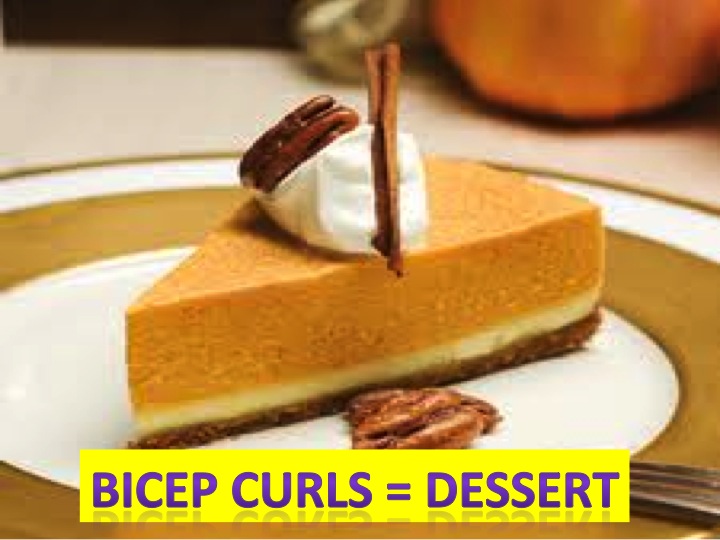
Ahhhhh, the “dessert” movements of the training world.

I will be blunt with this post.

Exercises like bicep curls, triceps extensions and deltoid raises provide very little bang for you buck.  I don’t care how many different angles, rep schemes and loading patterns you choose for a bicep curl, you are NEVER going to lean out by performing bicep curls alone.

I used to have a rule at the sports performance complex in Detroit, my athletes could do all of the curls, triceps, and shoulder work they wanted AFTER we finished taking care of business with our regularly scheduled program which consisted of:

–  Squats (one and two leg variations)

–  Hip dominant lifts (deadlifts, swings, etc)

–  Horizontal pressing (push ups, etc)

–  Vertical Pulling (Chin-Ups, etc)

–  Horizontal Pulling (Inverted Rows, etc)

–  Turkish Get-Ups

–  Energy System Development (aka: Anaerobic, aerobic, shuttle run conditioning)


The rule was simple.  You give me what I want, and I will let you go play around by the dumbbell rack and work all of the muscles that you think the girls love.

Most times, the guys were too tired to complete any “dessert” type movements like bicep curls, but occasionally they would find the energy to bang out a few reps/sets.


Does this rule apply to the general population seeking fat loss?

Hell yes it does.  I want you to change your view about training.  Bicep curls, triceps extensions and deltoid raises need to be considered “dessert”.  There is very little return on investment when performing these exercises.


Unless you are competing in a physique competition anytime soon, ditch them.

Replace them with total body movements, multi-joint movements that challenge your body as a single synergistic operating unit.

Run fast, lift heavy things from the floor, throw a medicine ball, work with a suspension trainer, use battling ropes, squat, push up, chin up, pull up, inverted row, push a heavy sled, pull a heavy sled, jump, run a long staircase, use a heart rate monitor to eliminate guesswork.


Image Credit: Core Performance

Do some of those things I just listed above, organized in a systematic way that prevents staleness, stagnation and keeps you progressing with weight, rest periods, exercise progression, mobility and flexibility, recovery until the next bout, etc…

Sooner than later you are going to see some results as a byproduct of your consistent development of strength, power and overall athleticism.


End timer…

I Don’t Count Calories: Ingredients, Food Addiction and Hyperpalatability

Food/Eating

I could care less about calories in food.

I’m serious.  I honestly don’t give a shit about the calories that are in the food I eat.

When you eat real food, you can relax your thoughts during a meal.  It’s great.  You should try it.

What’s real food you ask?

Boom… real food.

Thank you Pick N Save for the lovely picture to make help make my point.

What I care about are the ingredients that are making up those calories.

I can get all of the information that I need about a food by the number of ingredients listed on the box.  I have to be honest, these days I don’t buy anything that comes in a box.  My girlfriend can testify to this, it drives her nuts.

I could fill an entire 8×11 sheet of printer paper full of one-liners about eating that I commonly use with people, but one that has seemed to really hit home was the following…

5 ingredients or less is a green light food.

Once I have been working with a client for a while, I move my recommendations back to 3-ingredients or less for worry free eating.

Here is an example of food you shouldn’t eat:
Tough to see the exact ingredients, but easy to see that it’s a long ass list.

Are you curious to see the “health” brand that contains this novel of ingredients?

I will disclose the brand at the end of this post…  I have to keep you reading somehow, right?

Eventually, once the habits of that client begin to adjust to their new found eating strategies, one of two things happen…

1)  They begin to eat 1-ingredient foods naturally because they see what eating real food does for body composition in short time, with or without the addition of movement training.

2)  I slowly transition them to eating 1-ingredient foods with ease (ease based on results).

The ingredients in food are addictive, and I predict (as do many experts) that we will begin to see massive lawsuits against the food industry for their conscience intent to make unprocessed manufactured food addictive to consumers.  Watch.  It will happen.

Hyperpalatability is another term that you should become familiar with.  Dr. John Berardi, CEO of Precision Nutrition and author of my favorite cookbook (Gourmet Nutrition), has written a great piece about hyperpalatibility over at www.precisionnutrition.com.

Here is an excerpt from Dr. Berardi’s article:

“Processed foods are engineered in ways that exceed basic reward properties of traditional whole foods, making them hyperpalatable.

Consider items such as ice cream, burgers, candy, melted cheeses, buttery/oily sauces, and so on – these are the foods that stimulate the release of opioids and dopamine in the brain and have addictive potential (note: artificial sweeteners can even trigger a dopamine response).

Rodent studies confirm this: Rats are unlikely to binge on normal rat chow. But when given the option of sweeter and fattier rat chow, rats go on a bender.

The table below shows the characteristics of some “normal” foods and some hyperpalatable foods. Notice how much higher in sugar, fat, and/or sodium the hyperpalatable foods are — and how many ingredients each food contains.”

Notice anything about the chart above?

Check out the number of ingredients in foods that have been identified are hyper-palatable.

This isn’t rocket science ladies and gentleman.  It’s right there in the chart, and it is listed again and again in the research.  We know what is making us fat.

In my effort to really beat my point into the ground until it makes it’s way through the filters that we all have on our eyes and ears, I recently snapped a bunch of pictures of foods at the grocery store…  find them here soon.

Yeah, I know you don’t want to hear my advice Prince.  Tough shit. Diva.

What I know for sure…

I know that nutrition has been written about over and over.  I am kicking a dead horse here.  I know that.

 Huge newspapers like the New York Times have begun to exploit the food industry and preach the importance of healthful eating.

But we aren’t getting it as a population.  For some reason, it is falling on deaf ears and blind eyes.

The United STates is the

So what is psychology behind a person actually knowing what they should and shouldn’t eat, yet continuing to eat the worst quality food on the planet?

I think that the issue is deep rooted to our childhood and also to social factors (friends, family, etc).

Junk eating starts young these days.

So, it’s Saturday and time to hit the Farmer’s Market.  You won’t find one vendor at the Farmer’s Market in Eau Claire, WI selling their fresh harvested Doritos to the public. 🙂

Real food being sold @ the Farmer’s Market in Eau Claire, WI

Getting you to think one article at a time.  Time is now, let’s goooooooo…

Oh, I almost forgot.  Remember that brand that I promised to reveal?  Here is the “natural health food” I was talking about…

P.S. I also think that there is common perception that eating healthy foods is more expensive than eating junk.  I will show you why it isn’t in a future post… Stay tuned.
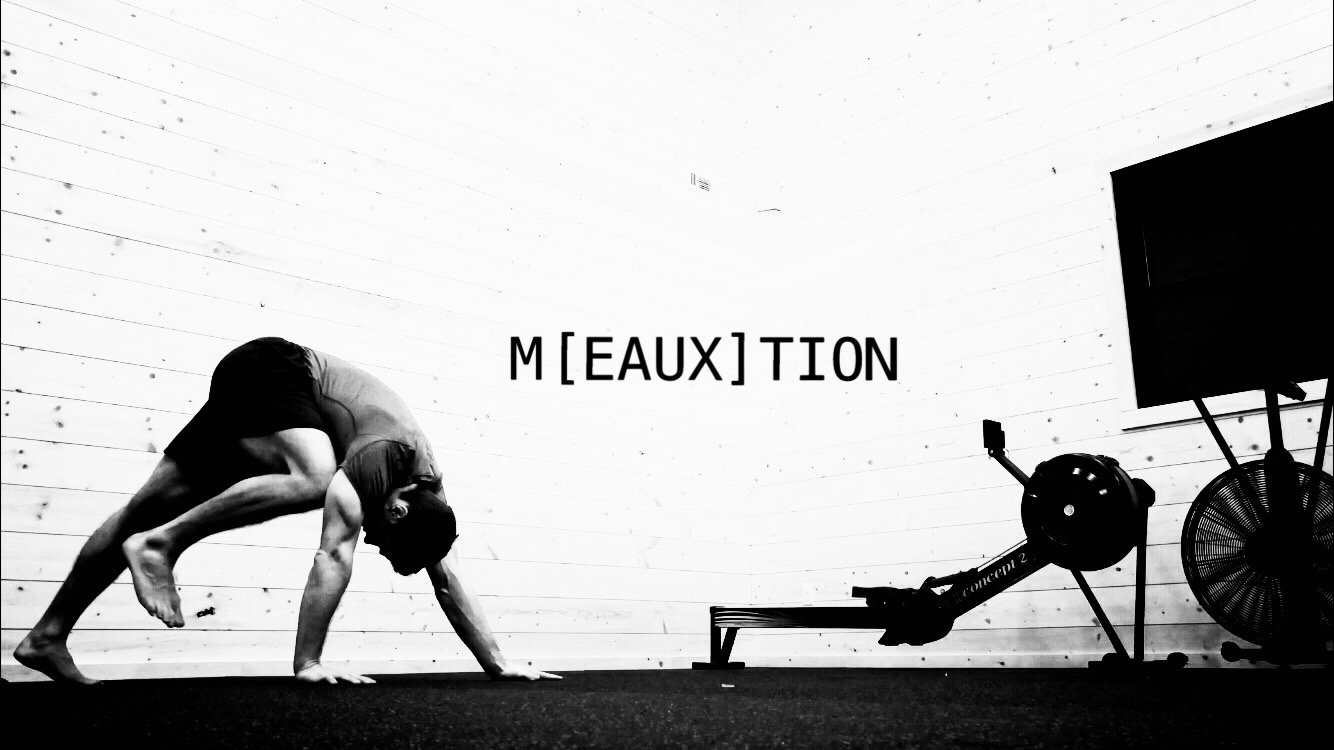
The Evolution of Man: Monkey to Desk Jockey

Injury Prevention, Quick Tips

Don’t fall victim to the negative effects of sitting.

Take a proactive approach to offsetting the hours upon hours of the hunching that is done in your cubical.

Sitting makes creates a situation where your muscles commonly become long and weak in the back (posterior) and short and tight in the front (anterior).

Simple solution:

  • Foam roll and stretch the quad and hip flexors (front) to lengthen.
  • Perform glute bridges, deadlift variations (1-leg & 2-leg), x-band walks, sliding hamstring curls, etc… to strengthen.
  • Gain some lost mobility in the mid-spine region (thoracic spine)
  • Learn how to breathe properly (Westerners are chest/neck breathers)
  • Be consistent and patient for change.

It kind of reminds me of:

The 23 and 1 Rule…

  • In one hour I can offer you the greatest training session in the world. I believe this. I am confident in my abilities.
  • Then I can watch as you destroy everything that we accomplished in the 23 hours that you have away from me.
*** The greatest opponent to a die hard advocate of movement is their own client, the person that pays them good money for their advice.  So weird.