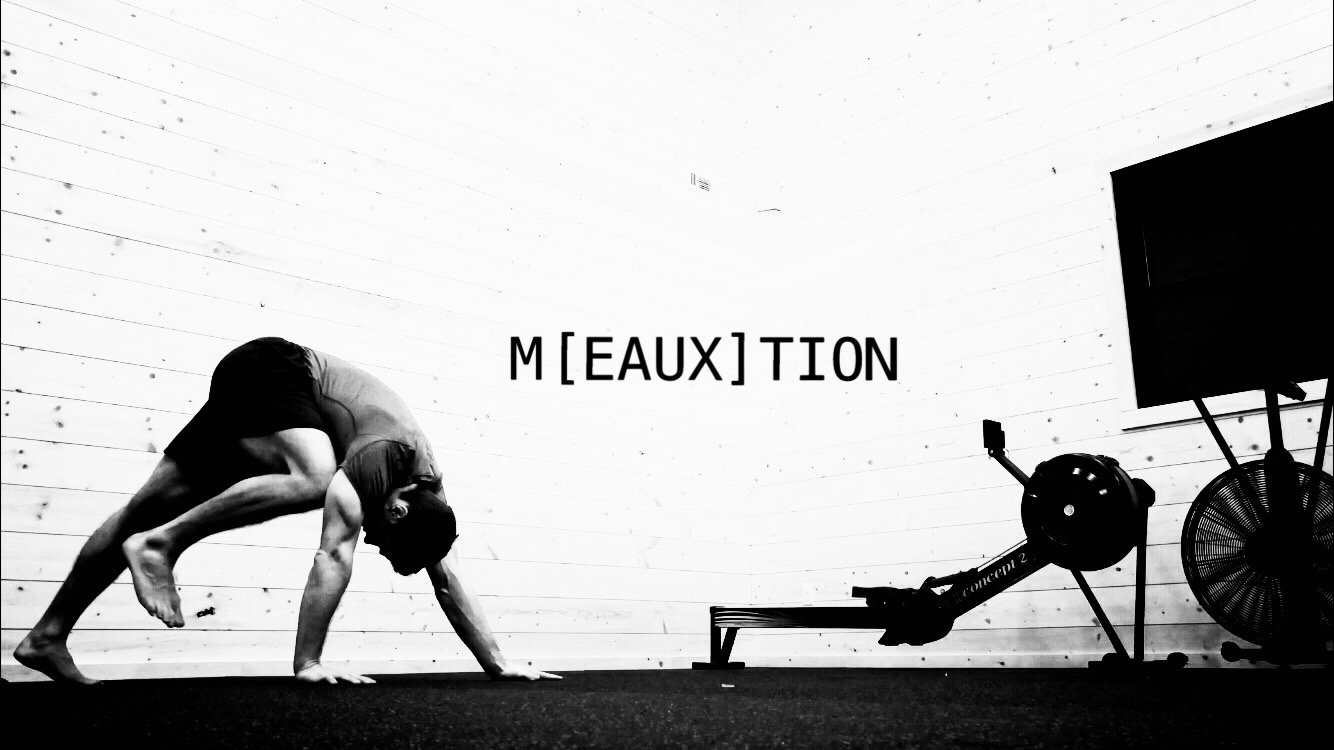
We Are So Messed Up (Movement VS. Aesthetics)

Human Performance Discussion, Injury Prevention

Aesthetics, not athletics.

It is important to make the distinction and not allow your eyes to trick you.  Why?  Because true athletes know how to move and care very little about aesthetics.

However, have you ever noticed that most athletes are about the leanest people on the planet?  The leaness  that an athlete has is simply a by-product of their training efforts, and the demands of their sport.  Sport is movement.  Athletes move more than average people.  You get it, right?  Movement and being lean have a strong connection.

Ahemmm… and nutrition.

There is a massive shift coming in the way that we look at fitness.  In fact, this shift has been going on in the “underground” for quite some time.  The shift is this:

Get people moving at a higher level.

By higher level, I am talking about a higher level of quality.  Pouring high volumes of exercise onto low quality movement is like driving your car until your oil is depleted and your engine blows up.  Trust me, it is going to happen.  Injury lurks around us all day everyday.  Some is accidental, but most is completely preventable.  Taking the proactive approach keeps your healthy.  Injury will show its ugly face to those who ignore their aches/pains and poor movement quality.

Nice introduction, right? Ha.  My mind is a blender of thoughts, so as always, be patient with me as we waddle through another article.

Let’s see if I can’t make some kind of point to you all…

Movement versus Aesthetics.

I have slowly watched as the fitness industry takes a turn for the better.  Fixing movement before fixing body fat (aka: aesthetics)

If you want to talk about sustainability, this is a sustainable model to follow, and I encourage all of you to drop your current habits and follow it.  Movement first, exercise second.

Gray Cook led the charge, years ago.  Mike Boyle helped to bring his theories to other trainers who believe Coach Boyle is sub-human (he really is a pioneer) in this training industry.  And Boyle is sub-human, he is the perfect blend of common sense, reality and knowledge.

The basics are this:  Don’t put fitness (exercise) on top of pre-existing movement dysfunction.  

In even simpler terms:  Don’t ignore your poor functioning hips, ankles, knees, back and shoulders while still attempting to force an intense workout, just for the sake of aesthetics (aka:  looking good in the mirror).

Because that is why most of us workout right?  Aesthetics?  I mean, we have piles and piles of research showing the internal and external health benefits of exercise, but come on… get real… are you actually running to increase your body’s rapid circulation for disease prevention?

Or are you running to keep yourself fitting in those jeans you’ve had since entering college?

I really don’t care why you choose to exercise, whatever is going to get you to take action is what I am interested in.  If you have a solid “why” behind your daily training regimen, keep it.  I like it.

But, now that you have the motivation to take action, let’s shift your thinking to quality of movement over just… exercise.

Let’s get your movement patterns dialed in, THEN AND ONLY THEN… let’s go and have one hell of a workout.

You see, our view of fitness is skewed these days.  We have come to associate someone with low body fat and six-pack abs as someone who is truly fit.  Sure, it is definitely aesthetically appealing to be lean and muscular.  To have that athletic look so to speak.

But at what cost?  How are you achieving those results?  Are you piling tons and tons of dysfunction on top of your movement quality?

Are you 2 weeks into Insanity with your anterior knee pain at a 10 out of 10? (anterior=front)  What are you really achieving at that point?  Pain?  Should exercising hurt?

I am getting you to think here.  I will even answer my last question for you.  No, exercising should not hurt.

(Note that the burn felt from a muscular contraction and pain are quite different sensations)

Working hard and working smart are very different.  

We need to start looking for sustainable, life long methods for maintaining physical and mental health.  Maintaining physical health requires a person to stay active and remain injury free.  Injuries crush people in this life.  One bad injury can set a person off course for years, maybe even for a lifetime.  It is a sad occurrence that happens all too often.  We all know someone who is virtually disabled due to injury (think lower back here).  Do I even need to talk about the $$$cost$$$ of an injury?  Yikes.

The shift to the movement based model is the solution.  I believe this.  I have listened and read enough work from guys like Gray Cook and Mike Boyle. Cleaning up your joint mobility, improving the balance and  function between your left and right sides, your front and back, along with the upper and lower parts of your body is the ticket.  Every. Single. Time.

Balance.

The elimination (“improvement” might be a better choice of word) of asymmetries (differences) between these halves of the body will catapult your performance, I guarantee it.  Most folks don’t know they are operating a body at about 75% of their potential.

The difficult part about all of you to start assessing and correcting your movement patterns is that it has very little entertainment value.  I know this.

Humans these days need entertainment or we become bored.  We enjoy complex over simple.  We have adult ADD.

It isn’t as fun to roll around on a foam roller or lacrosse ball to smash your hip musculature, mobilize your thoracic (mid-spine) or perform cable chops and lifts until you’re blue in the face.

I’m no dummy.  I know that you would rather pay your sign up fee at a Cross-Fit gym and have someone put you through a puke producing training session.  That is what your friends are doing, and they are dropping pant sizes, right?  I know the influence of peers on decision-making.  I get that.

But, trust in me, just invest that 10-15minutes to find the information about why you can’t perform a body weight squat, or step over a hurdle, or reach your arms overhead without going into dangerous lumbar extension.  Then, invest 10-15 minutes more daily to work through your corrective movements, and re-test your problem areas.  Re-test your squat.  Re-test your lunge.  Re-test.

Just take a few minutes, that’s all.

In closing, make your movement last a lifetime.  Yes, age is inevitable.  But we have the choice to continue moving freely and without restriction well into our life.  Don’t be fooled by the instant gratification that some programs and people are promising.

—> Healthy movement for a lifetime is more important than a six-pack for next summer.

KG

***  Today is 9/11.  I hang my hat to everyone that has given me the chance to sit at my computer in peace and write something like this.  You are true heroes in every sense of the word. Thank you. ***

Simple Tests to Measure Your Fitness/Performance

Bodyweight Workouts, Human Performance Discussion

I have never liked the word fitness.  It just reminds me of people like Tony Little and Richard Simmons bouncing around like circus clowns.

I think I might go as Tony Little this year for Halloween now that I think about it.  Interesting.

A net worth of $200 million. Unreal.

Anyways…

What I want to talk about today is how to measure your training to make sure that you are moving forward.  Just like improving your eating is going to help your body composition and weight issues, measuring improvements in your training goals is also going correlate with the amount of fat you lose.  I suppose this is assuming that you don’t ruin your workout by eating an ice cream sundae.

If I were you, these are some simple measures of physical fitness that I would measure…

  • 1 mile run
  • 400 meter run for time
  • Distance ride for time (amount of time it takes to ride 5 miles on a stationary bike)
  • Maximum # of push-ups (full reps)
  • Maximum # of bilateral squats (bodyweight and 2-legs)
  • Maximum # of single leg squats (are both sides equal?)
  • Maximum # of pull-ups and chin-ups
  • Maximum # of inverted rows (aka:  body rows)
  • Time to complete:  24 squats, 12 fw lunges r/l, 12 split squat jumps r/l, 24 squat jumps (beginners= 1 set, intermediate/advanced=2-3 set repeats)

Take note of the last bullet where I recommend that an intermediate or advanced trainee complete the circuit 2-3 times.  Record the time it takes to complete one full circuit.  Your rest period before starting the next circuit will be twice the time it took for you to complete the prior circuit.

Example: Intermediate trainee required 96 seconds to complete circuit…  2 x 96 seconds=  3:20/rest

This is a lower body work capacity circuit for an intermediate or an advanced trainee, and probably a combination of strength and work capacity for a beginner.  If you are beginner, GREAT!  You may have to modify it a bit to complete the circuit, but that is no problem.

Kudos to you for taking action.  

Most people don’t.

Just remember that what is easy for one person, may be difficult for another.  It is quite common for a beginner to get one hell of a training stimulus from simple bodyweight moves.  Heck, I still use bodyweight moves in my own training just because they are so effective and require zero equipment.

Very simple to implement.

Let me be clear that there are far more extensive tests that I could recommend, there are.  But, when it comes to training at home, not everyone has the equipment necessary to properly measure your performance. That’s fine.  You’re not training for the olympics, I wouldn’t worry about it.  Use what you have.  That will work.

If you are making solid improvements in most of the performance based tests I listed above, I guarantee something great is happening to your body.  The correlation between increasing performance is closely tied with leaning out and getting fit in my opinion.

Especially when you begin to make significant improvements in load lifting, work capacity efforts and

Improved performance comes with this great little by-product called leanness.

With the olympics still rolling in London, now is as good of time as ever to make that point.  Performance and leanness seem to go hand in hand.  Take a look at 99% of the athletes in the olympics.  Of course I would exclude the olympic lifting, archery and table tennis, but hey, most of those athletes are pretty lean also.  I should probably add in the ridiculously skinny/atrophied long distance guys/gals too.

Maybe we should all train like athletes?  (Hint, hint)

Don’t be afraid of sweat and effort. 🙂

Let me know how it goes…


KG

(P.S.  This is performance based testing.  Keep in mind that movement quality should be evaluated also, I will show you how to measure that in a future post).

What’s Slowing You Down: Brain or Body?

Brain Training, Human Performance Discussion

Let me ask you this…

1)  Is it the physiology of a champion?

or

2)  Is it the brain of a champion?

***  Keep reading if you don’t understand what I am asking.


Olympics Miracles!

With the Summer Olympics quickly approaching, I think that this topic is incredibly interesting.

Anyone who has ever watched a sport on TV has no doubt heard the announcer cry out, “Look at that finish!  It was all heart on the last 50 meters!  A new world record!”

Even if that isn’t word for word, it is pretty damn close.  I am a sucker for these kinds of stories.  I love seeing, reading, listening to stories about humans pushing themselves to new heights.

What about the average joe?

Yes, you probably understand that you are never going to be an Olympian.  That’s ok.  Neither will I.

Looking at what causes humans, Olympians or otherwise, to be able to accomplish or fail at physical tasks as they relate to our daily performance during body transformation, I often ask myself, “Is it physiology or all brain?”


Enter: The Central Governor

It wasn’t too long ago that I read an article about Dr. Tim Noakes and his ideas that human performance is controlled by something called the Central Governor.  Essentially, he is saying that human performance may be controlled less by physiological limits and more by the brain.  The brain will shut down physical output if it detects that the body is nearing a fatigued state that will damage the heart or homeostasis.  If physical exertion exceeds what the brain deems as acceptable, it will turn down the dial on the whole program (fatigue).

Here is a more official description of the Central Govnernor Theory (as described by Wikipedia):

The central governor is a proposed process in the brain that regulates exercise in regard to a neurally calculated safe exertion by the body. In particular, physical activity is controlled so that its intensity cannot threaten the body’s homeostasis by causing anoxia damage to the heart. The central governor limits exercise by reducing the neural recruitment of muscle fibres. This reduced recruitment is experienced as fatigue. The existence of a central governor was suggested to explain fatigue after prolonged strenuous exercise in marathons and other endurance sports, but its ideas could also apply to other causes of exertion fatigue. 

Begin rant…

—>  You might be saying, “Come on Kyle, don’t cite Wikipedia!”

Let me remind you that I am writing posts with the goal of providing practical and simple information.  If you read the studies behind the Central Governor Theory, most of you would experience early symptoms of head explosion.  The research can get heavy, and I am not here to impress anyone with scientific jargon.

We can either take a complicated theory and apply it to give real-world results, or we cannot.  Results-based information is what I am interest in sharing and results are probably what you are interested in experiencing.

End rant. 🙂


Criticisms to the Central Governor Theory:

Now, the Central Governor Theory is not flawless.  Dr. Noakes has pissed off a lot of researchers around the world with his theories.


Here are is one of the major criticisms (also sniped from Wikipedia):

The existence of a central governor over physiology has been questioned since ‘physiological catastrophes’ can and do occur in athletes (important examples in marathons have been Dorando PietriJim Peters and Gabriela Andersen-Schiess). This suggests that humans can over-ride ‘the central governor’.[16] Moreover, a variety of peripheral factors in addition to those such as lactic acid build up can impair muscle power and might act to protect against “catastrophe”.[17] Another objection is that models incorporating conscious control also provide an alternative explanation,[18] but also see Noakes’ reply.[19]

Exercise fatigue has also been attributed to the direct effects of exercise upon the brain such as increased cerebral levels of serotonin, reduced level ofglutamate secondary to uptake of ammonia in the brain, brain hyperthermia, and glycogen depletion in brain cells.[20][21]

The idea of exercise causing hypoxia at the heart, in the absence of arterial disease, moreover can be questioned due to the heart with every beat is delivering through coronary arteries that arise from first branches from the aorta freshly oxygenated blood to its own cells. Other factors exist that could in a self-limiting way limit oxygen uptake. For example, as more accessory muscles of respiration are recruited, (as occurs at near maximal values of VO2), the energy cost of increasing rib cage expansion is nearly equal to that gained by the oxygen obtained from doing so. Indeed, the Fick equation (see VO2 max) itself includes terms of limitation: Q (cardiac output) is determined by stroke volume and heart rate. Stroke volume has a natural, physically limited upper bound (the heart obviously has a maximal volume, and is restricted by surrounding structures such as the pericardium), while heart rate is limited by the ability rate at which cardiac cells can maintain rhythmicity. There are also natural limits to the rate at which oxygen can diffuse from the blood to the tissues, i.e. gas exchange is itself a limiting factor.

These criticisms suggest the potential exists for known physiological processes to adequately carry out what Noakes and others attribute to a complex, pre-calculated central mechanism of homeostasis. (Though they may be relevant for accounting for some types of observations such as the effects of altitude on cardiac and other muscular capabilities.)

Another criticism is that Hill’s original suggestion of a central governor uses a study in which a VO2 max test was conducted in which some of the subjects did not achieve a plateau in oxygen uptake. This failure led to his suggestion that VO2 max itself is a failure to account for their fatigue requiring the existence of another mechanism that could limit aerobic performance. However, this plateau requires that subjects are highly motivated, as the protocol of the test requires work at near maximal levels for protracted periods, and this might not have been the case.


I apologize for the long description, but there are some good points and I want anyone reading to be able to develop an opinion on it.

Here is an excellent article from The Walrus…  “The Race Against Time”.

Honestly, I am a physiology kind of guy as it relates to this matter.  I believe that exertion is mostly limited by our body’s natural processes as we experience fatigue.

To really confuse your decision-making on the matter even more, how do YOU explain this?…

Commonly know as “Bonking”

However, I have to say that I am extremely fascinated by what could come of Dr. Noake’s research.  The brain is an incredible switchboard that controls so many daily processes, and the thought that it can be one of the limiting factors of performance is not out of the question by any means.

We just haven’t figured out where all of the pieces fit.  It is going to be interesting to watch the research in the coming months/years as continue on our quest to figure out what makes us tick as humans.

What does this have to do with fat loss?