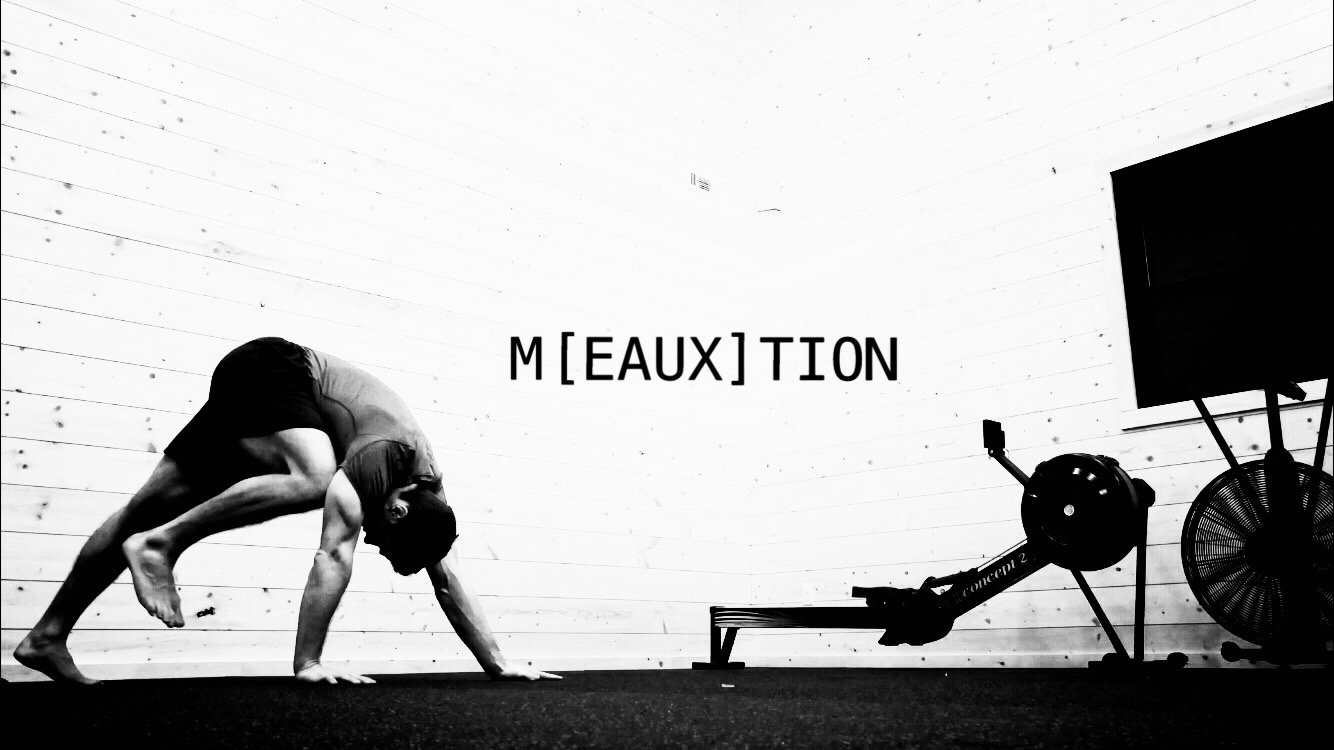
Aesthetics, not athletics.
It is important to make the distinction and not allow your eyes to trick you. Why? Because true athletes know how to move and care very little about aesthetics.
However, have you ever noticed that most athletes are about the leanest people on the planet? The leaness that an athlete has is simply a by-product of their training efforts, and the demands of their sport. Sport is movement. Athletes move more than average people. You get it, right? Movement and being lean have a strong connection.
Ahemmm… and nutrition.
There is a massive shift coming in the way that we look at fitness. In fact, this shift has been going on in the “underground” for quite some time. The shift is this:
Get people moving at a higher level.
By higher level, I am talking about a higher level of quality. Pouring high volumes of exercise onto low quality movement is like driving your car until your oil is depleted and your engine blows up. Trust me, it is going to happen. Injury lurks around us all day everyday. Some is accidental, but most is completely preventable. Taking the proactive approach keeps your healthy. Injury will show its ugly face to those who ignore their aches/pains and poor movement quality.
Nice introduction, right? Ha. My mind is a blender of thoughts, so as always, be patient with me as we waddle through another article.
Let’s see if I can’t make some kind of point to you all…
Movement versus Aesthetics.
I have slowly watched as the fitness industry takes a turn for the better. Fixing movement before fixing body fat (aka: aesthetics)
If you want to talk about sustainability, this is a sustainable model to follow, and I encourage all of you to drop your current habits and follow it. Movement first, exercise second.
Gray Cook led the charge, years ago. Mike Boyle helped to bring his theories to other trainers who believe Coach Boyle is sub-human (he really is a pioneer) in this training industry. And Boyle is sub-human, he is the perfect blend of common sense, reality and knowledge.
The basics are this: Don’t put fitness (exercise) on top of pre-existing movement dysfunction.
In even simpler terms: Don’t ignore your poor functioning hips, ankles, knees, back and shoulders while still attempting to force an intense workout, just for the sake of aesthetics (aka: looking good in the mirror).
Because that is why most of us workout right? Aesthetics? I mean, we have piles and piles of research showing the internal and external health benefits of exercise, but come on… get real… are you actually running to increase your body’s rapid circulation for disease prevention?
Or are you running to keep yourself fitting in those jeans you’ve had since entering college?
I really don’t care why you choose to exercise, whatever is going to get you to take action is what I am interested in. If you have a solid “why” behind your daily training regimen, keep it. I like it.
But, now that you have the motivation to take action, let’s shift your thinking to quality of movement over just… exercise.
Let’s get your movement patterns dialed in, THEN AND ONLY THEN… let’s go and have one hell of a workout.
You see, our view of fitness is skewed these days. We have come to associate someone with low body fat and six-pack abs as someone who is truly fit. Sure, it is definitely aesthetically appealing to be lean and muscular. To have that athletic look so to speak.
But at what cost? How are you achieving those results? Are you piling tons and tons of dysfunction on top of your movement quality?
Are you 2 weeks into Insanity with your anterior knee pain at a 10 out of 10? (anterior=front) What are you really achieving at that point? Pain? Should exercising hurt?
I am getting you to think here. I will even answer my last question for you. No, exercising should not hurt.
(Note that the burn felt from a muscular contraction and pain are quite different sensations)
Working hard and working smart are very different.
We need to start looking for sustainable, life long methods for maintaining physical and mental health. Maintaining physical health requires a person to stay active and remain injury free. Injuries crush people in this life. One bad injury can set a person off course for years, maybe even for a lifetime. It is a sad occurrence that happens all too often. We all know someone who is virtually disabled due to injury (think lower back here). Do I even need to talk about the $$$cost$$$ of an injury? Yikes.
The shift to the movement based model is the solution. I believe this. I have listened and read enough work from guys like Gray Cook and Mike Boyle. Cleaning up your joint mobility, improving the balance and function between your left and right sides, your front and back, along with the upper and lower parts of your body is the ticket. Every. Single. Time.
Balance.
The elimination (“improvement” might be a better choice of word) of asymmetries (differences) between these halves of the body will catapult your performance, I guarantee it. Most folks don’t know they are operating a body at about 75% of their potential.
The difficult part about all of you to start assessing and correcting your movement patterns is that it has very little entertainment value. I know this.
Humans these days need entertainment or we become bored. We enjoy complex over simple. We have adult ADD.
It isn’t as fun to roll around on a foam roller or lacrosse ball to smash your hip musculature, mobilize your thoracic (mid-spine) or perform cable chops and lifts until you’re blue in the face.
I’m no dummy. I know that you would rather pay your sign up fee at a Cross-Fit gym and have someone put you through a puke producing training session. That is what your friends are doing, and they are dropping pant sizes, right? I know the influence of peers on decision-making. I get that.
But, trust in me, just invest that 10-15minutes to find the information about why you can’t perform a body weight squat, or step over a hurdle, or reach your arms overhead without going into dangerous lumbar extension. Then, invest 10-15 minutes more daily to work through your corrective movements, and re-test your problem areas. Re-test your squat. Re-test your lunge. Re-test.
Just take a few minutes, that’s all.
In closing, make your movement last a lifetime. Yes, age is inevitable. But we have the choice to continue moving freely and without restriction well into our life. Don’t be fooled by the instant gratification that some programs and people are promising.
—> Healthy movement for a lifetime is more important than a six-pack for next summer.
KG
*** Today is 9/11. I hang my hat to everyone that has given me the chance to sit at my computer in peace and write something like this. You are true heroes in every sense of the word. Thank you. ***


 M(eaux)tion Fitness