The Coach Hacker Files: Are You Ready to Get Massively “De-Stabilized”?

Quick Tips

Coach Hacker can train with anyone.  Arnold ain’t nothin but a peanut compared to the the twisted steel and sex appeal of The Hack.

In fact, as I understand, The Hack had turned down multiple endorsement deals and a free pass into the Mr. Olympia competition way back in the day.  He opted to remain out of Arnold’s “Pumping Iron” documentary.  Unreal this guy.

That is the definition of not selling out and staying true to the game.  Something we can all learn from.

Today’s latest installment of “The Coach Hacker Files” is about one thing, and one thing only…

Getting De-Stabilized.  

Coach Hacker Vs. Chuck Norris

Coach Hacker smoked Chuck Norris.

You’ve never trained a day in your life if you haven’t been de-stabilized.  In fact, de-stabilization is such a top secret method that you won’t find it in any strength and conditioning book, magazine or dvd.  This is Area 51 type shit.

Coach Hacker Area 51 Top Secret

Coach Hacker spear headed alien dissections from the Roswell incident.

Up until this point, we were all on a “need to know basis”… and we didn’t need to know.

Until now.

Because as of right now, de-stabilization is hitting the mainstream at break neck speed, and I am going to join forces with Coach Hacker in promoting to all of the land.  People are going to really benefit from this methodology.

Are you ready to get De-Stabilized? (Yes it deserves capital letters)

Grab some popcorn and absorb the knowledge…

There are a couple of pieces of information that I gathered from this video that I think we should all take note of.

First, before you ever even think about initiating your first crunch, you have got to find the “sweet spot”.

Coach Hacker BOSU Crunch Sweet Spot

The lower lumbar is the sweetest of “sweet spots” for Coach Hacker.

Second, get your voice nice and growly after hitting that sweet spot.  It will help off-set the insane amount of de-stabilizing that is about to take place.
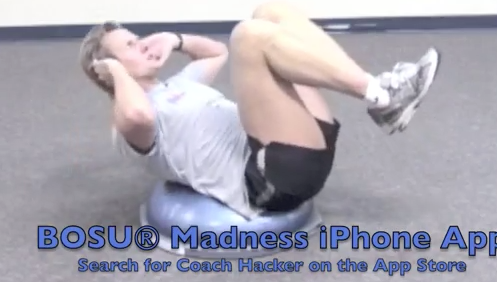
Coach Hacker Crunch Technique

Don’t you dare go full range of motion!  Half-ees only.

Third, do half reps.  Much like my last edition of The Coach Hacker Files where he drops a knowledge bomb on us with kettlebells, you’re going to want stay fresh through the set.  Going full range of motion will fatigue you out way too early.  Remember, you’re training Hacker-style now, so the rep range is going to be in the “10-15 rep range”.
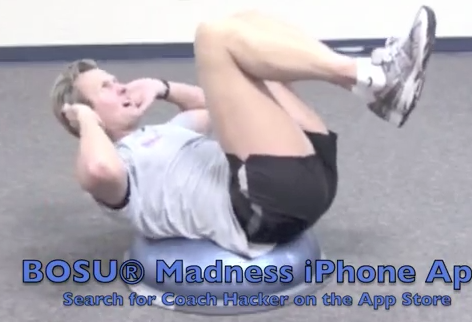
Coach Hacker Massive De-stabilization

Can you feel the massive de-stabilization?  Oooooh baby!  We like that!

Fourth, “massive de-stabilization” doesn’t happen until about the 4th or 5th rep.  We like that, don’t we?  The answer is yes, we do like that.  Don’t you even think about saying you don’t like it.  You’ll like it and you’ll have more of it.  Mmmmmm yea, now you like it.  But don’t like it so much that you breach the 10-15 rep range or lose your “sweet spot”.
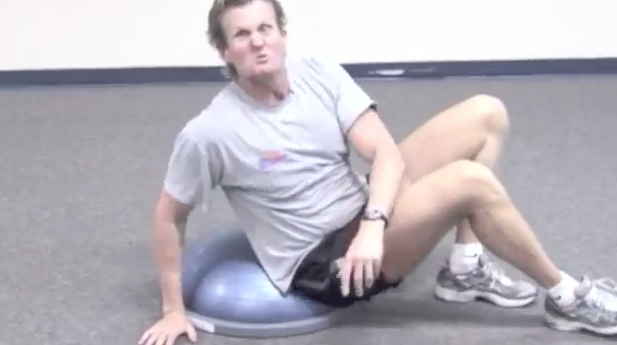
Coach Hacker Intensity

Grrrrrrrrrrrr BOSU Madness!  

Fifth, Coach Hacker was able to sustain his intensity from the kettlebell clean+ press video into the BOSU crunch video clip.  Incredible.  Do you realize what kind of dedication and training that takes?
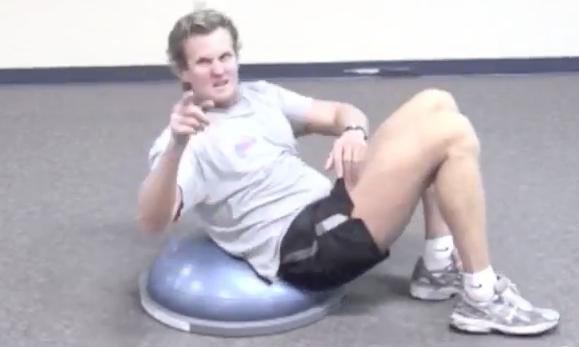
Coach Hacker Pointing and Meaning It

The last image that Chuck Norris had…

I cannot even begin to explain what kind of an impact de-stabilizing is going to have on my clients, friends, family and athletes.  My group of ladies that I train in the Summer here in beautiful Eau Claire, WI are going to be de-stabilizing all over Carson Park, at the Livery Pub, heck even when shopping in the mall.

Why not de-stabilize while trying on some stilettos or summer skirts?  It’s the perfect time, and you cannot afford to miss an opportunity to de-stabilize yourself.  It’s that great.  Who cares what the salesman thinks?  He’s not in the “know” with this stuff.  Shame on him.

You can de-stabilize anywhere and anytime.  What does TRX have on de-stabilizing?

The quick and correct answer is NOTHING.

De-stabilizing doesn’t require equipment and doesn’t care what kind of environment you’re in.

Coach Hacker does an impeccable job in the video- as he always does in all of his videos- of not just verbally describing the proper technique of the de-stabilizing BOSU crunch, but also showing it visually.  Effecive verbal cues are one thing, but when you mix in a solid visual… That makes for a complete learning experience.

That’s what we need to learn these advance workout techniques.

No stones are ever left un-turned with Coach Hacker, and this video is a prime example of that.  He’s not the kind of guy that would keep things from us.  He’s as transparent as they come.  No secretism with Coach Hacker, because he knows that’s not how we will learn to refine our own technique.

Ok, so I’ve got two videos recapped and 15 more to go.  It’s been pleasure bringing Coach Hacker to the world.  I know that we can get him some endorsement deals.  I am already have set in motion a Coach Hacker street team on social media.

Stay tuned, it only gets better.

Cheers to BOSU Madness and getting Massively De-Stabilized!

KG

A Quick Cardio-Strength Workout: Suspension Training + Bodyweight Training

Quick Tips

Screen Shot 2013-03-28 at 9.36.02 AM

Time is a limiting factor when it comes to staying active.  Whether the lack of time is a perceived or it is legitimate, it is still a limiting factor.

Proving that a short and intense training session is highly effective for creating forward motion is important.

That’s why I will continue to throw together small installments of workouts like the one below, because you need to know that you’ve got solutions.

Not every workout has to be a 2 hour affair.

Once you see results from these short burst training sessions, you’ll begin to see opportunity in every small window of free time to sneak in a quick workout.

Let’s get into it.

Here is a simple workout that integrates the suspension trainer with more traditional bodyweight movements.  It’s deceptively taxing.

Enjoy…

Equipment:  Suspension trainer, bodyweight, timer

Space:  8x8ft

Time: 15-20 minutes

Impact:  Low-Moderate

Complete at least 3 rounds (up to 5 round) of the following reps/exercises with no rest between exercises:

  • 20 Push-Ups
  • 20R/L Rear Foot Elevated Single Leg Split Squats (Suspension Trainer)
  • 20 Inverted Rows (Suspension Trainer)
  • 10 Ab Wheel Rollouts
  • 20R/L Mountain Climbers or 20 Burpees

Rest:  1-2 minutes before starting the next round.

Repeat for 3-5 total rounds

Here is an unedited/summarized video clip of the workout….

A couple of things:

  1. Scale the workout.  If you are new to training, perform 10 reps of each instead of the recommended 20 reps.  Switch single leg squats for traditional bodyweight squats.  Perform as many regular push-ups as possible, when you get tired, move to knee push-ups. If you’re advanced, aim for 5 rounds.  If you’re still not impressed with the difficulty, add a weight vest.  I can keep going all day with progressions to help increase the difficulty of a workout like this, if you have questions, just ask me!
  2. Buy a suspension trainer.  Some of you won’t see the value in this, but trust me, there is value in this.  It opens up a whole other world of working out that you didn’t know existed.  It makes a lot of exercises far more natural and enjoyable.  I prefer the Lifeline Jungle Gym XT because of price and quality.
  3. 10 reps for ab wheel roll outs.  Please take notice of the decreased reps for this movement.  I have completed this workout using 20 reps before, and quite honestly, it just took too long.  All of the other movements are up tempo and then boom… slow on the roll outs.  Plus, form breaks down quickly with high rep anti-extension core work.
  4. Go for it.  Assuming you’re using your head (aka: common sense) and you’ve been cleared by a physician to participate in physical activity, just go for it.  Warm up, and get to it.  The more you think about it, the greater the likelihood that you’ll talk yourself out of it.  Less reading, prepping and planning.  Sometimes you’ve got to take the road map and get behind the wheel.  I already gave you the road map, now get driving.


—>  Some thoughts…

I love training sessions like this, they are quick and to the point.

If you travel, training like this is cash money.

We address the entire body in a short time frame, using mostly unloaded movements that are resistance based.

One important thing to remember:  Don’t under-estimate the effectiveness of bodyweight training, yet don’t expect too much from bodyweight training.  Keep everything in perspective.

Just do the workout and see how your body reacts to it.  Your body will tell you what needs to be tweaked the next time around.


Cheers to finding a way to get it done!

KG

I Am Physically Prepared: Reasons Why I Stay in Shape Year ‘Round

Quick Tips

Screen Shot 2013-03-26 at 8.19.56 AM

Life of a personal trainer.  

It’s funny, between the ages of 18-22 years old, I didn’t really value my fitness.  The fitness that I did have was a byproduct of being an athlete in a sport that places high demand on conditioning and the ability to repeat those high intensity efforts, therefore I really didn’t know anything else.  Having strength and being conditioned was a part of life, as it is for so many athletes.

Screen Shot 2013-03-26 at 8.17.22 AM

When you play a college sport, you quickly find that you have to stay in shape damn near year ‘round.  For hockey, there is a period of down time between the end of the competitive season and the beginning of off-season training, but it is quite short.  Maybe a week or two at the most.

When you’re not on the ice, building aerobic/anaerobic capacity along with hockey specific skills, you’re in the gym building qualities like strength and power.  The efforts put forth in the gym are designed to boost to on-ice performance, as is any off-season training program for any sport.

After I graduated from college, the byproduct of fitness that I had enjoyed from athletics also left.  Training was no longer mandatory for the rest of my life, it was optional.  Many of you know what this feels like.  It’s strange, because everything is so regimented for so many years, and all of the sudden it just stops.  I no longer needed to keep myself even remotely close to the sort of shape that I did when playing, however I chose to keep up with it.

I trained smarter once I was done with college than I did when I was under the supervision of a full-time paid strength coach at the University. 

I learned that there was a whole other world of training methods available that we athletes had not be exposed to.  It’s still frustrating to think that our programs were a tweaked variation of the basketball or football team’s strength and conditioning program, but in reflection doing something in the gym was better than doing nothing.

Screen Shot 2013-03-26 at 8.24.01 AM


Fast forward a few years, about six to be exact, and I still train hard 3-5 days per week.  My training frequency (days per week) varies depending on my professional career schedule and other activities, but for the most part I am able to workout as much as I would like.

I love it.  I am grateful that I have taken care of myself post-college athletics.  It has allowed me to run races with buddies or skate with current college hockey players without stressing about my physical abilities.  If you think this sounds silly, I would bet that many of you have turned down the opportunity to run a race or play a sport because you thought that you weren’t fit enough, saving yourself some sort of embarrassment.  I’ve pulled that one myself.

I call it being “physically prepared”. 

Being physically prepared is nothing special.  In a recent post about aerobic conditioning, I shared a pie chart showing how my workouts are divided up between strength, aerobic and anaerobic interval training.

The chart is accurate at the present time.  But if for example, a friend called me up and asked if I wanted to pedal a Century Ride (100 miles) with him, I feel confident that I could do it with very little additional training.

Why?  Because I am physically prepared.

If I travel to Colorado to join a buddy in climbing a 14’er (14,000 ft mountain) I am confident that I can handle it no problem.

Why?  Because I am physically prepared.

I think you get the point.

Screen Shot 2013-03-28 at 6.56.23 AM

For most of the year, my training has no other purpose than to:

1)    Keep my body capable of handling short or no notice physical stress.

2)    Keep me lean and mentally self-confident (there is a large mental component to why we workout in the first place).

3)    Keep pushing myself to avoid giving in to the stereotypical  activity levels that supposedly come with adulthood, career and family.

4)    Make a small time commitment for a large ROI with my day-to-day health and ability to fight off sickness throughout the year.

Subconsciously, I also train with the motivation to do my best to avoid Orthopedic issues later in life.  I don’t want to find myself lying on the operating room table (having a joint replacement) because I was lazy.  That’s an expensive mistake that will hit you hard financially and physically.  Our bodies are sophisticated but at the same time we are also a bunch of pulleys and levers, and keeping the right amount of tension on each pulley and lever will help avoid going under the knife.

I also never want to be a statistic on the nightly news that shows deaths from completely preventable disease.  I won’t be that person either.

Bottom line:  You’ve to strengthen and condition yourself with the future in mind.  Always in mind.

Screen Shot 2013-03-26 at 8.29.39 AM

Yikes.

All of us are going to have a different opinion about the amount of fitness that we should keep.

Constantly making an effort to improve your strength and power, cardiovascular capabilities, joint range of motion and stability in those joints will keep you moving for the long-term.

Fitness should be tailored to each individual.  You should maintain a fitness level needed to successfully move through life pain-free and safe-guarded against injury while meeting the physical demands of day-to-day life without worry or hesitation.

But in my own case (and many others I am finding) keeping a lifestyle that is full of movement whenever and wherever makes the journey a lot more exciting, and I call it being physically prepared.

Cheers to joining the physically prepared!

KG

3 Conditioning Workouts to Check Your… Conditioning.

Quick Tips


One of my favorite things to do when I am training in a commercial gym is to use machines for everything but what they are intended to be used for.

Take the infamous Smith Machine for example.  I have never performed a Smith Machine specific exercise on this piece of equipment, and I never will.

The Smith Machine

The $2,000 “coat rack”

Why?  Because…

1)  I am an able bodied individual and should therefore be working with free weights.

2)  I value moving the through a natural range of motion with and without external resistance. (Smith machine is guided on tracks)

Squats, lunges, curling (I don’t even know how this would work) rowing are not for the Smith Machine, assuming you are an able bodied individual.  A Smith Machine to me is a glorified Nautilus machine.  They make great coat racks and leaning stations for recovering trainees in most gyms.

However, I have used the Smith Machine to execute movements such as:

  • Inverted rows (2 arm and 1 arm)
  • Plyo-like Bench Throws
  • Lateral torso holds
  • 1-Arm Push-Up progressions
  • Mountain climber progressions
  • Hip mobility warm ups

I may have to whip up a post about how to leverage a Smith Machine for executing different movements, we’ll see.

But whatever, this post wasn’t intended to bash Smith Machines.

The goal here was to provide you with some non-traditional ways to use some common pieces of equipment.

Enjoy…

 Screen Shot 2013-03-26 at 1.36.00 PM

Better use of treadmills… Incline + MPH

—> Treadmill Hill Sprints:

  • Set the speed of the treadmill to 8-10mph.
  • Set the incline to 8-10 degree of inclination.
  • Sprint for 15 seconds, step off and rest for 15 seconds (this equals 1 round)
  • Perform 10-12 rounds.

Screen Shot 2013-03-26 at 1.36.23 PM

The greatest low impact conditioning tool of all time.

—>  Stationary Bike 20:10 Protocol (I will not refer to it as the Tabata Protocol!)

  • Set the bike to medium resistance (you should be able to pedal around 90-100 rpm)
  • Spin as hard as possible for 20 seconds, follow that will 10 seconds of rest (this is one round)
  • Complete 8 total rounds and check fatigue levels.
  • If you have more in the tank, complete another 8 rounds or modify as needed.
  • *** I have commonly modified this type of workout to 6 rounds x 2-3 sets with 2 minutes rest in between.
  • Stay seated the entire time.


—>  5 Mile Ride for Time

I have talked about this conditioning test before on this site, somewhere, but it deserves to be talked about again.  Here are the specs on this challenge:

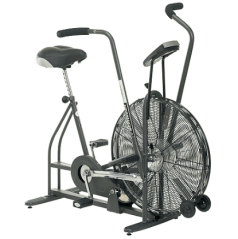
  • Ideally you’ll use a Schwinn Airdyne, but you can use any other stationary bike in a pinch.  Make sure that the bike has a mileage gauge on it, otherwise you won’t know when you’ve completed the 5 miles.
  • Set to light-medium resistance… and GO.
  • Again.. pedal pedal pedal and keep pedaling.  There isn’t much else to say here.
  • Chart the time that it takes to ride the full 5 miles, record it, attempt to beat it the next time around.
  • *** On the big fan Airdyne, my best is 11min30sec.  It was a bear.  I think my friend and fellow strength coach Joe Gorshe (Bemidji State Hockey) finished around 12:15-12:30min if I am not mistaken.


—>  Kettlebell Swing Breath Ladder

  • Grab a kettlebell that you know you can swing for at least 20 reps.  
  • Match the number of swings with the number of breaths for each round.
  • Set the kettlebell down after each round of swings and take an equal number of breaths.
  • Begin the next round of swings once you finish your breathing reps.
  • ***  This is high volume swinging, but shifting focus to calming your breathing really slows things down nicely
  • Focus on your swing technique.  Move from hips, stay tall and rigid at the top of the swing.

Kettlebell Swing Breath Ladder


—>  Closing thoughts…

A couple of these methods incorporate interval style training.  Go hard during the work sets of an interval training session.  Rest is coming don’t you worry, but go hard when it is time to work.

Always wear a heart rate monitor if you can.  It’s a great way to gauge your efforts and your ability to recover from those intense efforts.  It also keeps you honest during your training sessions.  Monitor your progress, how long it takes to recover, how high your heart rate reaches during each work set, etc.  You can learn a lot about your conditioning levels/progress by checking keeping an eye on this information.

On the treadmill conditioning workout, remember that the incline of the treadmill is going to require that you drive your knees all the way through with each stride.  If you get lazy, even just for one stride, you could catch your toe on the belt of the treadmill and get spit off and look ridiculous.  Avoid this.  Drive your knees, drive your arms, extends you hips with each powerful stride.

Use your head during these training sessions.  Don’t be afraid to scale the intensity down to suit your needs.  There is no shame in that.  It’s a process, you’ll get there.  If you have questions on how to go about doing this, just ask… I will field any and all questions…


Cheers to building up your conditioning!


KG

*** Coming up next:  The next Saga in the Coach Hacker series…***

Do More Push-Ups NOW: A Simple Technique to Increase Strength Instantly

Quick Tips

I really dislike the word easy, but this little trick of the trade is so easy a caveman could do it.

So easy a caveman could do it

Whoops, that’s not a caveman.  That’s Steven Tyler!

Creating tension in your body prior to moving weight, whether it be external loads (dumbbells, kettlebells, barbells, etc) or your own bodyweight, is a sure-fire way to make yourself stronger.

I know that this sounds like voodoo, but it isn’t.  Creating body tension before and during a movement will help all aspects of that movement.

*** Please note that this post will heavily quote and reference Pavel’s awesome bodyweight book, The Naked Warrior***

Take an exercise like a push-up.  Most of us can perform a single push-up with some kind decent form.  If you can’t, it doesn’t take much work to get there.  Some simple progressions and frequency of practice will get you performing push-ups in no time.

Screen Shot 2013-03-26 at 9.28.01 PM

But anyways, an exercise like the push-up provides one of the best examples of how creating total body tension can improve matters.  Whether you are a beginner aiming to increase your reps or an advanced trainee shooting for the single arm push-up, focusing on body tension during the downward and upward phases of the push up will make you feel stronger instantly.  When I first messed around with Pavel’s theories almost 5-6 years ago, I added close to 15 reps to my best on the first attempt.  This is no joke.

I was a fairly strong kid to begin with, but I didn’t know that I could squeeze even more strength out of my body, which in turn helps everything (body composition, performance, etc).

Creating total body tension was the game changer, because lord knows I didn’t get that much stronger overnight.  It doesn’t work that way.

The first lesson was quite simple actually:

IMG_0737

You will get stronger by contracting your muscles harder.

I know, it sounds bogus at first.  I felt the same way when I read it initially.  But I figured that messing around with the concept certainly wouldn’t hurt anything.  My results were great.  Your’s will be too.

So, first things first.  Let’s use the push up example and apply the tension technique.

Follow my lead here…  seriously… follow my lead…

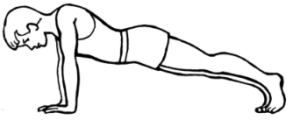
1)  Get down on the floor and set up for a traditional push up.  It should look like this:

Screen Shot 2013-03-26 at 9.29.51 PM

2)  Once you are in the start position, do the following and don’t laugh… this is serious shit… 🙂

  • Grip the floor with your fingertips, until they turn white.  (Grip hard!)
  • Tense your lats by attempting to twist both hands outward statically.  (To clarify your hands should not move at all, creating a corkscrew effect)
  • Squeeze your butt hard.
  • Brace your stomach hard as if you were going to take a punch.
  • Maintain your ability to breathe through pursed lips.

3)  As you begin to descend to the floor, actively pull yourself deep into the push up, versus “falling” loosely into it.

4)  Now perform 5-10 push ups without losing this muscular tension.

Stay tight!  Stay tight!  Stay tight!

What do you feel?

Do you feel a difference?

Really focus on all of the above tension techniques, especially gripping the floor with your finger tips and squeezing your ass.  Also, the concept of actively pulling yourself into the eccentric (downward) phase of any movement is a great way to keep tension.  It’s help my training immensely over the last few years.

The concept of creating tension can be applied to any exercise.  That is the pure beauty of the technique.  Once you stop approaching your strength training with a loose body and begin contracting hard before and during any movement, you’ll improve your lifts.  Improving your lifts will improve your performance and body composition over time.  It’s great.

Stop Sign Warning

Here’s the stop sign again…

Please don’t do what I did.  I messed around with one small set of push ups, felt “kind of” different, than ditched the technique for a few weeks.  Big mistake.  Once I re-focused on it, and applied Pavel’s teachings, it provided an instant improvement.

Lesson?  Don’t even try it if you’re only going to try it once.  Keep working at it.  You’ll feel a major difference once you connect all of the dots.

If you want a perfect example of an athlete that has to perfect the art of creating total body tension, look no further than the gymnast.

As gymnastics coach Christopher Sommer mentions in The Naked Warrior, “One of the main advantages to these advanced bodyweight exercises is that they require a complete, full body contraction.  In fact, at the advanced level, they are so demanding that it is simply not possible to complete them any other way”.

Exhibit A to make Mr. Sommers point:

Screen Shot 2013-03-26 at 8.51.37 PM

There are very few people on the planet that can execute this move.

The gymnast has mastered the art of bodyweight control.

I trained a former college gymnast for a while, and these guys are strong as hell.  His bodyweight-to-strength ratio, even after being 20+ years removed from competitive gymnastics, was incredible.  I could tell that he “set up” before all of the lifts that I was having him do.  His grip set up was especially noticeable.  No lift was done with a loose body, everything was tight.

Go and try this… tonight.  Don’t sit on it and waste time.  Try it out, apply it, then come back and learn something else that can help your workouts…

Cheers to the good kind of tension!

KG
P.S.  Check out my post about single arm push ups and pistols if you want more advanced bodyweight training.


Is Aerobic Training Bad? (a completely non-evidenced based discussion)

Quick Tips

Screen Shot 2013-03-23 at 1.30.41 PM

Aerobic Training!

Aerobic training was a hot topic a few months ago, and it will continue to be talked about topic for years to come.

First it’s bad, then its’s good, then it’s bad, then it’s good.  Back and forth, back and forth.

There is a thought process among many fitness professionals- mainly strength coaches and personal trainers- that striving to improve aerobic conditioning is a bad thing.  Actually, some magazines and websites have almost labeled it as sinful.

—>  The Most Useless Exercise Ever for Fat Loss

Activities like biking and running are the probably the most popular methods used to improve aerobic fitness, with running taking the cake for popularity it would seem.

I’ll just come out and say it:  Aerobic training is not bad.

It isn’t!  It’s just not the optimal choice for certain goals.

In my humble opinion, fat loss is one of those goals, along with sports performance.

There are other methods, depending on your goals, that would be a much better fit for moving your closer to those goals, especially if you are in the market for dropping useless tissue like fat and uncovering your abdominals.  If you’re aiming at fat loss, there are better methods to choose from than just steady state cardio.

A simple (but smart) strength training routine will crush aerobic training if you’re shooting for body transformation.

You may have seen this side by side comparison between these two athletes.  One athlete races in an aerobic dominated sport and the other races in a sprint (anaerobic) dominated sport:

sprinter versus a marathon body

Some time ago, aerobic training was labeled as a junk method of conditioning for athletes who play fast-twitch sports.  The premise was that if you train slow, you’ll be slow.  There is some truth to this I must admit.  For athletes that need to be fast, aerobic training should make up far less of the off-season training pie than other more effective training methods like strength and power training, sprinting, anaerobic conditioning.

—>  Admirable goals, wrong vehicle 

Again, the problem is that most people say that they want to lose weight (or fat) and put on some lean muscle, then all they do is participate in aerobic activities in an effort to burn calories.  Over time, they see the weight scale move, but quickly become confused because they still don’t like what they see in the mirror.  Frequently aerobic training will cause an “atrophied” look over time.  If all you did was train aerobically, you’d get skinny, decrease muscle mass and lose strength.  I’ve seen it happen time and time again.

Confused by the image in the mirror, these people then panic and jack up the duration and frequency of their aerobic training, pushing harder and harder in hopes of seeing positive changes in the mirror.  It still doesn’t happen.  Weight is dropping, but they look like they haven’t eaten in days.

When all they see is weight loss and muscle atrophy, they become discouraged and render exercise ineffective.

It’s not aerobic exercise’s problem that you didn’t achieve your goals, it’s your problem.   You chose the wrong vehicle to get you to your destination.  So choose another vehicle.  It’s not the end of the world, but you’ve got to adjust your training habits to get your body back where you want it.  Just don’t point the finger at aerobic training.  The bodily changes that occur from high frequency, long duration steady state exercises are quite predictable.

Here is a great article from Jason Ferrugia about why he avoids aerobic training:  10 Reasons Why I Don’t Do Aerobics

—>  Aerobic training has a place in my workout regimen, absolutely…

Personally, I engage in an aerobic training session- usually riding the Schwinn Airdyne or jumping rope- about 1-2 days per week.  It fluctuates depending on my workout schedule, but aerobic training is still very much a part of my training routine.  I throw on my heart rate monitor to keep my efforts measured- not too high and not too low on the bpm- and I get to work.  The aerobic effort will last anywhere from 30-45min depending on how I feel.  The goal is to flush my body from the previous days of hard training, increase blood circulation and just sweat.

In all honesty, sometimes I train long and slow just to sweat.

Schwinn Airdyne

Awkward lady not included.

I never try to set records, although I have ridden the Airdyne frequently enough to know how far I should be riding (mileage-wise) for a give time period.  If I am training aerobically, I am ALWAYS wearing a heart monitor, keeping my BPM (beats per minute) within my aerobic range.

This is what my typical training week looks like right now:

Aerobic, Anaerobic, Strength Training

This chart changes depending on what my goals are…

Remember, I can change these efforts based on physical needs for races/events/hockey season, the time of year (Summer, Winter, etc) or if I am simply interested in pursuing a different body appearance.  I am my own guinea pig.  Self-experimentation with physical effort has always been an interest of mine.

One of the biggest concerns I have with aerobic training is overuse.  Especially folks who run or bike for hours and hours every week.  The risk for overuse injuries skyrockets for those people who long duration exercisers.  These injuries can develop for a number of reasons, including:  impact of activity (running is high impact), muscular imbalances, poor fitting footwear (causing compensations), poor cycling mechanics (poor set up, posture), pre-existing imbalances that begin to surface as chronic pain, etc.

There’s an old saying:  You can’t run to get fit, you have to get fit to run.

Consider what that means for your situation.  Is your body fit enough to begin training for long durations?  Are your joints primed to withstand the ground impact forces from activities like running?

It’s well known that running is great for increasing bone density, yet conversely running with poor form (aka: slapping the pavement) is nothing more than repeated high impact stress.

Check out this snippet from a comparative running study:

Screen Shot 2013-03-26 at 8.47.52 AM

“During each foot strike the body is exposed to repeated impact forces of estimated to be two to three times the body weight of a runner”.

Again, I am not singling out running or saying that it’s a sin, I just want you to consider your training vehicle.  It might be something that you need to consider seriously, especially those of you who are battling aches and pains like shin splints, hip strains and or knee pain.

Aerobic Training Sucks!

Before you bash aerobic training, consider what results you want from your training efforts.  At the very least, aerobic training initiates rapid circulation in the body, which is a benefit that you cannot put a price on.  Rapid circulation helps promote proper internal functioning of your body.  It’s a really great thing to get the blood pumping as much as possible.

Screen Shot 2013-03-26 at 8.52.41 AM

Rapid circulation is a crucial reason to exercise in the first place.

Is this a bird’s eye view of aerobic training?  Yes, but you have to keep an open mind.  Training should be customized to you and you only.

While a lot of people do have the same training goals, you should take the time to investigate if your workout methods are in fact the right fit for your goals.

If they aren’t, switch them.  Easy as that.

Don’t over-complicate something that should be kept simple.

Cheers to accepting the red headed step child of fitness… aerobic training!

KG

*** Coming up next:  Creating stakes to create incentives for getting into shape…

Workout Injuries: Get Hurt and You’ll Learn Quickly

Quick Tips

In the mid-90’s there was a band called Marcy’s Playground.  Marcy’s Playground had a hit song called “Sex and Candy”, which turned out to be their only hit song (name me another one if you disagree).  Marcy’s Playground is what most people would refer to as a One Hit Wonder.  There’s nothing wrong with being a One Hit Wonder, but I bet if you were to ask the band how they feel about being a One Hit Wonder, they would probably tell you that they had wished their career have lasted a little bit longer than it did.

Screen Shot 2013-03-25 at 8.24.26 AM

It would be a great gig spinning One Hit Wonders all day long.

Marcy’s Playground, and other One Hit Wonder music groups, remind me of the first time that you experience a traumatic injury in the gym as a result of working out.  Your relationship with physical exertion should be a lifelong experience, not a one year experience.  We often forget that there building a body (that looks, feels and functions properly) is a process.  There is no instant gratification in training, although the “hardcore” training seen would have you think otherwise.

It doesn’t have to be an immediate injury (acute pain), like dropping a dumbbell on your foot from waist height, but more of a nagging lower back pain that’s built up over time (chronic pain).

Acute pain = sudden injury like a broken bone (maybe from bombing that dumbbell on your foot)

Chronic pain = persisting pain such as low back pain or

Here is a nice definition of both types of pain from a world-renowned hospital.

I picture acute pain as the classic weight drop on the foot, or the overhead snatch that goes terribly wrong, nearly ripping your arms from their sockets.

Not funny, but a reality in a lot of gyms.

Acute pain hurts right away and you know exactly where it came from.  There is no guessing as to what caused the pain.  This is my own definition.  I speak from experience.  It’s the kind of pain that you kick yourself for causing in the first place.

I commonly think of chronic pain as a type of gym injury that is the result of months or years of build up.  Maybe poor technique, lack of rest or something else contributes to the pain.  Squatting didn’t hurt your back initially, but suddenly you’ve developed low back pain.  Maybe you woke up one day and you felt a shooting pain while you bent down to tie your shoes.  You didn’t have that pain the day before, but you sure as hell have it now.

You’ll never appreciate how stupid a workout injury really is you experience it first hand.  Again, I speak from experience.  When I was in college, the hockey team was handed a poorly designed training program that required us to bench press about 3x the amount that we pulled (causing muscle imbalances), along with boatloads of sit-ups, bicycles, hanging leg raises, machine work, etc.  I followed the program down to the last rep, and by the end of the Summer, I could hardly bend over to put my socks on.  My lower back was shot.

Sure, I got strong in the lifts, but I also wrecked my back and spent at least a month sidelined.

It sucked and it cost my parents money to fix it.  Lucky for me, my parents supported me financially, but you?  Chances are quite high that your injury treatments are coming right out of your paycheck.  Ever consider that?

That’s why I preach about the importance of safety.  I want you to push it to your limits, but I also want you to clearly define what your limits are.  If you step over those boundaries, an injury might be lurking nearby.

The first time that you hear your back pop while attempting a “hardcore” workout, or you tweak your knee on the 200th jump of your “Craziest Most Insane Warrior Workout”, you’ll immediate appreciate the message that I was trying to project to you.

I am all about getting people up off their butts and moving, but not at the expense of blowing out joints and causing pain.

Screen Shot 2013-03-25 at 8.55.04 AM

Workout injuries remind me of when a parent recommends you to avoid hanging with the troublemakers in high school .  At the time, you can’t figure out why your parents could  just label and mis-understand your “friends”- you’re just trying to be cool-  but the second you’re found to be guilty by association when alcohol or cigarettes start appearing and you’re under-age, you immediately understand the message they were trying to teach you.  It’s a hard lesson to learn, but a lesson that is learned never the less.

Screen Shot 2013-03-25 at 8.45.44 AM

If you’re a retired athlete and now a professional in something other than sports (career, Mother, Father, etc), I highly recommend that you avoid killing yourself in the gym for no good reason.  It’s not worth it, especially considering that some of the injuries in the gym are completely preventable and can have lasting affects.  Yes, some injuries will be severe enough to cause permanent damage to your body.

Do you really want that?

I’m not here to scare you, I am here to get you to think.  Maybe re-think is the right choice of words.  If you find yourself awkwardly hoisting a fully loaded barbell overhead as your knees shake, back begins to cave and your lungs feel like their about to pop out… it might be time to take a step back and try and justify that experience.

Often, you’ll find that going “extreme” isn’t all it’s cracked up to be and certainly not necessary to sculpt a body that looks as good as it feels.

You should not have to donate your body  in order to consider a workout to be effective.  It’s not necessary.  It’s a big misconception in the training world right now.  The funny thing is that often times, your body will give you various clues when something’s not right, even before you experience the hurt.

*** On the flip side, you can get hurt doing anything physical in life.  Tripping down the stairs, stepping on a tack or burning your hand on a hot pan will all cause pain.  Please do you best to leave those comments in your back pocket, because that isn’t the point of this article.

Train hard, train smart.  Don’t be Marcy’s Playground, be U2.


Cheers to avoid unnecessary injuries!

KG

—> Coming up:  My Glutes are Weak!!!

Why You’re Not Fit: We’re All Busy, We All Have A Lot of Things That We’d Love to Do, Movement is Optional

Quick Tips

ladder of success

I love to study the psychology behind why we humans do or don’t do the simplest of things to propel ourselves to better situations in life.

This post is easy for me to write because I write it as a person that ISN’T EVEN CLOSE TO PERFECT.  I’m not.  I have a lot of personal growing to do, habits to establish and higher levels of work ethic that I could stand to settle into.  It’s an uncomfortable feeling knowing that you can push it way harder than you are, but at the same time it’s exciting because you know that taking your efforts to the next level is going to reward you in even bigger ways.

Exceptional effort will always bring about exceptional rewards.

It’s funny how it seems that the only people who are truly holding us back from greatness (whatever greatness means to you), is ourselves.  There is rarely an instance where someone else is to blame for our problems, shortcomings or disbelief in our abilities.  It’s nearly all in our head.

We created the barriers.  Amazing to think about.

The thoughts circulating around inside of our skulls will either catapult us to great achievements, or drag us down for the rest of our life, leaving all of our potential on the table, unused.

Image

There’s another truth that I would like to talk about today- it’s more of an observational statement- and it goes a little something like this:

  • We are all busy with work, family, chores, other responsibilities and we all have a lot of things that we would sure love to do.

Now, I am going to be the first to step up and say that I have leaned pretty hard on this excuse myself.  I have.  I still catch myself saying it or thinking it almost daily.  I’ve figured out that life shouldn’t be all work and no play, but if I find myself mindlessly watching TV, getting sucked into the black hole that is Facebook or reading ignorant YouTube comments, well, than I am wasting my own time and I could be focusing that time on something that I love to do.

Something valuable like writing more and pushing myself through the growing pains of finding my voice and tone.

How about you?

As it relates to fitness and achieving a higher state of fitness, are you really too busy?

I have found that if I say that I want to achieve something, I shouldn’t talk about it unless I am dead fucking serious about achieving it.  It’s so easy to just “kinda” want to achieve a goal.  Soooooooo easy.  Everyone just “kinda” wants to own their own business, or just “kinda” wants to travel more or just “kinda” wants to learn that second language or develop that other skill.

“Kinda”.  Because that’s what it really is.  It’s a half ass effort that we put forth to trick ourselves into thinking that we are really “going for it”.

–>  Leading by poor example

3 years ago I tricked myself into thinking that I could write the book I had always wanted to write because I felt like I had so much to say as it pertains to building performance and getting people back on track with smart strength and conditioning interventions.  I felt like I had a unique voice that people could relate to because my writing style wasn’t filled with science heavy jargon terminology to make myself sound intelligent.

Shit, little did I know, I was right.  My old blog was growing in popularity faster than I ever thought it would.  I actually had a fan base. I was contacted by a few fitness companies- who had products that I used and wrote about using- to set up some fees for advertising on the site.  But I just “kinda” wanted it to happen, I hadn’t reached a level of maturity inside of my head that was willing to sacrifice anything to achieve it.  I wasn’t even close.  It just seemed like a good idea.  I wasn’t ALL IN.

Belief systems control what happens to you.

So I will ask you again… if you say that you want to build fitness or eat healthier… are you really too busy to make it happen?  Or does it just seem like a good idea in the present moment.  Are you just saying it?

Are you convincing yourself that you’re too busy?

Image

Stop selling yourself the bullshit.  

We are all too busy to pursue higher levels of fitness.  We are all too busy to block off a few minutes to cook that nutritious meal that we consciously know will do some good for our health.  We would all love to be frolicking around on Miami Beach in the sun sipping on Pina Coladas and building sand castles.

Image

Yes, I want to be there too, frolicking.

You can’t go half-way and expect anything to happen.  That’s the reason you’re not fit.

You tricked yourself.  Trust me, I am just one voice among millions on the internet.  If you found me on here, well thank you for sticking with me, but I am a needle in a haystack.

Just for shits and giggles, go and type “Best Workouts for Fat Loss” into the Google search bar and see how many hits you come up with:

Image

12,500,000 results for the search of “Best Fat Loss Workouts”.

Most of this information is free and if it isn’t free, you can find enough free information from that search to throw together a pretty decent little program.  This is what the professionals will never recommend to you.  You can make your own programs, and if you spent about 30-60 minutes researching what exercises to include, I bet you wouldn’t be too far off from an effective workout.

At the very least, you’d be taking action, which is more than you did yesterday, right?

Are you too busy to workout today?  Too busy to learn how to prepare a decent breakfast that will help you lose fat and get some nutrients into your system?

You aren’t.  I know you aren’t.

You just haven’t made it a priority yet.

Cheers to ruffling feathers and crushing excuses!

KG

Simplicity: What If you Just Tried to Improve? At Something? Anything?

Quick Tips

It’s a simple question really… 

What if you just tried to improve?

What if you shut off all of the mental barriers that you use as excuses every single day as a crutch to not push forward in your life?  

What if… you just put your head down and aimed for improvement of some kind at some level of intensit

ImageNike got it right from the get go.

Because of the general theme of this blog, of course I am going to be mostly referring the improvement of your movement and eating habits. 

But what about your career?  What about your ability to say hi and smile at people? What about your effort to make friends? Be a better husband, wife, father, mother, son or daughter?  

What about all of those things?

What if you just stopped over-analyzing everything and compulsively planning your approach to your action plan, and you just… did it? (see massive Nike picture above for reinforcement)

I was talking with a good friend tonight who is also physical therapist, and we got to talking about geeky things like squatting.  Ha, squatting.  

We both agreed that a person’s ability to perform a simple body-weight squat is probably the most important example of healthy and free flowing movement.  We spend so much time on our feet, standing in a vertical posture… moving from a low to a high position then back down to a low position, it’s actually crazy to think about how often this happens throughout a day, week or year.  (How about that for a run on sentence!)

Image

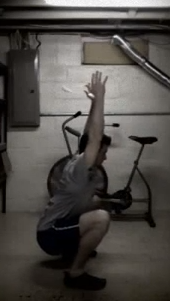
Maintain your ability to squat deep.

It’s no wonder have an epidemic of lower back injuries.  

Image


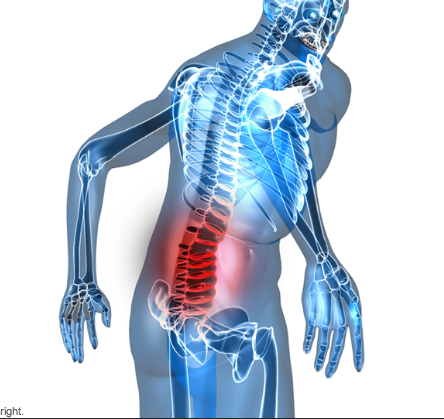
Low back pain sucks.


Everyone knows someone that has had a lumbar strain.  Everyone.  

The second part of our conversation shifted to some of the questions that I randomly receive throughout a given week about working out:

– Kyle, what exercises are best for weight loss?

– Kyle, how many reps are ideal for an exercise?

– Kyle, how many times per week should I be working out to maximize my fat loss?


I love the questions, because for a split second it makes me believe that the person that I am talking with is actually interested in pursuing improvement in their health habits.  

Over time, experience has proven that most of the answers I give to those questions end up sliding into one ear and then right out the other ear.  Nothing sticks.  Rarely does it stick.  

But honestly, what if you just picked one thing and you relentlessly worked to improve at it?

What doors would open?  Where would you find yourself that you once thought impossible?

Image

Take something like building fitness or eating habits for example:

–  Try eating only earth grown foods and animal meat for 7 days.

–  Add 3-5 reps to all of your exercises (squats, push ups, kettlebell swings, inverted rows, etc)

–  Run .5 mile farther than your last run.

–  Shave a minute off of your last mile of your last run. 

–  Drink two full glasses of cold ass water when upon waking.

Do something.  Anything.  You’ll be better for it.  It will build character, and despite what you consciously are aware of, it will inspire others who see you taking action.  It’s a domino effect, and quite honestly, taking time to improve yourself is taking time to initiate positive change in other people also.  Be a leader.  People want to be around leaders because it’s infectious.  

I really don’t know where or when it happens, but at some point in life, a lot of us tend to lose our motivational drive.  Our desire to improve diminishes to all time lows and we settle in to our current situation.  We render ourselves unable to do any better than we are right now.

It’s negative self-talk bullshit and it’s called complacency.

Complacency is a word that my Dad dropped on me when I was 24 years old, making a three month pit stop in between jobs in Detroit and my next career.  I had offers from an employer for a great gig and was in waiting to hear back one way or another.  I was half-assing everything outside of that one offer.  I was stuck in rut and it had only been about 90 days of living at home.  

One night right before heading up for bed, my Dad dropped the bomb on me, “Kyle, you’re getting complacent”.

I’ll never forget it.  It sucked more than anything to hear him say that, but shit, it is exactly what needed to be said at the time.  It sparked forward motion in my life.  It sparked my pursuit of improving my situation.  

So I ask you again… What could you improve about yourself right now?  

You can wipe your slate clean and start fresh, so what are you willing to give to make change?  Don’t be afraid of change.  Change can be great.  But you have to give some effort to make sure that change is great.  

On this blog, my goal is to spark a shift in how you think about working out.  Smarter movement that is focused on accelerating your training efforts.  I want to get you to think and re-think your gym habits and what’s possible for you to achieve.  

Shit, anything is possible, but you have to believe that.  And there is a major difference between just “thinking” that and believing that.  Understand this.

Image

So I will close out to enjoy my craft beer (New Belgium- Rampant by the way) by asking you again…

What are you going to do about it?  

Sit and feel sorry for yourself?  That’s lame.  The easy way out.  

Take some action, build some character and set sail to improving something about your life… 


Cheers to the average person realizing their ability to achieve greatness…


KG

(On deck… Coach Hacker)

A Simple Kettlebell Swing and Jump Rope Workout for You to Try

Quick Tips

I love simplicity and this workout doesn’t disappoint on that front.  

When I am not training to build raw strength, I love work capacity style training sessions to improve cardiovascular performance, maintain my strength and probably best of all… stay lean.  I don’t have to sacrifice muscle with work capacity training sessions that use resistance-based exercises.  This is important to me as my goal is to keep bodyfat low, not lose muscle mass.

Keeping muscle mass is the reason that most people stay lean in the first place, it is a calorie consuming tissue.  It takes more calories to sustain muscle than it does to sustain fat.  Keep trying to build more muscle at all costs.

I will never deny that work capacity training is unreal for people who seek fat loss or those who have already lost fat and just want basic maintenance training.  I hold the opinion that we can organize these work capacity workouts to be just as effective without all of the risk of injury.  Choose exercises and the variables wisely (rest periods, work periods, load, etc)  

That is an idea worth pursuing in my humble opinion.  Keep people safe and while getting rid of fatty tissue at a rapid rate.

You get the vibe.   

Let’s get into the workout.

So here is what you’ll need on hand for this workout:

–  Small space (8x8ft or so)

–  Jump Rope

–  Kettlebell that you can swing 20 times with no problems (lighter than your best)

–  Interval Timer or any other timing device


Here is how the workout will be structured:

1)  You’ll be working in 2 minute segments, alternating between the following drills w/o rest in between:

  • 1 minute of jump rope
  • 15 Kettlebell Swings

2)  After your last rep of kettlebell swings, rest for the remainder of the 2 minute block.

3)  Catch your breath, towel off, grab a drink and set up for jumping rope once again.

4)  Once the clock reaches the 2 minute mark, you’ll begin jumping rope for 1 minute followed immediately by 15 kettlebell swings.

*** There is NO REST between the transition from jumping rope and kettlebell swings.

 ***Just so I can make sure that you understand the structure of the rounds, you’ll begin the next set of jumping rope (after 20min) at:  18min, 16min, 14min, 12min, 10min…etc.  Does this make sense?  


Why do I love workouts like this?

Because I can get the cardio training effect that I want while staying vertical and using a movement like kettlebell swings to elicit a near total body muscular contraction.  Kettlebell swings are notorious for being a great method for decreasing body fat, and jumping rope is a skill that everyone could stand to get better at.  Vertical cardio work like this is highly functional if I do say so myself, especially when you compare it to other forms of cardio that involve fixed machines like elipticals, treadmills and recumbent bikes.  

Staying on your feet while working through fatigue has great carryover to the demands of life.  

I value this aspect of a workout like this.  

Holding posture during the later rounds of the jump rope will be challenging, but it’s important to control your breathing patterns as you fatigue.  It’s not as bad as you think it is, so relax, stay vertical and let the air flow in and out.  Focus hard on technique with the kettlebell swing.  If it gets sloppy, stop the set and rest until the next bout of jumping rope arrives.  


—>  Beginners

If you’re a beginner, you can scale the workout back a bit to better suit your abilities.  Try jumping for 30-45 seconds and swinging for 8-10 reps.  You could even knock off a few rounds, and work through say 8 rounds instead of 10.  It’s up to you how you want to work it out.


—>  Advanced

If you want to ramp it up beyond the original workout listed above, your best bet is to add a few rounds or increase the weight of the kettlebell.  I have done as many as 15 x 2 minute rounds (30 minutes total work) which got a little long I must admit.  

This is a great workout that can truly breathe fresh air into your currently training schedule.  If you are sick of boring ass cardio, give this a shot.  A workout like this will have a far greater impact than jogging or biking for the same about of time.  It’s important to know that you have alternatives to traditional cardio training.  

Trade the treadmill for a kettlebell and a jump rope.  Then get to work. 

Simple training tools, simple exercises and simple workout structure… Enjoy!


Cheers to swings and jumps!


KG