Forget Fat Loss For Now! Quality of Movement Before Quantity of Exercise

Quick Tips

Out of the gates fast here.

Two things…

1)   Gray Cook is a genius.

2)   “People would do better if they knew better”.  –Jim Rohn

If you aren’t familiar with Gray Cook, it’s quite alright.  The trickling down of human performance and corrective exercise information coming from Gray isn’t targeted to the average Joe and Jane.  Gray is the guy that teaches professionals.  You can probably guess how influential he is judging by the fact that he is the person who is teaching the people who you folks think are the experts in their field.

Gray Cook FMS

Genius.

Did you catch all of that?  Make some sense?

Anyways, Gray developed a system of assessing human movement called the FMS, or Functional Movement Screen.  Some years ago, he noticed that the movement industry lacked a protocols for assessing the quality of a person’s movement.  There was no baseline from which to build from.  Sure, you could watch a person squat and determine that it didn’t look right, but what then?  What is the course of action to fix that squat?

All we really had outside of the rehabilitation setting were “quantity” protocols.  By quantity, I am referring to the stereotypical physical assessment that you can still get in many gyms around the world. These assessments commonly included:

–       # of squats to failure

–       # of push ups to failure

–       # of chin ups/pull ups to failure

–       some assessment of cardiovascular performance (treadmill, bike, etc)

–       flexibility testing

Sit and Reach Test

I enjoyed my time in my college Kinesiology program as much as the next person, but how relevant is the data that I’m gathering from Sit and Reach Test (pictured above)?  Look at that guy!  That test is largely designed to measure lower back and lower extremity (hamstrings, etc) flexibility.  Check out the amount of spinal flexion he’s got going on that will increase his numbers.  Sit up straight son!  Even if he did sit up straight, and the test was legit, what are you going to do with the data gathered from the test?  What is your course of action?  Stretch the hamstrings?

We know that the lower back demands (primarily not only) stability for health and the hamstrings have become long, weak, and dormant in most people (from sitting all day).

So, using something like the sit and reach rewards a person that has flexibility in the hamstrings and flexibility in their lower back.  Pure tunnel-vision.

It’s not enough.  Tests like this are ancient and it’s just not enough anymore.

Quantity.  Do you see what I am talking about now?  Everything was based on physical performance qualities like strength, endurance, flexibility, etc.  I have no beef with any of these qualities, as they are definitely worth improving, I simply have shifted my thought process of what we should be assessing on people from the beginning of our relationship.

Personally, I now promote establishing quality of movement, then adding quantity of movement.  Move right and then burn tons of fat.  It’s a pre-requisite of sorts.  Adding quantity of movement with high volume methods (circuits, complexes, interval based, etc) only serves to make pre-existing movement problems worse.
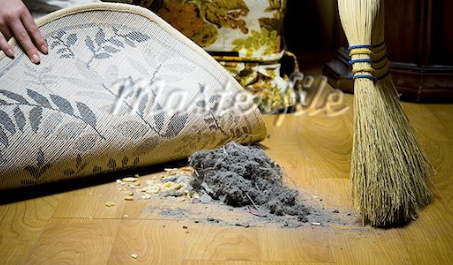
Dust under the rug

 It’s like sweeping dirt underneath the rug.  Dirt is still there, you just can’t see it.

That shift led me to favor the FMS and everything that it stands for. 

It took me a while to understand what the hell the Functional Movement Screen was all about.  It’s complex.  It takes a great deal of studying, reading and experimenting to grasp the concepts.  Every single time I listen to Gray speak; it’s easy to pick up that he is on a whole other level of knowledge and understanding.  He’s a pioneer for sure.

Messing around with the FMS and the associated corrective exercises is a blast.

Why?

Because in a matter of minutes you can fix a person’s faulty movement.  You can go from testing horribly in one of the seven FMS screens, to testing near perfect from leveraging a number of highly impactful corrective movements, each designed to improve a specific movement pattern test.


The FMS to me is the pre-assessment to the assessment. 

—> Personal Trainers:  Don’t Sell Yourself and Your Clients Short…

If you an exercise professional stopping by this blog, you need to get educated on the FMS.  It is a disservice to ask a client to perform bodyweight squats to failure when they can’t even squat properly in the first place.  I would also like to add that the inability of a person to squat often not a grooving problem.  In other words, having a person perform more and more ugly squats is not going to improve a person’s squat form.

Motor control definitely has something to do with movement technique, yes, but there are so many underlying issues revolving around primarily mobility and stability that need to be addressed to work out the kinks.

Personal trainers, you’ve got to establish your identity.  People come to you to lose weight and get “ripped”, but you’ve got to have standards.  Articulate the importance of moving properly and then moving to burn fat and lose weight.  We live in a world that feeds off instant gratification, but you’ve got to resist the urge to do the activities that make your clients happy at times.  You’re the professional, you’re in control.

So, my shift in thinking is from quantity to quality.  I adopted the concepts of the FMS quite a few years ago, and it’s been nothing short of fantastic.  I can’t even say that I am “drinking the Kool-Aid” anymore… I am officially doing a full-blown keg stand with the Kool-Aid.

You should to.  I’ll hold your legs while you drink.

—>  Average Joes and Janes read and watch now…

If you’re not an exercise professional, take a glance at this video from Gray.  Many of you are familiar with the Turkish Get Up, and Gray does a fantastic job describing how it fits into a training program.

Wrapping it up for now… address your movement quality and the ramp up your training regimen to burn fat, build muscles and all kinds of crazy athleticism.  Sustainable movement is more important than some rapid flash in a pan fat loss training program.  You’ve got the rest of your life to strip fat off your body.  Literally, years I tell you.  Habits are made over time and broken over time.  Stay dedicated and consistent in your workouts and fat loss with lean muscle gain will be pleasant reward.

*** If it feels like I only provided a hazy glimpse into what the FMS is and why we should apply it right now to our own situations, you’re accurate in with that feeling.  As I mentioned, the FMS is complex and articulating it’s importance and application to your own workouts is something that I want to address over time and multiple articles, not in one shot.

All in good time friends, all in good time.

—> Speaking of friends… if you like anything that you read or see on this blog, subscribe to it.  All subscribing does is notify you of a new posting when it drops.  I have stated that I want to build a community using this blog as my vehicle.  Humble beginnings, yes, but it will grow.  Let’s connect and move mountains together.<—


Cheers on this Superbowl Sunday 2013!


KG


Saturday Morning Workouts Work Fairly Well I’d Say…

Quick Tips

Weekend workouts are the best.

For most people, the weekend provides two free days for solid training sessions.

If you are someone that has used the excuse of “not having enough time” in the past, the weekend workout is the cure.  Take advantage of the time that you have on the weekend.  Weekend training session take the pressure off of the week day schedule.  Leverage that.

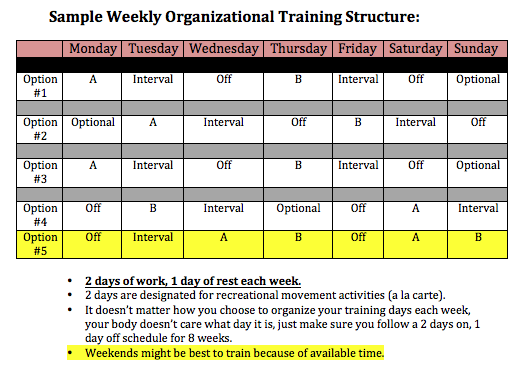
Here is a snapshot from my bodyweight training manual.  It assumes the training plan will incorporate two strength-cardio based sessions and two interval based workouts per week…

Image 

I always encourage working through your workout as efficiently as possible.  Don’t waste time.  Don’t talk to other people in the gym, don’t watch TV, don’t spend any amount of time checking yourself out in the mirror, just work.  Besides the time drain, keeping yourself moving regardless of distractions makes the workout do what it is supposed to do.  If you’re training for accelerating fat loss, keeping a good training pace will create a much more profound after burn training effect.

Work. Out.  

The key word is work.

Saturday morning workouts provide a time for me to finally take my time through a workout.  Now, taking my time doesn’t mean that I spend 90 minutes downstairs messing around (unless I am filming movements).  

My average training session with all components completed will last roughly 30-45 minutes.  As I have mentioned in the past, much of that time is spent addressing qualities other than the actual strength, power, cardio aspects of the workout itself.

I value my movement abilities.  I want to be able to move pain free for years to come.  Foam rolling, mobility work, activating weak areas, skill work, jumping rope are all part of the training plan, and often get more attention than the actual tough portion of the workout.  

Weekend training sessions are typically a little bit more aggressive.  Because of the time that I have on the weekend, I warm up extensively prior to putting the hurt on myself.

In fact, today’s Saturday morning workout will look something like this:

—>  Workset #1 is 10 minutes of:

1a)  Ballistic hip hinge

1b)  Upper body press

1c)  Full Body movement

—> Rest 2-3 minutes, hydrate, set up for:

—> Workset #2 is 10 minutes of:

2a)  Uni-Laterally loaded squat

2b)  Upper body pull

2c)  Airdyne Ride for time (20-30sec)

Done.


This is pure work capacity, not rocket science.  Who the hell knows who invented this type of training, god knows that I didn’t.  What we do know is that stringing together sub-maximally loaded multi-joint movements combined with incomplete rest periods is highly metabolic and will get a person lean quickly.  Most of all, the exercises listed in the workout above are safe to my movement abilities. 

Notice I said “my movement abilities”, not my neighbor’s, my friend’s or the ex-navy seal on the YouTube video.  Mine.  Absorb that principle, apply it to your own training.

Do your best not to confuse this type of workout with any modern day branding.  This is not representative of “that”, although many might not see the difference.  I have ramped up for years to get to this point, and it didn’t happen over night.  Much attention is paid to the quality of my movement, breathing, etc.  The little things.  It’s not pedal to the metal all of the time.

That is a recipe for disaster.  You have to know when to back off.  


Cheers to making up for 3 days of no posting in 2 hours!


KG

People Want Butts I Guess: YouTube Glute Ham Raises

Quick Tips

I had to post about this.

I won’t waste anytime leading into it…

I have a YouTube video that I posted in 2008 that has exactly 65,615 views.

Hahaha.

It makes me laugh every single time I stumble upon it looking for my new videos that I shoot for visual blogging purposes.  As you know, my videos are raw.  I am not trying to win an award for cinematography at Sun Dance, I just want to create a visual for whatever I am writing about.

Here ya go…

I originally shot this video clip with my wonderful Mother womaning the camera.  The video was sent to a hockey friend of mine that was struggling strengthening his backside.  The glute-ham raise is a great accessory lift that will activate the backside like none other.

In the video, I make two visible mistakes.

1)  The bench press is about to fly off the wall.  I should have loaded up the bar to weight it down.

2)  My backside was torched by the time I got to shooting this video.  The eccentric, also known as the lowering phase of the lift, happened way to fast.  More time under tension her would be ideal.  It’s all relative to your backside strength.

As much as I want to put out informal information to all of you… I am also human.  We all are.  I can sit here and critique myself all day long.  No one will be harder on me than myself, which is both a blessing for me and a curse.

One thing that cracks me up is that of all of the videos that I post (and I have a number of YouTube channels), the “Glute Ham Raise” gets all of the attention!  haha.  Good gravy.

If there are any technological wizards out there, feel free to teach me how to generate more buzz from YouTube.  If YouTube buzz is largely associated with quantity of videos posted, I will gladly out work anyone to accomplish this.

I will revisit this post sometime down the road and we will see where the view numbers are at.  I won’t compete with “Gangnam Style”, but hey, not bad for an accident.

Cheers to tenderizing the glute-ham region…

KG

I Love Kettlebell Swings

Quick Tips

Over the years I have found that I like certain movements more than others.

My favoritism toward kettlebell swings has nothing to do with my swing technique, efficiency, any muscular dominance, body composition, etc.

I just like kettlebell swings.  Actually, I love kettlebell swings.

Talk to anyone who has been training for any length of time, and their disclosure initially might be that a balanced program is the best approach (which it is), but dig a little bit deeper and they will spill the beans that they have favorite exercises also.  It’s natural.  Just as people tend to favor certain brands of clothing, so do we favor and enjoy certain movements more than others.

—>  I wasn’t a jumper, but now I am…

I used to be the guy that would watch other people jump off the bridge first.  I would watch them hit the water, then determine if I should jump based on their experience.

What I’m saying is that I used to have mentality that was rather conservative when it came to training tactics.  Eric Cressey mentioned in a recent post on T-Nation that he is approached with a lot of crazy workout shit at conferences.  Some of it has worth and makes sense, and some of it is flat-out nuts.

I thought kettlebell swings looked flat-out… nuts.

That was the strength coach mentality in me though.  Any new method or piece of equipment was required to make it through a very fine mesh filter before I ever thought about implementing it into our programs.

—>  Humbling myself with swings…

My first experience with any “swing” type movement pattern involved a 45lb dumbbell mixed into a circuit.  I can remember it like it was yesterday.  I was working out with a friend and colleague in Michigan, and we thought we would mess around with a modified swing to see how it felt.

Honestly, it felt good.  It felt unnatural, but that was because it was new.  The new feeling was to be expected.

Fast forward a couple of years, I finally got my hands on a kettlebell at a Perform Better conference in Chicago.  The heaviest bell they were selling was a 20kg, which equates to about 44lbs.  It felt heavy as hell.

Keeping my pride intact, I didn’t dare swing it at the conference.  I saved that moment for my return to the hotel room.  I will say that carrying that little guy through the sky walk out to the parking garage really sucked.  It was basically a 3/4 mile farmer, waiter bear hug carry.  Makes me laugh just thinking about how disgustingly sweaty I was.

Once I returned to the hotel room, I geared up and worked my way through a proper warm up.  I had no idea how to swing a kettlebell, but I understood movement:  hip hinging, breathing, etc.

That 20kg buried me.  

This is the same 20kg that buried me a few years ago.

  • My grip strength felt inadequate.
  • My hip snap (hip extension) felt inadequate.
  • My conditioning felt inadequate.

—> I had a Lance Armstrong moment…

Now I know that implementing new training methods can make a person feel somewhat deconditioned.  A perfect example of this would be the transition from cycling to running.  Take Lance Armstrong for example.  When he got off of the bike and took up running, everyone thought (based on his world-class conditioning) that he would finish quite high in the New York Marathon.  He finished with a time of 2:59:36 in 2006 and commented that, “without a doubt was the hardest thing physically that I have ever done”.

Lance Armstrong, despite whatever feelings you have toward him after confessing to taking PED’s, is a world-class athlete.  Even without PED’s, he is in the top 1% of athletes in the world.  Don’t forget that.  He is world-class physically in his sport.  But, the interesting thing here is that the transfer of his bike conditioning into his running conditioning helped, but not nearly as much as many sports performance experts thought.  Based on endurance related stats on him, he should have finished in the top 20.

—> Back to my love of swings…

Short story long (yes I just said that)… that is exactly how I felt swinging that piece of cast iron that day.

Since that time, I have submerged myself into the kettlebell world, trying to get a true grasp of what place the tool has in the fat loss game, strength and conditioning for athletes arena, and generally seeking to acquire a larger respect for the tool.

Kettlebells are a device that aren’t going to disappear.  They are here to stay.  Gyms across the world are starting to offer their members access to kettlebells.  I think that’s both very cool and very dangerous.

Cool because we are introducing people to ground based movement.  Dangerous because a lot of people can’t move properly without kettlebells, much less with kettlebells.  There definitely is a danger factor there.

I typically swing 3-4 days per week.  The volume of swinging varies from workout to workout, but I value the kettlebell swing so much that it now has a permanent place in my daily warm-up and workout.  In the workout, I have used swings as an important puzzle piece in complexes and circuits, and also as the ONLY puzzle piece on occasion.

Yes, sometimes my workout will only involve kettlebell swings and I love that.

A kettlebell swing ONLY workout puts the simplicity back into training and staying lean yet functional.

A single movement workout puts the “art” back into training because my focus is on one thing and one thing only… my swing technique.  I have really come to appreciate the discipline required to put sooooo much effort into perfecting a movement.  Maybe I will be a world-class kettlebell swinger, maybe not.

What I do know is that the kettlebell swing is an incredible movement worth learning more about.  If you’re an evidence based exerciser, go grab a bell and swing it for 4-6weeks with decent form and tell me what happens to your body composition.  “Evidence base” that you turkeys.  I maintain my stance on the results-based approach.

—>  A nice little kettlebell article…

There was a kettlebell article that came out a few years ago that showed the effectiveness of kettlebell training, and you can find that paper by clicking on the link below:

—> Twice the Results in Half the Time?

*Please just read what the researcher found and not the program that they recommend, yikes.

kettlebell training picture

Zoning in on the perfection of one movement reminds me of my days as a youngster participating Tae Kwon Do (yes I am a black belt… or was a black belt).  The martial arts are an incredible example of progression, discipline and art.  High level martial artists practice the same movements over and over and over and over.  Most people would fizzle out on that in short time.  The mind control required to perfect the basics in order to earn the right to progress to the complex is such an admirable thing.

The modern-day strength coach will roll his/her eyes at this, but hey… I could give a rip because it’s my blog.  Don’t like it?  Change the channel.

As for the rest of you… give the swing a try.  Don’t judge it until you try it, and when you finally do try it, take the time necessary to learn the technique.  Your technique will not be perfect on the first set.  However, progressing at a reasonable pace with attention to detail will quickly put you in a position to integrate the kettlebell swing into your own training programs.

Cheers to swinging the fat off your body…

KG

Are You Deserving of Fat or Weight Loss?

Quick Tips

I am not trying to be a buzz kill people, so you’ve been warned right away.

I’d also like to mention that the most important part of this article is probably the very last paragraph located underneath my typical “Cheers to…” sign off.  Make sure you get all of the way through to that point, ok?  It will give you the full effect. 🙂

The title of this post was meant to be an attention grabber.  I do in fact… have a heart and it is big and the people near and dear to me know that I care about them.

Ahemmm… moving on… ahemmm…

However, inspired by a classic sales book that I was paging through last night while lying in bed, I thought that I would put my own spin on classic topic related body restoration, fat loss, weight loss… whatever you choose to reclaiming ownership of your health as.

I want you to think about one thing for a quick second:

Deserve to lose fat or weight?

Do you?

I truly wish a long life that is filled with love and happiness and achievements for every single person. 

Time on earth is short, live it up.

If you are one of the rare few people who have gained weight or unwanted fat due to unavoidable natural causes, well, this article may not pertain to you so much.  But that doesn’t change the fact that you folks can put some interventions into motion yourself.

HOWEVER, for the rest of you, considering that a large majority of people are doing very little if anything to help themselves live a long life that is disease free (from preventable metabolic disease that is), you should really stop for a minute and evaluate what it is that you keep “thinking” that you want to achieve.

If you are someone who wants to trim down, build some strength, endurance, decrease the circumference of your waistline, eat better, drink more water, etc… well.. do it.  Enough thinking and pondering and researching… just do it (there is that Nike slogan again!).

It’s not enough to “think” about how bad you want to restore your body to that teenager or mid-20’s physique that you once donned.  You’ve got to do the work.  So many think about thinks until they nearly spontaneously combust it’s nuts!

This article might be the same old song and dance, but hey, if it is received by as little at 1% of the readers stopping by the blog… well… I impacted someone.  I can live with that.

The Sales to Body Analogy:

In the sales book I was reading last night (Integrity Selling), the author was sharing why sales professionals who have exhibit good character and work with their customers to service them to the best of their abilities deserve to earn mountains of money.  Theses sales people shouldn’t feel bad about asking for business from new customers or asking existing customers for more business.  They are selling with integrity.  If the sales person can go to bed every night knowing that they provided a high value to their accounts, they deserve every stinking penny.

Why?  Because these salesmen and women are EARNING their income. They aren’t being handed an income, they are earning it by exhibiting good character (doing the right things whether someone is looking or not- my definition) while accommodating their customer’s every need.  The successful salesperson sets goals (goal clarity) and then works to achieve them night and day.  Achievement is awarded to those who selflessly serve their customers night and day.

What about regaining control of your body?

The pursuit of fitness, whether you call it weight loss, body restoration or trimming fat around the edges, demands that you go to bed knowing that you put forth a worthy effort each and every day.  It’s tough to feel sorry for an individual that wants the world in hand yet sacrifices nothing.  You have got to put forth an effort of some kind and be relentless in your approach.

The beauty of moving more and eating well is that it takes very little tweaking for the average individual to start experiencing positive shifts in their appearance, energy levels, health markers, etc.  Very little I tell you.

But, in the same breath, I will tell you that it takes one things always:

The willingness to start followed by the willingness to endure.

Just as the salesperson has to be emotionally courageous (emotional intelligence) and willing to get kicked in the crouch without taking it personally, folding up and heading home with their tail between their legs… so does the person seeking physical self-improvement.

Peaks and valleys.  Thus is life.  Those who stick it out long enough will see reward.

We had an old saying in hockey that I have come to appreciate more and more as the years pass.  It always seems to put things into a manageable perspective for me:

No Highs, No Lows

Never allow yourself to get to high during the good times, never get to low during the frustrating times.

Keep the balance.

Endure.

Cheers from the icy streets of Eau Claire, WI…

KG

[You made it!  This article might stir up some emotions for some of you.  You might feel guilty, irritated, motivated, or “called out”.  My aim was not to make you feel bad about yourself.  If you begin to feel emotions like motivation and irritation, good!  Especially irritation.  Getting irritated gets things done.  It’s the point where you say to yourself, “Bullshit with this, I am going to take care of business from here on out”.  Irritation can set things in motion faster than anything sometimes.  It’s the “I told you so” attitude where you now want to prove the world wrong.  Me personally, irritation makes me accomplish tasks at break neck speed.  I get pissed because I observe myself becoming complacent in my position (whatever position that may be)  Embrace these emotions and leverage them to make positive change.]

Worry Free Eating Equals Plenty of Fat Loss

Quick Tips

What is “worry free” eating?  How can you lose fat with “worry free” eating?

How about I show what worry free eating is…

Fat loss avalanche.


This picture was taken my local grocery store here in tragically awesome Eau Claire, WI at the end of this past Summer.  Every vegetable was in full bloom, probably the best that it will taste until the warmer months return.  

You can take the safety off of your eating pistol if you’re eating what you see in this picture.  

Fat loss.  Fat loss is moving a bit more than you do right now (compound that daily/weekly/monthly) and eating quality food.  There are more serious forms of fat loss that will move the process along much quicker, but in it’s simplest form, you’ll shed pounds and strip some fat by doing the aforementioned.  

The picture represents the quality part of that fat loss equation.  Consume the hell out of those foods that you see in the picture.  Eat a rainbow of variety while you’re at it.  There is a vegetable or a plant in that picture for everyone, you just have to be willing to take the opportunity to grab it, put it in your cart, haul it home… Google a recipe to make it taste delicious.  Ideally, you’d Google that recipe before you head out for the shopping trip, but hey… whatever floats your boat.

Just to re-iterate… these are your action steps:

1)  Grab and bag.

2)  Haul and pay.

3)  Return home and prep.

4)  Cook and eat.

This really is another billion dollar idea that I should patent to help out with our current health crisis.  🙂

Worry free eating I tell you.  One less stress in life, it’s fantastic.

Join the movement, invest in yourself as you do your house, car and wardrobe.


Cheers to eating plants (sprinkled with some protein of course)…


KG

Minimalist Fat Loss Training Kicks Ass

Quick Tips

I love working out on the cheap, particularly minimalist fat loss style training that is highly metabolically demanding using short, intense, SAFE workouts.

I can warm up, workout and cool-down in a matter of 30-40 minutes on most days.

Sure, some days are shorter or longer in duration, but in general, it’s about a 30 minute time frame that I need to finish a high quality training session.

Over the years, my views on training have changed quite a bit.  I think it’s been a healthy shift in methods and ideas for me.  There will always be the staple principles of fitness that I may never let go of, but to remain stubborn to the idea of change is career and physical development suicide.  You’ll get what you always got if you do what you always did.  Change can be brutally painful, but sometimes it is necessary.

I’d like to take a few minutes to chat about minimalist fat loss training means to me.

There are two perceptions that people tend to have about working out:

1)  You need a gym membership and expensive equipment (maybe a trainer)

2)  You don’t need any equipment and can get it done at home with no equipment.

Flat out, #1 is false.  I actually despise the gym these days.  Why?  Because I hate waiting for equipment and it hinders my workouts because of it.  I also can’t handle the amount of questions I get when working through a set of Turkish Get Ups.

You can take the most cleverly designed fat loss program on the planet, and if you cannot execute it according to how the author originally designed it, you’ve already effected the results that you’ll receive from any amount of effort that you put in.

Programs are written the way they are for a reason.  If the rest periods say 30 sec between movements, then it needs to be 30 seconds between movements.  What happens when you finish your round of chin-ups, rest for 30 seconds, then you need that ever popular pair of 50lb dumbbells that some guy -who spends more time talking than working out- hogs for 20 minutes while he discusses last Sunday’s NFL results.

If you have ever been in a gym in your life, you have inevitably run into this.  It’s a major headache.

In a nutshell, that was reason enough for me to start training at home (among other things).

AT HOME, I NEVER WAIT FOR EQUIPMENT WHICH HAS ALLOWED ME TO EXECUTE MY WORKOUTS EXACTLY AS THEY ARE DESIGNED.  PRICELESS.

As for #2, I think this is an extreme view-point also.  The minimalist footwear running craze swept the nation a while back, people traded cushioned full support shoes for un-cushioned minimal support footwear, or even barefoot in some instances.  Some people benefited, some found themselves crippled over time from the adjustment.  Attempting to pound the pavement for the same mileage while going cold turkey on footwear caused an extreme overload for the feet.

I share this story because I feel that the minimalist running craze has a relationship to the idea that you need ZERO equipment to burn fat.  While I agree that there are great bodyweight fat loss programs available on the market today, I will also caution you that bodyweight training is JUST A TOOL.  You could train bodyweight style for the rest of your life, but honestly, what fun is that?

On the performance and progression side of things, how much fun could it possibly be to perform 200 push ups and 200 squats and 200 lunges and 200 burpees 4 days a week just to get some kind of training effect?  Good for you for putting up those kinds of numbers, but man o man is that boring!  Lack of variety will hurt your desire to WANT to exercises over time.  No one looks forward to something that is boring.  You’ll start avoiding the daily training session like the plague because you know that it will be boring.

Also, keep in mind that the body adapts quickly and you have got to add load at some point.  Angles and variations are great, but you have got to add load.  If bodyweight training is your end game, your last stop, you may find yourself disappointed in your results sooner than later.

Minimalist fat loss training means maximizing workout/program design with the equipment that you have available to you.  Give me one kettlebell and I can bury myself in a brutal training session.  Give me a suspension trainer or rings, I can do the same with that.  I encourage the purchase of simple equipment.  I highly encourage building a simple gym.  It’s inexpensive and can provide years and years of high quality training in the comfort of your own home.

So, after that long scenario…  Let’s ask a simple question…

What equipment should a newbie to home training have on hand???

1)  Suspension Trainer ($100)

2)  Kettlebell of a challenging weight ($65-$100)

3)  Interval Timer (Free-$20)

I am going to beat this equipment concept into the ground on this blog, so strap in for that.  It will come up time and time again until I feel I no longer have nothing more to say about building a quality home gym.

If you own a treadmill, elliptical or universal home gym, sell that crap on Craigslist and purchase the equipment I listed above, 1 through 3, with money you receive from your sale.  I am serious here.

If you own a gym membership, consider canceling it.  Money, time and travel are great reasons to cancel it.  On the low end, your membership will probably cost you around $300-$400 a year, which will buy you a bunch of home training equipment that will accelerate the fat loss beyond what you ever get out of being a member to a commercial big box gym.

IMG_0562

Suspension trainers are such a dynamic piece of fitness equipment, it is hard not to encourage the purchase of one.  A suspension trainer should be strung up from the ceiling in every single home in America.  Well, at least the homes of those who have aspirations of getting fit. The suspension trainer is a logical step up from simple ground based bodyweight training, with endless variations of movements and the angles of those movements, they really are a revolutionary training device.  It’s amazing the amount of uses you’ll find for a suspension trainer once you have a suspension trainer as a resource.

Image

Kettlebells weight, resistance, external load.  I don’t care what you choose to refer to a kettlebell as.  A kettlebell in the arsenal means the opportunity to build strength and power. Strength and power are the new modern day language for “skinny”.  Strength doesn’t mean bodybuilder-like bulk, it means strength.  Don’t confuse the two.  Kettlebells provide the opportunity for free-flowing 3-dimensional movement.  Functional strength is desirable strength.  Also, who could pass up the opportunity to integrate high-powered moves like kettlebell swings, snatches, presses and the almighty Turkish Get-Up in one’s program.

Assuming you properly educate yourself on how to execute these movements, you’ll feel great and look great.  I love kettlebells not because they are kettlebells and they are a trendy piece of fitness equipment right now, but because of  the number of doors that open once you adopt them into your training regimen.  Very unique piece of fitness equipment.

Gymboss Interval Timer

Interval Timer.  An interval timer should be called an “honest timer”.  Just as people grossly under-estimate the amount and quality of food that they consume daily/weekly, so do they grossly air ball on the amount of time spent resting between exercises.  The first time that you work through an entire training session paying strict attention to your rest periods, you’ll realize that you have been slacking on that front.  The “honest timer” keeps you focused on your training.  There are multiple FREE online interval timers… just type free online interval timer into Google and you’re golden.  If you want a portable timer, I HIGHLY HIGHLY HIGHLY recommend the Gym Boss.  Simplicity and effectiveness of monitoring your work sets and rest periods for what should be a one time fee of $20.

Like I said, I am going to ignite a home training movement.  People are already promoting it and have been for years, but I am going to perfect it.  The benefits outweigh any possible negatives.

Soon, I will be posting a “Day Old Workout” series and I want you all to follow along.  I practice what I preach and I would never ask you to do something that I haven’t already done. Period. End of story.


2013 is the year of connecting with people for me, so let’s do this.


Cheers from “Party Central USA” Eau Claire, WI,


KG

Warming Up w/ Deep Squats is Sexy

Quick Tips

The ability to drop your butt low to the ground like an infant while they play with their toys is a skill worth maintaining throughout life.

It doesn’t have a be the first thing you think about upon waking in the morning, but you should consider it regularly.

On my Facebook page yesterday, I posted about the need to work on your ability to lift heavy objects from a resting position on the ground surface to a vertical locked out position.  The backside muscles of the body, particularly the butt and hamstring muscles tend to become long and weak as we continue to sit throughout life.

This can cause a whole host of problems down the road, especially when people attempt grunt lift an awkward object and feel that horrible pop in their lower back.  Instant nagging back pain and a lifetime of fighting off the chronic pain of an injury like that.  Back pain is the worst.

I won’t say that a back injury like that is completely avoidable, but I think that really smart guys like Gray Cook (among others) have started to put together the puzzle pieces aid in  solving this riddle.  Injuries like this seem to be highly preventable, or at least there are daily drills that we can perform to help bulletproof out bodies against unnecessary injuries.

One of the patterns that people need to be assessing on themselves initially is the ability to squat deep.  Yes, a simple squat that exhibits the ability to drop your butt low with a somewhat vertical upper body posture.  I say somewhat because being completely upright with your upper body isn’t completely necessary, however being bent over like the Hunchback of Notre Dame is also undesirable.

Flat back.  We’ll say a mostly vertical flat back is how I want your upper body to be situated, with shoulder blades tucked down and back. Eyes forward.

A few years ago… 

… I used simple cues with my hockey athletes get them into position verbally without getting hands on.  One of those cues was, “Show me your logo on your shirt”.  Once they had reached an end range of motion in their squat (whatever depth that was), I simply requested to see their logo on their t-shirt.  For most, this brought the chest up, shoulders back.

The athletes that struggled to execute or maintain this position once I cued it gave me  valuable information (without words) that “something” was preventing them from achieving a comfortable squat.

Who cares about hockey players, what does this mean for me? Me? Me?

Well…

The ability for the average person to execute a simple bodyweight squat is important.  

Maybe the better statement is:

The inability of a person to execute a proper bodyweight squat might be reason for some concern.

Can you squat?  How deep? Test it on yourself right now using this starting position:

1)  Get barefoot w/ toes pointing forward.

2)  Position feet shoulder width apart ( or maybe a inside of feet just outside of shoulder width).

3)  Place hands together at chest height in prayer position or behind head prisoner style.

4)  Squat.  (don’t over think this… just squat)

*  If you don’t know what a squat looks like, Google or YouTube it.

5)  Assess.

Elaborating on your self-assessment…

–  How did it feel?

–  How low did you get (depth)?

–  Did you upper body fold over at any point as you got lower to the ground?

–  Did you knees cave in?  Wobble?

–  Did you heels lift off of the floor as you got deeper into the squat?

–  Did you feel a “locking” sensation in your mid-back?

*** Was your breathing labored or did you hold your breath at any point during the motion?

Ask yourself these simple questions.  I get tired of complicated advice, and I think this is about as simple as I can make it for you.

If you can, squat in front of a mirror or use your smartphone to video yourself.  Visual feedback is the greatest.  If you use your smartphone, you many want to delete it shortly afterward to avoid any sort of questioning or embarrassment from friends or family.

In a weird way, it’s cool to identify problems with your squat, or any other movement (raising arms, turning head).  Problems mean that I can dish out some simple solutions (saved for a later post) and also that you may have saved yourself from experiencing something tragic injury-wise.  Uncovering faulty movement also gives you something to focus on during your workouts.

In recent years, the workout has evolved tremendously.  It’s not just about exerting yourself and putting forth a big effort to lose some fat.  Professionals are throwing out solutions to help people move better, which helps maintain a pain-free life of movement.  This is priceless.

And don’t worry, poor squatting technique can be fixed.

In my own training…

I work on the squat pattern almost daily.  My mobility is pretty solid, but as you may or may not see in the video demonstration, when my left arm extends overhead, I strain a bit.  Something funky is going on here.  This isn’t just random stiffness that I should ignore.

Overhead Squatting in the Warm Up

Trust me, I am working on fixing it, but it is important for me to point out movement flaws that I have so that:

A)  You know that we are ALL human and this stuff happens (no one is immortal).

B)  You can grab on to some tips or tricks on how I fixed my own issues in order to fix yours.

Bottomline:  Pay attention to you ability to squat, it will pay you back tenfold throughout life.

Cheers on a cold day in Wisconsin…

KG

Homemade Protein Bars

Quick Tips

Before I get into this post I have to admit that I first saw this protein bar recipe in Gourmet Nutrition.  Gourmet nutrition is a phenomenal cookbook for anyone who is remotely health conscious yet doesn’t want to sacrifice flavor.  All in all, it is an incredible cookbook designed for the fit food lover. Actually, I think that is the slogan, maybe not.

Homemade proteins bars are the way to go.  Protein bars that you find at gas stations, discount stores or even grocery stores are probably about 90% crap.  

Why are they crap?

Next time you are in the store, grab one of those protein bars, flip it over and check out the ridiculous amount of ingredients it took to make that baby non-perishable.  The fact that most protein bars now taste like candy bars should be a hint that there is really nothing magically healthy about them.

So, the simple solution is to make your own.

John Berardi’s apple cinnamon protein bars have been a staple in my diet for years.  Well, ever since Gourmet Nutrition was released, which was probably 4-5 years ago.  The best part about creating your own food is that YOU know exactly what ingredients you are mixing in to make it.  

Trust me, this is priceless to know this information.  You’ll read stories every single week in the newspaper about how a large company is cheating it’s customers by using ultra low quality ingredients.  It’s not worth wasting your money on a protein bar that you can make at home for far less money while improving the overall nutrient profile of the damn thing.

It’s a no brainer really.

Much of fat loss is based on your nutrition and having a homemade protein bar that is packed with nutrients that will help move you along in this process.  These bars are a perfect solution to those of you who cannot make it home to eat during the work day, as they will keep you full for hours on end. 

So, without further ado, I present to you… The Apple Cinnamon Protein Bar.

Image

Here’s what you’ll need on hand:

Tools:  Mixing spoon, measuring cups, 9×9 pan, PAM (or other non-stick spray), whisk and a decent sized mixing bowl.

Food:  Cinnamon, salt, almonds, protein powder (I use Whey), oats, eggs and unsweetened apple sauce.  

Before you do anything, immediately pre-heat your oven to 350 degrees.  (nothing is worse than forgetting to pre-heat the oven once you’re ready to bake)

I prefer to mix all of my dry ingredient together first.  So, in your bowl mix together the following:

–  1/2 oats

–  almond meal (start with 2 cups whole almonds, throw in a blender, blend until crumbly) 

–  6 full scoops of protein powder

–  Cinnamon (I use a lot of cinnamon for this recipe, it’s gives great flavor)

Stir all of these dry ingredients together so they are mixed nicely.

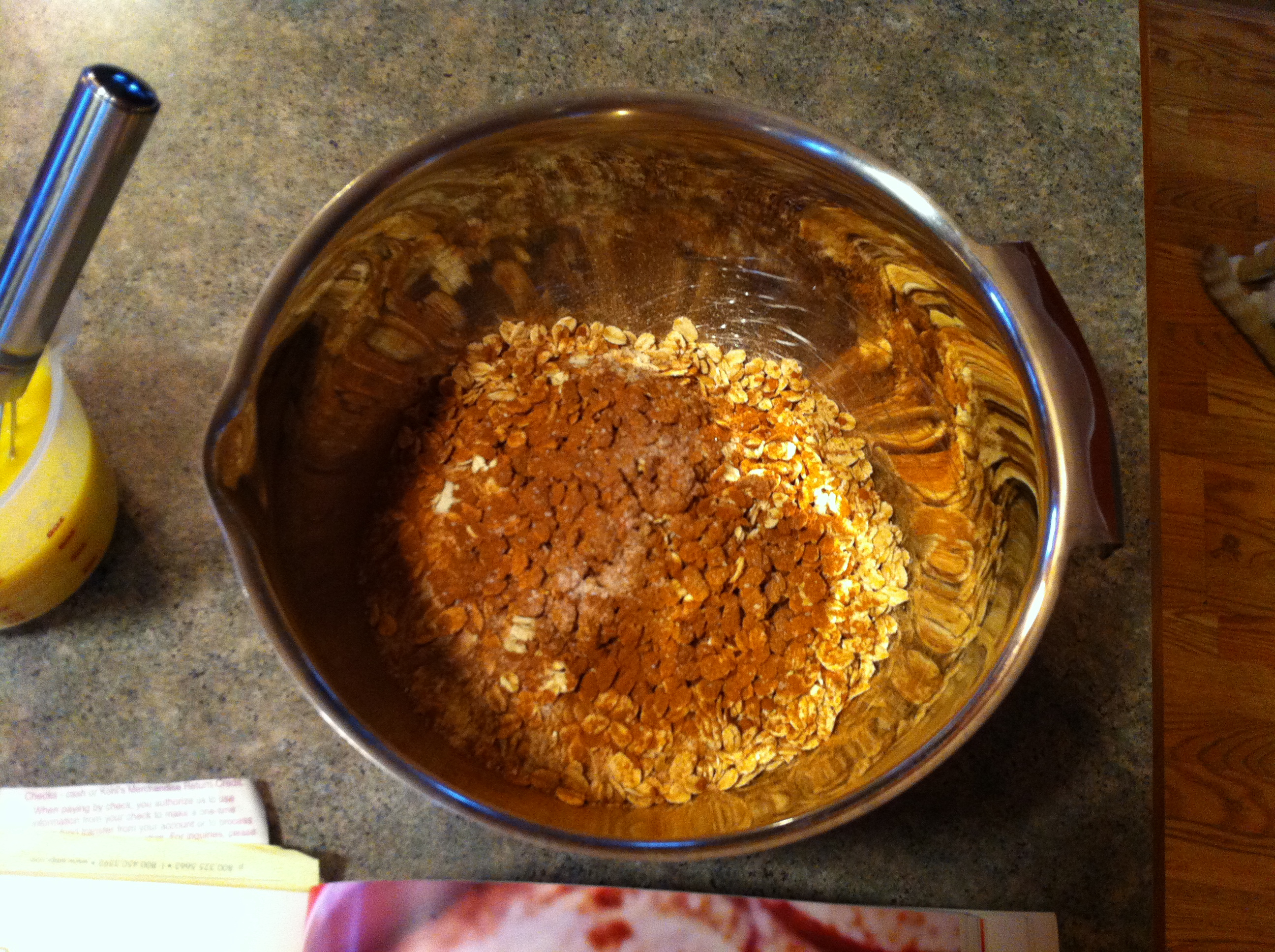
Image


Next, measure exactly 1/2 cup of unsweetened apple sauce in a beaker/measuring bowl and crack 2 eggs on top of the apple sauce.  Whisk the two together aggressively until the yokes disappear and the mixture is smooth.

Image

Pour the apple sauce/egg mixture into your dry ingredient bowl and begin to stir aggressively once again.

If you have ever made cookies before, you’ll be familiar with the thickness of the dough and the amount of work that it takes to mix everything together.

Once you’ve mixed the dry with the wet to make your dough, scrape it into the 9×9 pan that is already pre-sprayed with PAM.  

Spread it out evenly across the pan.

Bake for about 12-15 minutes and BOOM you’re done!

I love doughy textured bars so I bake for around 12 minutes each time.  If you like them a little more dry, leave them in for about 14-15 minutes.

The original recipe from Gourmet Nutrition adds chunks of fresh apple to the mix before baking, but in my personal experience, all this does is cause the apple to rot in the fridge if you don’t eat the bars fast enough.  You’ll deal with that one time before you say “screw it”, I don’t need the apples.  No worries, I feel your pain.  

By baking your own protein bars you are taking control of what is going into your mouth.  If you want a better body, you’ve got to get on board with this habits.  Take ownership for your situation (whatever it is) and aim to improve it bit by bit.  

Homemade protein bars is a massive step in the right direction.  You’re showing that you care about what you are consuming.  15 minutes of your time will give you more protein and nutrients in one bar than most people get in an entire day.  Consider that and tell your friends.  

Pat yourself on the back, rinse and repeat.


Cheers,


KG

Completely Un-Organized Kettlebell Training for Fat Loss and Athletic-Like Conditioning: Part 2

Quick Tips

Part 1, if you made it through that novel, was me thinking out loud about systems.  Part 2, right here, is what I actually did to spark that post.

Here we go…

Using my trusty jump rope, I started the training session with a 10 minute jump session.  I always start slow with two-foot jumps and work into more progressive drills like running, single foot, etc.  I keep the rope moving continuously, only stopping to change a shitty song, scratch or grab a swig of water.

Last night, this is where the un-organized part comes in.  In the kettlebell training world, there is a world-famous tough guy test called the “SSST”.  The “SSST” stands for “Secret Service Snatch Test”.  Initially, I thought it was another gimmick workout but I later learned that there was actually a story behind it.  Interesting.

So, here is what the SSST entails:

  • Perform as many snatches as possible in 10 minutes using a 24kg (53lb) kettlebell.
  • Record your score while trying to hold your lungs and eyeballs from shooting out.

That’s it.  

My best score with the SSST is 226 repetitions respecting the perimeters of the test bulleted above.   

I haven’t attempted a full SSST for about 2 years, and I would like to think that I could get 250 reps in the 10 minute time frame.  Who knows.  I tend to not have a governor when it comes to pursuing competitive type stuff.  All or nothing.  

The kettlebell snatch is a technical move just like the dumbbell snatch, so there is a method to the madness.  Grip, arc of the bell, hip snap, etc… all make a HUGE difference in your numbers.  The first time I tried the SSST I ripped all of the skin off of both of my palms.  It’s important to note that a “rep” in the SSST is counted only if the elbow is locked out overhead.  

Back to last night…  

Initially, last night was scheduled to be a recovery style training session because of the intensity of the previous day’s workout.  Typically I would just jump rope and bike while keep my heart rate in specific BPM zones, then call it a day.  Nope, I decided to try something different.  I decided that I would mess around with mini-circuits using my kettlebells.

Here is what I did:

5 minutes each of:

1)  Kettlebell snatches (alternating hands every 10 reps)

2)  2-Hand Kettlebell swings (30 reps then rest until ready)

3)  Intense jump rope (not sure of the revolutions per minute)

Done.

For the snatches, I completed 110 repetitions and for the swings I completed 120 repetitions.  My heart rate stayed where I wanted it and I felt great during the session.  The jump rope at the end was a bear.  

All in all, the workout lasted about 30 minutes, which was perfect because that is roughly how long I would have biked for had I gone that route.  

Soreness today was not bad and overall the workout was a success.  

Is it possible to train improvised in every session?  Of course, but I am still not convinced that it is superior to an organized, progressive training system.  Attempting to train too many qualities at once seems to make a person “average” in all of those qualities.  However, for fat loss efforts and general athletic-conditioning, I think training sporadic will work just fine assuming you are using big movements with solid technique and load.  

Again, at this point I would look to stay within a system.

Also, be realistic about the SSST.  If you aren’t qualified to be snatching a kettlebell, don’t attempt the SSST.  Honestly, this is high level stuff.  I don’t mean to make myself or anyone else sound superior in any way, but injury prevention is important to me.  Snatching a 53lb kettlebell for 10 minutes straight is not for the average person.  Don’t be a hero.  If you don’t have the technique or the conditioning, stay away from it.  Building your technique, strength and conditioning and then give it a go when you are capable.  Make sure your hands are prepared, you won’t want to grab your steering wheel for a week if you don’t rough those hands up first.  


Cheers to the improvised workout…


KG