
A Brief Synopsis About Why “Fat Loss” is Preferred Over “Weight Loss”

Quick Tips

Screen Shot 2013-07-16 at 1.08.50 PM

Look familiar?

“Weight loss” is a common set of terms that has been the measurement of health and wellness for decades.  Once the mainstream grabbed ahold of the weight loss, it was all over.  As for who first used the phrase “weight loss” to describe a positive shift in a person’s health and appearance?…

I have no clue.

What I do know is that I have never really understood why we say “weight loss”.

While I know that on some level, “weight loss” does do a decent job of describing the events taking place when a person decides to improve their nutrition or physical activity, I also feel that “weight loss” is so short-sighted.

Especially when the weight that is being lost is being measured by a bathroom scale or the equivalent.  We judge our progress by comparing our previous weigh in to the current weigh in.  If the needle moves left (weight loss) we celebrate and feel good, if the needle moves right (weight gained) we become frustrated, depressed, pissed off and in some extreme reactions, give up on our health endeavors all together.

I’ve witnessed people give up on physical activity and nutritionally smart eating habits solely based on the needle bouncing to the right instead of the left.  They may not give up the first time that they see it happen, but most certainly on the second, third, or fourth time that significant loss does not occur.

The problem with letting the weight scale be the dictator of your progress is that weight scales measure weight!  Ha!  Yes, weight scales suck because all they do is measure weight.  Weight scales don’t factor in whether that weight is useful muscle or useless fat (not all fat is useless), water weight, fecal matter (grow but true), etc.  There is zero indication about where the weight displayed on the scale is coming from, which is why I feel that body composition (or the composition of your total weight) is such important information to know.

Here are a couple of pictures that help make my point.  If you are someone that finds motivation to get fit for body appearance reasons, consider this picture:

Image

The picture depicts the same female at different weights, yet different shapes.  Although the difference between the right and left pictures may be subtle, there is a noticeable difference.  When asked, most people would probably want to look like the picture on the right, especially not knowing that the picture on the right represents the same girl at a HEAVIER weight.

The girl looks more “toned” (not sure I like using this word but it works for now) and fit in the picture on the right, but she weighs more.  Why?  She built lean muscle and removed  layers of fat.

Fat on the body, visually, projects much different than muscle on the same body.

Here is a picture that helps support my last statement, anyone who has ever been in a health class or kinesiology classroom has no doubt seen images like this:

Image

While the old “muscle weighs more than fat” adage doesn’t make much sense, body composition and  visual observations at what muscle increase and fat decrease looks like certainly do.

What we could potentially say, is that “a pound of fat takes up nearly four times the space of the same amount of muscle tissue”.

In other words, your height and weight can remain exactly the same, but you can feel and even visually look, well… fatter.

If you add more lean muscle to your body while simultaneously losing fat, you’re going to see a decrease in size, despite what the scale tells you. Your body begins to “tighten up”, “tone” or whichever descriptive word you choose to use.

Increasing muscle while decreasing fat is a positive shift in body composition, and generally, overall health.

The most direct and efficient way to accomplish this is with resistance training, and decent nutritional regimen.

Here is an old article from the University of New Mexico describing all of the benefits of resistance training…

Too simplify, here is a snapshot:

Weight loss versus Fat loss

Because of this, I have to recommend that we shift our thinking and judgements away from the weight scale, and on to body composition tests like bodpods, skin calipers or hydro-static weighing to analyze what the ratio of muscle to fat really is.  The problem is, these are all laboratory tools.  They are unrealistic for the average person to use for monitoring progress.

Waist circumference is also a decent indicator of how your body is reacting to exercise and nutritional interventions.

Go find a pair of jeans that fit tight at the current moment.  Try them on.  Set them aside for now.

Get aggressive with your movement and eating, forgetting about any measurements or weighing.

A week or two down the road, try on that same pair of jeans.

Rinse and repeat for months, because months is how long it is going to take.  Dedicated and repeated effort for months, not overnight or in a week.  Bodies built naturally and properly, take months to establish.  But once they are built, basic upkeep is all that needed to maintain their integrity.

Screen Shot 2013-07-16 at 1.04.23 PM

Better yet, strip down into a swimsuit for females, and a  pair of short with no shirt if you are a male.  Make a conscious effort to show some skin.  Now, take a full body picture.  Have the courage to do this in the beginning and frequently along the way.  It’s unscientific but it is brutally effective.  As they say, a picture is worth a thousand words.

Screen Shot 2013-07-16 at 1.05.45 PM

You don’t have to show anyone the pictures but yourself.  It’s your reminder of where you started and how you a progressing.  In the future, it may serve as a fuel to continue on the right path when times get rough.  We can all use a little motivation every now and then.

It takes time and effort to make change.  Transformation is a big process.  You’re tearing down and building up.  A complete remodel of your body.  Don’t get discouraged.  If you’re doing right things to initiate lean muscle gain and fat loss, you’ll make progress.  There is no doubt.  If you falter or give up, your progress will slow or halt.

Always remember that if it were easy, everyone would do it.

In most cases, body composition change is incredibly predictable.  Keep moving often, purposefully and aggressively and leverage that effort with nutrient dense food.  The combination of the two will peel fat off of your body like an onion, and restore something that most of us could use more of… muscle.

Cheers to trading weight loss for fat loss…

KG

Bodyweight Style: Dive Bombers: Pressing On Without Equipment

Quick Tips

Males love upper body pressing because it tends to make us look muscular, and females love upper body pressing exercise because (apparently) it decreases the amount of jiggle on the back of their arms while waving or doing other upper extremity activities.

Arm Jiggle

Ladies… it’s all in your head 🙂

However, upper body pressing exercises have to be on the top of most people’s lists when it comes to a workout, so why not talk about it?

Hello dive bombers.

I love dive bombers.  Dive bombers bridge an important gap for upper body pressing, and more specifically, vertical upper body pressing.  Traditional vertical pressing can also be referred to as overhead pressing.  Military presses are probably the most recognizable exercise in this category.

Handstand push-ups look great on paper, but the reality is that handstand push-ups are often too aggressive for most people, and dumbbells and kettlebells are not always readily available for use.  If you stop and think about it, a handstand push-up (press-up) is an inverted vertical press where you’re lifting the weight of your entire body.  If you weigh 175lbs, you’re pressing 175lbs.  Add in the friction of your heels against the wall, and you’re probably pressing 180lbs or more.  A lot of people cannot vertically press their bodyweight in a strict fashion.

Dive bombers can fill this training gap when needed, and dive bombers have the progressions (more difficult) and regressions (less difficult) to fit the needs of most people.

Dive bombers are challenging enough for the toughest guy/gal, yet can be regressed for the beginner who seeks an upper body challenge.

For those of you who cannot perform handstand push-ups or want to save your walls and neck from wear and tear, dive bombers are a fantastic alternative.

I’ve seen a few variations to this movement.  If possible, I prefer working through the entire eccentric and concentric phases of this exercise.  Meaning, you’re going to lower yourself down into “the hole” and also press yourself out of “the hole”.

Some folks will lower themselves into the hole, press up, then raise their butt back to the starting position.  Essentially, you are performing half of the whole dive bomber by doing this.  I don’t see anything terribly wrong with this, but I would much rather see both eccentric (lowering portion) and concentric (upward portion) strength represented.

If you’re going to get all dressed up, you may as well dance.

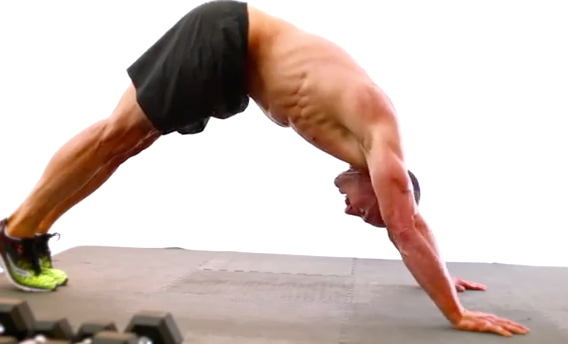
Here is a snapshot overview on how to perform dive bombers…

The starting/finishing position of the dive bomber is very similar to downward facing dog in yoga.  Very similar.

Image

Alignment from hands to hips could be better, but you get the general idea…

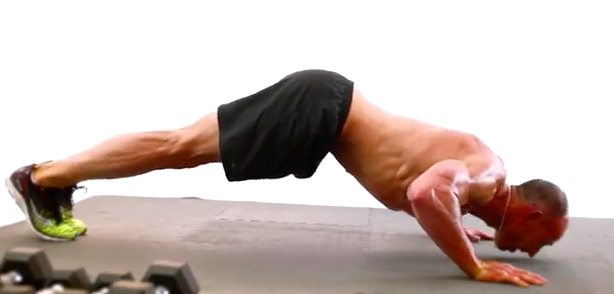
The lowering/pressing portion of the dive bomber demands upper body control, joint mobility and stability through the mid-section.

Image

The mid-point press up provides a low load training stimulus similar to a modified dip

Image


Image

1)  Imagine slithering your body underneath barbed wire on the way down and also on the way back up.  Chest can brush the ground but does not lean or rest for any amount of time, them movement flows from start to finish.

2)  Lower into the hole with control and press hard on the way back up.

3)  Maintain posture from head to hips.  Don’t break.  If you do, regress the movement and work different phases before going for the whole thing.

4)  Regress if need be (work lowering phase only, or upward phase only), progress if need be (elevate feet, lower slower, single arm, etc).

5)  Breathe.


Don’t over think dive bombers or any other exercise.  Just do it.  Play around with it.  Tweak it and then tweak it again.  Experiment with your movement and what fits best.

Use your judgment on progressing the difficulty of the movement or dialing it back.

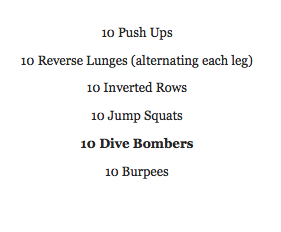
Here is sample bodyweight circuit with dive bombers included:

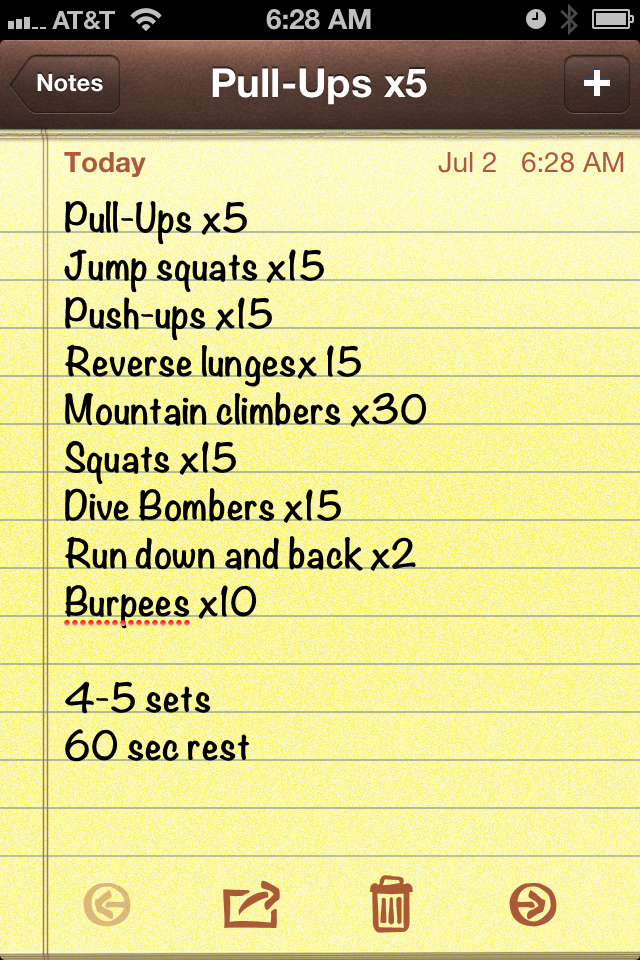
Bodyweight Workout

Dive bombers fit nicely in circuits because they can be adjust to be sub-maximal, which is an important consideration when fatigue begins to set in.  Again, they are a great alternative for vertical pressing, and it’s undeniable that there is a significant amount of stress put on the core to maintain posture throughout the range of motion.

It’s a home-run movement that is safe and effective.

Integrate into your training regimen right now.


Cheers to dive bombers, improved pressing habits and blasting jiggle!

KG

Shakira’s Hips Don’t Lie and Adding Burpees to My Kettlebell Complex Workout Kicked Ass

Quick Tips

Image

Burpees and I have a love/hate relationship, and I’m sure that most of you probably have similar feelings.  

On one hand, full burpees are as close as it gets to being a complete bodyweight exercise.

Burpees are ridiculously effective for elevating heart rate and recruiting a large amount of muscles.  Large muscular recruitment is a beautiful thing.  Burpees require little to no space, zero equipment and you can perform them anywhere.  Indoors or outdoors it does not matter.  Burpee workouts are a perfect alternative to traditional running or biking.

On the other hand- the hand that despises every aspect of the burpee- burpees are the red headed step child of my workouts.  When I see them on the docket for the day, I cringe.  I cringe because they test me every single time.  I cannot think of a single workout where burpees felt easy.  If there was a workout where burpees were enjoyable like a walk on a white sand beach on a hot Summer day, that would be a major red flag that I didn’t design my workout properly, or I was leaving something in the tank (aka:  Half-assing it).  Burpees are the vegetables of the workout world.  They require very little thought and are quite monotonous when performed for high reps.

But, when weighing the likes and dislikes toward burpees, I know full well that slipping burpees into a workout can crank up the overall impact of the workout.  The training effect if you will.  In other words, I’ve never felt worse (physically or mentally) after performing burpees at the end of a circuit or as a workout by themselves.  

Burpees deliver every single time.  

ImageShakira’s hips don’t lie and neither does my heart rate monitor.

So while I started thinking about different sub-maximal activities that I could integrate into my complex workouts- to keep my heart rate elevated in between rounds- burpees were one of the first exercises that came to mind.  It seemed like slipping them in between rounds could deliver what I was looking for.  Preferably, the filler exercise needed to be ground based and something that kept me in a vertical standing position.

So, here is what the workout evolved into:

Image

Again, the goal here was to add another 5 minutes of elevated heart rate and exertion to my training session.  I know from extensive experience that the kettlebell complex displayed in the snapshot typically takes 12-15 minutes to complete in full, so my goal was to extend the workout to 20 minutes or longer.  The addition of the burpees between complex rounds successfully did just that.

Overall, I enjoyed the addition.  I’ve added timed jump rope intervals to my complexes before, and they worked quite well.  But since I can’t seem to find a jump rope that can live longer than 2-3 months before breaking, I was forced to use burpees.  The key to adding filler exercises to tough workouts is to choose exercises that require low technical know-how.  When you’re sucking wind, trying to gather yourself before the next bout of exertion, this is not the time to be messing around with movements that have high technical difficulty.  

In fact I will just come out and say it… it’s stupid.  The risk doesn’t even come close to matching the reward.  Avoid it and you’ll put yourself in a better position to avoid injury while reaping all of the good that can come from a workout like this.

Closing thoughts…

The majority of my workouts are by design.  I rarely walk into a workout without knowing what’s about to happen, which is why I think I have adhered to this physical lifestyle for so long, and why I will remain committed to moving aggressively and intelligently for years to come.  It’s habit now, fully engrained into my life.

Each workout (or entire program) follows a general training template that I’ve got embedded in my mind.  Early in my strength and conditioning education, I consumed book after book and realized that everyone was using the same general approach to designing effective workouts and long-term programs, so I began adapting and experimenting with slight variations to these time tested principles.  

My personal preference is a system wide, total body approach to exercising, so I know that I like to see all of the major movement patterns represented in each training session (ex: squat, pressing, pulling, hip hinge, etc).  Body part splits are not for me.  I get bored.  Working a squat pattern four different ways on the same day is un-interesting to me.  But that doesn’t mean that it isn’t a great option for your fitness endeavors.

I also have a crystal clear distinction between what I classify as a purpose driven workout, and what I classify as a recreational activity.  Playing ice hockey on Wednesday nights is recreational.  Kettlebell complexes are a workout.  My approach doesn’t downplay the positives of recreational activities (because they do matter overall), but I feel that there is a major difference between “the workout” and pick up basketball.  

At the end of the day, movement in any shape or form adds up, and there is no denying this.  Any way that you can engage in it, it’s a bonus.  We can debate the details all day long, but the bottom line is make an effort to sit less and move more.  That’s a recipe worth following.

Here is a great video that diagrams how dramatic even the smallest shift in movement can have on health.  


Cheers to adding burpees to the workout…


KG 

Exercise Is Cognitive Medicine and Performance is Prevention

Quick Tips

I think exercise makes us smarter, but so do the scientists.   

I’ve felt for some time that peri-exercise and post-exercise “high’s” can shed light on solutions to problems that previously seemed unsolvable or overwhelming.  I’ve been stumped time and time again before heading into a workout, engaged in a workout, then come out of the workout with the solution.  

It’s magic. 

Whenever I hit writer’s block or cannot seem to find the words to describe what I am thinking about, a solid workout seems to help me climb over the hump. 

Most recently, during a couple of long slow runs (if I all else fails, lace ’em up and pound the pavement) while up north for July 4th weekend, I began thinking about how the benefits of purposeful movement extend so much further than just building beach bodies.  

Image

It goes back to the overall training effect of a workout.

I started thinking about how improving physical performance can have such a dramatic effect on your ability to ward off injury or chronic pain.  

Exercise can keep you pain-free.  You can bulletproof your body to unnecessary injury using simple tactics.

It’s so powerful.

Sure, exercise is just a small piece of the pie of life, but making an effort to move more adds years to your life with very little time invested.  It really doesn’t take much effort to initiate a noticeable shift in appearance and health markers.  In fact, I think most people are taken back by the simplicity of the overall process of establishing new levels of health and performance. 

At the very least, improving physical performance gives you the best opportunity to add years to your life, and make those years quality.  Moving through life in pain and negative effects of preventable disease is no way to live.  Adding quality years to your life is the goal.  

My simple advice is to learn which training methods and movements to invest your time in.  Doing so will pay dividends for the rest of your life.  It’s an investment that will pay you back whether you want it to or not.  “Do this, get that” kind of thing.  

Increasing performance-like qualities is prevention from injury and poor health.

I view training as an investment, and always have.  I’ve talked about leveraging quality workouts over and over again in the past.  It’s an investment in your physical and mental health.  The research on the effects that exercise has on long-term cognitive function alone are plentiful.  Besides the positive internal effects of that exercise has on or brains, persevering through challenging workouts and sticking to a long-term training regimen builds character.  

Here are some cool articles that I found regarding the effect that exercise has on your brain health:

1)  Regular Exercise Has Powerful Effect on Brain Health

2)  Exercise as a Behavioral Intervention

3)  How Exercise May Help Memory

The internet is jam packed with great articles like the one’s above.  If you get bored on a rainy day, type “exercise and brain health” into Google.  You’ll see get an insane amount of hits for that search phrase:

Image

There are so many positives byproducts that result from dedicating yourself to working out a regular basis, it is hard to imagine why we all aren’t flooding gyms, parks and trails to get our daily fix of movement.  


Cheers to keeping all of your fingers intact as we move through this 4th of July!


KG


No Equipment Workouts: Rocky Pull-Ups and Hill Running

Quick Tips

This past weekend proved to be a test of my ability to adapt to my surroundings, get my workouts and also do a decent job eating right.

My fiancé and I travelled down to my parent’s new retirement residence in central Wisconsin, where I quickly realized that any chance of a nice Saturday morning jog was out the window.  

It was all hills.  Nothing but hills encapsulated my parent’s little community.

No matter which direction I went out of the driveway, it was a hill both ways.  I know that sounds impossible, but trust me, I would have paid money to have flat ground.

Regardless, it was a scheduled training day and I am fully accountable to myself to get my workouts in when I schedule them, so I went through with it anyways.

The tough part about running terrain that has such great elevation change is that it leaves little time for the body to warm up.  I felt like I was still half-striding by the time I reached the base of the first incline.  In these situations, I typically dial back my pace and turn it into more a of a long slow climb.  Short, choppy steps work well for warming up on inclines, similar to what you would use when climbing a mountain or something similar.  Enough to keep you moving but nothing to set personal records with.

Saturday’s Workout looked like this…

Goal:  Increase heart rate and maintain for time, open up the lungs, enjoy the new sights and sounds.  Here’s what I did:

  • 20 minute run (slower pace accounting for hills)

I have no idea how far I went.  I would presume that I was running somewhere in the neighborhood of 8:30-9:00min/mile pace, but I cannot confirm this.  I didn’t have a heart rate monitor on either, so it was a fairly primitive run for me.  In situations like this, I try and gauge my effort based on respiration and stride technique.  If I feel like I am suffocating or my technique is compensating in some fashion, I dial back the intensity.  I am a chronic over strider during runs, so having the inclines on the hills really forced me to shorten up my stride and increase the frequency.  For me, this is good reinforcement.  

  • 100+ yard incline sprints x3

There was no shortage of hills.  One particular naturally identified itself as a nice location for some incline sprints (aka: a burnout session).  There was limited motor vehicle traffic, which made me feel comfortable about being out there, especially in the countryside.  You might look at the rep count for the hill sprints and feel that it is low.  That’s fair.  But three reps of all out sprints up a 7% incline for 100+ yards will surprise you.  I suggest that you give it a shot sometime.  Focus was placed purely on running posture, arm swing, knee drive and hip extension.  I’ll never be considered for the Olympics, but it’s fun to continue to work on skills.

Sunday’s workout something like this…

Pure bodyweight circuit:

Image

A couple of thoughts:

  • You can do pull-ups pretty much anywhere, but it doesn’t make them more enjoyable.
  • Pull-ups with a poor grip surface places a greater demand on grip strength/endurance, which can effect your performance.  
  • Grip strength is important.
  • Shuttle runs late in a circuit can be the icing on the cake.
  • There is still no great way to pull horizontally without some kind of equipment (suspension trainer, etc).
  • Burpees are one of the greatest total body, space saving movements of all time, and they also suck each and every time.
  • Understanding basic exercise and how to organize it using what you have, where you are, and your current fitness level will keep you on track for life.  

Conclusion…

Were my workouts this past weekend ideal?  Absolutely… not.  

I would have rather have been working with my kettlebells and something more structured.  But, I did not have access to that kind of equipment.  I had access to my body-weight, some hills and a phone timer.  The situation was not ideal, but it worked.

Depending on your body composition and fitness level, you could make some serious gains from workouts like this.  I have been training for quite some time, so the point of these workouts for me was basic maintenance.  Something to get me moving and get a daily sweat in.  

But for a beginner or a novice looking to make some bodyfat change or improve performance-like qualities, these two workouts are fantastic.  


Cheers to adapting unideal situations and leveraging your body!


KG

Jumping Rope: The Undeniable Negatives (Part 1)

Quick Tips

Summary:

  • Jumping rope can be hard on the joints if done excessively.  
  • The learning curve can be a turn off.  
  • Don’t let me talk you out of jumping rope.

Jumping rope is a low cost, medium to high-skill activity people have been leveraging to build impressive cardio fitness for a long, long time.  Particularly athletes in the combat sports, boxing and mixed martial arts.

As a cardio enhancer, jumping rope is making a resurgence.

Here I am working the Ali Shuffle, and other patterns of jumping rope.  

Modern day metabolic conditioning is giving the jump rope a reason to play a large part of many high-intensity workouts.  

Screen Shot 2013-06-25 at 6.37.53 AM

When you’re a kid, you jump rope… 

As a kid, I can vividly remember jumping rope in elementary school.  We had a yearly fundraiser called “Jump Rope for Heart”.  All the kids brought their jump ropes down to the gym, they pumped some 90’s dance music, and we jumped for hours.

I was never the best rope skipper in the gym, but I could hold my own by showcasing classy moves like crossovers, single and alternate leg hops, and even surviving in the infamous Double Dutch vortex.

As a kid, you don’t over-analyze the value of jumping rope.  You jump because it’s fun, not because you want to know how to burn more calories or lose weight.  Jumping rope provides an outlet for kids to burn off extra energy while

Jumping rope provides an outlet for kids to burn off extra energy while

But then adulthood stumbles in.  Jumping rope is no longer cool, it’s taboo.  

When you’re a kid, you move for the fun of it, when you’re an adult, any movement beyond what’s necessary becomes a chore.

As we age, many ask less and less from our bodies.

The “fun” part of hopping over the turning jumping rope seems like the furthest thing in adulthood.  

“You want me to what?  Uh, no thanks”.  

Exerting on purpose as an adult becomes a depressive thought.

Screen Shot 2013-06-25 at 7.05.36 AM

But when mainstream media picks up on the trends, it often reignites our interest in old training methods.  

Screen Shot 2013-06-25 at 7.05.46 AM

Naturally, we head to the sporting good store and buy a badass jump rope. 

But before you start jumping, let’s work through a couple of hang-ups I have with jump rope training.  Particularly if you haven’t exercised in a while.  

1)  Repetitive ground impact and overuse injuries.

Screen Shot 2013-06-25 at 7.04.32 AM

Any activity overdone is going to put you at risk for overuse injuries.  

Too much of a good thing is generally a bad thing.  Drink too much water, bad thing.  Eat too much broccoli, bad thing.  Exercise too much, bad thing.

Overuse injuries certainly aren’t a jumping rope problem per say.  Overuse injuries often occur because of excess volume or intensity (or both combined) relative to what the tissue tolerance is capable of managing.  

If you’ve ever run barefoot or with minimalist shoes without some kind of pre-workout up, the extreme soreness you felt in the days after is a perfect example of impact forces overwhelming the tissues without any shock absorption.  

In other words, physical stress beyond what the body is acclimated to can create some painful issues.

As for jumping rope, it’s the ground impact forces doing the damage.  Every single jump places strain on the legs, particularly the calves and ankles.

How much strain?  Roughly 300lbs of impact is directed toward the foot and ankle while jumping rope, as measured by lab tests.

But this isn’t 300lbs just one time… it’s 300lbs multiplied by thousands of jumps per workout. Thi can be a recipe for injury if your body is not acclimated progressively.

If a person is spinning a jump rope at an average of 100-120 revolutions per minute, a 10-minute workout can add up to about 1,000-1,200 jumps.

Jumping rope for 10 minutes is nothing like running for 10 minutes.  These are two completely different stresses.  Time seems to stand still when you jump rope.  10 minutes can feel like 30 minutes.

Many websites recommend “20-minute jump rope workouts for toning”, but I am extremely hesitant to encourage anyone to jump for 20 minutes as a starting point.

Start with 1 minute unbroken, then 2 minutes… 5 minutes… 10 minute, etc.

10 full minutes of jumping rope without stopping for breaks is a commendable feat.  Once you hit 10 minutes, it’s time to go harder or increase the difficulty of the jumps (1-foot, side-to-side, running).

Now, the impact forces of jumping rope are far less than running. 

If you haven’t jumped 1,000+ times in a while, or you’re a de-conditioned individual who hasn’t engaged in moderate to high physical activity in some time, you stand a high likelihood of sidelining yourself after a short duration of jumping rope.  

Jumping rope is a sub-maximal variation of plyometrics (jump training), which can be very high-impact. Plyometric training is best kept to reasonable volumes during a workout.  Most high-level athletes are jumping anywhere from 25-40 foot contacts per workout in the off-season.  

Lesson:  Work into your jump rope training, progressively adding minutes to each session.  If you’re a beginner, consider jumping from less than 5 minutes cumulatively per workout.  You can always build up.  

2)  Learning curve versus training stimulus.

Screen Shot 2013-06-25 at 7.03.02 AM

Here’s a realistic scenario…

You go out and buy a jump rope to whip yourself into shape.  You get that baby home, rip it out of the packaging and head to the garage.  After you put on your workout playlist, get ready to turn the rope over like Muhammad Ali.  

Wham!  You catch your feet and stomp the rope on the very first turn.  Hey, no problem, it’s the first time in a long time you tell yourself.  Here we go again…

Wham!  Shins this time.  Wham!  Ceiling got in the way.  Wham!  Back of your head, not enough tension on the twirl.  Wham!  Toes again, but somehow this time the rope tied a knot that you have to unravel.  Damn, a tight knot too.  

Next thing you know, the rope is 10 inches shorter and you’ve wasted 45 minutes jumping 25 times.  Ouch.

Don’t laugh now.  This is a real scenario, I’ve seen it happen to coordinated athletes, so I know it is happening to the average Joe and Jane all over the world.  

The real benefits of jumping rope comes from continuous jumping.  In other words, getting hung up on your toes every fifth turn isn’t going to allow for any real training effect.  You won’t be exerting long enough to accomplish much.  

I applaud your spirit and motivation, but we have to consider one thing…

Jumping rope is a skill.  And like any skill, we all have a unique starting point and learning curves of various lengths to become better at that skill.  Some will acclimate to the rhythm faster than others.  Here’s another important thing to consider:  some of us have a higher resilience for knowing that we suck at activities, yet continue to practice until the day we move passed the “suck” stage.   

If you’re terrible at jumping rope AND you have a tendency to shut down at first encounter of resistance, consider saving jump rope practice for after normal gym work, when you have peace of mind that some quality work was put in.  

But don’t let me turn you off from jumping.  Get after it.  But beware, you may not have the workout of your life on the first go around.  

If your goal is to get into shape ASAP, and for many people it is.  Riding the struggle bus for 15-20 minutes a day just to turn a rope 10 consecutive times without stepping on it won’t sound like fun to most people.

Therefore, it may be worth considering that the jump rope can take a backseat to bread and butter activities like running, cycling, rowing or lifting weights.  Even a potent bodyweight workout should be considered before re-engaging with the rope of death.  Talk about defeating.  

Again, jumping rope is a skill.  Expect it to involve failure, slow progress, and patience.  

If you’re lucky, you’ll hop right into it.  If you’re not, I warned you.  

Lesson:  Treat jumping rope like a skill.  Dedicate a small amount of time before or after your main workout to improving your jump proficiency.  Don’t make the mistake of putting all of your eggs in the jump rope basket, only to find out you can only manage 10 seconds of continuous movement before you smash your toes.

This tip will save you a lot of frustration.

3)  Cardio benefits over-hyped.

Screen Shot 2013-06-25 at 7.01.19 AM

Yes, jumping rope burns calories, but so does doing the laundry or making the bed.

Yes, jumping rope can improve cardiovascular function, but so does push mowing the yard.   help reinforce posture during exertion.  

Yes, jumping rope can be a decent reinforcer of upright posture, but so is waiting in line for public transit.

Compared to running, rowing, cycling, kettlebell swings/snatches, burpees, or smart bodyweight circuits, jumping rope delivers less bang for you cardio conditioning buck.   

Some of this circles back to the learning curve and the barrier it has to a reasonable training effect.  

I’ve seen videos of Ross Enaimat spinning a jump rope so fast I wasn’t even sure it was still in his hands, but not everyone is Ross Enaimat.  

He’s got over a million views on some of his YouTube videos from people eating popcorn watching him sweat, aspiring to have his conditioning without putting any effort in.

Returning to my previous point about training effect, head out to your local hill for some incline sprints or pick up your heaviest kettlebell and swing away.  

You’ll probably find time is better spent elsewhere to get that conditioning stimulus.

Adaptation sadness…

At some point, you’re going to experience diminishing returns on your efforts.  This is called adaptation.  It’s a good thing and a bad thing.  It’s good because you’ve established an efficiency at a certain skill, intensity, and duration.  It’s a bad thing because now, you have to push yourself harder to keep progressing.  

Adaptation is bound to happen with any activity you commit to doing on a regular basis.  It’s only a matter of time.  

When you reach this adaptation point, it is important to remember that jumping rope is no different from any other form of exercise.  You have to re-adjust the variables in order to continue progressing and break out of your adaptation, moving forward to the next level of adaptation.

The problem, once again, circles back to the issue of learning curve.  Once you’re a pro with single hops and the duration of jumping is hovering around 15-20 minutes, personally, I feel it’s time to figure out how to leverage the next progression in order to save your precious time.  Unless you love jumping rope that much.  

So how do we progress?  Well, you could…

  •  Buy a weighted jump rope
  •  Increase the tempo of the jumps (turn the rope faster)
  •  Decrease base of support (single leg hopping)
  •  Mix and match various jumps (front to back, side to side, boxer jump, high knees, etc)
  •  Move on to Double-Unders

Adjusting any one of these variables will progress the training stimulus and keep you away from stagnation.

Wrap Up…

You’ll notice that this post is more of a cautionary tale than anything.  

Personally, I jump rope before almost every single workout.  I love it.  It get’s me in a standing position and it serves as a great warm-up prior the tough part of my training sessions.  

Jumping rope is not a bad activity.  But, it’s important to know how it could be bad, and where the disadvantages are.  Probably the most important part of this article is the warning about overdoing it.  The impact can leave you limping for days afterward.  

Some of you will be able to pick up a jump rope and get after it aggressively from the start.  Others won’t make it 3 consecutive turns without tying a noose around your ankles or blooding up your toes.

Get to know yourself, your current physical conditioning level, and make a decision if jumping rope is right for you.  If it is, schedule some practice time before or after a workout to hone your jumping skills and acclimate your body to the stress.  

This article would be a real let down if I didn’t recommend at least one great resource to related to jump rope training:

If you found this article while searching for alternatives to high-impact activity, I highly recommend you to check out these posts:

Cheers, 

Kyle 

Over-training for Performance and a Brief Word on Exercise Addiction

Quick Tips

Good morning kids…

It’s a beautiful Friday morning here in Wisconsin, and for once, the sun is out and it looks like it could break 70 degrees.  Thank the big man above for that, because we have just about had all of the rain, snow and flooding that we can handle up here.  I was starting to think that movies like “End of Days” or “The Day After Tomorrow” was movie from the big screen to reality.  Yikes.

Summer in Wisconsin

Summer in Wisconsin 2013

Anyways, I wanted to touch a few things this morning, most of which have to do with over-training, working out excessively and body image.

Over-training.  I cannot be certain, but I think I walked a fine line this week between taking my training to the edge of over-training (but not crossing) and doing a cannonball into the over-training swimming pool.  Yesterday was a struggle for me fatigue wise, and my mood was up and down all day.  Without any real noticeable stress to attribute to this, it is plausible to think that I may have pushed it too hard in the days prior.

What caused it?

Well, the workout that sent me over is one that I have leveraged for quite some time. Let’s just say that it involved a couple of 10 minute sets, a lot of squats, chin ups, lunges and kettlebell swings.  I don’t blame the workout itself because I have been using this particular workout for 4-5 years. It’s a staple in my training regimen.

What I do blame, is my lack of judgement leading into the workout.  The days leading up to this workout were filled with tough training sessions.  Over-training is a cumulative scenario.  I always picture it like a traffic jam of volume, intensity and a lack of sufficient recovery.  What starts as a traffic jam ends up being a 50 car pile up.

Screen Shot 2013-06-14 at 7.16.14 AMThe over-training 50 car pile up.

I’ve over-trained only a handful of times in my life.  All of those times, I felt ridiculously lethargic, tired and real drifty mind-wise.  Physical movement of any kind seemed like a real chore.  I’m talking about simple physical tasks like walking out to get the mail.  It seemed like climbing a mountain to climb stairs or lift basic household objects.

I recently read a neat little article about over-training on Runner’s World website.

To be honest, I don’t know what I was doing on Runner’s World, but I enjoy getting information from a wide variety of sources, not just kettlebells, fat loss and strength training.  Running is a major part of the body transformation equation.  My past comments about running on this blog were not taking shots at running itself.  There were intended to state that running delivers poor results to people who are seeking fat loss.  It’s a classic example of using the wrong tool for job.

—>  Check out this article from Rachel Cosgrove to help make my point:  The Final Nail in the Cardio Coffin

Alex Hutchinson is the writer over at Runner’s World, and I would encourage you to read through some of his older posts.  There are quite good.  He’s one of those writers that can break down research into terms that everyone can understand.  He also adds a bit of his own knowledge to his articles which makes his writing that much more applicable.

In the article, Alex describes a study where researchers took two groups:

1) a normal training group

2) an over-training group

… and measured their heart rates in the morning along with their performance measures based on scheduled training of different intensities and duration.

The “functionally over-trained” group had a big drop off in performance throughout the 3 week  training phase, but after a taper in training, they produced far better performance in the run-to-exhaustion test than the normal training group did.

A study like this shows that purposely over-training or over-reaching might have some performance benefit if you can get a handle on when and how to apply it to your own training.

Personally, I say that something like “functionally over-training” is a slippery slope.

Image

The last two sentences are the most important pieces of information to be passed on to the general public.  Go ahead and read or re-read them… I’ll wait.

My fear after an article like this is that Johnny Dad or Susie Mom (both are new or relatively new to running) is going to read an article like this and try pushing it to the limit unsuccessfully.  I like that Alex makes mention that functional over-training like this may be best reserved for elite athletes.  The interesting thing is that the amount of physical effort that it takes to over-train- at least in my opinion- will vary from person to person.  The amount of effort that takes me to enter an over-trained state is different from my next door neighbor, which is different that the neighbor on the other side of them.  We all react to the effects of training in different ways.

I’d like to think that one quality that I have is an ability to get a handle on what’s going on with my body.  Pre-workout, peri-workout and post-workout I am good at staying in touch with the effects of my physical efforts.  I’ve rolled out of bed on some days and known instantly that it was not going to be a day to train hard (or at all for that matter) but rather spend the day focusing on sufficient hydration, good nutrition, rest and recovery.

My fear is that I don’t think that everyone has a gauge to determine when it is right to push, and when it is not.  Some people come off of the assembly line with only gas pedals installed, no brakes and no speedometer.  Some people only have brakes and no gas pedal.  The latter probably doesn’t need to read much further. 🙂

Over-training for the sake of body image.  Just like we have addicts with food and drugs, we have addicts with exercise.  The difference is that exercise addicts often get the benefit of the doubt because a lot of people perceive excessive physical effort as a positive thing.

“Oh, Johnny Dad, you exercise so often.  You’re just so healthy and fit!  I admire your effort! Amazing!”

Little to most people know that Johnny Dad is flat-out addicted to exercise because he has a deep fear if he doesn’t burn off every single calorie that he consumes, that he will get fat.  Body image.

There are a lot of people who feel that they need to push their exercising to the limit in order to look good in a swimsuit, look good with their shirt off or fulfill some magazine model fantasy look.  Some feel that excessive exercising will help fight age.

If you’re one of these people, guy or girl I do not care… take a moment and read this article:

—>  It’s Hard Out Here for a Fit Chick

If you’re a person that just cares about increasing their 5K, 10K or “Fran” time, my simple advice to you is this:

Spend some time getting to know your body inside and out and BE CAREFUL.

Over-training is really not well understood compared to other studied sectors of fitness, but it is real.  I believe this based on experience, so I am not sure that anyone could convince me otherwise.  There definitely is a point in time where excessive physical exertion creates a long-lasting fatigue, series of mood swings, shift in appetite and decrease in performance.

The effects of over-training are not fun.  If you’re planning on pushing your daily workouts to the limit, make sure that at the very least you are consuming adequate amounts of water and post-workout nutrition.  If you’re over-training and not eating, you’re heading for a dark place.  A very dark place.

That is all.  I’m off to fish the Great Lakes…

Cheers to managing your workouts and feeling comfortable in your skin!

KG

The Scientific 7 Minute Workout and Shortcuts

Quick Tips

Screen Shot 2013-06-05 at 1.29.46 PM

I don’t mind shortcuts.

If there is a more efficient way of completing a task or achieving a goal, I am all for it.

But shortcuts aren’t meant for everyone.  Some of us are always looking for shortcuts, the path of least resistance.  We abuse the shortcuts, and when the shortcuts become too challenging, they look for a shortcut to the shortcut.  Some people are always looking for shortcuts, a way out from doing the work.

When building fitness, I think that shortcuts are not appropriate for everyone.  People avoid physical exertion like the plague as it is, and now science is telling us that we can comfortably fulfill our daily activity needs in a matter of… wait for it…

Image

I respect science, but I cringe at how information like this is received by the public.  Now every personal trainer in America is going to be put on trial by their clients for holding 60 minute training sessions when The New York Times says that an effective workout can be achieved in 7 minutes flat.

With fitness, you get what you put in.  If you put forth an exceptional effort, you’ll get an exceptional reward.

If you put forth a crap effort, you’ll get a crap reward.  No secrets here.

In my experience, it’s tough to get a complete warm-up in 7 minutes time, especially when you are working to fix mobility and stability issues, let alone make a 7 minute workout change your body.

Is 7 minutes better than 0 minutes?  Of course it is.  If reading that New York Times article is the spark that you need to get you off the couch and moving, then god bless it.  Run with that motivation.  I can support that.

I have to assume that the article is only referring to building fitness, which is different than body transformation or fat loss.  Fitness does go hand in hand with accelerating body transformation, but 7 minutes won’t hold up against even an average nutritional effort.  If nutrition was perfect, you could make some decent gains (or should I say losses) with body transformation.

The main takeaway from the article (and the original research) was that short burst high intensity interval training can produce comparable health benefits to prolonged endurance training, if not better.

I know I have said this on this blog before, but I will continue to say it… what’s happening in innovative gyms across the country (and the world) at this very moment won’t be researched  for 2-3 years at least.  We have been executing -with great success- strength based workouts like the one below for years, and now the research comes.

In case you were wondering what the 7 minute workout entails, here is a snapshot from the New York Times site:

Image

With the exception of the abdominal crunches, I actually like all of the exercises listed in the workout.  It represents a minimalist total body (bodyweight) workout.  Not a bad little program.     The movements are require bodyweight strength based movements organized with minimal rest between movements.  Cardio strength.  I know you’ve heard that before.

Taxing your muscles to a high degree with minimal rest is an extremely effective way to accomplish performance improvement, body fat reduction and lean muscle gain in one shot.

Now that I think about it, this fitness news reminds me a lot of the Tabata intervals over-reaction that the fitness industry went through some years ago, but most of us have poured water on that fire.  Be careful not to mis-interpret the information and transform it into something that it was never intended to be.

And for someone who lacks the workout know-how, the diagram that was provided is perfect for that person.  My beef with still frame exercise tutorials has always been that it leaves A LOT unexplained.  You see the start of the movement, a mid-point and an end, but what does the entire movement look like?  What’s going on with the body in between those still shots?

In my early days of learning functional training, I used the still shot pictures of movements out of Mark Verstegen’s book (Core Performance), yet I never felt completely confident with what I was doing.  It was hard to know if what I was doing was an exact replication of what Mark wanted us to be doing.

Watching a video is better than still frame, and working with a knowledgeable professional is better than a video.  Hands on coaching from a good personal trainer is priceless, assuming they know what they are talking about.  If you are going to spend any money on a personal training, use it to learn the movements and get your technique down if nothing else.  Knowing how to execute basics movements like:  squats, lunges, chin ups, planks, push ups, cable movements, etc is well worth the money.  Learn how to execute big movements like deadlifts, front squats, split squats, bench press, rows, etc.

That’s an investment in your body for years to come.

Wrapping it up, give the 7 minute workout a shot, but don’t be afraid of physical exertion and increasing your body’s ability to handle that exertion.  Don’t shy away from training longer than 7 minutes, because that is just a recommendation.  Take your training to another level and see how it goes, learn something about yourself.

There is great long-term reward in pursuing physical endeavors throughout life.


Cheers to doing more than 7 minutes of exercise…


KG


It’s Just a Kettlebell Swing Workout

Quick Tips

Image

The kettlebell is a gym in itself.

I have not found any other tool that produces such dramatic results with body composition.

Sure, nutrition is a MAJOR part of ridding the body of fat and getting lean, but outside of a focused nutritional regimen, kettlebell training and more specifically kettlebell swings are a godsend to those who seek fat loss.

I have seen a lot of talk about the kettlebell swing’s ability to increase conditioning, but the truth is that I am not entirely sold on the idea of using the kettlebell swing for boosting conditioning.  I think that a fit individual who attempts to use kettlebell swings as a conditioning tool is going to quickly find that the volume of swings needed to elicit the kind of training effect needed to take one’s conditioning to the next level far exceeds the risks of overuse and mindless reps.

And quite frankly, extremely high rep sets is going to cause your grip to give out before your hips will.  I guess I would rather use other tools for increasing my conditioning (ex:  Airdyne, hill sprints, sled pushes/pulls, etc)

On the other hand, if you are a person who isn’t in game shape just yet, the training effect of kettlebell swings might be just what you need to mix into your workout regimen.

Either way, kettlebell swings are a great drill when performed with decent form, using a decent weight.  When selecting a weight to use for swings, go heavier rather than lighter.

Your hips are the most powerful region of your body and using a heavier bell will eliminate that chances of cheating the bell up with the arms.  Actually, “lifting” the kettlebell during the finishing movement of the swing is one of the biggest mistakes that I see in people.  The arms should definitely remain “taut”, but there should be no involvement from the shoulders when exploding out of the “hiked” position into the vertical standing position.

I like to picture my arms as two pieces of rope attached to the kettlebell when swinging.  My hand grip is not a death-gripped around the bell, but rather tight enough to keep control of the bell throughout the arcing motion.

The kettlebell, as I mentioned above, provides a fantastic opportunity to engage in a dynamic workout no matter what the occasion.  I personally love to engage in “swing-only” workouts the day after a tough cardio-strength training session.  If my body feels like it can handle the load of the kettlebell, I will go for a nice session of swings only.  Nothing else.  If I feel completely drained from the previous days workout, I will reach for the Schwinn Airdyne (aerobic based session) or simply roll and stretch and skip exertion altogether.

Long-term fitness is maximized when following a plan, but fine tuned and customized when you learn to listen to your body.  If you can train, train.  If you feel like you’re forcing everything that day, take a rest day and focus on hydration, nutrition and rest.  There is no shame in that.  I repeat, learn how to listen to your body and learn how to back off your training when it’s needed.

So, as the title of this post states, here is a simple swing only kettlebell workout that I have used in the past.  I view these as practice.  Swinging is an art, and I am not a master, although I do make a conscious effort to improve the efficiency of my swings, increase weight and continue to make forward progress.

Image

Alternating for 24 rounds (Set #1):

—->  15 seconds of 2-handed swings

—->  15 seconds of rest

Total Time: 12 minutes

Depending on your fitness level, you can stop here, or you can rest for 2 minutes and move into:

Alternating for 24 rounds (Set #2):

—>  15 sec Right Hand 1-Arm Swing

—>  15 sec rest

—>  15 sec Left Hand 1-Arm Swing

—>  15 sec rest

… and so on.

Total Time:  12 minutes

24 rounds seems like a lot, but consider that each work set is 15 seconds long and it is not maximal effort.  Why isn’t it maximal effort?  Because while kettlebell swings are definitely physically demanding, they are not a movement that you can max out on.  The bell swings as it will.  It is very tough to increase the swing count per work set to a point where you are will reach heart rates or perceived exertion that will tap you out.

The glory in kettlebell swings is the muscular engagement combined with the cardiovascular training stimulus.  This combination is pure gold for fat loss.

For a 15 second round, I am typically hitting 8-10 reps of kettlebell swings with a 28kg-32kg kettlebell.  This is my swing count for both two-handed and the single handed swings.  Single hand kettlebell swings call for a lighter weight bell and possibly a slightly slower rep count for the given work period.

*** Set a timer for alerting you when to swing and when to rest.  I suggest a GymBoss Interval Timer, but you can use whatever is easiest.  Ideally use something that doesn’t require you to work through mathematical equations in your head while trying to take in oxygen.  Not fun.

Please take care and attention to your form.  If it breaks down during the workout, put the bell down.  There is no blue ribbon at the end of the workout for struggling through with shitty swing form.  Only bad habits and increased likelihood of injury.  After the first 24 rounds of 2-handed swings, rest (yes, rest), and re-group for the single arm swings.

If you don’t know how to swing a kettlebell, a workout like this is not the place to learn.  If you can swing 2-handed comfortably but have never swung using the single arm version, again, this is not the place to learn.  Practice your technique before you engage in a workout like this.

If you clear the prerequisites listed above for entry to a workout like this, my only comments left are: don’t be afraid of work and opening up those lungs babies.

Set a timer and go for it…

Cheers to swinging fat off your body in record time!

KG

P.S.  As I mentioned above, fueling your body appropriately will enhance your workouts and your results from those workouts.  Precision Nutrition is the best nutritional program in the world right now.

The Freak 5K

Quick Tips

This past weekend marked my second experience at the local “hardcore” mud run… also known as the:

The Freak 5K

Yes, The Freak 5K was held once again this past weekend in Chippewa Falls, WI.

First let me say that this race is not easy.  What it lacks in distance, it makes up for in volume of obstacles and elevation change.  Each team was required to carry a keg the entire 5K, which added an element to the race also.  Someone mentioned that The Freak 5k had the same number of obstacles in about 1/4 of the distance of a Tough Mudder.

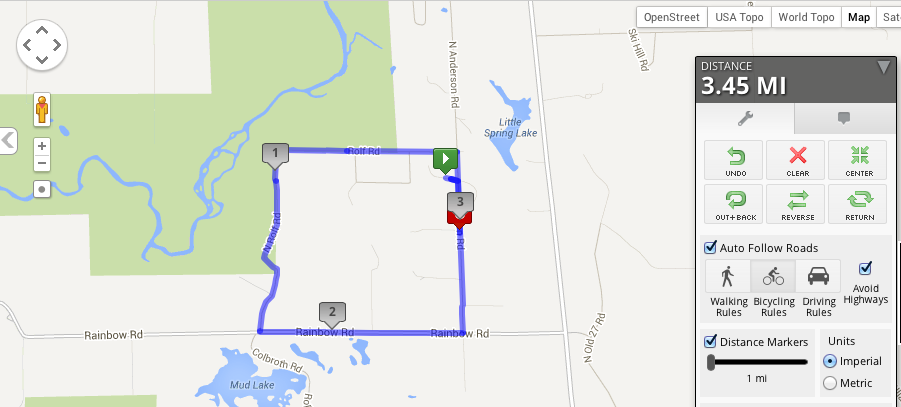
Freak 5K Map

Second, let me say that I only have one gear when competing in races.  No matter how much I say that I am just going to run for fun and enjoy myself, as soon as we leave the starting line, my competitive side appears and I basically black out from that point on.  I’ll step on heads to get out of the mud pits, ask slower racers to move over on narrower paths and elbow the males and females alike to get to the front.  I honestly hate losing and also hate seeing other people push it harder than I am, especially when I know that I have another gear.

I wrote an article a while back about the idea of staying “physically prepared”.  I enjoyed writing that article, and I feel that it loosely represented my philosophy on staying fit for demanding activities… whatever those demanding activities may be.

For The Freak 5K, I tweaked my training about 2 weeks prior and added a few longer distance aerobic based runs into the normal training regimen.  Why?  Just to make sure that my body had a few training sessions to adapt to the demands of running.  Personally, I respect running but I am not a fan.  It’s not my go to hobby for killing time and I rarely have a good time during a run.

I was told by someone before the race that the Cross-Fitters would do the best because they train for everything and it is hardcore training.  I always chuckle when I hear this.  Cross-Cult has got people believing everything these days.  Our guys dusted all of the “hardcore” cross-fitters on Saturday.  It’s hard to imagine that performing 50 continuous hang cleans or 100+ box jumps “unbroken” wouldn’t be enough to help someone power through a race like that no problem.

A workout is more than burying yourself in a pile of fatigue.

So, I took it as a personal challenge to torch everyone on the course after I heard this comment.

Here is a brief commentary on how we maneuvered the through the race…

On the starting line, my team chose to leave the starting line last for our wave, to avoid raising any tempers early on in the race.  Most people flail around like idiots in the mud pits, so I was on board with waiting for the flailers to move through the pits before we entered.  Shortly after the mud pit was a 35-40 foot dirt hill that was nearly a complete vertical climb.  Nice.

We made our move here.

Passing numerous teams on the dirt hill, we made our way into the woods.  The entire time passing competitors who were proudly sporting Cross-Fit t-shirts like they were tattoos.  Badges of honor.  Ha.

The demands of a condensed run course like The Freak 5K are interesting.  By far, the most difficult aspect of the course was the elevation change.  The course designers did a great job adding to the volume of hill climbing.  I bet we climbed 50 yards up and down for nearly 100 yards of horizontal travel.  It was brutal.  Up hill climb was exertion and focused breathing while the down hill was recovery into the next climb.  We made it through in good shape.

Freak 5K Elevation Change

So it turned out that we met up with a local high school wrestling team who we trailed for the remainder of the race.  The guys were in good shape, but we could have been relentless assholes and passed them a couple of times in sketchy spots.  We didn’t and it chaps my ass that we got stuck waiting for them to scale multiple obstacles, 20 foot lake plunges, 50 yard slip-n-slide, etc.  At these obstacles, we were typically forced to go single file, which is difficult to swallow when you are competing to win.  It really takes the wind out of your sails.

Our keg crossed the finish line 2nd behind the wrestler’s keg, by a matter of a few seconds.  I would like to note that we ran with 3 guys, taking turns carrying the keg for varying distances.  The wrestlers had 5 guys, doing the same.  No excuse, just saying that the rest factor could have played a part in how fresh they were toward the end.  God I wanted to bring home the trophy.  Next year.

Regardless, what I learned was this:

1)  Cross-Fit makes you good at… Cross-Fit… Training isn’t a sport, training is a means to accelerate at sports.

2)  I can train minimally still perform well at a demanding obstacle course-based race like The Freak 5K.

3)  I can keep my workouts to less than 30-40 minutes a session and still push it to the edge for 55 minutes no problem.

4)  Hip extension is everything, so train your butt muscles to be powerful extenders of the hip, add in some stability and mobility while you’re at it.

5)  It doesn’t take long to make adjustments to your training to acclimate to a specific demand if you’re training regularly.

6)  Trail running is superior to beating the pavement for building athletic qualities.

7)  Along with #3, simplicity in your workout regimen and your nutritional regimen yields great results.

8)  The ability to put your mind in a place where it is resilient to the thought of losing or quitting is essential to pushing yourself physically and squeezing  more out of your performance (black out and go for it).

9)  Life and sport happens on your feet… Make damn sure your lower body is strong, mobile and stable while taking care of your health/function of your muscles/joints.

10)  Don’t be afraid to step outside of your comfort zone with regard to physical exertion, you’re capable of enduring much more than you think you are.

11)  Never lose the desire to compete and avoid being average.

12)  Beer tastes great after a race like that.

13)  Spectators shouldn’t stand so close to the mud pit located at the bottom of the 50 yard downhill slip-n-slide when I slide down with a keg on my lap and toss it prior to water contact. (sorry old guy in the Levi’s with the new Polo shirt)


Cheers destroying your next race and The Freak 5k!

KG