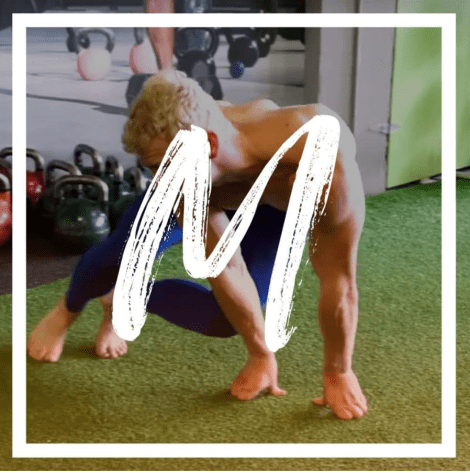
Here are Several Other Ido Portal Push-Up Variations

Ido Portal

The effectiveness of the Ido Portal Method is no longer a secret.  

Ido’s knowledge is quickly becoming the premier system for building body weight dominance.

Before you watch the videos below, remember that the best gains are made when following a system, which is basically a recipe.  

Keep the movement recipe simple:

Find an effective training system and practice it relentlessly.

Everything works… for a little while.  Literally everything.  Some programs are more effective than others, but people who commit themselves to any one system are going to see results from their effort.  If you’re not getting results, it’s time for a self-audit to identify what’s missing.  Chances are high the audit will reveal it’s something you’re not doing, or in some instances, not doing, that’s holding you back.

Allow me to rant on the value of practice…

Practice until you are sick of practicing.  Then practice some more.  Had a bad training session?  Come back tomorrow and do it again.  Build

There is no substitute for hard work.  You’ve got to tear up your hands, sweat and have a willingness to be sore and humbled by the difficulty of the movements.  

Practice increases understanding, awareness and insight, motor control, strength/stability/endurance/power/mobility.

The “elite” become “elite” because they practice.  A lot of athletes who are household names across the world, practice 10x more than people think.  When you’re watching them on television, you’re seeing the finished product.  Thousands of hours of behind the scenes blood, sweat and tears prepared that athlete to execute on the main stage.

Exercise #1: QDR: Beginner Rotational Push-Ups

Now, while doing something is generally better than doing nothing, it is possible to practice incorrectly, which is why receiving feedback from a mentor or a teacher so valuable.  A teacher is an advanced practitioner.  The teacher, through experience, has acquired understanding, knowledge to share with students.

The best teachers maintain the humble student mentality despite being experts at their craft.

Exercise #2:  NDA Beginner Lateral Push Ups

With movement, more specifically body position, it is very easy and quite common to think that you are practicing technique correctly when you are not.

Improper body alignment or stopping short of a full range of motion are two extremely predictable situations that a teacher has the eye and understanding to verbally cue or re-position.  

Exercise #3: Beginner Hybrid Push-Ups


A person could slip any (or all) of these exercises into their current workouts and get the full benefit.  Remember, each of these exercises is a puzzle piece that makes up an entire program.  Progress will always be faster when working inside of a system, which is a well drawn out plan.

Exercise #4:  Dive Planks

Another problem the distanced onlooker has with Ido Portal’s current portfolio of work is there isn’t a clear and defined starting point for a beginner.  Beginner in my world means someone who’s unfamiliar with all of this stuff.  Not someone who’s banging out unsupported handstands, looking to move on to an iron cross.

 
Exercise #5: Push-Ups with Toe Touch

One option a beginner has is a tedious scavenger hunt through old information on Ido’s previous blog.  Before I started to assemble the puzzle pieces, this is what I did.  It sucked.

If sifting through hundreds of blog posts seems a bit tedious, there are other fantastic training programs similar to the Ido Portal Method approach. These books serve as a logical stepping stone into the Ido Portal Method movement philosophy.

Are they identical?  No.  Are they extremely similar?  Hell yes.  Will you get results?  Hell yes.  

Here are those alternative training systems, should you decide to investigate further…
Screen Shot 2017-06-02 at 6.43.52 AM

Animal Flow (Mike Fitch)

Overcoming Gravity (Steven Low)

Ultimate Athleticism (Max Shank)

Complete Calisthenics (Ashley Kalym)

A quick word about equipment…

Whether you’re a novice or advanced trainee, a simple equipment set up can catapult your progress and increase your enjoyment.  Actually wanting to workout because you enjoy the process is just as important as training intelligently.

For the beginner, gymnastics rings and parallettes are the best starting point and will provide big bang for your buck.  There are endless exercise progressions and variations using rings and parallettes.

L-Sit progressions, tuck and push-up variations, vertical and horizontal pulling exercises, hanging challenges just to name a few.

Nayoya Gymnastics Rings

The Nagoya Gymnastics Rings (Amazon, $30) currently have a 5-star rating and over 1,007 customer reviews.  You’re welcome to shop around, but for the price and quality, you’ll be hard pressed to find a better deal with similar quality.

Best-selling author and movement enthusiast Tim Ferriss has raved about these gymnastics rings after testing them himself in past newsletters and blog posts.  

Gymnastics rings are an unbeatable buy in my opinion.

For parallettes, I constructed mine from PVC using these exact instructions.  It was inexpensive, simple and fast to assemble.  They work fantastic.

If you aren’t in the mood to DIY, I recommend these parallettes.

Cheers to you.

Kyle

Does Being Fit Make You Harder to Kill?

Quick Tips


At first I was going to say yes, without a doubt building fitness makes a person harder to kill.

I’m not sure about you, but personally every barbell squat, kettlebell swing, turkish get-up, 500m row and jump rope interval makes me that much harder to put 6 feet deep.

[Improving fitness cannot just be centered around improving exertion.  Exertion is just one piece of the puzzle, a fragment of a much larger picture.  We must consider the role of achieving better body position or movement pattern quality, tissue health and integrity, recovery and nutrition to be highly influential topics that enhance our ability to perform.]

It’s empowering to know that my stopping power increases with each and every repetition, distance covered and position held.

In fact, I was walking through the grocery store yesterday sizing up other customers wondering who might challenge me to a scrap.

As fate would have it, I navigated my way through the treacherous isles of the store without a single encounter,  purchasing my groceries unscathed.

Leaving the store, my thoughts quickly shifted to a classic movie scene from Indiana Jone’s.  Many of you will remember this particular clip quite well…


But if you do manage to trick me with ninja smoke and slip in a finishing move, please, do me the service of burying me ass up so you’ll have a place to park your bike.

Harder to kill?  Sweet slogan but hardly relevant for most of us. 🙂

Whatever gets you going though, right?


Kyle

Metabolic Conditioning: The Bear Barbell Complex Workout

20 minute Workouts, Quick Tips

“The Bear” Barbell Complex is as close to flowing barbell training with a barbell that you’ll ever get, or at least I have ever gotten.

I’ll assume that “The Bear” is referred to as “The Bear” because of how difficult the workout is.

This complex workout leverages barbells.  Barbells are mostly thought to develop pure strength and power.

The barbell was manufactured to work well for moving heavy weight.  Moving heavy weight creates the ideal training stimulus for building strength.  If a person moves the barbell fast enough across a set distance (Point A to Point B), the barbell becomes a tool that enhances an individuals power.  Think cleans, snatches, jerks, etc.

  • Slower moving + heavy weight = Strength Development
  • Fast moving + medium/heavy weight = Force Production = Power Development

Although barbell training might not be an appetizing fitness solution for a lot of people, taking some time to learn and practice the basics of barbell training can pay a person back ten-fold over time.

My guess is a lot of people avoid barbell training because of the intimidation and unfamiliarity factor, or for some, the uncomfortable sensation of iron grinding against the skin.  Barbell work will develop tough hands over time.

The callouses I cannot help you with… but if you want to know more about barbell training, buy Starting Strength by Mark Rippletoe.  Read a few pages, practice, read a few more pages and practice some more.  There is a wealth of knowledge in Starting Strength that can help you establish the emotional confidence and the technique to play around with the barbell a bit more.

It’s important not to be afraid or intimidated by the barbell.  When people think of barbell training they usually picture a 300lb tank-of-a-man squatting 500lbs, yelling like a maniac during every rep while his friends stand around yelling like maniacs during every rep.

You’re partially right if this is your initial mental picture.  But barbells, and how we use them to develop physical qualities has evolved a lot over the years.

Like any other fitness tool, barbells can be leveraged for other purposes also.

In particular, I enjoy using the barbell during work capacity directed training sessions (aka: metabolic conditioning) or at the end of a workout for a short burst finisher.  Think high reps with lower loads, or a highly concentrated amount of work done in a short time frame, or unique mixture of both.

When I re-stumbled onto the The Bear Barbell Complex a few weeks ago, I reintroduced myself to a style of barbell training that I used to use quite a bit, especially when available workout time was limited.

“What is The Bear Complex?, you ask.

Come a bit closer and let’s take a look…

Barrier to Entry

Tools: Barbell and plates (bumper or standard metal work fine), clock timer such as the GymBoss.
Skill:  Working knowledge of the barbell based exercises listed below.

The Exercises

#1: Power Clean

#2: Front Squat

#3:  Push Press

#4: Back Squat

#5:  Behind-the-neck Push Press

Workout Structure

–  Each movement is performed for 1 repetition before immediately moving into the next exercise.

–  1 Cycle =  1 repetition from #1-#5 in alternating/descending order.  After exercise #5’s rep, return back to exercise #1.

–  1 Round = 7 Cycles

–  Perform 5 Rounds

–  Rest 90 seconds after finishing each round.

–  Barbell weight is dependent on:

  • Weakest lift (the weakest lift determines the appropriate load, which should be sub-maximal)
  • Exercise technique and know-how.
  • Reaction to fatigue (which correlates closely with the deterioration of exercise technique)
  • Advanced Women – 95lbs
  • Advanced Men – 135lbs

The Extended Break-Down…

There are 35 reps of every movement being performed throughout all 5 rounds.  Just 35 reps.  If you consider the volume of a more traditional work-rest training session, where a squat is performed for 8 reps x 3-4sets, the volume is not much higher.

The weight used is also much lighter than a more traditional work-rest set and should be determined by your weakest lift in the complex.  For a lot of people that is going to be the push press, possibly the power clean (grip). I’m asking you to perform 5 reps for each round.  The barbell load should be a sub-maximal, which means that you should be able to push press that barbell for 8-10 reps comfortably.

My suggestions on weight for men and women are not the law.  Adjust the weight to what is appropriate for your current fitness level and know-how.

Every exercise is performed for a single rep before moving into the next exercise.  From rep to rep, you’re alternating between different movement pattern throughout each cycle.  It’s important to understand this aspect of The Bear Complex, because it’s one of it’s features that makes it so physically taxing.

Elevation Change

The barbell begins on the floor and travels to chest height after the clean and during the front squat.  After the front squat the barbell moves overhead after the push press.  The barbell then transitions from the front of the body to the back of the body on the descent down from the push press.

At this point, the barbell rests on the shoulders while you perform a back squat.  At the top of the back squat, the barbell is forcefully pressed overhead once more, and caught back into the front rack position at chest height.  The barbell is guided back to waist height and eventually back down to the floor to prepare for the next cycle, starting with a power clean.

The training stimulus elicited by moving the barbell up and down, front to back, movement to movement creates a large metabolic training effect.

Performing single rep of a movement pattern, followed by single rep of a completely different movement pattern, while bundling a bunch of different movement patterns together in a row (creating a “cycle”) is extremely fatiguing.  It’s provides a unique training stimulus for the body to cope with and also laser-like focus for the mind to keep up with since every rep involves a different movement pattern.

‘Single-rep-alternating-movement-pattern-workouts’ have proven to be an effective variation of traditional complex training, where exercises are performed for multiple repetitions before moving on to the next movement pattern.

If you’re accustomed to sectioning off your complexes, doing 6 reps of one exercise here and 6 reps of another there before moving on, alternating movement patterns with every rep will be a shock to your system.

It’s reiterating once again that alternating the movement pattern on every rep requires great skill.  The barbell is constantly changes levels, stopping and starting in different positions.  The transitions can be brutal.  There’s a high level of focus needed here.

The Fatigue is Coming…

During The Bear Complex, the first few reps/cycles usually don’t feel too rough, but the wave of fatigue that bites you in the ass somewhere around cycle 5, 6 or 7 can be overwhelming.  Possibly so much so that executing all 7 cycles for any 1 round is just plain unreasonable if you’re new it.  Don’t be afraid to remove your hands from the barbell to take a break and to gather yourself.

Loaded conditioning is a fantastic method to burn fat and develop high level work capacity which has great transfer into sport and becoming more resilient toward real life labor, but fatigue can break down your exercise technique.  Don’t be a hero here, be smart.  If 5 rounds is too much, do 4 rounds.  Be reasonable.

Movement technique first and foremost, forever and always.

Pay Attention to your grip integrity

Alternating movement patterns and transitioning the bar to different resting positions can fry your grip.  Consider that the bar is moving from the floor, to chest to over head, to shoulders, back to overhead and finally back down to the floor position.  That’s a lot of bar movement.  Don’t be afraid to walk away from the barbell if your grip starts to slip.  A quality grip is needed for the cleans.  Attempting to pull a barbell with a poor grip can be dangerous, and the fatigue that’s been created with slow your reaction/recovery time.  Again, rest for a few seconds, gather yourself, then complete the work with a solid grip.

If you’re a tenacious sweater like I am, also be aware of any sweat rolling down your forearm and into the hand/barbell interface.  Don’t push through this situation either.  Dry all surfaces with a towel and continue on.  Maybe consider using a no mess chalk solution such as HumanX Chalk Balls to help maintain grip.  Chalking your hands has come a long way.
.

This workout is advanced 

Complex training in general is an advanced form of training.

Any exercise scheduled in a complex must be an exercise that you have a familiarity with BEFORE you enter the workout.  You must have experience and proficiency in executing each of the included exercises on an individual level before you attempt a workout like The Bear Complex.  If you don’t know how to perform any one of the exercises, The Bear Complex is not the place to learn.

Explore…

If you’re looking to add in some variety to your training, give The Bear Complex a legitimate shot.  Be honest with your rest periods, your exercise technique and the structure of the reps, cycles, rounds.  Also be honest with weight that you choose to use.  There’s no shame in lessening the load if you need to.

Cheers to The Bear…

Kyle

(Video Coming Soon)

The Benefits of Jumping Rope (Part I)

Quick Tips

Over a year ago I whipped up an article that cautioned jump rope training, and it’s been one of my most popular posts on this blog.  You can find it here.

The issue with that post, is that I painted a picture that jumping rope is a harmful activity.

It’s not, but the title and tone of the post was deceptive.  In the end, I wanted it to be a cautionary tale.

It’s worth considering that jumping rope might not be the best option for you, depending on past injuries and other contraindications (which I cannot predict because I don’t know you).

The fact is that I really love jump rope training and I think that you should also.

Personally I jump rope almost daily, either as part of a warm-up or as part of the workout.

The jump rope is an incredible piece of equipment to leverage during the warm up.  5-10 minutes of jumping rope prior to a hard training session is ideal.

For the space restricted or climate restricted person (Winter in the North), I feel that jumping rope is an incredible solution to get you upright and moving.  We’ve beaten the “sit to much” campaign into the ground, but getting back on your feet while training a great goal.

Once beyond the initial learning curve, jumping rope transitions from a self-regulating/self torture activity into a highly engaging activity, that can be quite fun.

Here are a few of those undeniable benefits…

Functional Cardio

Does all cardiovascular conditioning need to take place on your feet?  Absolutely not.  However, it’s undeniable that life happens standing.  It’s also undeniable that we sit too much throughout the day.  Jumping rope puts you on your feet in an upright position where you are charged with the simple task of dodging the ropes as it turns.  It sounds easy and it might be for the first few turns, but jumping rope is a skill that elicits a cardio training effect similar to running.

In order to turn the rope faster, you’ll have to pay closer attention to your technique and posture, which needs to be on point as the jumps per minute increase.

Vertical conditioning tactics has great transfer into everyday life.  Improving your ability to deal with fatigue in a functional manner will serve you very well.

***  I’m aware of the studies saying that jumping rope for 10 minutes is like running for 30 minutes.  Studies like this are great for exercise physiologists and for selling fitness magazines, but in my opinion, they encourage people to do less.  Don’t cut corners on your workouts, do the work.  I’ve jumped rope for 10 minutes straight plenty of times and I can tell you that it gets boring and repetitive real quick.  I’ve also tracked my heart rate pretty aggressively during these jump sessions and I’ve never seen my heart reach a BPM as high as when I’m running.  Maybe it’s a personal problem.

Small Space Cardio Solution

If you live in a location where Winter cages you like an animal during 4-5 months per year, you can appreciate the fact that jumping rope can keep you fit without having to be outside or needing open space to move around.  If your ceilings are high enough and the floor you’re jumping on can tolerate it, jumping rope is a cash money conditioning activity.

The Winter’s in Wisconsin are relentless, so it’s nice to be able to mix in a potent conditioning session without having to stomp around outside in the slush.  Treadmills, stationary bikes and other new age cardio equipment are decent alternatives for elevating heart rate in a pinch, but there is nothing like moving your body as it was meant to on real ground.

Variations 

If you’ve only jumped rope using the standard two-foot jump, you’re missing out.  Go back and mix in some variations.  Standard two-foot jumping has it’s place, but even a full minute of two foot jumping is boring.  Switch it up.  Try going single leg for a few rotations, running with low knees, running with high knees, side to side, front to back, 180 degree rotations, double-unders, boxer hops, etc.

Jumping rope becomes interesting and quite taxing when you start to mix in improvised variations.

It takes skill to jump rope, and any time you can expose your body to a new skill, you’re better for it.

Low Cost Cardio Alternative

A speedy trip to your local sporting good store and $5-$10 buys you a pass into the jump rope game.

If you’re tight on cash, jump ropes are fantastic alternative.  If you’re thinking about buying a treadmill or an elliptical, buy a jump rope instead and roll that money into more versatile gym equipment instead.

Just be aware that there are major differences in jump rope design and the material their constructed from.  As with anything, you’ll get what you pay for.  I’m not saying it’s mandatory to drop $40 on a piece of rope with handles, but having a jump rope that spins freely at the handle-rope junction is nice, and I’d suggest purchasing cable rope to increase it’s lifespan.

I’ve broken a bunch of shitty quality ropes jumping and it’s frustrating when it happens and potentially harmful to your body, pets or personal belongings.

Rogue Fitness has great ropes for cheap, check out their selection.

It’s brilliant that “high end” jump ropes are selling for $40+, considering they are probably manufactured somewhere in China for less than $5. Not a bad profit there. Alibaba, here I come.

Active Rest

Jumping rope as a filler exercise in the middle of a workout is fantastic.

Here is how you would position jumping rope as a “filler exercise” :

Squat x10

Jump Rope x50 rotations

Push-Up x10

Jump Rope x50 rotations

Chin-Up x10

Jump Rope x50 rotations

Lunges x10 Right/Left

Jump Rope x50 rotations

… rinse and repeat for rounds and/or time.

Look at that!  Equipment needed?… your body and a jump rope.  Simplicity.

A workout like the one above is resourceful, barebones fitness at it’s best.  50 rotations of the jump rope might not seem like a lot at first, but remember that the fatigue is accumulating as you complete the work.  The bodyweight exercises provide a sub-maximal muscular challenge while jumping rope serves as a temporary break from that muscular effort.

Jumping rope as active rest in between resistance based exercises really highlights the self-limiting idea.  As technique and posture wear down with fatigue, your jump cadence will also slow or force a rest altogether.  The rope gives you instant feedback on your technique and fatigue.

It takes tremendous discipline to tame your thoughts, breath and posture when your heart rate is raging at 85%-90% of max BPM.  You’ll know what I’m talking once you’re in the storm.

The wrap up…

Jumping rope is a bad ass training method.  I support it 100%.  Boxers, martial artists and athletes have jumped rope for ages to develop high level conditioning that transfers.

Just remember that a jump rope is a tool.  It’s a small piece of a much larger puzzle.  It’s provides an inexpensive, yet effective vehicle for cardiovascular conditioning that is uniquely different than other traditional cardio activities like running or biking.  Not better, not worse, just different.

Also consider that there are rarely dangerous training methods.  I think my days of prefacing all of my writing with words of caution are behind me.  Fitness protocols and tactics become dangerous when they fall into the wrong hands or they are abused with negligence.  Take an honest assessment if there is anything out of whack with your body that should be considered before you start jumping.

Exercise common sense and you all of the positive effects of jumping rope…

Cheers to jumping rope…

Kyle

Basics of The Ido Portal Training Method

Ido Portal

Ido Portal

{Photo Credit:  http://www.idoportal.com}

Ido Portal Method training is taking off like rocket and growing in popularity every single day.  

There’s a moutain of Ido Portal movement videos and articles all over the internet describing his techniques and teaching. 

[I do not speak for Ido Portal in any way.  Ido is a man with his own original thoughts and ideas.  Anything I write or discuss on this blog is my interpretation of information he’s published on his social media page, his old blog, Youtube interviews and various other sources.]

My background…

I have an extensive background in strength and conditioning, but it’s traditional in every sense of the word.  

It took years for me break away from deadlifts, squats, pushing, pulling, and core work… and expand into movement training.

Old habits die hard, but eventually, I dove head first into movement training.  

Gradually, I rebuilt my body, peeling away layers of stiffness, improving range of motion, coordination and newfound strength.

Thousands of people have done the same, many through the information in this article.

It’s amazing to see the feedback of those who’ve decided to take actionable steps toward building up their movement arsenal. 

The first time I encountered Ido Portal Method, I knew I was watching something different.  This was a much different approach to building fitness.  The training tactics were unlike anything I’d seen. 

Crawling, sprawling, twisting/turning, reaching, flowing, strength movements paired with Capoeira, gymnastics, hand balancing, dance, gymnastics, etc.

Ido Portal Method was like an open platform for many differnet styles of movement.  

Just when you think you’ve got it figured out, it changes shape, moves in a different direction.  

Since my initial exposure, I’ve spent a significant amount of time reading, watching, practicing and digesting Ido’s methodology.

This article is my translation of the basics of the Ido Portal Method. 

IMG_4167 

Ido Portal Training Methodology…

If you’re looking to get the summarized view of what drives Ido Portal’s movement methodology, the formula looks something like this:

Isolation—> Integration—> Improvisation

Step 1:  Isolation

Step 2:  Integration

Step 3: Improvisation

What I currently comprehend, the movement paradigm is a series of transitioning from phases.  

Isolation to integration to improvisation.

Ido Portal Method raised the bar with movement standards.

Most systems teach isolation (do this squat, then do this deadlift, then run up that hill, then do a pull-up) and stop there.   

Ido Portal Method takes it a step further.

Here are details on each phase.

Isolation

In the Ido Portal Method, Isolation based movement is essential for making progress.  

This is the base of the hierarchy.

Strength is a prerequisite for movement.

Being strong enhances movement capacity because you OWN every position.  

Isolation = building strength with movement patterns.

Movement patterns:  

  • Squats
  • Deadlifts
  • Lunges
  • Carrying
  • Crawling
  • Vertical Pulling
  • Vertical Pressing
  • Horizontal Pulling
  • Horizontal Pressing
  • Bent Arm and Straight Arm Upper Body Training
  • Glute-ham raises
  • Rotational patterns
  • Core training
  • Power Training (cleans, snatches, jerks, kettlebell swings, etc)
  • Stabilization drills

This is isolation.

You might be familiar with these exercises.  

There’s also a heavy emphasis on high tension bodyweight-based strength training exercises.

Body levers, hanging and climbing, dips, muscle ups, parallette work such as L-Sits, and Tuck Planches, single leg squats, single arm pressing, handstand push-ups and various locomotion patterns (crawling, rolling, etc.)

Gymnastics strength training.

Mixing traditional strength training with body-weight based exercise is a potent combination.  

These are time-tested, proven strength builders essential to physical development. 

Improving athleticism with Isolation style training opens doors to building movement sequences (performing several movements in a row) and evnetually fully improvised movement flow.   

Multi-planar strength and movement freedom.

The bottom rung of Ido’s movement classification system is often the highest rung for other training systems.  

HIGH. STANDARDS.

There’s a realm of physical expression that exists beyond getting fixated on sets, reps, putting more weight on the bar, numbers numbers numbers, or racing the clock to set new P.R.’s in a WOD.  

Handstands, leg-less rope climbing, ground-based movement flow training packed with locomotion patterns and bodyweight movement patterns are here.  

Our bodies are designed to move freely.   

 Flow

Ido Portal Method combines the best of many movement disciplines.

Integration

Integration is the point where movement sentences are formed from the words (isolation).  

A squat, is no longer just a squat.  

A squat is a stepping stone to another movement, and another, and another.  

The practice is evolves into a seamless flow, moving about.

More movements are integrated, creating series of movement patterns formulating a “sentence” of movement.  

  • Sidenote: There’s a heavy Capoeira influence. 

The ground conditioning (locomotion patterns, Capoiera, etc) combined with gymnastics/bodyweight/traditional strength training, fused with flexibility and mobility work is NOT NEW, but since it’s being repackaged and people are seeing incredible results, it’s definitely creating a paradigm shift in fitness.  

“Fitness” is less about who can build the best looking body or lift the most weight (both respectable pursuits), it’s about moving and how your body can perform when confronted with the known and unknown.

The shift is on and people are taking notice.

Nike has…

Ido Portal Nike

More Integration…

Integration builds on the physical preparation from isolation training.  

Pre-planned movement sequences make up part of the Integration phase.  This is similar to a dancer demonstrating a choreographed routine.  Just because the routine has been practiced for months doesn’t make it any easier to execute.  

I’ve watched the “Locomotion Research” video 50+ times.  Watching someone move like water is inspiring.  The movement sequences demonstrated in the video are deceptively difficult.  

Ground-based locomotion is a multi-planar movement requiring a level of body awareness, joint range of motion and on again/off again body tension most people rarely practice.  

Many of these dynamic patterns are animal-like.

People are often humbled by the amount of mobility and strength needed for locomotion patterns.

After the first few sessions, locomotion practice will leave you sore.  

The Lizard Crawl bridges the gap between “lifting weights” and putting those gains toward challenging movement patterns.

Crawling is difficult.  

If you’re not yet crawling, get into it.

Crawling patterns are effective for building coordination, spatial awareness, strength and movement capacity.  

Improvisation…

Ido has commented on numerous podcasts that improvised movement represents the highest form of human movement.  I couldn’t agree more.

Dominating isolation exercises makes the transition to integration significantly easier.  

With consistent practice of Isolation and Integration, one will arrive at the final progression of Ido’s movement philosophy… improvisation.

World-class gymnasts (pound for pound the strongest people on the planet) are rarely expressing improvised movement.  Competition routines are all pre-planned, practiced and choreographed prior.  

Improvisation is the combination of isolation and integration.  You’re essentially making it up as you go, or “flowing”.  Though it will likely take years of dedicated practice, improvised movement flows are achievable.  

This is where progression becomes important.  

Flowing like Ido Portal doesn’t happen overnight.  

Practice is king.  

I’ll spend less time describing the Improvisation phase of the Ido Portal Method because most folks need to focus on nailing down the elements of Isolation and Integration.  

In interviews, Ido has mentioned several times he thinks there is a dimension to be explored beyond Improvisation.  

Isolation and Integration Progress

The Ido Portal Method represents an incredible shift with how we view and define fitness.  

Humans are made to move (climb, run, jump, roll, carry, etc) and I think there is an emerging sector of people who want to experience the thrill of moving in this way.  

It’s important to clarify that traditional physical fitness modalities aren’t obsolete.  Nor should they be.  

A person should spend a great deal of time gaining ground in the Isolation phase, grooving technique, building strength, improving joint control throughout a range of motion.  

Hammering away on the basics (squats, pulling, pressing, etc) is fundamental to progress.  

The goal is to build strength, stability, mobility (the missing link of fitness), conditioning and constantly expand movement capacity.  

Conditioning is also important, and should never be overlooked.  

Train Like Ido Portal Method without the Pricetag

Several years ago, I started looking for alternatives to the Ido Portal Method for several reasons.

  1.  Ido Portal doesn’t offer programs through his website.
  2.  Training privately with Ido and his team is EXPENSIVE ($2500+)

Like many of you, I couldn’t afford $2500 for a workout program, no matter how spectacular. 

I started researching alternative programs with the belief that similar results could be achieved while investing less money.

With enough research, I found what I was looking for, and what I felt other people could benefit from as well.

Here are two amazing programs to check out:

  • Movement20XX
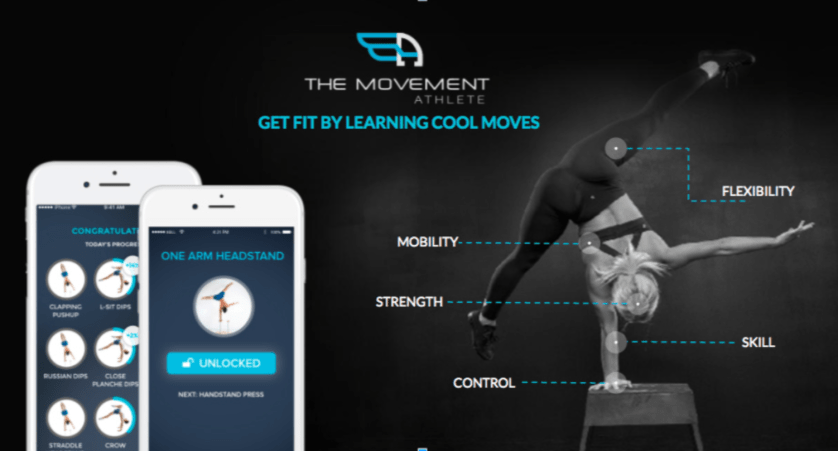
  • The Movement Athlete

Combining all of these programs creates a comprehensive training system.

Strength, movement training and mobility.   

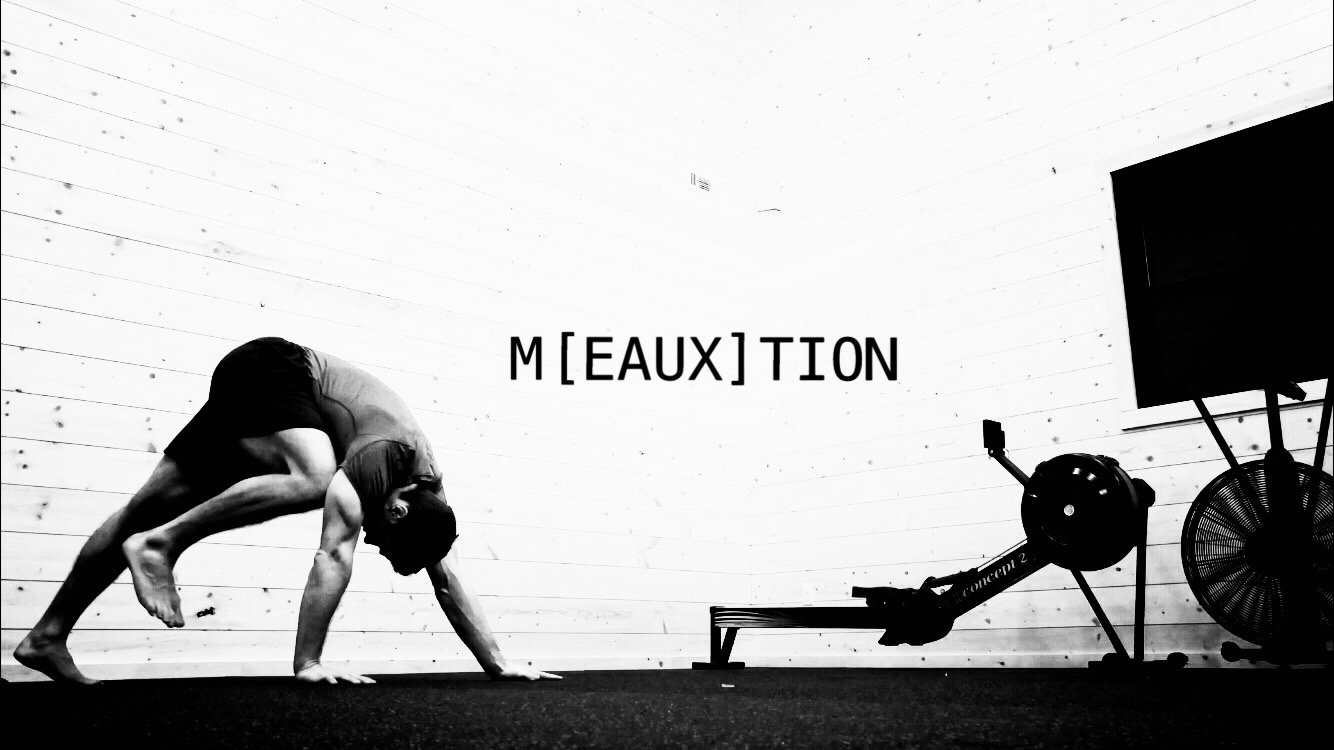
Movement 20XX  teaches ground-based movement, locomotion patterns (lizard crawl, etc),movement sequences and improvised flow work. 

The Movement Athlete will build strength using bodyweight exercises.  Strength is critical for performance and long-term health.  Pistol squats, one arm push ups, handstands, l-sits, body levers, upper body pulling, etc.  

Here’s a little more about each program. 

Movement 20XX

Screen Shot 2019-11-15 at 11.12.03 AM

Movement 20XX is a ground-based bodyweight training system that teaches many of the locomotion patterns and flow work found in Ido Portal Method.   

Locomotion mainly consists of quadrupedal ground-based exercises like crawling (lizard Crawl, etc), switches, transitions, etc.

Integrating Movement 20XX into my own workout regimen has been awesome.  

I started by supplementing my traditional resistance training workouts with a few basic crawling exercises, and built up from there.  

Over time I strung together exercises to create repeatable movement sequences.  

Movement 20XX integrates the best elements from different movement disciplines to create a hybrid system of movement training.  

Crawling, transitions, switches, flow, etc. 

I started Movement 20XX with a stiff spine, poor hip and shoulder mobility, tight hamstrings, and mediocre movement capacity.  

After about 4 weeks of dedicated movement practice, my body acclimated to the mechanics and demands of the patterns.

Using the curriculum from Movement20XX, I made more movement gains in 2 months then I had in the previous 5 years.  

Interestingly, my traditional lifts saw boosts in performance.  Deadlift, squat, pull-ups and pressing all improved, felt smoother, etc.

If you want to explore movement, this is the program to get. 

👉 Learn more: Movement20XX

The Movement Athlete  

The Movement Athlete

Strength is critical for improving movement performance.

If you get nothing else from this article, please, remember that. 

Movement Athlete Academy is a bodyweight-based strength program designed to improve performance in high powered movement patterns:

  • Muscle Ups
  • Handstand Push Ups
  • Single Arm Push Ups
  • Single Arm Body Rows
  • Pistol Squats
  • Handstands
  • L-Sits
  • Human Flags (aka: body levers)
  • Back Levers

Sadly I used to think bodyweight training was dumb.  If I wasn’t lifting weights, I was wasting time in the gym.

When I committed myself building effective bodyweight movements, my strength increased, everywhere.

The human body is adaptation machine. 


Movement Athlete Academy is a smart training system, built on the principles of:

  • Smart exercise progression.
  • Progressive overload.
  • Progressive exercise complexity and volume.
  • Rest and Recovery.

The workout design, exercise progressions and step-by-step tutorials make Bodyweight Athlete a great bodyweight-based program to invest in.    

Bottomline…

Find a program and follow the details.  

Invest the money in learning effective training techniques, commit yourself to the curriculum and you’ll get phenomenal results.

Stay Tuned 

If you’ve enjoyed this post, check out:

Cheers to the Basics of The Ido Portal Training Method…

KG

SaveSave

Make Your Bed and You’ll Succeed In Your Fitness Endeavors

Quick Tips

I’m an inspirational video junkie.

If I can find a great TED Talk or a video from a individual who has accomplished some amazing feats and has something to share about it, I am going to watch it.

Extracting value from anything and everything-video or the written word- has been a hobby of mine for a quite some time now, and this morning’s extraction was especially enlightening and thought provoking, definitely worth the 19 minutes of time to take it all in.

The video I watched was from this year’s University of Texas graduation commencement speech, where alumnus William H. McRaven was the guest speaker to nearly 8,000 graduating seniors.

McRaven is a big deal in the military, as he is the acting commander of the U.S. Special Operations Command. He helped organize the raid that killed Osama bin Laden. Not bad for the resumé.

There were a great number of points in McRaven’s speech that are worth discussing, but one in particular seemed to resonate with me.

It had to do with the SEAL training instructors entering the barracks every morning and conducting a stringent inspection of each SEAL candidates bed.

What were they observing? How well they made their made their bed.

Sheets needed to be square and crisp around each corner, covers pulled tight, extra blanket folded and placed gently at the foot of the “rack”, pillow placed carefully in at the head of the bed, perfectly centered.

The bed needed to be made to perfection, each and every day, no exceptions whatsoever. McRaven went on to comment, “It was a simple task- mundane at best.”

But the point of the task was in the wisdom behind it’s execution.

“If you make your bed everyday you will have accomplished the first task of the day. It will give you a small sense of pride and it will encourage you to do another task and another and another.

By the end of the day, that one task completed will have turned into many tasks completed. Making your bed will also reinforce the fact that little things in life matter.”

Here comes the magic statement (the wisdom if you will)…

“If you can’t do the little things right, you will never do the big things right”.

Although this sounds like something that many of you have probably heard over and over again, it deserves to be revisited the brilliance is in it’s simplicity.

Especially if you’re chasing fitness or any health related goal.

You need not worry about supplementation, fancy magazine exercises or any other minutiae if you are not already executing the basics of drinking water, eating whole foods, sleeping, and moving around more frequently and with purpose.

Doing so is putting the cart ahead of the horse, and will leave you filled with anxiety, broke and disappointed. I speak from experience first and foremost.

The magic solution to fitness (and health for that matter) is consistently (and frequently) executing the basics of human movement, nutrition and sleep despite all of the urges to not do so.

Stopping to make your bed in the morning gives you momentum throughout the rest of the day.

It really doesn’t matter what style of nutrition you choose (Paleo, Intermittment Fasting, more frequent feedings, square meals, etc) or how you choose to train (long slow cardio, powerlifiting, movement based, gymnastics, metabolic resistance, etc), if you can’t make you bed… you’re not doing the basics.

You’ve left a gap in the process. Your tactics are lacking the fundamental elements from which all other higher level tactics must rest upon.

If you want to draw some parallels to exercise and making your bed, I would say that the entire concept of exercise progression starts with making your bed.

If you want to move like Ido Portal or an elite gymnast, you better understand that it takes years of movement practice to achieve that level of movement. Practicing handstands once a week when it is convenient for you won’t cut it.

If you want to deadlift 600lbs, you better start with successfully pulling 135lbs with flawless form first. Heck, can you hinge your hips correctly without any weight? Start there.

You don’t have to like the timeless principles of overload and exercise progression, but you should probably learn to respect them.

Those who are consistent in their approach to overload and detailed with their attention to moving through exercise progressions often make the fastest advances and the greatest gains, all without sacrificing the integrity of your bones and joints. You can go hard, but go hard with “smart” always in the back of your mind.

And on and on…

Here are a few other make your bed scenarios…

“Can you teach me how to single arm swing a kettlebell and transition into a bottoms up squat to press”?

– “Have you made your bed?”

“Can you share with me why I should be eating more coconut oil and why MCT’s are good for the body?”

– “Have you made your bed?”

“What’s the difference between whey protein isolate and casein protein and how often should I be consuming each?

– “Have you made your bed?”

What’s the main idea here?

If a Navy SEAL, who is a professional warrior in essence, has to learn how to perfect the habit of making his bed prior to moving on to anything else in their training curriculum, why would it be any different for the average human?

Get your “make your bed” activity done right away in the morning. In other words, do something- and this can be anything really- that gives you momentum that can be leveraged for the remainder of the day.

This day to day execution will accumulate to weekly execution, which will spill over to monthly execution, which will spill over to yearly execution, which will culminate into your lifelong habits.

All of the small puzzle pieces, when put in their proper places, will eventually create a masterpiece.

Imagine, all you did was dedicate yourself to making your bed savagely well.

The magic is in the details, as basic as they may be.


Cheers to making your bed…

Kyle

(Check out the full video of this AMAZING speech on my Facebook Page)

Infusing Kettlebell Presses into Turkish Get Ups = Amazing Added Challenge

Kettlebell Training, Quick Tips

The Turkish Get Up is a little known weapon to those who are insanely strong, balanced and mobile.

Since implementing into my own training schedules, I have noticed incredible increases in shoulder stability and strength, core stability and strength through multiple planes of movement, along with a nice boost in joint mobility at the hip, shoulder and thoracic spine regions.

To be honest, it’s extremely hard for an exercise to crack my workout line-up. In other words, I am very selective about adding new training methods since I have seen such tremendous results with my mainstay movements.

However, in the same breath, I have to say that the turkish get up has been one of the greatest additions to my training habits to date. The amount of insight that I gained about my own movement quality was unprecedented, and humbling at times.

I ‘bulletproofed’ my body the day that I dedicated myself to learning the turkish get up, and by learning, I am talking about reading articles and watching YouTube videos until I was blue in the face.

You can learn any exercise correctly if you know where to look on the internet. If you’re a visual learner, check out the videos on YouTube, some are extremely high quality and in depth.

I cannot say enough about the drastic impact turkish get ups had on my performance and quite frankly, my physique. Spending that amount of time under tension does wonders for firming up a person’s body. I can’t deny that I haven’t enjoyed seeing the tweaks in transformation.

The traditional turkish get up is a phenomenal exercise, and probably needs no further adjustments or additions, but for the curious mind (which I have) and those who enjoy exploring (which I do), adding in slight tweaks to the turkish get up can make what some feel is a “bland” exercise extremely interesting, not to mention fun.

Of course, everyone should hone in on the basics of executing a regular turkish get up before moving any further in the progression, it just makes senses to progress with common sense.

The idea of pressing during the turkish get up was simple…

I perform a press at certain check points that allow for it.

Press #1: Horizontal chest press in the starting prone position.

Press #2: Overhead vertical press at the tall kneeling position.

Press #3: Overhead vertical press at the standing position.

Press #4: Explosive push press at the standing position.

Done.

If you stop and think about it, you’re pressing the kettlebell (or dumbbell) four different times for each individual rep of the turkish get up.

That’s a lot of work.

*** Keep in mind that the chest press performed in the lying position might will not feel like a normal bench press because: 1) You’re pressing an odd object (kettlebell), 2) Your range of motion is limited (elbow contacts ground surface) 3) Your body position is altered from a more traditional bench press.

All of these things are ok, so relax about it. “Real world training” says that you won’t always be pressing a shiny dumbbell on a padded bench. Though he was referring to sandbags, I believe I heard Alwyn Cosgrove call repetitions like these “alive reps”. Nice terminology, I can roll with that.

If you perform 5 reps of get ups on each side of the body, you’re looking at 20 reps per side (40 total) right and left. If you go higher reps, which I typically like doing since my turkish get up practice usually involves nothing more than get ups and some kettlebell swings afterward for conditioning purposes, you might be looking at a pressing volume of 40+ reps on each side of the body.

Consider that the pressing is uni-lateral (pressing with one arm while the other remains unloaded) and you can bet that your mid-section is getting as much of a workout as your upper and lower extremities are.

Poke your tummy the next time you press a decently heavier weight on one side only, it will be activated.

“Six-pack training” anyone?

I considered pressing at the same check points on the way back down to the start position, but felt like this would be slight overkill. Who knows, maybe down the road. That would have increased my pressing volume to 40 reps per side for every 5 reps of turkish get ups, and 80 per side had I completely 10 turkish get ups.

This is where I use my logic. For my goals, that amount of pressing will take away from my main goal, which is to work the turkish get up, not improve my pressing strength and abilities. So, I avoided this volume to keep the workout more TGU-centered.

Make sense?

Post-workout, the first observation I had was the fatigue component experienced from all of the added pressing.

The shoulder burn wasn’t nearly as bad as it was from the “5 minute no rest turkish get ups” that I adopted from Jon Hinds (owner of Monkey Bar Gym), but it was right up there. I am humbled what a simple activity like holding a weight (and a relatively light one at that) overhead can do to fry your shoulder musculature.

For me personally, it was a completely manageable fatigue (which is perfect) that provided an added challenge to the main movement.

A rarely discussed topic with turkish get ups is the amount of cognitive support needed to execute such a segmented exercise. There is a lot happening on the way up to the standing position, and then on the reversal moving back down to the starting position.

Holding the weight overhead is one thing. Holding the weight overhead while twisting and turning underneath that weight in an effort to rise up to the standing position from a dead stop laying position is another. Don’t

The first few times I gave a good effort to turkish get ups- treating them like practice versus a workout- my brain was fried. My eyes felt tired.

The brain has to be engaged in order to make turkish get ups work, and this is another HUGE benefit of the drill. Turkish get ups are a technique driven drill sequence. I respect those who preach this, because I feel that focusing on technique and the subtle details is how you extract the most physical and mental benefit from the movement.

The mind-body connection during get ups is of tremendous benefit for the exercisee.

I feel smarter after get ups, no lie. More detailed, more creative, stronger 3-dimensionally.

If you’re looking for a challenge, try adding some presses into your turkish get up practice. But keep it exactly that, practice. Be mindful of your abilities, yet don’t be afraid to walk to the fringe to challenge your mind and body.

And as I mentioned earlier in the post, if you have never practiced turkish get ups, your main job is to learn the steps first before adding pressing. You have to crawl before you walk.

Cheers to adding pressing to your turkish get ups,

KG

(pictures to come…)

Bodyweight Training Works, Go To The Next Progression!

bodyweight training

Just when you think bodyweight training is worthless, let me quickly restore your faith.

I know what you’re missing.  It’s the same thing most people are missing when they are looking to leverage bodyweight exercise to boost strength, boost power or burn fat.

It’s called progression.

Progression can mean a few different things:

1)  Load progression (increase in weight)

2)  Skill progression (increase in motor skill demand)

I chose to limit the progressions to loading and skill.  Could you say volume is a progression?  Of course, but I am convinced that MORE VOLUME IS NOT WHAT MOST PEOPLE ARE LACKING WITH BODYWEIGHT TRAINING PLATEAUS.

Just the thought of marathon sets of exercises that you are already good at makes me cringe.  I’m guilty of avoiding essential increases in loading or skill in favor of more volume also.  It’s soothing to your ego knowing that you can dominate a bulk set of push ups or squats.  I’ve been there, I know first hand.  Comfort feels good.

But comfort doesn’t get your stronger, leaner or more athletic.  Especially if you’ve got lofty strength or aesthetic goals and you’re attempting to leverage bodyweight training to get there.

So, progression is probably what you are lacking, but the great news is that once you have identified that proper progression is the missing link, the solution becomes rather simple.

Take the push up for example.  If you can rip out 20-30 bodyweight push ups no problem, you need to take the next step to either a)  rear foot elevated push ups, b)  externally loaded push ups c) 1-arm push ups.

In some instances, I am going to suggest going straight to 1-arm push ups to restore that faith.

Why?  Because the first time you set up and lower yourself into the bottom of a 1-arm push up, your eyeballs are going to feel like they are going to pop out of your skull, catching on your orbital bones.  Seriously, you’ll feel like a weakling.  The point of sending you to the 1-arm push up gallows is to expand your thought process to how effective bodyweight training can be if you’re willing explore new realms.

Generally, a lot of people who are great at strict 1-arm push ups also have incredible upper body strength and as a byproduct, a decent physique.

The junction where functional performance meets physique is an ideal point for most people.  It really stinks to be all show and no go or all go and less than ideal show.  But who am I to make that statement, because if you enjoy either one of those scenarios, it is your prerogative to embrace that happiness.

So as I mentioned, 1-arm push ups aren’t necessarily where I want you to start working your progressions, because the point of exercise progressions is to make one’s way from one challenging movement to the next, progressing as fast as your strength, stability and motor control can tolerate.

In school, most people don’t go straight into Calculus, right?  They have to work through the progressions of basics of mathematics before they earn the right to tackle Calculus.

Bodyweight training, heck, all forms of physical effort work in the same way.

The above example involved upper body pressing, more specifically the push up.

However, progressing the lower body, particularly the squat can be just as simple.

As a beginner, you might start with improving your technique, strength and work capacity in the basic bodyweight squat.  After improving the aforementioned qualities, you will need to move on to higher level variations of the squat.  If you’re adamant about staying true to a minimalistic fitness approach like bodyweight exercise only, the next progression might be to elevate one leg onto a bench or other form of support, and perform what many call Bulgarian split squats, or rear foot elevated-single leg squats.

RFE split squats remove one foot from the base of support while simultaneously increasing the loading on the working leg.  Instead of two legs contracting to move your body up and down, you’ve now got one leg doing the work, an obvious increase in loading.

The next progression from the RFE split squat are either assisted bodyweight pistol squats or full bodyweight pistol squats.  I mentioned assisted bodyweight pistols because it might be helpful to hold on to something while you allow your body to “feel” the mechanics of an unsupported squat.  There’s no shame in assisting yourself until you’re physically read to let go and go for the fully unsupported bodyweight pistol.

As it stands right now, bodyweight pistol squats are the greatest lower body strength exercise known to man.  That’s a big and bold statement, but I cannot dream up another exercise that accomplishes as much as the free-standing pistol squat.  A bodyweight pistol is just the beginning, because adding load and varying duration of time under tension dropping into and out of the “hole” can both work to advance your performance.

It can be quite interesting to observe the right side/left side differences in balance, strength, stability and skill acquisition.

For me personally, I have found that my right side, which is my non-dominant leg, is much stronger than my left side.

So the bottom line is this… bodyweight training is phenomenal.  Just because you don’t have access to weights or you’re simply looking to switch up your training routine, doesn’t mean that you have to sacrifice results.  The key is to understand your current performance, your goals and then choose the right progression to accelerate your arrival at the next level of performance and goal achievement.

Make sure that you are tracking your performance from workout to workout.  It’s important for tracking progress and creating the next plan of attack.


Cheers to bodyweight movement…


KG


Just Bodyweight Exercise

Quick Tips

Bodyweight training is making a serious comeback in my own training habits.

It’s easy to forget about how effective bodyweight exercise is.

I’m guilty of it for sure. But I’ve recently returned to what I consider the foundation of all exercise, basic bodyweight training. “Basic” doesn’t mean easy. Single leg squats, single arm push ups, hybrid pulling movements, handstands and crawling variations are some of the most challenging movements in the exercise rolodex. Especially when you hold yourself to strict technique.

Workout equipment is always going to be evolving and innovating, but the idea that you can get a highly effective workout anywhere and anytime is incredibly valuable.

The rules of bodyweight training don’t differ much from more traditional forms of resistance based training. There are advantages/disadvantages and sacrifices to every form of exercise when you think about it, and bodyweight strength and conditioning is no different.

Nearly all of the major movement patterns are present: pulling, pushing, squatting, lunging along with various forms of cardiovascular conditioning such as running, hybrid movements like burpees, mountain climbers, and crawling.

I used the word “nearly” in the previous sentence because there is still no viable way to load the hip hinging pattern using just bodyweight. Deadlifts are still a no go, especially if you are staying minimalist with your definition of bodyweight training.

However, since the rise of glute thrusts and other glute activation drills, strengthening the backside without equipment seems feasible. Progression is the key here, especially since many strong individuals will find that the double leg versions of bodyweight hip bridging and bodyweight hip thrusts just don’t load the backside enough.

Progressing to a single leg version of the hip thrust is the ticket here. Go for increased reps, slow the tempo of movement down or hold the top (lockout) position for time.

Let’s not forget about the vast amount of abdominal focused training that bodyweight exercise has to offer. Plank variations, hollow body rocks, crawling, slow mountain climbers and hanging leg raises are all incredibly challenging exercise when performed with strict technique and adequate time under tension.

Progressing the intensity -and therefore the training effect of bodyweight exercises- can also provide a unique challenge.

Knowing when to increase reps, increase time under tension, increase the intensity and skill challenge of a movement pattern all come into play here.

Single arm push ups are a great example here. The transition from a traditional push up to a single arm push up is drastic when it comes to the increasing demands in stability and loading. There is also a grooving issue early on, where the body simply hasn’t been exposed to what’s required physically to complete a quality rep/set of single arm push ups.

In these situations, I will either break up the movement or add assistance in the form of a resistance band.

Breaking up the exercise into its segments typically involves working the eccentric portion of the exercise first.

So, for the single arm push up, I will focus on the lowering portion (eccentric) exclusively for a few weeks, or until I have developed the control, strength and stability to progress to adding the concentric (ascending back to the top) portion of the exercise. Eccentric training isn’t sexy and even 3-5 seconds of lowering can feel like an eternity, but it’s a gateway method to arrive at the next logical progression of an exercise.

If you have access to a resistance band, you can loop it around your chest and receive assistance during key moments of the lift. For a single arm push up, it can be challenging to push out of the bottom of the exercise, and this is where the band assistance technique works wonders. Since the band will be stretched to the maximum at the bottom of the push up, you’ll receive the most assistance where it’s needed most.

Band assistance is fantastic for working up to chin ups, pulls ups and single leg squats.

If you’re looking for a simple yet effective bodyweight training session, try this one…

Set #1:
10 push ups
10 squats
10 hollow rocks
—> Repeat for 5 rounds, or work continuously for 10 minutes w/o rest.

Set #2:
10 chin ups
10 lunges (right/left)
10 yards and back crawling

Conditioning:
10 burpees every minute on the minute for 10 rounds.

Adjust the progression of each exercise to fit your strength and skill level. Everything can be adapted to your needs.

Leave the workout feeling invigorated and empowered knowing that you can handle your bodyweight…

Cheers to bodyweight training!

KG