The Perfect Combination: Kettlebell Training and Rowing Machines for a Total-Body Workout

Motion

Are you looking for a powerful full-body workout?

Combining kettlebell training and rowing offer incredible benefits, including increased cardiovascular fitness, improved muscular endurance, and enhanced core strength.

Kettlebells are the ideal fitness equipment for a home gym because they have a small footprint (space efficient) and offer hundreds of different exercises ranging from squats, pressing, pulling, carrying and ballistic movements. Rowing machines are a incredible tool for building cardio conditioning while sparing the joints from impact.

Kettlebell exercises like snatches, swings, and cleans can help you build explosive power and functional strength, while rowing machines provide low-impact, high-intensity cardio that targets your entire body.

MetCon Kettlebell & Rowing Workout

Kettlebell Snatches Combined with the Rowing Machine
  • Perform 8 kettlebell snatches on each side.
  • Row 250-300 meters.
  • Rest for 45-60 seconds.
  • Complete 8-10 rounds.

Whether you’re a fitness enthusiast looking to take your training to the next level or a beginner looking for an effective and efficient workout, kettlebell training and rowing machines can help you achieve your goals.

Keep your metabolic conditioning workouts simple and effective. There is ZERO need for the intense exercise portion of a high-intensity metabolic conditoning portion to be longer than 20 mintes.

In less than 40 minutes you should be able to warm up, train mobility, strength and cardio, cool-down.

Push-Up Combinations: Benefits of the Push-Up to Cross-Body Knee Touch

Motion

The push-up to cross-body knee touch is a compound exercise that combines the benefits of a push-up and a core exercise. 

Here are some of the benefits:

  1. Strengthens the chest: The push-up portion of the exercise targets the chest muscles, including the major and minor pectoralis, triceps, and shoulders.
  2. Builds core strength: The cross-body knee touch portion of the exercise targets the core muscles, including the rectus abdominis, obliques, and transverse abdominis.
  3. Improves balance and stability: The movement of bringing the knee across the body while in the push-up position challenges your balance and stability.
  4. Increases cardiovascular endurance: Doing multiple reps of this exercise can increase your heart rate and improve your cardiovascular endurance.
  5. Requires no equipment: The push-up to cross-body knee touch can be done anywhere and requires no equipment, making it a convenient and effective exercise for those who don’t have access to a gym or workout equipment.

The push-up to cross-body knee touch is a challenging and effective exercise that can help you build strength, improve your balance and stability, and boost your cardiovascular endurance.

How Explosive Diagonal Cable Chops Improve Your Athletic Performance and Fitness

home gym, Motion

If you’re looking for an exercise that can help you build core strength, improve your balance, and enhance your overall athletic performance, then standing diagonal cable chops might be just what you need.

In this article, we’ll take a closer look at the benefits of this exercise and provide you with a step-by-step guide on how to perform it properly.

How to Perform Standing Diagonal Cable Chops

You’ll need a cable machine with a handle attachment to perform standing diagonal cable chops. A tricep rope is the ideal attachment for diagonal chops and lift exercises. If you’re training at home and space is restricted, take a look at the ANCORE functional cable machine.

Here’s how to do it:

  1. Stand perpendicular to the cable machine with your feet shoulder-width apart, and knees slightly bent.
  2. Grab the cable handle with both hands and hold it at shoulder height (or just above) with extended arms.
  3. Keeping your arms straight (at the beginning), flexed through the middle and extended at the end of the exercise, rotate your torso and pull the cable handle diagonally across your body until it reaches the opposite hip.
  4. Return the cable handle to the starting position and repeat the movement on the opposite side.
  5. Perform 10-12 reps on each side for 3-4 sets.

Benefits of Diagonal Cable Chops

Standing diagonal cable chops are a great exercise for improving core stability and balance.

Diagonal chops are a frontal plane exericse that cross the midline of the body. Many sports and activities involve crossing the body’s midline, such as: throwing a ball, hitting a tennis ball and swinging a golf club.

Midline crossing exercises have the following benefits:

Improved coordination: When you perform exercises that cross the body’s midline, you engage both sides of the brain, improving coordination between the left and right sides of the body.

Increased cognitive function: Cross-lateral exercises require the brain to work harder, which can improve cognitive function and overall brain health. This can translate to improved memory, focus, and attention span.

Better balance and stability: Cross-lateral exercises can also improve balance and stability by strengthening the core and improving proprioception (awareness of body position in space). This can particularly benefit older adults at risk of falls and balance issues.

Improved athletic performance: Cross-lateral exercises can also improve athletic performance by increasing power and explosiveness in rotational movements.

Rehabilitation and injury prevention: Cross-lateral exercises can be used for rehabilitation and injury prevention by improving range of motion and joint stability. This can be especially beneficial for individuals with lower back, hip, and knee pain.

Explosive Diagonal Chops for Power

When performed explosively, diagonal cable chops can help improve power and speed in rotational movements. In order to move fast, you have to train fast. Explosive chops can train your body to generate force quickly and efficiently, translating to better performance on the field or court.

Training diagonal chops with speed can enhance your overall coordination and agility. As you perform the movement explosively, your body is forced to coordinate different muscle groups and movements simultaneously, which can improve your overall body awareness and agility.

Tip for Newbies Looking to Add Chops to Workouts

Explosive chops should only be implemented after you have mastered the form and technique of the exercise. Starting with slow and controlled movements is essential to ensure that you engage the correct muscles and maintain proper form throughout the movement.

Understanding Weight Distribution with Lunges: Front vs. Back Leg

How-To, Motion

The weight distribution in lunges plays a crucial role in targeting specific muscles and improving overall stability. Lunges are a functional exercise that mimic everyday movements, such as walking, climbing stairs, and getting up from a seated position.

How much weight should be distributed between the front leg and the back leg when performing lunges? This is a common question with a straight-fordward answer.

When performing lunges, the front leg should be doing most of the work, with about 70% of your weight on that leg. The back leg is used for balance and stability, with about 30% of your weight on that leg.

Play around with shifting more weight to the forward to the front leg, say roughly 75% and 25% to the back leg. If you’re in the ballpark of 70-75% weight on the front leg, and 20-25% on the back leg, the ratios are ideal.

It’s important to keep your weight centered over your front foot and avoid leaning too far forward or backward. If you’re a true beginner, practice bodyweight-only lunges to start. Groove the mechanics, timing and get acclimated to the balance and stability demands before adding load to the movement.

Respecting the effectiveness of progressive loading, add weight gradually and increase the loading until 6-8 repetitions are challenging. When the repetitions become effortless, your body is showing signs of adaptation (streight gains) and adapted to the stress and requires additional stress to make further gains. Add 5lb-10lbs to each hand (if using dumbbells) and get to work.

Benefits of Lunges

Lunges are an incredible functional movement pattern that have a high value inside the gym and in everyday living. Lunges are great for improving leg strength, balance, stability, increasing flexibility and engaging the core to stabilize the body during the movement.

The benefits of lunges include:

  • Increased lower body strength and muscle
  • Improved balance and stability
  • Flexiblity gains
  • Improved posture and overall appearance
  • Increased calorie burn
  • Boosted athletic performance (running, jumping, other movements)

Build Your Foundation: Why Goblet Squats Are the Perfect Exercise for Beginners

Motion

Goblet squats are a great squat variation for beginners because they are a relatively simple and safe exercise that can help individuals learn proper squatting before progressing to more advanced squat variations.

What is a Goblet Squat?

A goblet squat is lower body strength-training exercise that targets the quadriceps, hamstrings, and glutes. The weight is held at chest level in front of the body, with the hands wrapped around one end of the dumbbell. The dumbbell, positioned on end, resembles a goblet.

Kettlebells are a fantastic weighted tool to use with goblet squats. If using a kettlebell, the hands grip the “horns”.

How to do a Perfect Goblet Squat

1. To perform the exercise, stand with your feet shoulder-width apart, holding the dumbbell vertically against your chest.

2. Bend the elbows and point them downward.

3. The dumbbell should be held securely with both hands, and your fingers should be wrapped around the top of the weight to ensure it doesn’t slip.

4. Lower into the squat, keeping the dumbbell close to the chest, spine in a neutral position.

5. For sake of this blog post, aim to keep your knees in line with your toes.

6. At the bottom of the squat, reverse the motion and stand up by driving the hindfoot/midfoot into the floor.

The weight of the dumbbell in the goblet position can help to counterbalance your bodyweight and promote proper form throughout the movement.

Goblet squats are popular for beginners because they are relatively simple to learn and can help individuals develop proper squatting form before progressing to more advanced variations.

Don’t let this exercise fool intermediate or advanced fitness enthusiasts. High repetition sets of goblet squats will crush your soul. 15-20+ repetitions will remind you how brutal moderate weight can be when the reps are increased. The goblet position can be utilized for rear-foot elevated single-leg squats and added to metabolic conditioning circuits as a lower body killer. 

Here are some reasons why goblet squats are a great option for beginners:

  1. Goblet squats are easy to learn: Unlike other squat variations that may require more technical skill or mobility, goblet squats are a relatively straightforward exercise that can be learned quickly. The movement is simple and intuitive and requires minimal equipment.
  2. Goblet squats are a low-impact exercise: Goblet squats are a low-impact exercise, meaning that they put minimal stress on the joints. This makes them a good option for beginners with joint pain or injuries.
  3. Goblet squats can help improve squat form: They can help beginners learn proper squatting form by encouraging them to keep their torso upright, maintain a neutral spine, and engage their core muscles. By learning these key components of proper squatting form, beginners can reduce their risk of injury and build a solid foundation for more advanced exercises.
  4. Goblet squats build strength: While goblet squats may be a beginner-friendly exercise, they can also be used to build lower body strength and muscle mass. By gradually increasing the weight of the dumbbell, beginners can challenge themselves and gradually progress to more advanced squat variations.
  5. Goblet squats are compound exercise: Goblet squats engage multiple muscle groups, including the quadriceps, glutes, and core muscles. This makes them an efficient exercise for beginners who may not have much time to spend on exercise.

How Single Leg Squats Can Help You Achieve Better Balance, Stability, and Strength

Motion

Single-leg squats, also know as unilateral squats, involve working the squat pattern using one leg at a time. Single-leg squats offer several benefits over bilateral squats, where both legs are used simultaneously.

Here are some of the benefits of unilateral squats:

  1. Increased stability and balance: Unilateral squats require more stability and balance than bilateral squats. When you work one leg at a time, your core and stabilizing muscles have to work harder to keep you balanced.
  2. Correcting muscle imbalances: Unilateral squats can help correct muscle imbalances between your legs. If one leg is stronger than the other, unilateral squats can help bring the weaker leg up to speed and create more balance in your lower body.
  3. Reduced risk of injury: Unilateral squats require less weight than bilateral squats and can reduce th strain on the lower back and knees. Improving balance and stability is a great way to reduce unwanted injuries.
  4. Improved sports performance: Many sports require unilateral movements, such as running, jumping, and cutting. Incorporating unilateral squats into your workout routine can help improve your performance in these activities.
  5. Greater variety in your workout: Unilateral squats can add variety to your workout routine, which can help keep you motivated and engaged.

While bilateral squats are an excellent exercise for building lower body strength, unilateral squats offer unique benefits that can help improve your balance, stability, and overall lower body strength.

Supported vs. Unsupport Single-Leg Squats

Supported single-leg squats and unsupported single-leg squats are unilateral exercises that focus on the lower body, but there are some key differences between the two.

Supported single-leg squats, also known as assisted single-leg squats, are performed with external support to help maintain balance and stability. This support can come from a wall, a bench or chair, a resistance band, or a TRX suspension trainer, among other tools. Using a support, it’s easier to maintain proper form and technique. The support can also be used to provide additional resistance by pushing against it (for assistance) during the concentric phase of the movement.

Unsupported single-leg squats are performed WITHOUT any external support, relying entirely on your balance and stability. Pistol squats are one of the most popular unsupported single-leg squat exercises. During a Pistol Squat, you must maintain a stable base of support on one leg while lowering their body into a deep squat position, then rising back up to the starting position.

* Note: You may need to modify the exercise by holding onto a support or reducing the squat depth.

Beginners should start with supported single-leg squat variations to limit the complexity often associated with maintaining balance. Split squats and rear foot elevated split squats are two options that beginners will find challenging and manageable.

How Many Workouts Per Week Should Include Single-Leg Squats?

This is a great question and one that you should be asking. But here’s the unpopular, middle of the road response…

The frequency of performing single-leg squats to improve strength and performance can vary depending on individual fitness level, goals, and other factors such as recovery time.

Start with 2 days per week and separate training days by 48-72 hours, to allow for recovery from the stress. Give your body an opportunity to recover properly before the next workout. You’ll reduce muscle soreness, increase peformance in the next session (because your body isn’t depleted from the previous workout) and you’ll maintain a higher level of enjoyment.

How Many Sets & Reps of Single-Leg Squats Should I do?

For beginners, start with 2-3 sets of 6-8 reps of supported single-leg squats, gradually increasing the number of sets, reps or adding weights as you become stronger and more comfortable with the exercise. The rep scheme is generalized, and you may find lower reps are more appropriate.

The number of sets and reps you utilize can also be tailored to achieve different goals. Increasing the reps and each works at lens itself well to work capacity and endurance. However, if your goal is to build strength, keep the repetitions low and the weight high.

Supported single-leg squat variations (split squats, rear foot elevated split squats or assisted pistol squats) allow for acclimation to the balance and stability demands. The goal is to groove the pattern and create a training stimulus, not spend the whole workset hopping around or falling over.

Unlocking the Power of Creatine Monohydrate: Benefits, Research, and Expectations for Beginners

Motion

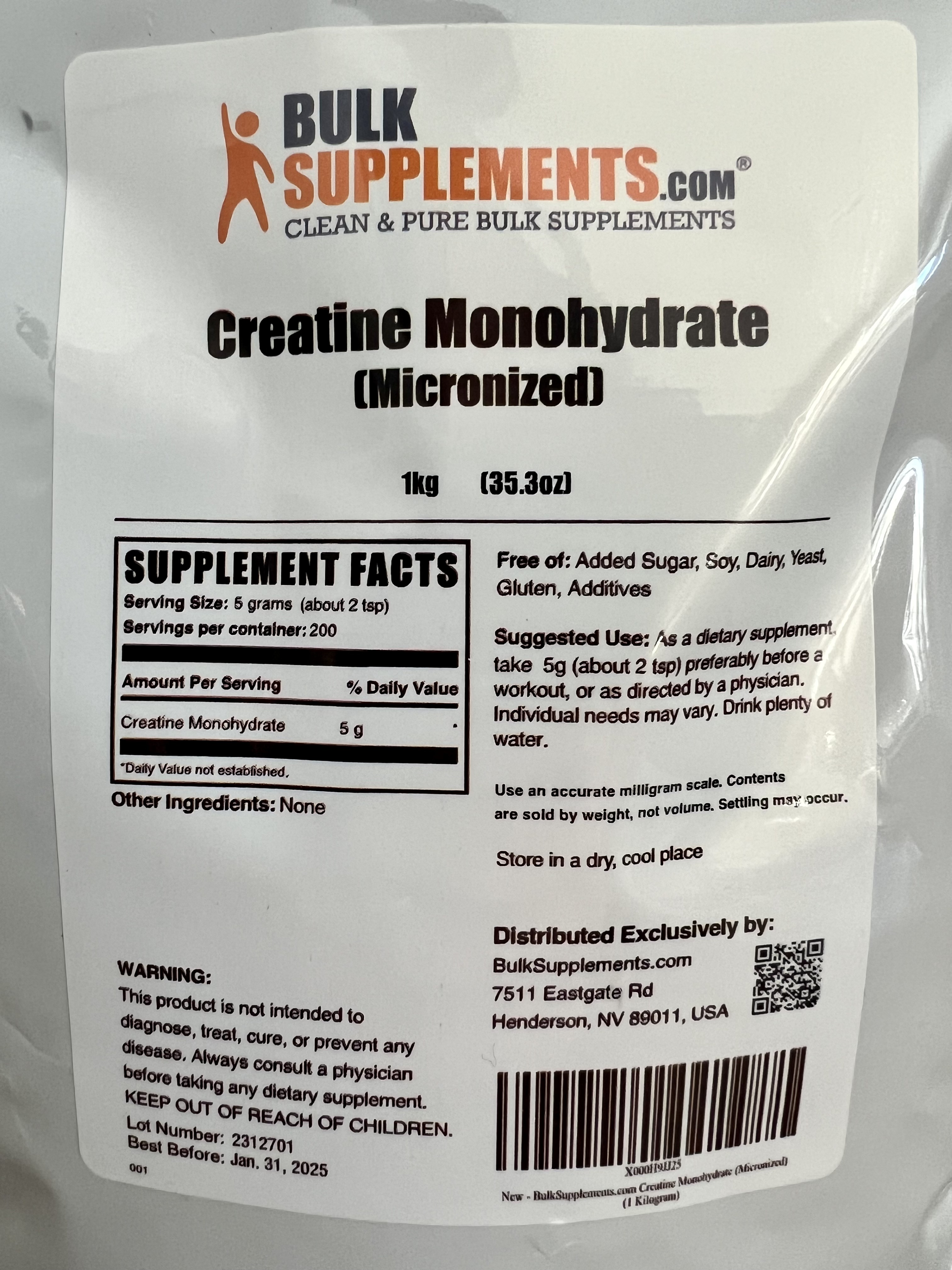
Creatine monohydrate is one of the market’s most popular and well-researched dietary supplements. It is a natural substance that is found in small amounts in some foods and produced by the body. Creatine monohydrate supplementation has been widely studied for its potential benefits on sports performance, muscle growth, and overall health.

What is Creatine Monohydrate? 

Creatine is a molecule produced in the liver, kidneys, and pancreas. It is then transported to the muscles used for energy during high-intensity exercise. Creatine is found in small amounts in animal-based foods such as meat and fish, but it is difficult to obtain enough creatine from diet alone. Supplementing with creatine monohydrate can help increase the body’s creatine stores, improving athletic performance and other benefits.

Benefits of Creatine Monohydrate

Creatine monohydrate has been shown to have several potential benefits, including:

Improved athletic performance: Creatine monohydrate has been shown to increase muscle strength, power, and endurance during high-intensity exercise. It can also help reduce fatigue and increase exercise capacity, allowing more intense workouts. By increasing the energy supply to muscles, creatine can improve overall exercise performance and increase the number of repetitions completed during a workout. Additionally, creatine has been shown to increase muscle strength, power, and speed, particularly in activities that require short bursts of intense effort, such as sprinting and weightlifting.

Increased muscle mass: Creatine monohydrate can increase muscle mass and improve body composition. It may also help with muscle recovery and reduce muscle damage after exercise. It works by increasing the availability of creatine phosphate in muscles, which can help to provide more energy during high-intensity exercises. Additionally, creatine has been shown to increase muscle protein synthesis and growth hormone production, which can contribute to muscle growth. Studies suggest that creatine supplementation can lead to significant gains in muscle mass, particularly when combined with resistance training. It is important to note that the benefits of creatine for muscle growth may vary depending on individual factors, such as age, gender, and diet

Neuroprotective effects: Research has suggested that creatine monohydrate may have neuroprotective effects, which could potentially help with conditions such as Parkinson’s disease and other neurological disorders. Studies have suggested that creatine supplementation could have a potential therapeutic effect on Parkinson’s disease. Parkinson’s is a neurodegenerative disease that affects the dopamine-producing neurons in the brain. Creatine supplementation has been shown to improve motor function and cognitive performance in individuals with Parkinson’s, potentially due to its ability to increase energy production in the brain and protect against neurotoxicity. However, more research is needed to fully understand the potential benefits and risks of creatine supplementation for individuals with Parkinson’s disease.

Improved bone health: Some studies suggest that creatine monohydrate may have positive effects on bone health and help prevent osteoporosis. Creatine supplementation has been shown to increase bone mineral density, reduce bone resorption, and potentially lower the risk of osteoporosis. The potential mechanism behind creatine’s effect on bone health involves its ability to promote bone growth by increasing the production of insulin-like growth factor-1 (IGF-1) and reducing the production of cytokines.

Research Supporting Creatine Monohydrate

Creatine monohydrate is one of the most well-researched supplements, with over 1000 studies conducted on its safety and efficacy. Numerous studies have shown that creatine monohydrate supplementation can improve athletic performance and increase muscle mass. Other studies suggest that it may have neuroprotective and bone-protective effects, although more research is needed in these areas.

If you love to see the research, here are links to some of the research on creatine. Keep in mind, there have been thousands of studies conducted

Why Creatine Monohydrate is Preferred

Creatine monohydrate is the most common form of creatine supplement and is widely considered to be the most effective. It has been extensively studied and has a proven safety record. Other forms of creatine, such as creatine ethyl ester or liquid creatine, are not more effective than creatine monohydrate and may even be less effective.

How Much Creatine Should You Take?

The recommended daily dose of creatine monohydrate is 3 to 5 grams per day, taken orally. There’s no need to cycle on and off of the supplement, although some people choose to do so.

What Liquids are Best for Mixing Creatine?

Mixing creatine monohydrate with water is the most common and effective way to consume this supplement. Creatine dissolves well in water and can be easily absorbed by the body. Other liquids, such as juice or milk, can also be used, but it is generally recommended to use water for the best results. It is important to note that creatine should not be mixed with hot liquids, as heat can break down the creatine and reduce its effectiveness.

In general, mixing with 8-16oz of liquid is recommended.

What is the Optimal Time of Day to Take Creatine?

Creatine can be taken at any time of day as long as it’s taken consistently and with adequate water intake. However, there are some arguments for taking it at specific times.

Many experts suggest that taking creatine monohydrate after a workout is a good strategy to help replenish your creatine stores, which may have been depleted during exercise. This can help speed up recovery and promote muscle growth. Taking it after a workout can also help increase muscle glycogen storage, which can benefit future workouts.

On the other hand, taking creatine monohydrate before a workout may also have some benefits. It can help increase your energy and performance during the workout, allowing you to work harder and potentially see better results. Research has shown that the timing of creatine supplementation is not as important as consistent daily intake. As long as you take creatine monohydrate consistently and with adequate water intake, you should see the benefits over time, regardless of when you take it.

Ultimately, the best time to take creatine monohydrate may depend on personal preference and workout schedule. Some people may find that taking it before a workout works better for them, while others may prefer taking it after a workout. It’s important to find a routine that works for you and stick to it consistently for the best results.

What to Expect While Taking Creatine

Drinking plenty of water while taking creatine monohydrate is recommended, as it can cause dehydration if you don’t stay adequately hydrated. The general recommendation for daily water intake is about 2-3 liters or 8-12 cups daily. However, the amount of water you need while taking creatine monohydrate may vary depending on your body size, activity level, and climate. As a general rule, you should aim to drink an additional 16-20 ounces (about 500-600ml) of water per day for every 5 grams of creatine monohydrate you consume.

Some people may experience mild gastrointestinal discomfort or water retention while taking creatine, but these side effects are generally mild and go away independently. It is also important to note that not everyone responds to creatine supplementation similarly, and results may vary from person to person.

Conclusion

Creatine monohydrate is a safe and effective supplement with numerous potential benefits, including:

  • Improved athletic performance
  • Increased muscle mass
  • Neuroprotective and bone-protective effects. 

It is the most well-researched form of creatine and is considered the most effective. While some mild side effects may occur, the potential benefits of creatine monohydrate outweigh the risks for most people.
5 Ways to Level Up Your Kettlebell Swing Workouts: Boost Your Endurance and Strength with These Simple Strategies

Motion

Kettlebell swings are a powerful dynamic exercise that can benefit those who consistently incorporate them into their workout routine. Swinging a kettlebell engages multiple muscle groups, including the glutes, hamstrings, quads, core, and back muscles, making it an effective full-body exercise. Kettlebell swings can improve cardiovascular health, as they require significant energy and can elevate your heart rate quickly. Regularly performing kettlebell swings can also improve your posture, enhance your balance and coordination, and even help to alleviate lower back pain. 

According to a study published in the Journal of Strength and Conditioning Research, kettlebell swings increase muscle power and cardiovascular health, effectively improving overall fitness (Jay et al., 2013). Furthermore, a study published in the Journal of Human Kinetics found that kettlebell training can also increase both maximum and explosive strength in the lower body (Pavel et al., 2011). 

Incorporating kettlebell swings into your workout routine can help to boost your energy, increase your strength and endurance, and provide a range of other physical and mental benefits.

How to make kettlebell swings more challenging?

You can make kettlebell swings, progressively more difficult by following the same guidelines as any other resistance, training, exercise. Sensibly increasing the weight of the bell, adding reps or incorporating different swing variations are all simple and effective ways to increase the difficulty.

20lb ankle weight riding on top of the 48kg kettlebell

Increase the weight: One of the simplest ways to make kettlebell swing workouts harder is to increase the weight of the kettlebell. As you get stronger, you can gradually increase the weight to challenge yourself. If 15-20+ reps of swings are no longer feeling challenging, it’s time to increase the weight of the bell. Make weight jumps incrementally. If you’re swinging a 24kg kettlebell comfortably for 15 repetitions, try swinging a 28kg kettlebell for 10-12 repetitions. Monitor your swing technique and post-set fatigue.

Increase the reps: Another way to make kettlebell swing workouts harder is to increase the number of reps you perform. As your endurance improves, add more reps to your sets, or perform additional sets. Adding repetitions has fallen out of favor recently, but it’s still an effective way to increase the difficulty of swings. Try adding 2-5 repetitions to each set and see how it feels. The key here is knowing when enough is enough volume-wise. At some point, adding more reps has diminishing returns. Also, beware of rep fatigue degrading swing technique. If you start moving sloppy, injury does become a concern, especially while swinging a heavy object.

Increase the intensity: You can make kettlebell swing workouts more challenging by increasing the intensity of your swings. This can be done by swinging the kettlebell more explosively or decreasing the rest time between sets. This is a hidden gem for getting better results from the same weight kettlebell. Swings should be explosive. Are you swinging aggressively? Or simply “guiding” the kettlebell through the arc? Check out this video where I’m performing “fake kettlebell swings”.

Change the swing style: There are several swing variations that you can try to make your workout more challenging. For example, you can perform one-handed swings, double-arm swings, or alternating swings to challenge your coordination and balance. If swing training is feeling stale with 2-handed swings, remove a hand, decrease the weight and attack one-handed swings. It’ll provide a different training stimulus.

Incorporate other exercises: You can also make your kettlebell swing workout more challenging by incorporating other exercises. For example, you can perform squats, lunges, or other bodyweight exercises in between sets of kettlebell swings to increase the overall intensity of your workout. Adding a set of 10 push-ups to the tail end of a swing set adds a new dimension to the workout. This is a simple tactic that can amplify the challenge exponentially. Bodyweight-based exercises are the most resourceful, but incorporating cardio or resistance training equipment are fantastic options as well. My personal favorite is alternating between kettlebell swings and SkiErg sprints. SkiErg motion is the opposite of swings, so they pair well together.

Kettlebell swings are a phenomenal exercise, one that the vast majority of people should consider incorporating into their workouts regularly. Take the suggestions in this article and apply them right away!

Transform Your Home Gym with PowerBlocks: Space-Saving, Versatile, and Cost-Effective Adjustable Dumbbells!

Motion

PowerBlock adjustable dumbbells are a type of adjustable dumbbell that can be customized to fit a wide range of weight-lifting needs. Here are some of the benefits of using PowerBlock adjustable dumbbells:

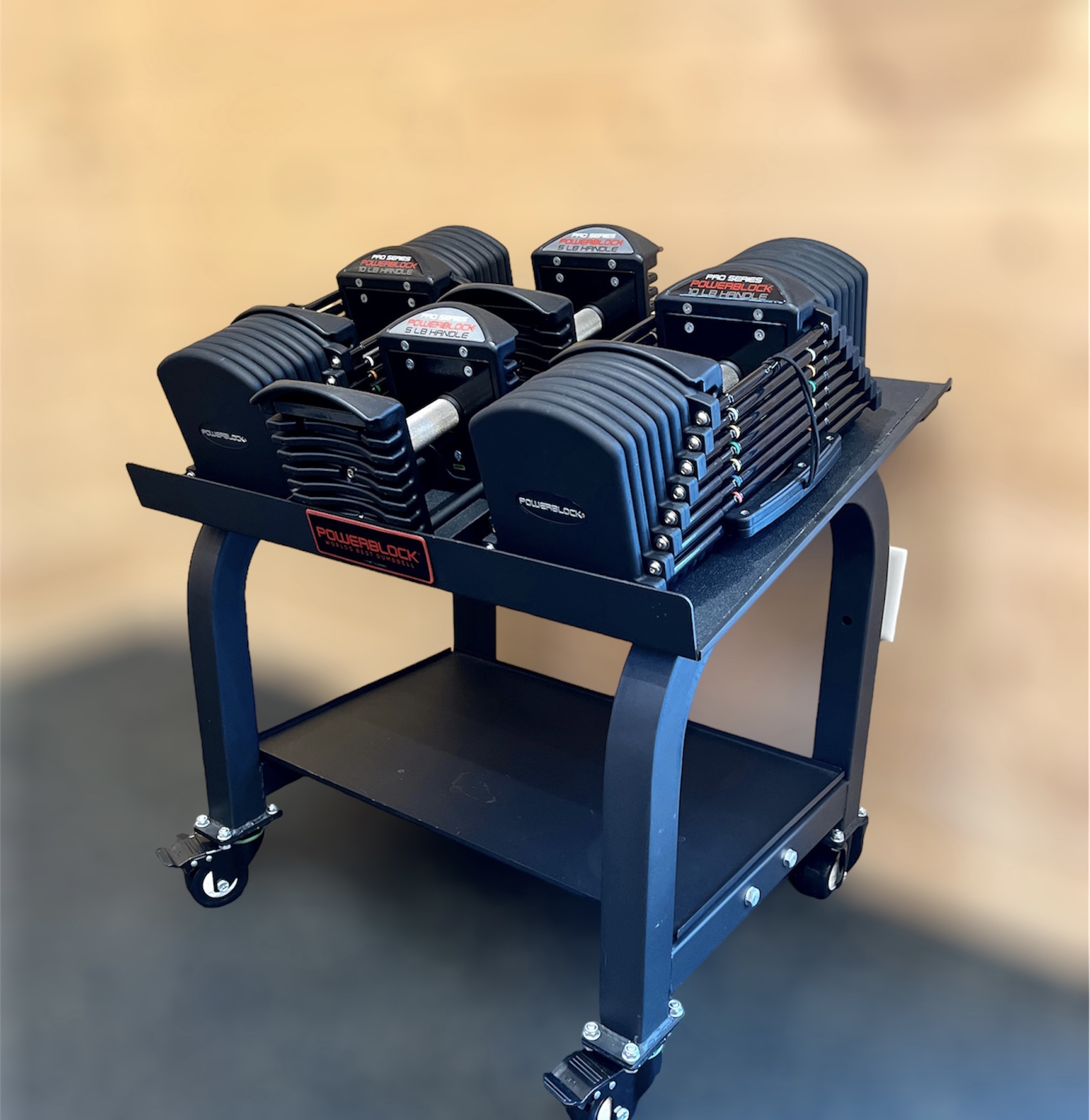
PowerBlock Commercial 5-90lb Dumbbells and Stand

Space-saving design: Instead of buying and storing multiple sets of traditional dumbbells, PowerBlocks take up significantly less space than a full set of traditional dumbbells, making them an ideal choice for smaller home gyms or workout spaces. If you’ve made the transition to a home gym workout regimen, chances are you lack the space to accommodate an entire rack of dumbbells. The minimal footprint of PowerBlocks is arguably their greatest benefit. With a 5-90lb set, you have an entire rack of dumbbells in a 21.5″x25″ inch space on the commercial stand. This is an absolute game-changer for home gyms. Personally, I am not a fan of converting a garage into a full time gym, where your cars no longer fit. Some people don’t mind this, I do. I invested hard-earned cash in my vehicles and I prefer to have them protected.

Quick customizable weight adjustments: PowerBlocks can be adjusted to many weight settings, making them versatile for various exercises and fitness levels. Depending on the model, some PowerBlocks can be adjusted in increments as small as 2.5 pounds, allowing for precise weight selection. The weight selector pin is easy to use and allows for FAST increases or decreases in weight. In my experience, moving between weights with PowerBlocks is quicker than returning traditional dumbbells to the rack to grab a different pair. The color coding and numbering on the top of the dumbbell makes it easy to identify where the pin needs to go.

Convenience and efficiency: The ability to easily adjust the weight of PowerBlock dumbbells makes it easy to switch between exercises and weight levels during a workout, saving time and improving workout efficiency. This point builds off of the space-saving design and customizable weight options previously discussed, but it’s worth sharing nonetheless. A while back I was hesitant about the hassle of wrestling the weight selector pin up and down the side of the PowerBlock (to change weight), but it’s a breeze. Watch the video above, where I change weight from 10-90lbs doing goblet squats, re-racking the dumbbell each time. Changing weight is fast, which allows for smooth/quick transitions between exercises in my metabolic conditioning workouts.

Durability: PowerBlock dumbbells are made from high-quality materials, including heavy-duty steel and urethane coating, making them durable and long-lasting. There are several other adjustable dumbbells on the market, but the durability of those brands is questionable. Reach closely, most are manufactured from plastic. No offense to NuoBells, but there are made of plastic. Plastic, in the fitness setting is no bueno. To be blunt, when it comes to resistance equipment, plastic is a terrible choice, one that’s destined to fracture and break.

Cost-effective: PowerBlocks are a cost-effective option for people who plan to use a wide range of weight options but don’t want to invest in multiple sets of traditional dumbbells. I encourage you to do your homework here. You’ll find, as I did, that Powerblocks are surprisingly cost-effective. It makes sense, since traditional dumbbells involve a lot more manufacturing and material to make 28 pairs of dumbbells (5-50lbs). PowerBlocks are far less expensive than buying an entire rack of traditional dumbbells. I purchased the commercial 5-90lb Powerblocks for $1,539 and it included a mobile commercial stand for storage. In most cases, traditional dumbbells that are sold in pairs are thousands of dollars more expensive. Take the money you save and invest it into other purposeful gym equipment!

Can you drop PowerBlocks on the floor?

No, you really shouldn’t.

Some people might view this as a drawback, but I personally don’t. There isn’t an adjustable dumbbell on the market durable enough to be dropped from a height of 2-3 feet repetitively. There’s a distinct difference between lowering a dumbbell to the floor with a little impact at ground contact, and fully letting go to drop them. In the home gym setting, dropping anything of considerable weight has the potential risk of destroying your equipment and the floor.

Overall, PowerBlock adjustable dumbbells offer a range of benefits for individuals looking to build strength and improve fitness, including space-saving design, customizable weight options, convenience and efficiency, durability, and cost-effectiveness.

I cannot recommend them enough. Full endorsement here.

Rev Up Your Workouts with Power Training: Why You Should Incorporate Power Moves into Your Fitness Routine

Motion, Power Training

As we age, we typically experience a gradual decline in both power and strength. Power and strength are related but different concepts. Power is the ability to generate force quickly, while strength is the maximum force that can be generated.

Research has shown that the decline in power is more rapid and pronounced than the decline in strength. One reason for this is that power is more dependent on the ability of the muscles to generate force quickly, which declines more rapidly with age.

In contrast, strength is more dependent on the size and number of muscle fibers, which decline more gradually with age.

Studies have found that power declines by approximately 3-4% per year after the age of 50, while strength declines by approximately 1-2% per year after the age of 50. However, these rates of decline can vary depending on various factors such as genetics, physical activity level, and overall health.

Kettlebell swings are fantastic for preserving and building power.

It is important to note that regular exercise, particularly resistance training, can help slow down the age-related decline in both power and strength. By engaging in regular physical activity and strength training, older adults can maintain their muscle mass, improve their physical function, and enjoy a better quality of life.

Power training involves explosive movements. These exercises are essential for maintaining the ability to perform everyday activities such as lifting and carrying groceries, climbing stairs, and getting up from a chair or the floor.

Why Add Power Training to Workouts?

Here are some compelling reasons why aging adults should incorporate power training into their workouts:

  1. Improves Functional Ability: Power training exercises simulate the movements that we use in everyday life. As we age, our ability to perform these movements declines, leading to a loss of independence and quality of life. Power training can help older adults maintain their ability to perform everyday activities, improve balance, and prevent falls.
  2. Slows Down Muscle Loss: As we age, we experience a decline in muscle mass and strength, known as sarcopenia. Power training has been shown to slow down the rate of muscle loss, which can help maintain muscle function and reduce the risk of disability.
  3. Increases Bone Density: Power training has been shown to increase bone density, reducing the risk of osteoporosis and fractures in older adults.
  4. Enhances Cardiovascular Health: Power training has been shown to improve cardiovascular health, reducing the risk of heart disease and stroke.
  5. Boosts Confidence and Self-Esteem: Power training can boost confidence and self-esteem in older adults by helping them feel more capable of performing everyday tasks and improving their overall physical function.

Exercises such as kettlebell swings, box jumps, medicine ball throws, and plyometric push-ups are effective power training exercises that can be modified to meet the needs of older adults.

Best Power Exercises for Adults

The best power exercises for adults are those that are explosive yet have a quick learning curve and require the use of multiple muscle groups.

Here are some examples of effective power exercises:

  1. Hang Cleans: This exercise involves lifting a barbell from just above the knees to the shoulders in one fluid motion. Hang cleans work, multiple muscle groups, including the legs, hips, back, shoulders, and arms.
  2. Box Jumps: This exercise involves jumping onto a box or platform from a standing position. Landing softly and with control is critical to getting the most benefit from box jump training.
  3. Medicine Ball Throws: Throwing weighted objects is the equivalent of Olympic lifting for the core musculature. Medicine balls are an ideal gym tool for all sorts of throw variations. Slams, scoops, rotational tosses, and chest passes are a few of the most common medicine ball throws. Throws can be performed from a static lower body stance or may incorporate footwork for an added dynamic challenge. The goal is to throw the bar as far/hard as possible, generating power from the ground up.
  4. Plyometric Push-Ups: This exercise involves pushing off the ground with enough force to lift the hands off the ground. Plyo push-ups target the chest, shoulders, and triceps while improving explosive upper body power.
  5. Kettlebell Swings: This exercise involves swinging a kettlebell using the hips to propel the kettlebell from between the legs forward and up to shoulder height. Swings are one of the best alternatives to barbell cleans. The learning curve is shorter.
  6. Standing Broad Jump: This exercise involves jumping forward as far as possible from standing. Much like box jumps, landing with control is critical.

Incorporating power training into your workouts can take your fitness journey to the next level. Training explosively will improve your strength and boost your speed, agility, and balance, making everyday movements easier and more efficient. Additionally, power training has been shown to provide a range of health benefits, including improved bone density, increased metabolism, and enhanced cognitive function.

Power training is a valuable addition to any fitness routine, whether you’re a seasoned athlete or a beginner looking to get in shape. Take the first step towards a stronger, fitter, and more functional you by incorporating power training into your workouts today!