The Many Ways to Use Animal Flow in Workouts

Animal Flow, bodyweight training, Motion

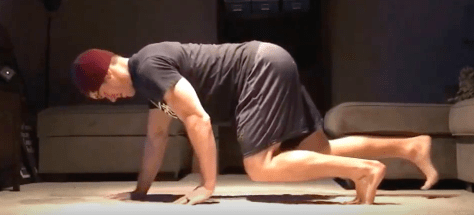
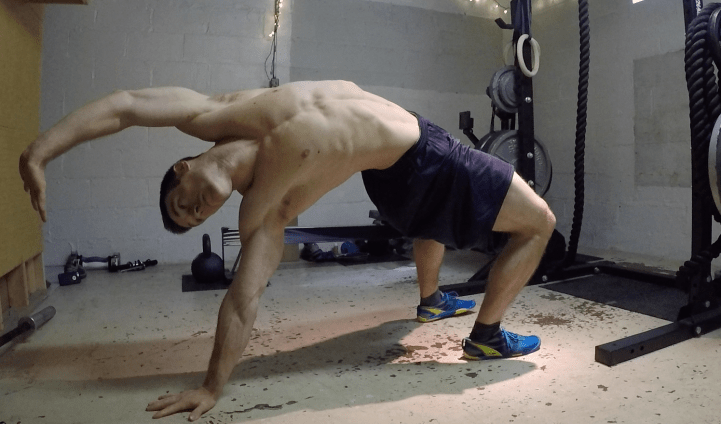
Scorpion

“Hmmm… Animal Flow looks a bit moving yoga. Then again, it also looks a bit like Capoeira. Well, maybe not. Maybe it looks like gymnastics. Yes, definitely gymnastics. Wait… there’s another yoga exercise, now it looks like yoga again.”

These are exact thoughts I had watching Mike Fitch demonstrating a movement flow several years ago.


Watching Mike flow seamlessly around the empty room captivated me. Even to the untrained eye, it’s unmistakable when you see someone who has complete dominance (aka control) over their body. When you see it, you know it.

I crashed head first into Ido Portal Method and Animal Flow at about the same time. Which makes sense now since they are both rooted deeply in bodyweight based movement. 

At the time, Ido Portal was growing at breakneck speed, but he had not (and still hasn’t) packaged his movement system into a product. Animal Flow did have a product, which it has now updated into Animal Flow 2.0.

Crawling patterns and primal movement were gaining traction as validated tactics to reset one’s body, improve strength, stability, core integration, body controls, yadda yadda yadda. In reflection, it makes sense Animal Flow caught my eye because Traveling Forms (Ape, Beast, Crab) are crawling locomotion patterns. For branding purposes, Animal Flow refers to these three basic forms as “animal-like” exercises which they are, but they are also crawling patterns.

Piggybacking the opening paragraph of this blog post, the most important point I could make about integrating Animal Flow into your workouts is this: Shape, mold and make it function any way that suits you.

Animal Flow is a hybrid training system constructed from many other movement disciplines, therefore it can serve you any way you need it to.

Cardio conditioning? Move fast, aggressive, lots of transitions, soft but quick floor contacts.

Recovery? Full range of motion, move slow, controlled, breathe deep, hold positions, find the stretch.

Pre-Workout Warm Up? Move through a full range of motion, activate hard at end range looking for expanded range, build the tempo up from slow to fast.

Animal Flow as the workout? Leverage lots of different tempos, explore many positions, make shapes, breathe, bring the heart rate up, lower it back down, improvise, etc.

Ground-based movement can serve an infinite number of purposes. How do you want it to serve your needs? That’s what I’d like you to keep in mind as you read through the rest of this article.

The purpose of this article is two-fold:

1) Share Animal Flow movement tactics with people who aren’t currently familiar.

2) Expand the application of Animal Flow exercises.

In we go…

I won’t pretend like it was love at first sight.

It took me a while to jump into Animal Flow. I was already working yoga steadily on non-workout days. Days when my body needed a rest but craved a sweat, range of motion, slow tempo and breath work. You know, the calming effect yoga is famous for.

Once I finally committed to mixing in Traveling Forms more seriously, I could immediately feel the difference. I felt more connected from my top half through my core to my bottom half. Shoulders opened up and felt more stable. General body awareness in space and control improved also. 

Stepping away from lifting is a major reason my body “opened up” and felt more fluid and connected. Pressing pause on lifting for several days if not several weeks (even months) is something that changed my entire perspective on daily physical activity. I recommend anyone who’s been a die-hard lifter to remove yourself from weight training for an extended period of time. Don’t stop exercising during this time, rather, seek out alternatives.

Animal Flow is a perfect place to start and explore.

Using Animal Flow exercises for Pre-Workout Warm-Up

Initially, I started by using Traveling Forms during my warm-up. Here is how I structured everything…

Pre-Workout Warm-Up (15-20 minutes)
Foam Roll + Thoracic Mobility Peanut Drills
Dynamic Stretching
Activation (using mini bands, wall slides, etc)
Animal Flow Traveling Forms (and maybe some jump rope)
The Workout

Yes, I still foam roll.  

After working through more traditional strength and conditioning stretches, activation and mobility, I’d start crawling for 3-8 minutes, sometimes followed by jumping rope, sometimes not.

In the beginning, 3 minutes of crawling patterns seemed daunting. After a month or so, I was crawling without rest for 8-10 minutes. Challenging? Hell yes, but the body acclimates quickly with consistent practice.

This pre-workout routine provided enough time to explore each of the three Traveling Forms in isolation. Isolating new exercises has always been my strategy. Isolating an exercise allows me to focus on the mechanics of the movement. 
Beast

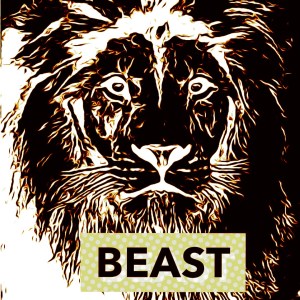
Favoritism and familiarity lead me to practice Beast and Crab first. Beast is a prone crawling pattern (chest to the floor) and Crab is a supine crawling pattern (chest to the ceiling). Beast and Crab are essentially opposites, and therefore complement each other very well. The difference in body position changes the stress on the core and arms, front, back, and side of the body. Each movement also challenges active mobility differently.

Currently, my home gym allows for 12 feet of crawling in any one direction. Working with my training space, I would crawl 12 feet forward, reverse it and crawl 12 feet back. The first couple of workouts I programmed low volume and a much slower tempo crawl.

Beast – Crawl down and back 5 times (120 ft of crawling)
Crab – Crawl down and back 5 times (120 ft of crawling)

Start Workout.

From here, I ramped it up pretty quickly. I get antsy.

Combine Beast and Crab together, crawling down and back 6 times each without rest. This will take about 5-6 minutes to complete with a steady tempo.

Once I started to explore and understand Animal Flow Switches, I integrated them into my little Beast/Crab crawling medley…

Forward Beast + Under-Switch + Reverse Crab

Forward Crab + Under-Switch + Reverse Beast

Start Workout.

Rinse and repeat for time. This combination is simple and effective. Crawl down forward, switch, come back in reverse.

Next, I played around with longer duration for each Traveling Form, ramping it up to 1-minute per exercise before switching to the next…

Cycle 1-Minute per exercise of:
1-minute Beast
1-minute Crab
1-minute Beast
1-minute Crab

Start Workout.

… And so on.

I recommend working these patterns for as long as you like. Don’t overthink it. The risk of overdoing crawling is almost non-existent. Of course, if your plan is resistance training afterward, leave something in the tank for the training session.

Eventually, I introduced Lateral Traveling Ape to the pre-workout routine. Lateral Traveling Ape was my first real exposure to side-to-side locomotion. I struggled. What my mind’s eye thought I was doing was not what the playback on my iPhone camera showed. My technique was brutal. But the pattern was completely foreign.

I practiced Lateral Traveling Ape more incrementally than Beast or Crab, starting with two reps in one direction, two reps back to where I started. Rest and repeat. A smooth flowing Lateral Traveling Ape did not come easily for me.

Fast forward to current day, I’ll rip out pre-workout Traveling Forms almost in any structure I like. Lately, a medley I’ve been enjoying has been:

Cycle 8 minutes of:
Lateral Traveling Ape 16 ft
Switch
Beast Crawl 16 ft
Switch
Crab Crawl 16 ft

Start Workout.

Cycle through each of the 3 Traveling Forms for 8 minutes without rest. You’ll never feel more ready for a workout as you will after this effective little medley.

The badass thing about Animal Flow exercises is that your body will learn the mechanics quickly with diligent practice. Lateral Traveling Ape went from being an exercise I avoided to one of my favorites.

Personally, I think there are a lot of people dabbling with crawling patterns, which is great, but not including enough volume to see desired results. I’m not implying you’ve got crawl for a .5 mile every workout, but if you really want to get benefit from crawling patterns, play around with increasing the volume (without bending on technique).

A Tool for Recovery…

I love many aspects of yoga and typically feel great afterward, but I don’t always enjoy how stationary yoga is. Yoga sessions can feel rather restricting. Stay on the mat, you must never part with your mat.

Animal Flow takes features of yoga and transforms it into a dynamic practice. Essentially, you can move around the room until you’re ready to hold a pose or position.

Transitioning into an animal-like crawl to relocate or continue switching body positions to find the next hold.

Combining movement with elements of yoga creates a comprehensive training session pack with benefits from each.  Here is a simple recovery workout…

Lateral Traveling Ape x10 yards
Beast Crawl x10 yards
Downward Dog x 5 long breaths
Reverse Beast x10 yards
Downward Dog x 5 long breaths
Crab Crawl x 10 yards
Table-Top x 5 long breaths
Reverse Crab Crawl x10 yards
Crab with Reach x3 each side
*** Repeat the cycle for time or rounds***

This simple recovery workout seamlessly fuses yoga with Animal Flow. I’ve worked sequences like this for 20-30 minutes and felt absolutely fantastic afterward.

Or, give this more comprehensive recovery session a try, which includes drills from Kinstretch and Animal Flow.

Start with some basic Kinstretch drills to nourish the joints, finishing with some dynamic Animal Flow exercises to further open up and re-educate the body to cross-crawling patterns, reaching and positional switches.

Kinstretch:
Hip CAR’s x5 each leg
Spinal CAR’s x3
Shoulder CAR’s x5 each arm

… Followed by…

Animal Flow:
Beast Crawl x 10 yards
Reverse Beast Crawl x 10 yards
Crab Crawl x 10 yards
Reverse Crab Crawl x 10 yards
Lateral Traveling Ape x 10 yards
Crab with Reach x 5 each side
Slow Under-Switch x 5 each side
Scorpion Switch x 3 each
Slow Side Kick-Throughs x 3 each side
*** Repeat for 3-4 rounds ***

*** Sidenote: If you aren’t familiar with Kinstretch, check it out. It will change your life.

This will take 30 minutes of your time (or less). Move slowly through each of these exercises in descending order (top to bottom). Breathe deep with control, owning each movement.

This workout has a boatload of natural joint mobility and muscle activation work in it. Crab with Reach alone is a million dollar movement. If you’re activating extending the hips and reaching hard in the high position of each Scorpion Switch, there is likely to be some soreness the next day.

A gentle recovery workout like this helps to open up the joints, turn on important muscles, challenge multi-planar core stability and while getting a sweat without the beaten down feeling.

It might seem off-topic to list sweating as a benefit of a recovery workout, but considering the skin is the largest organ of the human body and sweating helps eliminate toxins from the body, support proper immune function and fight out toxin-related diseases.

Animal Flow and Kettlebells for Cardio

Virtually any exercise or series of exercises can be adjusted to create a cardio training effect.

Limiting rest, increasing the tempo and exercise complexity are all fantastic ways to further tax the cardiovascular system.

The recipe is simple: global bodyweight movements recruit more muscles plus higher intensity tempo with little or no rest in between elevates heart rate and respiration. Across time and with enough intensity, the body will head straight into oxygen debt. Huffing and puffing begin.

Ground-based movements are a total body experience. Combining various Traveling Forms (ape, beast, crab, lizard crawl variations, etc) and Switches creates a potent multi-planar training effect. 

Kick-Throughs…
Kick-Throughs are an excellent ground-based cardio exercise. Kick-Throughs, similar to any other Animal Flow exercise, can be scaled to suit any skill or fitness level. The explosive nature of faster tempo Kick-Through’s makes them ideal for cardio.

There are two primary variations: Forward and Side Kick-Throughs.

Many people will find Side Kick-Throughs to be a great entry into higher tempo ground-based movement.

Side Kick-Throughs how-to:
• Start in the quadruped position (static Beast), hands and feet on the floor, knees hovering an inch above the floor.
• Lift and slide one leg underneath your body as you pivot on the supporting foot.
• Reach with the sliding leg and open up the chest.
• Return to the quadruped position and perform the same action on the opposite side.

Gradually increase the speed of the kick-through to the point where technique remains intact but on the verge of “out of control”. 15-20 repetitions per side of Side Kick-Throughs will get the heart rate going. Another measurement of work is time. Anywhere from 30-45 seconds of exertion is a great place to start.

Kick-Throughs pair very well with kettlebells, as you’ll see below.

Select two kettlebell exercises and one variation of kick-throughs. Here are two great examples.

Workout A
Kettlebell Swings x8-10
Side Kick-Throughs x8 each side
Kettlebell Overhead Press x8 each arm
*Repeat for 6-8 rounds, rest for 45-70 seconds between each round.

Or…

Workout B
Kettlebell Gorilla Row x8 each arm
Forward Kick-Throughs x5 each side
Kettlebell Deadlift x10
*Repeat for 6-8 rounds, rest for 45-70 seconds between each round.

Or…

Mix and Match: Alternate Workout A and Workout B
Round 1: Workout A
Rest 60 seconds
Round 2: Workout B
Rest 60 seconds
Round 3: Workout A
Rest 60 seconds
Round 4: Workout B
*** Repeat for 8 rounds ***

Each round you’re performing 3 completely different exercises, using the same tool (kettlebells). If you’re tight on space, limited on equipment or looking to keep training simple and effective, this is a fantastic option.

Improvised Workouts Ground Based Conditioning Plus Animal Flow…

This is my favorite part of this article.

Animal Flow is a flexible movement discipline that can serve as little or big of a role in your training as you need to. In this section, I’ll talk about using Animal Flow as the workout, not just part of the workout.

Practicing many of the Animal Flow elements in isolation leads to stringing together longer pre-planned sequences, which eventually leads to the total improvisation of a workout or freestyle. This is the “flow” part of Animal Flow.

Flowing between various exercises for several minutes changed the game for me. It’s liberating to move around an open space without having a plan, just an understanding of knowing you can move in and out of many different positions, making shapes, increasing tempo, slowing tempo, etc. You’re in control of the session, your mind-body connection is communicating the way it was designed.

Very poetic.

Improvised flow is the highest form of training. It’s essentially movement play and exploration. I touched on this in my popular Ido Portal Method post.

I have no recommendations for improvised workouts, as they are improvised.  You make it up as you go.  Take what you know about Animal Flow: locomotion patterns, switches, transitions, etc… and build a sequence.  

There is no wrong way to flow, just start moving.  

Workouts like this can last as long as you’d like. I’ve improvised for 20-30 minutes, increasing the speed of movement sporadically throughout the session but constantly moving and changing positions.

Closing Personal Commentary…

Equipment free, ground-based conditioning has expanded my conditioning in incredible ways. I am a huge advocate of rowing ergs, airbikes, skiergs and the like, but conditioning on an open floor is entirely different than machine-based conditioning.

I’m not anti-machine.

I still use my Assault Bike and Concept2 Rowing Erg 2-3 times per week. Not for extended periods, but long enough to matter.

Taking a break from machine-based cardio will make you realize how mindless it is. I’m not saying it’s easy. It’s difficult but mindless. The gears and levers of a cardio machine move through a fixed pattern/range of motion. How hard you push yourself on the machine is entirely up to you. It’s a mind game. It’s willpower.

The amount of energy required to crawl, bend, twist, lunge, reach, roll, sprawl, rotate, squat, press around an open floor intensely for an extended period of time is mind-blowing.  Especially if you are new to it.

—>  More details about Animal Flow 2.0


Cheers, 

Kyle

Benefits of Movement 20XX| Ground-Based Locomotion Training

Animal Flow, Motion

Screen Shot 2017-11-13 at 8.30.36 AM

Movement 20XX is an innovative, gap bridging movement system built around fundamental bodyweight exercise, organized in a readymade package.  

The movement system is comprised of a wide range of exercise progressions to get a beginner flowing in their first workout, leading up to advanced movement mastery.

Movement 20XX exercises and workouts are designed to help people improve strength, flexibility, body control and coordination.

The most impressive aspect of Movement 20XX is how well the movements and transitions fit together to create an artistic, fluid practice. 

Ground-based conditioning is a missing element in a lot of workout regimens and can help reboot the body’s natural ability to move well.

It’s just you and some empty space on the floor, which is both daunting and liberating.  

The brilliance of Movement 20XX is it’s a collection of many different movement disciplines.  

Instead of being pigeon-holed to training with one movement methodology, Movement 20XX  teaches key elements from yoga, martial arts, parkour, break dancing and gymnastics to name a few.

The emphasis on teaching locomotion patterns like the lizard crawl is awesome.

Expanding movement capacity and improving movement I.Q. through natural ground-based movements is as functional as it gets. 

Locomotion patterns make up 1 of 6 components in the Animal Flow training system. 

What is Locomotion?

Locomotion exercises often mimic the movements of animals. Basic crawling variations are an example.  Crawling is a full-body conditioning pattern. 

Each moving form has an emphasis on contralateral movement, which means the movement occurs across the body’s midline.

The opposite hand and foot are going to move together. Contralateral movements are great for building body awareness and coordination.

Locomotion, in laymen’s terms, means moving from one place to another. Walking, skipping, running, pushing a heavy sled, farmer walks are all variations of locomotion.

A large majority of locomotion patterns are performed in a quadrupedal position, with hands pressed against the floor supporting body weight under the shoulder, knees flexed near 90 degrees and only the balls of the feet supporting the lower body. 

Benefits of Movement 20XX locomotion exercises?

Humans are bipedal creatures.

We move most efficiently in an upright position using our legs to propel us through space.

Practicing locomotion patterns with the body and head in unique positions other than upright walking position (head on shoulders, eyes forward, arms hanging at the sides, etc) challenges the body to re-orient itself to those uncommon positions.

Quadrupedal, animal-like movement patterns expand our movement capacities, making our body a more complete piece of machinery.

Sure, one could argue that life happens on two-feet and that’s partially true.

However, there are many moments in life where we must be able to move into (and out of) positions outside of normal vertical standing

Supplementing a training regimen with ground-based conditioning trains a person to be more capable of handling known and unknown tasks.  

It’s hard to predict when you’ll need to be strong in a quadruped position, right?

When you need it, you need it.

A great goal of any fitness program should be to create a higher level of movement efficiency across a broader range of positions.  

Screen Shot 2017-11-13 at 7.41.50 PM

Locomotion movements provide a gentle loading for the upper extremities and demand the core musculature sort out new stimuli (cross-crawling).  

Yes, locomotion work is going to light up your core.

Other benefits of locomotion training:

  • Establish neuromuscular links throughout the kinetic exercise chain.
  • Movements are multi-planar, preparing the body for different planes of motion.
    • Up and down
    • Side to Side
    • Transverse (rotational)
  • Flexibility through movement and the opening of fascial lines and slings.
  • Full articulation of joints to reinforce mobility.
  • Reconnecting the brain-body activity with contra-lateral movements.
  • Exposure of asymmetries and energy leaks as you move closer to the ground (versus standing).

Ground flow drills are not boring, which is a really unscientific yet powerful reason to start exploring the practice.

If your current workout regimen has you bored out of your mind, you better switch it up quickly.  People who get bored often stop exercising all together.  It’s very predictable.   

Let’s take look at each of the three basic forms taught in Animal Flow…

Side-to-Side Locomotion

Side-to-side (lateral) locomotion is a challenge technique-wise.


Timing, force absorption, core compression, and flexibility are all equally important 

This same pattern can be executed forward and backward.

Quadrupedal Crawling

Screen Shot 2017-11-13 at 6.50.24 PM

Crawling is a fantastic activity for the pre-workout warm-up, or as a main component of the workout.

This dynamic quadrupedal activity reinforces and builds reflexive strength along with connecting the left side of the brain with the right side.

Small space? No worries.

Crawling is an adaptable exercise that can fit whatever size space you are training in.

In my old basement gym, I had less than 10 feet in any one direction.  Adapt to small spaces by making more trips down and back.  For folks who are stuck in hotel rooms while traveling, crawling is PERFECT.

8-10 feet of space is all you need to crawl.

Crawling can be modified to suit a wide variety of training stimuli and goals. Ramp up the tempo to elicit a cardio training effect or slow it down for movement control.

Beginners should practice crawling slow and controlled to establish a familiarization with technique. 

Crawling can be performed in high and low positions, forward and backward, side to side.

Supine Crab Crawl

Screen Shot 2017-11-13 at 6.41.04 PM
Supine crawling, sometimes referred to as the “Crab Crawl” positions the front of the body toward the ceiling with arms supporting behind the back and inches in front of the glutes.

This crawling variation engages the backside muscles of the legs to a higher degree while challenging shoulder extension.

The Crab Crawl is a unique exercise because of the way it engages the lats, traps and external shoulder rotators, opens up the anterior chain while simultaneously activating.  

How to Add Locomotion Drills to Your Workout

Locomotion exercises can be used as warm-up drills, recovery from the previous day’s training stress, included in a circuit or practiced as part of a long duration flow.

Natural bodyweight movement can be practiced anytime, in virtually any environment. 

Personally, I prefer a “less but better” training philosophy.

Starting out, I practiced basic locomotion patterns for 10-15 minutes before any resistance training or cardio work, using brutally slow tempos to gain an understanding of mechanics and build motor control and timing.


Slow movement training reveals movement deficits.

As mentioned earlier in this post, crawling can be used for cardio conditioning.  Increase the tempo and intensity.  Move faster.  Or, crawl for a longer duration.  Maintain quality of movement, however.  

Change of direction, body position, loading the upper extremities, tension, crawling, sprawling will jack up your heart rate as fast as any other form of cardio. All without any equipment.

Movement 20XX

Movement 20XX

Movement 20XX is the program I recommend for those who want to begin exploring ground-based training.

Eero Westerberg has done a fantastic job creating a comprehensive movement platform that really delivers significant benefits to customers.

Movement 20XX is packed with basic (similar to what I shared today) and advanced exercises and technique tutorials for those exercises, leading to flow training.

Flow training is highly challenging and fun.

Subscribe

Make sure to subscribe to this blog to receive updates on future posts.  I will never spam you, it’s not my style.

Screen Shot 2019-12-07 at 5.56.13 AM

YouTube and Instagram are also great resources for constantly updated exercise progressions and variations, flow training and how I’m integrating techniques to create hybrid workouts.  


Cheers, 

Kyle 

Interval Workout| Lizard Crawl + 500m Row

20 minute Workouts, Ido Portal, Workouts

Mixtaping different disciplines of fitness to create unique workouts is a hobby of mine lately.  

Yesterday, I found myself short on time.  I had roughly 20 minutes to make some workout magic happen.  Assessing the previous day’s workout, I decided on two modes of exercise:

  • The Lizard Crawl
  • Rowing

The goal:  total body training effect (in under 20 minutes)

Short burst workouts are a perfect solution to time-restricted days.  Days where I’m tight on time, but high on motivation.  “Short”… not be confused with “easy”.    

Generally, shortening a workout means the intensity gets cranked up to offset the decreased volume and duration.

Lizard Crawling is a locomotion pattern popularized by Ido Portal’s movement catalog.  


It involves crawling forward (or backward) in a low prone position, much lower than a traditional bear crawl.  The Lizard Crawl is a total-body exercise, well worth learning and working through the progressions.  

Most people will feel limited by their upper body strength when Lizard Crawling.  The strength needed in this particular range of motion may need some acclimation. 

That being said, there are plenty of Lizard Crawl variations to accommodate any skill level.

Here’s an example:


The Lizard Crawl, though graceful and rhythmic when performed by great movers, sucks the life out of you across even moderate distances.  It’s a very complex and demanding pattern.

Rowing, on the other hand, is, well, rowing.  

The rowing erg is beautiful in its simplicity,  yet brutal in its ability to break a person’s soul at higher intensities.  Though machine-based, rowing is one of those near total body activities that I cannot recommend enough. Rowing is primarily a posterior chain, upper body pull/lower body push action.

A quality rowing erg will cost you some cash, but across the long-term, it is well worth the investment.  

Turns out, the Lizard Crawl and rowing compliment each other perfectly.  

I’ve created workouts in the past using short distance Lizard Crawls and 250-meter row intervals, but never beyond that distance.  The 250-meter is a fantastic distance for an all out sprint.

Today I increased the challenge a bit, bumping the row up to 500-meters.

Here’s how the workout was structured…

Lizard Crawl for 20 yards

+

500 meter Row

  • Repeat for 6 rounds.  
  • Rest for 60-90 seconds in between each round.  

That’s it.  Two movements and roughly 18 minutes of time to work with.

Warm-up with something, anything.  A jump rope or some simple dynamic movements will work fine.  I do not advocate skipping warm-ups all of the time, this situation is unique, an outlier.

A cheetah doesn’t ask a Gazelle for a chance to warm-up before pursuing it for nearly a mile, it’s worth considering a human may not always have adequate time to warm-up.  

Many times, doing less things, but doing those things better makes for the best workouts.

Aesthetics and performance are built incrementally, piece by piece, workout by workout.   

Thoughts and Suggestions…

Find a pace on the rower a few levels below your personal best.  I aimed for a 1:35 min/sec pace for the 500-meter intervals, knowing that my best 500 meter was roughly 1:27 min/sec.

Why do this?  Because you will not be able to maintain a personal best pace for 500-meters across 6 rounds, with incomplete rest periods and lizard crawling before hopping on the rower.  Setting a challenging pace just below your best will get the training effect you’re after and allow room for progression in the future.

After standing up out of the rower, expect your heart rate to be sky-high.  60 seconds of rest will not feel long enough, and it shouldn’t.  It’s incomplete rest by design.  Use every second to collect yourself before the next round.  Walk around slowly, stay upright and slow your breathing.  

Keep in mind, a 500-meter row is not an easy distance to row on its own.  Adding pre-fatigue in the form of a Lizard Crawl will zap you.

When rest comes to an end, force yourself into the Lizard Crawl.  You’ll want to rest longer in later rounds but don’t.  Stay strict.  When rest is over, settle your breath and start crawling immediately.  

Anticipate the first few rounds of Lizard Crawling to feel great, followed by a steep drop off.  

If the full Lizard Crawl is too aggressive, scale it back.  Head over to my YouTube page and search “Lizard Crawl”.  You’ll find a bunch of different Lizard Crawl options I’ve played around with. 

Or, simply go with a crawling pattern in higher, more manageable body position, such as Beast (Animal Flow).  

If you found this post while surfing the inter-webs, thank you for stopping by.  

Do me a big favor and try this workout today, tomorrow or the next time you’re in a pinch for time.  


For more about Ido Portal and some his training methods, check out this post:


Cheers to you, 

Kyle 

5 Bodyweight Push-Up Variations

Animal Flow, Bodyweight Workouts, Ido Portal

The push-up is a fundamental human movement pattern effective for building athletic performance and improving aesthetics.

Calisthenic exercise solutions are HOT right now, and for good reason.  

Push-ups are a premiere bodyweight-based upper body exercise capable of building useable strength, endurance and sculpting a lean physique. 

It’s easy to get stuck doing the same variation of push-ups, which can make training dull and potentially lead to skipping workouts.  There’s a whole world of push-up progressions and variations worth exploring.  

The draw to bodyweight based training makes sense.  First and foremost, bodyweight training is FREE.  

Second, bodyweight training is natural movement.  How?  Why?  It’s just you managing your own weight against gravity, which makes this form of exercise pretty damn realistic for everyday life.  

Seems logical to improve one’s ability to handle their bodyweight in various positions and patterns.  The ability to press oneself up from the floor (to do other things like crawl or walk, etc) helps us stay mobile and live life.  

Bodyweight training can be as advanced as a person wants, or going the other direction, scaled for any beginner. 

Push-ups, squats, lunges, crawling and vertical pulling exercises pull-ups/chin-ups are the foundation of before external weight ever enters the equation.

Traditional Push-Ups…

When someone says “push-ups”, a lot of people immediately picture a max set of pumping up and down.  And yeah, you’re right, these are definitely push-ups, but these are just one variation done in isolation, in one body position, to nausea.  

There’s absolutely nothing wrong with the traditional push-up, but you’re leaving out a lot of AWESOME variations if you stop exploring there.

It’s a reasonable thought that many people would find a renewed interest (and results) in controlled physical activity if they delved a bit deeper into the hundreds of different push-up variations that exist.  

The traditional push-up doesn’t (and shouldn’t) be the end of the road variation-wise, which is why I’ve had some serious motivation to share exercise variations lately.

That being said, pay your dues with traditional push-ups before departing for the “sexier” variations.  The basics are the fundamental pillars from which all other movement is built.  

The Often Forgotten “Secret”… 

There’s no special “secret” sauce in fitness, only what you know and what you don’t know.  

And you don’t know what you don’t know.  

If there is a “secret” to push-ups, it’s that they are often overlooked and forgotten during workout exercise selection.  Our eyes drift to objects of weight or other fancy gadgets instead of down at the floor where we can assume the position and start doing work in less than 2 seconds.  

It would seem that push-ups are perceived to be rudimentary, lacking effectiveness or “only for beginners”.

If you find yourself thinking about push-ups in this way, I once again encourage you to dig into this article (and future articles) to explore and try every variation I’m about to share.

I guarantee you’ll be humbled by the potency and cognitively stimulated during most of these variations.   

Adding weight to a push-up is a common strategy to improve upper body strength, and indirectly, improve core strength at the same time.

But what about pushing up in odd body positions?

Having fully adopted and integrated ground-based movements from both Ido Portal and Animal Flow, I’ve been exploring different variations of pressing up from the floor at known and unknown (improvised) times throughout a workout.

This post is all about some of the push-up variations I’ve been toying around with across the last 10-12 months.

Watch the video, read the short description then give it a try.

Explore what YOU can do.  

#1 Resistance Band Assisted One Arm Push-Ups

Resistance bands are a brilliant tool to make exercises like chin-ups/pull-ups, single leg squats or single arm push-ups more palatable.  The band reduces the amount of weight the working arm must move during the exercise, which is often enough to make the exercise manageable.  

I value eccentric-only variations, but there is so much value is being able to go through a full range of motion, with a little less weight.

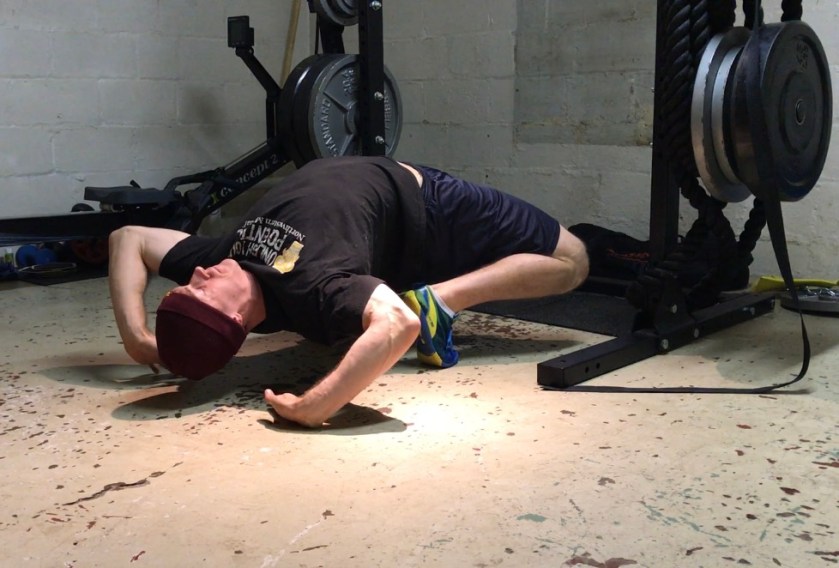
#2 Lateral Push-Ups

Traditional push-ups are a great exercise and should be taken as daily medicine, but pressing up from a variety of positions will expand your body’s movement IQ. The traditional push-up is very linear and can become boring in time.

Lateral push-ups put your body in a squat position, which from the get-go is unique.  The “fall-out” requires rotation of the torso and soft hand placement.  

Lightly touch your nose to the floor, press back up into the start position.  Performed rhythmically and for long durations, lateral push-ups will tire you out.

Aim for 6-8 reps on each side, but don’t be scared to work these for even longer sets.

#3 Stationary Low Lateral Shifts 

The low lateral shift was my first personal experience with a hybrid push-up.  Hybrid, in the sense that there is no upward/downward motion, yet many of the same muscles involved in push-ups are being worked.

Considering most people find themselves weakest at the bottom of a push-up, this exercise will challenge you to the maximum since you’re hovering at that depth.

Cues:  Shift your body side to side without making ground contact, yet avoiding the imaginary “razor wire” above you.  If you’re familiar with “Archer Push-Ups”, you’ll notice the body position is similar.  The difference is you are not pressing in this low lateral shift, the tension is high and constant throughout the work set. 

Aim for 3 sets of 5-8 shifts side to side.

#4 Dynamic Low Lateral Shifts

I could have tagged this exercise as “Traveling Low Lateral Shifts”, but dynamic sounded more professional and the definition of dynamic fits perfectly:

– relating to forces producing motion.  Often contrasted with static.  

This exercise is a stationary low lateral shift but now you’re moving across space.  I would consider this an introductory exercise to Ido’s locomotion training, though still falling into the Isolation category.  

Cues:  Stay off the floor, but don’t rise too high.

Start slow, maybe traveling 5 yards down and back.  Work up from there, as far as you can handle.

#5 Beginner Lizard Crawl Push-Ups

Lizard Crawl push-ups are a great way to practice pressing in a non-traditional body position.  

The full Lizard Crawl is one of the best exercises I’ve added to my personal workouts in years.

Of all the exercises in this post, Lizard Crawl Push-Ups require the least amount of strength, which doesn’t mean they are easy peasy, but you’ll likely be able to work these for higher repetitions.  Anywhere from 10-15 repetitions per arm.

*** If you want a humbling experience, I do suggest you attempt a full Lizard Crawl to gain some perspective on how difficult the movement pattern is.  Normally I wouldn’t recommend this, but being a body weight crawling pattern performed 2-3 inches from the floor, I see no real danger in trying it.  You’re either going to have the strength, mobility, and coordination to do make it or you’re not.  

No equipment required…

With the exception of the resistance band for assistance on the one arm push-up variation, all of these exercises require no equipment.  

This gives you an opportunity to test these exercises in your next workout.  

If you travel frequently for work, congrats, you’ve got some new push-up variations to play around with your hotel room or the hotel gym.  

Don’t procrastinate, get after it.  

To learn more about Ido Portal and my interpretation of the Ido Portal Method, check out this post.


For now… cheers, 

Kyle 


Basics of Movement20XX| The A-B-C’s of Crawling Exercises

Motion

The Basic Forward Crawling Pattern

Movement 20XX is a brilliant bodyweight fitness program designed to build a body using ground-based movement and smart exercise progressions

Beginner, novice or elite… it doesn’t matter.  

Eero Westerberg created exercise progressions for any level of fitness, from a beginner all the way up to an elite mover looking to develop movement mastery. 

Movement 20XX is a bodyweight ground-based movement training system that integrates different training methodologies into one unique workout experience.  

Looking closer, you’ll notice elements of yoga, ground-based locomotion, and various gymnastics drills fused into one flexible training system.

Crawling is a key element of Movement 20XX.

The most effective online fitness programs coach clients using clearly communicated coaching cues.  Clear and concise communication is an art form.  

Eero’s communication is what makes Movement20XX great, combined with regressions and progressions to those exercises.  

Movement20XX introduces beginner movers to the fundamentals of movement training while providing exercise progressions to challenge people who are higher up on the ladder.   

Natural (bodyweight-based) movement training is MISSING from most workout programs.

Improving your ability to control your body in any environment, with or without external load moving through space.  

Climbing, crawling, balancing, jumping, rolling, reaching, twisting, lifting, etc.

… keeps people young.

Lifting weights is great.  Mobility training is great.  But at some point, MOVE.

Ground-based exercises like crawling are rarely included in traditional fitness programs.  

Shame. It should be.  

Ground-Based Crawling

3 basic locomotion patterns I’d like to share today:  ape, forward/backward crawl and the crab walk.

Each pattern is bodyweight-based, requiring no equipment, just a small about of space either indoors or outdoors

Crawling Patterns: 

Ape is likely going to be the most challenging pattern shared today.  Ape requires the most upper body strength and coordination.  

Forward/backward crawling is a basic crawling pattern, and probably the most recognizable.  

Crab Walk is a supine (chest up) pattern that’ll challenge shoulder and hip mobility in a unique way.  


Ape

Forward/Backward Crawl


Crab Walk

Adding Crawling and Locomotion to Workouts

I started slow with crawling.  Not because I wanted to, because I had to.  

Even the basic patterns crushed me for short distances.  

#humblepie

Over the course of a few months, I increased the crawling frequency from 1-2 times per week (mainly during warm-ups) to daily practice for longer distances and durations.  

I’ve posted several videos on the Meauxtion YouTube page demonstrating 5+minutes of traveling forms/crawling.  

5+ minutes may seem like a long time to be crawling without rest… and you’re right… it is. 

Ideas For Workouts…

I train in the morning 99% of the time.

If I wake up and feel residual fatigue or muscle soreness from the previous day’s resistance training or metabolic conditioning workouts, I reach for ground-based only sessions. 

Isolating a workout to only ground-based movements like crawling (and other locomotion patterns) is great for the joints yet doesn’t involve huge muscle contractions, challenging, FUN… while delivering a significant training effect.  

The tempo (speed… fast or slow) of the movements can easily be adjusted to change the stimulus.

Crawling can be formatted for cardio training.  Increasing the speed of a basic crawl pattern (while reducing rest periods) challenges mind-body processing speed and coordination.

Or, add a weight vest to increase the loading.  Progressive loading is essential to make gains while lifting weights, and crawling is no different.   

Here I am wearing 80lbs of extra weight while practicing an advanced crawl variation, the lizard crawl:


In time, simple movement patterns like Ape, Forward/Backward Crawl and Crab Walk can be integrated into flow-like sequences. 

See below:

Video


For beginners, crawling is learned best using a slow and controlled tempo.  

Slow and controlled practice allows for a better motor pattern education.  You’ll develop a better understanding of the mechanics and physical demands of each movement.  

Why Crawl?

Ground-based crawling and other locomotion patterns are both fun and challenging.  

You may find (as I did) that these patterns bring restore life into your workout regimen.  

Isolated resistance training day in and day out can get extremely monotonous. 

One secret to maintaining a healthy long-term relationship with your fitness is to keep training fresh.  

Choose activities that require increased physical AND mental engagement.  

Most of us don’t have the will power or capacity to sustain a workout regimen it despises.  You’ll fizzle out over time.

Make sure to find a workout structure that’s results-oriented, challenging, yet ENJOYABLE. 

I love a good physical challenge, and these bodyweight ground-based movement patterns provide it every single time.

Engaging in more locomotion-based exercises reminded me it’s possible to finish a workout exhausted but REFRESHED, not beaten into a pulp.  

A 20-25 yard lizard crawl is both exhausting and humbling.  For me personally, diving deeper into crawl work was a splash of cold water to the face.  

Bodyweight training is an anytime, anywhere with zero equipment and limited space method of building fitness.  

Small, odd shaped, cluttered spaces become ideal areas to workout when bodyweight training is the focus.   

👉 For more info, check out the Movement 20XX


Related blog posts:


Kyle


10 Best Exercises for Burning Stubborn Body Fat

fat loss

In the gym, accelerating the process of fat loss is simple.

But, like anything unfamiliar, how to go about achieving fat loss can be confusing from the outside looking in.  

What exercises should I choose?  How many sets/reps of each?  How much weight should I use?  How many days per week?  How long should the workout last?  

These are all great questions.  If you’re asking them, you’re on the right track.

In the gym, maximum metabolic disruption is the name of the game.  

In 30-45 minutes, you should be able to train nearly every muscle, priming it for fat loss and lean muscle layering.

Do more work in less time to create a global training effect.  

In some cases, you may do more work in the same amount of time, which is still a form of progress.

I tricked you, I’m sorry…

In a way, I tricked you into reading this article by including “best exercises” in the title.  

For that, I sincerely apologize.  But to be honest, saying one exercise is going to magically burn all the fat off your body is a complete lie.  

One exercise won’t do it.  

What we could say is some exercises are a much better choice for fat loss, and even going a bit further we could say the combination of several exercises in a workout session will give your body the best opportunity to eliminate unwanted fat.  

Generally speaking, multi-joint compound exercises get more muscles working together are better than isolated exercises which have only one joint moving and fewer muscles.  

Important thought:  The best fast loss exercises are also the best exercises for almost any fitness goal.  

Just as no single exercise is going to melt fat from your body, no single workout is going to burn all of the fat off your body.  

A series of smart workouts will accelerate the fat loss process.

It’s all about creating a training effect.

How can workouts help with fat loss?  

  • Burn calories at time of workout (thermic effect of exercise)
  • Increased calorie burn after workout (EPOC)
  • Build lean muscle (requires more calories to maintain itself)
  • Increase resting metabolic rate (60-80% of all calories are expended at rest)

How do we create a fat burning state in the gym?  

There are a few time-tested methods to jumpstart the fat burning process:

  •  Higher Intensity Interval Training (cardio conditioning)
  •  Multi-joint Resistance Training (muscle conditioning)
  •  Multi-Planar Ground-Based Movement (muscle and cardio)
  •  Be inefficient.
  •  The combination of all of the above.

High(er) Intensity Interval Training

“High” is going to vary from person to person.  What may be “high” for me might be too high for you, or vice versa.  Instead, I choose to refer to interval training as “high(er)”.  

For the purposes of this article, let’s refer to high intensity interval training as cardio dominant activities where you exert at intensities that causes your body to go into oxygen debt during the intense work sets.  

This type a training has a precise work:rest format that can be monitored by time or a heart rate monitor (beats per minute).   

Rowing, biking, running are amazing activities for interval training which have a higher emphasis on cardio conditioning.

Multi-Joint Resistance Training

Resistance training with BIG movements like squats, swings, pressing and pulling increases the thermic effect of activity (calories burned during exercise) and metabolic rate.  Resistance training also builds lean muscle which requires more energy to maintain and repair post-workout than fat tissue.  

Multi-Planar Ground-Based Movement

At risk of sound cliché, ground-based movement is the new kid on the block.  It’s a brilliant paradigm shift in how practice fitness, building movement capacity and improving strength and cardio.  

Ground-based movement is a very broad description for low position drills like crawling, rolling, bounding, hand balancing, yoga, etc.  Much of the modern ground-based movement training has been led by Ido Portal and Mike Fitch (creator of Animal Flow).

Inefficiency

The more inefficient you are at an exercise or series of exercises, the harder your body has to work to complete those exercises.  Muscles fatigue faster and more energy (calories) is expended doing the work.  

*** If you’re going to leverage inefficient exercise, make sure you have some kind of prior background experience with that exercise.  Don’t jump into a set of kettlebell swings midway through a workout if you’ve never swung a kettlebell.  This poses a high potential risk of injury.  Not worth it.  

Instead, re-visit exercises you haven’t included in your training sessions for a while.  You’ll still know how to execute exercise technique, but your body will have lost it’s efficiency.

Nutrition Scolding…

[No fat loss article would be complete without giving a head nod to importance of nutrition.  Creating a caloric deficit, eating mostly plants with adequate amounts of protein and hydration with low/zero calorie beverages (aka: water) is in fact the magic behind much of losing body fat.  

Keeping calorie expenditure higher than calorie intake, along with choosing nutrient-dense foods and beverages that will sustain your activity level and nourish your body post-exercise is the path to fat loss.]

Progressive Overload and Baseline Fitness Testing…

Progressive Overload is a foundational principle to all movement training.  

To help decide the appropriate amount of progressive overload needed for each exercise (and shape the structure of your workouts) it is important to establish a baseline of your movement capacity.  

A baseline fitness test gives you information (however painful of a reality it might be) on where you are starting from, so a plan can be organized to make future progress.

A baseline fitness test can be very simple:  

  • How many strict bodyweight push-ups, squats, lunges, chin-ups/pull-ups can you do?  
  • How long can you hold a front plank, side plank, dead hang from a bar?
  • How many burpees can you do in 60 seconds?
  • How far can you bear crawl before stopping?

Once you’ve got a baseline, you can pinpoint not only the exercises, but sets and reps, time under tension, rounds, rest periods and duration.  

Here are my picks for 10 best fat loss exercises…

Burpees (total body)


The burpee might be the single most hated exercise on this list, which why it deserves first mention. Burpees are a total body movement that combines a hip-hinge, plank, push-up, squat, and jump, all in one shot.  

Burpees are a logical choice for this list because they are a bodyweight exercise, which means you can do them anywhere and anytime.  

Workout challenge:  How fast can you complete 100 burpees?

Animal Crawling (ground-based total body)

I’d bet a lot of fat loss articles don’t include crawling as a valid form of exercise to burn fat, but it is.

Basic crawling variations like the bear, ape and crab are examples of beginner locomotion drills that will challenge your core and upper body endurance like little else.

Ground-based bodyweight workout programs like Animal Flow are built animal-based exercises, designed to reconnect your body’s natural ability to navigate movement on the floor.  

Even if you’re tight on space, find a way to include crawling in your next workout.  Over time, you’ll notice crawling more consistently will do wonders for increasing shoulder health, upper extremity endurance and integrated core control.  

If you want to dive into the world of ground-based movement, check out Animal Flow.   

Workout challenge:  Bear crawling work capacity (4 rounds)

  • Round 1:  Strict bear crawl as far as possible (measure by distance or time)
  • Round 2:  Rest 30 seconds and repeat for 3/4 distance or time.
  • Round 3:  Rest 30 second and repeat for 3/4 distance or time
  • Round 4:  Rest 30 seconds and repeat for 3/4 distance or time.

Turkish Get-Ups (total body)

Turkish Get-Ups (TGU’s) is a layered approach to moving from lying flat on your back to 

Go from lying on your back to standing as efficiently as possible… with weight in your hand.  In slang terms, this what a turkish get-up accomplishes.  

Inside of a turkish get-up, you’ve got many exercises:  cross-body diagonal abdominal crunches, static overhead weighted holds, lunges, windmills, hip lifts.  

A turkish get up is a movement sequence with many layers, all of which can be practiced on their own to enhance your TGU proficiency.  

Workout Challenge:  Complete 10 minutes of Turkish Get-Ups (continuous)

Kettlebell Snatches (ballistic total body)


Kettlebell snatch workouts are legendary for boosting conditioning and burning fat.  The ballistic nature of the snatches coupled with the large amount of muscles used makes the training effect incredible.

Even 1-2 minutes of aggressive snatches will leave you gasping.  The design of the kettlebell and the exercise technique of the snatch allows for a natural flow from rep to rep.  

Personally, I’ve rarely seen my heart rate climb as high as it does when snatching a kettlebell.  

This means a large amount of work can be done in a short amount of time.  

Workout Challenge:  Secret Service Snatch Test (SSST) 

Thrusters (total body)

Squat and press, squat and press, squat and press.  

“Thrusters” are the combination of a squat and an overhead press.  Fusing squats and presses together creates a massive training stimulus.  Thrusters are pure work, which no real-time to rest between each repetition.  

Thrusters can be performed using a variety of training tools:  kettlebells, barbells, sandbags or dumbbells.  All provide a slightly different look at the same exercise.

Workout Challenge:  Every minute on the minute for 10 minutes, complete 10 thrusters.

Kettlebell Swings (ballistic lower body pull)


Kettlebells by design, are naturally a great tool to burn fat.  

Similar to kettlebell snatches, there is a tremendous amount of muscle tension throughout the entire arc range of motion in a kettlebell swing.  Speed of repetition and muscles engagement create a training effect unlike any other fitness tool.  When the hips get involved in an exercise, it usually means a global training effect.  

Workout Challenge:  Complete 15 sec swings, 15 sec rest for 24 rounds (12 minutes)

Sandbag Squats (lower body push)

The sandbag is one of the most underrated training tools out there.  Unlike a barbell which has rigid structure, sandbags are constantly shifting and changing shape.  This requires your body to make constant adjustments to these shifts and shape in real-time.  Whether you’ve got 100lbs in a sandbag or 100lbs on a barbell, weight is weight.  But, I guarantee you a 100lb sandbag is going to feel a lot heavier than a 100lb barbell.  

Mix up how you hold the sandbag when squatting.  Bear hug, front rack, underarm hook and shouldering will challenge your body in very different ways.  

Workout Challenge:  Descending Sandbag Squats

  • Set #1:  Complete as many reps of sandbag squats as possible without rest.  
  • Set #2:  Rest 45 seconds, now complete half the reps of Set #1.
  • Set #3:  Rest 30 seconds, now complete half the reps of Set #2.
  • Set #4: Rest 15 seconds, now complete half the reps of Set #3.

Chin-Ups/Pull-Ups (upper body pull)


No fat loss article would be complete without mentioning vertical pulling exercises like chin-ups and pull-ups.  For many, these will be the most frustrating exercises on the list because they are frequently the weakest lifts on the list.

Exercise regression is the path to your first chin-up/pull-ups and exercise progression is the path to building on that achievement.  If you can’t yet execute a full range of motion chin-up/pull-ups, you’ve got a couple effective options:  decrease the weight being pulled or practice one phase of the exercise.  

Stretch band-assisted chin-ups/pull-ups will decrease the amount of weight you’re required to pull on each repetition, making the exercise more manageable.  Wrap the band around the bar overhead, then down around the shin of a flexed knee or way down around your foot.  

If don’t have a stretch band, you can still make gains by practicing one phase of the exercise, the eccentric or lowering phase.  Start at the top of the chin-up/pull-up and lower yourself to the bottom as slowly as possible.  Eccentrics are well-known for producing muscle soreness, you’ve been warned.  

Workout Challenge:  Perform a 1-Minute Chin-Up

Push-Up Variations (upper body push)

Push-ups are my choice for best upper body pushing exercise.  Pressing exercises can be split up into two categories:  vertical and horizontal.  Vertical pushing extends the arms overhead and horizontal pushing extends the arms out in front of the body.  

Push-ups can be done anywhere, anytime with no equipment.  The variations are seemingly limitless.  The basic traditional push-up is a fantastic choice for metabolic workouts, as it requires little thought and set-up, yet worthy training stimulus to the core and pushing muscles of the upper body. 

Workout Challenge:  Perform 15 push-ups every minute on the minute for 10 minutes (150 total reps)

Lunge Variations (lower body pull)


Lunges are lower body exercise to train primarily the hips, hamstrings and adductors.  

Lunging is unique because it has many variations.  You could lunge front to back, side to side, rotationally, explosively, moving across a distance, on an incline or decline, or stationary if space is limited.    

Adding external weight to a lunge will challenge the core and grip muscles.  External weight could be placed in several positions:  arms hanging at the sides, chest height in a racked position, arms extended overhead, resting on the shoulders or varied (one arm hanging down, the other supporting weight overhead)  

If you want to go hands-free and make lunging more natural, a weight vest is a great option.  

Being able to lunge successfully becomes more important as we age, to preserve and extend quality of life.  Most times we get up off the floor into a standing position, we are essentially performing a variation of a lunge.  

Splitting your stance (not to be mis-read as “splitting your pants”) reduces the width of your base of support which increases the instability.  L

Generally speaking, if you want to make a lower body exercise more challenging without adding weight, here is how you do it:

Option 1:  Narrow the distance of base of support (squats)

Option 2:  Stagger the base of support (lunge)

Option 3:  Stagger AND narrow the base of support (inline lunge)

Option 4:  Partial support (rear foot elevated split squats)

Option 5:  Unsupported Single leg base of support (single leg deadliest or pistol squat)

I know option 4 and 5 are not technically a lunges, but the point was to lay out a nice progression to follow.

Workout Challenge:  How far/long can you lunge walk with 15 lbs (females) or 30lb (males) in each hand?

High Plank Rows (upper body pull)

Rowing while supporting yourself in a high plank position is a humbling experience, particularly for your core muscles.  Dragon flags and toe-to-bar are hyped as being incredible core strength builders, but high plank rows may make you rethink core training altogether.  

Alternate each arm while rowing.  For added challenge, pause the motion when the hand reaches your side, lower slowly.  The body tension needed to perform this drill is incredible.  You’ve got to be rigid from head to heel, front side and back side.  

Workout Challenge:  Perform 20 repetitions of high plank rows on each arm.

Try the workout challenges!  

Most of the challenges require less than 15 minutes of your time, and will be a good eye opener to the possibilities.  The workout challenges can also serve as baseline numbers to assess progress down the road.

The training options are only limited by your creativity.  

Now you can mix and match these 10 exercise to create effective workouts.

How to create a fat loss workout?  

Choose one exercise from each of the following movement patterns:  

  1.  Upper body pull
  2.  Upper body push
  3.  Lower body pull 
  4.  Lower body push
  5.  Total Body or Core Exercise 

Hybrid movements like burpees or thrusters combine several movement patterns into one exercise, compounding the amount of work being performed.  Most people will find hybrid exercises like thrusters to exhaust the body much quicker than if you performed a set of squats and overhead presses on their own.

How many reps per exercise?

Play around with reps.  Vary them high, very them low.  Generally, anywhere from 8-15 reps will provide a good training effect.  

Personally, I prefer keeping the reps on the lower side so I can increase the amount of weight for each exercise.  I have found the training effect to be profound with lower reps and higher loads.

How many rounds?  

Rounds are the cycles through each exercise and reps per exercise.  

Generally speaking, a great workout at the right intensity should go anywhere from 4-8 rounds, rarely more.  

If you’re able to push passed 8 rounds with ease, it’s probably time to increase the weight used or the complexity of the movement.  

How much rest between rounds?

Again, this will vary depending on fitness level.  However, 30-75 seconds is a good target amount of rest between working sets.  As your body adapts to the stress, you’ll find it’s necessary to decrease the rest in order to keep progressing.  

In tough workouts it might not feel like it, but the human body is brilliantly designed to adapt to physical stresses.  

You train and break down, you recover, regenerate and grow.  

Here’s another idea for resting between each round, descending rest periods.  

For example:

Round 1:  Rest 25 seconds

Round 2:  Rest 35 seconds

Round 3:   Rest 45 seconds

Round 4:  Rest 55 seconds

Round 5:  Rest 65 seconds

Round 6:  Rest 75 seconds

Using this rest period structure, you’re challenging yourself harder on the front end of the workout since rest is far shorter but the work remains the same.  As you progress through the rounds, your rest periods lengthen to accommodate the accumulating fatigue.  

Start right now!

Don’t read this and forget about it.  Read it, write it down and do it today or tonight.  

You have everything you need to organize several of these exercises into a workout conducive for burning fat.

Don’t over think it.  Choose exercises for each of exercises, 1-5 above and you’ve just designed a workout to torch fat.


Cheers to your workout…

Kyle 

Animal Flow: Movement Training for Fans of Ido Portal Method

Animal Flow

Screen Shot 2017-06-02 at 6.43.52 AM

“Animal Flow is an innovative fitness program that combines quadrupedal and ground-based movement with element from various bodyweight-training disciplines to create a fun, challenging workout emphasizing multi-planar, fluid movement.”  

If you’ve been hunting for a movement system to deepen your understanding of Ido Portal’s locomotion exercises, Animal Flow is the system to follow.  

Animal Flow’s training methodology embodies the evolution my own fitness practice has experienced over the last several years.  

The “your body is a barbell” is cliché statement, but a true statement about bodyweight training.  Everywhere you go, no matter what the circumstance, bodyweight training is a tool to be leveraged.  

Don’t stop at isolation…

A lot of people stop the bus at basic bodyweight training:  push-ups, pull-ups, squats, lunges, etc.  I have nothing against basic bodyweight training because it’s brutally effective for improving performance, it’s free and it’s arguably the most functional form of resistance training.  

You can live a great life by hammering away on basic bodyweight movements.

However, as I mentioned in my post “Basics of the Ido Portal Method”, a lot of people have an innate desire to explore what’s beyond isolation movements.  

After a while, it’s common to feel like your workouts are being reduced down to numbers (quantified progress):  more reps, more sets, more time, etc. 

There’s nothing wrong with quantified progress.  Quantifying your workouts practice is a great way to measure improvement or stagnation.  Scanning your numbers can help you evaluate if your current training plan working the way it should.  

It’s not much different than following a recipe in the kitchen.

But there is another realm, one where you’re moving without being restricted to reps and sets and time.  

This realm explores your body’s movement capacity through space.  

Twisting, turning, reaching, pulling, pushing, shifting, transitioning, flowing.

FullSizeRender.jpg

Some of these body positions are common and familiar, some are not.  Training uncomfortable positions is important to prepare the body for unpredictable scenarios.

Movement capacity development.  


Ground-based movement training benefits ANYONE and EVERYONE.  Why?  Because it is life played out through the movement lens.  Everywhere you go, your body is right there with you.  

Enter: Animal Flow…

Screen Shot 2017-05-29 at 11.48.00 AM

  • Anything in BLACK is information from the Animal Flow website.  
  • Comments in RED are my interpretation and elaboration on those points.  

What comprises the Animal Flow program?

“Animal Flow includes a wide range of exercises and movement combinations that are grouped into six components, each designed to elicit specific results. The six components can be mixed and matched in many ways, and you can incorporate one, some, or all of them in your workouts! The six components include:

Wrist Mobilizations

Wrist Mobilizations include a range of simple exercises designed to increase the flexibility and strength of your wrists, which is particularly important for any practice where you are spending a lot of time on your hands.”

– Although most of human life is spent either sitting or standing, training the hands/wrists/arms to tolerate a more robust range of motion and loading stress in various positions is important.  

Our wrists and arms aren’t designed to hang at our sides or flexed up on a keyboard for all day every day.  Hanging, brachiation, crawling, climbing are all activities humans should be able to do.  

More specific to the Animal Flow program, wrist preparation ensures your body is prepared to handle the load stress.

Activations

Activations are static holds we perform to connect the body before we start our practice. Examples include Static Beast Hold, Static Crab Hold, and Limb Lifts.”

– Activating dormant muscles is helps protect our bodies against acute injury and chronic aches and pains.  It boosts our ability to accomplish common daily tasks efficiently.

This is sometimes referred to as “pre-hab”.  Again, cliché, but important.

It’s not necessary to suffer an injury to begin paying attention to muscle activation.  Basic maintenance can keep a person functioning on a high level without pain or risk of injury. 

Imagine how much better a squat would be if your glute muscles knew they were supposed to participate in the exercise.

Isolated activation exercises remind these muscles they’ve got an active role in the exercise to come.

Form Specific Stretches

Form Specific Stretches are full body stretches that start in an animal form and then move through a wide range of motion. This increases your mobility and flexibility throughout the entire body. Examples include the Ape Reach, Beast Reach, Crab Reach and Scorpion Reach.”

Stretching is not dead, so don’t throw the baby out with the bathwater. Mis-directed, poorly performed stretches are dead.  Stretching areas that don’t need to be stretched is dead.  

Smart, intelligent stretching in combination with passive and active mobilization techniques are a smarter way to achieve a more functional range of motion.  Hello, KinStretch.

Traveling Forms

Traveling Forms are exercises that mimic the movements of animals. You’ll start with the “ABCs” – Ape, Beast, and Crab – to get you going on these full body conditioning moves. The traveling forms are essentially how we move like animals to improve the function of the human animal.”


IMG_4197

The human body is designed to navigate many different forms movement.

The ability to handle your body while performing uncommon movement tasks (example: crawling) beyond standing and walking will serve you well across life.  It gives quality to your years.    

Crawling (and the many variations of crawling) is a major component of Traveling Forms.  Yes, this is a similar crawling we do as infants.  Funny how we regress back to our earliest forms of movement as a reset later in life.

Crawling is an under-estimated, challenging form of movement that trains the body to handle unique body positions, transitions, upper extremity loading and core activation.  

The other, a less scientific reason to crawl, is it’s fun.  Plain and simple.  Crawling is an uncommon activity that is fun.  Life’s too short to not have fun.  

Fact:  a person is more apt to stick to training if there is fun involved.  Prove me wrong.

Switches and Transitions

Switches and Transitions are dynamic movements that we perform one after the other, creating the “flow” of Animal Flow. You can transfer from one form to another, or repeat the same one as a drill. Examples include the many variations for Underswitches, Side Kickthroughs, Front Kickthroughs, and Scorpions.”

– Combining 2-3 exercises is a great way to create a training effect beyond what’s possible by practicing only one drill in isolation.

Transitioning from crawling, to kick throughs into hollow-body rocks will challenge your body to adapt to several different patterns and planes of movement and muscular stress.

IMG_4239.PNG

Here’s an example:  Animal Flow Workout – Long Cycle Ground Based Movement 

These sequences can be practiced for extended periods of time to increase the demand on endurance and cardio.

A workout becomes an experience at this stage.  Switches and transitions is where people begin noticing they’re having fun. 

Flow

Flow: Your Flow is where the real magic happens. You’ll combine the Animal Flow moves by linking them together in a fluid sequence, seamlessly transferring energy from one move to the next. Flows may be a choreographed sequence practiced over multiple sessions, or may be created freestyle!”

No secrets here, it will take dedicated practice and patience to arrive at the “flow” stage.  Those who stick to the plan will make the gains needed to begin moving freely, improvising each movement as you go.  

Like words making a sentence, exercises stitch themselves together, “flowing”. 

In sync, the mind and body connection is extremely powerful.  Flow a physical demonstration of a mind that is free.

Bringing it home…

A balanced approach of traditional resistance training, gymnastics, and ground-based exercises can make a person dangerous.  Each philosophy improves the others.

If you’re a fan of Ido Portal’s methodology, Animal Flow is a logical training system to look into.  

Ido hasn’t produced a product for the masses yet, and I suspect he will never release a product.  

The current options to train under the Ido Portal Method are private online training or attendance of a seminar.  Not ideal and both cost a small fortune. Ido is in high demand right now.  

You could always cherry-pick drills from YouTube videos (as I have done), but you’ll never progress as quickly as if you were following a system.  

Training systems are designed with an end goal:  results.

If you’re interested in expanding your movement capacity, check out: Animal Flow 2.0


Cheers to discovering your movement capacity, 

Kyle 


Useful Exercises to Help Build the Lizard Crawl Pattern

Ido Portal

FullSizeRender

The Lizard Crawl is one of the most challenging crawling patterns.  

Aggressive joint angles, timing and coordination of the limbs along with a massive muscular demand make the lizard crawl pretty brutal in the beginning.  

The challenge is far beyond standard crawling patterns.  

Not all that long ago, I was a beginner with the lizard crawl.

The pattern was pretty sloppy for a long time.  I was inefficient and felt out of control.  

Inefficiency with movement might be great for burning calories, but it’s a bumpy road when you’re trying to build the pattern.  

On the road to preparing my body for the demands of the lizard crawl, several key exercise regressions played a significant role.  and this blog post directed at the beginner looking to learn more.

The goal of this article is to provide several launch points to work up into the full Lizard Crawl.  

Each Lizard Crawl exercise progression is designed to provide a gentle introduction to the body position and loading.

A full-blown Lizard Crawl has a deceptive number of moving parts moving and requires plenty of mental processing and physical capability.  

Exercises

The full lizard crawl requires:

👉 Mobility

👉 Upper body and core strength

👉 Coordination and timing

Improving control over shoulder range of motion is important for lizard crawling and beyond.  

The shoulder is a ball-and-socket joint and should be able to move freely, but with control.  

When the shoulder joint lacks mobility or control over range of motion, problems can surface.  

Shoulder CARs

Controlled articular rotations are a mobility exercise that great for daily shoulder “hygiene”. 

I like to perform 8-10 reps per side each workout, which means every day.  Yes, every single day.  

Mobility training is a critical component of fitness, yet, training mobility like you would strength or endurance is a relatively new to a lot of people.  

My friends over at MyDailyMobility created daily mobility workouts to introduce people to effective mobility training that’ll expand your range of motion and help control what you’ve already got.  Check it out

Upper body strength is essential for the lizard crawl.  If you lack upper body strength, the full lizard crawl will be impossible.  

Regular push-ups are a great place to start.  You should be able to perform 15-20 bodyweight push-ups without rest.

From there, progress the bodyweight push-ups by adding weight.  The weight can be in the form of a weight plate, sandbag, chains, weightvest, backpack loaded iwth gear, etc.  Whatever you’ve got. 

Weighted Push-Ups

You’ll have to reduce the reps per set once you add weight, and consider lengthening the rest periods to recover from each effort.  

Start with 10-20lbs of additional weight and work up from there.  Stay rigid from head to heel.  

Sets/Reps:  3-5 sets of 5-6 reps.  (the last rep should suck)

Next, it’s time for a gradual transition into single-arm push-up variations.  

Single-arm push-ups are an incredible exercise for building pressing and core strength.

I really like this carpet slide push-up variation.

Carpet Slide Push-Up w/ Reach

Carpet Slide Push-Ups increase the load on the working arm, provide practice of reaching the non-working hand out to move forward (as you would in the full lizard crawl) while introducing a less stable position for the core to sort out.

Your mid-section will probably be sore after a carpet slide push-ups.

Gradually decrease hand pressure on the carpet slide, eventually removing the slide completely, just lightly sliding the hand across the floor surface.

Sets/Reps: 2-3 sets of 5-8 reps.  

*** The rep range is pretty broad, but keep pressing until you feel posture begin to break down. At that point, end the set and rest. 

Core Training

The lizard crawl will put your core strength, endurance and function to the test.  

Here are 3 different exercises to integrate into your workouts.

Core Rolling Patterns

Rolling patterns are exercises you have to try to truly understand how draining they can be.  When you take most of the momentum out of rolling, you’re rolling over with subtle movements from your mid-section.  

Very humbling drills. 

Sets/Reps:  Roll 360 degrees, than roll back to the start.  Go by feel here, this exericse can be self-limiting, as in you’ll burn out won’t be able to complete a full revolution. 

Hollow Body Rocks

Turn yourself into a banana and keep that position while you rock like a rocking chair.  

Sets/Reps:  3-4 sets of 12-15 reps. 

Dragon Flag Variations

Dragon flags are one of the best core strengtheners I know.   

Sets/Rep:  3 sets of 5-8 reps.

Lizard 🦎  Looking Exercises

For beginners, breaking the lizard crawl up into sections and training each section works well.

I like to start introducing the coordination and timing aspect of the lizard crawl by practicing non-moving variations. 

First, become familiar with what the low position feels like, because it is different. 

Push-Up with Alternating Foot Placement

The goal of this first drill is to practice the feel of the lizard crawl while reducing the amount of strength needed to do so.  

Using two arms into the descent accomplishes this.  

👉 Step the foot up to the outside of the hand and plant.

👉 Lower down into and out of a push-up.  

👉 Return to high plank position.

Don’t forget to relax the jaw and breathe.

Sets/Reps:  3-4 sets of 6-10 per side

Alternating Lower-Body Step and Reach

👉 Starting in a high plank position, step one foot to the outside of the same side hand.  (The side you step to will be opposite of the working arm)

👉 Slowly lower your chest to 1-2 inches above the floor.

👉 With feather light pressure, slide the unloaded hand out into full extension. 

👉 Pause for a moment, breathe, feel the position.

👉 Slide the hand back in, return the foot and press up to the high plank.  

Sets/Reps:  3-4 sets of 8-10 reps on each side. 

Dynamic Crawling Variations

The next step in the process is to start moving around.  

Building up strength is important, but it’s time to dive into crawling.  

Crawling can be a humbling activity, especially for adults.  

We think of it as something exclusive to babies or when your TV remote slides underneath the couch, but crawling is a great coordination and conditioning activity.  

Check out this post to learn more about some great crawling patterns. 

Final thoughts…

Quiet foot and hand contacts with the floor surface is a pretty good indication you own a movement.  

Breathing is another good indicator.  Clenched jaw, holding the breath?  I’d bet you don’t own that position yet.  Ask any Yoga instructor.  

Give each of these exercises a shot and be mindful of what’s taking place as you practice.  

The secret sauce to progress is disciplined effort and consistency.  

Practice hard and in time you’ll get the results you’re after.

Alternatives to Ido Portal Method

Ido Portal
Screen Shot 2017-07-02 at 10.34.09 AM.png

“Coming soon” since 2013…

I’ve been checking the Ido Portal Method website for 7 years hoping the “store” page would populate with a few online products.  

Take my money Ido Portal, take my money.

7 straight years of, “Coming Soon”.

I’m confident saying Ido Portal is not going to write a book or create a digital product.

Ido has mentioned in interviews he doesn’t want to chain his work to the “foreverness” of a book.  

Plus Ido Portal Method training philosophy is constantly evolving and expanding, so he’d likely have to compose a 10,000-page book on movement training, which would receive weekly edits for all eternity. 

Like others who wanted to know more about The Ido Portal Method, I started to compile notes from his old blogs, YouTube videos, and interviews.  The idea was to collect enough information, sort it out and begin piecing together a program for myself.

But at some point, I’d burned out.  

I started researching alternatives.  Something that could bring me close to the Ido Portal Method style of training, without wrecking my bank account (more on that below).

While the Ido Portal Method has brand name recognition (with movement training), I knew there had to be other training systems comparable to, possibly even better.

Initial search results confirmed that there were some amazing alternatives.  

The Bones of Ido Portal Method

Weeks of sorting through older content on Ido’s first blog, YouTube videos, and other media was time-consuming and painful.  

But, it gave me valuable insight into his movement philosophy.  

Deconstructing his training methods, it becomes clear Ido Portal Method is a carefully organized hybrid system.

A collection of many different disciplines and methods:

  •  Ground-Based Conditioning  
  •  Gymnastics
  •  Traditional Resistance Training
  •  Mobility 

Categorizing the main elements provided clarity on what to look for during my alternative program search.

Again, looking through the magnifying glass, one will find elements of gymnastics, locomotion, Yoga, traditional resistance training, dance, Capoeira along with mobility training from Functional Range Conditioning (FRC).

Most of these methods are bodyweight-based.  However, Ido does utilize barbells, dumbbells and other tools to train strength or loaded stretching.

“Expensive Machines, Cheap Bodies”, is a classic theme inside Ido’s camp.

While I disagree with going cold turkey on all gym gadgets, I do understand Ido’s point of view.  People get lured into thinking they need fancy fitness machines to get into shape, build strength, etc.

You don’t.

Equipment manufacturers do not care if you buy their products only to love it when a customer buys a product, only to use it for drying wet laundry.  They have your money, you have clutter.

The potency and power of a simple gym set up can be humbling.  A pair of gymnastics rings, an overhead pull up bar, a space to crawl/roll and a willingness to train hard more than enough to make huge gains.

The Rise of Locomotion

Ido Portal did not invent locomotion, crawling and floor flow sequences.

I know this will be difficult for some people to read, but humans crawl as babies during early development and flow-oriented training has been around for generations.

He can be credited with being one of the first to post locomotion work on YouTube.

Crawling/locomotion, bridging and various “Floreio” elements is a great way to expand workouts away from linear exercises.  It’s easy to see the Capoeira influence.

Locomotion exercises can be progressed similarly to traditional exercises, giving beginners an opportunity to practice regressions while offering advanced trainees some really difficult patterns.

Along the way, isolated locomotion work is fused with other movements to create sequences.

Movement 20XX (a digital program from Vahva Fitness described below) was one of the first programs I found to be teaching a similar ground-based conditioning/locomotion curriculum at a FRACTION OF THE COST.

Newsflash:  Online coaching with Ido Portal Method is expensive as shit.

How do you quantify “expensive as shit”?

Expensive as shit = $1,000-$2,000 for 3 months (3-4 hrs per day, 6 days per week)

2BD9B891-B5DF-4E46-92BA-620C81CE406F

Price tag 6 years ago, best believe it’s higher now. 

It’s unlikely you’ll be coached by Ido Portal himself, but rather one of his students.  Plus, they reserve the right to fire you with zero refund.

People can justify and afford to spend $150 on a program.  Especially one with zero compromises in content and coaching, and likely a superior delivery with stream quality and support.

Across 12 months, that’s $15 per month.  Very doable.  

Spotlighted below are a few training systems worth exploring:

Movement 20XX

Movement 20XX

Movement 20XX is a bodyweight based training system that uses ground-based conditioning exercises and combinations to create pre-planned flows and movement sequences.  

Natural movement training.

Students start out by training movements in isolation, gaining strength, stability and fluidity prior to transitioning into movement sequences, and eventually improvised flow work. 

Movement 20XX blends many different movement disciplines, cherry-picking the best elements from Parkour, Yoga, bodyweight training, etc.

I started working on beginner locomotion years ago.  Doing so changed everything about my movement quality, capacity and confidence.  

It also started a shift in how I viewed the “working out” and fitness.   

The first few weeks of crawling was no joke.  It was humbling and I sucked.  But in time, my body adapted to the demands, graduating from stiff and immobile… to pliable, dynamic and strong.

My early attempts at the lizard crawl were ugly.

It’s a tough pattern.  The body position and range of motion were foreign, and the timing of the hand/foot movements was a challenge to manage.  Getting into the low position was challenging (trademark of the lizard crawl), much less moving anywhere.

I reluctantly swallowed my pride and started training as a true beginner.  The basics of crawling became my daily practice.

With practice, progression and adaptation, the Lizard Crawl became one of my favorite locomotion patterns, and still is to this day.

I experiment with a lot of hybrid variations of the lizard crawl now, along with integrating it into conditioning circuits.  Nothing like sucking wind while crawling 1 inch off the floor.  Whew.

Locomotion exercises are primarily quadrupedal (4 points of contact with arms and legs) and move the body through a natural (yet uncommon) range of motion, reconnecting the upper and lower extremities, challenge the torso muscles, timing, etc.  

I include a variety of crawling patterns in nearly all of my workouts.  

Currently, I use crawling patterns inside of pre-workout warm-ups (daily tune-up) on strength-focused days, as part of work capacity circuits or with bodyweight based flow sessions.  

The bodyweight based flow sessions are fun and equally challenging for the body and mind.  The premise is simple.  I move around a room without a plan for 10, 15, 20+  minutes.  

Here’s an example flow…


A lot of crawling and locomotion patterns I integrated from Ido Portal Method (skimming the blogs and social media) are being taught by Eero Westerberg in Movement20XX, which is why the program made the list as a valid alternative to Ido Portal online coaching.

Movement 20XX was designed to be effective when used remotely, which makes it great for training at home or while traveling.  The program design is progressive and structurally sound.  


Global Bodyweight Training

Screen Shot 2017-12-11 at 6.12.15 AM

Strength is a critical component of becoming a better mover.  

Dare I say… strength might be the most important of them all.

Strength comes in many forms.  Strength doesn’t always have to be associated with bench pressing 3x your bodyweight, deadlifting a truck or heaving a 300lb atlas stone onto a platform.

A full range of motion single arm push up is a demonstration of pure strength.

As I get older, I care less and less about quantifying my performance with numbers (weight on the barbell, etc).

What I do care about, is how my body feels the other 23 hours a day (when I’m not training) and also what I’m able to with my body in both known and unknown situations where I need to be able to perform.

There’s some truth to the old saying, “Nice body, what can you do with it?”

Bodyweight Athlete curriculum introduces and educates people on the power of leveraging bodyweight based strength training.  

When I found Global Bodyweight Training, the first thing I noticed was how closely the curriculum matched what I had designed for myself.  It was nearly a carbon copy.

I’d recently decided to trim the fat with regard to exercise selection and variation, choosing to pursue higher-level bodyweight patterns like single-arm push-ups, single-leg squat variations, handstand positioned pressing, L-Sits, etc.

Progressive bodyweight training requires plenty of body tension, attention to detail and refinement of technique.

Bodyweight Athlete is a structurally sound training program for anyone interested in experiencing the potency of bodyweight training.  

The best part about bodyweight training is it can be taken ANYWHERE.  

You’re never without an opportunity to workout.

Bodyweight-based patterns included in the curriculum:

  • Muscle Ups
  • Handstand Push-Ups
  • Single Arm Push-Ups
  • Single Arm Body Rows
  • Pistol Squats
  • Handstands
  • L-Sits
  • Human Flag 
  • Back Levers

The exercise progressions listed can be scaled for any level fitness, from beginner or elite level movers.


Carefully selected exercises and well-timed progression of those exercises are extremely powerful.

The human body is an adaptation machine.  In order to continue making progress, you’ve got to increase the challenge somewhere.  Increasing the challenge can mean adding load, complexity, volume, time under tension, etc.

Quality programs are designed to condition the body progressively and safely.  You want to boost performance while limiting the chance of injury during training.

Regarding injuries, always remember there is life outside of the gym.  If you’re destroying your body while working out, life is going suck.  Dealing with daily aches and pains, dysfunction and injury is no way to live.

Keep the needle moving… safely.  Your gym work should enhance your life, not take away from it.

Bodyweight Athlete emphasizes joint mobility work, core conditioning, self-myofascial release, and breathwork.  These are lesser-known elements (yet important) of a comprehensive approach to building a body.  

It’s easy to become fixated on the sexy part of the program… the exercises.

Building a high performing body is a multi-faceted approach.

Mobility, establishing and expanding your useable range of motion, is CRITICAL.

I’ll go ahead and say mobility training IS strength training.

Keeping joints buttery and strong contributes to adding useable strength to your frame and also avoiding doctor’s visits for preventable joint conditions later in life.  

Core training.  Lots of people have gone deaf to the importance of training the core.  It’s hard to pinpoint exactly why, but I think it could be because people are wasting their time with most core-focused exercises.  

In fitness, the pendulum always seems to swing too far in one direction (with concepts, machines, techniques, etc) and people get hyper-focused on things for a little while before the novelty eventually fades.

I think this is sort of what happened with core training.

Just like low load/high volume bodyweight exercises (1000 bodyweight squat workouts) do very little for increasing raw strength, limited range of motion crunches and sloppy toe-to-bar work also do little to contribute to developing a functional core.  

(Oh. My. God.  He said “functional”.  Send me a better word and I’ll edit it out)

Take a single arm push up.  If your mid-section is weak, you’ll know within the first 6 inches of the descent.  Low back with fold, ribs will flare, compensatory movement becomes the default operating system.

Approach your core training like you’d approach building other patterns (squat, deadlift, pulling, pushing, etc) and you’ll be pleasantly surprised.

Core conditioning still matters.

Check out Global Bodyweight Training

Strength and Movement Training

Everyone will read and digest this article differently (seeing value or maybe not seeing as much value) and I understand that we all have different financial budgets for investing in programs.  

That being said, I do believe that combining the strength work from The Bodyweight Athlete with the ground-based conditioning elements (crawling, locomotion, etc) taught in Movement20XX is an extremely powerful approach to take.  

You’re getting the best of both worlds.  Strength and natural movement training.

Train elements from each in the same workout, or, alternate every workout.

I’ve used both approaches and found each to be equally effective and enjoyable.

Either way, you’re going to make great progress.

Follow a system

Find a training system and follow it.

I’ve provided a few options for you to look into, please do.

Skipping around from program to program, using bits and pieces of various techniques doesn’t deliver the same results when compared to digging in and following every detail from a full training system.  

Building fitness and movement capacity is a multi-faceted endeavor.  

There’s plenty to consider and monitor. 

Strength, mobility, movement training, traditional resistance training all play a significant role in creating a strong, well-conditioned, injury resistant, dynamic body.

It’s a lot to think about, it’s not easy, but in time you’ll begin to gain an understanding of how to building a body.  The path to improvement should be simple, not complex.

Avoid the minutiae of complex training systems.  Both of the programs above are structured with clear communication, free of B.S. and straight to the point.

Keep it simple.  Work hard, stay consistent, bust your ass when you’re training and remember to give your body rest when necessary.

The best advice I can offer is to limit the “paralysis by analysis” and exhaustive research.

Yes, do your own homework and self-educate, observe which programs are worth trying out, but ultimately remember to settle on 1 or 2 get into the gym to do the work.

Nobody ever  “thought” themselves into a better moving body with less body fat.

At some point, you must get your hands dirty and move, even if you’re god awful.  If you’re new to this stuff, lord knows, you might be god awful.

Keep at it and your body will begin to adapt.  You’ll move with improved grace, balance, strength, and confidence.

In the beginning, nobody knows what the hell they are doing.  Not Ido Portal, not me, no one.

096DE450-8242-4982-AF49-20013929D2D0

If you’d like to see what I’m up to, check the Meauxtion YouTube channel or Instagram to see what my daily training looks like from a home gym. 


Cheers to your success,

Kyle

The Howard Stern Diet

Quick Tips

Howard Stern Radio Logo

Howard Stern, on the radio is an entertainer. He knows how to attract listeners and boost ratings. Howard’s craziness on the radio often overshadows his intelligence, career success, and real world insight.

Lately, most of my driving has been accompanied by Howard Stern streaming through the airwaves.

If you don’t like Stern, I apologize. Keep in mind, he’s an entertainer. What you hear on the radio is not the REAL Howard Stern.

The Stern Show is ridiculously entertaining. His no bullshit unfiltered and uncensored interviews to world-famous people are second to none, mainly because of the Sirius censor-free platform.

For the last 4 years, I’ve renewed my Sirius subscription without batting an eyelash.

Howard is has mastered his craft, radio. Detailing it further, he’s a master of entertainment and communication. It’s got to be difficult to do.

One aspect of the Howard Stern show that’s fascinating is how frequently he talks about his personal life, more specifically his ongoing battle with nutrition and fitness.

It’s comical, but it’s reality.

The other day, I turned on the radio to catch him ripping apart one of his staffers, Benji Bronk. Benji is a long-time writer and content creator for the Stern show who’s famous for his clever public pranks and funny radio bits. Benji is an absolute character.

If you know the Stern Show at all, you know the staff feuding is as entertaining as the celebrity interviews.

In the radio bit, Benji told Howard that he’s depriving himself of eating in order to drop weight. Leveraging the old calories in versus calories out equation.

As is common with a lot of people, Benji lost focus with healthy habits. He had gained an unnecessary large amount of weight and now wants it gone ASAP.

Howard’s conversation with Benji evolved into a hardcore lashing of Benji’s extreme strategy.

Overall, I have to say that Howard didn’t miss the mark by much with his advice, which was…

  1. Find a mentor who understands nutrition and eat what they eat.
  2. Avoid the extreme in favor of simple, work into it, increase the intensity.
  3. Identify a health strategy he enjoys and can stick to over time.

One might read this and think, “duh”.

But common sense is not so common.

Humans overcomplicate and overanalyze EVERYTHING.

What makes perfect sense to you doesn’t make perfect sense to everyone else.

The perfect health plan doesn’t exist, so if you fall into the category of a person who’s constantly searching for the “truth”, call off the search.

We live in the age of computer, tablets and cell phones, all connected to the internet moving at break neck speed. Information is literally everywhere. It’s difficult to find focus on just one thing, especially if you’re desperate to lose weight.

There are so many strategies, it’s overwhelming for a lot of people.

Let’s briefly touch on why I valued Howard’s health advice to Benji…

#1. Role models are important.

Someone, somewhere, has already done what you are attempting to do, so why not learn from them?

Regarding the best approach to health, get around people that are already on the healthy path. Do what they do. Spending time with people who are not making health oriented decisions is going to send you in the same trajectory. YOU BECOME WHO YOU SPEND THE MOST TIME WITH.

Start teaming up with people in the gym who are getting after, and understand how to get after it. If they are a decent human being, they will take you under their wing and stretch your comfort zone. Eat as many meals with people who understand what simple clean eating is.

Learn from what they do. Study their habits, emulate those habits. Are they bringing healthy leftovers from last nights dinner in a Tupperware versus scrambling to the local fast food establishment for a burger and fries? Follow that lead.

One of the first steps to making incredible gains in fitness and nutrition is becoming aware. Once you know, you cannot un-know.

Role models can help guide you along the way.

#2. Begin with the long-term in mind.

If you want to put the pedal to the metal right out of the gates, go for it. It’s your life. But beware that many people fade with this approach.

It’s mentally draining to adopt healthier habits.

Health is a process. It takes time and it requires discipline. You have to trust the plan and stick to the plan.

Fast gains can be made, but there is no overnight success and there shouldn’t be.

Celebrate your efforts in the short-term, but understand that the real victory is in dedication the long-term.

Begin with the end in mind.

#3. Make an effort and enjoy it.

If you hate your workout program and your eating plan, it wil never last.

You will burnout. The resistance crush any will-power you have.

There is a happy-medium between making an effort and finding enjoyment in the efforts being made. Where those two intersect is where results reside.

But here’s another reality. Making a shift from sloppy eating habits and a sedentary lifestyle over to smart nutrition and daily workouts are going to be stressful in the beginning. It’s work, and it’s not always easy.

You can expect many days where the last thing you want to do is eat a salad, especially when everyone else is smashing a greasy burger. You can expect days where getting up an hour earlier to get a workout in before starting the day is the last thing you want to do, especially when other people are sleeping in.

There is great (perceived) pain in building healthy habits. It is a lot easier to ignore the details and be careless. But, doing so has a price.

So, in the beginning, find foods that fall into the realm of being nutritious. Eat them. If you don’t know what foods are nutrient dense, Google it. Seriously. Type in “healthy foods” and you’ll find millions of search results. Find a list, go to the grocery store and familiarize yourself with those foods, regularly.

As you gain confidence, expand. Find other foods that serve your health well.

Same goes for fitness. Don’t jump into a hardcore metabolic conditioning workout on the first day. Opt for yoga, a long walk or some simple body weight drills like Animal Flow.

Animal Flow is an ideal fitness program for beginners since it’s body weight based. Plus, you can learn how to exercise effectively in the privacy of your own home.

Crawling is a low-impact highly effective activity to build strength, motor control, and core stability.  Can you do this?  I bet you can.

Bodyweight training is ideal for everyone, particularly beginners because you can get your training in ANYWHERE. Stop thinking, buy the Animal Flow DVD and get going.

Mike Fitch, the creator of the program will teach you everything you need to know.

If you’re not there yet, at least subscribe to my YouTube channel. Watch me do it, then you do it. Simple.

Less thinking, more doing.

Not into Animal Flow? Fine. No matter what you choose, remember that YOU HAVE TO MAKE AN EFFORT. You have to.

The effort given will be proportionate to the reward, nothing more and nothing less.

So what does Howard Stern’s Diet consist of?

Plain and simple, Howard is a mono-eater, just like many other lean and healthy people I know. No surprise here. A lot of times, people who have a good grasp on healthy habits aren’t preparing extravagant meals like you see on the Food Channel or various social media platforms.

Howard knows the foods he likes and he eats those foods on a regular rotation. A lot of healthy people do this. It removes the decision fatigue from the situation.

Here’s a snapshot of a day in the life of the Howard Stern diet:

  • Breakfast- Egg Whites, half piece of toast and fruit
  • Lunch- Salmon with 1/4 baked potato and veggies
  • Mid-afternoon snack- Apple
  • Dinner- Eat out or at home (protein with veggies/fruit)

He keeps it simple. I can appreciate that.

If I could change one thing about Howard’s daily eating, I would add more protein. I would also encourage him to eat the yokes in the eggs. There is so much nutrition in egg yokes!

I’d also be curious to see if he’s consuming enough calories. Based on the example above, it seems like he’s a contestant on the TV show Survivor.

On the fitness side of things, I would encourage Howard to limit the long, slow distance cardio training. In general, adults need more resistance training to preserve or build lean muscle mass.

Nothing crazy here… just simple and effective exercises like squats, lunges, push-ups, pull-ups and chin-ups, body rows, etc. People underestimate how effective a couple of rounds of simple bodyweight exercises can be.

Ground-based movements like you’d find in Animal Flow are also making giant waves fitness. Crawling, locomotion exercises various dynamic core drills, mobility training, etc… are all incredibly effective for burning fat, building lean muscle and re-establishing movement capacity. Again, this is all stuff you can find in the Animal Flow DVD.

Now, if you’re interested in leveraging the power of nutrition, I am going to direct to Brad Pilon and his intermittent fasting program, EAT STOP EAT.

Screen Shot 2017-06-10 at 5.42.13 AM

Brad is one of the smartest nutrition coaches in the world, and EAT STOP EAT is a perfect example of a massive shift in our understanding and approach to healthy diets. In fact, he refers to it as a “pattern of eating”, rather than a diet.

What we now know about highly effective eating, is that it’s not only about the foods you’re eating (or not eating) but it is also about the timing of eating food.

Intermittent fasting is not nearly as torturous as it sounds, so I encourage you to check it out.

The food you’re eating should give you a metabolic advantage to stay lean and healthy, no matter what your age or body type.

If you’re constantly stressing over counting calories, it’s worth auditing your food choices. Sometimes, I feel that calorie counting is what the modern generation does to manage the negative effects of eating food we know to be bad for our bodies.

Howard turned 60 years old this year. He often comments his body has never looked or felt better since he started focusing on leveraging smarter nutritional strategies.

Nutrition and fitness are never a bad investment, and it’s a lot more simple than you’d think.

The biggest secret is getting started and building steadily on that momentum, day by day.  


Cheers to the Howard Stern Diet…

KG