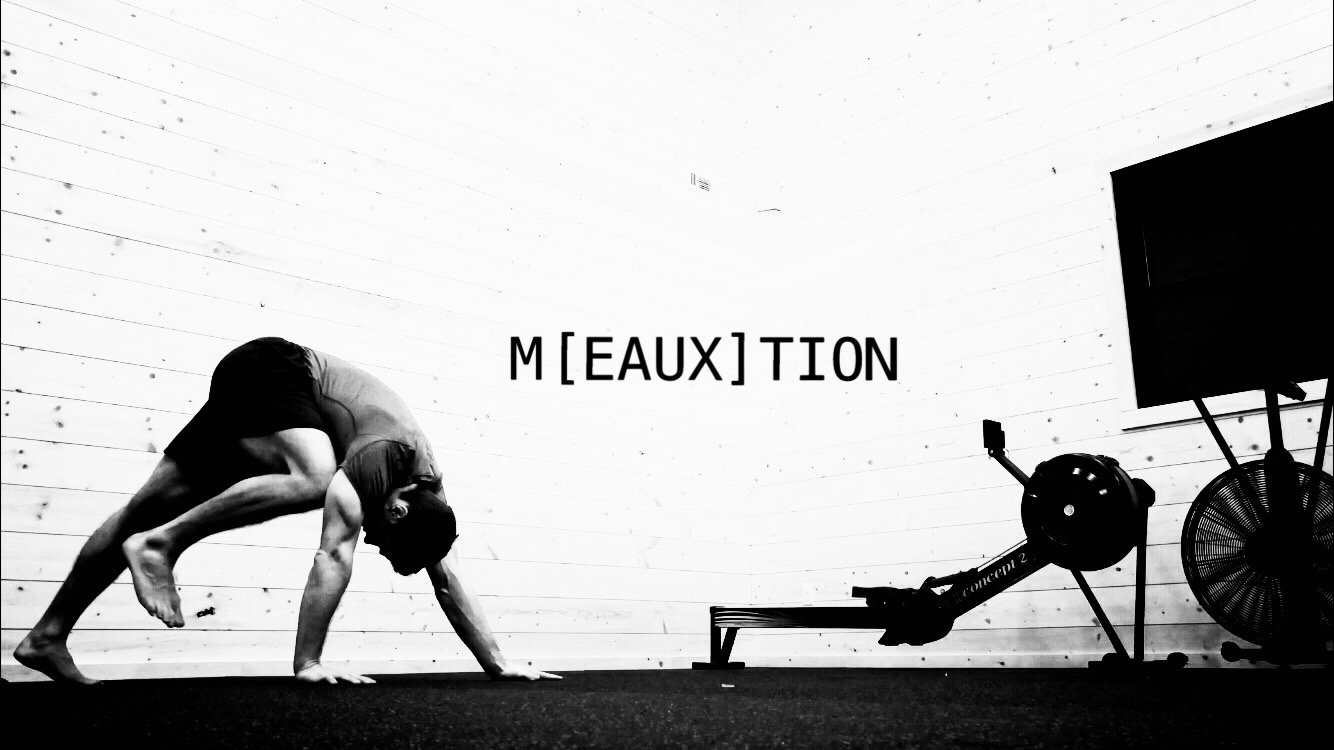
It’s not really, and it never will be, but the point here is that the gym reminds me of a jail cell.
When I first started training, it was very traditional. Barbells, cable machines, stationary bikes and treadmills were the ticket. It was how people stayed “fit”, strong and athletic.
Again, these tools still work, but the deeper you go into the rabbit hole, the more you question why building high functioning bodies has to be such a cookie cutter process.
Barbells will never go away. Why? Because a barbell’s design is perfect for lifting heavy things off of the ground, loading up the squat pattern and building explosive power through exercises like the clean, snatch and push press. We need tools like barbells. Barbells are safe. A quality barbell isn’t going to break mid-rep, and there are a series of checks that a person can run through to make sure that replicate their technique every single time.
But what I am beginning to question- and the better term might be “explore”- is why movement should be so cookie cutter.
Because that is how I am seeing it these days. It’s cookie cutter. We preach posture, we preach exercise technique, we preach moving within manageable ranges of motion. But how about this… let’s get out of the gym and move. Forget about all of the in-depth information, get off of the couch and out of the house. It’s sunny and 80 degrees outside and it’s a prime opportunity to use your god-given right to move yourself around.
If you’re a newer to training , and you cannot handle your bodyweight… the load that you carry around with you 24/7/365… forget about barbells, cable machines and kettlebells. You have bigger fish to fry than worrying about the next great exercise.
When I left the gym I started to LOVE training again. When you’re done with organized athletics, working out just for the sake of working out is a sure-fire way to burn out. Boredom sets in and you start to wonder what all of the effort is for? A six-pack? Honestly, who cares.
Six packs are nothing without function.
You can have a rippled six-pack and blow out your back in a heart beat, tear a rotator cuff, etc.
It’s like, “Congratulations, you can see your stomach muscles through your skin, but you can’t run a mile or pull yourself up to a bar or pull yourself out of Quasimodo posture”.
In fact, these days, I think that dedicating your training to achieving a six-pack is comical.
Once you get in this “I’m training for a six-pack” mindset, you’ll go insane trying to get it or attempting to maintain. It will elude most people not because their workout program sucks, but because their eating habits suck. You wouldn’t believe how hard that is for people to swallow (no pun intended). If you want a six-pack and don’t have it despite insane physical efforts, it’s most likely because your eating is not conducive to having a six pack. Ok?
It would be like if you started a business only with the goal of getting uber-rich and but ignored your customer service.
It’s short-sighted.
Get yourself out of the gym and start moving more. What do parents tell their kids when they are inside for way too long?… “Go play outside”. Adults should take their own advice.
Once you’re outside bodyweight training is an amazing method to leverage when you use the correct formula. Climb some stairs, hills or jog flat ground. Get your heart rate up and get the blood circulating rapidly. Mix in some squats. If you cannot squat, grab onto a pole, hinge your hips down and back, keep your chest tall without folding at the lower back and feel the movement. Use the pole to help groove that squat pattern, and what it should feel like. Gradually let go of the pole and continue to “feel” the movement.
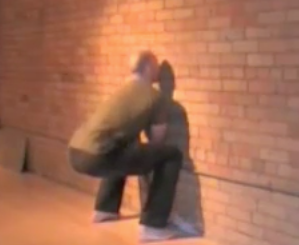
“Face the Wall” squats are great for learning technique.
If you cannot perform a certain movement- and I use the squat as a common example because it seems to give people the most trouble- you have got to practice it. Occasionally, you’re going to find that your internal wiring is all mixed up. In this case, you need to implement corrective exercises, which I why I promote The Functional Movement Screen so much.
Everyone should be able to squat, among other things. This isn’t a circus move that is exclusive to fitness buffs, this is exclusive to all humans. If you cannot squat, you need to figure out why and restore your ability to squat.

Gym memberships. We seem to think that just because we buy a gym membership we have just bought ourselves a fit body. But you haven’t. What you did is you bought yourself a gym membership, a contract that says you can walk into a brick and mortar structure where a bunch of fitness equipment resides, waiting for the next person to pick it up, push it, pull it or run on it.
But most people who purchase memberships never go. Buying the membership is the easiest part of the process. Anyone can hand over a credit card, swipe it and feel great about their decision. Especially credit cards, because when you don’t physically see the money being handed over, the impact of the purchase is dampened.
The real work begins when you make it a priority to go that gym over and over again. Daily. Every other day. Or at least on some kind of consistent schedule.
But most people burn out or never commit from the beginning. Out of the gates hard and fizzle, or they purchase the membership and never go in the first place. But they have the membership, so they will go “someday”. The membership is comforting because they always have it in their back pocket, never to be used… but it’s “there”.
In the back of my mind, I have long thought movement should be explored. We should be able to execute movements that require power and strength, yet exhibit a stable full range of motion and gracefulness regardless of the environment or the obstacle. And let me tell you something flat-out, one brief glimpse at how life happens in real-time when you are actively engaged in movement (outside of the confines of the gym) will reveal that you need to be able to adapt to the unknown.
However, I also believe that exploring movement should be done unloaded. External loading in really awkward positions can cause injury, and that erases any ground that you’ve made. Move with your body, and your body only.
Unknown stress, unknown range of motion, etc.
You’ll never be running on a trail and find a barbell neatly loaded with a chalk container sitting next to it. You’ll find a rock with shitty hand holes for gripping that is weighted heavier on one side than it is on the other, and wet. Or maybe that rock isn’t on the running trail, but it’s a part of the magnificent landscaping in your yard. Maybe you’re gripping 40lb bags of mulch carrying for 30 yards up an incline, shoveling gravel or raking a 2 acre yard.
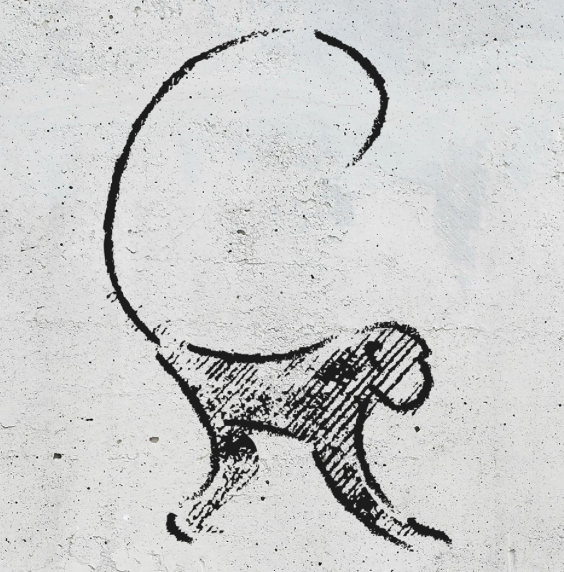
You cannot train for this stuff. You can prepare, and barbell training and other more traditional forms of gym work can aid in your completing of these tasks, but we have to develop succeed in raw movement. It’s life. Movement is part of life. So I have embarked on my dabbling of increasing my ability to move, mixing in Ido Portal-like methodology (logo seen above, great logo).
I believe that there is something to be learned here. Getting out of the cookie cutter mindset and into the movement mindset. Exploring the bear crawl, moving into a lateral lunge flowing into a crab crawl, gorilla hops and then into single leg pistol followed by a pull up to a bar where you pike out and lower yourself with a graceful strength.
Got that? 🙂
I value the building of systematic strength. I value programs that are geared toward making damn sure that strength progress and conditioning progress can be measured and evaluated. We call this “periodization”. We move through 3-4 week phases where focus is placed on building a certain quality, such as strength or hypertrophy. But all of this work needs to transfer over into the unknown, into life.
Systematic strength building and conditioning will always have a place for every human, and I will never stop promoting that to athletes, Mom’s and Dad’s and the elderly. We should place some focus on this method of building physical fitness.
But once we leave the gym, we have to realize that movement is more than bending over to pick up a piece of iron, grunting, standing up with it, then dropping it back on the floor.

Fitness is a blip on the movement map.
Fitness doesn’t mean that you can move.
In fact, I really don’t know what fitness means? Who’s considered fit? The powerlifter who can pick up 1,000lbs in a deadlift? The marathon runner who can win the Boston marathon? The UFC fighter? Usain Bolt? The kettlebell guru? The Crossfit Games champ?
I know this might not make sense right now, but fitness does not mean that you can move.
Ah, the gym. It’s really dead to me at this point. I value the tools found in the gym, particularly cable machines that can be used for movements that cross the midline, such as chops and lifts, but not the gym itself. I think there are better places to train. Places that inject an energy into your sessions.
With the evolution of training equipment that is capable for training outdoors, I’ve never been more motivated to explore movement in different environments, using different tools and lately with others who value the same approach. It’s a great bonding experience to train outside with someone else and finish the workout together, just as it is to climb a 14,000 foot mountain, bike 100 miles or complete a marathon.

With the popularity of unique outdoor activities like stand up paddleboards on the rise, I’ve never felt more justified about my decision to leave the gym in my rearview.
Come join me out here.
Cheers to movement and your ability to do it anywhere!
KG


 M(eaux)tion Fitness