Animal Flow Scorpion

Animal Flow| Scorpion

Animal Flow

Animal Flow is a ground based movement system that leverages multi-planar movements, transitions and various crawling patterns to create an effective form of exercise.  

Scorpion, is a unique exercise with roots in Yoga, yet adapted and modernized by Animal Flow.  

The benefits of practicing exercises like Scorpion on a regular basis are many, and discussed throughout this post.  

Scorpion is a versatile exercise.  We can slip it into warm ups, workouts, movement sequences and improvised flows.   

The aim of this post is to give you information on Scorpion technique, benefits and ideas on how to integrate this great exercise into your current or future workout regimen.  

More information on Animal Flow will be provided at the end of the article.  

Animal Flow Scorpion

Benefits of the Scorpion exercise

  • Lengthening of the hamstrings and lats
  • Opening up and activating the hips
  • Thoracic spine extension and rotation
  • Shoulder strength and stability
  • Rotational core training
  • Uniquely challenging multi-planar movement
  • Ground based, bodyweight, equipment free, minimal space requirements

Just one exercise, all of those benefits. 

Ground based movement exposes your movement flaws.

To be blunt, expect to feel stiff and weak.

Newbies to ground based movement training should anticipate getting tripped up for a while.  

The mechanics of the new exercises are foreign, the spatial awareness is new, the timing, tension, breathing, range of motion, etc… is new.  

Consistent practice yields improvement. 

Scorpion Movement Technique

Bottom Position

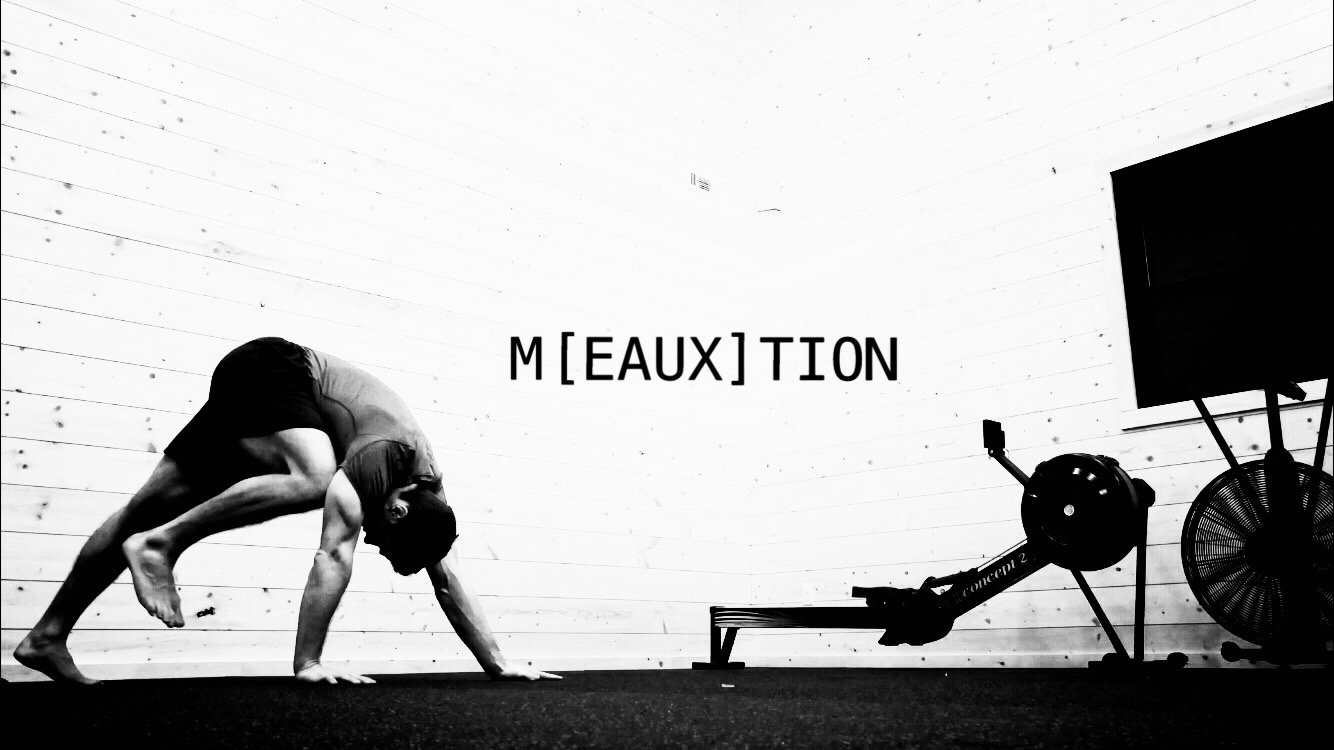
The bottom position of Scorpion involves trunk flexion and a bit of rotation.  

You can see my spine flexed, core hollowed out.  

Cues:

  Eyes toward the hands

  Shoulders over the hands

  Round the back slightly to make room for the knee coming across

Slide the knee across the midline of the body to the opposite side elbow. 

Once there, “kiss” the knee cap to the elbow.  

Reverse the motion to start the upward phase of Scorpion.

* Tip:  Limit momentum from the cross-body knee touch.  Move slow and with control.  If you cannot touch the knee to the opposite side elbow without compensating, that’s fine!  Work the range of motion that you’re able to control.  

 **Warning: core cramping possible and likely***

Driving the knee across the midline to the opposite side elbow is difficult shit.  

People who practice this type of training regularly (Yogis, etc) make it look easy, but it’s not.  

Cramps and whole body shaking is likely.  

Top Position

At the top of the Scorpion, the body moves into trunk extension and rotation. 

Cues:

–   Ears between the arms

–   Keep anchored leg as straight at the knee, heel down.

–   “Reach” with the elevated foot, squeeze the glute

–   Relax the jaw and neck (breathe)


What you should FEEL during Scorpion…

Moving is a multi-sensory experience.  

You hear, see and feel with every movement.  

Knowing what to feel can speed up the learning curve with new movements and also give feedback that you’re doing the movement correctly. 

Bottom position of Scorpion

  •  Shoulder and chest burn from stabilizing bodyweight in the high plank position.  
  •  Intense core burn from the cross body knee to elbow.

Top position of Scorpion:

  •  Suspended glute is WORKNG HARD, feel the burn here.  
  •  Hip flexor stretch. 
  •  Backside stretch running down the anchored leg from glute to the heel.  
  •  Side body stretch from the rotation (mainly the lats) 

Personally, my lats (hips to arm pits) get a big stretch while practicing scorpion. 

How to Use Animal Flow Scorpion into Workouts

Scorpion is extremely versatile for workouts.  

Slip it into warm ups, the workout itself or use it as part of a flow.  

Warm Up

Animal flow exercises are ideal to use in warm ups.  

Here’s how: 

Active mobility training

Ground Based Conditioning (Animal Flow)

Resistance Training

Cardio

Cool-down

This is a very simple and effective workout template.  

Spend 15-20 minutes working through foam rolling mobility and movement flow.  Keep it brief and focused.  

Resistance Training

Scorpion is a great filler exercise when paired with lifts (chin ups, squats, deadlifts, lunges, pressing, etc).  

Filler exercises don’t take away from your main lifts while being more productive with rest periods.  It’s active rest.  

Here’s tri-set that uses Scorpion as a filler exercise:

A1)  Chin Up

A2) Squat

A3)  Alternating Scorpion

Chin-ups training upper body pulling, squats for lower body pushing, and Scorpion for a bodyweight based multi-planar movement.  

Cardio-Strength

10 Kettlebell Swings

10 Push Ups

10 Alternating Jumping Split Squats

10 Rows

 Scorpions 5 each leg

Perform 5 rounds of this circuit for a time efficient total body cardio-strength workout.  

Movement Sequences 

For beginners to movement flow, moving beyond isolated exercise practice is best done with movement sequences.

Generally, a movement sequence is 2-3 exercises strung together.  

Sequences introduce another incredible benefit of flow training, transitions.  

Transitioning between exercises requires careful coordination, strength and control, balance, timing and spatial awareness.

The benefits of ironing out transitions between movements until they are seamless cannot be overstated.

Movement Flow

Ready to flow?  Perfect.

Set a timer and go.  

I’ve dabbled with 20-25+ minute improvised flow sessions.

Start with simple crawling exercises integrated with switches and transitions.


Add in traditional exercises like:  push-ups, planks, squats, lunges, hinging, pulling, etc.  

Check out this video

Explore the space.  MOVE!

Multi-Planar Movement Training KICKS ASS

Animal Flow movements are multi-planar, and very unique compared to what most people are doing in daily workouts. 

Exercises like the Scorpion move the entire body through a unique range of motion, challenging the core, hips and shoulders.

Ground based movements condition your body’s spatial awareness, strength, mobility, stability and efficiency.

Lunges, squats, kettlebell swings, over head pressing, push ups and vertical pulling exercises such as pull ups and chin ups are all great exercises, but they lack rotation.

Training your body to move well on a whim, in a wide variety of environments, on different terrain, over/under/through various obstacles or while completing unique tasks amplifies your movement capacity.  

If you’re currently lifting weights and doing cardio, GOOD!  

This article is NOT a call to stop doing those activities.  

Animal Flow style training and a quality resistance/cardio training regimen can and should coexist.  

Combining strength, conditioning and forms of natural movement creates the new gold standard in fitness. 

Scorpion is the tip of the iceberg when it comes to ground based movement.  There’s so much more to explore. 

If you really want to received full benefit of flow work and ground based training, I highly recommend checking out Animal Flow.


Benefits of the Crab Reach Exercise

Motion

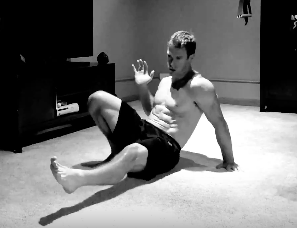
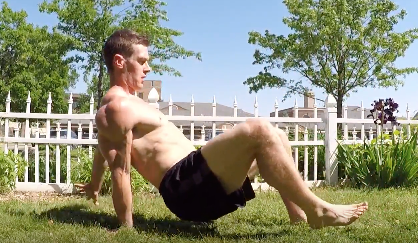
The Crab Reach is a great bodyweight exercise with a whole bunch of options of use before, during and after a workout.  

For a simple bodyweight move, this exercise offers a lot of benefits. 

Benefits of the Crab Reach

  • Posterior chain activation and hip extension
  • Active Thoracic Mobility
  • Anterior body stretch (hip flexors, quads, torso)
  • Shoulder stability/endurance emphasis in loaded shoulder
  • Trunk rotation
  • Right and Left Side 
  • Low-impact

Combat Sitting 

The Crab Reach is a great exercise to battle/off-set the negative effect of long duration sitting. 

It’s not “the cure”, the only tool or the “best” tool, but it’s a good one to implement on a regular basis.   

Reversing aches and pains caused by primarily long duration sitting requires dedication, discipline, and volume.  There is no quick fix.  

A quick hip flexor stretch, thoracic mobilization, and glute bridge are not going to cancel out 8+ hours of sitting in the same turtle-like, wound up position.  

Body restoration takes time, effort, consistency and volume.  Lots of repetitions, likely lots of time and an aggressive mindset.  Assuming you’re doing everything right, expect improvements over time.

Most people slump like a turtle while sitting.  Sitting like a slouchy turtle for 8-10 hours per day, 5 days per week isn’t good for our bodies.

We become the positions we use most.  

Fill in Gaps with Movement Training

Strength and conditioning built from traditional resistance training can benefit greatly from practicing multi-planar movements like the crab reach.   

Deadlifts are great.  Chin-ups are great.  Rows, push-ups and rotational core training are all great.

These are fundamental movements to build a strong body.  

But there are movement gaps leftover from each of these exercises.  

Once you’re on the floor crawling, transitioning between locomotion exercises, you find out pretty quick there’s a difference between squatting up and down with lots of weight on the bar and moving gracefully through space.  

It’s humbling. 

Exploring bodyweight oriented movement is a key piece of the fitness puzzle that will improve your movement IQ and create a well-functioning body.  

What’s a well-functioning body?

Strong (proportionate to what a person needs to thrive in daily life), mobile, confident in many different postures/positions/patterns, conditioned, free of aches and pains. 

Ground-based conditioning is a great way to backfill any gaps resistance training is not designed to address.  

Free-flowing, multi-planar fitness. 

Practicing postures and movement patterns less common to daily life. 

Improving strength, mobility and stability in uncommon movements make everyday exercises feel easy. 

Rotation

Looking at the average person’s exercise favorites, it’s usually a shortlist made up of linear resistance training and a sprinkling of cardio. 

Break out of the linear matrix. 

Every repetition of Crab Reach moves the body through a multi-planar, active range of motion.  

Through the range of motion, the body will extend and rotate.  

The twist is visible from the hip flexor, moving diagonally through the mid-section to the loaded shoulder.  

How to Use Crab Reach in Workouts

Ground-based bodyweight movement is extremely versatile.   

Keeping it simple, here are a few different options to integrate the crab reach into daily fitness:

  •  In the warm-up
  •  Filler exercise during a lifting session
  •  As part of a flow sequence

Crab Reach can be practiced in isolation or as a combination. 

I recommend practicing new movements in isolation to increase focus on technique. 

Practicing an exercise in isolation is better to understand the mechanics and demands is best. 

Isolating the exercise will give you the opportunity to focus on the mechanics of the movement and spatial awareness.

Warming Up with the Crab Reach

Movement flow exercises are perfect for pre-workout warm-ups. 

These movements are generally dynamic, full range of motion exercises that require movement into and out unique body positions, angles and tempo.  

Crab reach can serve as a valuable movement prep before exercises like deadlifts or kettlebell swings.

Crab Reach as Part of the Workout


Positioning the Crab Reach as part of a Tri-Set is a great way to isolate and practice the exercise while staying active/productive during a strength training session. 

Here’s an example a simple Tri-Set:

Exercise A) Front Squats

Exercise B) Chin-Ups

Exercise C)  Crab Reach

Crab Reach acts as a non-competing exercise with the front squats and chin-ups. 

Flow Training

Crab Reach can be used to create a simple bodyweight flow.

Start with two exercises separated by a switch to keep it simple.  Here’s an example:

The video above is an example of a simple movement sequence.

For an added challenge, increase the number of exercises in the sequence to 4, 5, 6 and beyond. 

Adding more exercises to create longer flows is great for the mind-body connection. 

The ultimate goal of movement training is improvisation, which is essentially moving without a plan.

Improvisational movement is an idea I plucked from Ido Portal’s movement hierarchy, which looks like this:

Isolation —> Integration —>  Improvisation

Read more about Ido Portal Method here.

Reps/Sets/Time 

In the beginning, keep the reps low.  

6-8 reps per side is a good place to start.

Focus on a slow and controlled tempo through the fullest range of motion you can make happen.

After you are feeling good about the mechanics, increase the volume. 

Don’t be shy about bumping up the reps to 15-20 reps per side.  Setting a timer can be a nice option.  

Not interested in counting reps?  

Set a timer and go.  Alternating right and lefts for 2-5 minute timed sets can free’s you up from having to count reps. 

Summary…

  • Bodyweight ground-based movements are effective for building strength, mobility, endurance, and movement IQ
  • Crab Reach is a versatile exercise that can be performed anywhere and anytime.  
  • Benefits of the Crab Reach include posterior chain activation, anterior body lengthening, thoracic mobility, body awareness in space.
  • The Crab Reach is great to include in warm-ups, during the workout or as flow training.  
  • The Crab Reach is an effective exercise to help mitigate aches/pains from sitting, restore function.

Want to Go Deeper? Check This Out…  

Vahva Fitness has created a fully streamable bodyweight-based movement program called Movement20XX.

The movement curriculum in Movement20XX is progressive, challenging, and scalable for beginners, intermediates and all the way up to people seeking movement mastery.   

Movement training is easily scaled to suit each person’s skill level.

Movement20XX is one of a small number of hand-picked online fitness programs I support. 


Benefits of Movement 20XX| Ground-Based Locomotion Training

Animal Flow, Motion

Screen Shot 2017-11-13 at 8.30.36 AM

Movement 20XX is an innovative, gap bridging movement system built around fundamental bodyweight exercise, organized in a readymade package.  

The movement system is comprised of a wide range of exercise progressions to get a beginner flowing in their first workout, leading up to advanced movement mastery.

Movement 20XX exercises and workouts are designed to help people improve strength, flexibility, body control and coordination.

The most impressive aspect of Movement 20XX is how well the movements and transitions fit together to create an artistic, fluid practice. 

Ground-based conditioning is a missing element in a lot of workout regimens and can help reboot the body’s natural ability to move well.

It’s just you and some empty space on the floor, which is both daunting and liberating.  

The brilliance of Movement 20XX is it’s a collection of many different movement disciplines.  

Instead of being pigeon-holed to training with one movement methodology, Movement 20XX  teaches key elements from yoga, martial arts, parkour, break dancing and gymnastics to name a few.

The emphasis on teaching locomotion patterns like the lizard crawl is awesome.

Expanding movement capacity and improving movement I.Q. through natural ground-based movements is as functional as it gets. 

Locomotion patterns make up 1 of 6 components in the Animal Flow training system. 

What is Locomotion?

Locomotion exercises often mimic the movements of animals. Basic crawling variations are an example.  Crawling is a full-body conditioning pattern. 

Each moving form has an emphasis on contralateral movement, which means the movement occurs across the body’s midline.

The opposite hand and foot are going to move together. Contralateral movements are great for building body awareness and coordination.

Locomotion, in laymen’s terms, means moving from one place to another. Walking, skipping, running, pushing a heavy sled, farmer walks are all variations of locomotion.

A large majority of locomotion patterns are performed in a quadrupedal position, with hands pressed against the floor supporting body weight under the shoulder, knees flexed near 90 degrees and only the balls of the feet supporting the lower body. 

Benefits of Movement 20XX locomotion exercises?

Humans are bipedal creatures.

We move most efficiently in an upright position using our legs to propel us through space.

Practicing locomotion patterns with the body and head in unique positions other than upright walking position (head on shoulders, eyes forward, arms hanging at the sides, etc) challenges the body to re-orient itself to those uncommon positions.

Quadrupedal, animal-like movement patterns expand our movement capacities, making our body a more complete piece of machinery.

Sure, one could argue that life happens on two-feet and that’s partially true.

However, there are many moments in life where we must be able to move into (and out of) positions outside of normal vertical standing

Supplementing a training regimen with ground-based conditioning trains a person to be more capable of handling known and unknown tasks.  

It’s hard to predict when you’ll need to be strong in a quadruped position, right?

When you need it, you need it.

A great goal of any fitness program should be to create a higher level of movement efficiency across a broader range of positions.  

Screen Shot 2017-11-13 at 7.41.50 PM

Locomotion movements provide a gentle loading for the upper extremities and demand the core musculature sort out new stimuli (cross-crawling).  

Yes, locomotion work is going to light up your core.

Other benefits of locomotion training:

  • Establish neuromuscular links throughout the kinetic exercise chain.
  • Movements are multi-planar, preparing the body for different planes of motion.
    • Up and down
    • Side to Side
    • Transverse (rotational)
  • Flexibility through movement and the opening of fascial lines and slings.
  • Full articulation of joints to reinforce mobility.
  • Reconnecting the brain-body activity with contra-lateral movements.
  • Exposure of asymmetries and energy leaks as you move closer to the ground (versus standing).

Ground flow drills are not boring, which is a really unscientific yet powerful reason to start exploring the practice.

If your current workout regimen has you bored out of your mind, you better switch it up quickly.  People who get bored often stop exercising all together.  It’s very predictable.   

Let’s take look at each of the three basic forms taught in Animal Flow…

Side-to-Side Locomotion

Side-to-side (lateral) locomotion is a challenge technique-wise.


Timing, force absorption, core compression, and flexibility are all equally important 

This same pattern can be executed forward and backward.

Quadrupedal Crawling

Screen Shot 2017-11-13 at 6.50.24 PM

Crawling is a fantastic activity for the pre-workout warm-up, or as a main component of the workout.

This dynamic quadrupedal activity reinforces and builds reflexive strength along with connecting the left side of the brain with the right side.

Small space? No worries.

Crawling is an adaptable exercise that can fit whatever size space you are training in.

In my old basement gym, I had less than 10 feet in any one direction.  Adapt to small spaces by making more trips down and back.  For folks who are stuck in hotel rooms while traveling, crawling is PERFECT.

8-10 feet of space is all you need to crawl.

Crawling can be modified to suit a wide variety of training stimuli and goals. Ramp up the tempo to elicit a cardio training effect or slow it down for movement control.

Beginners should practice crawling slow and controlled to establish a familiarization with technique. 

Crawling can be performed in high and low positions, forward and backward, side to side.

Supine Crab Crawl

Screen Shot 2017-11-13 at 6.41.04 PM
Supine crawling, sometimes referred to as the “Crab Crawl” positions the front of the body toward the ceiling with arms supporting behind the back and inches in front of the glutes.

This crawling variation engages the backside muscles of the legs to a higher degree while challenging shoulder extension.

The Crab Crawl is a unique exercise because of the way it engages the lats, traps and external shoulder rotators, opens up the anterior chain while simultaneously activating.  

How to Add Locomotion Drills to Your Workout

Locomotion exercises can be used as warm-up drills, recovery from the previous day’s training stress, included in a circuit or practiced as part of a long duration flow.

Natural bodyweight movement can be practiced anytime, in virtually any environment. 

Personally, I prefer a “less but better” training philosophy.

Starting out, I practiced basic locomotion patterns for 10-15 minutes before any resistance training or cardio work, using brutally slow tempos to gain an understanding of mechanics and build motor control and timing.


Slow movement training reveals movement deficits.

As mentioned earlier in this post, crawling can be used for cardio conditioning.  Increase the tempo and intensity.  Move faster.  Or, crawl for a longer duration.  Maintain quality of movement, however.  

Change of direction, body position, loading the upper extremities, tension, crawling, sprawling will jack up your heart rate as fast as any other form of cardio. All without any equipment.

Movement 20XX

Movement 20XX

Movement 20XX is the program I recommend for those who want to begin exploring ground-based training.

Eero Westerberg has done a fantastic job creating a comprehensive movement platform that really delivers significant benefits to customers.

Movement 20XX is packed with basic (similar to what I shared today) and advanced exercises and technique tutorials for those exercises, leading to flow training.

Flow training is highly challenging and fun.

Subscribe

Make sure to subscribe to this blog to receive updates on future posts.  I will never spam you, it’s not my style.

Screen Shot 2019-12-07 at 5.56.13 AM

YouTube and Instagram are also great resources for constantly updated exercise progressions and variations, flow training and how I’m integrating techniques to create hybrid workouts.  


Cheers, 

Kyle