



I always enjoy reading “list” style article from other writers, so I am making a conscious effort to put out more list style articles. I have to be careful on how I word the titles however. My major beef with article that are constructed in the list format are when they appear like the following:
“3 Best Foods to Eat for Fat Loss”
“10 Best Resistance Band Exercises”
“5 Best Butt Shaping Moves”
What is the common trend that you see there?
The word “best”.
I have trouble with the word “best” these days. I used to be the kind of guy that would give out information about what I thought was the best, but I have since realized that just about everything works. That being said, there are definitely exercises that I would select over others for most people. But I still don’t feel comfortable saying that there is any one “best” of anything. It’s a human malfunction, not an exercise malfunction.
I am guilty of it myself.
So I am careful on how I am going to word these “list” articles.
Moving on…
Physical culture has evolved tremendously over the last few years. Products and methods have continuously improved our industry. Naturally, the information being dispensed to the public has also become much more applicable.
Below are what I feel are 5 red hot trends in the fitness world…
1) Metabolic training.
I can’t really use any more description than that. We have officially entered the age of Cardio-Strength, Met-Con (metabolic conditioning) and work capacity based training for getting lean and regaining control of our bodies. It’s a trendy method, and rightfully so. I myself have trained using incomplete rest periods and high volumes of work in short amounts of time for years. The results are undeniable. I don’t like to generalize statements, but the kind of aesthetic look that metabolic style training produces seems to be highly desirable by the public. People want the lean and athletic look. As with any trendy method, metabolic conditioning is also heading toward the dangerous realms. There are always individuals who will take ideas to the extreme, and we are seeing this currently with metabolic conditioning. Over-training and injuries have never been so prevalent, yet people seem to think it is part of the gig. It doesn’t have to be.
2) Suspension Training.

Yes, TRX first hit the mainstream a long time ago. Close to 6-7 years actually before finally hitting it big time. Jon Hinds at LifeLine Fitness has been promoting his Jungle Gym suspension trainer for years prior to that. What is amazing is the evolution of how we are using the suspension trainer. It’s become a go to tool for rehab, developing and regaining mobility and stability and also yoga like movements. It’s arguably the most versatile piece of training equipment in fitness right now. Every home should have one.
3) Paleo.
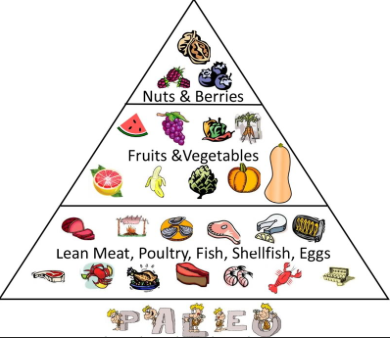
Paleo is the hottest trend in eating, and I have to say that I have been eating ridiculously close to Paleo for quite some time. Paleo is clean eating. Whole food, lean meats and plenty of plants. Although I feel that some professionals have really enjoyed the marketing appeal of a term like “Paleo”, I cannot argue with the eating recommendations. If you want to strip fat and get yourself out of the “sick, overweight and heading for preventable disease category”, Paleo is a fantastic option.
Here is a link to Robb Wolf, a trusted name in the Paleo world: Robb Wolf
4) Animal Movements.
This is something that I am HIGHLY interested in at that the present time. I will be reporting back on this in future posts. I would like to call it ground based mobility training, but that doesn’t even do it justice. After watching a few video clips from the folks over at Primal Move, I was hooked. I see so much value in it. Strength and Conditioning coaches have been gravitating to Gray Cook and his Functional Movement Screen for assessing athletes and general population clients alike. I can see this building on the findings of Gray’s FMS. Moving joints in a range of motion like the video below would be a tremendous addition for so many people…
5) Self-massage.
It’s never been more simple to perform self-maintenance on your body. Tools like foam rollers and lacrosse balls have around for ages, but the information on how to use them was really lacking. Sure, guys like Mike Boyle and others were promoting foam rolling sessions as a pre-workout method for eliminating trigger points and changing the density of muscle before changing length. Some will argue against the effectiveness of stretching statically, and I am not even sure where I stand on static stretching at the present time, but no one should argue against the effectiveness of relieving oneself of restrictions (aka: knots and sticky tissue). Trigger Point Performance, a company out of Texas, has really taken the concept of self-massage to the next level. There educational seminars and products are fantastic.
Where is physical culture heading next? Who knows, and that is the beauty of it. We read, learn and apply daily. The landscape of the fitness industry is constantly changing, and I really like that.
Cheers to being trendy (in a good way)…
KG

Once you have established that you can move without pain and 3-dimensionally in a strong, mobile and stable manner, it’s time to start thinking about your training goals.
Assuming that you don’t want to be a body builder or a power lifter, work capacity based fat loss circuits are a great option.
Basing the amount of work you perform during a work-set off of time versus reps can breathe new life into your training program. Battling the clock can really ramp up a training session as you attempt to complete as many reps as possible before the beeper goes off, signaling the next rest period.
As much as I like the idea of time based training and how effective it can be, I also have some hesitations. I feel like it’s natural of me to feel this way, and I wanted to get you thinking also.
–> What amount of time is appropriate for work?
Yes, work capacity style training sessions are going to be highly metabolic. Often times they are going to use incomplete rest periods (because they are fixed) and the work-sets are going to be a bit too long.
Just as the most common rep scheme in the fitness industry seems to be 10 reps, the most common duration of work in a fat loss circuit seems to be 30 seconds. If I dig hard enough, I can probably find some research paper that the entire industry has interpreted to establish this 30 second work-set, but that will have to wait for another time. Just my own thoughts for now.
First, let me say that 30 seconds is a long time to be performing work. For the lower body, this might be more appropriate. Movements like squats, lunges, step ups, etc could be managed by most trainees for 30 seconds. But for the upper body, 30 seconds in my experience is way too long. We often lose the training effect if we extend the work-set to 30 seconds. The effort tapers and technique goes to hell.
The work being done becomes aerobic.
If you’re trainer reading this, observe it in your next session with clients. Even the advanced clients are about 50/50 for solid movement technique and output for the duration of the 30 seconds.
If you’re incorporating upper body pulling movements, particularly vertical pulling movements like chin ups and pull ups, forget about it. Very few can sustain a high effort beyond the first round of the circuit. Body rows (aka: inverted rows), maybe.
The time that each person works is dependent on their physical abilities (strength, stability, endurance, etc). Selecting a time that is appropriate for the later rounds of the session should be considered before you ever start the workout. The first round of a high tempo fat loss circuit doesn’t provide a glimpse into what is coming once fatigue sets in.
And fatigue will set in, trust me here. It sneaks up quick. Plan for it.
So, for me, I would reserve 30 seconds of work for a proven population. Mostly advanced who can produce the output and handle the fatigue.
15-20 seconds might be more appropriate to get the training effect you’re looking for.
5-10 seconds of work can make all of the difference in the world.
—> What exercises are best for a time based fat loss circuit?
It has to be sub-maximal (lighter weight) or bodyweight here. I haven’t necessarily found a sweet spot for gauging the number of reps a person should achieve, but somewhere in the 1 rep for every 2-3 seconds is probably manageable for most.
That would mean a 30second work set would allow for 10-15 reps during that period of time.
Not bad.
How aggressive you are with your loading will also change the reps completed in that time frame, so consider this.
Lower body movements are fantastic for fat loss circuits. Keep them simple. I haven’t found a need to go beyond something as simple as say a squat. Squatting while balancing on a BOSU ball with resisting band rotation just complicates matters. You’ll end up performing the entire sequence with awful form maybe mediocre at best, versus executing perfect squats with every single rep. Don’t sacrifice form for entertainment.
This is also largely a judgement call for you. Can you manage a squat with external forces also being applied? An of an external force would be incorporating a rotational component to the squat, say a resistance band that wants to pull you left or right. If you can, go for it. If you are sacrificing form for it, ditch it. This is my personal opinion.
Save the anti-rotation training for after the circuit when you can focus on, well, resisting rotation. The middle of the fat loss circuit is not the time to introduce new exercises to yourself.
Upper body movements are great too, but there is a fine line here. The upper body, for most people, isn’t suited for handling the high volume that the lower body is. That doesn’t mean that you shouldn’t work to change that, it just means that you’ve got to choose exercises wisely for your circuits. Overhead pressing has been identified time and time again to be an issue for a lot of people. If it hurts to go overhead or form is sketchy, ditch it. If it hurts, like pain type hurting, you might need to make an appointment with a health professional. If your form is breaking down, you’ve either got mobility or stability issues. Usually it’s mobility issues.
Bodyweight movements like body rows, push ups, battling ropes and even dive bombers work quite well when training against the clock. Technique, technique, technique!
Hybrid moves like the squat-to-press, burpees and sled pulling/pushing are all fantastic moves for a high tempo fat loss circuit. Sled pushing is a favorite of mine because of how effective it is while being extremely safe. It’s really hard to push a heavy sped improperly. The sled determines when your technique fails. The instant feedback is great.
Experience sparked this article. Training against the clock is extremely effective, but what works for one person might not be appropriate for the next person. It’s the beauty of being human, we all have different needs.
I hope that it can help you improve the design and effectiveness of some of your workouts
Cheers to re-thinking how we workout…
KG

If I absolutely had no choice but to run on a treadmill, which I have been forced to do before, I have a plan.
But there are some important things I would do before, rather than just jumping on cold. They are:
1) I would self massage using a foam roll and lacrosse ball on my feet thoroughly.
2) I would work my corrective exercise and pre-hab
3) I would mobilize the hell out of my joints to deliver nutrients.
4) I would turn on (activate) on musculature that will be engaged in my running efforts.
5) I would work through a series of dynamically oriented stretches.
6) I would make sure my inexpensive heart rate monitor is properly placed around my torso and the watch is reading the signal clearly.
7) I would begin at a slow running pace focusing on arm swing, breathing and smooth strides.
8) I would begin jogging on the treadmill, progressively increasing the speed of the treadmill until I reached about 80-85% of my max run speed (about 5 min), then I would step off and get ready for the following workout…
Heart Rate Based Treadmill Conditioning:
Details/Rules
Procedure
* Complete 8-15 rounds depending on your current conditioning & peri-workout fatigue level.
Why so much emphasis on heart rate?
Let your heart rate monitor, your body’s natural physiology, tell you when you are ready to go again.
How hard are you working? Let your heart rate monitor tell you.
A few words on treadmills…
I have to admit that I am not completely anti-treadmill.
What bothers me about treadmills is that they remind me of hamster wheels, and people use them like hamster wheels. Same workout, same speed, same incline, same distance, same music, reading the same magazine… Same same same. “Same” is the enemy of progress. Trust that.

image credit: movnat
Also, recognize that there is an incredible difference between:
1) Running on a treadmill where you are simply keeping up with the speed of the belt and
2) Running on a real world landscape where you are having to put true force into the ground to create movement.
If it is nice outside, and right now it is, get your ass outside and perform a similar workout.
If you do head outside, be prepared for the intensity to be jacked up ten-fold if you are shooting for the same structured workout as I described above. Real world sprinting is fatiguing, especially when organized as a timed effort combined shorter than normal rest periods.
Is aerobic training bad?
There is nothing wrong with aerobic training assuming you are progressing, moving toward your goals and avoiding overuse injuries.
But why not challenge yourself a bit, melt some fat, preserve the lean healthy tissue you worked so hard to develop, and increase aerobic AND anaerobic pathways all in one shot?
Did I mention how time effective this type of training is?
Here is a great visual depiction to support my case…

What is so non-traditional about my workout you ask?
Well traditionally, a) Most people don’t use heart rate monitors (they guess) and b) Most people coast or “relax” on the hamster wheel for a few miles for a light sweat.
That being said, my workout is non-traditional. I am asking you to let your heart be your rest/work indicator along with requesting that you put forth an effort that is unfathomable for a lot of the population.
See you soon…
Just getting warmed up.
(P.S. As an end thought… if you are able to read any book or magazine comfortably while training, you aren’t working nearly hard enough)

 M(eaux)tion Fitness