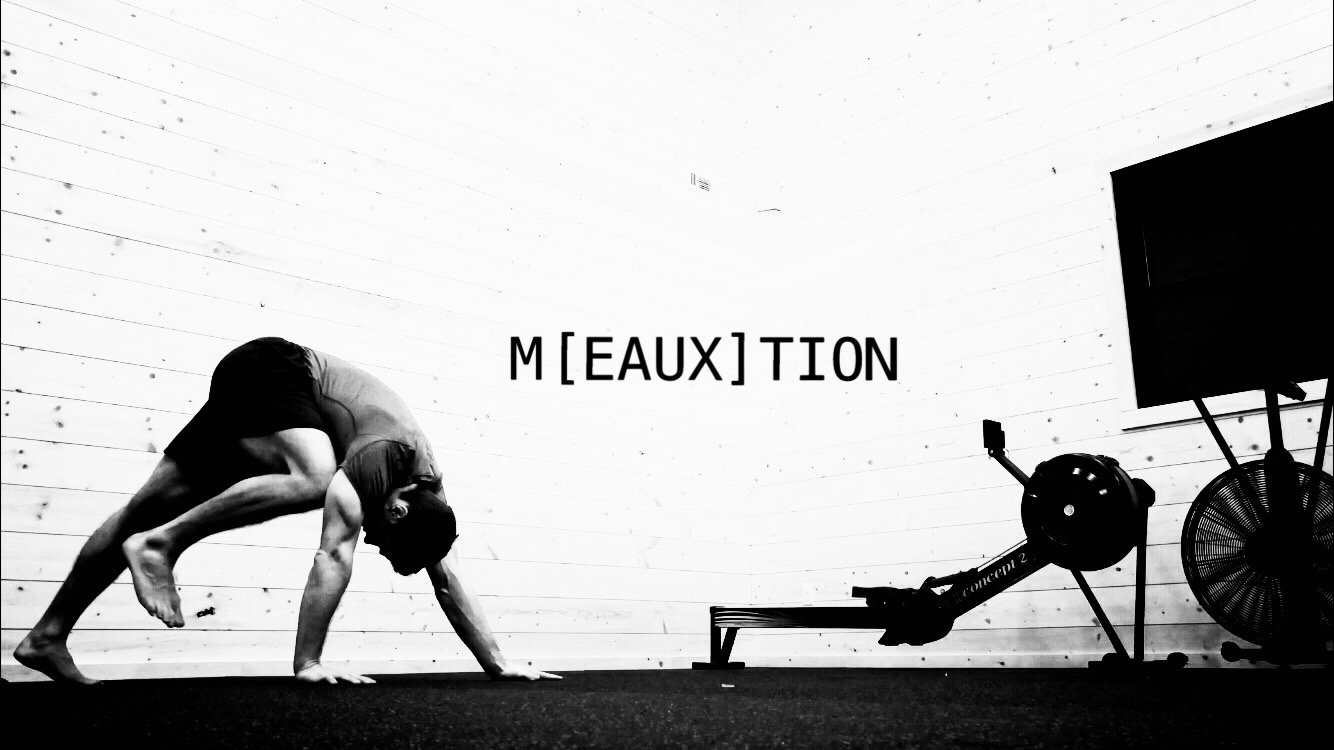
Saturday always provides adequate time to explore different combinations of work capacity style circuits.

I like to take the governor off and push myself on Saturday mornings.

This past Saturday didn’t disappoint.

The goal was to accumulate 25-30 minutes of a work:rest style circuit.  I didn’t feel like being monotonous with the exercise selection so included 10 different exercises, stringing them together strategically so that I could give an honest effort to each exercise without sacrificing anything (mostly due to fatigue) to the next exercise in the circuit.

It really worked out well and challenged a number of movement patterns.

The equipment that I used:  24kg kettlebells x2, jump rope, Jungle Gym Suspension Trainer

Here is how the workout was structured…

—> 20 seconds of work: 20 seconds of rest of the following:

24kg kettlebell snatch right hand

rest

24kg kettlebell snatch left hand

rest

Bodyweight Chin Up

rest

Double 24kg kettlebell squat-to-press (aka: Thrusters)

rest

Mountain Climbers

rest

Kettlebell Figure-8 (advanced and technical, but great drill)

rest

Bodyweight Push Ups

rest

Double 24kg Lunge (alternating sides)

rest

Hand-to-Hand 24kg Swings (alternating every rep)

rest

Burpees (jump and push up)

rest

Jump Rope (combination of two foot bounce and running)

—-> Repeat 4 complete cycles of the above…

The best part about this workout is that you don’t have to worry about keeping track of reps.  When I am doing work capacity style training, counting reps can be a major pain.  It’s really the last thing I want to be doing while I am huffing and puffing.  Instead, the work starts on the buzzer and ends on the buzzer.  It’s really convenient.

Know thyself… If you’re a beginner, this workout might not be scaled to suit you.  If you’ve been working out for a while, this might work great for you.  If you’re a tough guy or gal, bump up the weight for kettlebell exercises, add a weight vest to chin ups and push ups, use a weighted jump rope, etc.  I can provide exercise progressions to bury anyone if that is what you are seeking, hopefully that isn’t the case though.  Smart training reigns supreme.

You might see a lot of volume in a workout like this, and you’re absolutely right, so nice observation.  However, I preach workouts that can be managed.  I managed this one nicely.  Notice how explosive work is ordered first in the workout.  That is on purpose.  People tend to get hurt when they attempt to move weight quickly under fatigue and will poor form.  I am not foolish enough to place a highly technical lift at a place in the workout when I am most fatigued.

Also notice that all of the exercises are non-competing, and ordered in such a way to respect that.  In fact, look at the kettlebell figure-8 + bodyweight push ups + double 24kg lunge… sequence.  Very different muscles are being taxed there.  Figure-8’s are combination of squats with rotational power where the kettlebell moves from a high front to low back to side and finally diagonally across body to high position (hybrid movement).  Push ups are an upper body push dominant exercise, and lunges are mainly a lower body hip dominant exercise.  This allows for an increase in heart rate and work, without gassing out the body for the next exercise.  You tax one movement pattern, than move on to the next.

Different movement patterns, different muscles, quality technique, short rest, big training effect.

Now I don’t own a calorimeter or a metabolic analyzer, but I would guess that the calorie burn from a workout like this was quite high.  Maybe 650-800kcals total, and that doesn’t include the residual calories that are burned post-workout.  Shortened rest periods combined with resistance based lifts that leverage a sub-maximal muscle contraction are notorious for creating an after-burn effect, it’s been studied quite extensively in the last few years as the concept of fat loss slowly gains momentum versus weight loss.

Metabolism can stay elevated for several days leveraging workouts like this.

If you leverage some quality eating habits during that period of elevated metabolism, you’ll burn some fat no doubt.  Rinse and repeat the process and you’re going to end up burning a bunch of fat.

I should also note that I designed this workout knowing that the coming days were going to be either complete rest (no workouts) or at the very most, a short yoga/static stretch session.  It’s important to rest, recover and let your body heal in between workouts.  Your body can only handle so much stress before adverse events begin to occur.  You really don’t want to play chicken with overtraining or chronic fatigue in general.  The point of recovering in between workouts is to give your body the best possible chance to leverage the work done in the previous workout, while allowing enough time to enter the next training session and make gains.

I think that a lot of people could lose greater amounts of body-fat (faster) while boosting performance if they decreased the amount of cumulative stress from workouts.  You want your body to recover in full.  Always entering a workout in a state of recovery is bad for business.  If you haven’t acquired a full taste for physical activity, this is good news for you, as each dedicated workout can be used to accelerate

Instead, choose fewer weekly workouts that create a larger (but quality) training effect.  Make them count.

Focus on accelerating other areas of life while you recover in between sessions.  Focus on establishing quality eating habits.  Re-think your water intake.  Read more books on success and self-growth.  Calm the mind with yoga, foam rolling and a long static stretch session.  Get more sleep.

Learning how to workout is great, and building fitness is empowering.  But keep your training efforts sustainable.  Win the war, not just the battle.

Give this workout (or a variation of it) a go.

Cheers to kettlebell and bodyweight workouts!

KG

30 Minute Workouts, Bodyweight Workouts, Kettlebell Training, Quick Tips

Assess Yourself Often, Decide What’s Next

Quick Tips

Image

Assessment is an essential element of physical improvement.

Ideally, frequent assessments are made not only to your body aesthetics (weight, fat, muscle, etc) but also to your ability to move freely with stability and strength (mobility, stability, strength, etc).

After all, it is completely possible to look great and move like shit.

It’s also possible to move great and look like shit.

*** I should clarify what I mean when I say “look great”… it’s in the eye of the beholder.  Our perception of what a great body looks like is grossly skewed by mainstream models, magazines and media.  Obviously, carrying higher levels of body fat can raise health concerns, but “looking great” doesn’t have to mean visible muscle striations and the almighty six-pack.  If you’re body type allows you to feel confident in your own skin in any situation, good for you, you’re there.***

Besides, most magazine models, movie actors, and testimonials from famous workout programs like P90X and Insanity are manipulated and photo shopped to amplify their physiques.  Did you know that?

Check out this great article recently published in the Huffington Post describing how fake testimonials for workout programs really are…

Having looks without movement or movement without looks both carry their negatives.

The best approach might be to meet in the middle.  It’s more than possible to improve both at the same time without sacrificing one or the other.

If you look great but you cannot move without encountering restriction or pain, life’s activities become a hassle and certain movement patterns might be avoided altogether.  No one enjoys feeling pain, so we tend to avoid moving in ways that cause it.  I’m not referring to that burning sensation felt in your arms and legs when executing push-ups or squats, but rather the debilitating lower back pain experienced while you attempt to pull up a pair a socks.  Or maybe it’s the pinch in your shoulder when you reach overhead for a clean glass in the cupboard.

Looking great isn’t the only qualifying element to health.

The advances in made in assessing (and correcting) movement over the last 10 years or so have been tremendous.  The physical therapy world and fitness world are beginning to bridge gaps to one another, with ancient practices like indian clubs, yoga and martial arts adding value to the mix.

Image

We have a much clearer understanding of joint function, breathing and soft tissue health and how it all ties together to create a highly functioning body.

We understand that six-pack abs, bulging biceps and a set of trapezious muscles big enough to scratch your ear lobes may not mean a damn thing if movement dysfunction is present.

On the other hand, maybe you move really well but you pay little attention to your body composition.  I know a lot of people who are extremely athletic but don’t pay much attention to what they put in their mouths food-wise.  Ironically, poor eating can case inflammation and pain in and around your joints also.  Here are some common foods that are worth re-considering.  Eliminating most of these foods, or at the very least reducing and substituting with more nutrient dense options can work wonders.

In the operating room, it is obvious that a lack of attention to body composition will eventually restrict joint range of motion.  Many of the patients in need total joint replacements are also overweight/obese.  The increase in body fat literally prohibits the patient from achieving a healthy range of motion in the knee joint.  The additional weight combined with the lack of range of motion earns them a trip to the operating room where a surgeon hacks, cuts and pounds his way to an artificial knee.

This is an extreme end of the spectrum, but it’s worth mentioning none the less.

Image

Both scenarios described have solutions.  But it requires that you take a step back and assess what your next move is.  Just like a chess match, there is a next move, unless you’ve waited too long.  Then it’s checkmate.

If you desire the lean body, assess your training habits while simultaneously assessing your eating habits.  I’ve tried to out train my diet before, and it’s a pain in the ass.  Once my eating was in check, my body appearance improved but ironically so did my performance, skin and quality of sleep.

If you want to improve the quality of your movement, learn a few simple assessment tests give you feedback as to what’s going on.  If you cannot squat with arms extended overhead or perform a push up without breaking at the midsection, you’ve got some work to do.  Film yourself while you test out.  You don’t have to show anyone the video, it’s for your reference and education only.  Watch yourself, compare it with other folks, preferably a fitness professional that moves effortlessly and do some research on how to fix your hang ups.

I would start with the Functional Movement Screen, and someone who knows how to conduct such as test.

Consistently assessing yourself gives you important information on you where you are, your progress thus far, and allows you to decide on the next course of action.  It gives you focused direction.  It creates a clear and simple route from point A (where you are now) to point B (where you want to be in the future).

Assess and make the next move.


Cheers to assessing, correcting and building non-photo shopped bodies!

KG

It’s Just a Kettlebell Swing Workout

Quick Tips

Image

The kettlebell is a gym in itself.

I have not found any other tool that produces such dramatic results with body composition.

Sure, nutrition is a MAJOR part of ridding the body of fat and getting lean, but outside of a focused nutritional regimen, kettlebell training and more specifically kettlebell swings are a godsend to those who seek fat loss.

I have seen a lot of talk about the kettlebell swing’s ability to increase conditioning, but the truth is that I am not entirely sold on the idea of using the kettlebell swing for boosting conditioning.  I think that a fit individual who attempts to use kettlebell swings as a conditioning tool is going to quickly find that the volume of swings needed to elicit the kind of training effect needed to take one’s conditioning to the next level far exceeds the risks of overuse and mindless reps.

And quite frankly, extremely high rep sets is going to cause your grip to give out before your hips will.  I guess I would rather use other tools for increasing my conditioning (ex:  Airdyne, hill sprints, sled pushes/pulls, etc)

On the other hand, if you are a person who isn’t in game shape just yet, the training effect of kettlebell swings might be just what you need to mix into your workout regimen.

Either way, kettlebell swings are a great drill when performed with decent form, using a decent weight.  When selecting a weight to use for swings, go heavier rather than lighter.

Your hips are the most powerful region of your body and using a heavier bell will eliminate that chances of cheating the bell up with the arms.  Actually, “lifting” the kettlebell during the finishing movement of the swing is one of the biggest mistakes that I see in people.  The arms should definitely remain “taut”, but there should be no involvement from the shoulders when exploding out of the “hiked” position into the vertical standing position.

I like to picture my arms as two pieces of rope attached to the kettlebell when swinging.  My hand grip is not a death-gripped around the bell, but rather tight enough to keep control of the bell throughout the arcing motion.

The kettlebell, as I mentioned above, provides a fantastic opportunity to engage in a dynamic workout no matter what the occasion.  I personally love to engage in “swing-only” workouts the day after a tough cardio-strength training session.  If my body feels like it can handle the load of the kettlebell, I will go for a nice session of swings only.  Nothing else.  If I feel completely drained from the previous days workout, I will reach for the Schwinn Airdyne (aerobic based session) or simply roll and stretch and skip exertion altogether.

Long-term fitness is maximized when following a plan, but fine tuned and customized when you learn to listen to your body.  If you can train, train.  If you feel like you’re forcing everything that day, take a rest day and focus on hydration, nutrition and rest.  There is no shame in that.  I repeat, learn how to listen to your body and learn how to back off your training when it’s needed.

So, as the title of this post states, here is a simple swing only kettlebell workout that I have used in the past.  I view these as practice.  Swinging is an art, and I am not a master, although I do make a conscious effort to improve the efficiency of my swings, increase weight and continue to make forward progress.

Image

Alternating for 24 rounds (Set #1):

—->  15 seconds of 2-handed swings

—->  15 seconds of rest

Total Time: 12 minutes

Depending on your fitness level, you can stop here, or you can rest for 2 minutes and move into:

Alternating for 24 rounds (Set #2):

—>  15 sec Right Hand 1-Arm Swing

—>  15 sec rest

—>  15 sec Left Hand 1-Arm Swing

—>  15 sec rest

… and so on.

Total Time:  12 minutes

24 rounds seems like a lot, but consider that each work set is 15 seconds long and it is not maximal effort.  Why isn’t it maximal effort?  Because while kettlebell swings are definitely physically demanding, they are not a movement that you can max out on.  The bell swings as it will.  It is very tough to increase the swing count per work set to a point where you are will reach heart rates or perceived exertion that will tap you out.

The glory in kettlebell swings is the muscular engagement combined with the cardiovascular training stimulus.  This combination is pure gold for fat loss.

For a 15 second round, I am typically hitting 8-10 reps of kettlebell swings with a 28kg-32kg kettlebell.  This is my swing count for both two-handed and the single handed swings.  Single hand kettlebell swings call for a lighter weight bell and possibly a slightly slower rep count for the given work period.

*** Set a timer for alerting you when to swing and when to rest.  I suggest a GymBoss Interval Timer, but you can use whatever is easiest.  Ideally use something that doesn’t require you to work through mathematical equations in your head while trying to take in oxygen.  Not fun.

Please take care and attention to your form.  If it breaks down during the workout, put the bell down.  There is no blue ribbon at the end of the workout for struggling through with shitty swing form.  Only bad habits and increased likelihood of injury.  After the first 24 rounds of 2-handed swings, rest (yes, rest), and re-group for the single arm swings.

If you don’t know how to swing a kettlebell, a workout like this is not the place to learn.  If you can swing 2-handed comfortably but have never swung using the single arm version, again, this is not the place to learn.  Practice your technique before you engage in a workout like this.

If you clear the prerequisites listed above for entry to a workout like this, my only comments left are: don’t be afraid of work and opening up those lungs babies.

Set a timer and go for it…

Cheers to swinging fat off your body in record time!

KG

P.S.  As I mentioned above, fueling your body appropriately will enhance your workouts and your results from those workouts.  Precision Nutrition is the best nutritional program in the world right now.

A Simple Kettlebell Swing and Jump Rope Workout for You to Try

Quick Tips

I love simplicity and this workout doesn’t disappoint on that front.  

When I am not training to build raw strength, I love work capacity style training sessions to improve cardiovascular performance, maintain my strength and probably best of all… stay lean.  I don’t have to sacrifice muscle with work capacity training sessions that use resistance-based exercises.  This is important to me as my goal is to keep bodyfat low, not lose muscle mass.

Keeping muscle mass is the reason that most people stay lean in the first place, it is a calorie consuming tissue.  It takes more calories to sustain muscle than it does to sustain fat.  Keep trying to build more muscle at all costs.

I will never deny that work capacity training is unreal for people who seek fat loss or those who have already lost fat and just want basic maintenance training.  I hold the opinion that we can organize these work capacity workouts to be just as effective without all of the risk of injury.  Choose exercises and the variables wisely (rest periods, work periods, load, etc)  

That is an idea worth pursuing in my humble opinion.  Keep people safe and while getting rid of fatty tissue at a rapid rate.

You get the vibe.   

Let’s get into the workout.

So here is what you’ll need on hand for this workout:

–  Small space (8x8ft or so)

–  Jump Rope

–  Kettlebell that you can swing 20 times with no problems (lighter than your best)

–  Interval Timer or any other timing device


Here is how the workout will be structured:

1)  You’ll be working in 2 minute segments, alternating between the following drills w/o rest in between:

  • 1 minute of jump rope
  • 15 Kettlebell Swings

2)  After your last rep of kettlebell swings, rest for the remainder of the 2 minute block.

3)  Catch your breath, towel off, grab a drink and set up for jumping rope once again.

4)  Once the clock reaches the 2 minute mark, you’ll begin jumping rope for 1 minute followed immediately by 15 kettlebell swings.

*** There is NO REST between the transition from jumping rope and kettlebell swings.

 ***Just so I can make sure that you understand the structure of the rounds, you’ll begin the next set of jumping rope (after 20min) at:  18min, 16min, 14min, 12min, 10min…etc.  Does this make sense?  


Why do I love workouts like this?

Because I can get the cardio training effect that I want while staying vertical and using a movement like kettlebell swings to elicit a near total body muscular contraction.  Kettlebell swings are notorious for being a great method for decreasing body fat, and jumping rope is a skill that everyone could stand to get better at.  Vertical cardio work like this is highly functional if I do say so myself, especially when you compare it to other forms of cardio that involve fixed machines like elipticals, treadmills and recumbent bikes.  

Staying on your feet while working through fatigue has great carryover to the demands of life.  

I value this aspect of a workout like this.  

Holding posture during the later rounds of the jump rope will be challenging, but it’s important to control your breathing patterns as you fatigue.  It’s not as bad as you think it is, so relax, stay vertical and let the air flow in and out.  Focus hard on technique with the kettlebell swing.  If it gets sloppy, stop the set and rest until the next bout of jumping rope arrives.  


—>  Beginners

If you’re a beginner, you can scale the workout back a bit to better suit your abilities.  Try jumping for 30-45 seconds and swinging for 8-10 reps.  You could even knock off a few rounds, and work through say 8 rounds instead of 10.  It’s up to you how you want to work it out.


—>  Advanced

If you want to ramp it up beyond the original workout listed above, your best bet is to add a few rounds or increase the weight of the kettlebell.  I have done as many as 15 x 2 minute rounds (30 minutes total work) which got a little long I must admit.  

This is a great workout that can truly breathe fresh air into your currently training schedule.  If you are sick of boring ass cardio, give this a shot.  A workout like this will have a far greater impact than jogging or biking for the same about of time.  It’s important to know that you have alternatives to traditional cardio training.  

Trade the treadmill for a kettlebell and a jump rope.  Then get to work. 

Simple training tools, simple exercises and simple workout structure… Enjoy!


Cheers to swings and jumps!


KG