Precision Nutrition: Results Based Eating for Body Transformation

Food/Eating

Precision Nutrition

The best nutritional strategies are the strategies that you’re more apt to stick to.

The more I read about nutrition, the more I am reminded that the best tactics to leverage are also the most simple.

We overcomplicate a lot of things in life, and nutrition frequently is made much more difficult than it actually is.  In times like that, I outsource to professionals and programs that carry a knowledge that is beyond my own.  I have no problem humbly sending people to someone who specializes.  It’s the right thing to do.

Precision Nutrition is my go to resource.  I trust them whole heartedly right now, and will for years to come.  I first started leveraging Dr. Berardi’s nutritional advice years ago when I was first learning about nutrition for myself. I really started to realize how influential nutrition is to boosting sport performance, and later on, improving body composition.

I started reading free articles from Dr. Berardi on the popular website T-Nation, which is a niche site primarily targeted at males who desire higher level training and nutritional advice.  Dr. Berardi used to contribute guest articles to gain exposure to his cause when he was an up and comer.

“But Kyle, it’s the internet, nothing is true on the internet!”, you say.

Despite the negative outlook toward health advice on the internet, there is actually a lot of useful information that a person can leverage if you know where to look and who you can trust.  The key is that you have to spend some time deciding on who you can trust!  Or, you can take advantage of other people like myself that have a great working knowledge of where you should be looking for solid information.

Sometimes you have to sift and sift until you find the gold, but it’s out there.

My experience with learning how to eat…

Prior to making any changes to my diet, I thought that my eating was pretty decent really.  But looking back, I was a fool.  My activity level was so high that I could get away making poor nutritional choices.  I was burning through so many calories throughout the day that it almost didn’t matter what I was putting into my mouth.

A lot of people have a similar situation to this.  They burn so many calories from activity that they don’t even know that making a few subtle (yet impactful) changes to their diet would send their body aesthetics to a whole other level.  

Anyways, I began to dabble with some of Dr. Berardi’s suggestions.

Here are four different observations/ideas that I came away with…

1) Nutritional adjustments are easier said than done in the beginning.

There are thousands of nutritional articles that are published on the internet every single day.  Most of them preach the same general ideas: eat more protein, consume less sugar and refined carbohydrates.  I think it is safe to say that just about everyone agrees that this advice is legit.  It’s bland and boring advice, but still, it’s great advice.

Sugar and refined carbohydrates aren’t tolerated by the body very well, especially if you’re inactive or currently carrying a higher percentage of bodyfat.

I used to eat bread with nearly every meal as most people do.  The first step forward for me was cutting my bread consumption in half.  Instead of eating two pieces of bread with a sandwich, I would only eat one.  Again, this was difficult adjustment at first because my entire life I had been eating sandwiches with bread on top and bottom, as most people often do.

Cutting my bread consumption in half was challenging, but I knew that it had to be done in order to make improvements to body composition.  It was a simple change, but it wasn’t easy.  Old habits can be tough to break.  But, over time, new habits were formed.

Eating my meals with a lean protein source on top of only 1 piece of bread started to feel natural in short time with some consistency.

I noticed significant decrease in body-fat by doing this.

2)  Vegetable intake was increased.

When people think carbohydrates, they often think about foods like bread, pasta and rice.  At least those are the foods that usually come to mind.  Interestingly, there is a significant amount of carbohydates that are in vegetables like broccoli, brussel sprouts, asparagus and other leafy greens that provide valuable fuel for performance and energy throughout the day.

This change I found to be easy.  Initially, I began preparing my veggies by boiling them.  Later, I read an article that shared that the nutrient retention of veggies was greatly increased by steaming vegetables versus boiling.  So, I began steaming my veggies for all meals.  I cooked the vegetables on a meal by meal basis, eventually figuring out that steaming veggies in bulk was a far more convenient tactic (along with being time effective).

Filling up on veggies during meals is one of the oldest tricks in the book.  If you’ve never tried it, you’re missing out.  It works.  Veggies are low calorie foods that pack a huge nutrient punch.  It’s one of the most powerful nutritional shifts that a person can make in their quest for body transformation.

My decreased bread intake was now joined by an increase in vegetables.  Again, I noticed a change in body composition and an increased energy to direct toward my workouts.

Note:  There is also a certain mental satisfaction in eating more vegetables throughout the day.  Quite honestly, I began to build a healthier mindset just from increasing my veggie intake.  You’ll know what I am talking about when you make the leap.

3)  Nutrient timing

Nutrient timing completely changed my outlook on eating, and how to approach it throughout the day. The concept that there are specific times when foods are better tolerated by the body was mind blowing. Remember, I was learning about nutrition from ground zero. If you already know about nutrient timing, congrats, because you in the top 15% of people in the world who are leveraging this concept. 

I made valuable trade-outs in the foods I was eating for breakfast and in the timeframes before, during and after my workout sessions.

Again, I saw a drastic improvement in body composition and performance.

From a performance standpoint, the most notable improvement was my ability to recover quickly in between workouts.  It became apparent to me after adopting the new nutritional strategies that Dr. Berardi outlined, that I had not been recovering fully between workouts.  I was essentially entering the next workout incompletely recovered, which can be an overlooked hold up when aiming to lose fat and build muscle.

Again, had I not made the changes, I never would have known anything different.  I didn’t know what I didn’t know.  Make sense?

I was now using food properly.  It was fueling my physical activity appropriately while keeping me lean in the process.

4)  It’s way more effective to follow a nutritional system.

In as few words as possible, a system gives you focused direction.

It takes you from point A to point B as efficiently as possible.  No heartache, no anxiety, no wasted efforts.

I know I pump up the Precision Nutrition System a lot, but it really is a world class program.  They teach you how to eat, when to eat, what to eat, why you’re eating it, how to advance and progress your eating to achieve even higher levels of health, performance and leanness.

It was one of the first nutritional programs that I came across that made logical sense in their approach.

We stress the importance of progressing in all other areas of our lives, so why not approach nutrition with a progression?  It’s soooooooooo difficult to go from poor eating habits to perfect eating habits overnight.  It’s too much for a lot of people to handle in the beginning.  Saying goodbye to old habits can be extremely draining.

I often talk about the importance of following a fitness regimen that is results effective, yet sustainable for the long-term.  To do this, you have to manage your stress levels, scale your workouts to your current physical abilities and assess constantly.  It’s in ongoing process that you want to adhere to for life.

Nutrition requires a very similar format.  You need to be willing to put an ounce of energy into learning a few tips and tricks.  Once you apply the basics, things begin to snowball and you gain momentum.  Old habits disappear and new habits form.  Your body changes in the process and eventually you’re equipped with knowledge that will serve you well for the remainder of your life.

If you can dial in your eating habits for the long-term, again, you’re now in the top 15% of healthy people in the world, without even breaking a sweat during a workout.  Sound personal eating habits are vital.

Of course, this is summarized and simplified guidance, but it’s pretty close to what happens when you transition into being a fit eater.

If you’ve got anxiety with nutrition, let these guys and gals help you out.  They are incredible resources…

Hopefully some of my personal testimonials that I touched on will help you bring your own eating into some kind of perspective.

*** If this post sounds like a sales pitch, I can assure you, it is.  Yes that’s right, it is absolutely a sales pitch.  People like to talk about products and programs that they love.  Word of mouth marketing is one of the most powerful forms of advertising on the planet.  It just so happens that PN is something that I completely believe in, so why the heck not talk about it?


Cheers to your nutritional success!

KG

How to Choose Exercises for a Time Efficient Total Body Circuit Training Workout For Strength and Fat Loss

Quick Tips

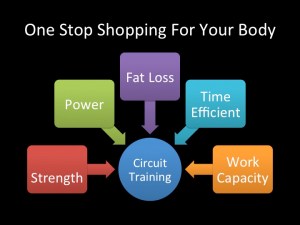
If you’re in the market to lose a little fat, circuit training is for you.  The bonus is that you’re going to build some strength and work capacity in the process.  Or maybe it is the other way around, maybe the bonus is that you’re going to burn some fat while you make an effort to build strength and work capacity?

Benefits of Circuit Training

Either way you look at it, you’re circuit training is going to kill multiple birds with one stone.  This is time leverage for a workout.  If you’re going to make the time to workout, you should really be utilizing a training method that is going to continue to work for you even after you finish the last rep.  That’s smart training.

When I say “circuit training, I’m not referring the kind of training where you move from one machine to the next.  There will be no use of machines- at least not how they were designed to be used- on this blog.  I can confidently say that.  An able-bodied human needs to move about their joints freely, not sit on a machine.

I guess I don’t mind fitness machines… for hanging my jacket on them when I arrive to the gym.

Total body circuit training should fatigue just about every single muscle in your body by the end of the training session.  That’s why we call it “total body”.  In fact, I will make the argument that just about every circuit training workout should be total body.  I guess am just not a fan of training the upper body on one day and the lower body on the next, or splitting sessions up by body parts.

The total body approach builds athleticism.  Circuit training using the total body approach will allow you to perform more work using heavier loads for each movement pattern while remaining as fresh as possible.

That’s a mouthful.

The most effective circuit training in the world involves strength based (or resistance based) multi-joint movements.

If you aren’t familiar with the terms “multi-joint movements”, I am referring to exercises like:

  • Squats
  • Lunges
  • Push-Ups
  • Chin-Ups
  • etc…

All of these movements require freedom of movement about multiple joints and recruitment from multiple muscles.

Total body muscular fatigue.

Just because I keep saying total body, doesn’t mean that you’ll be performing 20 different exercises in a training session.  Don’t confuse that.  The goal with exercise selection is to keep it simple and focused.

When selecting exercises to incorporate prior to the workout, there is a simple format that you can follow to help you along.

You can literally plug any exercise into the following categories and whammo!… You’ve got yourself a quality training session.

Here are the movement patterns that I would like you to address during the session:

1)  Total Body Explosive  (Kettlebell swings, thrusters, etc)

2)  Upper Body Vertical Pulling (Chin ups, pull ups, etc)

3)  Lower Body Pushing (squats)

4)  Core/Pillar (ab wheel rollouts, body rocks, suspension trainer pendulums)

5)  Upper Body Horizontal Push (Push-Ups, bench press, etc)

6)  Lower Body Hip Dominant (Lunge, deadlift, hamstring curls, etc)

7)  Cardio Filler (Schwinn Airdyne, mountain climbers, jump rope, etc)

Exercises for Circuit Training

Seven categories of movements that will build you a lean athletic body: burn fat, develop strength and power, improve performance and save you time in the gym or at home.

Here is how the exercise would be ordered for the training session:

Effective Circuit Training

A workout like this is what I call a leveraged training session.  Time is leveraged and the training effect of the workout is leveraged.  Just about any workout is to elicit a metabolic response, but an aggressive workout like this done 3-4 times per week will really shake up your system.

A workout like this combined with some sensible food choices will send a body transformation into overdrive.

Where people fail, is they fail to take action.  Or, if they take action, the motivation to stick with the program begins to fizzle out.

Stay with it for at least 4-6 weeks and you’re going to see some amazing changes take place.  Trust me here.

But you have to stay with it.


Cheers to DIY circuit training!

KG

Good Calories, Bad Calories: Weight Gain or Fat Loss

Quick Tips

I recently read an article where a blogger that posts about his journey to overcoming struggles with food addiction, moving into a life of health and movement, had his wrist slapped for promoting nutritional advice without being a licensed professional.  So, to CMA (cover my ass) I will go ahead and let it be known that this article or any article on this blog that discusses nutritional interventions should not be implemented without consulting a professional.  This is for reading entertainment only, the choice to take action is yours. 🙂

The hard part about saying that is that a lot of nutritionists use outdated methods and refuse to move past the calories in verses calories out recommendations to treat overweight or obese patients.  This is sad, because there is obvious more going on with weight gain and fat retention than just calories.

Overweight belly

I am going to tell you right now that there are good calories and bad calories.  No doubt about it.

What about the quality of food?  The type of food we consume?  This has to count for something, doesn’t it?

Scientists are starting to blow the whistle in agreement.

Gary Taubes is an author that is leading the charge, not a scientist but worth listening to.

I have long thought that it is an ingredient issue, and since I dove into the underground nutrition world some years back, it is obvious that our health epidemic is heavily related to the quality of our food more than the quantity of our food.  Again, calories do count for something, but the source of those calories seem to be impacting bodily fat loss more than anything.

I like analogies to understand topics so let me ask you this…

—>  If you drink 300 calories of soda versus eating 300 calories of lean meat/veggies/eggs, which will have a bigger negative impact on body composition, particularly with regard fat gain?

The soda, right?

Fat gain and diet soda

It’s clearly the soda, and so many people know that it is the soda that it boggles my mind why we as consumers continue to buy products like soda, candy and pastries when we know that regaining control of our body would require choosing natural whole foods like lean meat, veggies and eggs.

Here is a decent article from Men’s Health about diet soda and fat gain.

It’s crazy to think about.  There is an incredible amount of psychology behind why we choose to eat what we do.  I know for a fact that kids are exposed to crap food through their parents and schools.

Kids will eat whatever their parents prepare, and when they are at school, they have to eat whatever the school has prepared (unless they pack a lunch that their parents have made).  I haven’t seen a healthy school lunch yet, even though I know there are pockets around the country that are promoting the transition to healthier lunches for schools.

Unhealthy school lunch

This is what my school lunch looked like as a kid, how about yours?

I was reading this morning, and I came across a link to an article discussing calories and the food industry.  The article goes on to say that the food industry is tricking us.  They have mastered the art of influencing people’s buying habit based on calories.  The promotion of low calories in processed foods leads people to believe they are making a healthy choice, when in reality they are buying highly processed food that increases the body’s likelihood of translating that food into fat.

Here is a nice snippet of the article:

calories in versus calories out

You can find the entire article here:  Debate over calories starting to erode “food pyramid’

Take a few minutes to read it, it’s worth your time.

I do agree that calories still count for something, but I also think that in order to get the pendulum to swing back away from the calories in versus calories out approach, we have to preach quality versus quantity.  Once this thought process starts to stick, we can then re-introduce mindful calorie consumption in combination with quality food consumption.

I know that I am an extremely active person and that has helped me maintain a lean body, but I haven’t given a crap about my calories consumed in a given day for well over 7 years.

Why?

Because when you diet consists of mostly plants combined with adequate protein, water, coffee and green tea, what is to be concerned about?  Eating well is the best stress reliever because you can feel confident that what you put into your mouth is giving you the best possible chance at a long and healthful life.  Aesthetic-wise, you’re giving your body the best opportunity to stay lean, which does wonders for your self-confidence.

I intended for this post to give a bird’s eye view of some of what is currently being discussed regarding what we perceive as good calories and bad calories.

One thing is certain… we’ve got an epidemic on our hands and the solution to it is simple, but how we get there seems to remain complicated.

Subtle positive changes in diet will have provide massive returns on investment, I guarantee this whole-heartedly.  It’s a decision we all have to make from individual to individual.  The food that you consume will either put you closer to your body transformation goals or lead you further from them.  Exercise alone is not enough.

What will you choose?

Cheers to sticking it to the food industry and regaining health…

KG