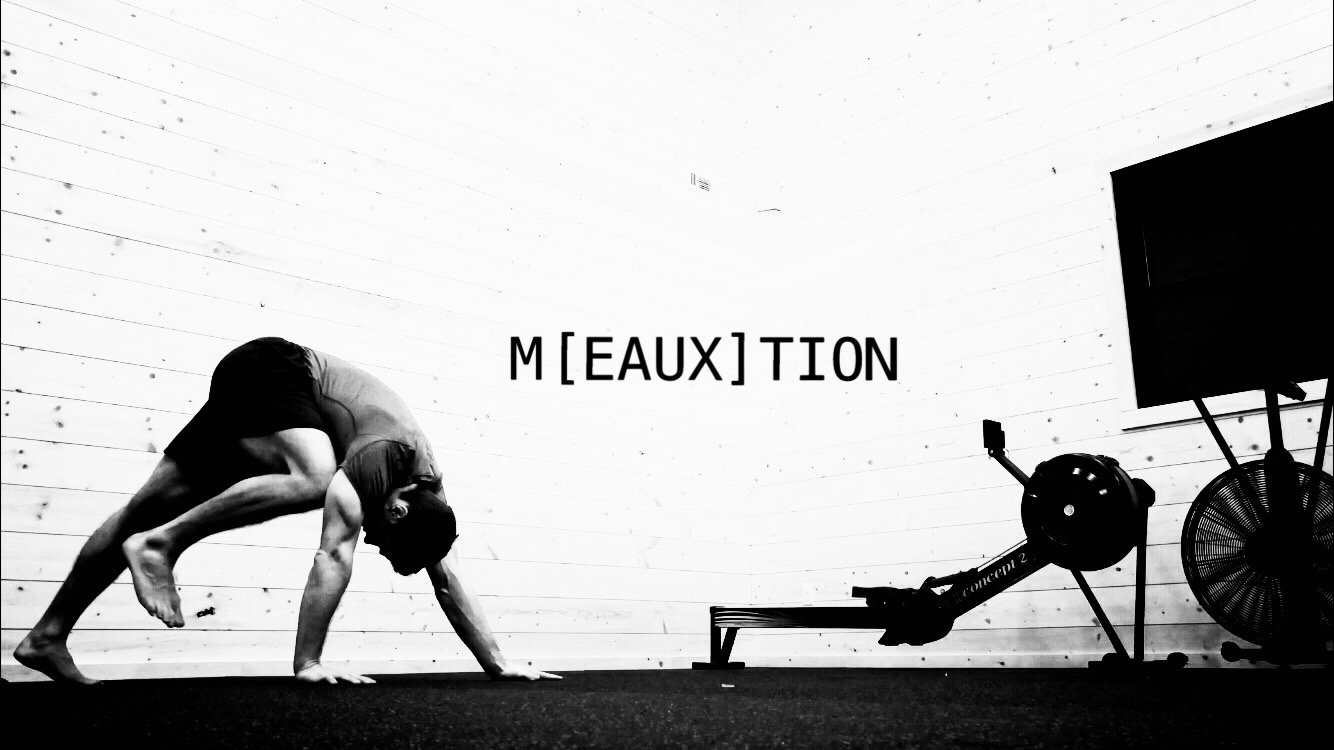
Crawling and Kettlebell Swing Workouts

Motion

Crawling patterns and kettlebell swings are two great exercises that work really well together inside of circuits.

Quick and saucy training stimulus.

Combining two exercises might sound limiting, but if you select the right exercises it can be a really effective way to train. 

Workouts don’t need to be complicated to be effective.  There doesn’t need to be a long list of exercises to work through.  

Alternating between two non-competing movements allows for max energy to be plugged into each movement, improves time efficiency while keeping the work focused.

Let’s talk about crawling and kettlebell swings, shall we?

Crawling

Crawling exercises can be performed in almost any training space.  Tiny hotel rooms, outside, or at home in the make-shift home gym.  

6-8 feet of straightaway space can accommodate any crawling variation.    

There are a hundred different ways to modify the crawl to fit your environment and training space.  

However, as you gain strength and coordination with the patterns, consider increasing the challenge by introducing obstacles, crawling over, under and around different terrain creates a whole new challenge.  

Crawling looks easy.  Baby’s crawl without a problem, so adults shouldn’t have an issue, right?

The shoulders, chest, core, and hips tire quickly, which is not necessarily an indicator of an effective workout, but more so a point to make for folks who think crawling looks “too easy”.  

Here are some notable benefits of crawling:

  •  Spatial awareness
  •  Total body strength and conditioning 
  •  Coordination
  •  Confidence (movement skill education)
  •  Minimalist (can be performed anywhere, anytime)
  •  Scalable for beginners to elite movers
  •  Easily adjusted to elicit different training effects
  •  Pair well with other exercises (lower body, pulling, swings)
  •  Natural movement other than lifting weights and linear cardio

Kettlebell Swings

Kettlebells are one of the most versatile pieces of gym equipment on the planet.

A single kettlebell is all that’s required to crush a workout featuring kettlebell swings.

Similar to crawling, kettlebell swings can be performed in extremely small spaces, outside, hotel rooms, etc.  

Higher rep kettlebell swing workouts are fantastic for burning calories and accelerating fat loss. It’s essentially loaded conditioning, similar to metabolic conditioning.

Kettlebell swings will burn fat while doing a surprisingly great job at maintaining muscle mass.

Some bloggers would feel guilt writing something like that, but there are too many testimonials to argue otherwise.

Thousands people who’ve leveraged kettlebell swings for body transformation. With good nutrition and a caloric deficit, using higher volume kettlebell swings will blast fat.

Benefits of kettlebell swings:

  • Increased power for the “go” muscles
  • Builds a strong back
  • Grip endurance
  • Quick learning curve
  • Minimalist… 1 kettlebell for a great workout
  • Time-efficient total body training
  • Cardio, both aerobic and anaerobic
  • Pair well with other exercises (ex: crawling)

Crawling Variations 

📺 Forward/Backward Crawl

📺 Sideways (Lateral) Crawl

📺 Bear Walk

📺 Lizard Crawl

You can see how the lizard crawl and bear walk differ with regard to hip position.  

Hips stay high, arms straight with the Bear Walk.

The lizard crawl is a whole other situation. Lizard crawling drops the hips close to the floor, making this crawling variation a serious challenge.

Kettlebell Swing Variations

The video above demonstrates 3 basic kettlebell swing variations:

  • 2-hand kettlebell swing
  • 1-hand kettlebell swing
  • Hand-to-hand swing

There are a lot more variations to explore, but I would consider these to be the fundamentals. 

We will pair these variations up with a crawling pattern for each of the nano-circuits shared below. 

Nano-Circuit Training

Nano-Circuits incorporate 3 exercises or less.  

They are simple, saucy, and focused.

Reducing the number of exercises in the circuit removes unnecessary thinking.

There’s no stopping to check what exercises come next, how many reps, etc.

You just go.

Here are a few ideas for you to try:          

Forward/Backward Crawl + 2-Arm Kettlebell Swings

Accumulate 20 yards of forward and backward crawling.  

After finishing the crawl, step up to the kettlebell and perform 10 swings.  

Side-to-Side Crawl + Single Arm Kettlebell Swings

Accumulate 20 yards of side to side crawl.  

Upon finishing the crawl, step up to the kettlebell and perform 10 reps of 1-hand swings.  

FW/BW/Side-to-Side + Bear Walk + 2 -Arm Swings

Perform forward, backward, side-to-side crawl, bear walk for 10 yards each…

… step up to the kettlebell and bang out 10 reps of 2-arm swings.

Lizard Crawl + Hand to Hand Kettlebell Swings

Obliques are going to take a beating with this combo.  The lizard crawl is one of the toughest crawling patterns. Lizard crawling might require shortening the crawl distance because of how aggressive it is.  Play around with it.  Perform 5 reps per arm with the hand to hand swings.  Use a lighter kettlebell if needed. 

Move with focus. 

Not every exercise needs to be picture-perfect from the get-go, but DO NOT RUSH THE MOVEMENTS.

Slow down, focus, move with stability

Beginners will feel and look wobbly, which is why selecting an exercise variation of the appropriate difficulty level is so important. 

Even with simple exercises, movement mechanics are rarely sexy in the early days.

No matter which exercise variations you choose, establish the discipline DO IT RIGHT, versus opting to do it fast, intensely or while versus blasting through it chasing burn. 

Generally, moving slow to learn exercises and develop strength, mechanics, and coordination.  

I think people chase fatigue by rushing through exercises far too early in the process.

Learn slow, create a solid foundation, then add in the sexy stuff.

Here’s a fun crawling challenge: the 60 second, 10 yard crawl

Beginner Flow Training: 5 Challenging Bodyweight Exercise Combinations

Motion

Natural movement flow is a key training element missing from most people’s fitness regimens.

Including movement combinations, ground-based exercises and sequences bridge the gap between linear resistance training and natural movement.

Practicing exercises in isolation essential for developing performance.  

What is isolation?  

Deadlifts, front squats, push-ups and pulling without the addition of any add-on exercises, using a work-then-rest format, is isolation.  

You’re isolating an exercise and performing it for a set number of sets, reps and rest.

In a separate blog post, I dove deeper into Ido Portal’s general training template, which included an overview of his methods following this approach:

Isolation 👉 Integration 👉 Improvisation

Walk into any gym, and you’re likely going to see people exercising in isolation.  

Perform a set of deadlifts, rest, check Instagram, a sip of water, then back to the next set of deadlifts.

This is the isolation phase of movement training.

Movement Flow

If you’re looking to add a fresh challenge to your workouts, combining exercises together to create movement flow sequences is a great way to do that. 

Several years ago, I started mixing and matching traditional movement patterns and non-traditional exercises together to create 2 or 3 exercise flow sequences.

Here’s an example:


Gym workouts and real-world movement can be very different experiences.  

While I value pursuing a mechanically perfect squat, do I ever stop to align my feet before squatting in a real-world scenario?

NEVER.

The modified squat I’m using in a real-world situation is often combined with 1 or 2 other movements.  

Squat down, lunge up, twist and carry.  

It’s rarely every just a perfect bodyweight squat in the real-world.

One goal of controlled environment training (aka gym workouts) is maximum transferability.

We lift and conditioning with the idea that it will enhance the physical moments (daily tasks, sports, and recreation, health, etc) help us improve the functionality of our body.

Yet, natural bodyweight movement is completely absent from most workout templates.

Crawling, climbing, rolling, navigating changing levels (laying to standing, fall training, etc), rotation or fusing exercises together in a pre-planned movement sequence or improvised movement work where you don’t know what’s coming next.

Practicing how to transition efficiently and effectively between two different body positions or patterns just makes sense to me.

Benefits of Movement Flow Training

👉  Improve movement IQ (confidence, dissipating fear of unexplored positions and tasks).

👉  Coordination and skill-building.

👉  Improving spatial awareness and how to transition between movements.

👉 Strength at more angles and positions.

👉  Injury mitigation via conditioning tissues to handle stress.

👉 Improve mind-body connection 

👉  Control over one’s bodyweight. 

👉  Fun, refreshing, never boring. 

Movement flow is very challenging for the mind, which to me, is one of the greatest benefits of flow work.

While you’re learning a flow, you really have to think it through to execute it properly and avoid getting twisted up, trips and falls.

“Ok, so my hand goes here, foot over the top, create tension, then relax, drop down, etc…”

The elevated thinking involved with a lot of ground-based movements is a major benefit.

Plus, introducing flow training is refreshing and fun. 

Hours in the gym working the same exercises, chasing the numbers (weight increases, more reps, more sets, faster finishing times) can get quite bland. 

Remaining excited every to move every single day is best for the long-term.   

5 Bodyweight Movement Combinations

#1  Parallette Bar Pass Through to L-Sit

Parallette Bars are inexpensive to buy and easy to build from PVC pipes.

Start in a push-up position, passing the legs through the middle of the parallettes right into an L-Sit.  

If an L-Sit is too aggressive, transition into a tuck position instead.

Hold the L-Sit for a 2-3 second count, then reverse the motion back to the start position. 

Perform 2-3 sets of 8-10 reps.

No parallettes?  

Chairs, stools or yoga blocks a good equipment substitutes.      

#2  High Bridge Rotation to Lizard Crawl

A reasonable looking back bridge used to be impossible for me.  My body was stiff as a board and incapable of arching through the spine. My shoulders lacked mobility, etc.  

Using dedicated joint mobility drills really accelerated the process, expanding the positions I was able to get into and out of, but bulletproofing my joints as well. 

MyDailyMobility is my recommendation for mobility conditioning. 

Today, I practice some variation of back bridging in nearly every workout, either as maintenance or to make progress.  

High Bridge Rotations require an adequate amount of spinal extension, shoulder mobility, stability and strength, which is why I recommend adopting a mobility program to accelerate the process.  

From an exercise progress perspective, practicing basic back bridges is the starting point.  

Adding in the rotation will come after.  

Transitioning out of the high bridge rotation can be a dizzying experience.  Refocus your vision, lower down and crawl lizard-style. 

The lizard crawl is an amazing strength and conditioning exercise.  

Here is a variation better suited for beginners: 

  Alligator Crawl

  Hand Slide Lizard Crawl 

  Elbow Crawl

#3 Burpee Sprawl – Push Up – Squat – L Sit

Perform a push-up, hop forward into a deep squat position, place the hands on the floor slightly behind the butt cheeks as the legs extend and LIGHTLY tap the floor with the heels. 

Reverse the flow.  

Keep the sprawl motion soft and graceful. 

#4  Lunge to Pistol Squat Flow

Lower body training is essential for health and performance. 

Our legs need to be strong and well-conditioned, but also mobile and capable of expressing strength and stability throughout a large range of motion.

Especially the hips.  Hip mobility training has been a game-changer for me.

This combination connects two movement patterns:  lunges and squats.  

During the transition from front to back, do your best to avoid making contact with the floor.

This is one combination probably best executed for reps. 

3-5 sets of 6-10 reps per side will work. 

#5  Lizard Crawl + Low Scorpion 

This lizard crawl + low scorpion combination is a unique, high-value movement combination. 

There’s no beginning or end with this sequence, which makes it a great bodyweight-based cardio alternative.

This flow is relatively compact, making it perfect for a small home gym or other imperfect training spaces.  

Practice this sequence for repetitions or time. 

I like to set a timer and go.  Not having to keep track of reps allows me to focus on what my body is doing.  

Time-wise, I’ve used this flow for 5+ minutes continuous and it’s a challenge every time.

MOVEMENT20XX 

Fusing movements together to create flows is a great addition to traditional lifting and cardio, and is sure to bring a refreshing challenge into workouts. 

If you want to learn more about movement flow training, I highly recommend checking out the MOVEMENT20XX program from Vahva Fitness.

MOVEMENT20XX is one of the best movement-based products I’ve come across.  

Eero Westerberg did a brilliant job organizing and communicating the techniques of each exercise, how to create flows and leverage this method of training to build a high functioning body.


Related Blog Posts

✅ Basics of Movement 20XX| The A-B-C’s of Crawling Exercises

✅ 14 Exercise Total Body Warm-Up Routine

✅ A Giant List of Effective Core Exercises| Part 1

Basics of Movement20XX| The A-B-C’s of Crawling Exercises

Motion

The Basic Forward Crawling Pattern

Movement 20XX is a brilliant bodyweight fitness program designed to build a body using ground-based movement and smart exercise progressions

Beginner, novice or elite… it doesn’t matter.  

Eero Westerberg created exercise progressions for any level of fitness, from a beginner all the way up to an elite mover looking to develop movement mastery. 

Movement 20XX is a bodyweight ground-based movement training system that integrates different training methodologies into one unique workout experience.  

Looking closer, you’ll notice elements of yoga, ground-based locomotion, and various gymnastics drills fused into one flexible training system.

Crawling is a key element of Movement 20XX.

The most effective online fitness programs coach clients using clearly communicated coaching cues.  Clear and concise communication is an art form.  

Eero’s communication is what makes Movement20XX great, combined with regressions and progressions to those exercises.  

Movement20XX introduces beginner movers to the fundamentals of movement training while providing exercise progressions to challenge people who are higher up on the ladder.   

Natural (bodyweight-based) movement training is MISSING from most workout programs.

Improving your ability to control your body in any environment, with or without external load moving through space.  

Climbing, crawling, balancing, jumping, rolling, reaching, twisting, lifting, etc.

… keeps people young.

Lifting weights is great.  Mobility training is great.  But at some point, MOVE.

Ground-based exercises like crawling are rarely included in traditional fitness programs.  

Shame. It should be.  

Ground-Based Crawling

3 basic locomotion patterns I’d like to share today:  ape, forward/backward crawl and the crab walk.

Each pattern is bodyweight-based, requiring no equipment, just a small about of space either indoors or outdoors

Crawling Patterns: 

Ape is likely going to be the most challenging pattern shared today.  Ape requires the most upper body strength and coordination.  

Forward/backward crawling is a basic crawling pattern, and probably the most recognizable.  

Crab Walk is a supine (chest up) pattern that’ll challenge shoulder and hip mobility in a unique way.  


Ape

Forward/Backward Crawl


Crab Walk

Adding Crawling and Locomotion to Workouts

I started slow with crawling.  Not because I wanted to, because I had to.  

Even the basic patterns crushed me for short distances.  

#humblepie

Over the course of a few months, I increased the crawling frequency from 1-2 times per week (mainly during warm-ups) to daily practice for longer distances and durations.  

I’ve posted several videos on the Meauxtion YouTube page demonstrating 5+minutes of traveling forms/crawling.  

5+ minutes may seem like a long time to be crawling without rest… and you’re right… it is. 

Ideas For Workouts…

I train in the morning 99% of the time.

If I wake up and feel residual fatigue or muscle soreness from the previous day’s resistance training or metabolic conditioning workouts, I reach for ground-based only sessions. 

Isolating a workout to only ground-based movements like crawling (and other locomotion patterns) is great for the joints yet doesn’t involve huge muscle contractions, challenging, FUN… while delivering a significant training effect.  

The tempo (speed… fast or slow) of the movements can easily be adjusted to change the stimulus.

Crawling can be formatted for cardio training.  Increasing the speed of a basic crawl pattern (while reducing rest periods) challenges mind-body processing speed and coordination.

Or, add a weight vest to increase the loading.  Progressive loading is essential to make gains while lifting weights, and crawling is no different.   

Here I am wearing 80lbs of extra weight while practicing an advanced crawl variation, the lizard crawl:


In time, simple movement patterns like Ape, Forward/Backward Crawl and Crab Walk can be integrated into flow-like sequences. 

See below:

Video


For beginners, crawling is learned best using a slow and controlled tempo.  

Slow and controlled practice allows for a better motor pattern education.  You’ll develop a better understanding of the mechanics and physical demands of each movement.  

Why Crawl?

Ground-based crawling and other locomotion patterns are both fun and challenging.  

You may find (as I did) that these patterns bring restore life into your workout regimen.  

Isolated resistance training day in and day out can get extremely monotonous. 

One secret to maintaining a healthy long-term relationship with your fitness is to keep training fresh.  

Choose activities that require increased physical AND mental engagement.  

Most of us don’t have the will power or capacity to sustain a workout regimen it despises.  You’ll fizzle out over time.

Make sure to find a workout structure that’s results-oriented, challenging, yet ENJOYABLE. 

I love a good physical challenge, and these bodyweight ground-based movement patterns provide it every single time.

Engaging in more locomotion-based exercises reminded me it’s possible to finish a workout exhausted but REFRESHED, not beaten into a pulp.  

A 20-25 yard lizard crawl is both exhausting and humbling.  For me personally, diving deeper into crawl work was a splash of cold water to the face.  

Bodyweight training is an anytime, anywhere with zero equipment and limited space method of building fitness.  

Small, odd shaped, cluttered spaces become ideal areas to workout when bodyweight training is the focus.   

👉 For more info, check out the Movement 20XX


Related blog posts:


Kyle