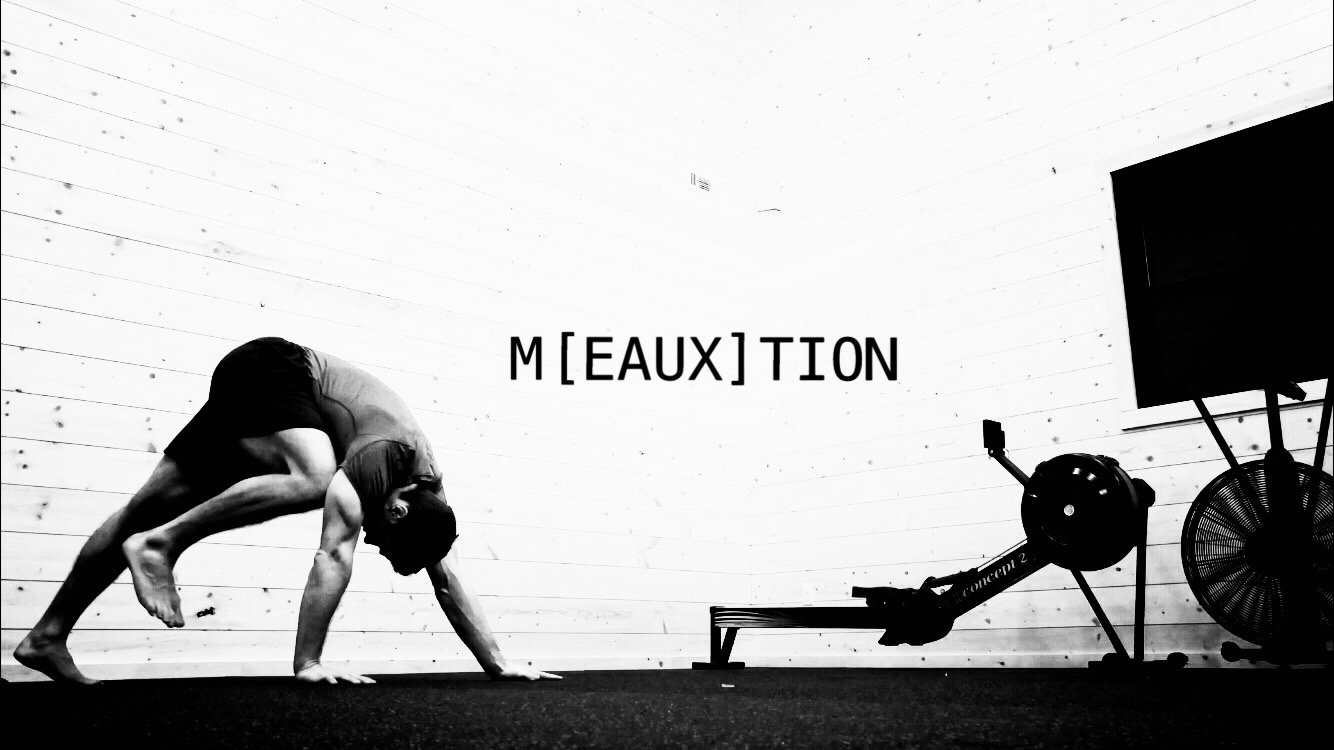
Bodyweight Leg Conditioning Using Dragon Squats, Lunge Variations and Horse Stance

Motion

Dragon squats, lunges and horse stance are great exercises to help improve lower body strength and efficiency.

I went on a pretty solid run of posting lower body drills (dragon squats, curtsy airborne lunge, horse stance, etc) on my Instagram page, so I thought I’d repurpose those posts into a blog.

You can find and follow me at instagram here.

All of these posts depicted bodyweight leg exercises.

I find myself posting more and more bodyweight-based lower body exercises, using no equipment, just progressively challenging body positions/mechanics/timing.

2 years ago, I couldn’t fathom performing a full dragon squat.

I couldn’t even comprehend how my body was going to allow me to drop down to the floor with the hovering leg positioned behind my working leg.

Making progressive gains in mobility and literally feeling your body adapt to positions, stress and range of motion is a crazy experience, but it takes consistency, discipline and reflection.

One day you might feel a million miles from being able to perform an exercise. Fast forward 2 weeks, and you own it.

Quoting Mat Fraser, “Hard work pays off”.

4x Speed Lunge Variations

Lunge training, using ONLY bodyweight and added weight, has become a staple in my workouts over the last 6 months.

Almost daily, I noticed myself using some variation of a lunge pattern to perform basic tasks or play with my kids, and decided to commit to training lunges more regularly.

People sound off about how great the squat is for daily activity, and I’m not saying it isn’t, but the lunge is a workhorse for me.

After becoming a Dad, my reasons for training shifted a bit. Preserving my ability to get up and down from the floor with EASE became a priority.

I started thinking about when I have grandchildren. My life would be fullest if I’m able to maneuver up and down from the floor (where kids dwell in there younger years) without any issues.

The lunge pattern is an excellent way to make a transition from standing to the floor (and vice versa).

I used to dodge like the plague.

In reflection, this avoidance was two-fold:

  1. Discomfort, not being as good at lunges as other exercises.
  2. Perception that single leg squat practice was enough.

The number of times we avoid exercises because we either suck at them or the discomfort is overwhelming is humbling.

Notice in the video above, the number of variations I’m playing around with.

Extended stance, feet close together, knees way out over the toes, lateral lunge, reverse lunge, static hold/pause, rotational lunge, etc.

Lunges don’t have to be a dull experience.

Practice and acclimate to all lunge variations using simple variations first and progressive loading.

Expand.

Curtsy Airborne Lunge

I had no clue that this exercise was called the “Curtsy Airborne Lunge”, until I started performing it and felt the need to assign it a name.

The curtsy airborne lunge is a phenomenal exercise regression that can help lead a person into a dragon squat.

Why?

Curtsy Airborne Lunges use similar mechanics. Lowering down, touching the knee cap to the floor on the outside of the working foot looks a lot like the initial lower phase of a dragon squat.

What makes this exercise a regression, is not having to deal with hovering the trailing.

Keeping the trailing leg off the floor during a full Dragon Squat is hard.

You’ll see what I’m referring to in the next video.

Dragon Squats, Ice Cold in Street Clothes

In my opinion, cold performance is the only thing that matters beyond competitive athletics.

Pretty bold statement, but whatever athletic qualities I can express at the snap of a finger, ice cold (no fancy 15 minute warm up, activation, core temp elevation, mobility, etc) with whatever clothes and footwear I’m wearing is my performance capacity.

Right?

I like to test cold performance periodically.

Cold performance efforts are, of course, at my own risk.

I accept this risk.

Horse Stance and Cossack Squats

Horse stance and Cossack Squats are two exercises show up in my daily workouts.

Sometimes I use them during the warm up, other times I’ll add weight to build strength, or I’ll slip them into a flow sequence.

It’s amazing how often I use a dead stop Cossack Squat to stand up from the floor with my kids in my arms.

Quick Deadstop Cossack Squat

From any seated position, bring either leg in, foot close to the butt cheek, slight transfer of weight forward to steady myself and load the foot, push and stand.

Simple as that.

I added a 53lb kettlebell to the video above as a defense mechanism for the hecklers out there.

If you have ownership over a movement or range of motion, you’ll use it.

If you don’t, you’ll avoid it.

In the case of performing a Cossack Squat from the bottom position, I own it, so I use it A LOT.

The value of pursuing efficiency with a robust number of movement patterns and ranges is that it gets hardwired in your system. Practice these movements until you can hardly stomach another repetition, then transfer it to real life. The gym is a controlled environment where we can build our bodies to perform out in the real world.

It’s difficult to explain to people how liberating being able to move confidently however, whenever, wherever really is.

Zero aches. Zero pains. Zero restrictions. No second thoughts of “Can I do this?”.

When you own it, you just do it without hesitation.

Being able to access a wide array of movements and having control over a robust range of motion will seriously change your life. Lowering your susceptibility to injury is an often overlooked MAJOR benefit of building a body that can move well.

Regarding long holds in the horse stance, allow me to set the expectation for you. It’s a slow death. No way around that.

Turn gaze out into space with a blank stare and feel your soul drip out of your body, through your hips. Bonus points if you don’t moan softly or wince.

You develop a tolerance for the discomfort, and quite frankly, plowing through the discomfort is something you’ll have to acquire a taste for if you desire fitness.

This reality is left out of many fitness books.

The carryover from horse stance conditioning into Cossack Squat work has been profound.

Pistol Squat Progressions For Beginners

Motion

Screen Shot 2017-06-14 at 6.14.58 AM

Pew, pew, pew… pistol squats.

There are few exercises that accomplish more for functional lower body performance than single leg squats, aka “pistol squats’.  They’ve been referred to as the “king of lower body strength training”, and I cannot disagree.  

Here are some key benefits of pistol squat training:

  • Improve single leg performance (strength, balance, stability, etc)
  • Challenge movement complexity beyond regular squats
  • Training body control and coordination
  • Low reps, high reward
  • Mind/body focus
  • Assessment for movement deficits (strength, balance, flexibility, etc)
  • Portable strength (you can do them anywhere)

I’ll expand on each of these benefits in a separate article.  For now, the takeaway is pistol squats are a potent lower body performance enhancer, connect the mind and body to a greater degree, progress body control and coordination, and you can practice them anywhere.  

Symmetry

Building symmetrical strength, balance, and coordination between the right and left sides of the body provides immediate and noticeable benefits to performance in daily life and sport.  Bilateral squats are not bad, but they can mask deficits and encourage compensations.  Your body is extremely good at finding a way to complete exercises by any means necessary, even if the movement is full of compensations. 

For a lot of people, one of the great payoffs in practicing physical fitness is that one moment when you realize a physical task was executed that wasn’t previously possible.  Surprisingly yourself physically is rewarding.

“Oh, I can do that now”.

Unknowingly, many daily tasks are performed on one leg.  Improving one’s ability to perform on one leg makes doing anything on two legs that much more efficient.

Personally, increasing my focus on improving pistol squat performance has saved my lower-back, and served as a door opener to more advanced movement flows.  

More so, single leg training brought to light my own right/left performance deficits.  I won’t say I became a better person once I cleaned up my asymmetries, but my performance saw improvement and nagging irritations went away.  

If you find yourself unable to mirror a range of motion, or lift a similar amount of weight on one side of the body but not the other, it’s worth investigating why these differences exist.  

It could be because of favoritism.  Right/left side favoritism is common.  I have it, you have it, we all have it. Repetitively completing tasks using the same arm or leg can slowly create imbalances, which may or may not manifest into acute or chronic issues down the road.

Examples:  Stepping up or down a ladder with the same leg, using the same arm for heavy lifting or carrying, slinging the work bag over the same shoulder, driving with the same hand on the steering wheel tilted to the same side.

I’m not saying audit your entire life and become a hypochondriac with these things, just be aware favoritism exists.

Though it is important to practice traditional bilateral squats (2-legs), single leg training, even if only using one’s body weight, addresses gaps left unfilled by regular squats.  

Balancing on one leg requires hip stabilizers to wake up and participate.  This is a positive for those who sit for long periods throughout the day. 

Leverage Exercise Progression

For a beginner, a full round of pistol squats may seem unachievable, and only for the “fit”.  This is bullshit.  

The “fit” didn’t enter this world sporting six-packs while ripping out pistol squats, just as the wealthy (typically) haven’t always been wealthy.  The simple truth is your body isn’t acclimated to the mechanics of the pistol squats yet.  Leveraging proper exercise progression and dedicated practice, a full pistol squat is a lot closer than you’d think.

If you’re unable to execute a pistol squat, the simple truth is that your body isn’t acclimated to do so.  It’s a sign you may be lacking strength, flexibility or coordination, all of which can be improved quickly through proper exercise progression and practice.

You’re a lot closer to doing pistol squats than you think.

With proper progression and some tenacity for achievement, the human body adapts to be strength and new patterns quickly.  

The power of progression is why I continue to demonstrate progression roadmaps leading to these “big bang for your buck” exercises.

All 3 of the following exercise progressions can be used regardless if you’ve been squatting with two-legs or using supported single leg squat variations.  Though these exercises are a nice stepping stone, they are not necessary if the exercise is regressed back far enough to be manageable.

Variation #1:  Suspension Trainer Assisted Pistol Squats

Use the suspension trainer to guide your body into and out of the squat.  Grip the handles with intent and use the arms to lessen the intensity as needed.  Slowly ask your legs to do more work as you gain strength.  

3-5 sets of 5-8 reps per leg

Variation #2:  Pinch Grip Assisted Pistol Squats

This pistol squat progression is demonstrated using a squat rack, but a door frame will work just as well.  Grip the rack or doorframe with your fingertips, lower into the squat and back up, assisting as needed.  Slowly soften the grip as you become more efficient.  Move to a 2 or 3 finger pinch grip to increase the challenge.  

3-5 sets of 5-8 reps per leg

Variation #3: Dowel Assisted Pistol Squats

The dowel acts as unstable assistance in this progression.  This unstable assistance provides an introduction to a training effect similar to an unassisted pistol squat.  Maintaining balance throughout the range of motion will have the hip, knee, and core stabilizers working overtime.  

Expect to feel soreness in the days from maintaining balance throughout the work set. 

3 sets of 4-6 reps per leg

All three of these exercises should be used as progressions to a fully unsupported single leg pistol squat.   Keep in mind that each exercise demonstrates a full range of motion.  

Select a progression according to your current fitness level.  Aim to graduate to the next most difficult progression as you gain strength and efficiency. 

If this article was helpful, leave me a comment, or check out others like it.

Next steps?  Get after it.  

Cheers, 

Kyle 

SaveSave