3 Best Crawling Exercises for Every Fitness Level

Motion

Crawling exercises can be rehabilitative, restorative or performance-enhancing, which is pretty cool.  

I say again, crawling on the floor, without any equipment, like a baby, can serve to heal and make you stronger.  

Wild.  

Crawling exercises deliver a plethora of benefits, including:

  • Improving reflexive strength
  • Brain stimulation (activate and stimulate)
  • Integrating: 
    • Vestibular system (balance system)
    • Proprioceptive system (self awareness in space system)
    • Visual system 
  • Connects shoulders and hips using contra-lateral movement (opposite limb movement)
  • Central nervous system reset (lower stress, recovery, etc)
  • Great carry over to real world tasks
  • Interesting, fun, challenging, a breath of fresh air

Obviously, I’m a fan of crawling during workouts and I think you’ll find a ton of value in it too.  

Plus, it’s interesting, fun, challenging.  

Bear Walk, Forward/Backward Crawl, Lizard Crawl

re

This article was created to share 3 of the best crawling exercises for any fitness level:

1) Bear Walk

2) Forward/Backward Crawl

3) Lizard Crawl 

As you scroll through each of these exercises, take notice of the change in body position during each exercise.   

In particular, the shoulders/chest/hips in relation to the floor.

Body position changes a lot with these exercises. 

Bear Walk

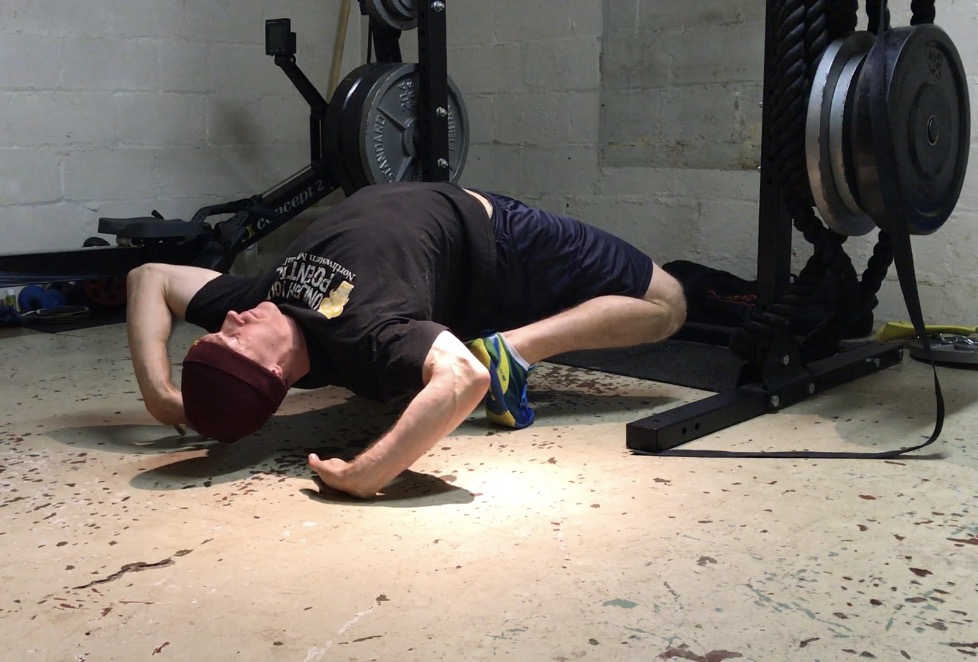
The Bear Walk is a sem-inverted position that will challenge hand and foot coordination, hip flexibility, and shoulder strength. 

During the Bear Walk, your body is working to control twisting and bending forces from your arms and legs.  

Practiced regularly, bear walks can improve rotator cuff, scapular and spinal strength, along with positively impacting hamstring and calf flexibility.

Notice, this variation of the Bear Walk involves keeping the hips high and the arm/knees straight.  

Wait, why is this referred to as a “walk” and not a “crawl”.  

No clue.  

Exercise names can be confusing.  

If I were to name it, I’d call it “Downward Walking Dog”.  

From a difficulty standpoint, Bear Walks are the most forgiving exercise to learn on this list.

Forward/Backward Crawl

Forward and backward crawling is awesome for challenging the arms/shoulders, core and hips.  

This crawling variation is excellent for improving reflexive strength.

My self-coaching cues for this exercise are simple… keep the spine parallel to the floor, avoid excessive movement through the torso while moving, quiet hand/foot contacts.

Another great cue is to “Imagine balancing a glass of water on your back. Don’t spill a drop”.

Better yet, place a shoe or a yoga block on your backside and balance that sucker for the duration of the crawl. That’ll keep you honest.

Or a wood dowel if you’re looking for insane honesty with this crawl.

As with any crawling pattern, move slow for greater benefit. 

Slow movement requires more fine motor skill and the time under tension will creep up on you.  

Animal Flow 2.0 refers to this pattern as “Beast”, and is where I first learned my technique cues.

Lizard Crawl

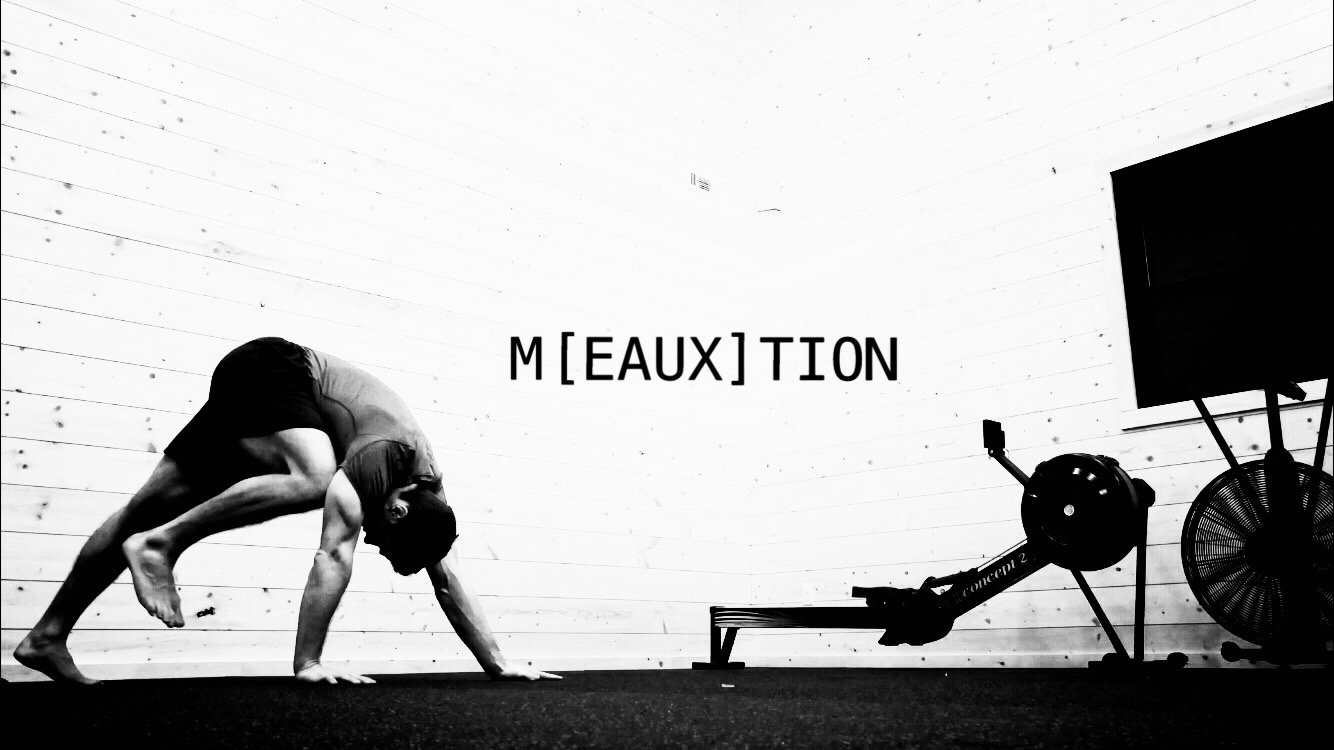
The lizard crawl is a low-to-ground locomotion pattern that seriously challenge scapular mobility and stabilization, core control and hip mobility.  

Lizard Crawl is a SUPER challenging patterns for the muscles. It takes your breath away when you’re first adapting to the demands.

Notice the how low my shoulders, torso and hips stay in relation to the ground.  

I’m hovering 1-2 inches above the floor as I move forward.  

Staying low makes this exercise extremely demanding for the muscles since you’re in a disadvantaged position. 

First timers to lizard crawling will feel this in the days after.  You’ll be sore. 

This pattern is more similar to true resistance training compared to the Bear Walk and Forward/Backward Crawl described above.  

Over the years I’ve substituted the lizard crawl in place of push-ups and other pressing exercises in workouts.

12 to 15 feet is all you will need to get a great stimulus.  Practice each work set with focus, soft hand and foot contacts, moving the limbs with control.  

Be sure to rest plenty in between effort, as this crawling pattern is more like resistance training.

Movement20XX (Vahva Fitness) does an excellent job describing lead-in exercises to the Bear Walk and the Lizard Crawl, leading up to mastery.  The progressive design of Movement20XX program was a real draw for me.  

“How to organize crawling in workouts?”

You cannot screw this up. Seriously. There is no right or wrong way to practice crawling in a workout.

If you’re a beginner, I would suggest practicing each of these crawling patterns while you are fresh.

Either as part of the warm-up or just after the warm-up, but get your crawling in before any resistance training or higher intensity exercise.

Practicing new exercises is best done FRESH, not fatigued.  You can test yourself while under fatigue down the road.  

Once you’re at the intermediate or advanced stage, you can get a little bit more creative with where you place crawling exercises in the workout.  

Personally, I like to use crawling as an element of movement sequences, long duration movement flow, or as part of a conditioning circuit. 

Try this simple combination:

Because crawling is bodyweight-based, it pairs up extremely well with equipment such as kettlebells and barbell work.

Crawling for Time or Distance

Each of these crawls can be performed for a set distance or time. 

I’ve tried both options, and they both work really well.

For distance, 15-20 feet of slow tempo, technique focused crawling is plenty for a beginner.  

I’m talking about a single set of 15-20 feet, then taking rest.  Usually, rest periods should last 1.5-2x the time spent crawling.  

Personally, I like to set a timer and crawl until it sounds.  This way I can stay focused on my movement, instead of speculating how far I’ve crawled.  

For a beginner, 3-5 sets of 30-40 seconds of continuous crawling is enough time to elicit a great training effect.

Intermediate/advanced trainees will likely need to increase the time and play around with slowing down the tempo, toying with other variations, etc.

Crawl for 5 minutes straight. 🤷‍♂️

New to ground based movement exercises?

Start adding ground based movements to your workouts, immediately.  

Don’t wait.  

Most folks simply aren’t used to doing movements like these on a regular basis. 

In fact, crawling and other ground-based movements are a rarity in most workout routines.

To improve your coordination, mechanics and skill with anyone of these crawling patterns, it’s often a matter of practice and consistency.

Crawling and Kettlebell Swing Workouts

Motion

Crawling patterns and kettlebell swings are two great exercises that work really well together inside of circuits.

Quick and saucy training stimulus.

Combining two exercises might sound limiting, but if you select the right exercises it can be a really effective way to train. 

Workouts don’t need to be complicated to be effective.  There doesn’t need to be a long list of exercises to work through.  

Alternating between two non-competing movements allows for max energy to be plugged into each movement, improves time efficiency while keeping the work focused.

Let’s talk about crawling and kettlebell swings, shall we?

Crawling

Crawling exercises can be performed in almost any training space.  Tiny hotel rooms, outside, or at home in the make-shift home gym.  

6-8 feet of straightaway space can accommodate any crawling variation.    

There are a hundred different ways to modify the crawl to fit your environment and training space.  

However, as you gain strength and coordination with the patterns, consider increasing the challenge by introducing obstacles, crawling over, under and around different terrain creates a whole new challenge.  

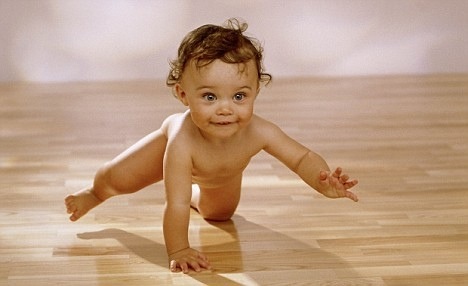
Crawling looks easy.  Baby’s crawl without a problem, so adults shouldn’t have an issue, right?

The shoulders, chest, core, and hips tire quickly, which is not necessarily an indicator of an effective workout, but more so a point to make for folks who think crawling looks “too easy”.  

Here are some notable benefits of crawling:

  •  Spatial awareness
  •  Total body strength and conditioning 
  •  Coordination
  •  Confidence (movement skill education)
  •  Minimalist (can be performed anywhere, anytime)
  •  Scalable for beginners to elite movers
  •  Easily adjusted to elicit different training effects
  •  Pair well with other exercises (lower body, pulling, swings)
  •  Natural movement other than lifting weights and linear cardio

Kettlebell Swings

Kettlebells are one of the most versatile pieces of gym equipment on the planet.

A single kettlebell is all that’s required to crush a workout featuring kettlebell swings.

Similar to crawling, kettlebell swings can be performed in extremely small spaces, outside, hotel rooms, etc.  

Higher rep kettlebell swing workouts are fantastic for burning calories and accelerating fat loss. It’s essentially loaded conditioning, similar to metabolic conditioning.

Kettlebell swings will burn fat while doing a surprisingly great job at maintaining muscle mass.

Some bloggers would feel guilt writing something like that, but there are too many testimonials to argue otherwise.

Thousands people who’ve leveraged kettlebell swings for body transformation. With good nutrition and a caloric deficit, using higher volume kettlebell swings will blast fat.

Benefits of kettlebell swings:

  • Increased power for the “go” muscles
  • Builds a strong back
  • Grip endurance
  • Quick learning curve
  • Minimalist… 1 kettlebell for a great workout
  • Time-efficient total body training
  • Cardio, both aerobic and anaerobic
  • Pair well with other exercises (ex: crawling)

Crawling Variations 

📺 Forward/Backward Crawl

📺 Sideways (Lateral) Crawl

📺 Bear Walk

📺 Lizard Crawl

You can see how the lizard crawl and bear walk differ with regard to hip position.  

Hips stay high, arms straight with the Bear Walk.

The lizard crawl is a whole other situation. Lizard crawling drops the hips close to the floor, making this crawling variation a serious challenge.

Kettlebell Swing Variations

The video above demonstrates 3 basic kettlebell swing variations:

  • 2-hand kettlebell swing
  • 1-hand kettlebell swing
  • Hand-to-hand swing

There are a lot more variations to explore, but I would consider these to be the fundamentals. 

We will pair these variations up with a crawling pattern for each of the nano-circuits shared below. 

Nano-Circuit Training

Nano-Circuits incorporate 3 exercises or less.  

They are simple, saucy, and focused.

Reducing the number of exercises in the circuit removes unnecessary thinking.

There’s no stopping to check what exercises come next, how many reps, etc.

You just go.

Here are a few ideas for you to try:          

Forward/Backward Crawl + 2-Arm Kettlebell Swings

Accumulate 20 yards of forward and backward crawling.  

After finishing the crawl, step up to the kettlebell and perform 10 swings.  

Side-to-Side Crawl + Single Arm Kettlebell Swings

Accumulate 20 yards of side to side crawl.  

Upon finishing the crawl, step up to the kettlebell and perform 10 reps of 1-hand swings.  

FW/BW/Side-to-Side + Bear Walk + 2 -Arm Swings

Perform forward, backward, side-to-side crawl, bear walk for 10 yards each…

… step up to the kettlebell and bang out 10 reps of 2-arm swings.

Lizard Crawl + Hand to Hand Kettlebell Swings

Obliques are going to take a beating with this combo.  The lizard crawl is one of the toughest crawling patterns. Lizard crawling might require shortening the crawl distance because of how aggressive it is.  Play around with it.  Perform 5 reps per arm with the hand to hand swings.  Use a lighter kettlebell if needed. 

Move with focus. 

Not every exercise needs to be picture-perfect from the get-go, but DO NOT RUSH THE MOVEMENTS.

Slow down, focus, move with stability

Beginners will feel and look wobbly, which is why selecting an exercise variation of the appropriate difficulty level is so important. 

Even with simple exercises, movement mechanics are rarely sexy in the early days.

No matter which exercise variations you choose, establish the discipline DO IT RIGHT, versus opting to do it fast, intensely or while versus blasting through it chasing burn. 

Generally, moving slow to learn exercises and develop strength, mechanics, and coordination.  

I think people chase fatigue by rushing through exercises far too early in the process.

Learn slow, create a solid foundation, then add in the sexy stuff.

Here’s a fun crawling challenge: the 60 second, 10 yard crawl

Basics of Movement20XX| The A-B-C’s of Crawling Exercises

Motion

The Basic Forward Crawling Pattern

Movement 20XX is a brilliant bodyweight fitness program designed to build a body using ground-based movement and smart exercise progressions

Beginner, novice or elite… it doesn’t matter.  

Eero Westerberg created exercise progressions for any level of fitness, from a beginner all the way up to an elite mover looking to develop movement mastery. 

Movement 20XX is a bodyweight ground-based movement training system that integrates different training methodologies into one unique workout experience.  

Looking closer, you’ll notice elements of yoga, ground-based locomotion, and various gymnastics drills fused into one flexible training system.

Crawling is a key element of Movement 20XX.

The most effective online fitness programs coach clients using clearly communicated coaching cues.  Clear and concise communication is an art form.  

Eero’s communication is what makes Movement20XX great, combined with regressions and progressions to those exercises.  

Movement20XX introduces beginner movers to the fundamentals of movement training while providing exercise progressions to challenge people who are higher up on the ladder.   

Natural (bodyweight-based) movement training is MISSING from most workout programs.

Improving your ability to control your body in any environment, with or without external load moving through space.  

Climbing, crawling, balancing, jumping, rolling, reaching, twisting, lifting, etc.

… keeps people young.

Lifting weights is great.  Mobility training is great.  But at some point, MOVE.

Ground-based exercises like crawling are rarely included in traditional fitness programs.  

Shame. It should be.  

Ground-Based Crawling

3 basic locomotion patterns I’d like to share today:  ape, forward/backward crawl and the crab walk.

Each pattern is bodyweight-based, requiring no equipment, just a small about of space either indoors or outdoors

Crawling Patterns: 

Ape is likely going to be the most challenging pattern shared today.  Ape requires the most upper body strength and coordination.  

Forward/backward crawling is a basic crawling pattern, and probably the most recognizable.  

Crab Walk is a supine (chest up) pattern that’ll challenge shoulder and hip mobility in a unique way.  


Ape

Forward/Backward Crawl


Crab Walk

Adding Crawling and Locomotion to Workouts

I started slow with crawling.  Not because I wanted to, because I had to.  

Even the basic patterns crushed me for short distances.  

#humblepie

Over the course of a few months, I increased the crawling frequency from 1-2 times per week (mainly during warm-ups) to daily practice for longer distances and durations.  

I’ve posted several videos on the Meauxtion YouTube page demonstrating 5+minutes of traveling forms/crawling.  

5+ minutes may seem like a long time to be crawling without rest… and you’re right… it is. 

Ideas For Workouts…

I train in the morning 99% of the time.

If I wake up and feel residual fatigue or muscle soreness from the previous day’s resistance training or metabolic conditioning workouts, I reach for ground-based only sessions. 

Isolating a workout to only ground-based movements like crawling (and other locomotion patterns) is great for the joints yet doesn’t involve huge muscle contractions, challenging, FUN… while delivering a significant training effect.  

The tempo (speed… fast or slow) of the movements can easily be adjusted to change the stimulus.

Crawling can be formatted for cardio training.  Increasing the speed of a basic crawl pattern (while reducing rest periods) challenges mind-body processing speed and coordination.

Or, add a weight vest to increase the loading.  Progressive loading is essential to make gains while lifting weights, and crawling is no different.   

Here I am wearing 80lbs of extra weight while practicing an advanced crawl variation, the lizard crawl:


In time, simple movement patterns like Ape, Forward/Backward Crawl and Crab Walk can be integrated into flow-like sequences. 

See below:

Video


For beginners, crawling is learned best using a slow and controlled tempo.  

Slow and controlled practice allows for a better motor pattern education.  You’ll develop a better understanding of the mechanics and physical demands of each movement.  

Why Crawl?

Ground-based crawling and other locomotion patterns are both fun and challenging.  

You may find (as I did) that these patterns bring restore life into your workout regimen.  

Isolated resistance training day in and day out can get extremely monotonous. 

One secret to maintaining a healthy long-term relationship with your fitness is to keep training fresh.  

Choose activities that require increased physical AND mental engagement.  

Most of us don’t have the will power or capacity to sustain a workout regimen it despises.  You’ll fizzle out over time.

Make sure to find a workout structure that’s results-oriented, challenging, yet ENJOYABLE. 

I love a good physical challenge, and these bodyweight ground-based movement patterns provide it every single time.

Engaging in more locomotion-based exercises reminded me it’s possible to finish a workout exhausted but REFRESHED, not beaten into a pulp.  

A 20-25 yard lizard crawl is both exhausting and humbling.  For me personally, diving deeper into crawl work was a splash of cold water to the face.  

Bodyweight training is an anytime, anywhere with zero equipment and limited space method of building fitness.  

Small, odd shaped, cluttered spaces become ideal areas to workout when bodyweight training is the focus.   

👉 For more info, check out the Movement 20XX


Related blog posts:


Kyle


Animal Flow: Movement Training for Fans of Ido Portal Method

Animal Flow

Screen Shot 2017-06-02 at 6.43.52 AM

“Animal Flow is an innovative fitness program that combines quadrupedal and ground-based movement with element from various bodyweight-training disciplines to create a fun, challenging workout emphasizing multi-planar, fluid movement.”  

If you’ve been hunting for a movement system to deepen your understanding of Ido Portal’s locomotion exercises, Animal Flow is the system to follow.  

Animal Flow’s training methodology embodies the evolution my own fitness practice has experienced over the last several years.  

The “your body is a barbell” is cliché statement, but a true statement about bodyweight training.  Everywhere you go, no matter what the circumstance, bodyweight training is a tool to be leveraged.  

Don’t stop at isolation…

A lot of people stop the bus at basic bodyweight training:  push-ups, pull-ups, squats, lunges, etc.  I have nothing against basic bodyweight training because it’s brutally effective for improving performance, it’s free and it’s arguably the most functional form of resistance training.  

You can live a great life by hammering away on basic bodyweight movements.

However, as I mentioned in my post “Basics of the Ido Portal Method”, a lot of people have an innate desire to explore what’s beyond isolation movements.  

After a while, it’s common to feel like your workouts are being reduced down to numbers (quantified progress):  more reps, more sets, more time, etc. 

There’s nothing wrong with quantified progress.  Quantifying your workouts practice is a great way to measure improvement or stagnation.  Scanning your numbers can help you evaluate if your current training plan working the way it should.  

It’s not much different than following a recipe in the kitchen.

But there is another realm, one where you’re moving without being restricted to reps and sets and time.  

This realm explores your body’s movement capacity through space.  

Twisting, turning, reaching, pulling, pushing, shifting, transitioning, flowing.

FullSizeRender.jpg

Some of these body positions are common and familiar, some are not.  Training uncomfortable positions is important to prepare the body for unpredictable scenarios.

Movement capacity development.  


Ground-based movement training benefits ANYONE and EVERYONE.  Why?  Because it is life played out through the movement lens.  Everywhere you go, your body is right there with you.  

Enter: Animal Flow…

Screen Shot 2017-05-29 at 11.48.00 AM

  • Anything in BLACK is information from the Animal Flow website.  
  • Comments in RED are my interpretation and elaboration on those points.  

What comprises the Animal Flow program?

“Animal Flow includes a wide range of exercises and movement combinations that are grouped into six components, each designed to elicit specific results. The six components can be mixed and matched in many ways, and you can incorporate one, some, or all of them in your workouts! The six components include:

Wrist Mobilizations

Wrist Mobilizations include a range of simple exercises designed to increase the flexibility and strength of your wrists, which is particularly important for any practice where you are spending a lot of time on your hands.”

– Although most of human life is spent either sitting or standing, training the hands/wrists/arms to tolerate a more robust range of motion and loading stress in various positions is important.  

Our wrists and arms aren’t designed to hang at our sides or flexed up on a keyboard for all day every day.  Hanging, brachiation, crawling, climbing are all activities humans should be able to do.  

More specific to the Animal Flow program, wrist preparation ensures your body is prepared to handle the load stress.

Activations

Activations are static holds we perform to connect the body before we start our practice. Examples include Static Beast Hold, Static Crab Hold, and Limb Lifts.”

– Activating dormant muscles is helps protect our bodies against acute injury and chronic aches and pains.  It boosts our ability to accomplish common daily tasks efficiently.

This is sometimes referred to as “pre-hab”.  Again, cliché, but important.

It’s not necessary to suffer an injury to begin paying attention to muscle activation.  Basic maintenance can keep a person functioning on a high level without pain or risk of injury. 

Imagine how much better a squat would be if your glute muscles knew they were supposed to participate in the exercise.

Isolated activation exercises remind these muscles they’ve got an active role in the exercise to come.

Form Specific Stretches

Form Specific Stretches are full body stretches that start in an animal form and then move through a wide range of motion. This increases your mobility and flexibility throughout the entire body. Examples include the Ape Reach, Beast Reach, Crab Reach and Scorpion Reach.”

Stretching is not dead, so don’t throw the baby out with the bathwater. Mis-directed, poorly performed stretches are dead.  Stretching areas that don’t need to be stretched is dead.  

Smart, intelligent stretching in combination with passive and active mobilization techniques are a smarter way to achieve a more functional range of motion.  Hello, KinStretch.

Traveling Forms

Traveling Forms are exercises that mimic the movements of animals. You’ll start with the “ABCs” – Ape, Beast, and Crab – to get you going on these full body conditioning moves. The traveling forms are essentially how we move like animals to improve the function of the human animal.”


IMG_4197

The human body is designed to navigate many different forms movement.

The ability to handle your body while performing uncommon movement tasks (example: crawling) beyond standing and walking will serve you well across life.  It gives quality to your years.    

Crawling (and the many variations of crawling) is a major component of Traveling Forms.  Yes, this is a similar crawling we do as infants.  Funny how we regress back to our earliest forms of movement as a reset later in life.

Crawling is an under-estimated, challenging form of movement that trains the body to handle unique body positions, transitions, upper extremity loading and core activation.  

The other, a less scientific reason to crawl, is it’s fun.  Plain and simple.  Crawling is an uncommon activity that is fun.  Life’s too short to not have fun.  

Fact:  a person is more apt to stick to training if there is fun involved.  Prove me wrong.

Switches and Transitions

Switches and Transitions are dynamic movements that we perform one after the other, creating the “flow” of Animal Flow. You can transfer from one form to another, or repeat the same one as a drill. Examples include the many variations for Underswitches, Side Kickthroughs, Front Kickthroughs, and Scorpions.”

– Combining 2-3 exercises is a great way to create a training effect beyond what’s possible by practicing only one drill in isolation.

Transitioning from crawling, to kick throughs into hollow-body rocks will challenge your body to adapt to several different patterns and planes of movement and muscular stress.

IMG_4239.PNG

Here’s an example:  Animal Flow Workout – Long Cycle Ground Based Movement 

These sequences can be practiced for extended periods of time to increase the demand on endurance and cardio.

A workout becomes an experience at this stage.  Switches and transitions is where people begin noticing they’re having fun. 

Flow

Flow: Your Flow is where the real magic happens. You’ll combine the Animal Flow moves by linking them together in a fluid sequence, seamlessly transferring energy from one move to the next. Flows may be a choreographed sequence practiced over multiple sessions, or may be created freestyle!”

No secrets here, it will take dedicated practice and patience to arrive at the “flow” stage.  Those who stick to the plan will make the gains needed to begin moving freely, improvising each movement as you go.  

Like words making a sentence, exercises stitch themselves together, “flowing”. 

In sync, the mind and body connection is extremely powerful.  Flow a physical demonstration of a mind that is free.

Bringing it home…

A balanced approach of traditional resistance training, gymnastics, and ground-based exercises can make a person dangerous.  Each philosophy improves the others.

If you’re a fan of Ido Portal’s methodology, Animal Flow is a logical training system to look into.  

Ido hasn’t produced a product for the masses yet, and I suspect he will never release a product.  

The current options to train under the Ido Portal Method are private online training or attendance of a seminar.  Not ideal and both cost a small fortune. Ido is in high demand right now.  

You could always cherry-pick drills from YouTube videos (as I have done), but you’ll never progress as quickly as if you were following a system.  

Training systems are designed with an end goal:  results.

If you’re interested in expanding your movement capacity, check out: Animal Flow 2.0


Cheers to discovering your movement capacity, 

Kyle 


You Watch! Crawling Is Going to Be All the Rage in Fitness

Quick Tips

20140114-172621.jpg

You wait, just wait, crawling is going to be all of the rage in the fitness industry. It’s going to spread through the websites, blogs and then infect it’s way into print media like Men’s and Women’s Health, etc.

It’s coming, and there is probably little that anyone can do to stop it.

Why? Because it is NEW, and as consumers, we love ideas that are NEW. We are fascinated and engulfed by new ideas, trends and material goods. The editors of big magazines know this quite well. They know that we get weak in the knees for what is perceived as the latest and greatest.

But, does crawling actually hold up? Or is it just another “new” trend that will temporarily satisfy the thirst of the average fitness enthusiast.

My personal opinion…

… crawling is going to hold up for the long-term.

Why? Well, because crawling is a ground based, deconstructed and completely stripped down activity that is fundamental to a young human being’s (infant’s) progression to more advanced activities like walking and running.

As infants, we literally had to crawl before we could walk. We had to learn how to walk before we could run, etc.

Tim Anderson has recently coined a term that he calls “reset”. I love the term, because by calling for a “reset” he is asking for humans to re-establish lost function by going back to our roots, ground based movement. Crawling, rolling and planking are all forms of ground based movement. Tim is asking for us to leverage our body’s natural interaction with gravity and the ground surface.

Ironically, shortly before finding out about Tim and his efforts to endorse low load ground based movement done properly, I got on the same kick.

I started to notice how physically challenging it was to perform what are normally fast paced exercises, slow. Slowing it down and moving through a full range of motion was- and still is- extremely difficult, and it seemed to be very effective at highlighting weak points throughout range of motion of any given exercise. Identifying these weak points gave me some valuable insight about what I was missing in my training by blasting through all of my exercises and workouts.

The world is stuck in an “extreme”, “high tempo”, “explosive power” and “fast paced” vortex of fitness right now. Except for “extreme”, I believe in the three other phrases. They have a valuable place in a workout and a program, at the right place and the right time. Everything has some value it seems, it just a matter of how it (and when) it is applied. If you apply the world’s greatest exercise to a person that isn’t ready for it, you’re putting them at risk. If they are ready for it, you’ll take there performance to the moon.

We trick ourselves into thinking that we are moving properly when we rush through exercises. Even if the exercise is being executed technically sound at a fast pace, that DOES NOT mean that you are going to be able to execute it in a technically sound manner at a slower, more controlled tempo.

Watch a pro football player work through a session of yoga, many of them cannot hold positions longer than a split second. They are all fast twitch with very little stability and grace. Gray Cook proved it when he made a bunch of NFL guys perform a 50lb/50yard slow and controlled overhead carry. Most of the players involved failed to complete the challenge, yet can overhead press 1-1.5x their bodyweight without batting an eyelash.

The mountain climber was the lightbulb moment for me. I’ve done my fair share of mountain climbers. I greatly value the mountain climber in my work capacity training sessions, using it primarily as a “filler exercise” to actively recover in between two more demanding movements. Before, I had hardly paid attention to anything but how fast I could whiz through 30-50 reps of mountain climbers, driving my knees to my elbows without breaking at the lower back junction in the process.

One day, I slowed it all down. I attempted to “pull” my knees through to my elbows as opposed to violently driving them forward.

You know what I found? I was ridiculous weak once I flexed my hips beyond the prone/horizontal 90 degree mark in the range of motion. I was weak, and I could pinpoint the exact point in the movement where I was weak. The only way that I could complete the movement in full was to compensate, and I wasn’t about to stroke my ego by cheating the movement.

After my run in with mountain climbers, I really started to gain interest in dabbling with other low load movements that are primarily ground based. These movements were typically isolated to a lateral, supine or prone position. Sometimes the movements were transitional/segmented, moving from a supine to prone to lateral all in one shot. This, to me, is the progress of things. You start working isolated movements, gaining control of these movements in an isolated fashion and then you slowly begin to integrate the patterns to work more complex movements.

More complex movements require a greater recruitment of muscles, dynamic stability and mobility and thought. Integrated movement takes integrated thought, which is a rarely spoken of benefit of complex movement training. We exercise our mind as much as we are exercising our bodies.

So, the movements slowly evolve from isolated to complex, all the while we must learn to turn our muscles on and off gracefully as we maneuver our bodies through space.

Gymnasts have mastered this type of movement expression, and I am growing to value practicing it more and more every single day. Movement is second nature for a gymnast. They have established high level movement through consistent repetition.

Drills like crawling, dynamic planking, slow frog hops and turkish get ups make me feel more like a human capable of executing 3-dimensional movement and less like a robot lifting weights to no end. I enjoy knowing that my traditional weight lifting is translating to something more valuable than six-packs and bulging biceps. Both of which mean absolutely nothing in the real world. Well, I guess you’ll look cool in those Summer time still shots, but it doesn’t mean you can move.

All of that weight lifting should translate into something greater than, well, lifting more weight.

Translating isolated resistance training into improving your ability to move with grace, strength and unwavering stability is a noble endeavor. It can be hard to stay on this path, especially when our society provides so much temptation to build the perfect body, or what we perceived as the perfect body.

This is obviously my personal opinion, don’t let it stop you from leaning out.

Crawling is a reset movement activity. The first time I really started to employ crawling patterns into my own training and encourage others to do the same, it was about 4 years ago. We used to have our group athlete training sessions crab walk and high crawl as a fun warm up. I saw it as a time to get the core, shoulders, and hips firing all at once. The crab walk would be performed with forward motion until I said “stop! hold!”, at which point the athletes would drive their hips to the ceiling, effectively creating a “human table-top”. Creating a level table top required that the athlete actively contract their glute muscles while actively stretching their pecs and anterior shoulder. There is some core activation hidden in their also, as the torso muscles work to protect the spine.

Quite honestly, I think that the crab-walk+tabletop combination is one of the best warm up drills out there. Crab walking, to me, is a supine variation of a prone crawl. Infants move around frequently on their butts. They push with their arms while pulling with their heels, supporting the weight of their body with both upper and lower as they “scoot” across the floor surface. There is value in training this movement pattern in adults who have lost the ability to do so.

Sometimes we have to take a developmental step backwards to regain control and start to take steps forward in present day.

We’ve discussed- almost at nauseating length- that sitting causes a lot of metabolic and structural issues with humans. The longer and more frequently we sit, the more our body seems to take on the shape of the sitting position, even in the standing position. We start to hunch our shoulders, our hips remain tilted forward and our lower back gets creased like a bi-folded letter home to Mom.

Once in this position, we attempt to walk, run and do other physically demanding activities while being confined to these un-ideal postures.

Is it more complicated than this? Of course it is, but what most people really need to know is that sitting is slowing breaking our bodies down to nothing, sometimes beyond the point of any ability to repair. One day you might even find that surgery is the final intervention to fix years of poor alignment and compensation.

Attempting to express athletic-like qualities such as strength, explosive power through forced ranges of motion with poor posture many times requires compensatory movement be present as a temporary solution to completing such activities. If you remember, compensatory movement compounded with high reps and high load can rip a person to shreds over the long term.

It been said that workout injuries are just “unfortunate”, when in reality, they were staring us in the face from the beginning, looming in the darkness waiting to be identified. Obviously, those who feel the pain of that disc exploding in their back will one day wish they would have taken the time to identify movement flaws. But the damage is done.

The next time you engage in a warm up prior to a workout, try prone crawling for 1 minute straight with ideal crawling posture. Shake it out for 30 seconds and then complete that 3-5 more times. It might scare you how challenging crawling really is. The stress placed on the upper body is tremendous, especially if it is a new stimulus. It’s easy to fatigue quickly from the waist on up while crawling, in my experience.

Not to be gross, but if you’re someone who gets off on working the core muscles to exhaustion and that “deep burn”, crawling is definitely for you. Keep your back flat and your belt line zipped up and tight, and you’re going to feel every synchronized step of the hand and foot ripple right through your torso.

In fact, I would recommend trading that marathon abdominal training session for about 10 minutes of dedicated crawling. If you’re rolling your eyes, stop. Try it and report back to me. Let me know what you think.

I recently watched a video where Tim Anderson crawls an entire mile without breaks, in a low crawl position. That’s incredible, as you’ll soon find out when you give it a shot. If you make it to the end of his video, he remarks that his ipod shut off right from the start but he was too mentally focused to quit and reset it. Nothing like crawling for nearly an hour straight listening to yourself wheezing from fatigue.

My cues for ideal crawling posture are simple:

– Keep back parallel to the ceiling, stomach parallel to the floor.
– Keep eyes looking down or roughly 12 inches forward toward direction being travelled.
– Keep spine in a neutral, braced position, pulling your stomach out of anterior tilt.
– Simulate a full glass of water on your back as you crawl, preventing any spillage.
– Make each hand and foot contact as quiet, soft and graceful as possible.
– Have fun and work at it.

Start crawling. Use it as a tool not an entire workout.

Leverage it’s ability to be a safe alternative to core training, and a important developmental step to restoring your body’s desire to move without compensation and pain.

Start slow, build from there, and remember that it is process.

Cheers to crawling around like an infant!

KG

Hand Walking/Crawling Exercises: Demanding More From Your Upper Body

Quick Tips

6 years ago I watched Jon Hinds strap his LifeLine Power Wheel to his feet and proceed to walk on his hands 100 yards down entire length of a football field.

I have to admit I thought the entire sequence was pretty badass.  The feat also seemed like something I could achieve… wrong.  It’s way harder than it looks.

The LifeLine Power Wheel boasts that it’s core activation is top notch, and that is supported with a study composed by CSU-Sacramento students.  The two other training tools that were compared to the Power Wheel were quite weak in my opinion (Ab Revolutionizer, ab straps).  

However, it appears that based on muscle activation (through surface electromyography (EMG), the Power Wheel performed extremely well.

When you watch YouTube videos, especially how-to exercise videos, it can be hard to find value in what the performer is showing you.  You watch it, roll your eyes and move on the the next suggested video.

I did exactly that with Jon’s hand walking video 6 years ago.

It’s a damn shame.

But, fast forward 6 years and I am an advocate spending more time loading the upper body via static/dynamic various of crawling, handstands and hand walking.  I think we need to stress our upper extremities in a similar fashion that we do our lower extremities.

Battling ropes are an example of a tool have added tremendous value to the average trainee’s tool box.  Battling rope drills are primarily executed in a standing position, involving timed (or rep based) work sets that are highly metabolic, recruit a ton of muscle for completion and train the upper body to produce repeated effort force in a way that is extremely unique.

But, battling rope drills don’t require our upper extremities to support the weight of our body.

Sure, the shoulder is not a load bearing like the hip or the knee, but we should be able to support and stabilize a percentage or even our entire body with our hands and arms.  Please don’t ask me to give “functional” examples of how drills such as handstands transfer over into real world activities until you yourself perform a series of 1-minute inverted holds yourself.

Doing so might make you feel like you like a weakling whether you are an avid exerciser or not.  I sure did.

—> What can you attribute to the difficulty of a hand walking/crawling/stands?

New stimulus?  Yes.  Very challenging regardless?  Absolutely, every single time.

The average workout just doesn’t stress the upper body in the same way that it tends to stress the lower body.  It makes sense since humans are bipedals.  Keeping our lower extremities strong, mobile, stable, and capable of sustained and high level repeated physical effort serves us very well.

But we need to be strong, stable and mobile movers in many different positions, not just with walking and running.

Hand walking, crawling, handstands and other upper body support drills stress the upper body much differently than push ups, overhead pressing, Turkish Get-Ups.  In the past, most hand walking drills were exclusive to gymnasts and other tumblers.  It’s amazing that it has taken so long for this type of training to leak out to the general population.

But, it’s here now and we need to leverage it.  It’s a tool (or maybe a strategy is a better description), and like all training tools, it serves a purpose in our physical development.

Handstands.  I have been a huge fan of hand walking and crawling for years, but have more recently begun to see amazing value in practicing handstands.  Simply kicking your feet up to a wall and holding that position with assisted support from your feet is extremely challenging and beneficial for overall physical improvement.

Ido Portal Handstand

Try it for yourself.  Go.  Now.  Try it.

It feels unnatural to support yourself vertically and I believe this is a good thing (unless you are experiencing pain).  You’re acclimating yourself to a new movement skill.  I am all about safety in training because it keeps us moving for life, but exploring uncharted territories of movement will bring you back to your childhood roots, where exploring is encouraged and crucial for overall development.

Fast forward to our adult years.  People who are hesitant to participate in certain physical tasks haven’t exposed themselves to that stimulus before.  They haven’t explored, so the movement seems risky, difficult or in some cases unfathomable.

Much of this handstand talk is probably coming from Ido Portal’s training philosophy, which is fine because I love the tenacity that Ido is bringing to the movement community.  He doesn’t dabble with movement, he is movement.  That’s pretty cool.  Devoting your life’s work to becoming the best mover possible, and then teaching the progressions on how to get to that level to others, is pretty amazing when you think about it.

Kudos to Ido Portal.

In my own training, I have divided my hand walking/crawling into two different categories:

  • Horizontal walking/crawling
  • Vertical walking/crawling

Both of these have two sub-categories that can be broken down even further:

  • Static (not moving)
  • Dynamic (moving)

I haven’t felt the need to progress any further than the bulleted points to be honest.  Hand walking/crawling is a supplement to my current training regimen, not the entire training regimen itself.  It’s a skill that I am looking to develop starting from ground zero.  The decision to keep hand walking/crawling as a supplement to the whole is based on my current goals.

My warm-ups have proven to be prime time for practicing and experimenting with various progressions of hand walking/crawling.  80% of the time I am crawling, which is what I would consider to be a horizontal-dynamic drill.  Something like this…

If you slow down while performing a basic bear crawl and do it properly, you may notice that you aren’t as connected as you thought you were.  Timing and an upper/lower body connectedness are two main keys to crawling properly.  The core serves as the conduit between the upper and lower body.  You’ll also notice that crawling isn’t as easy as it looks, as it can be extremely taxing even at shorter distances.

If you’re looking for a core workout, start crawling.  Start with a basic static hold.  You’ll find that  supporting yourself in this position activates your torso musculature like the 4th of July.  Progress to dynamic crawling slowly, working on the the timing of your opposite hand/foot.  Again, feel the burn in your stomach.

Here is Dewey Nielsen working through the ladder of crawling progressions…

—> Why should you incorporate more crawling and hand walking into your training?

1)  It’s fun.

I never thought that I would tout “it’s fun” as the top reason for crawling and hand-walking, but it really is.  Both provide a unique challenge that we can look forward to.  Pursuing specific goals in your training will keep the fire going in your belly.  Otherwise, it’s easy to begin flaking out on training.

I have recently dropped a few barriers with regard to my viewpoints on training, and what it means to “workout”.  For sometime, I felt unfulfilled in my workouts.  It seemed there was a piece that was missing.  I felt like a robot going through the motions.  Start a set, do the reps at a particular tempo using a particular weight, stop, rest, rinse, repeat.  It was nauseating.

Crawling and hand-walks scratched that itch.  Now intentionally incorporate warm-ups packed with plenty of crawling and hand walks.  It’s open new doors for me as I know it will for you.

2)  Loading the upper extremities uniquely

Moving yourself around using your hands/arms is a new training stimulus for many.  Even holding yourself against a wall for a brief period of time puts a valuable stress on your upper body to support the weight of your body.

3)  Balance

Horizontal or vertical crawling/walking are activities that require constant body correction.  Reflexive stability is a hot topic right now, and crawling/walking works reflexive stability nicely.  Keeping the hands connected to Mother Earth is advantageous, creating a closed-chain training scenario.  Crawling is both simple and more complicated than we think, especially when we realize how dysfunctional we have become from our lack of movement.  Holding a wall supported handstand requires stability, strength and balance.  A free-stranding handstand is the perfect expression of balance.

4)  Connecting the core

Not six-pack abs.  Chasing six pack abs should be furthest down on most people’s list.  The torso musculature’s main job is to protect the spine.  Our core is supposed to activate when it senses that the spine might be in jeopardy.  Our torso lights up (activates) to keep our bodies stabile and in control during these movements.  Lightly palpate (touch) your stomach while in the assumed basic bear crawl position, tell me what you feel.

5)  Primal movement

We had to crawl before we could walk.  Crawling isn’t a fitness progression, it’s a human life progression.  Regressing back to crawling can help to restore lost movement patterns from which we can build a bulletproof body.  The body’s wires can easily become crossed, don’t make the mistake of blowing a fuse by skipping the crawling section of the progression book.

6)  Low impact

Crazy is the craze right now.  Extreme, hardcore, tenacity and intensity!  But not everyone wants crazy workouts, and crawling fits the bill nicely for those who seek a bodyweight challenge without the risk of injury.  Although it’s possible to hurt yourself doing just about anything, crawling/handwalks are extremely low on the injury potential ladder.  Your joints will applaud your choice.

7)  Movement

To take an unofficial idea from Ido Portal’s training philosophy…  Just start f’ing move people.  Stop over thinking it and engage in full fledged movement.  Explore what your body can do in space.  If you’re embarrassed to do it in the public gym, do it behind closed doors in your basement or garage.  As I have said before, movement is the benefit of moving.  So keep moving every which way.  Caution… be prepared to be humbled at first… you might need to lubricate your joints and blow off the cobwebs for a few sessions before it starts flowing and feeling natural.

So there you go, the most un-organized 1600+ word article ever written on crawling/handwalking.

Stay tuned for how to get started with crawling/walking and where to slip it into workouts…


Cheers to exploring the upper body’s ability to move!

KG

What is Ido Portal’s Training Philosophy Doing To Me?

Quick Tips

Ido Portal

I’ve been following Ido Portal for nearly 2 months and I’m starting to question how we “practice” fitness, what it means to be “fit”, how we get to the point of being considered fit, what humans should be able to do movement-wise, and on and on  and on.

I have to admit, thought process-wise, I am going through a shift.

Ido makes incredibly great points about movement and body control.  It’s a raw thought process, completely stripped down to just… movement.

The point that Ido conveys time and time again is that we should be able to move freely.  He references movement patterns, but I know from reading through his blog and watching his YouTube videos that he isn’t referring to the “safe” movement patterns that we fitness professionals beat into the ground.  He’s expanding far beyond that thought process.

Here are some snapshots of Ido-style movement…

I realize now, more than ever, that the modern-day human really doesn’t know how to handle their body.

We are slaves to sitting in chairs, cubicles, in front of the television and in cars.  If you really stop and think about how much we sit on any given day, it’s nauseating.  Even if we have no choice but to sit for our careers, when the weekend comes we still choose to grab a lawn chair and sit, sit at the bar, sit at restaurant.  Sit.

I can partially throw myself into this group also because I have to sit down to write on this blog.

I consider myself to be an athletic dude, but watching some of these videos leads me to believe that I have handicapped my own movement performance.  I am not even in the same realm as some of the people that have been under the Ido Portal tutelage for as few as a few months.

I can squat (ass to grass) and rest in the squatting position for long periods of time, elevate my arms overhead without breaking at the low back, and exhibit rotational range of motion at my thoracic spine when it’s required… but integrating of all of these elements into a free-flowing long sequence without making it look painfully difficult was humbling for me.

The low lizard crawl is a basic locomotion pattern in the Ido Portal Training Method, and it’s basically used as warm-up!  I am here to tell you that it is humbling how difficult it is to crawl 10-15 yards like this (fast forward to 1:56)…

Are the followers of the Ido Portal Method been practicing different techniques than I am?

Yes, of course.  They are following strict progressions that allow for a appropriate movement education.  A repetitive approach to learning movement in a progression-friendly manner will ensure that no fundamental steps were skipped along the way, all while achieving desired results.

The human body will adapt and increasingly better how we ask to move, or how we don’t it to move.  That is why a lot of people have back pain, poor hip mobility and loss of muscle activation from sitting.  But humans naturally want to stand up straight, so in order to make this possible, we compensate to achieve.

So I think that over time my movement will begin to flow like some of his videos, but it is going to take some work, some practice, dedication and time.

Many of Ido’s students YouTube videos display what I would consider to be “test-outs” or results from following his teachings, so I think that it’s important (when watching these videos) to keep in mind that there was an incredible amount of dedication and work put in prior to shooting each person’s testimonial of the Ido Portal Method.

It didn’t happen over night, in a week or in a month.

The other night, I was trying to find the words to describe my perception of how we pursue health and wellness, and where I stand on the matter.  It’s a difficult topic to discuss because there are so many elements that combine to form, health.

I continue to find myself veering away from “safe” more and more.  Now, I don’t mean that I am moving toward “unsafe” and negligent, but I really am questioning why we do what we do in the gym or outside of the gym (wherever we train).  It’s cookie cutter and robotic in nature.  It’s lacking exploration.  Reps, sets and rest cannot be the pot of gold at the end of the movement continuum.

Who established these rules that we follow so closely?  Science?  Industry leaders?

Do we continue to teach and preach these methods because that is what the masses want?  Or are we lacking in our own understanding of more complex movement patterns, integration and improvisation?  Are we aiming for the wrong target?  What does fitness mean anyways?

We aim for reproducible results- and I don’t think that we should be aiming for anything different- but we have become robots in our pursuit of fitness.  The entire idea is skewed.  Everything that we preach for people to do is cookie cutter and safe.

There is very little room for anyone to stray from the path, and if you do (as I am exploring currently), you’re branded and thrown out to the wolves.

We preach moving within our means, avoiding compromising body positions and alignment, moving weight safely, employing safe rep and set ranges for maximizing our goals, adequate rest to perform that work safely, etc.  Safe, safe, safe.

Before you label me a hippocrate, let me say that I actually also believe in safe.

Ido Portal’s methods of movement might be right for everyone at some point, but maybe not at this moment.

The human race have never moved less or eaten worse.

We sit more, we move less. We are walking time bombs with regard to our ability to move effectively or for any duration (endurance, etc).  We eat food created in factories, food that has never seen the earth’s soil, food that contains ingredients that we cannot pronounce much less identify… and because we eat so much of this food, our body’s have become a reflection of these poor choices.

Make no mistake, we are what we eat.

But the problem is that we don’t even know we are heading down a path of self-destruction.  Eating crap has become the norm, and we don’t even know it.  But food chatter is outside of the scope of this blog post.  I’m not a nutritionist nor do I really want to be.  I’ll end the nutrition talk here.

We walk around commenting that a person is “in shape” if they don’t cast a bubbly shadow on pavement on a sunny day.  Not everyone needs to have a six-pack, but we are desensitized to what health looks like.  “Lean” is almost taboo is some areas of America, and the world.  One look back in history will show that most of civilization is getting bigger.  And by bigger, I am not referring to taller.

In many instances, our body shape is actually limiting our ability to move.  Yes, the amount of tissue that we are carrying on our bodies are preventing us from moving the way that we are supposed to move.

Studies like this support my bantering…

I started thinking like this a few years ago, and I thought I was crazy, because my background is strength and conditioning.  Strength and conditioning workouts and programs are EXTREMELY structured, and EXTREMELY safe.  There is very little room for movement exploration in the eyes of strength coach.  Strength based programs, as I mentioned, are extremely structured.  You work through phases that place focus on building different athletic qualities (hypertrophy, strength, power, work capacity, etc).  The reps and sets are calculated, training days, rest, etc.

I got trapped in that way thinking for everyone, athlete or otherwise.  More like handcuffed.  To the point that I felt like if I explored anything outside of a 4-phase workout program, a barbell squat or a systematic approach to “core training”, then I was a Looney Tune.

Then I picked up a kettlebell for the first time.  Kettlebells had been around for a little while, but they were still considered taboo by some of the leaders in the strength and conditioning industry.  After executing some kettlebell swings and some turkish get ups in a hotel room after a performance conference, I realized that movement was different from exercise.

Movement is different from exercise.

This is movement:

This is exercise:

I was strong, but my integrated movement was shit.  In fact, I wasn’t graceful at all.  My muscles were powerful and my joint were mobile and stable, but I had zero grace in pure movement.  I was powerful, strong and stable within the confines of identified movement patterns, but when I challenged myself outside of these confines, I was at beginner level.

Again, I realized that movement is different from exercise. I was certainly moving when I exercise, but I was trapping and limiting my ability to move freely with traditional exercise.

In fact, I don’t even like the word exercise.  I use it but I don’t like it.  I use the word “movement” on this blog over and over again.  I would even prefer to say “train” or “practice” or “drills” over the word exercise.  Exercise makes me cringe.  “Exercise” makes me think of automated robots on a treadmill.  I don’t want to be an automated robot.  I want to move.  I want to move because I enjoy moving, and seeking out new methods of movement is challenging.  I want to move in an unrestricted 3-dimensional manner.

I’m not going to discard structured movement training using such drills as push ups, squats, and lunges, because they have their place.  But I am damn well going to explore un-traditional forms of movement from here on out.  Climbing, hanging, swinging, etc.  Full integration of movement play and practice starts now.

We fitness professionals think that we know movement and that we are teaching people how to be “functional”, shame on us.  We stop our teachings at “flat back”, “shoulders down and back” and “pressurize your core”!

I learned a long time ago, after crumpling up and throwing away probably 2-3 books worth of writing material that I should trust my thinking.  I feel that I should trust my thinking now.  I have grown to appreciate being exposed to new ideas that initiate an evolution in my own thinking.

Why be trapped?  Go explore, go move…

Oh and here is that picture that I promised some 910 words ago…

Screen Shot 2013-08-17 at 12.01.58 PM


Cheers to stumbling onto ideas that open our minds!

KG