Vahva Fitness – Movement 20XX Review

Motion

In recent years, functional strength, mobility and movement training, and Animal Flow are all modes of exercise that have grown in popularity and taken the fitness industry by storm.

The quality over quantity approach to fitness has gained traction as people realize how good it feels to improve mobility and movement capacity, while still achieving aesthetic goals.  

Improving mobility can improve lean muscle gains because joints are able to move through a larger range of motion, while staying safe and mitigating injury.

A big key to getting fit and staying fit regardless of circumstances (space, equipment, time, etc) is learning how to exercise without equipment.  

Moving your body through space, without equipment… changing shape, exploring and building strength and efficiency at all angles while working varying tempos.  

For imperfect workout spaces, which most home gyms are, knowing how to exercise purposefully with minimal or no equipment is a game changer. 

Across the last year, lockdowns and closing of gyms has given people a new perspective on what life might look like without access to gyms and athletic facilities.  

Gyms closures have created a huge demand for workout alternatives as people try to figure how to keep moving, stay healthy and pursue athletic performance (and physique). 

All without having access to weights and cardio equipment.   

People who were once hesitant to embrace online fitness coaching were forced into considering the online fitness format to stay fit during the Pandemic.  

Not having access to gyms was the nudge people needed to check out online training options.  

For the record, online training is NOT what it used to be. It’s significantly better.

Fitness has evolved and transitioned from being solely an in-person experience, to giving customers damn good results through high quality coaching/instruction, tools and memberships. A number of companies have bailed on doing in-person sessions because they help more people using the online format.

Online fitness products are cost-efficient, convenient (train anywhere, anytime) interactive and the coaching is top notch.  

Fitness can now be streamed to directly to your location (home, hotel, outside, etc) and has become a really effective way to train and make significant progress.  

Technology has improved (mobile phones, tablets, better wifi, etc). Exercise instruction is captured and uploaded in HD, clear as day.

The modern day trainer has also adapted to the online marketplace, providing clear and concise communication for members to get the most benefit out of the product.

Vahva Fitness

Vahva Fitness Movement 20XX

Years ago, Vahva Fitness launched several successful programs to satisfy the rising demand for quality online fitness programming. 

  •  Movement 20XX 
  •  Athlete 20XX
  •  Warrior 20XX

(Athlete 20XX and Warrior 20XX are programs that’ll have to be reviewed later.) 

Vahva Fitness’s flagship movement program, Movement 20XX, offers up an under-addressed catalog of movements, exercises and flows.

Natural movement training, ground based conditioning and other multi-planar bodyweight exercises are incredible for building a capable body, yet often absent from workout regimens.

This review may serve as an introduction to such training styles.  

People who’ve added dynamic ground based movement exercises/drills to their workouts quickly realize how effective it is at tying everything together.  

Lifting weights and cardio training is great.  

But weight lifting is very linear, while the human body is very dynamic and capable of moving in a million different ways.

Bridging the gaps that are sure to exist between repping out squats/deadlifts and cardio training by using multi-planar movement drills (and flow work) will catapult a person’s movement know-how.

Cherry picking the best elements from various sectors of fitness, Movement 20XX will get you strong, mobile and limber in one shot. 

Prior to the pandemic, Movement 20XX was already starting to emerge as one of the best online fitness programs.

Eero Westerberg and the Vahva Fitness team took a risk on creating a program that veered away from the, “We’ll make you dead tired with insanely high intensity workouts to get the body of your dreams” approach that so many other mindless fitness programs have suckered customers with.   

One of the biggest misconceptions in fitness is that results are based on fatigue.

Redlining the body every workout is a horrible idea, which becomes even worse of an idea without adequate rest and recovery between each workout.

Any fool can make another fool tired.

Movement 20XX is designed to teach people how to move well, restore form and function and build bodies with the holistic approach. 

Don’t get it confused however, you’re sure to be humbled by the difficulty and intensity of the movement curriculum.   

The customer is NOT always right when it comes to making decisions on fitness.  

Sustainable fitness integrates different disciplines, creating a hybrid approach to exercise and bodybuilding using ALL of the tools, methods, ideas and concepts.  

Movement 20XX is a breath of fresh air and a step in the right direction to offering customers coaching on how to build strength, movement capacity and mobility.   

It’s a whole body approach to movement that’ll build athleticism, improve health and keep you moving at a high level for years to come.  

Let’s take a closer look at why the program has been so successful for so many members and why it’s become the preferred program for my readers.

What is Movement 20XX?
Vahva Fitness Movement 20XX

Movement 20XX  is an exercise program that integrates movement, mobility and strength into an easy-to-follow online system.

Few programs offer customers a hybrid approach to fitness.

It’s an uncommon style with huge benefits.  

The user is exposed to a wide variety of training styles. Plucking the best elements from Yoga, martial arts, gymnastics, calisthenics, locomotion and flow training.

The course curriculum emphasizes learning each exercise in isolation, which is important to lay the foundation for the next phase of the journey, flow sequences and fully flow training. 

Flow based training is phenomenal for mixing different training philosophies into sequences or improvised movement sessions.  

The “isolation+ integration + improvisation” approach is a gold standard methodology for optimizing physical fitness.  

First build strength.  Establish know-how, familiarity, mechanics and efficiency by practicing exercises is an isolated fashion.  

Second, fuse these isolated movements into movement sequences (several exercises performed in a row) where smooth transitions exist between exercises.  Timing, balance and coordination are key during this phase.   

Third, move into improvised flow work.  A flow session can last 60 seconds or carry on for 10+ minutes continuously.  There are no rules here.  You’re moving any way you want using exercises, positions, combinations that you’ve built up during the isolation and integration phases.    

Flow training is a blast and it’s really effective for building a strong and lean body. 

Navigating a movement flow is both physically and mentally demanding.

It’s also the junction where people feel themselves waking up from the monotony of the average body part focused gym routine. 

Movement 20XX – Cost

The best fitness products in the world deliver value above and beyond the price.

Vahva Fitness is known for delivering high-value fitness content, along with membership features and benefits inside of their online programming.

Vahva Fitness Movement 20XX

$997 gets members lifetime access to over 6+ months of insanely good movement training, coaching, exercise demonstrations, regressions/progressions, ideas, and concepts. 

What’s included in Movement 20XX:

  • 53 flow elements and 11 flow routines
  • 30 strength exercises and 30 mobility drills
  • 6 active flexibility drills and 4 static strength skills
  • 6 months of workout routines with a weekly schedule
  • Bonus muscle-up guide
  • Customer support

A 30-day money-back guarantee is honored should the member not satisfied with the product.

The 30-day money back guarantee gives customers buying confidence.  

Vahva Fitness Movement 20XX

By offering a no questions asked money back guarantee, Vahva Fitness is saying “We stand behind the quality of this product”. 

If you don’t like something about Movement 20XX or it’s not what you thought, get your money back. Simple as that.

Pro tip:  Once you finish first 6 months of training, cycle back through the program using more difficult progressions as your starting point.  You’ve got life-time access to the content, why not level up and get even more fit?

Comparatively, the hourly rate for similar instruction from a good personal trainer might range from $60-$100 for a single 60 minute session, and that’s assuming the trainer understands movement training, which many don’t.  

Online fitness programs have a real cost-to-value advantage compared to in-person training.   In-person training certainly has it’s place, but it’s expensive.  

Note:  If you bundle several programs together, you’ll save even more. The Trinity Bundle is a crazy good value, giving the customer the ability to mix it up and explore each program. Buy more, save more. 

A really cool aspect to Movement 20XX is the number of training methods used to create the product. I’ll talk about this A LOT throughout this review, and for good reason.

You’re coached on techniques to improve mobility/flexibility effectively while building strength.

The value of including all of this on one platform using simple to follow coaching and an easy to access website is what truly sets Movement 20XX apart.

It’s important to note that ALL skill levels can participate in this program.

Beginners will focus on performing the movement drills slowly and properly while still seeing the benefits of their effort.

Advanced athletes can scale up the curriculum to increase the intensity, correcting exercise form issues through proper technique coaching and challenging themselves. 

Across the 6-month duration of the course, you’ll begin to notice significant transformations in your physical appearance and performance, and most importantly, your overall health.

Stick to the plan Movement 20XX has created, and you’ll see the benefits.  

What to expect with Movement 20XX

Vahva Fitness Movement 20XX

After becoming a member, you’ll gain access to the member-only resources:

  •  HD video tutorials
  •  Weekly schedules
  •  Daily workout routines.

Movement 20XX is broken down into two main categories of training:

  • Movement Training
  • Strength and mobility training

You can choose to attack movement training or the strength/mobility section (or a little of both) during daily workouts, accessing the content from anywhere (computer, tablet, smartphones, etc) and anytime.  

Movement training

Here’s where it gets fun

The movement training focuses on uncommon whole body movements, blending higher intensity efforts, poses rooted in Yoga and other locomotion intense training and yoga-like poses. 

You’ll be tired, not broken.  

Over time, members gain coordination, strength, improve range of motion.  

As the flows become progressively more difficult, you’ll experience improvements in your agility, strength and mind-body connection.

The movement portion is broken down into 3 different categories:

  • High Flow (performed standing)
  • Low Flow (performed low to the ground)
  • Ground Flow (performed on the ground)

Having this variation is sure to target the body parts that may be neglected in our day-to-day routines. 

The increasing amount of time that the average person spends standing or sitting can have a detrimental effect on our bodies, and movement training is a great way to counteract this. 

These flows will assist in developing functional strength in areas that are necessary for correct posture and stability.

Strength and mobility training

During this phase, members are coached through 30 different bodweight strength exercises and 30 mobility drills using only bodyweight. 

Bodyweight strength training is grossly under-utilized and underrated.  

Again, these exercises are broken down into 3 categories:

  • Pushing strength and mobility
  • Pulling strength and mobility
  • Leg strength and mobility

Time-tested exercises like pull-ups, push-ups and squat variations are essential components of building useable strength, and will add to the potency of the movement and mobility work.  

Strength is crucial for mitigating injury and building a well-functioning body.  

The strength portion of Movement 20XX was designed tastefully, so as not to exclude people with pre-existing injuries or limitations.  

For those with existing injuries or nagging pain, the advice is straight forward:  If it hurts, don’t do it.  

Exercising around aches/pain and injuries can be done successfully, but it requires careful attention to identify the movements that cause discomfort (avoiding them temporarily) while implementing protocols that can restore function and help get rid of that pain.  

Get sh*t working nice.  

Mobility training ends up being a real eye opener for a lot of people. When joints are able to move freely, with strength and control, people often experience relief from nagging aches and pains.

The triad of movement, strength, and mobility training is the recipe that gives Movement 20XX it’s balanced, comprehensive approach.  

Summary of Movement 20XX

Movement 20XX is perfect for any fitness enthusiast who’s looking improve how they move, look and feel.  

You get it all here. 

Most people find this style of physical activity to be a fun yet challenging, new and refreshing approach to exercise. 

Members get to indulge into true movement capacity training that leverages hybrid programming to build a strong foundation of coordination, strength and mobility.  

The amount of research and testing are apparent, as the system works equally well for beginners looking to develop foundational strength and technique, or the athlete who’s in search of exploring alternative modes of building fitness.  

This global approach to fitness gives customers the results they want, without breaking down bodies in the process.  

Joint health, strength, mobility/flexibility and movement coordination all coexist inside of a really well thought out program. 

Combining ground-based movements, flow, mobility training and other movement methods with resistance training (pushing, pulling, squats, etc) creates a well-balanced fitness regimen. 

The exercises, combinations and flow work is gradual, scaled and appropriate. 

Movement 20XX content is 6-months long, but customers have lifetime access to the program, giving them the option to circle back and work through the programming again and again, building on their progress.   

It’s rare to find a program that executes on blending such a diverse number of training methods into a single program, but Movement 20XX got it done.  

The training concepts inside of Movement 20XX are relatively low-impact and designed to help improve joint health and restore function.

Movement is truly medicine.

Great program from a great company.  

Movement Training for Beginners

Animal Flow, Motion

The beginner mindset, frequently called the White Belt mindset, is extremely powerful.  

So while the title of this blog post may be directed at “beginners”, the content is for everyone.  

I intend to share a 20,000-foot view of movement training.  

It’ll be packed with exercise and movement sequence videos, descriptions, pictures, links to valuable resources and ideas on why movement, a rarely talked about sub-category of fitness, might be exactly what you need.

And nothing expert-level here, just a few basics of movement training.  

I believe in integrating many different methods.  

Over the years, I’ve evolved from being a “traditional resistance training + high-intensity interval training” advocate, to:

a crawling, climbing, steady-state aerobic enduring, macebell wielding, kettlebell flow, rowing, running, skierg shredding, brachiating, flow sequence dabbling, active mobility training, gymnastics exploring movement enthusiast.  

The day I stepped outside the box of traditional resistance training, a whole world of exciting physical challenges began to appear. 

Locomotion and ground-based conditioning changed my entire outlook on what a workout can be.  

All fitness gains accomplished from my home gym.

I started combining the better elements of yoga, gymnastics, locomotion/crawling, strongman, natural movement methods, and bodyweight strength training.

Today, my daily workouts look NOTHING like the days of old, yet I couldn’t be happier with the way I move and the transfer it’s made into my daily living.  Training should enhance life in some capacity.  

My body feels stronger, resilient, better conditioned, and more capable than it ever has.  

Yesterday’s workout looked like this:  

1a) Hybrid Turkish Get Ups

2a) Box Elevated Dragon Squats

3a)  Parallette Bar L-Sits

4a)  Lizard Crawl Flow

All of these “GAINZ” were earned after competitive college athletics, a time when a lot of people would say, “That was my peak athletically and physically”.  Blah blah blah.  

You’re done with competitive sports, not dead.  Keep moving and moving often.  

The human body will either adapt and allow you to expand, or it will adapt to stagnation/lack of effort and constrict.  

Success leaves clues, and habits compounded are powerful.

James Clear’s book, “Atomic Habits” does an amazing job articulating the power of building good habits.  

Either way, our bodies are products of what we repeatedly do, good or bad. 

Weekly, I’ve experienced incremental improvements with strength, expanding movement capacity, joint range of motion control, and endurance.

And I love my workouts, they’re hybrid in how they mix a little bit of this and a little of that.

The movement rich training I’ve integrated into my workouts keeps sessions fresh without losing discipline, challenging and effective.  Most of all, it’s engaging.  Taxing for the body, but also for the mind.  A deadly combination. 

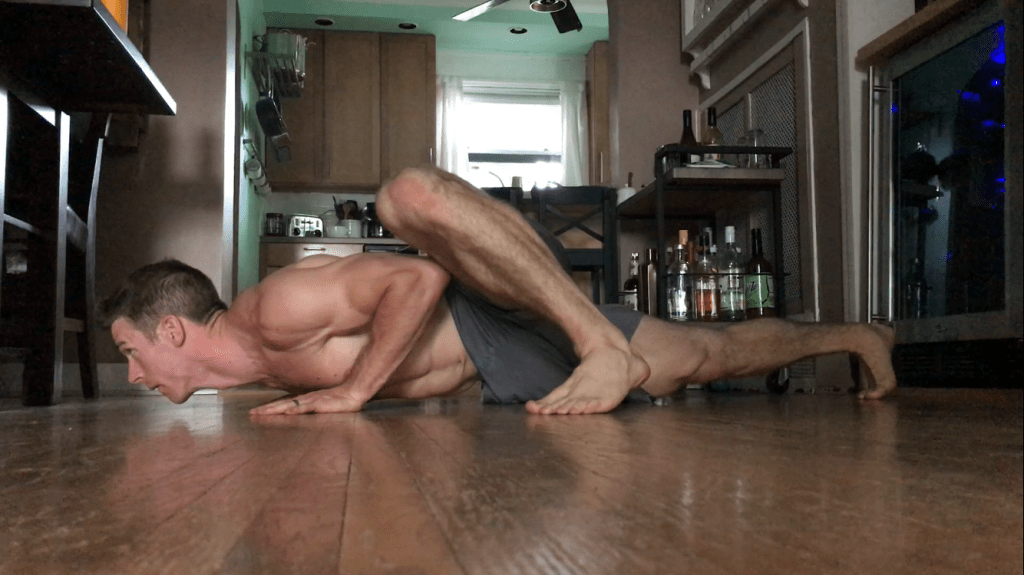
The lizard crawl (and variations) is now my favorite upper body exercise.  

Interestingly, I’ve lost absolutely NOTHING when it comes to basic lifts (squats, pressing, deadlifts, pulling core strength, and stability).

Hmmmm… 

Beginner Movement Patterns

The list below is not everything.  But does highlight some of the more notable movement patterns a beginner should begin to familiarize with.

  •  Crawling
  •  Reaching
  •  Twisting
  •  Balancing
  •  Rolling
  •  Climbing
  •  Jumping
  •  Transitions between movement (common and uncommon)
  •  Movement Sequences
  •  Improvised Movement

Beginner Movement Training

This blog post is all about the beginner.  The newbie to the movement training.  

The rolling, crawling, transitioning, exercises, and flowing sequences rarely written about in fitness magazines.  

Why don’t fitness magazines grab ahold of movement training methodology?

I have my own theories, but the infatuation with luring people in to read about the next great muscle building routine, fat loss and weight loss is addicting.  Pure aesthetic trickery.  

And there’s nothing wrong with using exercise for body transformation.  

It’s the fact that these magazines repetitively create new angles on the same old, worn out, tired topics.  Plus, judging by the exercise videos I’ve watched from some of the better known mainstream fitness magazines, the fitness editors might sport lean bodies, but they DO NOT MOVE WELL.  

Standing bicep curl technique?  Expert level.

Transitioning from a low crawl into a single leg squat variation back down into a 90/90 position?  Nope.  

Movement training encompasses a lot of the stuff that exists BEYOND lifting weights, sets/reps/rest, racing the clock, WODs, and treadmills.

Crawling.  We crawl as babies, but revisiting basic crawling patterns in adulthood is packed with benefits.   

Ground-based movement training is missing from the average person’s workout regimen, and it’s a key element.  

Free of equipment and fancy gadgets.  

Just your body moving around a space.

Squatting on uneven surfaces, with a staggered stance.  

Pressing up from the floor, stepping through, dropping back down into a Cossack squat, sliding the legs across, and mirroring this combo on the other side.   You could do this for 5 minutes straight.   

Rotation.  A lot of exercise and workouts lack rotational training.  Some workouts overly stress the importance of anti-rotation exercises, paying little attention to the fact that we must be able to produce rotation also.  

Injuries.  People often injury themselves (to varying degrees) when the stress exceeds the body’s tolerance to handle the stress.  

Progressively expanding movement by introducing manageable patterns, loading and positions can help mitigate injuries.

Pertaining to injury mitigation, active mobility training becomes essential.  Increasing range of motion and CONTROLLING (building strength and stability) in these newfound ranges.  

Supplementing resistance-based exercise and natural bodyweight movement with a progressive mobility-focused regimen is the gold standard in injury prevention.

With this recipe, you’re gaining strength, movement IQ, and establish a useable joint range of motion.

Movement Training For Life

On one hand, I believe in general physical conditioning versus attempting to mimic the exact movements of daily living.

On the other hand, conditioning the body for common everyday movements makes a ton of sense.

Exertion in daily life often doesn’t look like the average gym routine.

There are no symmetrically weighted barbells, chalked up kettlebells or dumbbells waiting to be lifted and move.

Real-world movement is less predictable.

We fall into and out of weird positions, often require on-the-go improvised corrections, rebalancing, and constant transitions in and out of body positions.  On top of that, toss unique environments with uneven surfaces and odd-shaped objects.

This is not to say barbells, kettlebells and dumbbells are bad.  There are FANTASTIC tools to leverage.  But at some point, you’re no longer in the gym, you’re no longer pistoning a barbell up and down for robotic reps.

And how about that gym perfect, flat-backed, technically sound bodyweight squat?

Squatting in my life looks like something else entirely.  A hybrid combination of movements and transitions.

Maybe you’ve got to navigate moving from the floor to standing without the use of your arms.

Every day, real-world movement is full of imperfections.   

Interestingly, years of pounding on movement patterns didn’t make me a more efficient mover in the real world.  I mean, to some extent it did, but I started to encounter a lot of different scenarios where I felt weak, uncoordinated, and immobile.

We cannot train for every quirky experience in life, but I strongly believe supplementing resistance and cardio training with movement rich tasks, challenges, and ground-based conditioning would help a lot of people increase their

I find myself squatting out of mechanical alignment, twisting, bending, reaching, rolling, lifting, and moving objects with a technique that most gym fanatics would consider unacceptable.

Picking up heavy, awkward shaped, slippery sh*t from the garage requires a creative approach, which is rarely addressed in a structured workout.

Fully flexing the lumbar spine while assuming a modified lunge stance, driving off the forefoot while my feet slide inside of my Crocs.

This is life.

Sometimes I’m moving by fusing 2-3 of those patterns at one time.

When it’s time to perform in life, it’s time to perform.  Sometimes we get to step up to a heavy object, get situated and lift similar to our gym lifts.  Most times, this is not the case.

Much of movement in daily life is reaction-based, rarely planned, and happens quickly.  There’s no time to externally rotate the hands, pull the shoulder blades down and back, tuck the rib cage, etc.

Real-life movement is unpredictable, deviating from “flat neutral spines”, perfect posture, and ideal foot placement.

It’s life.

The human body is a movement machine.

Ground-based movement drills improve a person’s movement capacity and address a lot of these in-between life moments that a barbell squat or deadlift simply doesn’t.  

Improving your ability to interact with the ground, using nothing but bodyweight will help you as a mover, and probably make your traditional lifts that much better. 

And to be completely honest, engaging in movement-based training is as fun as it is challenging.

One great benefit of practicing movement based drills is how quickly a person builds confidence in unique and unfamiliar body positions.

We knowingly (and unknowingly) avoid activities we know our body isn’t suited for.  After a few months of movement training, this starts to shift.  You begin to look at daily tasks differently.  Situations you used to avoid become worthy challenges you’ll meet head-on with a new-found confidence in your abilities.

Twisting and rotational movements are absent from most workouts.

Walk into a big box membership-based gym and you’ll witness 95% of the members slaving away on fixed range of motion cardio machines, ab machines, or and crowding the bench press area..

I’d shred my chest and core by ramping up the volume of lizard crawl versus laying lifeless on a bench while pressing the weight up and down… ANY DAY OF THE WEEK.

Rotation is a basic human movement action and training it consistently can provide some noticeable benefit with regard to performance and postural integrity.  It’s quite common to have people comment on their spine feeling “locked up” or “stiff”.

Insufficient mobility at the mid-back region can cause excessive motion at the lower back, as the lower back tries to pick up the slack to make everyday movements possible.

Rotational drills are great for training mid-back mobility while opening up the hip flexors and activating the powerful glute muscles.  The stretch from the hip to the shoulder is incredible.  

Injecting multi-planar and multi-joint exercises into a workout regimen can (and will)_ bridge the gap that many traditional compound lifts simply do not address.  

More examples… 

Training movement patterns in isolation is best for learning mechanics and giving the body an opportunity to adapt.  

The range of motion of each exercise can be modified to suit what you can comfortably handle at this moment and will improve with time and consistent practice.  

The human body is a brilliant adaptation machine.   

Most of my early ground-based movement flow practice involved spending focused time on 1 or maybe 2 movements in isolation.  I like to work new exercises with a “do less but do it better” type approach.    

As my movement efficiency improved, I began to string together 2, 3 even 4 exercises in a row, flowing and transitioning between each for reps or time.     


Every exercise has progressions leading up to mastery.  I cannot stress this enough.  Movements can be progressed for YEARS.  

Interested in getting a cardio conditioning effect from the workout?  Great.  Increase the tempo of each exercise or add time to the work set.  Flowing around a room for 8-10 minutes will elevate your heart rate as much as traditional cardio.  With the added benefit of training more movement patterns and improvisation to increase the brain’s processing speed.  

Crawling is great for loading the upper extremities, core, and sequencing.  Extremely slow tempo crawling remains one of the most eye-opening physical challenges for people.   

10-15 minutes of ground-based movement training will leave you exhausted, particularly if you’re new to it and inefficient.  

Are you going to be sore all over from this?  Yes.  Expect soreness in the days that follow.  

Newbies to ground-based movement training should consider implementing such training after the warm-up, but before resistance training in the day’s workout.  

Movement 20XX

Movement 20XX

Movement 20XX is a program I’ve become a huge fan of across the last year.

Eero Westerberg and I have a lot of similar ideas and approaches to building physical freedom, exploring different avenues of exercise and how to integrate those methods into a pre-existing regimen.

Movement 20XX is loaded with exercise progressions, bodyweight strength training, moving into ground-based movement, and sequences.  

Sequences are a series of pre-planned movements fused together.  Like a movement sentence.

Everything in Movement20XX can be adjusted for beginners/novice movers or progressed to challenge the elite mover.  

Movement training will improve all other areas of fitness.

Watch for more posts sharing exercises, combinations, and flow!


Cheers,

Kyle

Basics of Movement20XX| The A-B-C’s of Crawling Exercises

Motion

The Basic Forward Crawling Pattern

Movement 20XX is a brilliant bodyweight fitness program designed to build a body using ground-based movement and smart exercise progressions

Beginner, novice or elite… it doesn’t matter.  

Eero Westerberg created exercise progressions for any level of fitness, from a beginner all the way up to an elite mover looking to develop movement mastery. 

Movement 20XX is a bodyweight ground-based movement training system that integrates different training methodologies into one unique workout experience.  

Looking closer, you’ll notice elements of yoga, ground-based locomotion, and various gymnastics drills fused into one flexible training system.

Crawling is a key element of Movement 20XX.

The most effective online fitness programs coach clients using clearly communicated coaching cues.  Clear and concise communication is an art form.  

Eero’s communication is what makes Movement20XX great, combined with regressions and progressions to those exercises.  

Movement20XX introduces beginner movers to the fundamentals of movement training while providing exercise progressions to challenge people who are higher up on the ladder.   

Natural (bodyweight-based) movement training is MISSING from most workout programs.

Improving your ability to control your body in any environment, with or without external load moving through space.  

Climbing, crawling, balancing, jumping, rolling, reaching, twisting, lifting, etc.

… keeps people young.

Lifting weights is great.  Mobility training is great.  But at some point, MOVE.

Ground-based exercises like crawling are rarely included in traditional fitness programs.  

Shame. It should be.  

Ground-Based Crawling

3 basic locomotion patterns I’d like to share today:  ape, forward/backward crawl and the crab walk.

Each pattern is bodyweight-based, requiring no equipment, just a small about of space either indoors or outdoors

Crawling Patterns: 

Ape is likely going to be the most challenging pattern shared today.  Ape requires the most upper body strength and coordination.  

Forward/backward crawling is a basic crawling pattern, and probably the most recognizable.  

Crab Walk is a supine (chest up) pattern that’ll challenge shoulder and hip mobility in a unique way.  


Ape

Forward/Backward Crawl


Crab Walk

Adding Crawling and Locomotion to Workouts

I started slow with crawling.  Not because I wanted to, because I had to.  

Even the basic patterns crushed me for short distances.  

#humblepie

Over the course of a few months, I increased the crawling frequency from 1-2 times per week (mainly during warm-ups) to daily practice for longer distances and durations.  

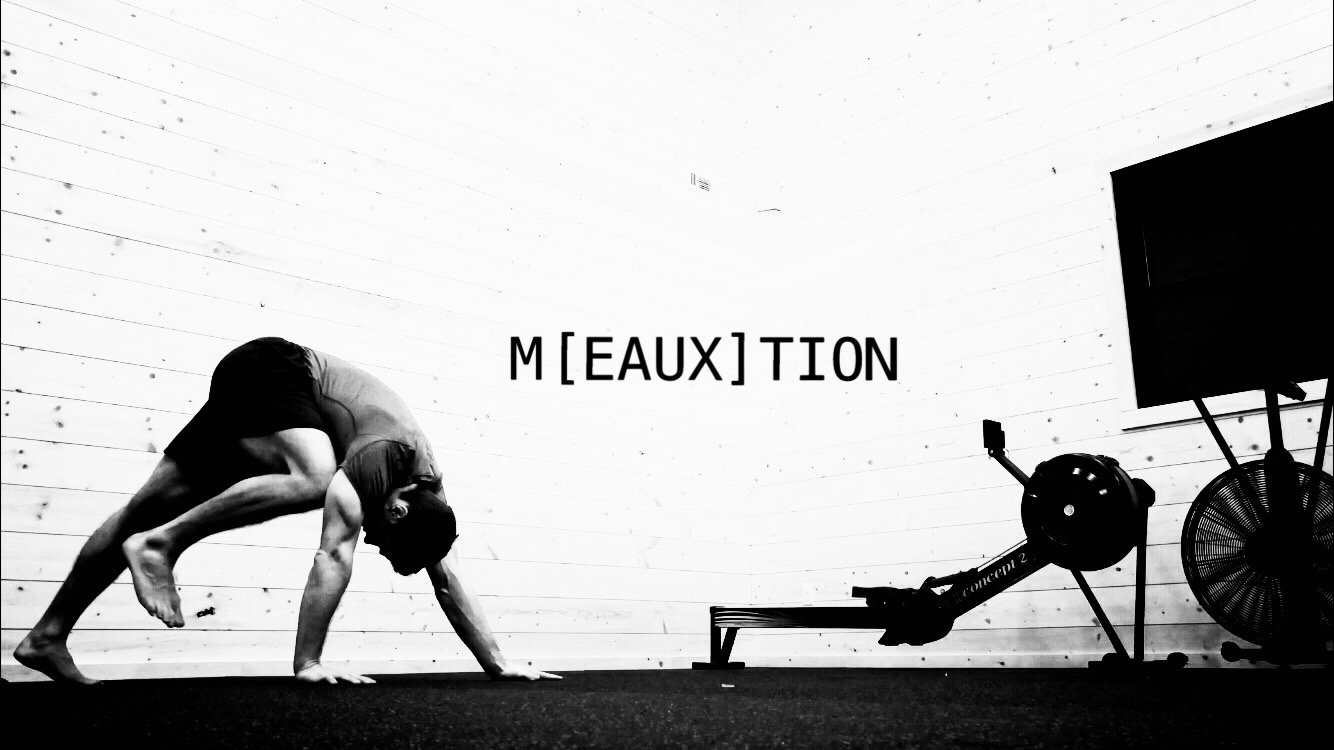
I’ve posted several videos on the Meauxtion YouTube page demonstrating 5+minutes of traveling forms/crawling.  

5+ minutes may seem like a long time to be crawling without rest… and you’re right… it is. 

Ideas For Workouts…

I train in the morning 99% of the time.

If I wake up and feel residual fatigue or muscle soreness from the previous day’s resistance training or metabolic conditioning workouts, I reach for ground-based only sessions. 

Isolating a workout to only ground-based movements like crawling (and other locomotion patterns) is great for the joints yet doesn’t involve huge muscle contractions, challenging, FUN… while delivering a significant training effect.  

The tempo (speed… fast or slow) of the movements can easily be adjusted to change the stimulus.

Crawling can be formatted for cardio training.  Increasing the speed of a basic crawl pattern (while reducing rest periods) challenges mind-body processing speed and coordination.

Or, add a weight vest to increase the loading.  Progressive loading is essential to make gains while lifting weights, and crawling is no different.   

Here I am wearing 80lbs of extra weight while practicing an advanced crawl variation, the lizard crawl:


In time, simple movement patterns like Ape, Forward/Backward Crawl and Crab Walk can be integrated into flow-like sequences. 

See below:

Video


For beginners, crawling is learned best using a slow and controlled tempo.  

Slow and controlled practice allows for a better motor pattern education.  You’ll develop a better understanding of the mechanics and physical demands of each movement.  

Why Crawl?

Ground-based crawling and other locomotion patterns are both fun and challenging.  

You may find (as I did) that these patterns bring restore life into your workout regimen.  

Isolated resistance training day in and day out can get extremely monotonous. 

One secret to maintaining a healthy long-term relationship with your fitness is to keep training fresh.  

Choose activities that require increased physical AND mental engagement.  

Most of us don’t have the will power or capacity to sustain a workout regimen it despises.  You’ll fizzle out over time.

Make sure to find a workout structure that’s results-oriented, challenging, yet ENJOYABLE. 

I love a good physical challenge, and these bodyweight ground-based movement patterns provide it every single time.

Engaging in more locomotion-based exercises reminded me it’s possible to finish a workout exhausted but REFRESHED, not beaten into a pulp.  

A 20-25 yard lizard crawl is both exhausting and humbling.  For me personally, diving deeper into crawl work was a splash of cold water to the face.  

Bodyweight training is an anytime, anywhere with zero equipment and limited space method of building fitness.  

Small, odd shaped, cluttered spaces become ideal areas to workout when bodyweight training is the focus.   

👉 For more info, check out the Movement 20XX


Related blog posts:


Kyle


Basics of The Ido Portal Training Method

Ido Portal

Ido Portal

{Photo Credit:  http://www.idoportal.com}

Ido Portal Method training is taking off like rocket and growing in popularity every single day.  

There’s a moutain of Ido Portal movement videos and articles all over the internet describing his techniques and teaching. 

[I do not speak for Ido Portal in any way.  Ido is a man with his own original thoughts and ideas.  Anything I write or discuss on this blog is my interpretation of information he’s published on his social media page, his old blog, Youtube interviews and various other sources.]

My background…

I have an extensive background in strength and conditioning, but it’s traditional in every sense of the word.  

It took years for me break away from deadlifts, squats, pushing, pulling, and core work… and expand into movement training.

Old habits die hard, but eventually, I dove head first into movement training.  

Gradually, I rebuilt my body, peeling away layers of stiffness, improving range of motion, coordination and newfound strength.

Thousands of people have done the same, many through the information in this article.

It’s amazing to see the feedback of those who’ve decided to take actionable steps toward building up their movement arsenal. 

The first time I encountered Ido Portal Method, I knew I was watching something different.  This was a much different approach to building fitness.  The training tactics were unlike anything I’d seen. 

Crawling, sprawling, twisting/turning, reaching, flowing, strength movements paired with Capoeira, gymnastics, hand balancing, dance, gymnastics, etc.

Ido Portal Method was like an open platform for many differnet styles of movement.  

Just when you think you’ve got it figured out, it changes shape, moves in a different direction.  

Since my initial exposure, I’ve spent a significant amount of time reading, watching, practicing and digesting Ido’s methodology.

This article is my translation of the basics of the Ido Portal Method. 

IMG_4167 

Ido Portal Training Methodology…

If you’re looking to get the summarized view of what drives Ido Portal’s movement methodology, the formula looks something like this:

Isolation—> Integration—> Improvisation

Step 1:  Isolation

Step 2:  Integration

Step 3: Improvisation

What I currently comprehend, the movement paradigm is a series of transitioning from phases.  

Isolation to integration to improvisation.

Ido Portal Method raised the bar with movement standards.

Most systems teach isolation (do this squat, then do this deadlift, then run up that hill, then do a pull-up) and stop there.   

Ido Portal Method takes it a step further.

Here are details on each phase.

Isolation

In the Ido Portal Method, Isolation based movement is essential for making progress.  

This is the base of the hierarchy.

Strength is a prerequisite for movement.

Being strong enhances movement capacity because you OWN every position.  

Isolation = building strength with movement patterns.

Movement patterns:  

  • Squats
  • Deadlifts
  • Lunges
  • Carrying
  • Crawling
  • Vertical Pulling
  • Vertical Pressing
  • Horizontal Pulling
  • Horizontal Pressing
  • Bent Arm and Straight Arm Upper Body Training
  • Glute-ham raises
  • Rotational patterns
  • Core training
  • Power Training (cleans, snatches, jerks, kettlebell swings, etc)
  • Stabilization drills

This is isolation.

You might be familiar with these exercises.  

There’s also a heavy emphasis on high tension bodyweight-based strength training exercises.

Body levers, hanging and climbing, dips, muscle ups, parallette work such as L-Sits, and Tuck Planches, single leg squats, single arm pressing, handstand push-ups and various locomotion patterns (crawling, rolling, etc.)

Gymnastics strength training.

Mixing traditional strength training with body-weight based exercise is a potent combination.  

These are time-tested, proven strength builders essential to physical development. 

Improving athleticism with Isolation style training opens doors to building movement sequences (performing several movements in a row) and evnetually fully improvised movement flow.   

Multi-planar strength and movement freedom.

The bottom rung of Ido’s movement classification system is often the highest rung for other training systems.  

HIGH. STANDARDS.

There’s a realm of physical expression that exists beyond getting fixated on sets, reps, putting more weight on the bar, numbers numbers numbers, or racing the clock to set new P.R.’s in a WOD.  

Handstands, leg-less rope climbing, ground-based movement flow training packed with locomotion patterns and bodyweight movement patterns are here.  

Our bodies are designed to move freely.   

 Flow

Ido Portal Method combines the best of many movement disciplines.

Integration

Integration is the point where movement sentences are formed from the words (isolation).  

A squat, is no longer just a squat.  

A squat is a stepping stone to another movement, and another, and another.  

The practice is evolves into a seamless flow, moving about.

More movements are integrated, creating series of movement patterns formulating a “sentence” of movement.  

  • Sidenote: There’s a heavy Capoeira influence. 

The ground conditioning (locomotion patterns, Capoiera, etc) combined with gymnastics/bodyweight/traditional strength training, fused with flexibility and mobility work is NOT NEW, but since it’s being repackaged and people are seeing incredible results, it’s definitely creating a paradigm shift in fitness.  

“Fitness” is less about who can build the best looking body or lift the most weight (both respectable pursuits), it’s about moving and how your body can perform when confronted with the known and unknown.

The shift is on and people are taking notice.

Nike has…

Ido Portal Nike

More Integration…

Integration builds on the physical preparation from isolation training.  

Pre-planned movement sequences make up part of the Integration phase.  This is similar to a dancer demonstrating a choreographed routine.  Just because the routine has been practiced for months doesn’t make it any easier to execute.  

I’ve watched the “Locomotion Research” video 50+ times.  Watching someone move like water is inspiring.  The movement sequences demonstrated in the video are deceptively difficult.  

Ground-based locomotion is a multi-planar movement requiring a level of body awareness, joint range of motion and on again/off again body tension most people rarely practice.  

Many of these dynamic patterns are animal-like.

People are often humbled by the amount of mobility and strength needed for locomotion patterns.

After the first few sessions, locomotion practice will leave you sore.  

The Lizard Crawl bridges the gap between “lifting weights” and putting those gains toward challenging movement patterns.

Crawling is difficult.  

If you’re not yet crawling, get into it.

Crawling patterns are effective for building coordination, spatial awareness, strength and movement capacity.  

Improvisation…

Ido has commented on numerous podcasts that improvised movement represents the highest form of human movement.  I couldn’t agree more.

Dominating isolation exercises makes the transition to integration significantly easier.  

With consistent practice of Isolation and Integration, one will arrive at the final progression of Ido’s movement philosophy… improvisation.

World-class gymnasts (pound for pound the strongest people on the planet) are rarely expressing improvised movement.  Competition routines are all pre-planned, practiced and choreographed prior.  

Improvisation is the combination of isolation and integration.  You’re essentially making it up as you go, or “flowing”.  Though it will likely take years of dedicated practice, improvised movement flows are achievable.  

This is where progression becomes important.  

Flowing like Ido Portal doesn’t happen overnight.  

Practice is king.  

I’ll spend less time describing the Improvisation phase of the Ido Portal Method because most folks need to focus on nailing down the elements of Isolation and Integration.  

In interviews, Ido has mentioned several times he thinks there is a dimension to be explored beyond Improvisation.  

Isolation and Integration Progress

The Ido Portal Method represents an incredible shift with how we view and define fitness.  

Humans are made to move (climb, run, jump, roll, carry, etc) and I think there is an emerging sector of people who want to experience the thrill of moving in this way.  

It’s important to clarify that traditional physical fitness modalities aren’t obsolete.  Nor should they be.  

A person should spend a great deal of time gaining ground in the Isolation phase, grooving technique, building strength, improving joint control throughout a range of motion.  

Hammering away on the basics (squats, pulling, pressing, etc) is fundamental to progress.  

The goal is to build strength, stability, mobility (the missing link of fitness), conditioning and constantly expand movement capacity.  

Conditioning is also important, and should never be overlooked.  

Train Like Ido Portal Method without the Pricetag

Several years ago, I started looking for alternatives to the Ido Portal Method for several reasons.

  1.  Ido Portal doesn’t offer programs through his website.
  2.  Training privately with Ido and his team is EXPENSIVE ($2500+)

Like many of you, I couldn’t afford $2500 for a workout program, no matter how spectacular. 

I started researching alternative programs with the belief that similar results could be achieved while investing less money.

With enough research, I found what I was looking for, and what I felt other people could benefit from as well.

Here are two amazing programs to check out:

  • Movement20XX
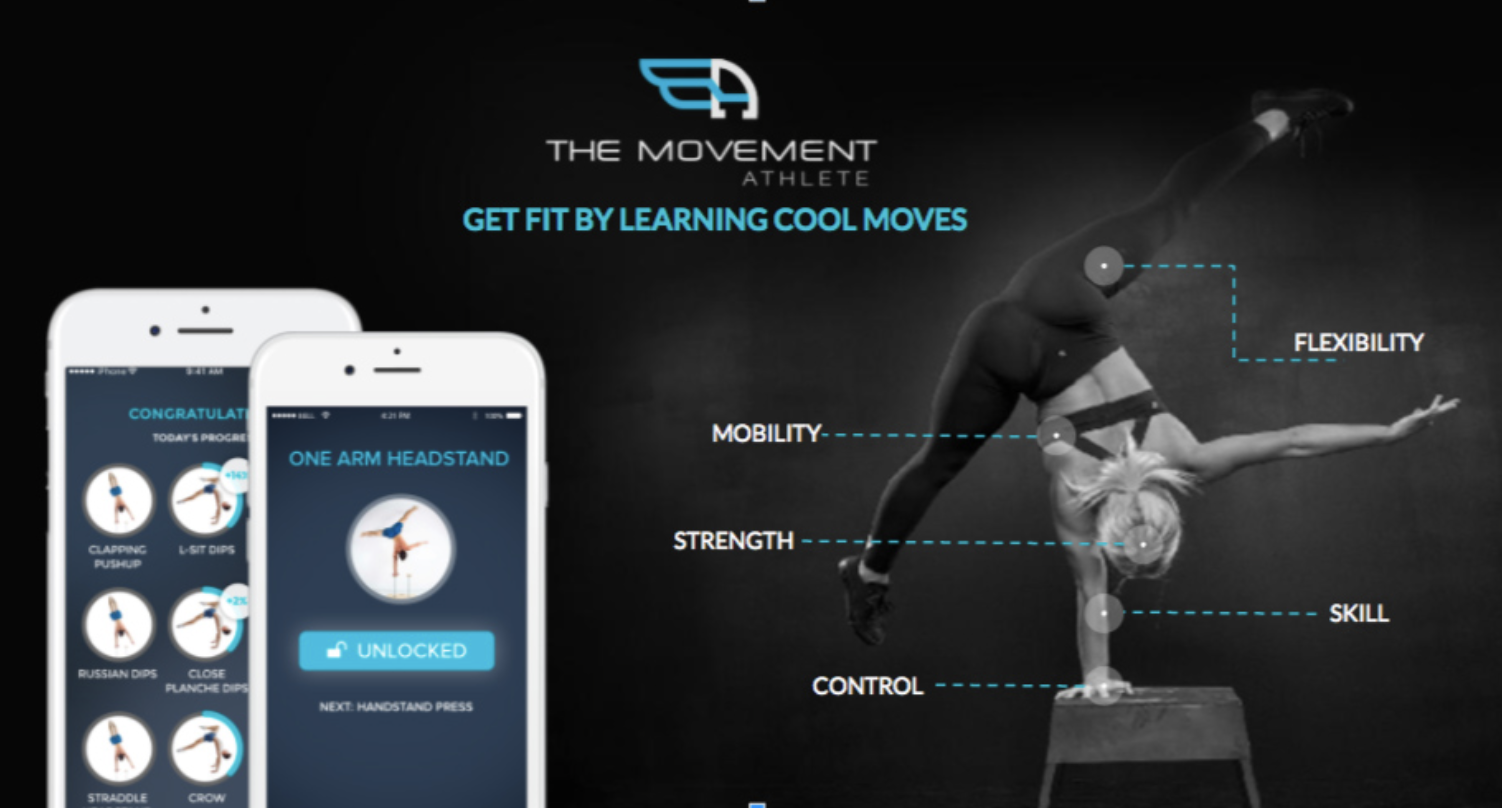
  • The Movement Athlete

Combining all of these programs creates a comprehensive training system.

Strength, movement training and mobility.   

Movement 20XX  teaches ground-based movement, locomotion patterns (lizard crawl, etc),movement sequences and improvised flow work. 

The Movement Athlete will build strength using bodyweight exercises.  Strength is critical for performance and long-term health.  Pistol squats, one arm push ups, handstands, l-sits, body levers, upper body pulling, etc.  

Here’s a little more about each program. 

Movement 20XX

Screen Shot 2019-11-15 at 11.12.03 AM

Movement 20XX is a ground-based bodyweight training system that teaches many of the locomotion patterns and flow work found in Ido Portal Method.   

Locomotion mainly consists of quadrupedal ground-based exercises like crawling (lizard Crawl, etc), switches, transitions, etc.

Integrating Movement 20XX into my own workout regimen has been awesome.  

I started by supplementing my traditional resistance training workouts with a few basic crawling exercises, and built up from there.  

Over time I strung together exercises to create repeatable movement sequences.  

Movement 20XX integrates the best elements from different movement disciplines to create a hybrid system of movement training.  

Crawling, transitions, switches, flow, etc. 

I started Movement 20XX with a stiff spine, poor hip and shoulder mobility, tight hamstrings, and mediocre movement capacity.  

After about 4 weeks of dedicated movement practice, my body acclimated to the mechanics and demands of the patterns.

Using the curriculum from Movement20XX, I made more movement gains in 2 months then I had in the previous 5 years.  

Interestingly, my traditional lifts saw boosts in performance.  Deadlift, squat, pull-ups and pressing all improved, felt smoother, etc.

If you want to explore movement, this is the program to get. 

👉 Learn more: Movement20XX

The Movement Athlete  

The Movement Athlete

Strength is critical for improving movement performance.

If you get nothing else from this article, please, remember that. 

Movement Athlete Academy is a bodyweight-based strength program designed to improve performance in high powered movement patterns:

  • Muscle Ups
  • Handstand Push Ups
  • Single Arm Push Ups
  • Single Arm Body Rows
  • Pistol Squats
  • Handstands
  • L-Sits
  • Human Flags (aka: body levers)
  • Back Levers

Sadly I used to think bodyweight training was dumb.  If I wasn’t lifting weights, I was wasting time in the gym.

When I committed myself building effective bodyweight movements, my strength increased, everywhere.

The human body is adaptation machine. 


Movement Athlete Academy is a smart training system, built on the principles of:

  • Smart exercise progression.
  • Progressive overload.
  • Progressive exercise complexity and volume.
  • Rest and Recovery.

The workout design, exercise progressions and step-by-step tutorials make Bodyweight Athlete a great bodyweight-based program to invest in.    

Bottomline…

Find a program and follow the details.  

Invest the money in learning effective training techniques, commit yourself to the curriculum and you’ll get phenomenal results.

Stay Tuned 

If you’ve enjoyed this post, check out:

Cheers to the Basics of The Ido Portal Training Method…

KG

SaveSave