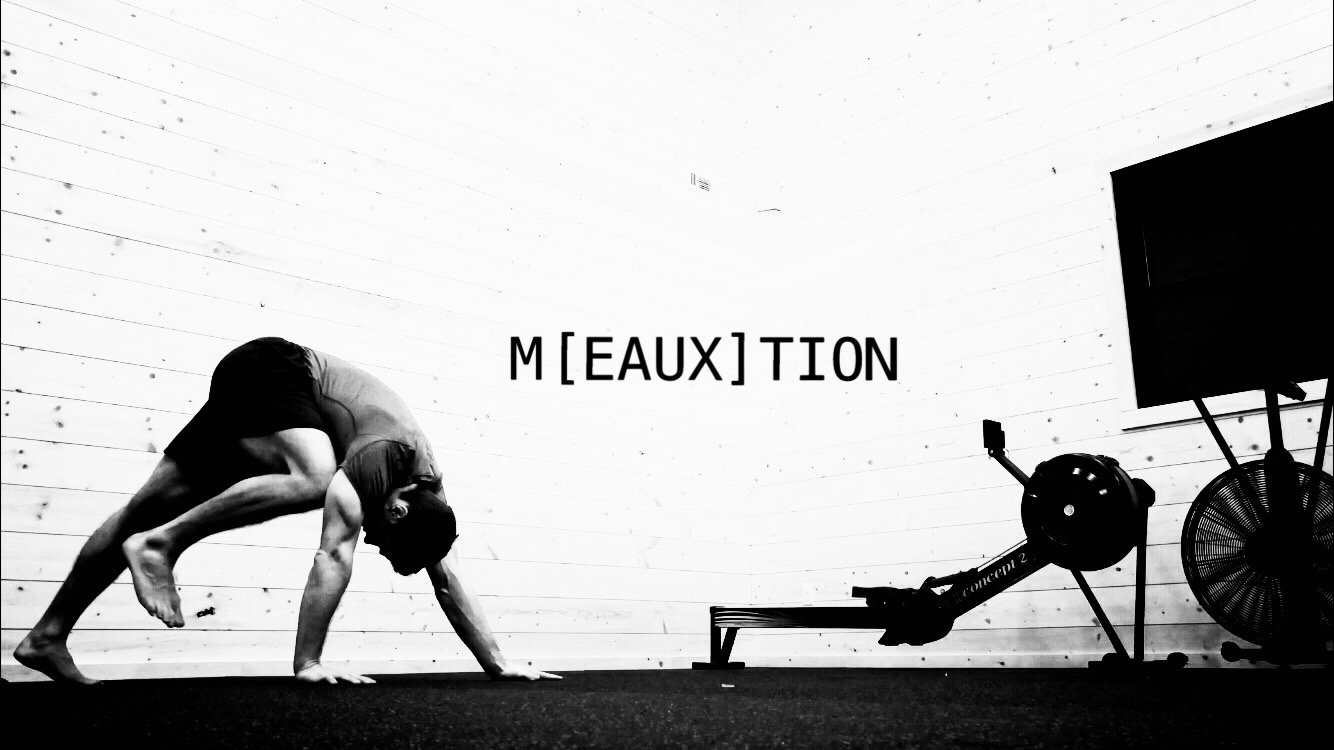
Bodyweight Training Works, Go To The Next Progression!

bodyweight training

Just when you think bodyweight training is worthless, let me quickly restore your faith.

I know what you’re missing.  It’s the same thing most people are missing when they are looking to leverage bodyweight exercise to boost strength, boost power or burn fat.

It’s called progression.

Progression can mean a few different things:

1)  Load progression (increase in weight)

2)  Skill progression (increase in motor skill demand)

I chose to limit the progressions to loading and skill.  Could you say volume is a progression?  Of course, but I am convinced that MORE VOLUME IS NOT WHAT MOST PEOPLE ARE LACKING WITH BODYWEIGHT TRAINING PLATEAUS.

Just the thought of marathon sets of exercises that you are already good at makes me cringe.  I’m guilty of avoiding essential increases in loading or skill in favor of more volume also.  It’s soothing to your ego knowing that you can dominate a bulk set of push ups or squats.  I’ve been there, I know first hand.  Comfort feels good.

But comfort doesn’t get your stronger, leaner or more athletic.  Especially if you’ve got lofty strength or aesthetic goals and you’re attempting to leverage bodyweight training to get there.

So, progression is probably what you are lacking, but the great news is that once you have identified that proper progression is the missing link, the solution becomes rather simple.

Take the push up for example.  If you can rip out 20-30 bodyweight push ups no problem, you need to take the next step to either a)  rear foot elevated push ups, b)  externally loaded push ups c) 1-arm push ups.

In some instances, I am going to suggest going straight to 1-arm push ups to restore that faith.

Why?  Because the first time you set up and lower yourself into the bottom of a 1-arm push up, your eyeballs are going to feel like they are going to pop out of your skull, catching on your orbital bones.  Seriously, you’ll feel like a weakling.  The point of sending you to the 1-arm push up gallows is to expand your thought process to how effective bodyweight training can be if you’re willing explore new realms.

Generally, a lot of people who are great at strict 1-arm push ups also have incredible upper body strength and as a byproduct, a decent physique.

The junction where functional performance meets physique is an ideal point for most people.  It really stinks to be all show and no go or all go and less than ideal show.  But who am I to make that statement, because if you enjoy either one of those scenarios, it is your prerogative to embrace that happiness.

So as I mentioned, 1-arm push ups aren’t necessarily where I want you to start working your progressions, because the point of exercise progressions is to make one’s way from one challenging movement to the next, progressing as fast as your strength, stability and motor control can tolerate.

In school, most people don’t go straight into Calculus, right?  They have to work through the progressions of basics of mathematics before they earn the right to tackle Calculus.

Bodyweight training, heck, all forms of physical effort work in the same way.

The above example involved upper body pressing, more specifically the push up.

However, progressing the lower body, particularly the squat can be just as simple.

As a beginner, you might start with improving your technique, strength and work capacity in the basic bodyweight squat.  After improving the aforementioned qualities, you will need to move on to higher level variations of the squat.  If you’re adamant about staying true to a minimalistic fitness approach like bodyweight exercise only, the next progression might be to elevate one leg onto a bench or other form of support, and perform what many call Bulgarian split squats, or rear foot elevated-single leg squats.

RFE split squats remove one foot from the base of support while simultaneously increasing the loading on the working leg.  Instead of two legs contracting to move your body up and down, you’ve now got one leg doing the work, an obvious increase in loading.

The next progression from the RFE split squat are either assisted bodyweight pistol squats or full bodyweight pistol squats.  I mentioned assisted bodyweight pistols because it might be helpful to hold on to something while you allow your body to “feel” the mechanics of an unsupported squat.  There’s no shame in assisting yourself until you’re physically read to let go and go for the fully unsupported bodyweight pistol.

As it stands right now, bodyweight pistol squats are the greatest lower body strength exercise known to man.  That’s a big and bold statement, but I cannot dream up another exercise that accomplishes as much as the free-standing pistol squat.  A bodyweight pistol is just the beginning, because adding load and varying duration of time under tension dropping into and out of the “hole” can both work to advance your performance.

It can be quite interesting to observe the right side/left side differences in balance, strength, stability and skill acquisition.

For me personally, I have found that my right side, which is my non-dominant leg, is much stronger than my left side.

So the bottom line is this… bodyweight training is phenomenal.  Just because you don’t have access to weights or you’re simply looking to switch up your training routine, doesn’t mean that you have to sacrifice results.  The key is to understand your current performance, your goals and then choose the right progression to accelerate your arrival at the next level of performance and goal achievement.

Make sure that you are tracking your performance from workout to workout.  It’s important for tracking progress and creating the next plan of attack.


Cheers to bodyweight movement…


KG


Just Bodyweight Exercise

Quick Tips

Bodyweight training is making a serious comeback in my own training habits.

It’s easy to forget about how effective bodyweight exercise is.

I’m guilty of it for sure. But I’ve recently returned to what I consider the foundation of all exercise, basic bodyweight training. “Basic” doesn’t mean easy. Single leg squats, single arm push ups, hybrid pulling movements, handstands and crawling variations are some of the most challenging movements in the exercise rolodex. Especially when you hold yourself to strict technique.

Workout equipment is always going to be evolving and innovating, but the idea that you can get a highly effective workout anywhere and anytime is incredibly valuable.

The rules of bodyweight training don’t differ much from more traditional forms of resistance based training. There are advantages/disadvantages and sacrifices to every form of exercise when you think about it, and bodyweight strength and conditioning is no different.

Nearly all of the major movement patterns are present: pulling, pushing, squatting, lunging along with various forms of cardiovascular conditioning such as running, hybrid movements like burpees, mountain climbers, and crawling.

I used the word “nearly” in the previous sentence because there is still no viable way to load the hip hinging pattern using just bodyweight. Deadlifts are still a no go, especially if you are staying minimalist with your definition of bodyweight training.

However, since the rise of glute thrusts and other glute activation drills, strengthening the backside without equipment seems feasible. Progression is the key here, especially since many strong individuals will find that the double leg versions of bodyweight hip bridging and bodyweight hip thrusts just don’t load the backside enough.

Progressing to a single leg version of the hip thrust is the ticket here. Go for increased reps, slow the tempo of movement down or hold the top (lockout) position for time.

Let’s not forget about the vast amount of abdominal focused training that bodyweight exercise has to offer. Plank variations, hollow body rocks, crawling, slow mountain climbers and hanging leg raises are all incredibly challenging exercise when performed with strict technique and adequate time under tension.

Progressing the intensity -and therefore the training effect of bodyweight exercises- can also provide a unique challenge.

Knowing when to increase reps, increase time under tension, increase the intensity and skill challenge of a movement pattern all come into play here.

Single arm push ups are a great example here. The transition from a traditional push up to a single arm push up is drastic when it comes to the increasing demands in stability and loading. There is also a grooving issue early on, where the body simply hasn’t been exposed to what’s required physically to complete a quality rep/set of single arm push ups.

In these situations, I will either break up the movement or add assistance in the form of a resistance band.

Breaking up the exercise into its segments typically involves working the eccentric portion of the exercise first.

So, for the single arm push up, I will focus on the lowering portion (eccentric) exclusively for a few weeks, or until I have developed the control, strength and stability to progress to adding the concentric (ascending back to the top) portion of the exercise. Eccentric training isn’t sexy and even 3-5 seconds of lowering can feel like an eternity, but it’s a gateway method to arrive at the next logical progression of an exercise.

If you have access to a resistance band, you can loop it around your chest and receive assistance during key moments of the lift. For a single arm push up, it can be challenging to push out of the bottom of the exercise, and this is where the band assistance technique works wonders. Since the band will be stretched to the maximum at the bottom of the push up, you’ll receive the most assistance where it’s needed most.

Band assistance is fantastic for working up to chin ups, pulls ups and single leg squats.

If you’re looking for a simple yet effective bodyweight training session, try this one…

Set #1:
10 push ups
10 squats
10 hollow rocks
—> Repeat for 5 rounds, or work continuously for 10 minutes w/o rest.

Set #2:
10 chin ups
10 lunges (right/left)
10 yards and back crawling

Conditioning:
10 burpees every minute on the minute for 10 rounds.

Adjust the progression of each exercise to fit your strength and skill level. Everything can be adapted to your needs.

Leave the workout feeling invigorated and empowered knowing that you can handle your bodyweight…

Cheers to bodyweight training!

KG

Take a Big Juicy Bite of Humble Pie: Progressing Your Workouts

Quick Tips
credit: blisshabits.com

credit: blisshabits.com

Ah, the humble pie.

In life it can be hard to convince yourself to take a delicious bite of humble pie, but sometimes it is absolutely necessary, especially when we begin to dissect our daily workouts.

First off, if you’re finding a way to get to the gym, you’ve put yourself ahead of the curve.  They say much of sales is just showing up, and I firmly believe fitness is very similar.  Getting to the gym is half of the battle.  Once you’re there, small shifts to progress beyond your current training habits will work magic for your body.

For example, if you’ve been killing it on the leg press, pressing a half ton load for endless reps, it’s time to remove yourself from the leg press and enter the world of free weight squatting.  You don’t even need weight.  You could knock your ego back down to earth by mixing in some pistol squats.

A few sets of pistol squats and you’ll figure out what you’ve been missing.  Single leg strength is where it is at.

If you’ve been dominating bicep curls, walk over to the squat rack and load up a set of chin-ups.  Lower yourself slow and explode on the way up.  Vertical pulling strength is a fantastic benchmark for upper body strength.  It’s important to work on handling your own bodyweight (and beyond) during upper body pulling actions.

Too cool for school on the lat pulldown?  Mix in some strict pull-ups using the same tempo as the chin ups.  Pull ups are the king of upper body exercises.  If you find yourself knocking it out of the park with pull ups, I would bet you will find yourself becoming extremely strong.

Still doing cross-words during the treadmill jog?  Take the incline up to 6-8%, turn up the speed and run some 15-20sec sprints.  Aerobic work is great, but shuffling your conditioning to venture into the higher ranges of heart rate BPM has great carryover to leaning out and resistance to fatigue during sport.

Tired of being unsure about how hard you are working?  Buy a heart rate monitor and measure your effort.  There are plenty of brands, colors and features to choose from.  It’s really a solid investment and I highly encourage that everyone leverage a heart monitor to increase the effectiveness of their training habits.
Exercise progression fitness

Improving your workouts is a lot easier than you might think, but it requires turning away from the path of least resistance and toward the path of progression.

Trust me, I know it feels really good to be awesome at certain exercises while simultaneously avoiding the exercises that plague you, but re-adjusting your training plan to include some of the exercises listed above (among others) is a sure-fire way to see quick improvement.

It really doesn’t take much put yourself on the right track for certain progress.  But you have to put yourself on the right track.  You have to progress.  If you don’t progress in some way, you’ll stay the same.

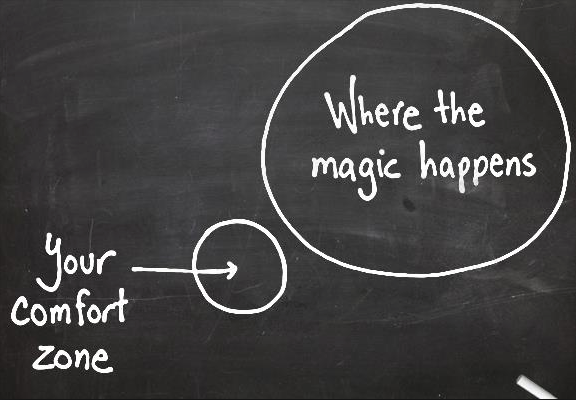
If you desire the next level of results, it will take some effort and an inner strength to consistently (and intelligently) push yourself out of your current comfort zone.  If you remember from an old post the picture below is worth a thousand words.

credit: thinkingmomsrevolution

credit: thinkingmomsrevolution

Progress applies to all aspects of life.  If you do what you always did, you’ll get what you always had.

Keep progressing and you’ll keep improving.  It’s a simple concept, but it isn’t always easy.


Cheers to progressing the workout in small increments!

KG

Progress your nutrition to see results, click the photo to find out how to make it happen.

Progress your nutrition to see results, click the photo to find out how to make it happen.