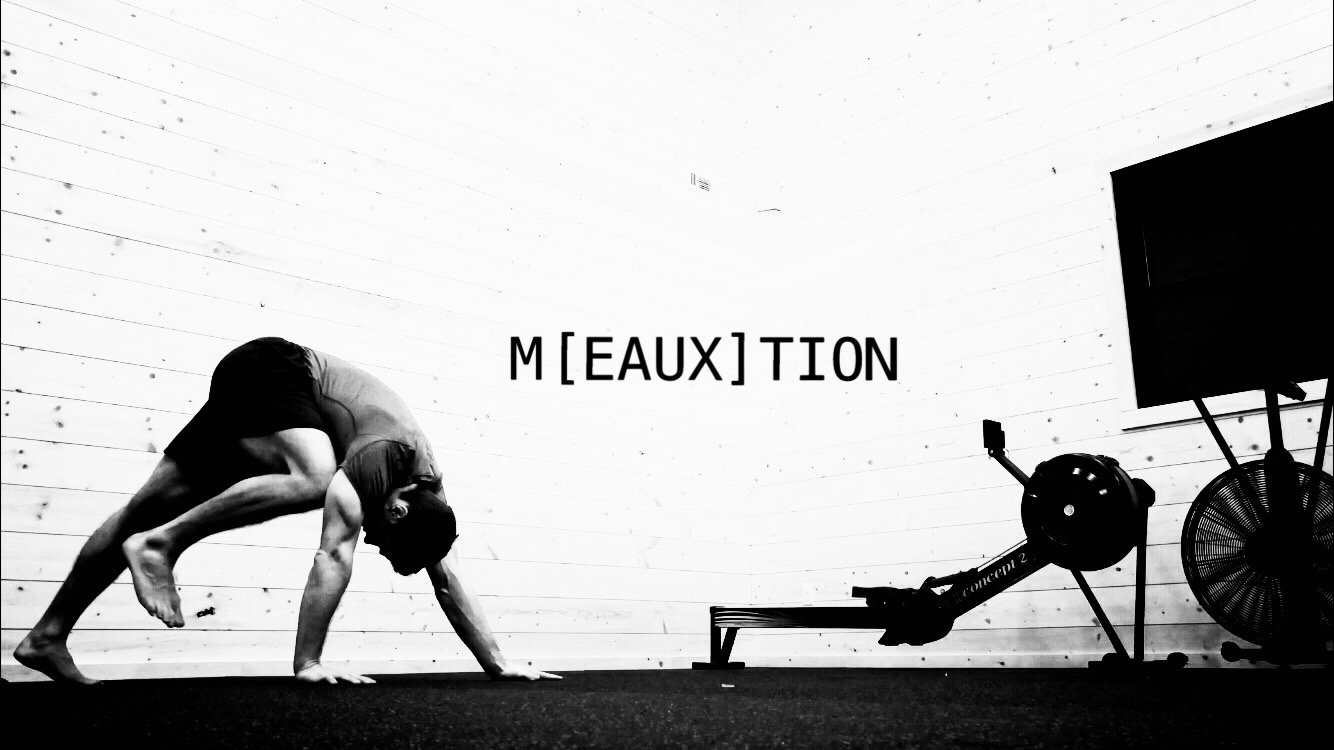
Completely Un-Organized Kettlebell Training For Fat Loss and Athlete-Like Conditioning: Part 1

Quick Tips

I am a huge believer in following a system.  Sticking to the game plan if you will.

There is nothing like a well executed game plan.  If you have ever played sports you know what I am referring to.  If you are fortunate enough to have a career with an employer (or as an entrepreneur) that preaches game plan for success and then the entire company comes together and follows through on executing it, well, it feels damn good.  

Sticking to your systems is the best way to measure your progress.  A system can tell you where you have been and also points you in a focused direction of where you are going.  For a beginner or even a novice aspiring to reach new levels of health and wellness, there is nothing more effective at creating change than executing a system to perfection.  

I love systems.  Did I say that already? 

But let me ask you something that I often think about in my own life…

  • What’s wrong with being sporadic about your exercise selection, sets, reps, interval length, rest periods, etc?
  • Does everything have to follow a set system?
  • Can I still maintain strength and conditioning levels and leanness improvising workouts?

I know those seem like a silly questions, some that most people will never think about, but after you make so many visits to the gym, work through workout after workout following a set progression to an end goal, systems get boring.  

Once I took a step back to get a deeper understanding of how and why we humans move, what our movement options were once we choose to train movement and what seemed to be the most effective at creating total body change… I realized that building high functioning lean bodies can be achieved in a completely un-organized way.  System-less if you will.  Cross-Fit does it in every single workout.  Besides following their two days on, 1 day off (rinse and repeat) training schedule, they seem to be building some pretty resilient humans.  I can’t say that I agree with everything that they are teaching and coaching, but the system-less approach seems to work pretty well for them.

If I can ever focus long and hard enough to put the final touches my books (they are coming I promise), you’ll find that I love simple advice.  Once you become more than a recreational exerciser and decide to invest time in learning about more serious forms of fitness and nutrition, topics can get really complicated, confusing and blurry.  The fitness and health pool is really deep.  There is a lot of conflicting advice, methods and even research.  

But it doesn’t have to be complicated, confusing and blurry.  At least I don’t think it does personally.

I spent years (and still do) reading heavy literature for no other reason than I enjoy reading it. I have a major chip on my shoulder from years and years of personal athletic endeavors that had no real guidance in strength and conditioning.  I didn’t know what a power clean was until Senior year of high school.  That sucks, because I no know what a dramatic difference a simple program can make a young athlete.  It’s incredible.

Sorry, sidetracked for a second there… Where was I?

Oh, I know…  I was just about to finish discussing the title of this post.

I love systems and I love simple training and eating advice.  Give me the meat and potatoes of what I need to know and I can figure the rest out as we move forward.  “Learn by doing” kind of thing.

I have also found that I love the concept of physical preparedness and completely un-organized kettlebell training.  I love heading to the basement, drawing up the workout based on my goals, and getting after it.  Sometimes there is good flow to the training session and sometimes it is full of sticking points, causing a much choppier workout.  Either way, I really never know what I am going to be doing until I get down there.  

However, that being said… I do stick to some key guidelines that help me get away with this un-systematized approach.  Here they are:

1)  Train big movements with challenging resistance

2)  Multi-planar core training

3)  Mobility Mobility Mobility

4)  Conditioning using many different methods

5)  Rest and recover harder than I workout


1)  When I say big movements, I am talking things like squats, kettlebell swings, snatches, presses, pulls, etc.  Stop messing around with tricep extensions and bicep curls, you have to eat your main course before you can have dessert.  

2)  I train my torso region in all directions and planes of movement.  I train my core for force production and force absorption.  I train my core to reinforce stability I can transfer as much force with any energy leaks from my lower extremity to my upper extremity.  

3)  Mobility.  I train mobility so that I can experience life as it should be experienced physically.  Loss of mobility is a prerequisite to pain through faulty movement  Loss of mobility is loss of life to me.  

4)  I condition myself with as many methods as I have resources.  When I was an athlete, I conditioned myself using set methods.  Running early in the off-season, slide boarding and then biking as the season drew closer.  It was scheduled and systematic because that was what my sport (hockey) demanded.  It made sense.  But, now I don’t have a sport.  I simply want to be physically prepared for anything.  It feels damn good to go for a 50 mile bike ride, run a 10k or play hockey 3-4 nights a week without feeling like a slug.  I use many methods to achieve both aerobic and anaerobic-like qualities.  I want to be able to endure long duration activities as much as short burst activities that get my heart rate sky high.

5)  I rest and recover much harder than I train.  Sleep, tissue work, hydration and nutrition are all important to me.  I am what I eat, drink and how I recover from my training sessions.  The green light isn’t always on.  You have to learn how to sit at the red light patiently until it is time to accelerate once again.  Rest, recovery and regeneration.  

Do you see what I am getting at?

I can train myself using a simple set of rules to keep myself lean and athletic, without experiencing the boredom of a system.  Training smart and slightly sporadic will keep me athletic for the rest of my life.  Sure, age will catch up with me as it does everybody at some point, but each training session will be fresh and purposeful.  Movement longevity is something that I am fully invested in, and I encourage you do invest in the same. 

I will say this however, I HIGHLY recommend systems to everyone.  You’ll never get better results as you will when following a system step by step.  My books leverage systems.  Systems get results.  They keep the main thing… the main thing.  Following a system takes discipline, and discipline is something worth developing throughout life.

I treat myself like test rat for variations of time tested methods.  I enjoy seeing if my 5-mile Airdyne ride for time improves or suffers after I train high repetition kettlebell snatches for 3-weeks versus metabolic body-weight circuits.  That kind of comparison scenario is interesting to me, but it isn’t for everyone.

(Any strength coach that reads this is going to grind their teeth)


Cheers to moving more and with purpose,


KG 


Red Table Round Table #1

Quick Tips

Good Saturday morning from the little Red Table in Eau Claire, Wisconsin.

Part of the fun of keeping a blog is being able to write whatever you want, whenever you want to write it.  It’s your own personal space to release thoughts and ideas on this massive beast we call the Internet.  That is a pretty cool thing.

I decided that I really wanted to develop a blog posting series where I could just discuss whatever topics happened to come to mind during that writing session.  

Basically, I am talking about just putting my fingers on the keyboard and having at it.  

Creatively, I think this will help me regurgitate some of the interactions, questions and experiences that I had from the previous week.  

A recap of sorts from the past week.

Here we go…


—> Fat loss isn’t an ongoing process, it ends eventually<—

The concept of losing fat has to end at some point.  You cannot forever be in “fat loss” mode with your training and your eating.  You have got to have some kind of end goal to attain.  Whether you choose a certain body fat % or a performance related goal, it doesn’t much matter to me.  Although I suppose that if you are partaking in a full-fledged fat loss program you should probably be measuring the amount of fat you lose.  Skin calipers are a simple and relatively effective way to do this, otherwise hydro-static weighing or a BodPod will give some fairly accurate numbers also.

I was talking with my girlfriend Amanda about the whole concept of fat loss.  I told her that in my experience, sometimes people end up taking the fat loss concept to the extreme.  They literally attempt to walk around with 0% body fat.  They engage in extreme eating habits (calorie restriction and the like) and sign up for extreme workouts.  It becomes just as addictive as eating sugar or smoking cigarettes.  

At some point, you have to realize that you are going to enter a maintenance phase.  You’ve reached  your goals and you’re content with your body figure and your physical abilities and now you’re in what we call:  Maintenance. 

Fat loss ends at some point and maintenance begins.  You decide when that happens.  

Fat loss is a war and it is a lot more mental than physical in my opinion.  Habits need to be broken and new habits need to be hardwired.  Mentally you’ve got to prepare yourself for fighting off your old self-talk.  You’ve also got to get your head in the right place to endure your training schedule.  Physically, the human body is incredibly resilient.  You can handle a lot more physical stress than you think.  (Just keep it manageable physical stress)


I often go back and forth between favoring two approaches fat loss, and I think both depend on the personality of the person.  

Here they are:

  • Aggressive training and eating for 4-6 weeks, followed by a tapering process.
  • A consistent, not overly aggressive effective training regimen paired with a smooth transition into concepts of clean eating.


The first bullet point is an approach that is my definition of a fat loss war.  It’s pedal to the metal. You go crazy in your training and you stay brutally strict with your diet.  You get results quickly and then you turn back the dial a bit and continue pushing on at an effective yet much more manageable pace with regard to training and nutrition.  

The second bullet point is an approach that is quite popular also.  This is the “lifestyle” approach.  I am sure you’ve heard that a million times… “It’s not a diet… it’s a lifestyle”.  Puke.  

Anyways, this approach is a gradual climb.  There is a lot of acclimation to this approach.  I enjoy this approach to losing fat because fat loss is inevitably going to happen if you are eating clean and training purposefully.  I love the research and the highly technical information that the experts put out, but they complicate topics in an effort to sell products.

Eat clean and drink water, learn how to lift weight using big movements, ramp up your cardiovascular training from aerobic to higher effort intervals, then move into a more cardio-strength style training regimen and you’re going to experience a reduction in overall bodyfat.  

Measure your fat loss progress on the cheap.  Use a snug fitting pair of jeans and a tighter fitting shirt to gauge your progress.  Remember, you’re after fat loss and lean tissue gain… not weight loss. (I lose up to 3-5lbs just from sleeping, it doesn’t tell me anything useful).

 —> Again, I encourage you all to set your sights a goal.  A goal is a target.  Once you have the target, set the timeline.  Once you have the timeline, you can assess what kind of effort is required to achieve that goal in that timeline.  It’s simple.  We over-complicate what should be simple.   


Cheers to keeping it simple…


KG


You Gotta Lift With Your Legs!

Quick Tips

Walk into a loading dock at any department store, hospital or industrial factory and you are going to see- maybe in plain sight or maybe laying next to the garbage- a sign that resembles the following:

Image

Caution:  Use Proper Lifting Mechanics


I probably hear something similar to the following quote 3-4 times a week while lifting decent sized plastic bins… “Kyle, lift with your legs bud!”, people say as I throw one bin on top of another.  

Ok, first things first…

1)  Take a look at the picture above.  How many people do you know that have proper mobility in their hips to get their ass that low?  Do you?  Most people don’t, so right away you’re putting yourself in a sketchy body position.  You’ll compensate big time to get that object off the floor.

2)  Lifting with the legs isn’t enough.  It’s all about technique.  Lifting the object by hinging your hips and driving your butt to the floor in an effort to primarily use your legs during the grunt of the lift is ideal.  Also, we deadlift barbells with massive loads in the gym…  Your back muscles are highly involved in that process, so don’t forget that having the back muscles helping out is a good thing, just don’t make them the only thing taking on the brunt of the load.  You’re moving a heavy object from a resting position on the floor to waist height (or higher).  You’ve got to pressurize your torso region to help protect your spine during the grind of the lift.

3)  Lifting odd-shaped objects is… well… odd.  The rules of lifting still apply to lifting odd objects.  Stay rigid, pressurize your torso to help protect your spine as I mentioned above, etc.  However, lifting something other than a designated weight training tool is awkward at best.

4)  Thankfully, most people who are probably lifting heavy stuff like the picture above are probably doing it for a living.  The reason that I say thankfully is because these people are probably conditioned to lifting heavy odd shaped objects, but more importantly they probably aren’t sitting in a chair all day.  You’ll hear me preach about how sitting is wrecking our posture and ability to move (it’s also unavoidable with our occupations), our metabolism, etc.  It’s horrible and unavoidable in today’s working world.  Take a person that sits all day and ask them to lift a 75lb-85lb box and you might have just dealt the camel the final straw (if you know what I mean).

5)  Programmed resistance training and attention to movement quality will protect our bodies from injury and aid in performance, even it that performance is lifting a heavy box off of the floor.  This is the foundational thought process behind establishing and enhancing strength, power, mobility and stability in your training sessions.  Physical preparedness is everything.

You’ll never appreciate your ability to move more than you will once you DO NOT HAVE THE ABILITY TO MOVE.

You gotta lift with your legs! haha…

Cheers

KG

We Are So Messed Up (Movement VS. Aesthetics)

Human Performance Discussion, Injury Prevention

Aesthetics, not athletics.

It is important to make the distinction and not allow your eyes to trick you.  Why?  Because true athletes know how to move and care very little about aesthetics.

However, have you ever noticed that most athletes are about the leanest people on the planet?  The leaness  that an athlete has is simply a by-product of their training efforts, and the demands of their sport.  Sport is movement.  Athletes move more than average people.  You get it, right?  Movement and being lean have a strong connection.

Ahemmm… and nutrition.

There is a massive shift coming in the way that we look at fitness.  In fact, this shift has been going on in the “underground” for quite some time.  The shift is this:

Get people moving at a higher level.

By higher level, I am talking about a higher level of quality.  Pouring high volumes of exercise onto low quality movement is like driving your car until your oil is depleted and your engine blows up.  Trust me, it is going to happen.  Injury lurks around us all day everyday.  Some is accidental, but most is completely preventable.  Taking the proactive approach keeps your healthy.  Injury will show its ugly face to those who ignore their aches/pains and poor movement quality.

Nice introduction, right? Ha.  My mind is a blender of thoughts, so as always, be patient with me as we waddle through another article.

Let’s see if I can’t make some kind of point to you all…

Movement versus Aesthetics.

I have slowly watched as the fitness industry takes a turn for the better.  Fixing movement before fixing body fat (aka: aesthetics)

If you want to talk about sustainability, this is a sustainable model to follow, and I encourage all of you to drop your current habits and follow it.  Movement first, exercise second.

Gray Cook led the charge, years ago.  Mike Boyle helped to bring his theories to other trainers who believe Coach Boyle is sub-human (he really is a pioneer) in this training industry.  And Boyle is sub-human, he is the perfect blend of common sense, reality and knowledge.

The basics are this:  Don’t put fitness (exercise) on top of pre-existing movement dysfunction.  

In even simpler terms:  Don’t ignore your poor functioning hips, ankles, knees, back and shoulders while still attempting to force an intense workout, just for the sake of aesthetics (aka:  looking good in the mirror).

Because that is why most of us workout right?  Aesthetics?  I mean, we have piles and piles of research showing the internal and external health benefits of exercise, but come on… get real… are you actually running to increase your body’s rapid circulation for disease prevention?

Or are you running to keep yourself fitting in those jeans you’ve had since entering college?

I really don’t care why you choose to exercise, whatever is going to get you to take action is what I am interested in.  If you have a solid “why” behind your daily training regimen, keep it.  I like it.

But, now that you have the motivation to take action, let’s shift your thinking to quality of movement over just… exercise.

Let’s get your movement patterns dialed in, THEN AND ONLY THEN… let’s go and have one hell of a workout.

You see, our view of fitness is skewed these days.  We have come to associate someone with low body fat and six-pack abs as someone who is truly fit.  Sure, it is definitely aesthetically appealing to be lean and muscular.  To have that athletic look so to speak.

But at what cost?  How are you achieving those results?  Are you piling tons and tons of dysfunction on top of your movement quality?

Are you 2 weeks into Insanity with your anterior knee pain at a 10 out of 10? (anterior=front)  What are you really achieving at that point?  Pain?  Should exercising hurt?

I am getting you to think here.  I will even answer my last question for you.  No, exercising should not hurt.

(Note that the burn felt from a muscular contraction and pain are quite different sensations)

Working hard and working smart are very different.  

We need to start looking for sustainable, life long methods for maintaining physical and mental health.  Maintaining physical health requires a person to stay active and remain injury free.  Injuries crush people in this life.  One bad injury can set a person off course for years, maybe even for a lifetime.  It is a sad occurrence that happens all too often.  We all know someone who is virtually disabled due to injury (think lower back here).  Do I even need to talk about the $$$cost$$$ of an injury?  Yikes.

The shift to the movement based model is the solution.  I believe this.  I have listened and read enough work from guys like Gray Cook and Mike Boyle. Cleaning up your joint mobility, improving the balance and  function between your left and right sides, your front and back, along with the upper and lower parts of your body is the ticket.  Every. Single. Time.

Balance.

The elimination (“improvement” might be a better choice of word) of asymmetries (differences) between these halves of the body will catapult your performance, I guarantee it.  Most folks don’t know they are operating a body at about 75% of their potential.

The difficult part about all of you to start assessing and correcting your movement patterns is that it has very little entertainment value.  I know this.

Humans these days need entertainment or we become bored.  We enjoy complex over simple.  We have adult ADD.

It isn’t as fun to roll around on a foam roller or lacrosse ball to smash your hip musculature, mobilize your thoracic (mid-spine) or perform cable chops and lifts until you’re blue in the face.

I’m no dummy.  I know that you would rather pay your sign up fee at a Cross-Fit gym and have someone put you through a puke producing training session.  That is what your friends are doing, and they are dropping pant sizes, right?  I know the influence of peers on decision-making.  I get that.

But, trust in me, just invest that 10-15minutes to find the information about why you can’t perform a body weight squat, or step over a hurdle, or reach your arms overhead without going into dangerous lumbar extension.  Then, invest 10-15 minutes more daily to work through your corrective movements, and re-test your problem areas.  Re-test your squat.  Re-test your lunge.  Re-test.

Just take a few minutes, that’s all.

In closing, make your movement last a lifetime.  Yes, age is inevitable.  But we have the choice to continue moving freely and without restriction well into our life.  Don’t be fooled by the instant gratification that some programs and people are promising.

—> Healthy movement for a lifetime is more important than a six-pack for next summer.

KG

***  Today is 9/11.  I hang my hat to everyone that has given me the chance to sit at my computer in peace and write something like this.  You are true heroes in every sense of the word. Thank you. ***

3 Methods I Don’t Recommend for Interval Training

Pressed for Time, Pure Fat Loss

Interval training is definitely worth the time and energy.

I will just get that out in the open right away.

But, also remember that there is a lot more to building a lean body capable of quality movement, then well, interval training.

It’s not the end all be all, but when it is organized in an intelligent manner, it is effective as hell.

I often think about all of the possibilities available for organizing a solid interval training session.  I have tested them all, or nearly all of them.  I really am my own testing lab.  I take pride in that.  I would NEVER ask anyone to do something physically that I haven’t done myself.  That would make me uncomfortable and would be unprofessional in my opinion.

In my own experience, the magic of interval training comes when there is little technique skill involved in the exercises be used for that session.

I have talked about the golden rule of “first do no harm” to oneself (injury) in during a workout in the past.  Well, that same rule will hold true throughout the remainder of this article.

Let’s get to it.

Here are 3 Methods that I don’t recommend for interval training:


1)  Olympic Lifting

If you want my number one beef with a fitness brand that rhymes with “boss-knit”, here it is.  Using HIGHLY TECHNICAL lifts such as cleans and snatches to elicit a work capacity based effect, or “metabolic” as they refer to it now (it’s a catchy marketing term), it dumb.  It’s mindless.  Olympic lifts were never intended to be used to “burn fat” and “create athleticism” by being placed 3 movements into a 6 movement circuit.  I don’t care what your justification is or what Kool-Aid watering hole you are drinking from, olympic lifting will never be ok to perform for anything other than strict power development and rapid force production.  True sets of olympic lifts are organized early in a training session and surrounded by plenty of rest between sets, heavy loading and strict attention to technique and body position.

In my opinion, high rep sets of cleans used for developing work capacity and a training effect is making a complete mockery of a movement that is even in the Olympics as its own sport!  Guys and gals train daily for years to execute a lift with a load that can win them a gold medal, so what makes YOU (the 34 year old mother of two) think you can just walk into a gym and grind out a long set of 20 hang cleans?

If you want injury, this is your best route to it.  Risk vs. Reward.  Run your own evaluation.  End rant.


2)  Sprinting

I know this is going to piss some people off, but most of you physically cannot sprint and interval train at the same time.  Sprinting is a fast twitch, short duration, short distance sport that the average person just cannot execute in most cases.  If you are in fact sprinting, it is probably only for the first couple of work sets, followed by an up-tempo gallop (or limp in some cases).

Call it high tempo running instead, and we can meet in the middle.  What you are actually doing is running, and as your energy reserves deplete, you are now probably jogging.

What scares me about people announcing that they are sprinting for their interval training is the fact that a true sprint for any individual requires massive contraction from the musculature on the back of the legs (hamstrings, glutes).  For people who sit all day, your glutes are effectively “turned off”.  I guarantee it.  Your pelvis is probably tilted forward and your back is consistently stiff, right?  Are you hips tight too?  Your hamstrings are long and weak and now you are calling about both of those muscles to exert a large amount of force over a distance that is far to long.

Dessert:  Hamstring pull anyone?


3)  “Tabata” anything (other than on a stationary bike)

I touched on this in an older post, but cranking out a true Tabata is impossible.  Most will never know what it is like to hover around 170% effort and have your lungs and heart feel like it is going to explode.  But this is just human nature.  We will shut it down before we ever reach that point for some fear of high exertion? (just a guess)

Anyways, please please please do not fall into the Tabata pit.  Don’t believe the bullshit that your trainer is feeding you about this protocol being the greatest fat loss and conditioning method on the planet.

It’s not.  It’s fatiguing and grueling, but at the end of the day, it is just negative work to rest ratios with a high effort.

Most of all, if you are going to give this protocol a solid effort, don’t use anything other than a stationary bike.  Squatting, kettlebell swings, deadlifts, cleans, snatches, bench press, etc are all loaded movements that should be avoided at all costs using this method.

I know Dan John talked about ripping out a Tabata Protocol with front squats on T-Nation but I am here to tell you, don’t.  Loaded movement + high level fatigue is not for average folk.  If you have a high training age (years of training) I would still caution you.

Please take my advice here.  Injury may await you.


So there you have it.  3 methods that I am not very high on for interval training.  Remember, interval training can be effective and safe at the same time.  It doesn’t have to involve circus like movement coupled with heavy resistance.  It’s important to know your limits.  Just because a fitness author writes something crazy in a book as their “fat burning”, “performance enhancing” program, that doesn’t mean that you should do it.

David Blaine (the magician) held his breath for 17 minutes underwater in a giant glass egg in front of the world.  If he wrote about doing that, would you do it?

Probably not.


Cheers…


KG

Flip the Switch

Food/Eating

I don’t think that there is anything more:

  • Controllable
  • Manageable (is this the same as Controllable?)
  • Predictable

… then movement, eating and transitioning your lifestyle into the positive category.

Think about it.

What other area in your life do you have so much control over?  You are in the driver’s seat throughout your entire life.  You determine your general health.

What other area in your life can you map out and say, “If I do this, then I am going to get the reward of that”, especially with such subtle adjustments.  There really isn’t any real effort involved, it’s more of perceived effort.  Your brain is holding you back.

Improving your overall health is certainly a choice, but once you flip the switch and make the decision to be healthy by  executing consistent bouts of physical activity paired with rock solid nutritional habits, you are GUARANTEED to get results.

Be the switch on the left

It’s tough to guarantee a lot of things in this life.

Again, stop and think about it for a quick second…

Can a person guarantee by achieving a Master’s Degree that they are going to be successful?  Is your life going to be that much better by going through another 2 years of school and thousands of dollars of school loans?  No.

(I am not hating on all of you that went for your Master’s… kudos to you)

My point, again, is this:  What other area of your life has such an obvious step by step procedure to attain desired results outside of choosing to eat well and move more?

I cannot think of anything.  If you can, please leave a comment below.  

My job is to create awareness.  Actually, that is my mission.  If you’re aware of the exact steps that you need to take to achieve lasting positive change by improving your body and mind, you are that much closer to success.

Once you’re consciously aware of what you should be doing, you’re screwed.  

Why?  Because now you know.  Now you are aware.  Now you’re emotional invested in executing what’s right.  Anything negative or toxic is now just moving you further from your goals.

Yes, my aim is to get at your conscious thought process, absolutely.  If I can create enough of an emotional justification in your head for you to break your current habits and reach for better habits, then I have won.  That is my goal.

I say it all of the time it seems like, but people who are currently living in an unhealthy state really don’t realize how close they are to being able to change it all for the better.  It is so simple.  Not easy… simple.

A tweak in your eating here… a tweak in your beverage consumption there… sprinkle that with some movement instead of sitting…

You viewed this on an older post, but, watch it again because it’s that good…

2.7 million people have watched this video.  That means that 2.7 million people now know what even just the smallest adjustment of moving more throughout the day can have a life.

That’s awareness.  That’s my aim, my goal and my mission.

Stop wasting time and flip the switch before it’s too late.

-KG-

Concept: Training When You’re Pressed for Time

20 minute Workouts

You’ll never have more focused, productive workout than you will when you are pressed for time.

I’m serious.

Sure, 45-60min is probably the best case scenario for a complete workout, but hot damn if some of my best workouts have come when I look at the clock and realize I have no time to waste.

Yesterday I had 20 minutes to get a workout in.  I adapted my regularly schedule training session into a complex format.  I used two kettlebells, both 53lb (24kg) and I got to work.

Warming up with authority, especially when pressed for time, should provide some aerobic benefit as a by-product.  Yes, a warm up should be more than arm circles, head rolls and leg swings.  Prepare your body for 3-dimensional movement and the demands of the training session ahead.

When there is no time to waste, you’ll find that you will only execute the activities that matter.  There is nothing to contemplate, no over-thinking, no procrastination.

In my case yesterday, this is what I worked through in this exact order:


  • Foam Roll:  Glutes, back, lats.
  • Band assisted Mobility/Stretch:  Tall Kneeling Hip Flexor (I have tight hip flexors)
  • Activation:  Glute bridging, band walks and wall slides.
  • Movement Prep:  Elbow to instep, sumo squat, lunge matrix, eccentric focused bodyweight push ups, hand walks.
  • Movement Warm Up Circuit:  Bodyweight squats, pushups, jumping jacks, reverse lunges.
  • Workout:  Kettlebell Complex (5 rounds, 60sec rest, 6 reps per movement)

Shower and out the door.


If you were to stand on the sideline and watch a training session like the one I describe above, you would notice that there is no separation between each of the different components.  Everything flows.  It is non-stop movement from the beginning to the end.  There is no time to waste.

Is this ideal?  No, probably not.  I would have like to focus more time on correcting my problem areas and had the workout be less of a work capacity style event and more of a strength based session.

Is this better than sitting on my ass for 20 minutes?   Absolutely.  Movement matters in any way you can get it.

Don’t make the excuse of lack of time.  Things are rarely “ideal” in life, so find a way to get the work done.  Work through a fast paced session when you are pressed for time.  You’ll probably never have a better training session.  You’ll feel better that you did it, that is for sure…


Cheers,


-KG-

Trickery & Timeless One Liners to Help Guide Your Lean Eating

Food/Eating

Anyone who has gotten into a discussion on eating with me knows that I don’t dive into the complicated micronutrients, label reading or hormonal changes that come about with eating different packaged foods.

Quite honestly, after you read so much material about fat loss and eating, you begin to see that everything is connected.  You start to read the same material worded a different way over and over again.  It get’s old, fast.

So, I have found that the best thing we can do for ourselves is STOP COMPLICATING what should be simple.  Eating nutrient dense food shouldn’t be hard.  The problem is that many of us were raised to believe that some of the food that was served at the dinner table was healthy.  There is nothing healthy about Hamburger Helper (Yes I ate it a lot too) or Macaroni and Cheese.

Our view of health food is skewed.  The food industry has done a masterful job at tricking us.

Words and phrases such as:

–  “Natural”

–  “Fat Free”

–  “Sugar Free”

–  “Low Calorie”

–  “Zero Calorie”

–  “Metabolism Boosting”

–  “Farm Fresh”
… are red flags in my world.

As much protein as an egg, and as much sugar as a candy bar.

I rarely walk down the center isles of the grocery store, but if I do, the first thing I notice is how clever the food companies are at tricking us.  It’s a scam all the way around.

So as I mentioned early on in this post, I often throw out a one liner to people who I talk to about nutrition and what they should be eating to see their abdominals once again.  Or, screw seeing your abdominals, some of us should be eating to prolong life and fight disease and a lifetime of hospital bills.  Because that is a reality also.

Here are just a few:

  • If your great grandparents wouldn’t recognize what you’re eating, you shouldn’t eat it.
  • If it has a mother or came from the earth, eat it.
  • Meat:  The less legs the better.
  • “If it’s a plant, eat it. If it was made in a plant, don’t.”  -Michael Pollan
  • “Eat food. Not too much. Mostly plants.”  -Michael Pollan


*  For the last bullet point, I always recommend adding protein to that recommendation.

I have seen at least 50 or more one liners like this floating around the internet regarding nutritious eating practices.  At first I thought they were gimmicky.  That was until I started throwing them out to people who were asking me if the new 100 calorie bags of popcorn were ok to eat for fat loss, or if Rockstar energy drinks could provide the daily recommended vitamin intake.

Personally I love the look that people give me when I toss out a good quote.  It’s almost as if they expected me to give them a magic bullet or a secret tip.  There are no secrets, remember?

Here is a reminder of that… 

“Well is that how you eat?”, they ask me.

“Yes”, I reply.

Don’t complicate eating.  You have enough stress in your life.  The food you’re jamming down your pie hole doesn’t need to be one of those stresses. Buy some good quality extra virgin olive oil, sea salt, pepper, and get cooking.  Enjoy the experience.


-KG-

My Real Issue With Devoting Less Time to a Workout

Angry Rants, Quick Tips

The real issue that I have with cutting a workout short is this…

I see a direct correlation between the length of a workout and the intensity level needed to accelerate fat loss and lay down lean muscle tissue, positive hormone changes, etc.

What’s the problem?

Well, as a professional, my right mind has issues with telling a beginner to go blast themselves through a high work capacity style training session in 20 minutes.  You have to earn the right to train like that.  You have to prove to me that you are technically proficient in your exercise technique.  You have to prove to me that you can lift heavy things (db’s, kb’s, bb’s, etc) while under fatigue.


I have other criteria but I think you get the idea.

To be honest, this is my current beef with Cross-Fit.  It’s cookie cutter for everyone.  Very little assessing of movement quality before being thrown into a 15 minute high intensity work capacity training session (this is just my experience around these “extreme training” style trainers and gyms).  From beginner to advanced, you are going to perform the workout of the day despite your training age, abilities, technical proficiency in high risk lifts, etc…

Some of these people are not even close to being ready for the kind of intensity and work needed to create change in that short of a time span.  Sure, I could write-up a workout for anyone that could bury them in less than 5 minutes.  That’s no joke.  But anyone can do that.  That’s just making someone else tired.  That isn’t training them for the long-term or educating them on the process of what it takes to lose fat and keep it off.

I can’t advocate that.

It’s mindless and it isn’t safe.

So at some point I have to draw the line.  A person needs to be realistic with themselves, especially someone new to resistance training and some of the modalities that we coaches are finding the biggest return on. You have to be willing to find the time or adjust your schedule to make the time to train.  You have to be willing to learn and groove things like the squat, hip hinge, core stability, etc.

Are your weekends open?  Saturdays and Sundays?  Don’t forget the weekend doesn’t discriminate 🙂

I design short training sessions as a solution, not an easy out.

There are people out there who are legitimately pressed for time for themselves.

Example:  A lot of the surgeons who I work alongside are seriously hard pressed for time.  They get up crazy early, make rounds on patients, operate, go to clinic, then get out of the office around 6-7pm (commonly later) and have a family to come home and spend time with.  This is a common issue for a lot of people who are entrepreneurs, businessmen and women, etc.

They need solutions.

Time effective workouts are their effective solution.

Just remember, there is a trade off for a short workout.  

That’s all…

Have an AWESOME WEEKEND.


-KG