Forget Fat Loss For Now! Quality of Movement Before Quantity of Exercise

Quick Tips

Out of the gates fast here.

Two things…

1)   Gray Cook is a genius.

2)   “People would do better if they knew better”.  –Jim Rohn

If you aren’t familiar with Gray Cook, it’s quite alright.  The trickling down of human performance and corrective exercise information coming from Gray isn’t targeted to the average Joe and Jane.  Gray is the guy that teaches professionals.  You can probably guess how influential he is judging by the fact that he is the person who is teaching the people who you folks think are the experts in their field.

Gray Cook FMS

Genius.

Did you catch all of that?  Make some sense?

Anyways, Gray developed a system of assessing human movement called the FMS, or Functional Movement Screen.  Some years ago, he noticed that the movement industry lacked a protocols for assessing the quality of a person’s movement.  There was no baseline from which to build from.  Sure, you could watch a person squat and determine that it didn’t look right, but what then?  What is the course of action to fix that squat?

All we really had outside of the rehabilitation setting were “quantity” protocols.  By quantity, I am referring to the stereotypical physical assessment that you can still get in many gyms around the world. These assessments commonly included:

–       # of squats to failure

–       # of push ups to failure

–       # of chin ups/pull ups to failure

–       some assessment of cardiovascular performance (treadmill, bike, etc)

–       flexibility testing

Sit and Reach Test

I enjoyed my time in my college Kinesiology program as much as the next person, but how relevant is the data that I’m gathering from Sit and Reach Test (pictured above)?  Look at that guy!  That test is largely designed to measure lower back and lower extremity (hamstrings, etc) flexibility.  Check out the amount of spinal flexion he’s got going on that will increase his numbers.  Sit up straight son!  Even if he did sit up straight, and the test was legit, what are you going to do with the data gathered from the test?  What is your course of action?  Stretch the hamstrings?

We know that the lower back demands (primarily not only) stability for health and the hamstrings have become long, weak, and dormant in most people (from sitting all day).

So, using something like the sit and reach rewards a person that has flexibility in the hamstrings and flexibility in their lower back.  Pure tunnel-vision.

It’s not enough.  Tests like this are ancient and it’s just not enough anymore.

Quantity.  Do you see what I am talking about now?  Everything was based on physical performance qualities like strength, endurance, flexibility, etc.  I have no beef with any of these qualities, as they are definitely worth improving, I simply have shifted my thought process of what we should be assessing on people from the beginning of our relationship.

Personally, I now promote establishing quality of movement, then adding quantity of movement.  Move right and then burn tons of fat.  It’s a pre-requisite of sorts.  Adding quantity of movement with high volume methods (circuits, complexes, interval based, etc) only serves to make pre-existing movement problems worse.
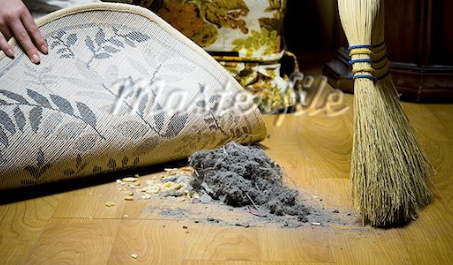
Dust under the rug

 It’s like sweeping dirt underneath the rug.  Dirt is still there, you just can’t see it.

That shift led me to favor the FMS and everything that it stands for. 

It took me a while to understand what the hell the Functional Movement Screen was all about.  It’s complex.  It takes a great deal of studying, reading and experimenting to grasp the concepts.  Every single time I listen to Gray speak; it’s easy to pick up that he is on a whole other level of knowledge and understanding.  He’s a pioneer for sure.

Messing around with the FMS and the associated corrective exercises is a blast.

Why?

Because in a matter of minutes you can fix a person’s faulty movement.  You can go from testing horribly in one of the seven FMS screens, to testing near perfect from leveraging a number of highly impactful corrective movements, each designed to improve a specific movement pattern test.


The FMS to me is the pre-assessment to the assessment. 

—> Personal Trainers:  Don’t Sell Yourself and Your Clients Short…

If you an exercise professional stopping by this blog, you need to get educated on the FMS.  It is a disservice to ask a client to perform bodyweight squats to failure when they can’t even squat properly in the first place.  I would also like to add that the inability of a person to squat often not a grooving problem.  In other words, having a person perform more and more ugly squats is not going to improve a person’s squat form.

Motor control definitely has something to do with movement technique, yes, but there are so many underlying issues revolving around primarily mobility and stability that need to be addressed to work out the kinks.

Personal trainers, you’ve got to establish your identity.  People come to you to lose weight and get “ripped”, but you’ve got to have standards.  Articulate the importance of moving properly and then moving to burn fat and lose weight.  We live in a world that feeds off instant gratification, but you’ve got to resist the urge to do the activities that make your clients happy at times.  You’re the professional, you’re in control.

So, my shift in thinking is from quantity to quality.  I adopted the concepts of the FMS quite a few years ago, and it’s been nothing short of fantastic.  I can’t even say that I am “drinking the Kool-Aid” anymore… I am officially doing a full-blown keg stand with the Kool-Aid.

You should to.  I’ll hold your legs while you drink.

—>  Average Joes and Janes read and watch now…

If you’re not an exercise professional, take a glance at this video from Gray.  Many of you are familiar with the Turkish Get Up, and Gray does a fantastic job describing how it fits into a training program.

Wrapping it up for now… address your movement quality and the ramp up your training regimen to burn fat, build muscles and all kinds of crazy athleticism.  Sustainable movement is more important than some rapid flash in a pan fat loss training program.  You’ve got the rest of your life to strip fat off your body.  Literally, years I tell you.  Habits are made over time and broken over time.  Stay dedicated and consistent in your workouts and fat loss with lean muscle gain will be pleasant reward.

*** If it feels like I only provided a hazy glimpse into what the FMS is and why we should apply it right now to our own situations, you’re accurate in with that feeling.  As I mentioned, the FMS is complex and articulating it’s importance and application to your own workouts is something that I want to address over time and multiple articles, not in one shot.

All in good time friends, all in good time.

—> Speaking of friends… if you like anything that you read or see on this blog, subscribe to it.  All subscribing does is notify you of a new posting when it drops.  I have stated that I want to build a community using this blog as my vehicle.  Humble beginnings, yes, but it will grow.  Let’s connect and move mountains together.<—


Cheers on this Superbowl Sunday 2013!


KG


We Are So Messed Up (Movement VS. Aesthetics)

Human Performance Discussion, Injury Prevention

Aesthetics, not athletics.

It is important to make the distinction and not allow your eyes to trick you.  Why?  Because true athletes know how to move and care very little about aesthetics.

However, have you ever noticed that most athletes are about the leanest people on the planet?  The leaness  that an athlete has is simply a by-product of their training efforts, and the demands of their sport.  Sport is movement.  Athletes move more than average people.  You get it, right?  Movement and being lean have a strong connection.

Ahemmm… and nutrition.

There is a massive shift coming in the way that we look at fitness.  In fact, this shift has been going on in the “underground” for quite some time.  The shift is this:

Get people moving at a higher level.

By higher level, I am talking about a higher level of quality.  Pouring high volumes of exercise onto low quality movement is like driving your car until your oil is depleted and your engine blows up.  Trust me, it is going to happen.  Injury lurks around us all day everyday.  Some is accidental, but most is completely preventable.  Taking the proactive approach keeps your healthy.  Injury will show its ugly face to those who ignore their aches/pains and poor movement quality.

Nice introduction, right? Ha.  My mind is a blender of thoughts, so as always, be patient with me as we waddle through another article.

Let’s see if I can’t make some kind of point to you all…

Movement versus Aesthetics.

I have slowly watched as the fitness industry takes a turn for the better.  Fixing movement before fixing body fat (aka: aesthetics)

If you want to talk about sustainability, this is a sustainable model to follow, and I encourage all of you to drop your current habits and follow it.  Movement first, exercise second.

Gray Cook led the charge, years ago.  Mike Boyle helped to bring his theories to other trainers who believe Coach Boyle is sub-human (he really is a pioneer) in this training industry.  And Boyle is sub-human, he is the perfect blend of common sense, reality and knowledge.

The basics are this:  Don’t put fitness (exercise) on top of pre-existing movement dysfunction.  

In even simpler terms:  Don’t ignore your poor functioning hips, ankles, knees, back and shoulders while still attempting to force an intense workout, just for the sake of aesthetics (aka:  looking good in the mirror).

Because that is why most of us workout right?  Aesthetics?  I mean, we have piles and piles of research showing the internal and external health benefits of exercise, but come on… get real… are you actually running to increase your body’s rapid circulation for disease prevention?

Or are you running to keep yourself fitting in those jeans you’ve had since entering college?

I really don’t care why you choose to exercise, whatever is going to get you to take action is what I am interested in.  If you have a solid “why” behind your daily training regimen, keep it.  I like it.

But, now that you have the motivation to take action, let’s shift your thinking to quality of movement over just… exercise.

Let’s get your movement patterns dialed in, THEN AND ONLY THEN… let’s go and have one hell of a workout.

You see, our view of fitness is skewed these days.  We have come to associate someone with low body fat and six-pack abs as someone who is truly fit.  Sure, it is definitely aesthetically appealing to be lean and muscular.  To have that athletic look so to speak.

But at what cost?  How are you achieving those results?  Are you piling tons and tons of dysfunction on top of your movement quality?

Are you 2 weeks into Insanity with your anterior knee pain at a 10 out of 10? (anterior=front)  What are you really achieving at that point?  Pain?  Should exercising hurt?

I am getting you to think here.  I will even answer my last question for you.  No, exercising should not hurt.

(Note that the burn felt from a muscular contraction and pain are quite different sensations)

Working hard and working smart are very different.  

We need to start looking for sustainable, life long methods for maintaining physical and mental health.  Maintaining physical health requires a person to stay active and remain injury free.  Injuries crush people in this life.  One bad injury can set a person off course for years, maybe even for a lifetime.  It is a sad occurrence that happens all too often.  We all know someone who is virtually disabled due to injury (think lower back here).  Do I even need to talk about the $$$cost$$$ of an injury?  Yikes.

The shift to the movement based model is the solution.  I believe this.  I have listened and read enough work from guys like Gray Cook and Mike Boyle. Cleaning up your joint mobility, improving the balance and  function between your left and right sides, your front and back, along with the upper and lower parts of your body is the ticket.  Every. Single. Time.

Balance.

The elimination (“improvement” might be a better choice of word) of asymmetries (differences) between these halves of the body will catapult your performance, I guarantee it.  Most folks don’t know they are operating a body at about 75% of their potential.

The difficult part about all of you to start assessing and correcting your movement patterns is that it has very little entertainment value.  I know this.

Humans these days need entertainment or we become bored.  We enjoy complex over simple.  We have adult ADD.

It isn’t as fun to roll around on a foam roller or lacrosse ball to smash your hip musculature, mobilize your thoracic (mid-spine) or perform cable chops and lifts until you’re blue in the face.

I’m no dummy.  I know that you would rather pay your sign up fee at a Cross-Fit gym and have someone put you through a puke producing training session.  That is what your friends are doing, and they are dropping pant sizes, right?  I know the influence of peers on decision-making.  I get that.

But, trust in me, just invest that 10-15minutes to find the information about why you can’t perform a body weight squat, or step over a hurdle, or reach your arms overhead without going into dangerous lumbar extension.  Then, invest 10-15 minutes more daily to work through your corrective movements, and re-test your problem areas.  Re-test your squat.  Re-test your lunge.  Re-test.

Just take a few minutes, that’s all.

In closing, make your movement last a lifetime.  Yes, age is inevitable.  But we have the choice to continue moving freely and without restriction well into our life.  Don’t be fooled by the instant gratification that some programs and people are promising.

—> Healthy movement for a lifetime is more important than a six-pack for next summer.

KG

***  Today is 9/11.  I hang my hat to everyone that has given me the chance to sit at my computer in peace and write something like this.  You are true heroes in every sense of the word. Thank you. ***

My Hero: Gray Cook + Movement Pattern Stretching/Mobility

How-To, Injury Prevention

Gray Cook is an icon in the movement and physical therapy realm.

Quite honestly, he is one of my heroes and has been since I first pick up his book “Athletic Body in Balance”.

Gray sees things years before they are fully adopted by the mainstream.  His landmark body of work, The Functional Movement Screen is the best assessment system being used in gyms across the world.

Movement pattern training is here to stay, and will be the future of quality movement and performance for years to come.  It really is landmark work.

As I often mention on a couple of my Facebook pages related to personal growth and success, it is so important to submerge yourself into networks of people who make you feel uncomfortable.  This feeling of being uncomfortable often causes an acceleration in positive change in your own life.  It motivates a person to be better at what they do.  I feel this way whenever I read Gray Cook’s work.

I would say that a lot of professionals feel this when they read or watch Gray speak.  He is on another level when it comes to professionalism and pioneering methods for improving or assessing human movement.  He really is world-class.

Let’s get into it…


Mobility in the thoracic spine…

The thoracic spine needs mobility.  It needs mobility in all three planes of movement, and is often one of the main culprits for influencing poor movement.  When the T-Spine’s mobility is limited, other areas of the body begin to pick up the slack and move.  This is rarely a good thing.  Think low back pain here.  The lumbar spine (lower spine) begins to over-compensate due to the lack of mobility in the T-Spine.  Shoulder range of motion goes to hell and then everything snow balls.

Just like smoking increases your risk of lung cancer, inadequate mid-spine mobility increases your risk of injury.  It’s a slow death in a lot of cases.  It may not be a situation where injury happens over night, but rather a cascade of events that lead to the grand explosion.  Your body will inevitably reach it’s breaking point and then…  boom.  Injury.

Everyone could use a little more thoracic mobility it seems.  This is a generalized statement, but we often see more people will thoracic restrictions than we do people with adequate motion at the T-Spine.  Another generalization, but sitting is toxic to spine health, especially core activation and T-Spine mobility.  Keeping a crunched posture all day leaves does little for your movement quality.

Take a proactive approach to regaining some motion.  Your body will thank you for it.


A quick word about joints…

The joint by joint approach is still methodology that I follow.  I think that the thought process of acknowledging that some joints in the body need stability and some need mobility is genius.  Obviously, this is a simplification, but simple is effect.  Simple can get results because we are avoiding the ever common over-complication of things.

In my experience, when things get complicated, little to no action is typically taken.  But when things are clear-cut and made simple, there is little confusion as to what needs to get done to see results.  This is what the joint by joint approach means to me.  Simple and effective.

So, in my continual effort to avoid re-inventing the wheel, I give you an extremely valuable video of Gray Cook teaching and explaining the Brettzel and the Brettzel 2.0.  I always figure that if someone else can say it better than I can, all credit to that person.  Whatever gives my reading audience the greatest return is the route that I will take every single time.

Here are two fantastic movements for not just improving thoracic spine mobility, but movement pattern range of motion.


Watch the video a few times and follow along.  I can assure you that you will get something out of these drills should you be diligent about implementing them.


Kettlebell Training For Beginners

Kettlebell Training

In my 4 year training hiatus away from traditional gyms, I have learned a lot about strength and conditioning.

I’ve learned that fancy equipment is NOT a necessity, and that a small investment in large ROI (return on investment) tools like the kettlebell are well worth the money spent.

I was introduced to kettlebells through the internet.  Honestly, the first time that I ever witnessed a person swinging a kettlebell was on YouTube while in Detroit, MI.  I have to admit that I was stubborn in my training philosophy then, so I hated them.

“Another exercise fad! That’s insane and dangerous!”

I believe that to be my initial reaction that after watching the video clip.

Kettlebells weren’t a thought in my mind until a year after watching that clip.  What a mistake.

Perform Better and Gray Cook…

While attending a Perform Better conference in Chicago, I decided to listen in on Gray Cook’s seminar as he raved about the kettlebell’s versatility when it came to rehab, strength and power development.  Gray isn’t known for being a fat loss guru, but he made a point to touch on the effectiveness of kettlebell training for burning fat.

One point that Gray made was an experience that he had working with the Indianapolis Colts, having 260-320lb NFL athletes try and walk 50 yards with a 53lb (24kg) kettlebell held in full extension over their head.

Not one guy could do it.

Pound for pound, we are talking about some of the strongest athletes in the world.  Many of these guys can probably press 100+ pounds vertically, yet not one could overhead carry load half of that (53lb) for 50 yards?!?!

No shoulder stability.  Many of these guys were ticking time bombs for injury.  Very interesting.

After Gray’s seminar, I ventured over to the product display table where they had a 20kg kettlebell out for trainers to play around with.  As soon as I picked it up, I felt like I hadn’t trained in years.  The feel of it was so unique.

One short, awkward, off-balance kettlebell workout later that night in the hotel room and I  knew that there was something incredibly valuable about the kettlebell.  The rest is history.

Here are some reasons to love KB’s…

Kettlebell Design…

The weight of a kettlebell is off-center that of the handle, unlike a dumbbell where the weight is evenly distributed on either side of your hand grip.  First impressions after picking up the 20kg bell at the convention told me that I needed to give it a shot.  I purchased a 20kg kettlebell and my introduction to alternative training methods began.

Most of the kettlebells that I recommend purchasing as made of a cast iron mold.  Lifeline and Dragon Door are the two major players, with companies like Perform Better and Art of Strength having a market presence also.

You are going to find two different styles of kettlebell on the market today.

1)  The first is the competition kettlebell and looks like this:

2)  The second (and more common) kettlebell that you will often see is what is known as the “hardstyle” kettlebell.  This kettlebell design was used by the Russian’s to condition their military for years.  Pavel Psatsouline pioneered the kettlebell craze in the Western world in the early 2000’s, and his methods have since grown like wild-fire in popularity.

Here is what the “hardstyle” kettlebell looks like:

Flow…

The flow of kettelbell training is what makes it so addicting.  Virtually every movement in a kettlebell workout is completed in standing position, so transitioning from a 2-handed swing to a 1-handed swing to a 1-arm clean into a vertical press… is actually quite simple.  It’s all about grace and flow while maintaining enough muscular tension to move the bell through space.

Ground based training with constant transitions from movement to movement is total body in nature, and extremely fatiguing.  The indirect core training that occurs as a result of a vertically standing posture is one of the many perks of ground based training.  Muscles are called upon to contribute as they would in a real world situation.

This is functional training.  No gimmicks, just amazing real world carryover from the workout to life.

Relaxed-Tension…

Kettlebell training is a skill and an art.  Creating tension where it is needed yet remaining relaxed is something the is so non-traditional compared to traditional strength training methods.  Sure, you can perform the grunt lifts, but the balance of “relaxed-tension” is something to be marveled at with a kettlebell workout.  Martial artists have known the value of relaxed-tension for hundreds of years.

Relaxed-tension demonstrated in the Bottom’s Up Turkish Get Up

Basic movements, huge training effect…

Simplicity will trump everything with kettlebell training.  A steady diet of kettlebell swings, cleans, snatches, vertical presses, bent rows, reverse lunges, turkish get ups and carrying variations will keep you progressing for months both aesthetically and athletically.

Forget about fancy moves from the get go.  Train the foundational movement patterns listed above and you’ll develop strength while consistently decreasing your waist circumference.

A lot of people struggle with sticking to a training regimen because they get paralysis by analysis.  Men’s Health and their trivial information sends people in 10 different directions, which often times causes the tiring spinning effect in a training

Stick to the basics.


Stay tuned as I load this blog up with more videos and demonstrations.

Time to move more and sit less people.

Here is a two movement basic kettlebell workout that I still use to this day…