You Watch! Crawling Is Going to Be All the Rage in Fitness

Quick Tips

20140114-172621.jpg

You wait, just wait, crawling is going to be all of the rage in the fitness industry. It’s going to spread through the websites, blogs and then infect it’s way into print media like Men’s and Women’s Health, etc.

It’s coming, and there is probably little that anyone can do to stop it.

Why? Because it is NEW, and as consumers, we love ideas that are NEW. We are fascinated and engulfed by new ideas, trends and material goods. The editors of big magazines know this quite well. They know that we get weak in the knees for what is perceived as the latest and greatest.

But, does crawling actually hold up? Or is it just another “new” trend that will temporarily satisfy the thirst of the average fitness enthusiast.

My personal opinion…

… crawling is going to hold up for the long-term.

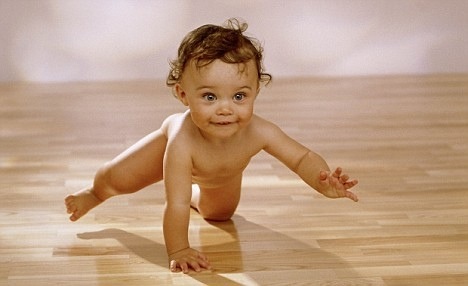
Why? Well, because crawling is a ground based, deconstructed and completely stripped down activity that is fundamental to a young human being’s (infant’s) progression to more advanced activities like walking and running.

As infants, we literally had to crawl before we could walk. We had to learn how to walk before we could run, etc.

Tim Anderson has recently coined a term that he calls “reset”. I love the term, because by calling for a “reset” he is asking for humans to re-establish lost function by going back to our roots, ground based movement. Crawling, rolling and planking are all forms of ground based movement. Tim is asking for us to leverage our body’s natural interaction with gravity and the ground surface.

Ironically, shortly before finding out about Tim and his efforts to endorse low load ground based movement done properly, I got on the same kick.

I started to notice how physically challenging it was to perform what are normally fast paced exercises, slow. Slowing it down and moving through a full range of motion was- and still is- extremely difficult, and it seemed to be very effective at highlighting weak points throughout range of motion of any given exercise. Identifying these weak points gave me some valuable insight about what I was missing in my training by blasting through all of my exercises and workouts.

The world is stuck in an “extreme”, “high tempo”, “explosive power” and “fast paced” vortex of fitness right now. Except for “extreme”, I believe in the three other phrases. They have a valuable place in a workout and a program, at the right place and the right time. Everything has some value it seems, it just a matter of how it (and when) it is applied. If you apply the world’s greatest exercise to a person that isn’t ready for it, you’re putting them at risk. If they are ready for it, you’ll take there performance to the moon.

We trick ourselves into thinking that we are moving properly when we rush through exercises. Even if the exercise is being executed technically sound at a fast pace, that DOES NOT mean that you are going to be able to execute it in a technically sound manner at a slower, more controlled tempo.

Watch a pro football player work through a session of yoga, many of them cannot hold positions longer than a split second. They are all fast twitch with very little stability and grace. Gray Cook proved it when he made a bunch of NFL guys perform a 50lb/50yard slow and controlled overhead carry. Most of the players involved failed to complete the challenge, yet can overhead press 1-1.5x their bodyweight without batting an eyelash.

The mountain climber was the lightbulb moment for me. I’ve done my fair share of mountain climbers. I greatly value the mountain climber in my work capacity training sessions, using it primarily as a “filler exercise” to actively recover in between two more demanding movements. Before, I had hardly paid attention to anything but how fast I could whiz through 30-50 reps of mountain climbers, driving my knees to my elbows without breaking at the lower back junction in the process.

One day, I slowed it all down. I attempted to “pull” my knees through to my elbows as opposed to violently driving them forward.

You know what I found? I was ridiculous weak once I flexed my hips beyond the prone/horizontal 90 degree mark in the range of motion. I was weak, and I could pinpoint the exact point in the movement where I was weak. The only way that I could complete the movement in full was to compensate, and I wasn’t about to stroke my ego by cheating the movement.

After my run in with mountain climbers, I really started to gain interest in dabbling with other low load movements that are primarily ground based. These movements were typically isolated to a lateral, supine or prone position. Sometimes the movements were transitional/segmented, moving from a supine to prone to lateral all in one shot. This, to me, is the progress of things. You start working isolated movements, gaining control of these movements in an isolated fashion and then you slowly begin to integrate the patterns to work more complex movements.

More complex movements require a greater recruitment of muscles, dynamic stability and mobility and thought. Integrated movement takes integrated thought, which is a rarely spoken of benefit of complex movement training. We exercise our mind as much as we are exercising our bodies.

So, the movements slowly evolve from isolated to complex, all the while we must learn to turn our muscles on and off gracefully as we maneuver our bodies through space.

Gymnasts have mastered this type of movement expression, and I am growing to value practicing it more and more every single day. Movement is second nature for a gymnast. They have established high level movement through consistent repetition.

Drills like crawling, dynamic planking, slow frog hops and turkish get ups make me feel more like a human capable of executing 3-dimensional movement and less like a robot lifting weights to no end. I enjoy knowing that my traditional weight lifting is translating to something more valuable than six-packs and bulging biceps. Both of which mean absolutely nothing in the real world. Well, I guess you’ll look cool in those Summer time still shots, but it doesn’t mean you can move.

All of that weight lifting should translate into something greater than, well, lifting more weight.

Translating isolated resistance training into improving your ability to move with grace, strength and unwavering stability is a noble endeavor. It can be hard to stay on this path, especially when our society provides so much temptation to build the perfect body, or what we perceived as the perfect body.

This is obviously my personal opinion, don’t let it stop you from leaning out.

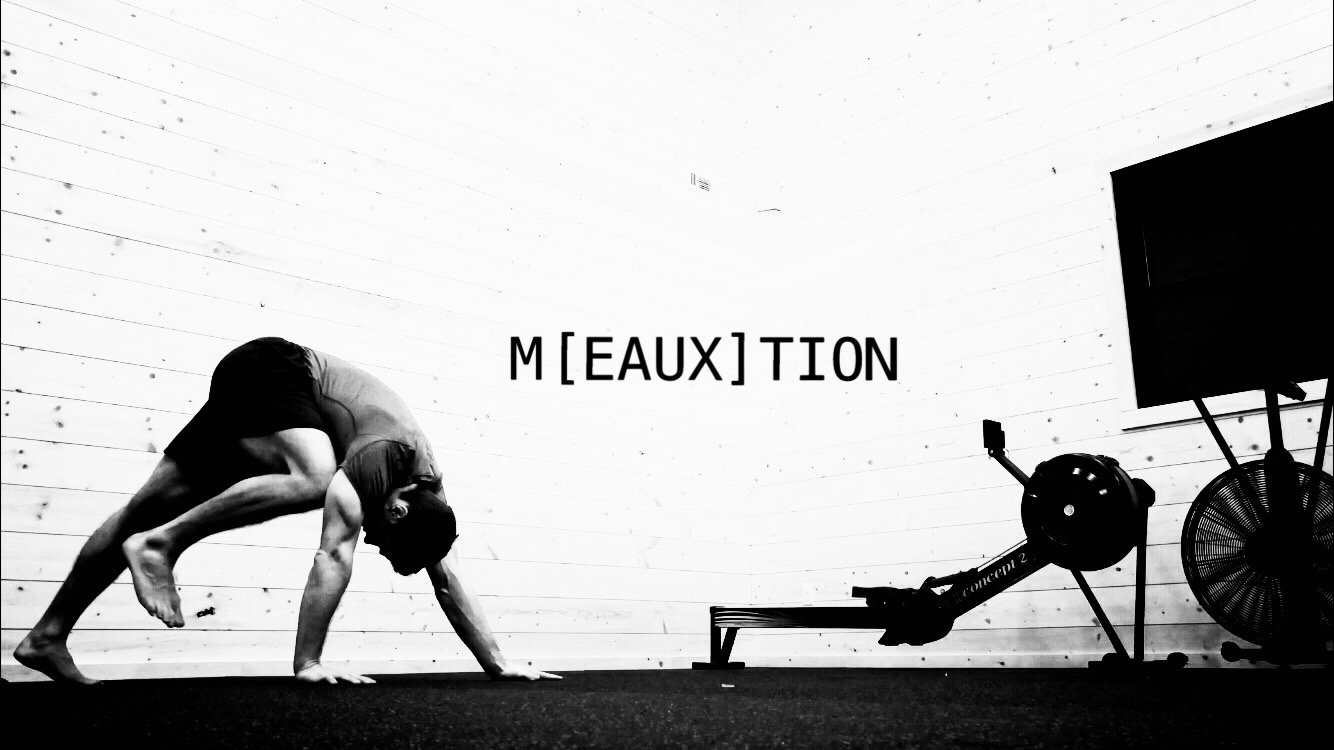
Crawling is a reset movement activity. The first time I really started to employ crawling patterns into my own training and encourage others to do the same, it was about 4 years ago. We used to have our group athlete training sessions crab walk and high crawl as a fun warm up. I saw it as a time to get the core, shoulders, and hips firing all at once. The crab walk would be performed with forward motion until I said “stop! hold!”, at which point the athletes would drive their hips to the ceiling, effectively creating a “human table-top”. Creating a level table top required that the athlete actively contract their glute muscles while actively stretching their pecs and anterior shoulder. There is some core activation hidden in their also, as the torso muscles work to protect the spine.

Quite honestly, I think that the crab-walk+tabletop combination is one of the best warm up drills out there. Crab walking, to me, is a supine variation of a prone crawl. Infants move around frequently on their butts. They push with their arms while pulling with their heels, supporting the weight of their body with both upper and lower as they “scoot” across the floor surface. There is value in training this movement pattern in adults who have lost the ability to do so.

Sometimes we have to take a developmental step backwards to regain control and start to take steps forward in present day.

We’ve discussed- almost at nauseating length- that sitting causes a lot of metabolic and structural issues with humans. The longer and more frequently we sit, the more our body seems to take on the shape of the sitting position, even in the standing position. We start to hunch our shoulders, our hips remain tilted forward and our lower back gets creased like a bi-folded letter home to Mom.

Once in this position, we attempt to walk, run and do other physically demanding activities while being confined to these un-ideal postures.

Is it more complicated than this? Of course it is, but what most people really need to know is that sitting is slowing breaking our bodies down to nothing, sometimes beyond the point of any ability to repair. One day you might even find that surgery is the final intervention to fix years of poor alignment and compensation.

Attempting to express athletic-like qualities such as strength, explosive power through forced ranges of motion with poor posture many times requires compensatory movement be present as a temporary solution to completing such activities. If you remember, compensatory movement compounded with high reps and high load can rip a person to shreds over the long term.

It been said that workout injuries are just “unfortunate”, when in reality, they were staring us in the face from the beginning, looming in the darkness waiting to be identified. Obviously, those who feel the pain of that disc exploding in their back will one day wish they would have taken the time to identify movement flaws. But the damage is done.

The next time you engage in a warm up prior to a workout, try prone crawling for 1 minute straight with ideal crawling posture. Shake it out for 30 seconds and then complete that 3-5 more times. It might scare you how challenging crawling really is. The stress placed on the upper body is tremendous, especially if it is a new stimulus. It’s easy to fatigue quickly from the waist on up while crawling, in my experience.

Not to be gross, but if you’re someone who gets off on working the core muscles to exhaustion and that “deep burn”, crawling is definitely for you. Keep your back flat and your belt line zipped up and tight, and you’re going to feel every synchronized step of the hand and foot ripple right through your torso.

In fact, I would recommend trading that marathon abdominal training session for about 10 minutes of dedicated crawling. If you’re rolling your eyes, stop. Try it and report back to me. Let me know what you think.

I recently watched a video where Tim Anderson crawls an entire mile without breaks, in a low crawl position. That’s incredible, as you’ll soon find out when you give it a shot. If you make it to the end of his video, he remarks that his ipod shut off right from the start but he was too mentally focused to quit and reset it. Nothing like crawling for nearly an hour straight listening to yourself wheezing from fatigue.

My cues for ideal crawling posture are simple:

– Keep back parallel to the ceiling, stomach parallel to the floor.
– Keep eyes looking down or roughly 12 inches forward toward direction being travelled.
– Keep spine in a neutral, braced position, pulling your stomach out of anterior tilt.
– Simulate a full glass of water on your back as you crawl, preventing any spillage.
– Make each hand and foot contact as quiet, soft and graceful as possible.
– Have fun and work at it.

Start crawling. Use it as a tool not an entire workout.

Leverage it’s ability to be a safe alternative to core training, and a important developmental step to restoring your body’s desire to move without compensation and pain.

Start slow, build from there, and remember that it is process.

Cheers to crawling around like an infant!

KG

Deep Down, We Workout For Injury Prevention, Don’t We?

Quick Tips

I’ve never let go of this thought since I entered the physical fitness/strength and conditionining arena, although when you’re working with healthy athletes and able bodied working professionals, it can be easy to forget why we are truly doing any gym work at all.

It’s very easy to lose sight of what matters most.

All of the magazines scream “performance!” or “burn fat!”, but we need to remember that every workout should be treated as a small dose of injury prevention medication.

And you could argue that increasing one’s ability to perform is also contributing to injury prevention, except in instances where training risks outweigh training rewards.

I watched a friend tear a ligament during a bar league hockey game last night. You could, argue that ligamentous injuries of the knee are freak accidents. They commonly do happen on impact, while twisting and turning, etc… but it is also important to remember that there simple (and safe) measures each of us can take to aid in preventing such an injury.

By taking such measures, are we 100% guaranteed to be safeguarded against blowing out a knee if we train diligently?

Absolutely not. There are very few guarantees in life outside of death and taxes.

Working to build a high functioning and resilient body that is capable of expressing adequate levels of strength, power, stability, mobility and resilience to cardiovascular fatigue (in a progressive and scaled way) also carries the benefit of injury prevention.

I’ve seen enough athletics to know that un-trained/de-conditioned bodies are more susceptible to injury during competition. I’ve seen it, I have heard physicians, athletic trainers and physical therapists talk about it. There is a lingering danger to compete or perform any other type of strenuous work in a de-conditioned state.

The guy that blew out his knee last night is an attorney with a wife a kids. He has a professional career that he needs to wake up and get to every morning along with numerous life duties around the house. All of that is now affected dramatically by his knee injury.

Lately, I have found that I am waaaaaaay more mindful about what truly matters in life, and in this case, what truly matters while we engage in our daily “workout”.

Whatever motivates you to keep training hard yet smart, hold on to that. But lets be more mindful that training should be a lifelong process that effectively contributes to preserving our ability to move without pain and restriction. When you’re young, it is far easier to view training as a vehicle to a lean body that performs well. When you’re young, you also think about hurting yourself far less then you do when you age.

But as we age, and you can ask anyone who is between say 40-50 years of age, a workout is mostly an effort to offset the challenges of life. Your priorities change. Sure, you can increase your peformance at any age, but squatting 500lbs or running a sub-10sec 100 meter sprint is pretty low on the totem pole. So is victory at Sunday night bar league hockey at the expense of torn ligaments in a knee.

Six pack abs and dunking basketballs are small peanuts in the grand scheme of things. Especially when we compare it to reducing the likelihood that you blow out a knee while playing pick up hockey with your buddies, where clearly nothing is on the line if you win or lose (despite all of us wanting to win of course). Or maybe preserving your ability to walk in the later stages of life.

I used to see a lot of world famous strength coaches preach about the first golden rule of successful programming: “first, do no harm”. I know that they were talking about their personal duties to each of their athletes/clients, but maybe we should all keep this in the back of our minds while we pursue personal fitness.

Wondering what to do? Here are a few things to consider… (in no particular order)…

1) Slow down.
We rush fitness. It is the trend right now. A lot of programs take a pure run and gun approach, completely neglecting or generalizing baseline starting points. Big name companies tug on our heart strings by promising rapid weight loss, etc. Next time you engage in a warm-up, slow every movement down and reference #2.

Rushing through exercises has never done anything for anyone. Slow down, do it right.

2) Do it right.
Technique is everything. We train muscles to turn on when we need them to, joints to have adequate mobility to prevent other joints from moving when they shouldn’t all while improving our static and dynamic posture. Does it really matter what you squat technique looks like? Yes it does. Does you body alignment matter that much during a plank? Yes it does. Slow down, do it right. Repetition is going to reward one day when you least expect it.

Technique is everything, get detailed and hold yourself accountable to exercise smarter.

3) Assess Risk vs. Reward.
Does the amount of risk involved in your completing the workout challenge, program or individual exercise outweigh the reward? If so, consider taking a different approach. If something hurts while you do it, don’t do it. Avoid that exercise and figure out why you’re hurting. Pain is your body trying to tell you something valuable, whether you choose to listen is completely up to you.

Are you rolling the dice on a certain exercise or protocol? Is it worth injuring yourself over?

4) Justify your actions.
If you can’t justify why you are doing something during a workout, consider not doing it. If you don’t understand because you simply haven’t taken the time to read up on why a movement is beneficial to improving your current situation, get your ass in front of computer screen and read up. Stop going through the motions just because you read that Peyton Manning does it, or because Shaun T. preaches it in his exercise DVDs. Be mindful of each and every decision and action you take during a workout. Justify everything. You should be able to say to yourself, “I am doing _____________ because it will do ____________ for my body, and my life”.

You should have a reason behind every rep, set, and exercise. If not, why are you doing it?

5) Define Your Goals
You’ll struggle to arrive at your goals if you first don’t define them. Goal setting has been beaten to a pulp over the years, but it also seems to have fallen on deaf ears. What do you want to happen as the result of your training efforts? Do you want fat loss to relieve inflammation and pressure on joints? Do you want strength to better handle decelerating forces in athletics? Are your shoulders unstable? Are you extremely stiff and need to improve flexibility? Start asking yourself these questions. It will help you compile a list of what needs to take place in order to achieve these goals.

Goal planning is powerful, so is following through on those goals.

Lastly, don’t let this post turn you into a hypochondriac. Get out and explore you body’s ability to move through space.

It’s not rocket science. Learn a little bit and build out from there. Everyone starts as a beginner. Every workout brings you closer to your ideal self.

Life is meant to be explored with movement.

When the ability to move is taken from you, you’ll never appreciate how precious of a gift it really was.

Cheers to preventing unwanted injuries!

KG

Off-Centered Health Advice: The Happiness Advantage, Laughing and Fat Loss

Quick Tips

I’ve been reading “The Happiness Advantage“, by Shawn Achor.
It’s an amazing book.

If you have heard of it, you know by now that there is a convincing argument presented by some brilliant psychologists that point toward working to boost your happiness (positive psychology) instead of focusing on the negatives that surround us in our daily lives.

It’s been said that:

laughter is the best medicine

… and since stress is a body and mind killer, laughter really might be the best medicine.  Mayo clinic seems to think it has a pretty significant impact on health.

If you can laugh, you can relax and you can reap the rewards of

Well this morning, an old friend posted a fantastic YouTube video on my Facebook news feed that is sure to make you laugh, at least once or twice.  I know I did.

Too often we get caught up in the minutiae.  Sometimes the best fix for health and well-being is free.  It’s staring us right in the face.

Have yourself a good laugh, you deserve it.


Cheers to laughing and the pursuit of happiness!

KG

Is Sitting is the New Smoking? Is Strong is the New Skinny?

Quick Tips

Spend a few minutes scrolling through your news feed on Facebook, you’ll inevitably come across someone posting spirited words of inspiration.

Diagram A:

Image

Diagram B:

Image

Very spirited posts indeed.

Let’s start with “strong is the new skinny”…

I recently read a Huffington Post article that made a great number of points about the concept that “strong is the new skinny”.  I have to say that I agree with many of the points made in the article.  I felt that the author made some really good points that seemed to be deeply tied to her preferences.

I’ve never preached skinny.  I actually think that “thinning out”, “getting skinny”, “slimming down” are all as annoying as “strong is the new skinny”.  Strong definitely is strong.

What’s even cooler than saying that “strong is strong” is building up a person’s confidence to the point that they are about to explode with ambition, drive and the pursuit of their own form of greatness.  Whether “getting skinny” or “getting strong” is the path to jump starting a person’s legacy, it doesn’t matter to me.  Use whatever fuel gets you moving.

I once trained a 12-year old hockey player in Detroit, MI, who will remain nameless.  At 12 years of age, most males are just starting to figure out their bodies, muscles, etc.  They are on the brink of puberty, so this makes sense.

This young man was one of my favorite training sessions of the week, by far. I always looked forward to working this kid because I could tell that he didn’t have much confidence, and his Mom- after a few training sessions- praised my efforts by telling me that her son really looked up to me as a coach.  I praised him every chance I got.  High-five’s, knuckles, shouting and clapping when he succeeded was my formula.    As with any enjoyable client, his strongest trait was that he listened.  He was coachable.  He may have been smaller and weaker than other kids his age, but he was willing to listen to my advice and follow through with my suggestions.

A few months down the road, after never missing a scheduled training session, he walked into our training center smiling from ear to ear.  “I made the Peewee A team (hockey), I am the strongest on the team and a girl at school said I have big muscles”.

Naturally, I laughed, particularly at the end part of his comments.  I was ridiculously proud of this kid.  His entire demeanor had changed over a course of months.  Not necessarily from an introvert to an extrovert, but definitely from a kid that lacked confidence to a kid that realized he could accomplish whatever he wanted if he stuck to the recipe and did the work.

Strong may not be the new skinny, but building strength, both physically and mentally can change a person in a matter of weeks.  You’d be surprised at home many people, kids or grown-ass adults have displayed a new-found confidence from improving that strength, ability to move, performance and most recently… their composition of their body.

So, I really don’t care what you choose to refer to “it” as,  but in this situation, strength is confidence.


Next, “Is sitting the new smoking”?

Kelly Starrett thinks that it is, and while Kelly Starrett isn’t god, he is certainly a massively influential face in the movement world right now.  Right up there with Ido Portal.

The truth is that I don’t think that comparing sitting to smoking is really a good comparison.  I understand the message that people are aiming to convey by saying that over-indulging in sitting is kind of like smoking, but sitting is sitting, and smoking is smoking.

Everyone needs to sit at some point.  Quite honestly, I enjoy sitting.  It usually means that I am reading a book, listening to music, watching the waves roll in on a lake, watching NHL hockey (as I am right now) or writing.  All great activities that I thoroughly enjoy.

I don’t punish myself for sitting and nor should you.  However, I also don’t sit 8+ hours day for my career.  That fact, makes me consciously accepting of times that I sit.  I feel that I earned the right to sit, rest my feet, relax and reboot.

The magnitude of the negative effects that sitting has on a person should be related to each person and their unique situation.

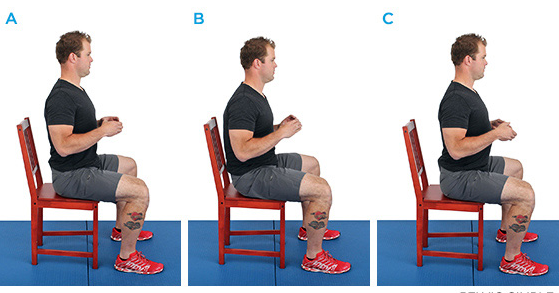
If you’re a person that remains seated and stationary during most of the waking day, you probably need to be more conscious of your sitting.  You probably need to move more.  You probably need to consciously focus on an improved posture for sitting.

Image

Photo credit: bodybuilding.com

You probably need to consider a standing desk (if you can have one where you work or at home), you probably need to take more walking breaks throughout the day.  You also probably need to be more aware of the structural changes taking place with your body as a result of such prolonged periods of sitting.

If you sit too much, you just need to be aware.  Don’t get compulsive about it, just be aware of the events that are taking place as a result of sitting so much.

Also, if you are sitting for prolonged periods, understand that you need to be consistently diligent about off-setting the effects of sitting.  Here are some simple things that you can do:

1)  Open up your thoracic spine using the tennis ball peanut.

2)  Yoga (donate 30-60 minutes of your time, you’ll feel great after)

3)  Rapid circulation (aka:  exercise)

4)  Foam roll aggressively and then hold this stretch…

Although sitting affects us all differently (just like getting punched in the head affects us all differently), the rules of unwinding and off-setting the negative adaptations of sitting can be somewhat generalized and still provide tremendous benefit and relief.  As I have said in the past, our bodies are extremely complicated and yet at the same time, extremely predictable.

So is sitting bad?  For some people, yes, it’s a slow road to a whole host of future issues.  But sitting is not evil and there is no need to pull your hair out if you sit down for a while.  Just be aware of how much you are moving around, and do you best to increase it or sustain that movement for the long haul.

Smoking, on the other hand, is terrible.  I cannot think of one benefit that anyone receives from bucking a dart.  I have an orthopedic surgeon colleague that was telling me a story not too long ago about a patient that he saw in his clinic.  This particular patient was in severe pain from bone on bone knee articulation.  Obviously, the average person is supposed to have nice lubricated cushion of meniscus, but this lady had worn through her cushion.  So, bone on bone grinding was taking its place.

Surgeons do extensive health checks for any patient that is a candidate for total joint replacement.  Upon conducting a health check on this lady, it was identified that she was a heavy smoker.  By heavy, I am talking about a pack of cigarettes per day, if not more.  This is common for orthopedic surgeons to see during consults.

After taking this patient’s knee through range of motion tests, exhaustive questioning about symptoms and an evaluation of her x-rays, the doctor told the patient that she was in fact over-due for a knee replacement.

“I would like to see you again in a week for another series of tests so we can properly schedule your surgery”, the surgeon told her.

“Another visit?!  I can’t afford that!”, the patient responded.

“Why is that?  It’s important to make sure that you’re able to make it through the surgery, it’s in your best interest ma’am”, said the doctor.

“I won’t be able to buy my cigarettes if I have to drive down to the clinic again”, the patient said.

The irony in this story is that the patient had terrible bone quality from smoking, diabetes and no meniscus in her knee from her lack of activity and her weight.

But she just couldn’t give up those cigarettes.

Sitting is not smoking and smoking is not sitting.


Cheers to moving more, sitting less and the pursuit of your greatest self!

KG

What is Ido Portal’s Training Philosophy Doing To Me?

Quick Tips

Ido Portal

I’ve been following Ido Portal for nearly 2 months and I’m starting to question how we “practice” fitness, what it means to be “fit”, how we get to the point of being considered fit, what humans should be able to do movement-wise, and on and on  and on.

I have to admit, thought process-wise, I am going through a shift.

Ido makes incredibly great points about movement and body control.  It’s a raw thought process, completely stripped down to just… movement.

The point that Ido conveys time and time again is that we should be able to move freely.  He references movement patterns, but I know from reading through his blog and watching his YouTube videos that he isn’t referring to the “safe” movement patterns that we fitness professionals beat into the ground.  He’s expanding far beyond that thought process.

Here are some snapshots of Ido-style movement…

I realize now, more than ever, that the modern-day human really doesn’t know how to handle their body.

We are slaves to sitting in chairs, cubicles, in front of the television and in cars.  If you really stop and think about how much we sit on any given day, it’s nauseating.  Even if we have no choice but to sit for our careers, when the weekend comes we still choose to grab a lawn chair and sit, sit at the bar, sit at restaurant.  Sit.

I can partially throw myself into this group also because I have to sit down to write on this blog.

I consider myself to be an athletic dude, but watching some of these videos leads me to believe that I have handicapped my own movement performance.  I am not even in the same realm as some of the people that have been under the Ido Portal tutelage for as few as a few months.

I can squat (ass to grass) and rest in the squatting position for long periods of time, elevate my arms overhead without breaking at the low back, and exhibit rotational range of motion at my thoracic spine when it’s required… but integrating of all of these elements into a free-flowing long sequence without making it look painfully difficult was humbling for me.

The low lizard crawl is a basic locomotion pattern in the Ido Portal Training Method, and it’s basically used as warm-up!  I am here to tell you that it is humbling how difficult it is to crawl 10-15 yards like this (fast forward to 1:56)…

Are the followers of the Ido Portal Method been practicing different techniques than I am?

Yes, of course.  They are following strict progressions that allow for a appropriate movement education.  A repetitive approach to learning movement in a progression-friendly manner will ensure that no fundamental steps were skipped along the way, all while achieving desired results.

The human body will adapt and increasingly better how we ask to move, or how we don’t it to move.  That is why a lot of people have back pain, poor hip mobility and loss of muscle activation from sitting.  But humans naturally want to stand up straight, so in order to make this possible, we compensate to achieve.

So I think that over time my movement will begin to flow like some of his videos, but it is going to take some work, some practice, dedication and time.

Many of Ido’s students YouTube videos display what I would consider to be “test-outs” or results from following his teachings, so I think that it’s important (when watching these videos) to keep in mind that there was an incredible amount of dedication and work put in prior to shooting each person’s testimonial of the Ido Portal Method.

It didn’t happen over night, in a week or in a month.

The other night, I was trying to find the words to describe my perception of how we pursue health and wellness, and where I stand on the matter.  It’s a difficult topic to discuss because there are so many elements that combine to form, health.

I continue to find myself veering away from “safe” more and more.  Now, I don’t mean that I am moving toward “unsafe” and negligent, but I really am questioning why we do what we do in the gym or outside of the gym (wherever we train).  It’s cookie cutter and robotic in nature.  It’s lacking exploration.  Reps, sets and rest cannot be the pot of gold at the end of the movement continuum.

Who established these rules that we follow so closely?  Science?  Industry leaders?

Do we continue to teach and preach these methods because that is what the masses want?  Or are we lacking in our own understanding of more complex movement patterns, integration and improvisation?  Are we aiming for the wrong target?  What does fitness mean anyways?

We aim for reproducible results- and I don’t think that we should be aiming for anything different- but we have become robots in our pursuit of fitness.  The entire idea is skewed.  Everything that we preach for people to do is cookie cutter and safe.

There is very little room for anyone to stray from the path, and if you do (as I am exploring currently), you’re branded and thrown out to the wolves.

We preach moving within our means, avoiding compromising body positions and alignment, moving weight safely, employing safe rep and set ranges for maximizing our goals, adequate rest to perform that work safely, etc.  Safe, safe, safe.

Before you label me a hippocrate, let me say that I actually also believe in safe.

Ido Portal’s methods of movement might be right for everyone at some point, but maybe not at this moment.

The human race have never moved less or eaten worse.

We sit more, we move less. We are walking time bombs with regard to our ability to move effectively or for any duration (endurance, etc).  We eat food created in factories, food that has never seen the earth’s soil, food that contains ingredients that we cannot pronounce much less identify… and because we eat so much of this food, our body’s have become a reflection of these poor choices.

Make no mistake, we are what we eat.

But the problem is that we don’t even know we are heading down a path of self-destruction.  Eating crap has become the norm, and we don’t even know it.  But food chatter is outside of the scope of this blog post.  I’m not a nutritionist nor do I really want to be.  I’ll end the nutrition talk here.

We walk around commenting that a person is “in shape” if they don’t cast a bubbly shadow on pavement on a sunny day.  Not everyone needs to have a six-pack, but we are desensitized to what health looks like.  “Lean” is almost taboo is some areas of America, and the world.  One look back in history will show that most of civilization is getting bigger.  And by bigger, I am not referring to taller.

In many instances, our body shape is actually limiting our ability to move.  Yes, the amount of tissue that we are carrying on our bodies are preventing us from moving the way that we are supposed to move.

Studies like this support my bantering…

I started thinking like this a few years ago, and I thought I was crazy, because my background is strength and conditioning.  Strength and conditioning workouts and programs are EXTREMELY structured, and EXTREMELY safe.  There is very little room for movement exploration in the eyes of strength coach.  Strength based programs, as I mentioned, are extremely structured.  You work through phases that place focus on building different athletic qualities (hypertrophy, strength, power, work capacity, etc).  The reps and sets are calculated, training days, rest, etc.

I got trapped in that way thinking for everyone, athlete or otherwise.  More like handcuffed.  To the point that I felt like if I explored anything outside of a 4-phase workout program, a barbell squat or a systematic approach to “core training”, then I was a Looney Tune.

Then I picked up a kettlebell for the first time.  Kettlebells had been around for a little while, but they were still considered taboo by some of the leaders in the strength and conditioning industry.  After executing some kettlebell swings and some turkish get ups in a hotel room after a performance conference, I realized that movement was different from exercise.

Movement is different from exercise.

This is movement:

This is exercise:

I was strong, but my integrated movement was shit.  In fact, I wasn’t graceful at all.  My muscles were powerful and my joint were mobile and stable, but I had zero grace in pure movement.  I was powerful, strong and stable within the confines of identified movement patterns, but when I challenged myself outside of these confines, I was at beginner level.

Again, I realized that movement is different from exercise. I was certainly moving when I exercise, but I was trapping and limiting my ability to move freely with traditional exercise.

In fact, I don’t even like the word exercise.  I use it but I don’t like it.  I use the word “movement” on this blog over and over again.  I would even prefer to say “train” or “practice” or “drills” over the word exercise.  Exercise makes me cringe.  “Exercise” makes me think of automated robots on a treadmill.  I don’t want to be an automated robot.  I want to move.  I want to move because I enjoy moving, and seeking out new methods of movement is challenging.  I want to move in an unrestricted 3-dimensional manner.

I’m not going to discard structured movement training using such drills as push ups, squats, and lunges, because they have their place.  But I am damn well going to explore un-traditional forms of movement from here on out.  Climbing, hanging, swinging, etc.  Full integration of movement play and practice starts now.

We fitness professionals think that we know movement and that we are teaching people how to be “functional”, shame on us.  We stop our teachings at “flat back”, “shoulders down and back” and “pressurize your core”!

I learned a long time ago, after crumpling up and throwing away probably 2-3 books worth of writing material that I should trust my thinking.  I feel that I should trust my thinking now.  I have grown to appreciate being exposed to new ideas that initiate an evolution in my own thinking.

Why be trapped?  Go explore, go move…

Oh and here is that picture that I promised some 910 words ago…

Screen Shot 2013-08-17 at 12.01.58 PM


Cheers to stumbling onto ideas that open our minds!

KG

Building Yourself Through Experimentation and Experience

Quick Tips

[This blog post has ZERO pictures.  Straight written word kids]

I’ve read a lot of books on health and wellness.

Nutrition, biomechanics, fat loss, athletic development, psychology of sport, anatomy and physiology, Orthopedic volumes and so many more.

I cruise through blogs that are maintained by some of the brightest and most innovative on the planet.

While I do feel that all of my reading has been for something, I also feel like at the end of the day… you’ve got to continue self-experimenting.

Some of the biggest names in the industry frown about self-experimentation, but I look at the concept as being no different from playing as kids.  You live, you experience,  you learn.

Obviously, don’t dabble around with something that could potential harm your life permanently, but don’t be afraid to… just… try stuff.

Try it.  See if it fits in your program.

The truth is that almost anything that you do exertion-wise is going to move you closer to your goals, especially if those goals are aesthetically based goals.

If you want to trim down, create less of a shadow, decrease your pant size, drop lb.’s on the scale, flatten that stomach, develop some muscular definition…

You’ve got to make an effort to progressively move more and eat with a sense of urgency.

Exercise is simple.  Start somewhere that fits your current strength and conditioning level and training know how, and begin climbing the staircase.  Stop over thinking it, just put on foot in front of the other and climb.  There are free resources all over the internet that can get you moving forward.

Progress yourself as quickly your body can tolerate over time.  Keep progressing.  The body is no different than the mind.  Imagine if you would have stopped learning mathematics at addition and subtraction.  Would you have understood Calculus?  No, you wouldn’t have.  You would have been lost like a puppy and miserable.  You’ve got to progress and build up to learning Calculus, at least most of us did.

Trust me on one quick thing here… you’re going to reach a point in your progressions where it feels like you’ve reached the top, but believe me, you can bust through that barrier.

There is another gear that you can drop in to.  Always another level of effort.

If you disagree with me, ask yourself if your body is holding you back, or if your MIND is holding you back.  You might be surprised at what you find here.  The mind is the command center of your universe… get it in check.

With eating, explore everything.  I am serious with this suggestion.

Buy something, cook it and eat it.  If you like the way it tasted, right down the recipe.  If you didn’t, find a new one.  Just because something doesn’t taste good the first time you try it, doesn’t mean that it will never taste good.  Give food another chance.  It’s not all vegetable’s fault that you don’t like eating it, it might be your desensitized palate.

If your diet primarily consists of processed foods, of course most veggies and fruits are going to taste like cardboard at first!

Everyone eats differently.  What I like to eat, and can tolerate eating on a daily basis is not the same as what you can tolerate eating on a daily basis.  This is just my guess.

If you don’t like boiled broccoli, sauté it.  If you don’t like either of those options, throw it on the grill.  If you still don’t like it, season it for heaven’s sake!  I don’t even think that plain broccoli is that appetizing.

If you hate broccoli, stop complaining about how much you hate broccoli and eat something else.  Find a substitute, an alternative.  There are thousands of foods on the planet.  Choose something else that provides a nutrient load that you body can use.

Seasoning can change a food, and to be quite honest, who cares if you add some salt to your food. Just don’t be a donkey and throw a pile of it on there.  Be sensible in your approach, a pinch is more than enough.  You season foods to enhance their flavor, not drown it out.

I’ve always wondered why people drown food in condiments.  Why eat something if you have to bury it in so much ketchup, BBQ sauce or some other condiment on it to the point that you don’t even taste the meal?  Not judging, just wondering why we do it.

Eating for performance is different from eating for aesthetics.  This might be getting a bit too detailed, but when I was eating to sustain my athletic performance, I didn’t have the greatest physique.  I was lean, but only because of my daily energy expenditure.  When I finished my athletic career, I cut out a few foods that I was initially led to believe that I “needed”.  Bread was one of them.

Thanks government created food pyramid for that load of B.S.

My abdominals popped through in less than 3 weeks.  Ironically, my performance didn’t suffer a bit.  I had no idea if this elimination would work, but it seemed logical.  Pure trial and error here.

Actually it was more like trial and success.

One thing that gets beaten like a dead horse is the concept of avoiding trying to out train your diet.

I should stop telling you not to try this, and let you try it for yourself.  Go ahead, workout like a maniac and eat whatever you please.  See what happens.  It’s an experiment right?  So, go ahead and experiment with it.  Challenge the thought.  If you’re an Ironman, I don’t want to hear a word from any of you, because you’re about the only category of human that can make this work.

Experiment and experience.

Guys and gals are writing books, shooting DVD’s and maintaining blogs (just like this one) that preach a certain way of doing things in order to get results.

But how about this… learn a little something, enough to get you started, and begin carving out your own path.  Nothing about fitness is the law.  There are theories that I would prefer to follow, but if you break them, who cares!

The more you do something, despite your knowledge, know-how or skill level, the more you learn.

You develop knowledge that sticks because you experienced it.  You didn’t read about it and do nothing, you experienced it first hand.  You became an eye-witness to what works well for you and what doesn’t.

It’s important to break out of your shell… practicing and experiencing things.  My suggestion, as I have learned in my own life, is to get out and practice as many things as you can.  You’ll develop likes and dislikes, and you’ll carve your own path.

I tried not to get too specific with anything here.  This is a thought process that applies to everything.

Trial and error, self-experimentation and experience are tremendously powerful methods for catapulting a person forward toward their goals.  If you have the conviction and dedication to follow through over the long-term, you’ll find methods that are the best fit for you.

Just remember, the grass isn’t always greener on the other side.  Trust yourself…


Cheers to trial and success!


KG


A Brief Synopsis About Why “Fat Loss” is Preferred Over “Weight Loss”

Quick Tips

Screen Shot 2013-07-16 at 1.08.50 PM

Look familiar?

“Weight loss” is a common set of terms that has been the measurement of health and wellness for decades.  Once the mainstream grabbed ahold of the weight loss, it was all over.  As for who first used the phrase “weight loss” to describe a positive shift in a person’s health and appearance?…

I have no clue.

What I do know is that I have never really understood why we say “weight loss”.

While I know that on some level, “weight loss” does do a decent job of describing the events taking place when a person decides to improve their nutrition or physical activity, I also feel that “weight loss” is so short-sighted.

Especially when the weight that is being lost is being measured by a bathroom scale or the equivalent.  We judge our progress by comparing our previous weigh in to the current weigh in.  If the needle moves left (weight loss) we celebrate and feel good, if the needle moves right (weight gained) we become frustrated, depressed, pissed off and in some extreme reactions, give up on our health endeavors all together.

I’ve witnessed people give up on physical activity and nutritionally smart eating habits solely based on the needle bouncing to the right instead of the left.  They may not give up the first time that they see it happen, but most certainly on the second, third, or fourth time that significant loss does not occur.

The problem with letting the weight scale be the dictator of your progress is that weight scales measure weight!  Ha!  Yes, weight scales suck because all they do is measure weight.  Weight scales don’t factor in whether that weight is useful muscle or useless fat (not all fat is useless), water weight, fecal matter (grow but true), etc.  There is zero indication about where the weight displayed on the scale is coming from, which is why I feel that body composition (or the composition of your total weight) is such important information to know.

Here are a couple of pictures that help make my point.  If you are someone that finds motivation to get fit for body appearance reasons, consider this picture:

Image

The picture depicts the same female at different weights, yet different shapes.  Although the difference between the right and left pictures may be subtle, there is a noticeable difference.  When asked, most people would probably want to look like the picture on the right, especially not knowing that the picture on the right represents the same girl at a HEAVIER weight.

The girl looks more “toned” (not sure I like using this word but it works for now) and fit in the picture on the right, but she weighs more.  Why?  She built lean muscle and removed  layers of fat.

Fat on the body, visually, projects much different than muscle on the same body.

Here is a picture that helps support my last statement, anyone who has ever been in a health class or kinesiology classroom has no doubt seen images like this:

Image

While the old “muscle weighs more than fat” adage doesn’t make much sense, body composition and  visual observations at what muscle increase and fat decrease looks like certainly do.

What we could potentially say, is that “a pound of fat takes up nearly four times the space of the same amount of muscle tissue”.

In other words, your height and weight can remain exactly the same, but you can feel and even visually look, well… fatter.

If you add more lean muscle to your body while simultaneously losing fat, you’re going to see a decrease in size, despite what the scale tells you. Your body begins to “tighten up”, “tone” or whichever descriptive word you choose to use.

Increasing muscle while decreasing fat is a positive shift in body composition, and generally, overall health.

The most direct and efficient way to accomplish this is with resistance training, and decent nutritional regimen.

Here is an old article from the University of New Mexico describing all of the benefits of resistance training…

Too simplify, here is a snapshot:

Weight loss versus Fat loss

Because of this, I have to recommend that we shift our thinking and judgements away from the weight scale, and on to body composition tests like bodpods, skin calipers or hydro-static weighing to analyze what the ratio of muscle to fat really is.  The problem is, these are all laboratory tools.  They are unrealistic for the average person to use for monitoring progress.

Waist circumference is also a decent indicator of how your body is reacting to exercise and nutritional interventions.

Go find a pair of jeans that fit tight at the current moment.  Try them on.  Set them aside for now.

Get aggressive with your movement and eating, forgetting about any measurements or weighing.

A week or two down the road, try on that same pair of jeans.

Rinse and repeat for months, because months is how long it is going to take.  Dedicated and repeated effort for months, not overnight or in a week.  Bodies built naturally and properly, take months to establish.  But once they are built, basic upkeep is all that needed to maintain their integrity.

Screen Shot 2013-07-16 at 1.04.23 PM

Better yet, strip down into a swimsuit for females, and a  pair of short with no shirt if you are a male.  Make a conscious effort to show some skin.  Now, take a full body picture.  Have the courage to do this in the beginning and frequently along the way.  It’s unscientific but it is brutally effective.  As they say, a picture is worth a thousand words.

Screen Shot 2013-07-16 at 1.05.45 PM

You don’t have to show anyone the pictures but yourself.  It’s your reminder of where you started and how you a progressing.  In the future, it may serve as a fuel to continue on the right path when times get rough.  We can all use a little motivation every now and then.

It takes time and effort to make change.  Transformation is a big process.  You’re tearing down and building up.  A complete remodel of your body.  Don’t get discouraged.  If you’re doing right things to initiate lean muscle gain and fat loss, you’ll make progress.  There is no doubt.  If you falter or give up, your progress will slow or halt.

Always remember that if it were easy, everyone would do it.

In most cases, body composition change is incredibly predictable.  Keep moving often, purposefully and aggressively and leverage that effort with nutrient dense food.  The combination of the two will peel fat off of your body like an onion, and restore something that most of us could use more of… muscle.

Cheers to trading weight loss for fat loss…

KG

I Am Physically Prepared: Reasons Why I Stay in Shape Year ‘Round

Quick Tips

Screen Shot 2013-03-26 at 8.19.56 AM

Life of a personal trainer.  

It’s funny, between the ages of 18-22 years old, I didn’t really value my fitness.  The fitness that I did have was a byproduct of being an athlete in a sport that places high demand on conditioning and the ability to repeat those high intensity efforts, therefore I really didn’t know anything else.  Having strength and being conditioned was a part of life, as it is for so many athletes.

Screen Shot 2013-03-26 at 8.17.22 AM

When you play a college sport, you quickly find that you have to stay in shape damn near year ‘round.  For hockey, there is a period of down time between the end of the competitive season and the beginning of off-season training, but it is quite short.  Maybe a week or two at the most.

When you’re not on the ice, building aerobic/anaerobic capacity along with hockey specific skills, you’re in the gym building qualities like strength and power.  The efforts put forth in the gym are designed to boost to on-ice performance, as is any off-season training program for any sport.

After I graduated from college, the byproduct of fitness that I had enjoyed from athletics also left.  Training was no longer mandatory for the rest of my life, it was optional.  Many of you know what this feels like.  It’s strange, because everything is so regimented for so many years, and all of the sudden it just stops.  I no longer needed to keep myself even remotely close to the sort of shape that I did when playing, however I chose to keep up with it.

I trained smarter once I was done with college than I did when I was under the supervision of a full-time paid strength coach at the University. 

I learned that there was a whole other world of training methods available that we athletes had not be exposed to.  It’s still frustrating to think that our programs were a tweaked variation of the basketball or football team’s strength and conditioning program, but in reflection doing something in the gym was better than doing nothing.

Screen Shot 2013-03-26 at 8.24.01 AM


Fast forward a few years, about six to be exact, and I still train hard 3-5 days per week.  My training frequency (days per week) varies depending on my professional career schedule and other activities, but for the most part I am able to workout as much as I would like.

I love it.  I am grateful that I have taken care of myself post-college athletics.  It has allowed me to run races with buddies or skate with current college hockey players without stressing about my physical abilities.  If you think this sounds silly, I would bet that many of you have turned down the opportunity to run a race or play a sport because you thought that you weren’t fit enough, saving yourself some sort of embarrassment.  I’ve pulled that one myself.

I call it being “physically prepared”. 

Being physically prepared is nothing special.  In a recent post about aerobic conditioning, I shared a pie chart showing how my workouts are divided up between strength, aerobic and anaerobic interval training.

The chart is accurate at the present time.  But if for example, a friend called me up and asked if I wanted to pedal a Century Ride (100 miles) with him, I feel confident that I could do it with very little additional training.

Why?  Because I am physically prepared.

If I travel to Colorado to join a buddy in climbing a 14’er (14,000 ft mountain) I am confident that I can handle it no problem.

Why?  Because I am physically prepared.

I think you get the point.

Screen Shot 2013-03-28 at 6.56.23 AM

For most of the year, my training has no other purpose than to:

1)    Keep my body capable of handling short or no notice physical stress.

2)    Keep me lean and mentally self-confident (there is a large mental component to why we workout in the first place).

3)    Keep pushing myself to avoid giving in to the stereotypical  activity levels that supposedly come with adulthood, career and family.

4)    Make a small time commitment for a large ROI with my day-to-day health and ability to fight off sickness throughout the year.

Subconsciously, I also train with the motivation to do my best to avoid Orthopedic issues later in life.  I don’t want to find myself lying on the operating room table (having a joint replacement) because I was lazy.  That’s an expensive mistake that will hit you hard financially and physically.  Our bodies are sophisticated but at the same time we are also a bunch of pulleys and levers, and keeping the right amount of tension on each pulley and lever will help avoid going under the knife.

I also never want to be a statistic on the nightly news that shows deaths from completely preventable disease.  I won’t be that person either.

Bottom line:  You’ve to strengthen and condition yourself with the future in mind.  Always in mind.

Screen Shot 2013-03-26 at 8.29.39 AM

Yikes.

All of us are going to have a different opinion about the amount of fitness that we should keep.

Constantly making an effort to improve your strength and power, cardiovascular capabilities, joint range of motion and stability in those joints will keep you moving for the long-term.

Fitness should be tailored to each individual.  You should maintain a fitness level needed to successfully move through life pain-free and safe-guarded against injury while meeting the physical demands of day-to-day life without worry or hesitation.

But in my own case (and many others I am finding) keeping a lifestyle that is full of movement whenever and wherever makes the journey a lot more exciting, and I call it being physically prepared.

Cheers to joining the physically prepared!

KG

How to Build Bodyweight Strength: 1-Arm Push Ups and Pistols

Quick Tips

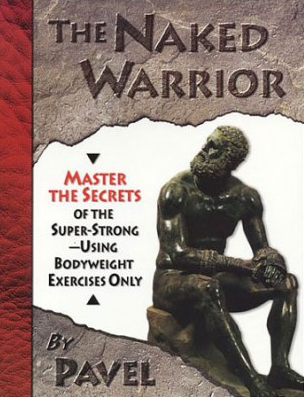
Almost 8 years ago now, I stumbled onto Pavel Psatsouline’s bodyweight strength based book, “The Naked Warrior”.

The Naked Warrior

It was the Summer between my freshman and Sophomore year of college, and I knew that I wanted to pursue a career in strength and conditioning.

I became fascinated with bodyweight training.  One quick Google search led me to Pavel’s book, and I think I read it cover to cover in two days time.

The sad part, I didn’t act on any of his strategies.  It took me a couple of years to finally pick the book back up and re-absorb his methods.  I regret that big time.

Now that I think about it, reading through Pavel’s book was the first time that I was introduced to kettlebells.  They are featured throughout the book as effective loading progressions to make the exercises more difficult.  I didn’t actively pursue kettlebell training for another two years.

Damn.

Hindsight is always 20/20, right?

The Naked Warrior, provides a much needed look at how to develop raw strength through two simple (but not easy) movements:

  • 1-Arm Push Up
  • Pistol

I can remember reading reviews on the “The Naked Warrior, where customers were angry because the entire Naked Warrior book is based off of only two exercises.  I felt the opposite.  I thought it was extremely refreshing to read a book that was so focused.  One upper body movement and one lower body movement.  Both have tremendous carry-over into the real world and athletics.

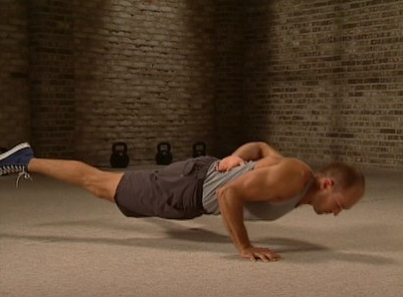
Here is a great snapshot of Pavel executing the mother of all upper body pressing exercises, the 1-Arm Push Up…

1-Arm Push Up

1-Arm Push Up

Here is a still shot of the what I believe is one of the greatest lower body movements known to man…

The Naked Warrior Pistol

The Pistol (aka: Single Leg Unsupported Squat)

Both movements require a large muscular contraction, body tension and zen-like focus for completion with great technique.

Pavel’s teachings provide an extremely valuable lesson on methods to build high level strength.

The road to executing these two movements require large amounts of body tension and muscular contraction.  It’s simple and brilliant.

Here I am executing 1-arm pushups and pistols…


Training with 1 leg or arm at a time is a great way to uncover imbalance in strength, stability and mobility.  You might be able to notice, but my left arm is the weaker of the two.

I used to think that drills like the 1-Arm Push Ups and Pistols should be reserved for like circus performers and stuntmen.  Or, maybe they were just something you show off to your friends after a few beers.  But that’s because I didn’t fully understand their value.

Now I understand their value and incorporate these movements into my own training regularly while advocating their use in the training programs of others. Pistols and 1-Arm Push Ups building tremendous strength while teaching the trainee methods that can be used squeeze more out of their training.

Progression is the key here, as it is always the key to success in building a body that is strong, lean and able to move freely.

Not many people can drop down and perform a full bodyweight single limb movement on a whim.  There’s usually a fair amount of ramping up that needs to take place prior.  I understand this completely.  Both of these moves provide amazing bang for you buck, but they are advanced movements.  ADVANCED.

How do you move yourself into the advanced category?  Keep training, that’s how.  Keep working at it daily, weekly, monthly, yearly.

In a future post, I will give you a road map to executing your first 1-Arm Push Up or Pistol.  It’s a lot more simple than you might think.  Successful completion of both requires dedication and consistency.  You just have to keep working at it.

—>  No mention of fitness?  Not even once?

Strong is the New Skinny

You probably noticed that this post never mentioned fitness until right now.  In my opinion, fitness is nothing without the presence of strength.  Strong is the new skinny.  Spend time working hard building up your strength and your body shape will follow suit.

Cheers to harnessing your body to build crazy strength…

KG