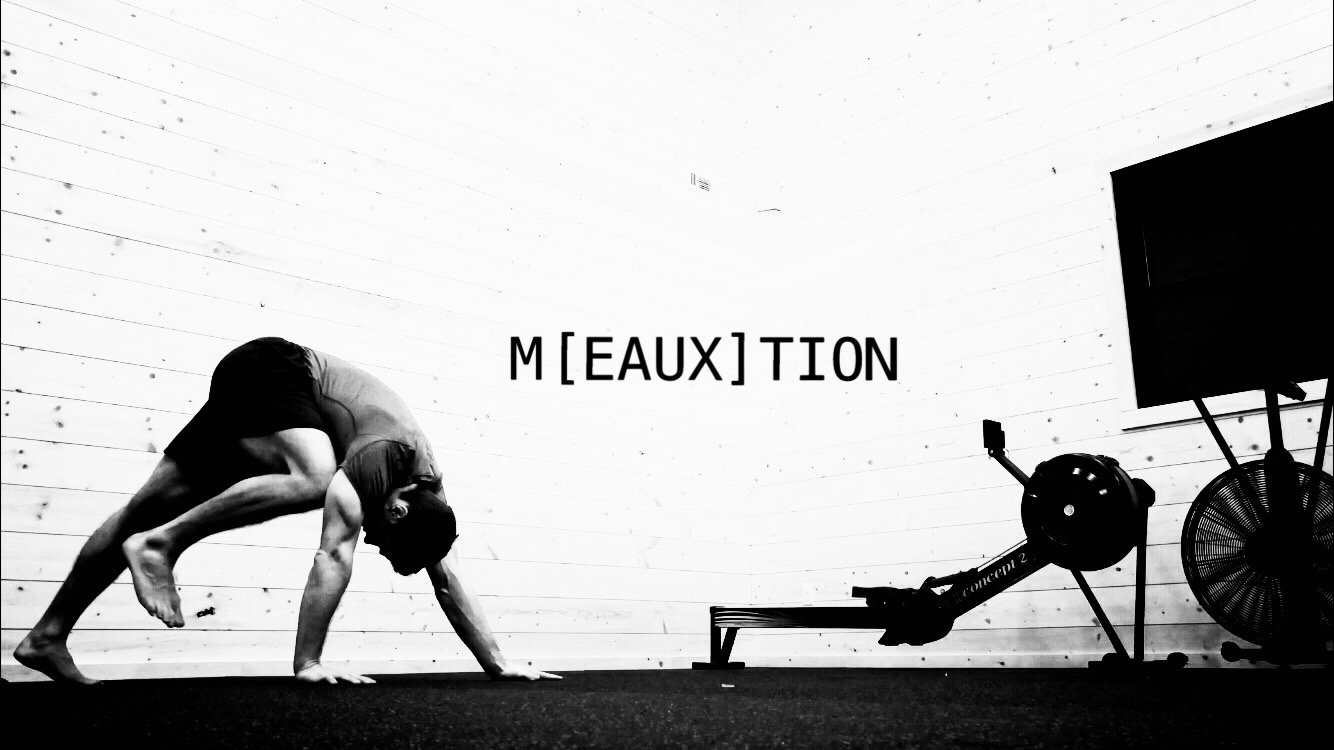

Home Gym Workouts! 10 Minute Circuit Training

home gym

Today’s home gym workout is all about simplicity. 

Keeping it simple, is keeping it effective. 

Turkish Get-Ups, crawling, traveling squats and lunges, push-ups, rolling are all included in the 10 minute mini-circuits of the session.  

Get ready to dirty your shirt.  

If you’re unfamiliar with any of the exercises mentioned above, please head over to my YouTube channel and perform a search using those terms.  

Always, always, always learn movement mechanics of new exercises while fresh and in an isolated fashion.  

Learning an exercise in isolation means you’re repping out that exercise with the basic work-then-rest approach.  Perform specific reps for a number of sets, rest, then attack the exercise again. 

Fatigue can be managed with this approach, allowing movement precision to become the prime focus. 

No one is above learning movements in isolation.  

The exercise’s degree of difficulty might change from person to person depending on fitness level (beginners versus elite movers), but the approach is the same.  

Learn new movements in isolation, code the movement into your system, do what you want from there. 

Workout Structure

The full workout consists of 3 x 10-minute sections, each with a different movement emphasis.

You can execute all 10-minute sections, or perform 1 or 2 depending on your space, equipment and time.  

Movement Emphasis

    • Workset #1: Turkish Get-Ups
    • Workset #2: Traveling Squats and Lizard Crawl
    • Workset #3: High Plank Step-Squat-Reach-Roll Flow

The goal is to perform the work non-stop 10 minutes with minimal rest.

Of course, movement quality is king, so if rest is needed take it to preserve the quality of each repetition.  

10 minutes is the target exertion time.  If you need to reduce the working time for each section, please do so.  Start with a duration you can tolerate, any amount of time is better than doing nothing.  👊 

After completing a 10-minute section, grab a drink, towel off the sweat and get ready for the next section.  Don’t waste time. 

Equipment List:

OMG!!! I need equipment?!?!

Not all workouts require equipment, but this one does, sorry… 

    •  * Kettlebell, dumbbell, sandbag, etc (weight for Turkish Get-Ups)
    •  Bodyweight
    •  12-15 feet of straight-away space

🤷‍♂️ If you don’t have any weights, find any object of reasonable shape and weight laying around the house that can add weight to the Turkish Get-Ups.  

Get creative, it can be anything.  A loaded backpack, children who are durable, a pet with a calm demeanor.  

At the end of this post, I’ve included equipment shopping options.


Set #1: Turkish Get-Ups

No secret sauce here.  

Turkish Get Ups are one of the best exercises on the planet. 

Stand up and lay back down for 10 minutes, alternating sides each rep. 

Turkish Get-Ups are a total body exercise and 10 minutes of continuous Turkish Get Ups is total body cardio conditioning.

Ideally, you’d have access to several different weights to switch it up.  Start by using a lighter weight, bumping up the load every 3 minutes or so.  End this 10-minute section with the heaviest load you have.

If you only have one weight, just use that.  You’ll get a good enough training effect.

I prefer to use kettlebells for Turkish Get-Ups, but I’ve used many other gym tools with success.  Dumbbells or sandbags can be used to add load to the Turkish Get Ups.


Set #2: Traveling Squats + Lizard Crawl

I love integrating isolated exercises into circuits.

Once you own a movement pattern, the options for using that movement pattern become limitless.

In the video, I’m traveling back and forth across a 15-foot distance.  

From right to left, I use a descending modified dragon squat, uncrossing the legs and standing up with a Cossack squat to shimmy across the room.  

After reaching the wall, I return to the start position with the king of locomotion patterns, the lizard crawl.  

Turn around, switch sides, repeat.

Dragon Squat.  The dragon squat is going to be a bit too aggressive of an exercise for a lot of people.  

Here are exercises to substitute:

👉  Walking Lunge (forward or backward)

👉  Lateral Lunge

Lizard Crawl.  If you’ve never tried a full lizard crawl, a work capacity circuit isn’t the time or place to dabble.  The lizard crawl is an aggressive pattern best learned fresh. 

I suggest regressing the crawling pattern to one of the following:

👉  Forward/Backward Crawl

👉  Lateral Crawl

👉  Bear Walk


Set #3: High Plank Step-Squat-Reach-Roll Flow

This simple ground-based flow includes a few common exercises (push-ups, sit-ups) along with uncommon ground-based flow movements (crab reach, rolling).

For some, this might be the first introduction into integrated movement conditioning.

Moving your body naturally through space.  

This isn’t your basic “jogging in place, knees to elbows, shadow boxing fitness” circuit.  

It’s bodyweight and movement, which will likely be humbling for a lot of people, including those who spend a lot of time resistance training in the gym.  

You’ll feel the difference between natural movement and linear exercise while training like this.  

During this work set, focus on smoothing out the transitions between each exercise.  Make the entire sequence look like it’s fused together into a single unit.  

I’ve got a semi-truck load of flow videos on YouTube.  


 🛒 Need Equipment?

5 years ago, I wouldn’t have referred anyone to Amazon for fitness equipment.

Today, Amazon is one of the best options to buy fitness equipment.  Prime Shipping is hard to beat for shipping heavy gym equipment directed to your home fast.  

👉 Kettlebells

👉 Kettle Gryp (converts a dumbbell to a kettlebell)

👉 Powerblock Adjustable Dumbbell (cost and space effective dumbbell)

Give each of these mini-workouts a try, leave a comment, ask questions, keep grinding folks!

A Giant List of Effective Core Exercises| Part III

Motion

Need water?  A cigarette 🚬 ?  Struggling to stay awake 😴 ?

Yeah, me too.  

If you made it this far, you’ve read through 30 different core exercises. 

Congrats, you’re in an elite group, primed with knowledge.

Brace yourself for exercises 31-48.  

Here. We. Go.

31.  Rotational Throws

The human body must be able to produce force and resist forces acting on it.  Rotation is a missing component of a lot of workout programs. 

Our bodies move through a ton of rotational patterns in sport and daily living. 

Don’t necessarily reach for the heaviest weighted ball. 

10lb, 12lb a 15lb medicine ball is plenty heavy. 

I like this style of medicine ball.

3-5 sets of 5-8 throws per side (ideally early in the workout the body is fresh).

32.  Chops and Lifts

Chops and Lifts are two simple (not easy) exercises that most people will find they: 

a) struggle to execute on either side (even with lightweight).

b) can only successfully do on one side, not the other (even with lightweight)

There are many different positions to perform Chops and Lifts in, but the inline position is one of the most humbling. 

Assume a half-kneeling position (one knee down, one knee up). 

Place the down knee directly behind the heel of the up leg.  So, make a straight line with your up and down legs. 

Chopping or Lifting once in this position is dramatically more difficult. 

33.  Anti-Rotation Press Outs

Training rotation is often forgotten yet a HUGE part of everyday movement.  One of the core’s important functions is to brace against forces acting upon it. 

Stretching a resistance band under tension, pressing the hands out away from the body, you’re calibrating the core to resist rotational forces. 

3-5 sets of 8-12 repetitions.  

Hold each rep (elbows extended)  for 2-3 seconds.  Add time as needed. 

34.  Single-Arm Push-Ups

Everyone is fanatical about something, and I am fanatical about the value of single-arm push-ups.

To get started here, allow me to say that single-arm push-ups are not a circus exercise only for the flashy calisthenics athlete.  They are for EVERYONE.  Follow the progressions and you can make great gains with upper body pressing strength, stability, and range of motion. 

Single-arm push-ups are a fully scalable movement for a beginner.  A beginner can make single arm push ups more approachable by executing from a kneeling position, hands elevated on stairs/bench/plyo box or by wrapping a resistance band around the chest to reduce the loading. 

All of these regressions will build strength while moving you closer to a full single arm push up. 

I have found single arm push-ups to be one of the best upper body pressing exercises available.

35.  Atomic Push-Ups

There is a time and place for isolated core work, and at some point, you realize that all exercises are “core work” on some level.  So if you can add a push up to a knee tuck, do it. 

The key to the knee tuck in this exercise is lifting the butt/hips to the ceiling, as high as possible, to make room for the knees tucking in toward the elbows. 

3-5 sets of 6-15 reps

36.  Core Smash

Core smash = intense core flexion contraction. 

Lay face-up on the floor. 

Place hands on the side of the head (fingertips just behind the ears), slowly bring your knees to meet your elbows, pressing elbow into the knees as hard as you can. 

Hold it there, think of something other than the cramp brewing in your mid-section.

The set ends when the elbows lose contact with the knees. 

Aim for brief holds at first, extending the duration as you gain strength. 

37.  Arch Body

The core is not only on the front of the body, easily seen in the mirror.  It wraps around your body like a weight belt.  Hard to see in the mirror, the glutes and spinal erectors are crucial for human performance, body health, and injury mitigation. 

Arch body exercise is the opposite of the Hollow Body exercise.  Chest down on the floor, you’re going to create a pronounced U-Shape by lifting the arms/back/hamstrings and heels. 

Many will feel weak during the arch body, cramping, etc.  It’s ok.  Hold as long as you can, rest and repeat. 

Hammer the front side, hammer the backside. 

38.  Hollow Body High Plank or Push Ups

Assume a high plank position (aka the top of a push up), roll your pelvis under, arch your spine and protect your shoulder blades to make as pronounced of a “U-Shape” as possible. 

Hold there and embrace the suck, because it’s a highly rewarding position but a sucky position at first.  The hollow body position is fundamental for many more difficult gymnastics based movements.    

Beginner level gymnastics posture here.  Very humbling. 

39.  Stability Ball Stir-the-Pot

Stability balls are naturally unstable.  So, putting the elbows on the stability ball to perform a plank creates a wobbly situation.  Now, add a circular motion with the elbows as if you were stirring a giant pot of soup. 

Why do this exercise?  Because adding more time to a marathon length standard plank is not what most people need.  More time doesn’t mean greater gains.  At some point, especially with planks, make them harder. 

One way to make them harder is to add a dynamic movement to a fundamental stability exercise. 


40.  Suspension Trainer Pendulums

Slip your feet into the loops of a suspension train or gymnastics rings, turn over and assume a high plank position (top of a push up).  The feet are now suspended while the upper body is supporting. 

Initiate a side to side motion pendulum motion from the waist on down by activating the hands/arms/torso.  Grip the ground hard and swing the legs without breaking at the low back, hips, knees. 

This is a very non-traditional exercise that will blow up your mid-section.  Expect oblique soreness in the days that follow.

3-5 sets of higher repetitions, maybe 10-20 per side.

41.  Core Compression Pulses

Core compression pulses are a beginner level gymnastics exercise, which in itself is humbling to think about. 

To do them, sit on the floor, upper body erect and legs straight out in front of you. 

Place hands on the outsides of the thighs, pressing into the ground for assistance as you lift each leg entirely off of the ground, pulsing up and down. 

Lift the legs as high as possible without rocking, bending the knees or compensating to do so. 

Core compression pulses are a high repetition exercise, but beginners don’t be surprised if you’re only able to get 3, 4 or maybe 5 before form breaks or cramping commences.

I like to work these early in the workout, before any other lifting or cardio because they are so demanding and isolating the motion is important.  3-5 sets of 4-20+ reps. 

42.  Loaded Carrying Variations

Loaded carries are incredible for core development and total body tension. 

For the functional fanatic in all of us who want every minute of strength work and cardio exercise to translate to real-world scenarios, is there any other mode of exercise more functional than carrying objects of varying weights, texture, shapes and sizes (not to mention carrying in various positions) from Point A to Point B?

Personally, I do not think so.

43.  Lizard Crawl + Push or Pull

Perform a lizard crawl while pushing or pulling an object of weight.  Simple as that. 

I hesitated to include this hybrid exercise but ultimately felt that people who can Lizard Crawl proficiently would enjoy adding a brutal push or pull to the exercise.

A sandbag on carpet or a hard floor surface, a kettlebell, dumbbell or weight plate can all be used as the equipment for the push and pull. 

I’ve used all of these tools with success, but I prefer using a sandbag on carpet or hardwood. 

44.  Spinal Waves

It’s been said, “we are as old as our spines”.

The spine is our life force and if we cannot move it when we need to, it is likely to become a problem down the road. 

Exercise tips:  Soft pump the wall for 100-200 reps most days of the week. 

Sounds like too much?  200 reps of spinal wave take less than 5 minutes and your body will thank you for the movement. 

45.  Standing Spine CAR’s

Lock in the hips, hug yourself and articulate in a circular fashion as if you were trying to dodge pushes from a boxer.  Say hello to controlled articulations and their ability to wake up the obliques.  Brace and breathe. 

46.  Hip CAR’s

Assume a quadruped position with hands, knees, and feet in contact with the floor.  Raise your leg out to the side of your body as high as possible, pretend like you’re a dog about to pee on a fire hydrant.  Be mindful to keep your shin bone parallel with the floor, which means your foot doesn’t move higher or lower than your knee.  

[The guys at MyDailyMobility.com teach controlled articulations and a lot of other effective mobility drills in their daily mobility program.  Give it a look.  Your body will thank you]

Draw a large circle with your knee (articulate) as you slowly move the knee behind the body.  This will look like the finishing position of a donkey kick.  Lower the knee back underneath the body, but don’t set it down.  Reverse the pattern. 

Many of the best “core” movements are not isolated movements, and they shouldn’t be because isolating the “core” is not how humans operate. 

47. Movement 20XX Kick Throughs

Side Kick Through’s are a basic movement element in Movement 20XX, resembling a break dancing type move.

Movement 20XX is a bodyweight focused, ground-based movement system packed with performance and restorative movement patterns. 

Begin in a quadruped position, hands and feet supporting the body (knees hover 1-2 inches off the floor). 

Rotate to one side by pivoting on the ball of the foot, opening up your chest to the side you’re turning toward. 

Slide the trailing leg through and “kick” it through until fully extended. 

While the leg kicks through, pull the opposite arm/hand back as if you were drawing back a bow and arrow. 

48.  Movement 20XX Supine Reach

This exercise is LOADED WITH BENEFITS. 

Posterior chain activation, controlled rotation of the torso, elongation of the often shortened muscles of the core.

This benefits of this exercise are plentiful:

  Opens up the torso and chest in a diagonal pattern (far hip to far shoulder)

  Challenges and improves shoulder stability on the loaded working arm

  Opens up the hips anteriorly

  Activates the posterior chain (gluten/hamstrings) moving into extension.

  Uncommon position (head and eyes get a different look at the world)

The End.  


Kettlebell Clean – Press- Squat

Motion

Years ago when I was low on cash and training in my studio apartment, my lone pair of 24kg kettlebells provided workout after challenging workout.  Making the most of a tiny home gym also gave me PHD in resourcefulness. 

Kettlebell training is unique, unlike any other mode of training.

Bursting onto the fitness scene in the early 2000s, kettlebells gradually became a mainstay piece of equipment in gyms all over the world.

Kettlebells disrupted fitness.  The spotlight was shifted really functional loaded exercises.  Drills like swings, cleans, snatches, Turkish Get Ups and other combinations became the new standard.  Most of which performed in standing position.

Though the effectiveness of kettlebell training has never changed, the novelty of the tool has since dissipated, which is common in the fitness industry.  

Exercises, equipment, and methods lose their popularity in the mainstream… here today, gone tomorrow.  

“Bring in the next shiny toy of the year, please!”.  

Despite the sex appeal fading a bit, basic kettlebell exercises remain brutally effective for building strength, conditioning, and fat loss.  

I’m one of those people who don’t forget.   

Outside of nutrition, sleep, hydration and adequate non-exercise activity on a daily basis… short burst kettlebell training (high intensity, low rest, etc) is amazing for burning body fat.

And yes, if you want to maximize workouts, you’d better be auditing habits outside of the gym.  Don’t sabotage your efforts. 


Kettlebell Clean, Press and Squat Combo

The clean, press and squat combination is a prime example of how a simple 3 exercise circuit can be leveraged to produce a significant training effect.  

And it doesn’t require much time at all.  15-20 minutes at most. 

For your eyes only… 


This kettlebell combination features 3 staple exercises:  clean, press and squat.  

Each exercise is performed with very little or no rest in between each exercise.  

Smooth transitions between each exercise is the goal.

Changing levels with the kettlebell… cleaning the bell from under the legs up to the front rack position, pressing overhead, back down to the front rack for the squat for repetitions…

… is pure work.  

This work creates a total body training stimulus.  

It’s the “magic sauce” of this combination.  

Before moving on, here are some key thoughts:

  •  You must have a working familiarity with each exercise before engaging in this circuit.
  •  Respect fatigue and what it does to the body while under load (increase rest if needed)
  •  Work reps, rounds and rest periods appropriate to your 
  •  Choose a sub-maximal kettlebell weight that allows for 10-12 reps per exercise (even though you’re going to do 6 reps).
  •  Not sure what weight to start with? Go light, work up as needed.
  •  Keep the workout short (15-20 minutes at most)


Alternatives/Substitutions

Not everyone is going to have access to a pair of kettlebells that are the same weight, or maybe they are the same weight, but too light or too heavy for your current fitness level.  

One of the most important ideas in staying fit is becoming resourceful.  When space is limited, equipment is scarce or time is tight, DO NOT FOLD.

How many times do we read a workout blog or fitness article and realize we don’t have the same set up the author did?  I’ve had this experience hundreds of times.  

What do you do?  Make adjustments, move forward, get the work done.

No kettlebells?  It’s ok!  Here are some equipment alternatives:

  • Barbell (same exercises and reps)
  • Dumbbells (same exercises and reps)
  • *Bodyweight (change exercises and reps)

Barbells and dumbbells are the most common pieces of weight training equipment in the world.  Most hotel gyms, YMCAs, 24Hour Fitness or Big Box Gym is going to have one or the other.  

Both allow for the clean+press+squat exercise combination to be performed.  The main difference between barbells/dumbbells and kettlebells is the design and how you can maneuver them.  

Barbell training fixes both hands to the shaft of the barbell.  For some people, this is great because you’re not having to control each hand independently.  

Dumbbells allow for independent arm work, but the shape of dumbells means you’ll have to tweak hand position/technique for each exercise.  These are subtle adjustments are mainly to avoid bumping the dumbells into your body on each movement.  

Bodyweight.  Now, if you’ve got no equipment available whatsoever, you’re still in the game, don’t worry!  You’ve got plenty of options.  Tons.  

When resources are scarce, you make adjustments, adapt and push forward.  Don’t get hung up on imperfections. 


Try this bodyweight combination…

Wouldn’t it be great if life was perfect all day, everyday?  Yes, it would be. 

(👋 slap across the face)

Life’s not perfect and never will be, so the best practice is to be ready to embrace the situation presented and make do with what you’ve got.

If bodyweight is the only option for the workout, consider digging into this circuit:

  •  Alternating Split Squat Jumps
  •  Dive Bomber Push-Ups
  •  Air squat (or variations: pistols, rear foot elevated, etc)
  •  Burpees

– 6-8 reps per exercise

– 6-10 rounds

– Limited/no rest between exercises

– 45-90 seconds rest after each round.

Perform in descending order (top to bottom) without rest between exercises.  Alternating split squat jumps first, then dive bomber push ups, etc…  

Factoring in no weight is being used to load these exercises, consider increasing reps per exercise, increasing the number of rounds performed or reducing the rest periods.  

Be mindful not to adjust all of these variables in one shot, it may create more fatigue than what your body can handle.  It’s like fine-tuning the dial on a boombox to get the signal of a radio station.  

Tweak here, tweak there.

Burpees?!?! What?!?! I h*te you!?

I don’t believe burpees are the greatest exercise on the planet. 

Some people do, I do not.

Burpees are often blindly prescribed to the wrong people and abused by many, but burpees are an incredible exercise to increase heart rate quickly and condition the entire body… in a pinch.

Personally, I rarely perform burpees.  But if I have few other options, hell yeah, I’m going to rip out some burpees.  

Don’t tar and feather me.

👉👉👉 Up for a challenge?  Try this burpee variation.

So, you have access to kettlebells, but… 

  • Kettlebells are too light
    • Increase the reps 
    • Increase the rounds
    • Decrease the rest periods
    • Add other kettlebell moves or filler bodyweight exercises
  • Kettlebells are too heavy (for desired rep range)
    • Decrease the reps
    • Decrease rest periods
    • Insert bodyweight filler exercises to achieve desired training stimulus)
  • Only 1 kettlebell (see video below)
    • Perform exact same exercises one side at a time 
    • Finish both sides, take rest period
    • Single kettlebell training is fantastic.

Ok, I’ve laid it out for you.  Time to dig in.  

Get after this exercise combination.  The kettlebell clean-press-squat combination is awesome for improving strength, conditioning and fat loss. 

Go.  Now. 


Cheers, 

Kyle 


Build a Home Gym? Yes, You Should.

home gym, Motion

Before you read this, please know I am a HUGE advocate for moving workouts into the home setting.  

Cutting the cord on a big box gym membership is a little like cutting the cord on cable television.  I’ve done both so I’ve got some experience here.  Change is hard.  Sounds dumb but when I cut cable television for good, I had a few weeks of not knowing what the hell to do with myself at night.  

It was purely conditioning and habit driving these feelings.  

But eventually, I adapted and transitioned my time to more productive activities.  Of course economical streaming subscriptions also helped fill the void (Netflix, Hulu, Prime Video, etc). 

Anyways, there’s some initial hesitation, weighing, back and forth, and although it sounds kind of funny… anxiety involved with cancelling a gym membership (or cable television).

“What will I do without my gym membership?”

Step one is to ask yourself if you’re actually using your gym membership.  If you are, how many days a week are you going?  Are you getting results from that money and time investment?  

These are simple questions.  Are you going to the gym enough to make the cost of keeping the membership worth while?

A lot of people go to the gym with intentions of losing weight, building strength, getting healthy, yet have very little if anything to show for it.  

No offense to these folks, but there’s a lot of people that fall into this category.  Gyms love them because not achieving results (aka:  spinning tires in the mud) is great for ensuring a steady revenue stream.  The anxiety is too high to cancel the membership.  So, you pay every month.  

If you do go to the gym and you enjoy it, KEEP YOUR MEMBERSHIP.

The goal of this article isn’t to project a rigid stance on big box gyms and paint them as being a bad place.  

My goal is to shed light on the effectiveness of working out at home and let you know it’s more than doable, it’s becoming the new standard.  Lots of people aren’t aware of this.  #themoreyouknow

A lot of folks use gyms as a social hang out just as people get memberships at the local country club to hang out with their buddies.  

Well built gyms often offer amenities to families (pools, child care, classes, etc).  So for these folks, spending the money might be well worth it.  

Mom and Dad can get some exercise in while the kids play in the pool with licensed gym staff.  

But…

… cancelling your gym membership will free up funds, time and hopefully bring some excitement back to your workouts.  

The biggest benefit (in my opinion) of moving workouts to a home gym set up is the freeing up of TIME.  

When I was younger I had a much harder time understanding the value of my time on this earth.  My perception was that I had all the time in the world.  Wrong.  

Fast forward several birthdays later, I feel much differently.  I have a desire to own as much of my time as possible.  Life’s too short.

Google “Memento Mori Chart” and fill one of those out if you really want the realities on the shortness of life.  

Balancing family, career and finding time for recreation can eat up most of the time in a day.  

Working out at a membership based brick and mortar gym certainly has it’s advantages, but it also has limitations which often go overlooked.


#1  Paying for something you don’t use.

A gym membership going unused or not being used on a regular basis is a waste of money.  

#2  Time.  

How much is your time worth?  

Time is our most precious commodity, and we can never get time back.  Drive time to and from, changing clothes time, waiting for equipment time, workout time, shower time, etc.  Big box gyms are a TIME SUCK. 

#3  Safe equipment.  

Most gyms still refuse to offer fitness equipment considered to be “taboo” or “dangerous” because it’s a liability for injury.  

So, the average big box gym is littered with fixed range of motion (aka:  artificial and unnatural range of motion cardio and resistance machines)

There’s a reason most people despise exercise…  because spending hours on these machines is uneventful and completely against human nature.  We were force fed the concept of exercising on fixed machines back in the 1960’s and 1970’s and somehow the concept survived to 2018.  

Those feelings of boredom while “ellipticalling” are real… and more importantly they are NOT WRONG.  Your body craves robust movement, exploration, change of direction, challenge.  

It took 8+ years for most gyms to offer kettlebells to clients for fear of throwing them through mirrors, dropping them on toes, or blowing out backs from poor technique.  All reasonable concerns.

To be blunt, if your gym isn’t offering and promoting alternative modalities of building fitness such as kettlebells, you’re missing out.

#4  Personal training is expensive

God bless personal trainers and their ongoing commitment to educating the public on the benefits of exercise.  

But personal training is expensive.

Personal training is expensive regardless if you’re training 1-on-1, semi private or in a group setting.  At $5, $10 or in some areas $70-$80 per session you could pivot and transition those dollars into one of many online training programs (probably starting with bodyweight based training like yoga or calisthenics) and gradually purchase some home equipment.

Start with a simple pair of dumbbells or kettlebells, maybe a suspension trainer.  These are three of the most versatile pieces of gym equipment on the market.  

Yes, I know barbell training is amazing.  But even in the year 2018, barbells freak a lot of people out.  I don’t know if their is data on this, but it’s anecdotal fact for me in conversations with people.  

So, do your homework on dumbbells, kettlebells or a suspension trainer.  

For the cost of one month of gym membership, you can buy one or possibly two pieces of equipment.  A kettlebell is a one-time purchase.  That kettlebell will outlast your life. 

The gym membership model succeeds and relies on signing up customers who don’t set foot in the door.  

I didn’t make this up.  

Listen, if I owned a gym I wouldn’t want all of my members to workout daily and tear up my expensive equipment.  

It would be a hassle and lost dollars for me to constantly fix broken down cardio machines, reface beat up barbells and weight plates, patch holes in benches, etc.  

No, no… if I owned a gym, give me your money and stay at home.  

Here are some great articles regarding gym memberships:

A snippet from the last NPR article:

“Joining a gym is an interesting form of what behavioral economists call pre-commitment,” says Kevin Volpp, director of the Center for Health Incentives and Behavioral Economics at the Wharton School. Volpp says we actually like the idea of being locked into a gym contract … at first, anyway. “They’re picturing the ‘new me’ who’s actually going to go to the gym three times a week and become a physical fitness machine.” We convince ourselves that since we have committed to putting down money for a year, we will make ourselves go to the gym. And then, of course, we don’t.

Working out at home is not for everyone. 

“Wait, I thought you just told me that…”

I did.

Before you cancel your gym membership, it’s important to understand your habits and personality.  

Cancelling a gym membership with intentions of working out at home, but never actually getting the home workout habit to stick is not good.  It’s a step in the wrong direction.

If you were exercising twice a week at a gym, but now exercising ZERO times per week after making the transition, this is not a good scenario.

While taking workouts into the home setting is loaded with advantages, a lot of people may find it difficult to stick to a workout regimen at home.

I’ve found that inability to make the home workout habit stick are pretty similar to the reasons a lot of people shouldn’t have a home-based career.  

The comfortable environment of the home setting can kill off motivation for physical exertion and breed complacency.  

The temptation to do anything but be productive and get work done is too great.

Before cancelling a gym membership, test the waters by bringing 1 or 2 workouts into the home.  Keep it simple.  Work some bodyweight sessions, play around with the space you’ve got and get acclimated.   

No equipment means no workout!

Survey says:  Wrong.  

A common perception is that quality exercise cannot happen without the presence of fancy fitness machines.  

Heavenly Father… what are you supposed to do without any fitness equipment?!

I can see how a person would have this opinion, I really can. But the reality is you DON’T KNOW WHAT YOU DON’T KNOW.  

If you have these feelings, you’ve got to explore your options.   

Here are some ideas for you… 

Yoga, Animal Flow, KinStretch, gymnastics and calisthenics and resistance training are all INCREDIBLE forms of movement that can provide far more benefit for your body (looks, feel and performance) than any machine ever will.  

Listen, exercise machines have their place, but moving your body in a natural environment should be a primary goal.  Your body and the ground.  Start there.

What about walking?  

Walking, time and time again has proven to be potent form of daily activity.  Start with 10 minutes per day, every single day.  See what happens.  

The Economics of Building a Home Gym

Before buying home gym equipment there are two important points to consider:

  1. Quality gym equipment often isn’t cheap at time of purchase.  The upfront cost of purchasing the equipment will likely exceed what you were paying per month at your gym.  However, shift your attention to the long-term value instead of the short-term.  Most quality gym equipment should last you lifetime versus paying for monthly gym memberships.
  2. What’s the cost of not exercising across the long-term?  This question can be hard to wrap one’s head around, but seriously, in 10, 20, 30 years, what will be the cost you pay for not taking care of yourself physically when you had the chance.  

A badass home gym could be built by shifting spending habits for 6-8 months.  

Many people won’t buy gym equipment for the home because they don’t know how to use it.  In 1996, this was a valid concern, but not in 2017.  This little thing called the internet has created massive opportunities to learn basic technique of physical conditioning, all the way to movement mastery.  

Fitness is now digital.  The information is distributed through video, audio and the written word, there is education that appeals to all forms of learning.  A lot of it is given away for free.

Everything a person could want to know about fitness is on the internet.  

If you’re one of those anti-internet people… please stop.  Yes, the internet has some crap floating around but so does society.  

Take ownership, research, experiment, explore, refine, get curious, learn.  

I want this article to open your eyes to a different perspective on working out, where you do it, how you do it and a alternative view to transitioning your health regimen back to home base.  

Even if you don’t make the switch, it’s important to have the information.

Please let me comments or questions.

Check out some of these other topics of I’ve explored on the blog…  

All center around workout programs, workouts, exercises or equipment fully compatible with the home gym setting.


For now… cheers to you and building a home gym.


Kyle 


Air Bike Workouts| 5-Mile Ride for Time

Airbike Workouts

Assault Air Bike

The air bike is a low-impact, low learning curve, low-risk of injury, high reward cardio machine that’s perfectly designed for high-intensity workouts.  

Air bike training is super effective for improving cardio, without all of the ground impact forces.  

On an air bike, the harder you pedal, the more difficult it becomes.  

Air bikes work the upper and lower body.  The upper body works the dual-action arms, while the lower body pedals.   

This article is all about a middle-distance air bike workout, the 5-mile ride for time. 

The 5-mile ride for time is a SOUL-CRUSHING aerobic threshold challenge.

Most people will finish the ride in 15 minutes or less, making this ride extremely time-efficient.

Air Bikes

One of the best features of air bike training is the learning curve.  

There isn’t a learning curve.  

There’s very little skill required to peddle a stationary bike.  

Get on and go.

I wrote a more comprehensive article on air bikes here.

There’s a significant amount of mental conditioning involved with air bike training at higher intensities.  You’re willing your body to push on through the discomfort.  

It’s a character builder.  

The addition of the dual-action arms works the upper body using a push and pull motion.  

This adds to the overall training effect.  

With air bikes, the resistance felt is proportionate to the intensity of the effort.

As effort increases, so does the air resistance.  😯

Pedal at higher intensity efforts and holding that intensity for time is a first-class way to trash yourself.

1-minute ride for max calories is a perfect example.


5-Mile Ride Instructions…

The instructions for the 5-mile ride are simple:  ride 5 miles as quickly as possible.

Record your time so you can monitor progress and identify the time to beat for the next ride.  

Tracking your numbers will give you massive fuel for future attempts.

Make sure you remember to record your time.  Each personal best time serves as the target for the next attempt.  

Constantly attacking your personal best is a great way to gauge improvements with conditioning. 

Here’s a cinema-quality video of the closing seconds of a 5-mile effort…


Finding the data…

Over the years, I’ve been unable to find a log of best 5-mile air bike times on the internet.  I’ve seen private gyms and colleges post times, but not the general public.

I’ve come across plenty of recorded times using the large fan Schwinn Airdyne, but fewer using modern air bikes like the Assault Bike.  

The Schwinn Airdyne has been on the market for 20+ years so naturally there will be more data for the bike. 

I was able to locate several clips of 5 -mile rides on YouTube, but watching someone ride a bike for 12 minutes is boring, not to mention no quality control to verify methods.  

I’m looking for is visual proof of finishing time.  


Strategies to crush the 5-Mile Ride…

Your best 5-mile time will depend on the following:

  •  Increase in fitness levels (strength, power, endurance, etc)
  •  Willingness to be uncomfortable for an extended period of time (grit).
  •  Pacing

Unlike a lot of popular air bike workouts, the 5-mile ride requires a bit of strategy.

Don’t sprint too early.  Come out of the gates too hard, you’ll hit the wall and have nothing left to give as you near the end.  I’ve done this plenty of times.  

Don’t save it all for the end.  Conserve energy for too long and valuable seconds are lost which might not be able to recover at later stages of the ride.

Pace yourself with RPM’s and heart rate.  Monitor your heart rate (beats per minute) and pay attention to RPM’s.  Both are tracked on the computer monitor.  

Avoid obsessing over how far you’ve ridden.  You’ll always think you’re farther than you actually are and wish you were farther.  Settle into a challenging RPM range, focus on breathing and stay there.  No need to keep glancing at the monitor when only 15 seconds have passed since you last checked. 

Use your arms.  The arms play an important part in finishing faster.  You must get your arms involved to take on the stress.  

Push and pull, push, and pull.

Lift your legs.  The deadweight of the non-working leg makes it harder for the working leg and arm.  Actively lift the non-working leg on each revolution, otherwise, you’re moving deadweight with the working leg.

Posture.  Keep the chest tall and the butt planted firmly on the seat.  Do not stand up, that is cheating.  Keeping the chest tall will keep the airways open, versus hunching like a turtle and trying to breathe all coiled up.

What’s a good finishing time?

12 minutes or less is a great time.

Here are the closing seconds of my most recent attempt:


Finishing closer to 11 minutes is aggressive.  

A sub-11 minute ride can be done, no doubt about it.  However, as you become more fit, it becomes more difficult to shave seconds off the finishing time.

My best time is 11:07, verified with picture proof Instagram.

screen-shot-2017-01-03-at-9-04-00-pm

I need your help compiling the data…

After completing the 5-mile ride, stop back and leave your time in the comments section.

Snap a picture of the computer monitor like you see above.  

We need proof.  No cheaters.

Read more about fitness and workouts:

3 Jump Rope and Kettlebell Workouts To Try

Workouts

Depending on your training level, pairing kettlebell drills like swings and jumping rope can provide an incredible training stimulus.

All three of the workouts below will require a kettlebell and a jump rope.

The effectiveness of the workouts will depend on you, your effort, training familiarity with the exercises, kettlebells and jump rope.  Jumping rope can be a limiting factor for a lot of people, but with practice, you’ll quickly improve.

Step #1: Choose a kettlebell weight that is challenging to swing for 15 repetitions (we’ll be swinging it for 10 repetitions in the workouts).

Step #2: Select a jump rope that turns effortlessly and has a length appropriate to your height.  Generally speaking, when you place one foot on the rope you should be able to pull the handles to your armpit region.

Selecting only two pieces of equipment minimizes decision fatigue.  Less can be more.

Baseline workout:

10 Kettlebell Swings

1 minute Jump Rope

  • 10 continuous rounds without rest between swinging and jumping.
  • Two movements performed savagely well.


Intermediate workout:

10 Kettlebell Swings

10 Kettlebell Goblet Squats

1 minute Jump Rope

  • 10 continuous rounds without rest between swinging, squatting and jumping.
  • Addition of the squat pattern element to the baseline workout above.


Advanced workout:

10 Kettlebell Swings

10 Kettlebell Goblet Squats

5 Right/Left Arm Kettlebell Overhead Press

1 Minute Jump Rope

  • 10 continuous rounds without rest between swinging, squatting, pressing and jumping.
  • Now it’s a party.  A full-body training session of hip hinging (swings), squatting (goblet squats), vertical pressing (overhead press) with jumping rope serving as the active rest between these loaded movements.


One easy way to make any of these workouts more challenging is to complete more rounds in the given timeframe.  

In other words, work faster.  Be mindful of exercise technique of course.

Less is more.  

The impact of a simple workout like this is tremendous, and I often recommend breaking the monotony of traditional cardio training with sessions like this.

Incorporating big bang major movement patterns like kettlebell swings will serve you amazingly well.

Enjoy these workouts and feel free to progress them beyond what I’ve suggested to further challenge/customize to suit your needs.


Kyle


Similar posts:


Buy a Gym Membership or Build a Home Gym???

Quick Tips

I draw ideas to write from every little conversation and every daily experience. 

I recently had a longtime friend ask me this very question:

“I am just getting back into working out, would you recommend getting a gym membership or should I buy some simple pieces of equipment from a sporting goods store”.

This is a really good question actually.  The funny thing is that if someone would have asked me this 5 years ago, I would have said get the gym membership.  

Why?

Home gym equipment sucked.  Honestly, home gym equipment was really shitty.  You were stuck shelling out thousands of dollars for a treadmill or a elliptical trainer, or maybe a universal gym that companies touted as the “greatest thing ever”.  

The problem is two-fold for this type of equipment:

1)  You’re buying a $2,000 coat rack.  Most people buy a treadmill and 2 months later they are using it to dry their laundry.  This might be some of you reading this blog right now.  Same goes for a universal gym or elliptical.

2)  It provides an inferior training effect.  We know this!  You only have to maintain the speed of the belt on a treadmill with zero ground force production and a universal gym is a machine with fixed angles that place a much lower demand on crucial stabilizing muscles that fire in reaction to daily physical demands (whatever they may be).  A weight machine has very little real world carryover.  

Fast forward to my response to him today…

Without a doubt, I said go with the home gym set up.  I have been training at home for the past 5 years and it has been refreshing.  Absolutely refreshing.  I don’t like being around people when I train.  I don’t like the little conversations about my “toe shoes”, I don’t even like people asking if they can work in with me or when I am projecting to be done with the equipment that I am using.  I don’t like the music they play in gyms, blah blah blah.  

I just don’t like it.

Now, the second reason that I recommended the home gym is because quite frankly, home training went to another level with the introduction of:

  • Suspension trainers
  • Kettlebells
  • Dumbbells (Powerblocks)
  • Jump Rope
  • Weight-vests
  • Battling Ropes
  • Sand bags
  • Sand-bells

These are some of the more popular pieces of training equipment that is widely available to the public today.

Now, you’ll spend a decent chunk of change if you bought one or two of all those items that I listed, so will trim down the list to what I believe are the most impactful pieces of equipment.

1)  Suspension Trainer

2)  Kettlebells

I would go with those two items.  If you’re a male, start with a 12kg and a 16kg kettlebell (be prepared to make a quick jump to a 20kg) and a LifeLine Jungle Gym XT suspension trainer.  Females, start with a 8kg and 12kg kettlebell (be prepared to make a quick jump to the 16kg)   The exercise variations that a person can come up with from just these three pieces of equipment will blow your mind.  Endless combinations, workouts, etc.  Total body training that lends itself to not just stripping fat and building a lean physique, but also promotes the building of athleticism.   

The suspension trainer alone will keep you progressing for months.  It’s the single best piece of home training equipment on the market.  The portability and simplicity of a suspension trainer make it ideal for those who travel or those who wish to initiate the home training experience on a budget.  I love suspension trainers for folks that have banged up joints from years of grinding it out lifting big weight.  Reputable brands are TRX and Lifeline Jungle Gym, although i can’t say enough about the quality of the Jungle Gym XT and it’s unbeatable price point ($99 or less).  Watch for sales.

I buy my kettlebells from Lifeline also.  They are high quality, great surface finish and the customer service makes ordering a breeze every time.  Plus Jon Hinds is local to my location so it feels good buying a product from someone in my own backyard.  Trust me, it is possible to buy a shitty kettlebell.  Buying kettlebells is just like buying everything else.  You’ve got quality and then you’ve got imitation, then you’ve got plain old cheap.  Stay away from the latter two.  You’re only buying your kettlebells once, so make the purchase count or I can promise you that you will wish you had.  At least your hands and wrist will wish you had.As for the durability of suspension trainers and kettlebells…  you should have both for a lifetime.  The only reason the suspension trainer would crap out on you is if you were using it improperly, maybe having excessive loads on the straps or stringing it around a coarse/sharp edged anchor point, which would cut through the straps.  Shouldn’t be an issue if you use your head.  

Image

Kettlebells are a one time purchase that will last forever.  Period.  Well worth the money.  

The bottom-line is this…

The options for training at home were terrible even just a couple of years ago.  That has all changed with the evolution of improved equipment options.  More and more people are seeking alternatives to the commercial gym, and I fully support this movement.  Obviously the best approach is to analyze your budget and what you desire from your training efforts.  I would also evaluate your personality.

Are you the kind of person that can give an effort without anyone watching?  If not, home training is not for you.  At least not yet.  

If you can, and you have the money to invest in some simple gym equipment… well… welcome to the club.


Respectfully,


KG

Turkish Get-Up and Kettlebell Swing ONLY Workout

20 minute Workouts, Kettlebell Training

This workout includes two foundational kettlebell exercises (Turkish Get-Ups and Kettlebell Swings) and is perfect for a home gym workout.

Who doesn’t love a home gym workout these days?  Time-efficient and minimalistic workouts are PERFECT proving the superiority of the home gym workout experience.

Clearly, I’m an outspoken advocate for creating a home gym space.

In the kettlebell training world, turkish get-ups and swings are two of the best exercises a person could learn, practice, and improve on.

I stand firm on this statement.  Call it “my truth” or whatever.  I’ve spent years working these two movements and the benefits of my efforts include sustained power, strength, and a consistently lean and muscular physique.

Aesthetics might seem superficial, but no one trains hard to stay fat.

There are HUNDREDS of other great exercises, I support them all, but going full-on minimalistic mode, I know that attacking turkish get-ups and swings would make a lot of people happy with the time investment.

It’s a powerful combo.

Kettlebell swings are a ballistic hip hinging exercise that’ll improve power, train fast-twitch muscle fibers and if organized accordingly, build conditioning in a really unique way.

Turkish Get-Ups are a pure loaded movement-rich exercise.  Few other exercises are as humbling, addicting, total body, and rewarding as practicing turkish get-ups on a regular basis.

You feel less like a Lego exercising while doing turkish get-ups, and more human.  

Equipment needed:  Timer and kettlebell

15 minutes Alternating Turkish Get-Ups

+

2-Hand Kettlebell Swings (24 rounds of 15sec on/15 sec off)

The TGU’s

15 minutes of continuous turkish get-ups is a lot of work, so if the duration needs to be decreased a bit, please do it.

Start with 5 minutes, see how you feel.

If 5 minutes is a breeze, add 2 more minutes and see how that feels.

There are very few secrets to fitness.  Actually, there are none.  Only what you know, and what do you don’t know… and how consistently and effectively you are at practicing what you know.

The key to building fitness safely, is auditing and be honest with your fitness level, and adjusting any pre-formatted workouts (like this one) to match your abilities.

Turkish get-ups, like any other exercise, are not supposed to be sloppy.

A full turkish get-up is a marathon of an exercise, multi-segmented, with many steps/moves/transitions on the way up and down.

The technique, timing, hand and foot placements, breathing and coordination are just a few key things to pay attention to while performing Turkish get-ups.

Poor technique… can result in tweaks, strains and injuries, which is not the point of exercising in the first place.

We exercise to improve our lives, not make it worse.

Regressions may be necessary, and the person who acknowledges they need to scale back a workout is a person I RESPECT!

The Swings

24 rounds of 15 seconds on (swinging) and 15 seconds off (rest) equates to 12 total minutes.

6 out of 12 minutes are spent performing kettlebell swings.

Pausing to think about how potent kettlebell swings are for fat loss (among other benefits), it’s pretty amazing a measly six minutes can have such a dramatic impact on body composition over time.

When I first started shaping this workout years ago, I used a 24kg kettlebell.

Today, I like to use a 32kg or my 40kg for the swings.

Exercise Variations for the Workout

Establish familiarity with both turkish get-ups and kettlebell swings BEFORE diving into a workout like this one.

Here are the recommended variations of each exercise:

Turkish Get-Ups

Kettlebell Swings

Give this workout a shot and leave a comment.