The Devil’s Ass Crack is Sitting on Wisconsin and There’s Nothing Wrong with Working Out Indoors

Quick Tips

Image

Blog post title is inspired by this viral “It’s Hot As Hell” YouTube video

(you can find the link to the video at the end of the post)

All of my Apple devices say that it’s 89 degrees in the EC (Eau Claire, WI), but there is no way in hell it is 89 degrees.  I could cook an egg on the sidewalk and I nearly lost skin to the seat of my Volkswagen Jetta (TDI I might add).  Just for clarification, TDI means diesel:)  It’s got to be closer to 94-95 degrees at least.

In a nutshell, it is stupid hot in Wisconsin at the present moment.   It’s down right suffocating outside.

***  Please grant me this moment to bitch about the weather… I am well aware that it is hotter elsewhere.

I preach about how refreshing it is to get take your workouts outside, but not in this kind of heat and humidity.  You’ll bury yourself in the first ten minutes.  Plus, if you’re a sweater like I am, any movements that require grip become annoyingly unsafe.  When I say sweater, I mean wet.  Not damp or slight lower back sweat stain, I’m talking about ring out my t-shirt wet.  Squeaky sneakers wet.

Swinging a kettlebell with sweat sliding between the palms of your hands and a heavy cast iron cannonball is nerve-racking.  It’s not fun to re-grip at the apex of your swing.  Also, if the bell slips, it’s going to slip on the backswing, where gravity is re-introduced and the hands are taxed to maintain grip.  Smashing the bones in your feet would not be fun.  I’ve been swinging for a while, and I’ll still grind through a few extra swings with wet hands despite knowing better.  It’s not good practice, but I’ll commonly pull the plug on any ballistic kettlebell movements (snatches, cleans, swings, etc) when the sweat is really pouring out of me.

So, the game plan today is an indoor workout.  No question about it.

My sacrifice for training indoors is that my ceilings are not of the ideal height for a select few kettlebell exercises.  If I was working in max effort squat jumps (which I never do) or snatches (which I love to do but can’t), I would have to find alternatives or take my workout outside.  But not today.

Today is going to be totally improvised.

Image

  • Continuous movement for 15 Minutes
  • No rest between movements, reset back to squat jumps after finishing the Schwinn Airdyne ride.
  • Monitor heart rate for effort.
  • Monitor exercise technique for muscular fatigue/breaking of form.

*  I don’t claim to have invented this, and I don’t typically mix multiple movements together that take a great deal of thinking, but this seemed like a nice combination.  I wanted a total body movement combination, and this seems to serve that purpose.

First, I put this workout together using my same general template that I use for all of my program/workout design.  All movement patterns are represented in the workout, including a cardio effort with the 60 second Schwinn Airdyne ride (in honor of the Tour de France).  Nothing is maximal effort.  That would ruin the point of the workout.  Burning out in the first round does little for you.  By monitoring my heart rate, I can verify that I am in fact working as hard as I think I am.  It’s not a perfect gauge effort, it has it’s flaws, but it works extremely well for me and a lot of other people.

Second (and to my last point), I chose sub-maximal reps and sub-maximal loading on all exercises.  This decision was influenced by the duration of time that I targeted for the session (15 minutes).  Again, the point is to move a pace that allows for:

1)   Quality technique in each rep of every exercise.

2)   The accumulation of an afterburn-like effect that will lend itself to staying lean, maintaining strength, improving work capacity through various exercise variations and while leveraging my body’s reaction to the training stimulus (calories expended post-workout). 

Third, all movements are bodyweight based the entire way through.  I have fallen back in love with bodyweight training.  Bodyweight training goes wherever you go, has simple progressions and leverages the most effective movement patterns in a brutally effective manner.  Bodyweight training is the foundation of all other modes of training, so it’s probably best be capable of executing sound technique using just bodyweight against gravity’s pull.

Also, I enjoy having and building strength as much as the next person, but at the present time, the strength that I have developed and maintained through bodyweight based exercise progressions is more than enough to meet my daily needs.  If I ever want to develop higher levels of strength, I will have to move heavier loads and adjust other training variables.  Simple as that.

Fourth, the entire workout takes 15 minutes.  Now, I won’t con you (yes con you) into thinking that the whole ordeal takes 15 minutes only, because it doesn’t.  I typically spend 10-15 minutes before the actual effort driven portion of the training session hammering home joint mobility, soft tissue restrictions and activation of weaker muscles.  I also whip through a series of staple dynamic flexibility drills that prepare my body for what’s ahead.

You can argue that warming up doesn’t prevent injuries, but in reality, why risk it?  Do you really want to find out through experience?  It’s just not worth it.

Lastly, take a look at the final two bullet points above.  Here is a snapshot so that you don’t have to scroll up (the things I do for my readers):

Image

What’s going to burn out first?  Lungs or muscles.  It will vary from person to person depending on what your past training regimen was and current fitness status is.  In other words, will your cardio or your ability to successfully and repeatedly execute each rep of each exercise (muscular contraction) give way first?

For me, it’s a combination.  Muscles seem to go first, especially when I am toying around with higher volume training sessions.  Some of you may find that you haven’t open up your lungs aggressively for quite some time, so the feeling of not getting enough air may cause you to tap out first.  In this case, focus on relaxing your neck.  Push your oxygen through your neck and chest down to the lowest part of your stomach.

Breathe deep.

So there you have it, a simple yet effective training session for all the land to enjoy.  Feel free to substitute your favorite or most accessible cardio alternative for the Schwinn Airdyne sprint.  Some days, low impact/high reward conditioning tools are the ticket.  High impact all of the time may mean high risk for some of you who have not yet adapted.  Jumping rope would fit the bill nicely, so would a treadmill sprint set to an incline.  Your choice.

Cheers to training inside when it’s Image outside!

KG

(As promised:  “It’s Hot As Hell”)

Crawling to Improve Core Stability and Performance

Quick Tips

Animal movement is getting a lot of attention from forward thinking fitness professionals these days.

I predict that Men’s Health will jump on this bandwagon soon enough.  You’ll probably see a headline that screams:

“Burn Fat and Build An Athletic Body Like True Animal!”

Men’s Health has mastered the art of the headline and how to attract to attention.  That’s cool.  I am slightly jealous, but then again, I would rather have the freedom to write with my own authentic voice and tone, not what they think people want to read.  That would get old real quick.  You lose your identity as a person, what makes you uniquely you, when you start working for the man.

My blog articles wouldn’t be authentic if I didn’t get a bit lost here and there, so let’s get back to the business of discussing animal-like exercises, and where they might fit in a workout program.

—>Bear crawling is an awesome therapeutic movement…

First, let me say that I understand movement, however, I am not an “animal movement”, I simply see it as a methodology that can provide some great benefit while keeping your training session fresh.

Crawling for a better body…

I have used crawling off and on for quite some time now, both in my own training and in the training of my general and athlete clients.

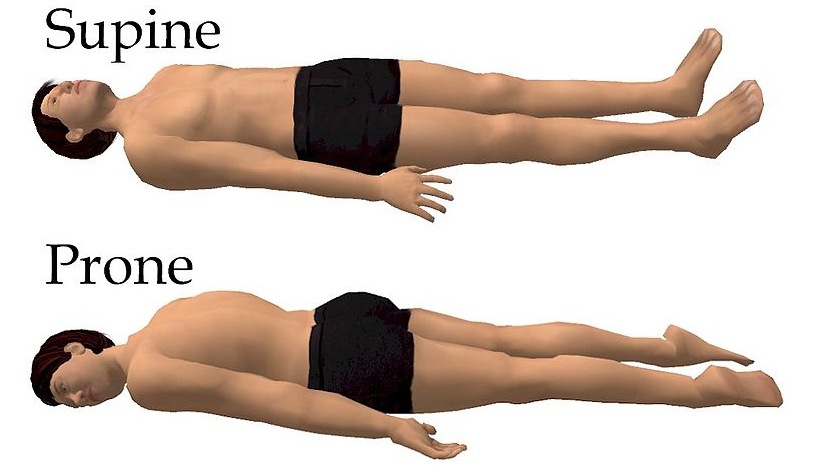
Actually, I have used the supine and prone versions of crawling for about 7 years.  Here is what I mean when I use the anatomical terms supine and prone:

supine and prone

Crawling was valuable part of our warm up when I worked with my younger athletes.  I have to admit however that I really only used crawling movements with the younger population, mostly between the ages 9-12 yrs.  Reflecting back, I wish I would have programmed more crawling with my elite athletes and corporate personal training clients.

Babies crab and bear crawl all of the time.  It is essential for their movement and development into the early walking stages of life… Check out these videos for proof….

The Crab Crawl and Variations

The crab crawl is the supine version of crawling.  The front of the body faces the ceiling and back faces the floor.

Here is a simple variation of a supine crab crawl called the Table Top Pull Through.  You’ll understand why it’s named this way once you click on the video.  Great warm up movement…

With the younger athletes, I mostly used the crab crawl (supine).  I saw (and still do see) tremendous value in the upper body and lower body connection that a supine (crab crawl) provides.  When working with younger athletes, it’s important to keep the balance of entertaining them (keeping them engaged in what you’re coaching) and teaching them how to use their bodies.  It’s quite an interesting process working with younger kids, I deeply respect any coach or trainer that is successful at it.

Here is what a full crab crawl looks like:

I would ask my athletes and clients to crawl forward like you see in the video above until I verbally cued “hips up!”, at which time they would stop, raise their hips and form that human table top that you viewed in the first video.  The backside muscles of the body light up during this static hold, as does the torso.  While the backside activates you’re simultaneously lengthening the anterior (front side) aspect of the shoulders/pecs.

This is such a fantastic movement for people who sit all day long.  It really helps to unwind some of the structural changes that as a result of sitting for extended periods of time.  Unwinding and reversing these changes is really important to avoid unnecessary injury and malfunction.

It was great, but most of all, it was fun for the kids and adults alike.  It’s one of those movements that doesn’t feel like a “workout”, yet has tremendous bang for your buck.

Shortly after incorporating the crab crawl, I started playing around with the bear crawl.  This is essentially the flipped over version of the crab crawl, with the participants face and belly facing the floor.

You’ll notice  that it is quite easy to “butcher” crawling movements and cheat.  However, if you take your time, align your body and move as if you were trying to stay as soft and quiet as possible, there is an incredible amount of motor control, timing and recruitment that takes place to make it all happen.

Sidenote:  I have found the “soft and quiet” idea to be quite effective for working to perfect movements related to crawling and Turkish Get Ups.  Staying soft and quiet asks the person to stabilize and activate muscular in a timely manner in order to be graceful.  In a fitness world that seems to drool over “harder, faster, aggressive, yeah!!!!”… moving with grace is a nice breath of fresh air.  Think yoga-like grace.

Now, the bear crawl, just like any other movement, can be performed at different speeds.  My recommendation is to prove that you can perform the slow motion bear crawl before you start racing around with horrible technique.  I’ve seen some videos of bear crawl racing on YouTube.

Not where you should be starting…

If you can’t go slow with expert like technique, why should you go fast?

It’s almost hard to say “technique” when talking about bear crawls, because I don’t know if anyone has actually established what ideal technique should look like.  It’s open for interpretation and varies depending on who you are talking to.

Keeping the mid-section still and some sort of rhythm is key however. Picture a glass of water balancing on your back as you crawl, avoid spilling any of the water during the movement.

—> Keep the bear crawls training effect in perspective…

1)  The bear crawl is a demanding exercise that has progressions, just like any other exercise.  If you can’t hold a satisfactory plank or properly activate your abdominal musculature, bear crawling might be a little further down on the needs list for you.  You may have to fix some other things first, than work into the full bear crawl.

2)  Start slow and perfect the movement. Move with control over speed.  It’s not a race.

3)  Don’t expect anything extreme to come from the bear crawl.  You’re not going to develop a six pack (abs are made in the kitchen), burn crazy fat, or become super human by incorporating the bear crawl into your workouts.  It’s a tool, treat it as a small but important piece of the whole picture.

4)  Integrate the bear crawl into your warm-up.  It’s a fantastic upper/lower body activating exercise that will prepare your joints for the demands of the workout.

I have to admit, I am fascinated with animal movements and how they can and should fit into a training program.  It’s an old idea that is creeping back into workout programming for forward thinking coaches.  I value animal movements, but I wouldn’t be the first to base an entire program off of them.  As I mentioned earlier, they are tools and puzzle pieces that help create a complete program.

Definitely worth messing around with in your own training however.  I can say that for sure.

—>  People will think you are a weird for sure…

You’ll get some weird looks if you’re doing bear crawls in a public place or at your local gym, but remember, who cares?  People don’t think much about anything, so just do it.  You’ll have a blast and create some positive training effects from it.  If you’re at the gym and people roll their eyes, let them.  You’re ahead of the game by incorporating crawling movements into your training regimen. Keep yourself away from stale training programs.

Cheers to humans crawling around like bears and crabs…

KG