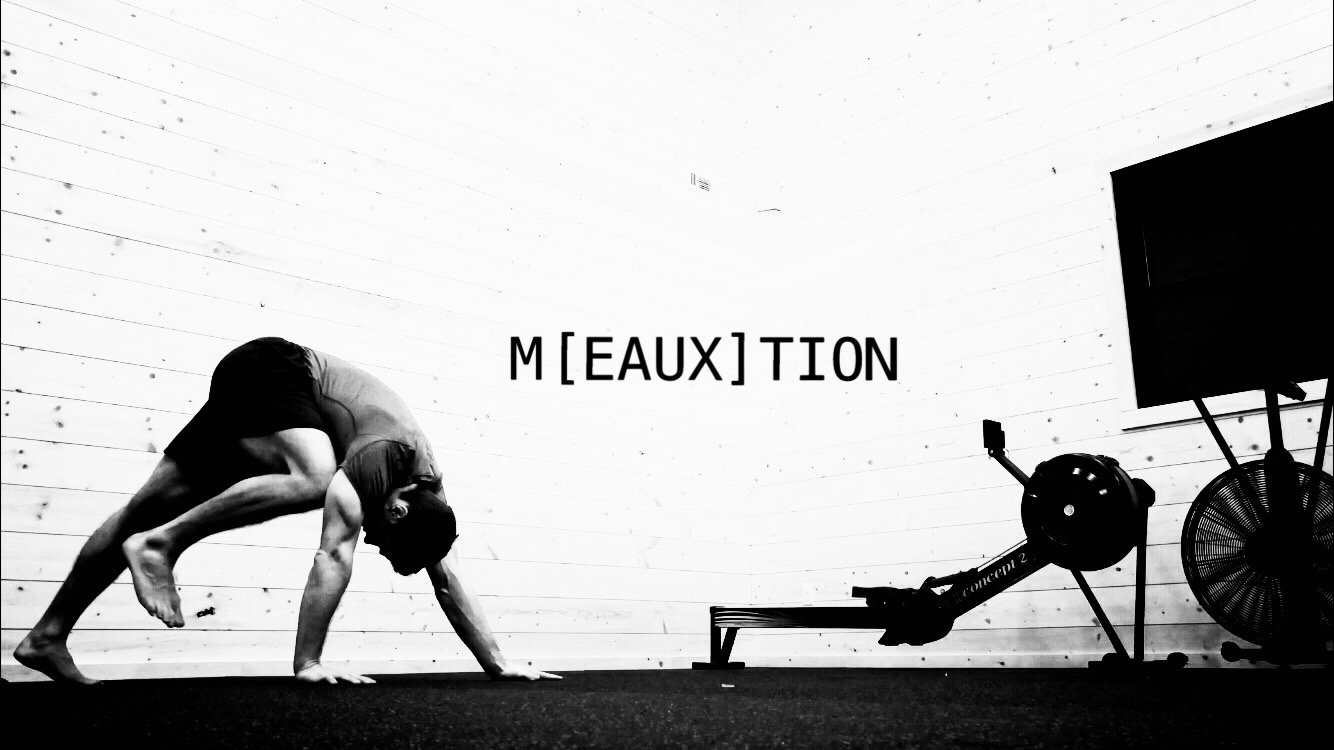
Saturday always provides adequate time to explore different combinations of work capacity style circuits.
I like to take the governor off and push myself on Saturday mornings.
This past Saturday didn’t disappoint.
The goal was to accumulate 25-30 minutes of a work:rest style circuit. I didn’t feel like being monotonous with the exercise selection so included 10 different exercises, stringing them together strategically so that I could give an honest effort to each exercise without sacrificing anything (mostly due to fatigue) to the next exercise in the circuit.
It really worked out well and challenged a number of movement patterns.
The equipment that I used: 24kg kettlebells x2, jump rope, Jungle Gym Suspension Trainer
Here is how the workout was structured…
—> 20 seconds of work: 20 seconds of rest of the following:
24kg kettlebell snatch right hand
rest
24kg kettlebell snatch left hand
rest
Bodyweight Chin Up
rest
Double 24kg kettlebell squat-to-press (aka: Thrusters)
rest
Mountain Climbers
rest
Kettlebell Figure-8 (advanced and technical, but great drill)
rest
Bodyweight Push Ups
rest
Double 24kg Lunge (alternating sides)
rest
Hand-to-Hand 24kg Swings (alternating every rep)
rest
Burpees (jump and push up)
rest
Jump Rope (combination of two foot bounce and running)
—-> Repeat 4 complete cycles of the above…
The best part about this workout is that you don’t have to worry about keeping track of reps. When I am doing work capacity style training, counting reps can be a major pain. It’s really the last thing I want to be doing while I am huffing and puffing. Instead, the work starts on the buzzer and ends on the buzzer. It’s really convenient.
Know thyself… If you’re a beginner, this workout might not be scaled to suit you. If you’ve been working out for a while, this might work great for you. If you’re a tough guy or gal, bump up the weight for kettlebell exercises, add a weight vest to chin ups and push ups, use a weighted jump rope, etc. I can provide exercise progressions to bury anyone if that is what you are seeking, hopefully that isn’t the case though. Smart training reigns supreme.
You might see a lot of volume in a workout like this, and you’re absolutely right, so nice observation. However, I preach workouts that can be managed. I managed this one nicely. Notice how explosive work is ordered first in the workout. That is on purpose. People tend to get hurt when they attempt to move weight quickly under fatigue and will poor form. I am not foolish enough to place a highly technical lift at a place in the workout when I am most fatigued.
Also notice that all of the exercises are non-competing, and ordered in such a way to respect that. In fact, look at the kettlebell figure-8 + bodyweight push ups + double 24kg lunge… sequence. Very different muscles are being taxed there. Figure-8’s are combination of squats with rotational power where the kettlebell moves from a high front to low back to side and finally diagonally across body to high position (hybrid movement). Push ups are an upper body push dominant exercise, and lunges are mainly a lower body hip dominant exercise. This allows for an increase in heart rate and work, without gassing out the body for the next exercise. You tax one movement pattern, than move on to the next.
Different movement patterns, different muscles, quality technique, short rest, big training effect.
Now I don’t own a calorimeter or a metabolic analyzer, but I would guess that the calorie burn from a workout like this was quite high. Maybe 650-800kcals total, and that doesn’t include the residual calories that are burned post-workout. Shortened rest periods combined with resistance based lifts that leverage a sub-maximal muscle contraction are notorious for creating an after-burn effect, it’s been studied quite extensively in the last few years as the concept of fat loss slowly gains momentum versus weight loss.
Metabolism can stay elevated for several days leveraging workouts like this.
If you leverage some quality eating habits during that period of elevated metabolism, you’ll burn some fat no doubt. Rinse and repeat the process and you’re going to end up burning a bunch of fat.
I should also note that I designed this workout knowing that the coming days were going to be either complete rest (no workouts) or at the very most, a short yoga/static stretch session. It’s important to rest, recover and let your body heal in between workouts. Your body can only handle so much stress before adverse events begin to occur. You really don’t want to play chicken with overtraining or chronic fatigue in general. The point of recovering in between workouts is to give your body the best possible chance to leverage the work done in the previous workout, while allowing enough time to enter the next training session and make gains.
I think that a lot of people could lose greater amounts of body-fat (faster) while boosting performance if they decreased the amount of cumulative stress from workouts. You want your body to recover in full. Always entering a workout in a state of recovery is bad for business. If you haven’t acquired a full taste for physical activity, this is good news for you, as each dedicated workout can be used to accelerate
Instead, choose fewer weekly workouts that create a larger (but quality) training effect. Make them count.
Focus on accelerating other areas of life while you recover in between sessions. Focus on establishing quality eating habits. Re-think your water intake. Read more books on success and self-growth. Calm the mind with yoga, foam rolling and a long static stretch session. Get more sleep.
Learning how to workout is great, and building fitness is empowering. But keep your training efforts sustainable. Win the war, not just the battle.
Give this workout (or a variation of it) a go.
Cheers to kettlebell and bodyweight workouts!
KG


 M(eaux)tion Fitness