Kettlebell Clean – Press- Squat

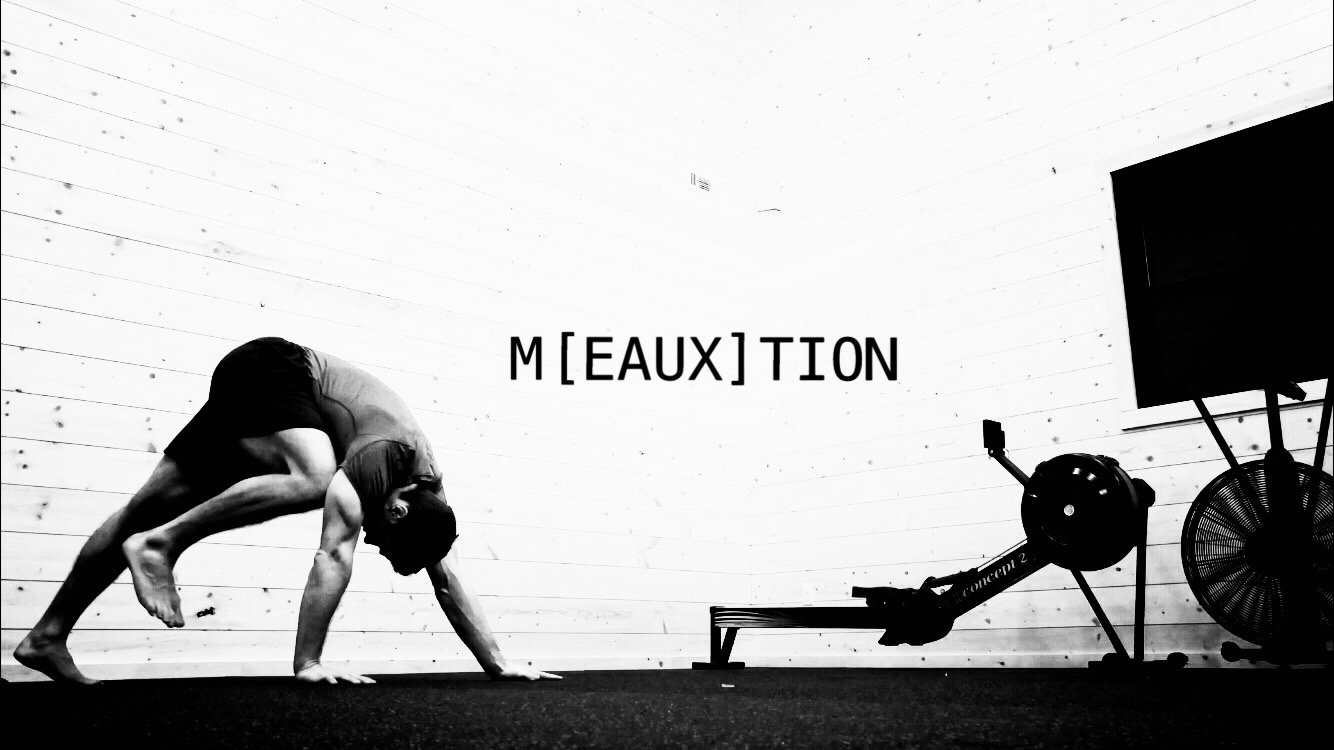
Motion

Years ago when I was low on cash and training in my studio apartment, my lone pair of 24kg kettlebells provided workout after challenging workout.  Making the most of a tiny home gym also gave me PHD in resourcefulness. 

Kettlebell training is unique, unlike any other mode of training.

Bursting onto the fitness scene in the early 2000s, kettlebells gradually became a mainstay piece of equipment in gyms all over the world.

Kettlebells disrupted fitness.  The spotlight was shifted really functional loaded exercises.  Drills like swings, cleans, snatches, Turkish Get Ups and other combinations became the new standard.  Most of which performed in standing position.

Though the effectiveness of kettlebell training has never changed, the novelty of the tool has since dissipated, which is common in the fitness industry.  

Exercises, equipment, and methods lose their popularity in the mainstream… here today, gone tomorrow.  

“Bring in the next shiny toy of the year, please!”.  

Despite the sex appeal fading a bit, basic kettlebell exercises remain brutally effective for building strength, conditioning, and fat loss.  

I’m one of those people who don’t forget.   

Outside of nutrition, sleep, hydration and adequate non-exercise activity on a daily basis… short burst kettlebell training (high intensity, low rest, etc) is amazing for burning body fat.

And yes, if you want to maximize workouts, you’d better be auditing habits outside of the gym.  Don’t sabotage your efforts. 


Kettlebell Clean, Press and Squat Combo

The clean, press and squat combination is a prime example of how a simple 3 exercise circuit can be leveraged to produce a significant training effect.  

And it doesn’t require much time at all.  15-20 minutes at most. 

For your eyes only… 


This kettlebell combination features 3 staple exercises:  clean, press and squat.  

Each exercise is performed with very little or no rest in between each exercise.  

Smooth transitions between each exercise is the goal.

Changing levels with the kettlebell… cleaning the bell from under the legs up to the front rack position, pressing overhead, back down to the front rack for the squat for repetitions…

… is pure work.  

This work creates a total body training stimulus.  

It’s the “magic sauce” of this combination.  

Before moving on, here are some key thoughts:

  •  You must have a working familiarity with each exercise before engaging in this circuit.
  •  Respect fatigue and what it does to the body while under load (increase rest if needed)
  •  Work reps, rounds and rest periods appropriate to your 
  •  Choose a sub-maximal kettlebell weight that allows for 10-12 reps per exercise (even though you’re going to do 6 reps).
  •  Not sure what weight to start with? Go light, work up as needed.
  •  Keep the workout short (15-20 minutes at most)


Alternatives/Substitutions

Not everyone is going to have access to a pair of kettlebells that are the same weight, or maybe they are the same weight, but too light or too heavy for your current fitness level.  

One of the most important ideas in staying fit is becoming resourceful.  When space is limited, equipment is scarce or time is tight, DO NOT FOLD.

How many times do we read a workout blog or fitness article and realize we don’t have the same set up the author did?  I’ve had this experience hundreds of times.  

What do you do?  Make adjustments, move forward, get the work done.

No kettlebells?  It’s ok!  Here are some equipment alternatives:

  • Barbell (same exercises and reps)
  • Dumbbells (same exercises and reps)
  • *Bodyweight (change exercises and reps)

Barbells and dumbbells are the most common pieces of weight training equipment in the world.  Most hotel gyms, YMCAs, 24Hour Fitness or Big Box Gym is going to have one or the other.  

Both allow for the clean+press+squat exercise combination to be performed.  The main difference between barbells/dumbbells and kettlebells is the design and how you can maneuver them.  

Barbell training fixes both hands to the shaft of the barbell.  For some people, this is great because you’re not having to control each hand independently.  

Dumbbells allow for independent arm work, but the shape of dumbells means you’ll have to tweak hand position/technique for each exercise.  These are subtle adjustments are mainly to avoid bumping the dumbells into your body on each movement.  

Bodyweight.  Now, if you’ve got no equipment available whatsoever, you’re still in the game, don’t worry!  You’ve got plenty of options.  Tons.  

When resources are scarce, you make adjustments, adapt and push forward.  Don’t get hung up on imperfections. 


Try this bodyweight combination…

Wouldn’t it be great if life was perfect all day, everyday?  Yes, it would be. 

(👋 slap across the face)

Life’s not perfect and never will be, so the best practice is to be ready to embrace the situation presented and make do with what you’ve got.

If bodyweight is the only option for the workout, consider digging into this circuit:

  •  Alternating Split Squat Jumps
  •  Dive Bomber Push-Ups
  •  Air squat (or variations: pistols, rear foot elevated, etc)
  •  Burpees

– 6-8 reps per exercise

– 6-10 rounds

– Limited/no rest between exercises

– 45-90 seconds rest after each round.

Perform in descending order (top to bottom) without rest between exercises.  Alternating split squat jumps first, then dive bomber push ups, etc…  

Factoring in no weight is being used to load these exercises, consider increasing reps per exercise, increasing the number of rounds performed or reducing the rest periods.  

Be mindful not to adjust all of these variables in one shot, it may create more fatigue than what your body can handle.  It’s like fine-tuning the dial on a boombox to get the signal of a radio station.  

Tweak here, tweak there.

Burpees?!?! What?!?! I h*te you!?

I don’t believe burpees are the greatest exercise on the planet. 

Some people do, I do not.

Burpees are often blindly prescribed to the wrong people and abused by many, but burpees are an incredible exercise to increase heart rate quickly and condition the entire body… in a pinch.

Personally, I rarely perform burpees.  But if I have few other options, hell yeah, I’m going to rip out some burpees.  

Don’t tar and feather me.

👉👉👉 Up for a challenge?  Try this burpee variation.

So, you have access to kettlebells, but… 

  • Kettlebells are too light
    • Increase the reps 
    • Increase the rounds
    • Decrease the rest periods
    • Add other kettlebell moves or filler bodyweight exercises
  • Kettlebells are too heavy (for desired rep range)
    • Decrease the reps
    • Decrease rest periods
    • Insert bodyweight filler exercises to achieve desired training stimulus)
  • Only 1 kettlebell (see video below)
    • Perform exact same exercises one side at a time 
    • Finish both sides, take rest period
    • Single kettlebell training is fantastic.

Ok, I’ve laid it out for you.  Time to dig in.  

Get after this exercise combination.  The kettlebell clean-press-squat combination is awesome for improving strength, conditioning and fat loss. 

Go.  Now. 


Cheers, 

Kyle 


90 Days of Kettlebell Complex Workouts

15 minute Workouts

Kettlebell complex workouts accomplish a lot (strength, muscle endurance, work capacity, afterburn training effect, etc) considering the time investment (15 minutes or less).

I’ve got an extensive background using complexes on training days where time is tight and when I want to lean out quickly.  

Complex training is not a miracle, but for me and many others, they do pack a MASSIVE punch.  

Essentially for 90 days, I used the same catalog of exercise, weight, reps, sets and rest periods to observe the adapations and see what would happe.  

Calorie intake (and the quality of those calories, protein intake, etc) remained as consistent as possible.  

To be fair, there was probably some slight variance with calorie intake over the 90 days, but it was controlled and kept as consisent day-to-day as possible.

Complex workouts, particularly using kettlebells, are my go-to modality for quick and powerful combination of resistance training and conditioning.  Some refer to this as metabolic conditioning, fine.  

No matter what you choose to call it, complexes deliver an awesome training effect in a really short amount of time.  

Here’s the 20,000 foot view of my personal experiment using a kettlebell complex:

  • Duration: 90 days
  • Complex workouts per week: 3 (sprinkling in airbike session on the weekends)
  • Rounds per workout: 5
  • Reps per movement: 6 (except for kettlebell swings and pushups… 15 reps for those)
  • Equipment: 53lb (24kg) kettlebells x2
  • Rest: No rest between movements, 60 seconds of rest after each round
 

The Kettlebell Complex Workout

Double Kettlebell Clean x6

Double Kettlebell Front Squat x6

Double Kettlebell Overhead Press x6

Alternating Gorilla Rows x6 r/l

Double Kettlebell Deadlift x6

2-Hand Kettlebell Swing x15

Bodyweight Push Ups x15


After the last rep of push-ups, rest for 60 seconds before starting the next round.

Again, one full pass through each of these exercises from beginning to end  = 1 round.  

Complete 5 total rounds.

Make sense?

The combination of 7 different exercises to stress the entire body, movement tempo, no rest between exercises and incomplete rest after each round makes complex training extremely challenging.  

In 15 minutes or less, you trained the entire body, addressing strength and conditioning in one workout.  

Complexes are generally made up of 4-8 exercises, mixing ballistic, upper and lower body resistance training, bodyweight and even ground based conditioning exercises like crawling, etc.

Results

Lean and efficient.

If I wasn’t such a dipshit, I would’ve documented exactly what happened with, before and after pictures, saving the chit chat. 🙄 Now you all think I’m liar.

My bodyfat percentage dropped below previous lows (my college hockey playing days).  I can’t say this didn’t come at the expense of losing some muscle and raw strength, but I leaned out pretty aggressively.  

Nutrition.  The 90 day experiment was a reminder of the power nutritional consistency (calorie management, protein intake, hydration, etc) and how much impact it has on fat loss.  

But I also have to tip my cap to impact of exercise.  Exercise matters.  It adds muscle, strength, burns calories and has a plethora of health benefits.  I hate it when people ONLY preach nutrition or exercise for aesthetic gains.    

Execute both and maximize your results.  

Complex workouts can add lean muscle (resistance training) while accelerating fat loss.  

Work capacity improved dramatically.  How do I know?  After roughly 6 weeks, I could’ve dropped the rest periods to 45 seconds and added another round.  Specific adaptations to imposed demands.  My body acclimated to the stress and I became efficient at crushing the workouts.

In the last few weeks of the experiment, I added a 6th round, then a 7th and closed it out with 8 rounds.  

The negatives of adding more rounds was the increase in time it took to complete the workout, and a general feeling of diminishing return.  

More volume isn’t always the answer, and in this case, I felt it was probably overboard.  

Progressive loading.  The purists will tar and feather me for not increasing the loading, but AGAIN, I deliberately avoided progressive loading. I wanted to see what zero change looked like after 90 days. 

Strength gains plateaued quickly, but this was also expected bI never increased the weight of the kettlebells.  Again, SAID Principle at work.

Without progressive increases in weight using the exact same exercises, strength stalls.

The goal was engage in a little experiment.   3 months of the exact same complex workout.  No change, no deviation, just consistency.

Cautions

Know the exercises beforehand.  

Don’t “learn” how to control the kettlebells while under fatigue.  

Practice and develop familiarity with each of the exercises in ISOLATION FIRST.  

 Complex workouts are great for helping the fat loss process along.  But this type of exercise is much different than aerobic steady state cardio.  The fatigue hits hard.  

This type of training is also very different than a traditional approach to lifting weights, where you’re performing reps and then taking full rest before the next work set.  

Complexes are purposefully designed with incomplete rest periods.  In the later rounds, you’re going to cringe at picking up the kettlebells to start again.  

The key is find the right balance of weight used and rest periods.  You want the session to be difficult but not impossible, yet not so easy that you walk away feeling like you could have done another 4 rounds.  

5 rounds should be a bear 🐻 

Lastly, whenever weights are being used to create a conditioning type training effect (metabolic conditioning) the user runs the risk of mishandling the equipment, losing body position and tension, etc… resulting in tweaks, strains and injury.  

USE COMMON SENSE.

If you don’t have access to a pair of same weight kettlebells, this workout could be adjusted to use dumbbells aor a barbell instead.  

Note:  It’ll be difficult to include swings if you use a subsitute.  

Progress slowly and adjust the training variables incrementally…  Start with light weight, decrease the reps, add rest periods between each exercise, increase the rest after each round.  

Over time, do the exact opposite of the previous suggestions to keep the workouts challenging.  Increase weight, increase reps, reduce or remove rest periods between each exercise or shave off time after each round.   

Let exercise technique be your guide.  If you feel technique deteriorating, rest.  Simle as that.  

The goal is to control every movement, rep, set and stay the hell away from injury.  

Closing

Complex training is perfect for people who are looking to get a TON of work done in a short amount of time.  

In this busy world (career, kids, social life, hobbies, daily duties, etc) not every workout can last 90 minutes.  

When you’re short on time and have the drive to get a sweat in, complexes are extremely valuable, without giving up much. 

Plus, complex workout generally require very little space and equipment, so they are great for at-home workouts.  

For people who are regularly lifting weights and doing cardio, I highly recommend adding in a complex day (two) throughout the training week.  Mixing it up here and there can provide a refreshing break from your normal exercise regimen.  


e