Kettlebell swings are a dynamic exercise that’s been proven to be a powerful tool for weight loss, especially when shedding unwanted fat. Kettlebell swings are a highly effective exercise for fat loss due to their high calorie burn, total body workout, cardiovascular benefits, functional movement, and low-impact nature.
This blog post will examine why kettlebell swings are one of the best exercises for fat loss and explore the science behind their effectiveness.
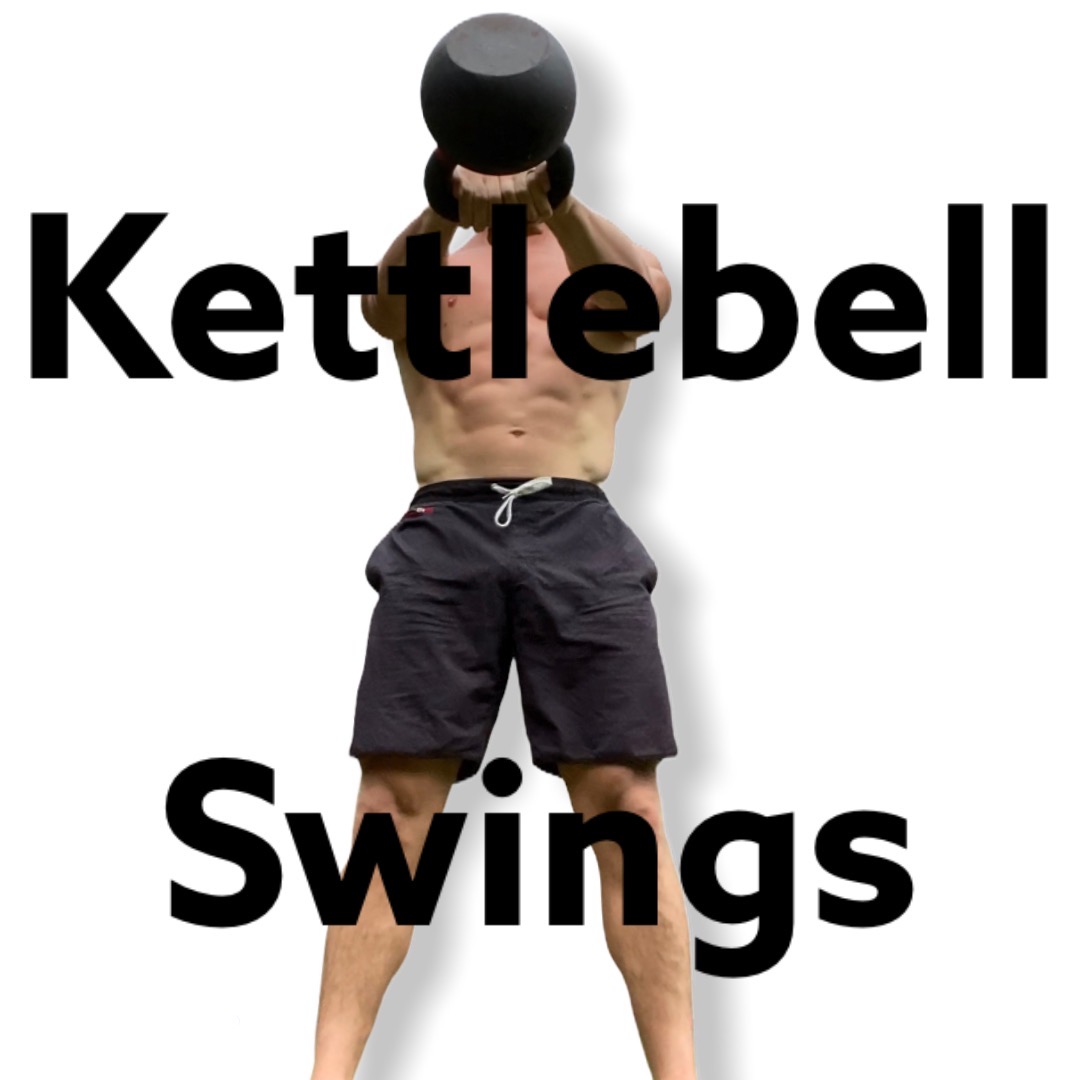
First, let’s define what kettlebell swings are. I won’t assume everyone reading this has been swinging kettlebells for years. Here’s what swings look like. My YouTube and Instagram have tons of clips of me swinging.
Kettlebell swings are a ballistic exercise that involves swinging a weighted ball-shaped object, known as a kettlebell, between your legs and up to shoulder height. This movement engages your glutes, hamstrings, quads, core, and back muscles.
So why are kettlebell swings the best exercise for fat loss?
High Calorie Burn
Kettlebell swings require significant energy output and have been shown to burn a lot of calories quickly. Studies have shown that kettlebell swings can burn up to 20 calories per minute, making them one of the most effective exercises for fat loss.
Total Body Workout
Kettlebell swings exercise an extraordinary number of muscle groups simultaneously, including the legs, glutes, core, and back. This full-body workout is ideal for increasing strength and conditioning and promoting fat loss.
Improved Cardiovascular Health
Kettlebell swings are a high-intensity exercise that gets your heart rate up quickly. This type of cardiovascular training has been shown in studies to improve heart health, boost metabolism, and increase fat burning.
Functional Movement
Kettlebell swings mimic (and enhance) many daily movements, such as lifting and carrying heavy objects. This functional movement pattern helps improve overall fitness and enhances our ability to perform daily activities efficiently.
Improve Maximal and Explosive Strength
Kettlebell swings are a powerful exercise for building muscle and improving overall fitness. The explosive nature of the movement requires a significant amount of force to be generated by the lower body muscles, making it an effective way to improve strength and power.
The study “Kettlebell swing training improves maximal and explosive strength” was published in the Journal of Strength and Conditioning Research in 2014. The study investigated the effects of kettlebell swing training on maximal and explosive strength in the lower body. The participants were 16 recreationally active men and women randomly assigned to either a kettlebell swing training or a control group.
The kettlebell swing group trained with kettlebell swings twice a week for six weeks, while the control group did not perform any resistance training during the study period. The kettlebell swing training program consisted of three sets of 20 kettlebell swings with moderate weight.
After six weeks of training, the kettlebell swing group showed significant improvements in maximal and explosive strength in the lower body compared to the control group. The researchers concluded that kettlebell swing training effectively improves lower body strength and power output.
Low Impact Exercise
Kettlebell swings are a low-impact exercise, which means they put less stress on your joints and muscles compared to high-impact activities like running. This makes swings an excellent option for individuals looking to lose weight but may have joint or mobility issues.
How Many Kettlebell Swings Should I do?
Most people will see fantastic results (after about 4 weeks) from performing 75-150 repetitions of kettlebell swings in a single workout, 2-3 days per week. The sensible approach for beginners is to start with lower repetitions an
Over time, the swing volume can increase by adding repetitions to each work set, or by adding an additional work set.
[Buyer beware: Swings aren’t a miracle, don’t expect immediate results from 1-2 workouts. It doesn’t work like that.]
Total Body
The kettlebell swing works a lot of muscles on each and every rep.
Swings are a ballistic (explosive) pendulum-like exercise that hammers the hamstrings, glutes, core, forearm, and back muscles all in one shot.
To maximize power training, turn your focus on pulling the kettlebell through the legs explosively and “pop” the hips forward into an extension on every rep.
Make sure the kettlebell appropriately weighted. Swinging a kettlebell that is too light will not provide enough of a challenge for the powerful muscles of the posterior chain. Explore different weights and be sure to increase the weight when it’s necessary.
Calorie Burn and Fat Loss
I really want to avoid going overboard with the potential fat loss benefits associated with kettlebell swings.
For me, it’s not fair to label any exercise as being SUPREME to others for burning fat.
And the fact is, nutrition you talk to the nutritionists, exercise and there are too many other factors influencing the amount and speed of losing body fat.
That being said, kettlebell swings burn a significant number of calories and can make a nice contribution to fat loss.
The big takeaway, as it pertains to fat loss, is that kettlebell swings recruit a lot of muscles, and the work really adds up (calorie burn) if performed for multiple sets.
A kettlebell swing focused workout could burn up to 150 calories in 12 minutes.
Kettlebell swings burn a lot of calories because they work a large number of muscles.
In general, the more muscles working during an exercise, the larger the calorie burn of that particular exercise across time.
Thousands of people have experienced amazing aesthetic transformations (in addition to performance gains) by adding kettlebell swings to their workout.
Core Training
Kettlebell swings condition the core in a really unique way.
During each rep, the hips catapult the kettlebell up the arc of motion, while the lats pull the kettlebell back down.
A fully active kettlebell swing hammers the core muscles, particularly while pulling the kettlebell back down through the arc of motion. Actively reversing the motion at the apex of the swing hits the core muscles good.
While the kettlebell swing might not deliver the same muscle burn (mostly due to lack of time under tension) through the mid-section (like Turkish Get Ups, L-Sits, or Dragon Flags), the core muscles are getting a solid dose of stress.
Scroll up and reference the first photo in this blog post.
The core gets a workout during swings, no question.
Improve Athleticism
Kettlebell swings are amazing for training power and explosiveness.
The velocity component to kettlebell swings is a key ingredient to its effectiveness for improving power.
Kettlebell swings can improve strength, but they are probably best thought of as an enhancer of strength.
Swings serve as a supplement to strength exercises like deadlifts and squat.
Muscular endurance is the ability to produce sub-maximal muscle contractions for extended periods of time. Moderate to high rep kettlebell swings SHINE for building muscular endurance.
Other notable athletic benefits include balance and coordination.
Perfect for the Home Gym
Swings require very little space, making them PERFECT for a home gym workout.
Nobody’s home gym is a perfect space. You work with what you’ve got. And that’s fine because kettlebell swings shine in imperfect spaces.
Kettlebell swings are a front to back pendulum exercise, so the clearance needed to swing is minimal.
Reach your arms out in front, then reach your arms behind your body. If you didn’t touch anything, you’re good to perform swings in that space, no matter where it is.
Swings reign supreme for home workouts because overhead clearance is not a factor. The swing range of motion rarely rises above sternum height.
I’ve swung a kettlebell in bedrooms, living rooms, kitchens, etc.
Being able to perform swings almost anywhere decreases the likelihood of missing a workout due to environmental constraints.
Off-setting the long hours spent driving with active mobility trainingand a quality swing workout can unwind time spent sitting.
Normally, people rely on bodyweight exercise or running while traveling.
The kettlebell can add a new dimension to the usual travel workout.
Kettlebell swings integrate really well with bodyweight or suspension trainer exercise and can boost the training effect.
Or, make a workout by combining swings with other time-tested exercises like presses, rows, squats, snatches, cleans, lunges, or Turkish Get Ups.
Note: Kettlebells aren’t ideal for air travel because of weight and having to lug it around the airport.
Listen to Joe Da Sena talk about this travel habits with his 20kg kettlebell on the Joe Rogan Experience Podcast.
Low-Impact
Kettlebell swings are a low-impact exercise that can deliver a potent cardiovascular training effect similar to running, according to this study.
The subjects in the study swung extremely light kettlebells (in my opinion) and were still able to generate an aerobic training effect comparable to running.
Low impact activities that have a high energy cost/metabolic demand can be great for a lot of people.
Simple to Learn
For benefits, kettlebell swings are easy to learn.
Hike and Hinge
Hike the kettlebell between the legs, hinge and load the hips, shoulders stay higher than the hips.
2. Root
Pull the kettlebell through legs from the back to the front of the body, “root” the feet firmly to the ground as the bell arcs upward.
3. Float
Float the kettlebell as it reaches the apex of the swing.
Common Mistakes:
Avoid “lifting” the kettlebell or squatting the kettlebell.
The best way to avoid lifting the kettlebell is to choose a weight you cannot lift. People can muscle up lighter weight. When the kettlebell is too heavy for muscling, you’re forced to power it up with hip action.
Avoid squatting by practicing the kettlebell deadlift, which has very similar mechanics to the swing.
The swing is a hip hinge, not a squat.
Kettlebell Swing Variations
Kettlebell swings have a number of awesome variations to keep workouts fresh and challenging.
The three most common swing variations are:
2-hand swing
The exercises above are ranked in order of learning importance. Always start and train the 2-hand swing hard.
Once you’re acclimated to the basic three, explore other swing variations.
Hybrid swing variations:
Dynamic Forward and Lateral Single Arm Swings
Single Arm Swing and Catch
Staggered Stance Single Arm Swings
Band Resisted Swings Traveling Swings
Outside-the-Knee Swings
Side-to-Side Swings
The staggered stance single-arm swings are a personal favorite.
Shift body weight to the opposite leg for a more aggressive loading stimulus on each rep and the rotational component of this swing variation is evident.
With a few different weight kettlebells, switching up the swing variations throughout the workout becomes a refreshing approach and a great way to train.
Creating Workouts with Kettlebell Swings
Creating a workout that includes kettlebell swings is simple.
Kettlebell swings can be performed in an isolated fashion without any other exercises or can be paired with other movements to create a 2-3 exercise circuit, building up to a complex style workoutwhere 6-8 exercises are performed.
Kettlebell ONLY Workout
Grab a kettlebell and swing it for 10 reps.
After the 10th rep, stand over the kettlebell, don’t move.
This can serve as a workout finisher or as the workout. Don’t let the simplicity fool you.
Kettlebell Circuits
Kettlebell swings don’t have to be THE ONLY exercise in the workout.
You can increase a workout’s impact by adding other exercises to make a circuit.
Example:
1a) Clean to Overhead Press
2a) Goblet Squat
3a) Bent Over Rows
4a) Push-Ups
5a) Kettlebell Swings
Amplify the Training Effect Using Cardio Machines
Mixing kettlebell swings with other equipment, cardio machines, bodyweight or accessory lifts is a great way to amplify the training effect of the workout.
Most of these workouts are metabolic resistance training workouts.
Low-impact workout:
1a) Row, SkiErg or Airbike x 1-minute effort
2a) 15 Kettlebell Swings
3a) 15 Bodyweight Push-Ups
Rest for 60-75 seconds, repeat for 6-8 rounds.
Kettlebells (not just kettlebell swings) pair well with cardio machines.
Several days per week, I put in 60+ minutes of steady-state cardio on the air bike.
During the workout, I like to break up the monotony of riding with kettlebell swings and/or hip thrusts.
Performing kettlebell swings saves your ass from falling asleep on the bike, puts you back in the standing position while delivering a potent training stimulus to the posterior chain.
Finish the swings and start riding again.
SkiErg
SkiErg is anterior dominant and kettlebell swings are posterior dominant. Combining the two creates a non-competing, total-body training session.
I love alternating between 8-10 heavy kettlebell swings and 100m-150m SkiErg sprints, for 10 total sets
This power-endurance type training delivers a punch with explosive efforts, cardio and calorie burn using a simple and effective workout.
If rowing, I do my best to accumulate at least 2000 meters in the session.
8 x 250m = 2000 meters.
My Results Using Kettlebell Swings
The key is consistency (swinging several days per week), respecting progressive loading (can’t swing the same weight forever and expect different results) mixing in other swing variations to challenge rotation, stability, and balance.
The style of the swing matters.
Adjustments can be made to kettlebell swings to elicit varying different training responses.
The weight and reps per set can dramatically change the style of the swing.
High(er) rep kettlebell swing work set is going to look and feel a little different because, at 20+ reps, we’re now dealing with muscular endurance and conditioning.
Low rep efforts are best for power training. Each rep is maximum effort. The goal with low rep kettlebell swings is NOT cardio, it’s explosiveness and power.
High rep swings have diminishing returns for improving power, but can be great for improving conditioning.
Each swing style has its own advantages and benefits. It’s all about what you’re hoping to achieve from your training.
Swings remain my go-to exercise for getting sh*t done.



 M(eaux)tion Fitness