3 Best Crawling Exercises for Every Fitness Level

Motion

Crawling exercises can be rehabilitative, restorative or performance-enhancing, which is pretty cool.  

I say again, crawling on the floor, without any equipment, like a baby, can serve to heal and make you stronger.  

Wild.  

Crawling exercises deliver a plethora of benefits, including:

  • Improving reflexive strength
  • Brain stimulation (activate and stimulate)
  • Integrating: 
    • Vestibular system (balance system)
    • Proprioceptive system (self awareness in space system)
    • Visual system 
  • Connects shoulders and hips using contra-lateral movement (opposite limb movement)
  • Central nervous system reset (lower stress, recovery, etc)
  • Great carry over to real world tasks
  • Interesting, fun, challenging, a breath of fresh air

Obviously, I’m a fan of crawling during workouts and I think you’ll find a ton of value in it too.  

Plus, it’s interesting, fun, challenging.  

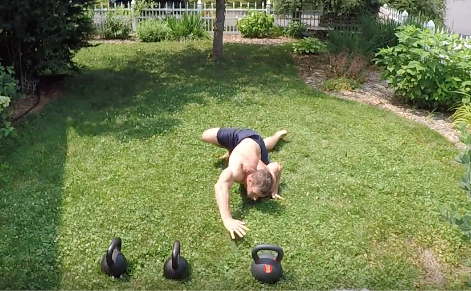
Bear Walk, Forward/Backward Crawl, Lizard Crawl

re

This article was created to share 3 of the best crawling exercises for any fitness level:

1) Bear Walk

2) Forward/Backward Crawl

3) Lizard Crawl 

As you scroll through each of these exercises, take notice of the change in body position during each exercise.   

In particular, the shoulders/chest/hips in relation to the floor.

Body position changes a lot with these exercises. 

Bear Walk

The Bear Walk is a sem-inverted position that will challenge hand and foot coordination, hip flexibility, and shoulder strength. 

During the Bear Walk, your body is working to control twisting and bending forces from your arms and legs.  

Practiced regularly, bear walks can improve rotator cuff, scapular and spinal strength, along with positively impacting hamstring and calf flexibility.

Notice, this variation of the Bear Walk involves keeping the hips high and the arm/knees straight.  

Wait, why is this referred to as a “walk” and not a “crawl”.  

No clue.  

Exercise names can be confusing.  

If I were to name it, I’d call it “Downward Walking Dog”.  

From a difficulty standpoint, Bear Walks are the most forgiving exercise to learn on this list.

Forward/Backward Crawl

Forward and backward crawling is awesome for challenging the arms/shoulders, core and hips.  

This crawling variation is excellent for improving reflexive strength.

My self-coaching cues for this exercise are simple… keep the spine parallel to the floor, avoid excessive movement through the torso while moving, quiet hand/foot contacts.

Another great cue is to “Imagine balancing a glass of water on your back. Don’t spill a drop”.

Better yet, place a shoe or a yoga block on your backside and balance that sucker for the duration of the crawl. That’ll keep you honest.

Or a wood dowel if you’re looking for insane honesty with this crawl.

As with any crawling pattern, move slow for greater benefit. 

Slow movement requires more fine motor skill and the time under tension will creep up on you.  

Animal Flow 2.0 refers to this pattern as “Beast”, and is where I first learned my technique cues.

Lizard Crawl

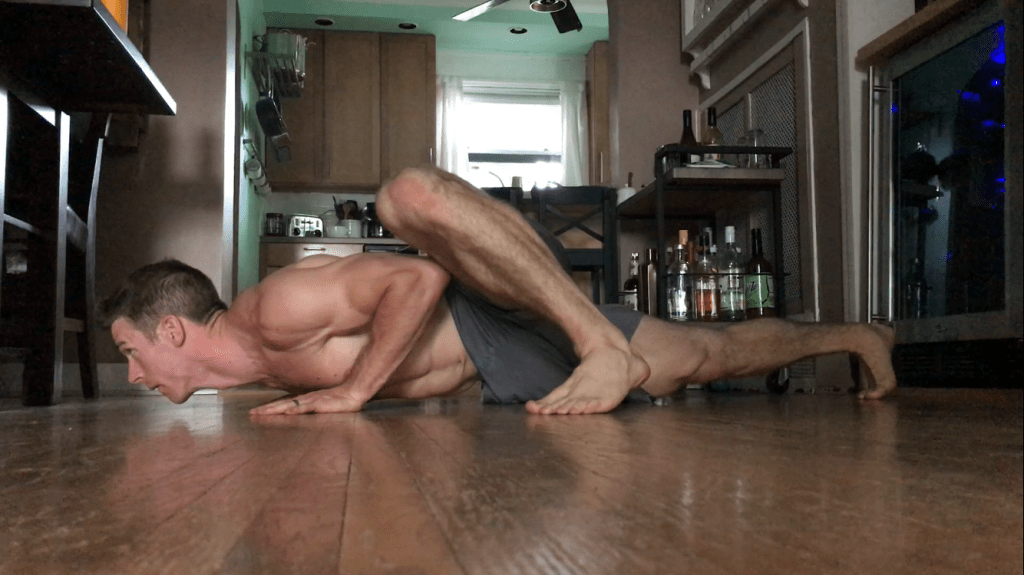
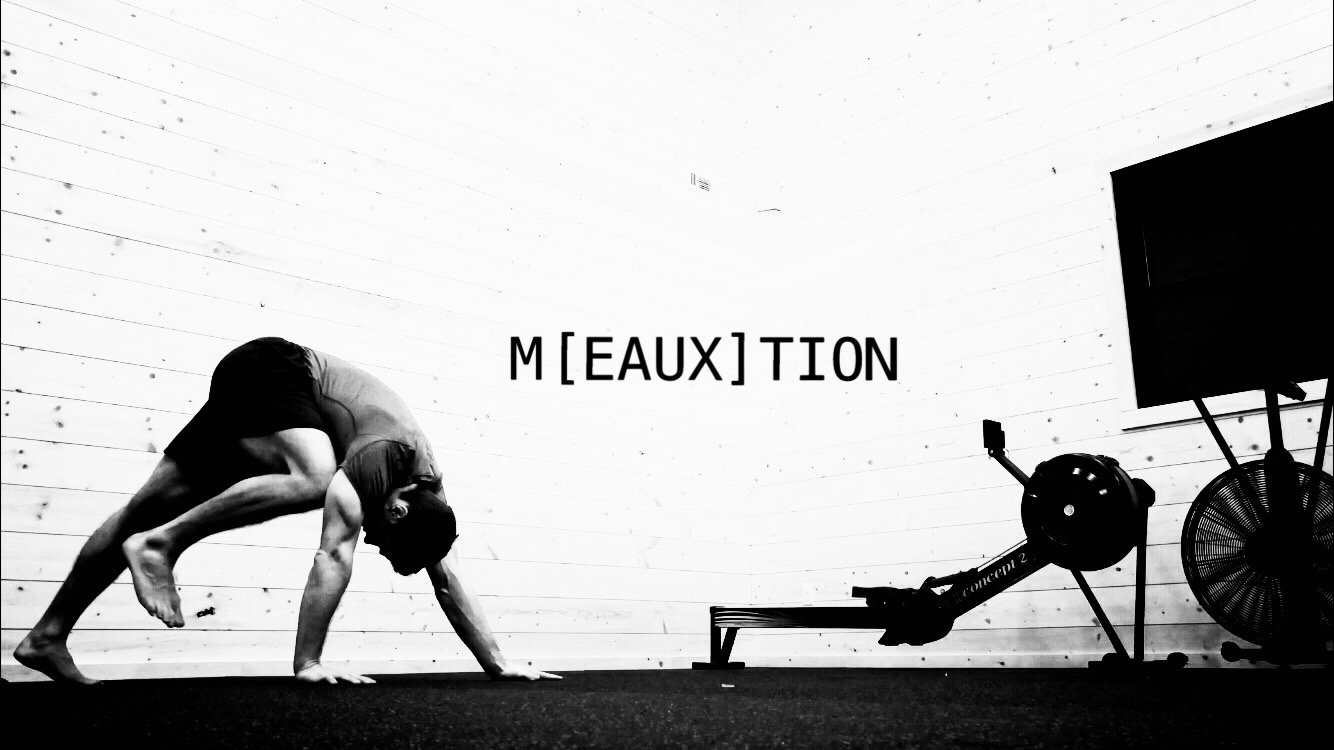
The lizard crawl is a low-to-ground locomotion pattern that seriously challenge scapular mobility and stabilization, core control and hip mobility.  

Lizard Crawl is a SUPER challenging patterns for the muscles. It takes your breath away when you’re first adapting to the demands.

Notice the how low my shoulders, torso and hips stay in relation to the ground.  

I’m hovering 1-2 inches above the floor as I move forward.  

Staying low makes this exercise extremely demanding for the muscles since you’re in a disadvantaged position. 

First timers to lizard crawling will feel this in the days after.  You’ll be sore. 

This pattern is more similar to true resistance training compared to the Bear Walk and Forward/Backward Crawl described above.  

Over the years I’ve substituted the lizard crawl in place of push-ups and other pressing exercises in workouts.

12 to 15 feet is all you will need to get a great stimulus.  Practice each work set with focus, soft hand and foot contacts, moving the limbs with control.  

Be sure to rest plenty in between effort, as this crawling pattern is more like resistance training.

Movement20XX (Vahva Fitness) does an excellent job describing lead-in exercises to the Bear Walk and the Lizard Crawl, leading up to mastery.  The progressive design of Movement20XX program was a real draw for me.  

“How to organize crawling in workouts?”

You cannot screw this up. Seriously. There is no right or wrong way to practice crawling in a workout.

If you’re a beginner, I would suggest practicing each of these crawling patterns while you are fresh.

Either as part of the warm-up or just after the warm-up, but get your crawling in before any resistance training or higher intensity exercise.

Practicing new exercises is best done FRESH, not fatigued.  You can test yourself while under fatigue down the road.  

Once you’re at the intermediate or advanced stage, you can get a little bit more creative with where you place crawling exercises in the workout.  

Personally, I like to use crawling as an element of movement sequences, long duration movement flow, or as part of a conditioning circuit. 

Try this simple combination:

Because crawling is bodyweight-based, it pairs up extremely well with equipment such as kettlebells and barbell work.

Crawling for Time or Distance

Each of these crawls can be performed for a set distance or time. 

I’ve tried both options, and they both work really well.

For distance, 15-20 feet of slow tempo, technique focused crawling is plenty for a beginner.  

I’m talking about a single set of 15-20 feet, then taking rest.  Usually, rest periods should last 1.5-2x the time spent crawling.  

Personally, I like to set a timer and crawl until it sounds.  This way I can stay focused on my movement, instead of speculating how far I’ve crawled.  

For a beginner, 3-5 sets of 30-40 seconds of continuous crawling is enough time to elicit a great training effect.

Intermediate/advanced trainees will likely need to increase the time and play around with slowing down the tempo, toying with other variations, etc.

Crawl for 5 minutes straight. 🤷‍♂️

New to ground based movement exercises?

Start adding ground based movements to your workouts, immediately.  

Don’t wait.  

Most folks simply aren’t used to doing movements like these on a regular basis. 

In fact, crawling and other ground-based movements are a rarity in most workout routines.

To improve your coordination, mechanics and skill with anyone of these crawling patterns, it’s often a matter of practice and consistency.

Home Gym Workouts! 10 Minute Circuit Training

home gym

Today’s home gym workout is all about simplicity. 

Keeping it simple, is keeping it effective. 

Turkish Get-Ups, crawling, traveling squats and lunges, push-ups, rolling are all included in the 10 minute mini-circuits of the session.  

Get ready to dirty your shirt.  

If you’re unfamiliar with any of the exercises mentioned above, please head over to my YouTube channel and perform a search using those terms.  

Always, always, always learn movement mechanics of new exercises while fresh and in an isolated fashion.  

Learning an exercise in isolation means you’re repping out that exercise with the basic work-then-rest approach.  Perform specific reps for a number of sets, rest, then attack the exercise again. 

Fatigue can be managed with this approach, allowing movement precision to become the prime focus. 

No one is above learning movements in isolation.  

The exercise’s degree of difficulty might change from person to person depending on fitness level (beginners versus elite movers), but the approach is the same.  

Learn new movements in isolation, code the movement into your system, do what you want from there. 

Workout Structure

The full workout consists of 3 x 10-minute sections, each with a different movement emphasis.

You can execute all 10-minute sections, or perform 1 or 2 depending on your space, equipment and time.  

Movement Emphasis

    • Workset #1: Turkish Get-Ups
    • Workset #2: Traveling Squats and Lizard Crawl
    • Workset #3: High Plank Step-Squat-Reach-Roll Flow

The goal is to perform the work non-stop 10 minutes with minimal rest.

Of course, movement quality is king, so if rest is needed take it to preserve the quality of each repetition.  

10 minutes is the target exertion time.  If you need to reduce the working time for each section, please do so.  Start with a duration you can tolerate, any amount of time is better than doing nothing.  👊 

After completing a 10-minute section, grab a drink, towel off the sweat and get ready for the next section.  Don’t waste time. 

Equipment List:

OMG!!! I need equipment?!?!

Not all workouts require equipment, but this one does, sorry… 

    •  * Kettlebell, dumbbell, sandbag, etc (weight for Turkish Get-Ups)
    •  Bodyweight
    •  12-15 feet of straight-away space

🤷‍♂️ If you don’t have any weights, find any object of reasonable shape and weight laying around the house that can add weight to the Turkish Get-Ups.  

Get creative, it can be anything.  A loaded backpack, children who are durable, a pet with a calm demeanor.  

At the end of this post, I’ve included equipment shopping options.


Set #1: Turkish Get-Ups

No secret sauce here.  

Turkish Get Ups are one of the best exercises on the planet. 

Stand up and lay back down for 10 minutes, alternating sides each rep. 

Turkish Get-Ups are a total body exercise and 10 minutes of continuous Turkish Get Ups is total body cardio conditioning.

Ideally, you’d have access to several different weights to switch it up.  Start by using a lighter weight, bumping up the load every 3 minutes or so.  End this 10-minute section with the heaviest load you have.

If you only have one weight, just use that.  You’ll get a good enough training effect.

I prefer to use kettlebells for Turkish Get-Ups, but I’ve used many other gym tools with success.  Dumbbells or sandbags can be used to add load to the Turkish Get Ups.


Set #2: Traveling Squats + Lizard Crawl

I love integrating isolated exercises into circuits.

Once you own a movement pattern, the options for using that movement pattern become limitless.

In the video, I’m traveling back and forth across a 15-foot distance.  

From right to left, I use a descending modified dragon squat, uncrossing the legs and standing up with a Cossack squat to shimmy across the room.  

After reaching the wall, I return to the start position with the king of locomotion patterns, the lizard crawl.  

Turn around, switch sides, repeat.

Dragon Squat.  The dragon squat is going to be a bit too aggressive of an exercise for a lot of people.  

Here are exercises to substitute:

👉  Walking Lunge (forward or backward)

👉  Lateral Lunge

Lizard Crawl.  If you’ve never tried a full lizard crawl, a work capacity circuit isn’t the time or place to dabble.  The lizard crawl is an aggressive pattern best learned fresh. 

I suggest regressing the crawling pattern to one of the following:

👉  Forward/Backward Crawl

👉  Lateral Crawl

👉  Bear Walk


Set #3: High Plank Step-Squat-Reach-Roll Flow

This simple ground-based flow includes a few common exercises (push-ups, sit-ups) along with uncommon ground-based flow movements (crab reach, rolling).

For some, this might be the first introduction into integrated movement conditioning.

Moving your body naturally through space.  

This isn’t your basic “jogging in place, knees to elbows, shadow boxing fitness” circuit.  

It’s bodyweight and movement, which will likely be humbling for a lot of people, including those who spend a lot of time resistance training in the gym.  

You’ll feel the difference between natural movement and linear exercise while training like this.  

During this work set, focus on smoothing out the transitions between each exercise.  Make the entire sequence look like it’s fused together into a single unit.  

I’ve got a semi-truck load of flow videos on YouTube.  


 🛒 Need Equipment?

5 years ago, I wouldn’t have referred anyone to Amazon for fitness equipment.

Today, Amazon is one of the best options to buy fitness equipment.  Prime Shipping is hard to beat for shipping heavy gym equipment directed to your home fast.  

👉 Kettlebells

👉 Kettle Gryp (converts a dumbbell to a kettlebell)

👉 Powerblock Adjustable Dumbbell (cost and space effective dumbbell)

Give each of these mini-workouts a try, leave a comment, ask questions, keep grinding folks!

Hybrid SkiErg Training

Motion


The number of exercise variations and hybrid circuits that can be performed using a SkiErg is relatively unknown.

Simple adjustments in body position, adding exercises or implementing other equipment to alter and amplify the training effect of the SkiErg are many.  You’re only limited by your creativity.    

Most SkiErg videos and articles are centered around “SkiErg how-to”  stroke technique and mechanics.  We need these videos, and there are some really informative instructional videos on YouTube.  

But for people wondering how they can expand there use of SkiErg, there are very few videos.  Not a lot of discussion on stroke variations, adding movement to strokes, combining exercises with SkiErg to create work circuits, or other creative applications for the cardio machine.  

This article is an introduction to a few of the variations I’ve played with and implemented successfully into my own workouts.  

Per usual, everything shared has been tested by me first.

Try Something Different, Avoid Boredom at All Costs

There are ZERO reasons to allow boredom to creep in and dissolve your workout regimen.

Fitness pro’s are willing to argue over nutrient transport and motor units recruitment during deadlifts, but few acknowledge how boredom is a very effective killer of exercise motivation.

Changing it up from time to time is important.  

 Adjustments and tweaks can always be made to create a new challenge and keep daily workouts fresh.  

I’m a big believer in gym discipline.  Show up and leverage basic fitness principles because they are powerful.  The fundamentals get results.

But…

… if you’re one bland workout away from throwing in the towel with your fitness, it’s time to switch it up.  

❤️ SkiErg

SkiErg workouts have never made me cringe the way other cardio machines do.  

Rowing?  Brutal.  Someone utters “2000m row for time” and I melt into the floor. Gross.

Airbike?  Meh.  Not as bad, but bad enough.  Higher intensity air bike training can be awful, especially when gunning for personal records on the 5-mile ride for time

For whatever reason, I’ve developed an affinity for tough workouts on the SkiErg.  

I’m always game for a quality SkiErg session.  Even the longer distances don’t give me the heebie-jeebies like the rower. 

Save the Legs!

SkiErg training is a leg sparing cardio activity.

The training stress is much different compared to rowing, biking or running.   

SkiErg is upper body dominant. 

While the arms pull on the handles, the trunk begins to flex slightly as the hips hinge and knees bend ever so slightly.  

This loosely describes traditional SkiErg stroke technique.

Reach and contract, pull and flex/hinge…. relax and return to the start.

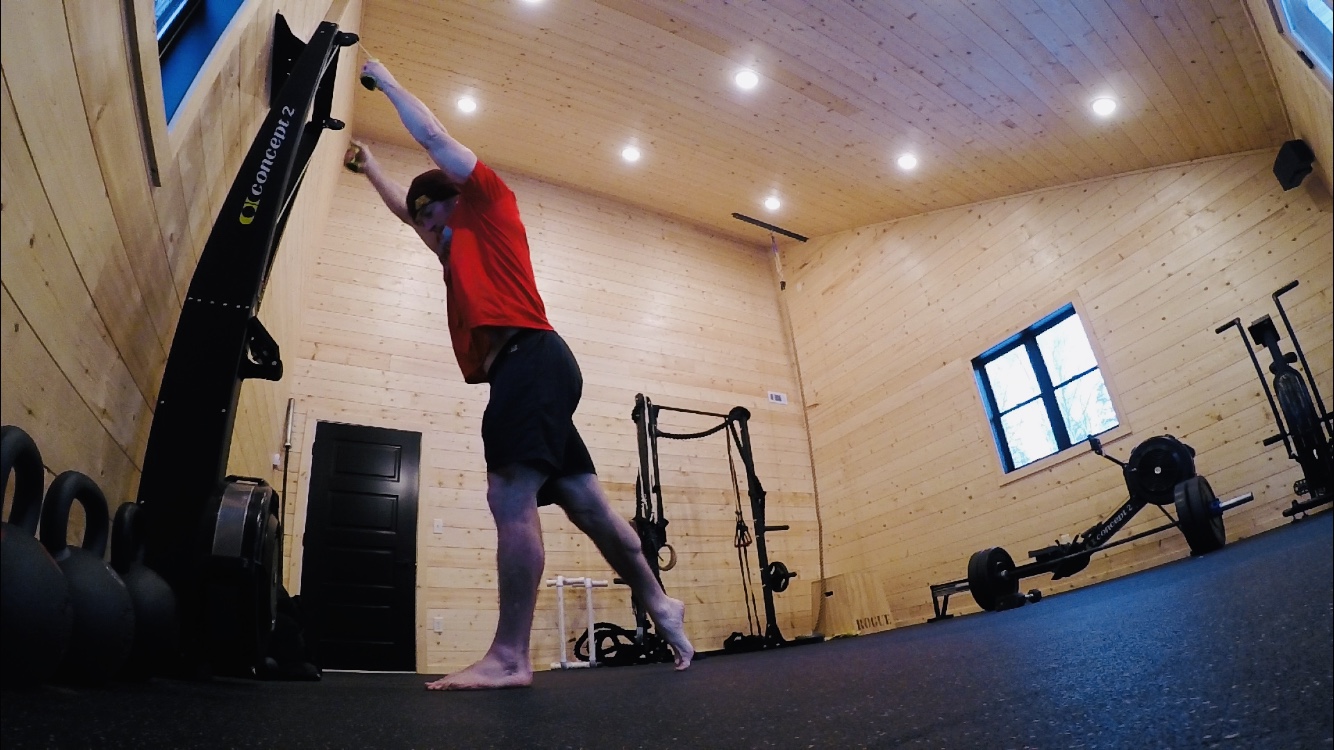
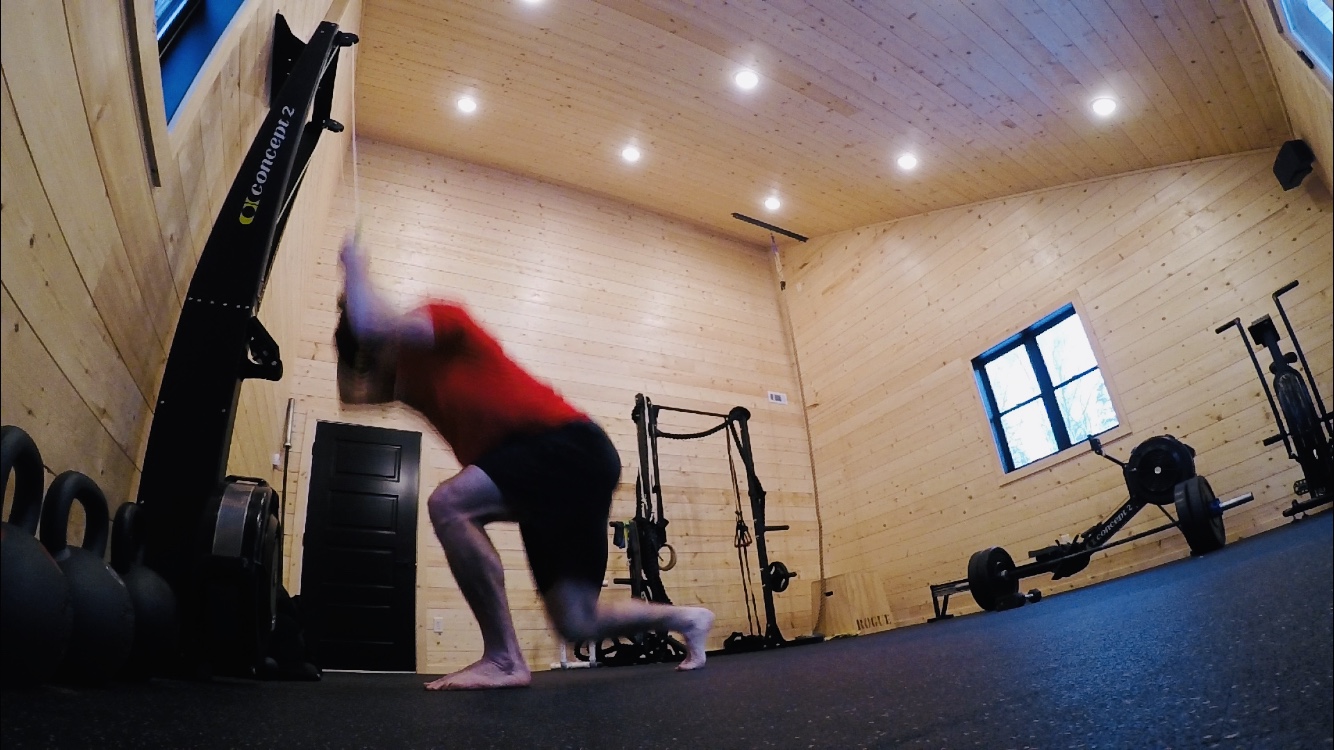
Photos of a split squat variation… 

Strokes become rhythmic while the meters accumulate.  

SkiErg training is mostly (not always) performed in a vertical standing position. Training in a standing position with feet on the floor is a nice feature of SkiErg. 

I say “not always” because the SkiErg can be used in the seated or kneeling positions.  

These modified positio are great for adapted athletes or people with lower-body injuries.  

SkiErg Variations

Over the course of the last year, I’ve tested a wide scope of applications for SkiErg training.

  •  Short burst efforts integrated into hybrid circuits
  •  Long distances (2000m, 5000m, etc)
  •  Power training for shorter distances (100-200 meters)
  •  Multi-modal aerobic cardio training (bike, row, SkiErg)

What did I find?

It all works quite well.  

SkiErg is seamless to integrate into circuits because there’s zero set up to initiate the exertion.  

You don’t have to climb onto it or need to strap any body parts in, or mess around with seat heights, etc.  

Check out this little circuit:  Lizard Crawl + Kettlebell Swing + SkiErg circuit.

As you can see… pairing SkiErg with other exercises (bodyweight, kettlebells, barbell, etc) is a piece of cake, and challenging as hell.  This integration adds a whole new dynamic to basic gym equipment.    

Simply walk up to the machine, grab the handles and start pulling.  Make it purrrrrrr.   

Tiny adjustments to the traditional SkiErg stroke technique can change a lot about the training stimulus.  

Staggering the stance, turning the body to a 45-degree angle, jumping on each stroke all create a new training experience.  

Below are several different ways to shake up your next SkiErg session.  

Future articles will branch off to share more SkiErg variations I’ve found to be challenging and “fun”.  

The idea here is simple…  

TRY SOMETHING DIFFERENT. 


Foot Placement/Base of Support Variations

Shifting foot position can alter the base of support, which changes the training effect ever so slightly as the body makes on-the-go adjustments to remain in control and balanced during efforts.  The feet remain in a fixed position on the floor in all of these variations. 

Split Squat Double Arm Pull 

Technique cue: “kiss” the knee cap of the rear to the floor at the bottom of the split squat.

Leverage your body weight’s descent to the floor and pull HARD on the handles.  Generate power!

45 Degree Angle Stance + Double Arm Pull 

Rotate the lower body to a 45-degree angle to the SkiErg.  Turn the upper body to face the chest at the SkiErg.  

Training from this position will challenge the upper body/lower body separation and hammer the obliques.  Again, the obliques will take a serious beating here.   


Dynamic Variations

Now, we get the lower body moving.  

What was once upper body focused training, goes headfirst into the total body cardio realm.

Everchanging positions, twisting/turning, jumping and lateral bounding.  The lower body movement will vary, the upper body pulling action remains the same.  

Alternating Split Squat Jumps + Double Arm Pull

Adding split squat jumps to the double arm pull creates a total body training effect.  The split squat jump increases the fatigue factor 3x, versus normal technique.  Traditional SkiErg training is primarily upper-body focused, the split squat jump changes that.    

At the bottom of the split squat jump, “kiss” the knee cap to the floor. Soft and quiet landings.  Try and time the pull of the handles with the landing of the split squat, which will give you the best opportunity to create as much power on each stroke as possible. 


Rotational Squat Jumps + Double Arm Pull 

Squat, jump and rotate.  Find the floor, pull.  

Got it?

This SkiErg variation adds complexity to the effort.  

The key to having success with this exercise is planting the front foot on the floor in line (or as close to) with the tower of the SkiErg.  Doing so will create space for the handles to straddle the front leg and avoid any interference on the pull.

Adding Equipment

Sometimes, other gym tools can be used to add a new dynamic or challenge to a cardio experience.  With SkiErg, the hands are fixed to the handles, so the external loading will likely be hands-free.  Weight vests and resistance bands work really well here. 

Here is a badass resistance band variation worth trying out...

Stretch Band Resisted + Double Arm Pull 

The resistance band pulls the hips backward, making driving hips forward into extension a more difficult.    

The pull of the band will set your glutes on fire.  

Of all of the variations listed in this post, this is my favorite.  

Getting a little more action for the glutes and reinforcing aggressive hip extension is a fantastic addition to an already great cardio activity.  


SkiErg Hybrid Circuits

Whenever I feel my workouts getting a bit stale, I’ll mix 1-2 exercises with the SkiErg to create a hybrid circuit.  “Nano-Circuit” may be a more accurate description.

Kettlebell swings, clean and press, loaded lunges, goblet squats and lizard crawling all pair extremely well with the SkiErg and the transition between activities is painless.  

Generally, I keep the SkiErg distance consistent.  Each of the videos below shows a 100m effort on the SkiErg, short enough to really power up each stroke, but not so far to create fatigue too early in the workout.  

I recommend keeping the resistance exercise, locomotion pattern and SkiErg effort brief and intense.  Choose fewer reps for the non-SkiErg exercise… anywhere from 6-10 reps.  

Rest after achieving your target distance.  Execute for however many rounds you prefer.  

Steady, accumulated fatigue is the goal.  As the clock ticks, you’re going to get tired training using this format.  Don’t start out too aggressively and burn out in the first round.  

I value these workouts because almost all of the work is performed standing.  

Here are some examples:

Kettlebell Swings + SkiErg

Macebell 360’s + SkiErg

Lizard Crawl Flow + SkiErg

Ah, yeah, that’s enough for this post.  

Get into some of these variations and let me know how it went.  

I love hearing from everyone!


Cheers, 

Kyle 

Beginner Flow Training: 5 Challenging Bodyweight Exercise Combinations

Motion

Natural movement flow is a key training element missing from most people’s fitness regimens.

Including movement combinations, ground-based exercises and sequences bridge the gap between linear resistance training and natural movement.

Practicing exercises in isolation essential for developing performance.  

What is isolation?  

Deadlifts, front squats, push-ups and pulling without the addition of any add-on exercises, using a work-then-rest format, is isolation.  

You’re isolating an exercise and performing it for a set number of sets, reps and rest.

In a separate blog post, I dove deeper into Ido Portal’s general training template, which included an overview of his methods following this approach:

Isolation 👉 Integration 👉 Improvisation

Walk into any gym, and you’re likely going to see people exercising in isolation.  

Perform a set of deadlifts, rest, check Instagram, a sip of water, then back to the next set of deadlifts.

This is the isolation phase of movement training.

Movement Flow

If you’re looking to add a fresh challenge to your workouts, combining exercises together to create movement flow sequences is a great way to do that. 

Several years ago, I started mixing and matching traditional movement patterns and non-traditional exercises together to create 2 or 3 exercise flow sequences.

Here’s an example:


Gym workouts and real-world movement can be very different experiences.  

While I value pursuing a mechanically perfect squat, do I ever stop to align my feet before squatting in a real-world scenario?

NEVER.

The modified squat I’m using in a real-world situation is often combined with 1 or 2 other movements.  

Squat down, lunge up, twist and carry.  

It’s rarely every just a perfect bodyweight squat in the real-world.

One goal of controlled environment training (aka gym workouts) is maximum transferability.

We lift and conditioning with the idea that it will enhance the physical moments (daily tasks, sports, and recreation, health, etc) help us improve the functionality of our body.

Yet, natural bodyweight movement is completely absent from most workout templates.

Crawling, climbing, rolling, navigating changing levels (laying to standing, fall training, etc), rotation or fusing exercises together in a pre-planned movement sequence or improvised movement work where you don’t know what’s coming next.

Practicing how to transition efficiently and effectively between two different body positions or patterns just makes sense to me.

Benefits of Movement Flow Training

👉  Improve movement IQ (confidence, dissipating fear of unexplored positions and tasks).

👉  Coordination and skill-building.

👉  Improving spatial awareness and how to transition between movements.

👉 Strength at more angles and positions.

👉  Injury mitigation via conditioning tissues to handle stress.

👉 Improve mind-body connection 

👉  Control over one’s bodyweight. 

👉  Fun, refreshing, never boring. 

Movement flow is very challenging for the mind, which to me, is one of the greatest benefits of flow work.

While you’re learning a flow, you really have to think it through to execute it properly and avoid getting twisted up, trips and falls.

“Ok, so my hand goes here, foot over the top, create tension, then relax, drop down, etc…”

The elevated thinking involved with a lot of ground-based movements is a major benefit.

Plus, introducing flow training is refreshing and fun. 

Hours in the gym working the same exercises, chasing the numbers (weight increases, more reps, more sets, faster finishing times) can get quite bland. 

Remaining excited every to move every single day is best for the long-term.   

5 Bodyweight Movement Combinations

#1  Parallette Bar Pass Through to L-Sit

Parallette Bars are inexpensive to buy and easy to build from PVC pipes.

Start in a push-up position, passing the legs through the middle of the parallettes right into an L-Sit.  

If an L-Sit is too aggressive, transition into a tuck position instead.

Hold the L-Sit for a 2-3 second count, then reverse the motion back to the start position. 

Perform 2-3 sets of 8-10 reps.

No parallettes?  

Chairs, stools or yoga blocks a good equipment substitutes.      

#2  High Bridge Rotation to Lizard Crawl

A reasonable looking back bridge used to be impossible for me.  My body was stiff as a board and incapable of arching through the spine. My shoulders lacked mobility, etc.  

Using dedicated joint mobility drills really accelerated the process, expanding the positions I was able to get into and out of, but bulletproofing my joints as well. 

MyDailyMobility is my recommendation for mobility conditioning. 

Today, I practice some variation of back bridging in nearly every workout, either as maintenance or to make progress.  

High Bridge Rotations require an adequate amount of spinal extension, shoulder mobility, stability and strength, which is why I recommend adopting a mobility program to accelerate the process.  

From an exercise progress perspective, practicing basic back bridges is the starting point.  

Adding in the rotation will come after.  

Transitioning out of the high bridge rotation can be a dizzying experience.  Refocus your vision, lower down and crawl lizard-style. 

The lizard crawl is an amazing strength and conditioning exercise.  

Here is a variation better suited for beginners: 

  Alligator Crawl

  Hand Slide Lizard Crawl 

  Elbow Crawl

#3 Burpee Sprawl – Push Up – Squat – L Sit

Perform a push-up, hop forward into a deep squat position, place the hands on the floor slightly behind the butt cheeks as the legs extend and LIGHTLY tap the floor with the heels. 

Reverse the flow.  

Keep the sprawl motion soft and graceful. 

#4  Lunge to Pistol Squat Flow

Lower body training is essential for health and performance. 

Our legs need to be strong and well-conditioned, but also mobile and capable of expressing strength and stability throughout a large range of motion.

Especially the hips.  Hip mobility training has been a game-changer for me.

This combination connects two movement patterns:  lunges and squats.  

During the transition from front to back, do your best to avoid making contact with the floor.

This is one combination probably best executed for reps. 

3-5 sets of 6-10 reps per side will work. 

#5  Lizard Crawl + Low Scorpion 

This lizard crawl + low scorpion combination is a unique, high-value movement combination. 

There’s no beginning or end with this sequence, which makes it a great bodyweight-based cardio alternative.

This flow is relatively compact, making it perfect for a small home gym or other imperfect training spaces.  

Practice this sequence for repetitions or time. 

I like to set a timer and go.  Not having to keep track of reps allows me to focus on what my body is doing.  

Time-wise, I’ve used this flow for 5+ minutes continuous and it’s a challenge every time.

MOVEMENT20XX 

Fusing movements together to create flows is a great addition to traditional lifting and cardio, and is sure to bring a refreshing challenge into workouts. 

If you want to learn more about movement flow training, I highly recommend checking out the MOVEMENT20XX program from Vahva Fitness.

MOVEMENT20XX is one of the best movement-based products I’ve come across.  

Eero Westerberg did a brilliant job organizing and communicating the techniques of each exercise, how to create flows and leverage this method of training to build a high functioning body.


Related Blog Posts

✅ Basics of Movement 20XX| The A-B-C’s of Crawling Exercises

✅ 14 Exercise Total Body Warm-Up Routine

✅ A Giant List of Effective Core Exercises| Part 1

A Giant List of Effective Core Exercises| Part 1

Core Training

Direct core training is an essential part of any workout program. 

The fitness industry gets into highschool level fights over whether direct core training necessary, but since I believe in training the entire body…

…. core training is a must.  

Boom. 

In a way, if your core sucks, you suck.

A strong core protects the spine and serves as a conduit for force transmission between the upper and lower body.  

Ground reaction forces travel from the feet, up through the mid-section and out through body tips of the fingers.

Highly controversial fitness trainer Uncle David Weck taught me that.  

If the muscles that wrap around the torso are weak or under-performing, energy leaks and both performance and function can suffer.  

A strong bodies has a strong core.

A balanced, comprehensive approach to core focused training will calbrate the body to properly absorb force and produce force in all planes of movement.

This is a giant list, so let’s not waste any more time.  

Here are 15 different core based exercises worth slipping into your next workout…  

1.  Anti-Extension Roll Outs (Ab Wheel Roll Outs) 

For $15 on Amazon, you can purchase an Ab Wheel Roller.  Ab Wheel Roll Outs are anti-extension core exercise, great for building not only core strength but core endurance.  

In a tall kneeling position, slowly roll out way from the knees. 

During this rollout motion, cue your hips to fall outward at the same pace as the upper body. 

Roll as far out as you can control.  If the lower back caves, you’ve gone to far.  

Pull yourself back in using your mid-section, lats and pec muscles (gripping the handles hard). 

During the most difficult portion of the roll-out,  “hollow” out the mid-section. 

The hollow body position tucks the ribs down while the navel curls toward the ribs.  The result is a curved body shape or the “hollow” body.  


2.  Turkish Get-Ups 

As far as productivity and global training effect, Turkish Get Ups (TGUs) are hard to beat. 

Turkish Get Ups are a total body exercise. 

The goal of the Turkish Get Up is to transition from a lying position (supine) to a standing position, reverse the order and return back to the original lying position.

Controlling the weight during the up-down sequence is fatiguing not only for the core but for the loaded shoulder as well. 

Turkish Get Ups are best performed with kettlebells or dumbbells, though nearly any object of weight can be substituted.  I’ve used sandbags, liquid filled milk cartons, barbells, weight vests, shoes, and weight plates to name a few.  

Turkish Get Ups are best learned by isolating and practicing each segment.  

Stabilizing the weight overhead is can be draining for the stabilizing muscles of the shoulder.  However, the time spent in this over-chest/over-head position is fantastic for building shoulder stability, which can help with injury mitigation and performance.  

Standing up and laying back down equals one rep.

Sidenote:  I’ve used Turkish Get Ups as my “workout of the day” for years.  I set a timer (10, 15, 20 minutes) and alternate sides until the timer sounds. 

I use a variety of weights during this time, work several repetitions in a row without putting the weight down or mix up the way I stand up and lay back down for variation (squat, lunge, etc).  I’ve added a simple press at each of the 7 steps, performed kettlebell swings cleans and snatches at the halfway point (standing position).

3.  Dragon Flags

Iconic martial artist and movie star Bruce Lee made Dragon Flags famous.


Dragon Flags (and variations) are one of my favorite core exercises. 

Why?  Because they’re hard as hell!  

Dragon Flags require a tremendous amount of effort and total body tension.  

Ly on your back, grab onto a bench, squat rack, heavy sandbag or any other immovable object with the hands positioned above the head. 

Raise the feet up to the ceiling.  Making the body as straight as possible from ankles to shoulders, begin lowering to the floor.

SLOW IT DOWN, resist gravity’s pull.

Working the descent of the dragon flag is known as the “eccentric”.  For beginners, only focusing on quality eccentrics is just fine.  

If you’re feeling strong, Advanced Trainees can reverse the eccentric and ascend back to the top. 

Do not lose the straight line from head to toe.

After listening to Gymnastics Bodies founder Coach Christopher Sommer’s podcasts with Tim Ferriss, I dropped Dragon Flags into my workouts as a mainstay core conditioning exercise.  

You can find smart dragon flag exercise regressions and progressions from Global Bodyweight Training.  

4.  Dynamic Plank Variations 

Planks are a fundamental static core drill and a position worth exploring. 

The video demonstrates rotational side planks.  

I use these (and many other plank variations) frequently. 

Reps, sets and time to hold each plank exercise is a highly debated topic. 

If you can comfortably hold a plank for 90-120 seconds without strain, you’re likely wasting your time and the return on effort has diminished. 

Move on to more challenging core work. 

4. Crawling

Crawling is a critical component for early childhood physical development, but also effective for building strength and conditioning in the gym.   

The more “adult” we become, the more we move away from activities we engaged in as kids.  

This is de-evolution.  It’s not good.  

You either use it, or you lose it.  

And as adults, we tend to move less and less with age, and if we do move, it’s generally isolated to linear walking or machine-based cardio.   

Adults need to revisit moving like they did when they were kids.  

Get on the floor and crawl.  

5.  Lizard Crawl 

The Lizard Crawl is an advanced crawling pattern and probably the king of all ground-based crawling variations.  

Ground-based conditioning is bodyweight training with no equipment needed.  

6.  Offset/Asymmetric Pressing and Holds 

Grab a dowel, barbell or a stronger broomstick. 

Dangle an object (with a handle) like a kettlebell or wrap a resistance band on one end. 

Now, press or hold that dowel without changing body position or allow the object to slip off.  Confused?  Me too.  Watch the video above and it will all make more sense.

Objects we encounter in life are rarely perfectly balanced. 

Weight is often distributed unevenly, which means we have to adapt to awkward loads, recalibrate on the fly and push on.  

7.  One Arm Push Ups 

A lesson in indirect core training, one arm push-ups will challenge the muscles of the midsection better than 95% of core based exercises. 

One-arm push-ups train single arm pressing strength like few other exercises.  

Global Bodyweight Training does a great job laying out exercise progressions leading to the one arm push up.

8.  L-Sits (all variations)

L-Sits are a beginner exercise in the gymnastics training realm. 

Very humbling to think about it with that perspective, since L-Sits are a tough ass exercise.  

Creating an “L” between your upper body and lower body (at the hips) extremely taxing for the hip flexors and lower abdominal muscles.  

Starting out, you’ll have to dial back the duration of your L-Sit efforts to 5-10 seconds of work, with plenty of rest between each effort.   

In time, the duration of the hold will increase as your body adapts to the demands.

Of all of the basic gymnastics postures, I have found L-Sits to be an absolute game-changer for building core strength. 

Including L-Sits in my workouts, 2-3 times per week has increased my hold duration time from a few mediocre sets of 10-15 seconds to 30+ seconds with legs moving above parallel.  

9.  Arch Body Holds 

Lay on the floor face down, arms and legs stretched out straight above/below. 

Lift the upper body and lower body at the same time, arching your back toward your butt.

Hold this Superman-like position for 5-10 seconds and release back to the floor. 

Repeat for repetitions.  

Progress Arch Body Holds by increasing the time of the hold.  

10.  Hollow Body Variations (rocking and static holds) 

Hollow body holds (progressing into rocking) conditioning the entire front side of the body, from fingertips to toe tips.

The quads, diaphragm, abdominals, hip flexors all get some love during hollow body training.

11.  Toes to Bar

Toes to Bar improves core strength, midline endurance while improving grip, shoulder health and back performance. 

Prolonged hanging from a bar, branch or anything overhead is therapeutic for the upper body.  

There are few different variations of the Toes to Bar exercise, kipping (ballistic) or strict.  

12.  Bridging 

Bridging is can help offset the modern-day desk warrior posture.  

Following the lead-up bridge positions and working shoulder and mid-back mobility, hip flexor flexibility and glute strength can inch you closer to a full bridge.

I’d also suggest training active mobility.  

MyDailyMobility is a follow-along mobility program with updated workouts every week.  Taking the time to train mobility will bulletproof joints against injury and increase performance. 

Once you’re able to hold a static high bridge for 45-60 seconds, start exploring adding the rotational piece into the bridge movement.  

13.  Dynamic High Plank Exercises (pull-throughs, push-pull) 

14.  Landmine Grapplers

The landmine trainer provides the opportunity to train many angled exercises and rotational exercises not possible without the pivoting sleeve.  

If you’ve got access to a barbell and a few weight plates, you can start training landmine exercises right away.  

Wrapping an old towel around one end of the barbell can protect your walls from damage.  Or, several fitness companies have manufactured inexpensive landmine trainers well worth the money in my opinion.

👇 How to perform a landmine grappler 👇

Arc (ascend) the barbell up and through the midline of the body.  

Once the barbell passes through the midline, it will begin to arc (descend) down to the same start position on the opposite side of the body.  

The challenge at this point in the movement is decelerating the barbell quickly.  

Landmine grapplers are fantastic for training rotational force production and absorption.  

During a work set, you quickly toggling the switch between creating force and absorbing it.  

Landmine grapplers have great carryover to athletics and daily living.  

Plus most workout programs are deficient when it comes to rotational training.

Landmine grapplers check ✔️  the box. 

Use moderate weight to start.

The weight of the barbell may be enough to elicit a training effect to start.  Add weight slowly as you gain efficiency and strength.

Sets and reps will vary, but 3-5 sets of 6-10 reps per side is a good start.  

It really depends on the weight you’re using.  

Lighter weight = explosive movement and more reps.

Heavier weight = grinding movement and fewer reps.

15.  Slosh Pipe Exercises

The water inside of the pipe is unpredictable and free moving. 

Tilt the slosh pipe an inch below level, the water begins to run, the balance of the pipe changes and your body must react to this change. 

There’s very little relaxation time during a set of slosh pipe exercises since the water is never completely balanced inside the pipe. 

The big issue with slosh pipe training is the size of the slosh pipe.  It needs to be quite long, which isn’t always feasible while training indoors.  

For the home gym, a water-filled slosh training bag is a great alternative.

Whewwwww!

Want to see more core exercises?  

Check out Part II and Part III of this series:

(Work)out| Lizard Crawl + Kettlebell Carries + Walking Lunges + Crab Walk

Motion, Workouts


Screen Shot 2017-07-18 at 5.57.50 AM.png

Lizard Crawl to Kettlebells


Fusing body weight locomotion movements with traditional strength and conditioning exercises can create a hybrid workout experience. can breathe new life into a stale training regimen.  

When training gets stale, mix it up to breathe new life into your regimen.  

Basic linear lifting can get extremely monotonous.  Instead of skipping the workout, toss in different exercises to give you new motivation.  

What exercises are you avoiding or leaving out of your program?  Everyone has some.  It is impossible to do it all, all of the time.  My YouTube channel has hundreds of exercise demos, only 4-10 exercises can make the cut for a workout on any given day.  That leaves hundreds more sitting on the sidelines.  

Many people forget about the value of carrying heavy objects.  Carry those objects in as many different positions as possible (overhead, at your side, chest height, bear hug, etc).  Do it all.  

Locomotion drills are also a relatively new platform for building fitness most people haven’t explored.   If you haven’t, you must.  

This training session includes both.  

Today’s workout includes the following exercises:

  • Lizard Crawling (“traveling forms” in Animal Flow)
  • Suitcase-style Kettlebell Carries 
  • Overhead Kettlebell Carries
  • Kettlebell Walking Lunges
  • Reverse Crab Walks (“traveling forms” in Animal Flow)

*** For all of the kettlebell exercises, feel free to use dumbbells instead.  Any object with a handle and some challenging weight will do.

What you’ll need:

  •  1 heavy kettlebell
  •  2 kettlebells of matching weight
  •  15 yards of walking space

The Structure of the Workout

  1.  Start by lizard crawling 15 yards the location of the kettlebells.
  2.  Clean the heavy kettlebell up to chest height and position overhead.  Walk down and back with the overhead carry.
  3.  Clean the same kettlebell overhead with the opposite arm.  Walk down and back with the overhead carry.
  4.  Suitcase carry the same heavy kettlebell down and back with both arms.
  5.  Pick up the matching kettlebells and lunge walk the same 15-yard distance, down and back.
  6. Reverse crab walk to the initial start position.
  7. Repeat the process, beginning with lizard crawling once again.

Workout Video Demo

Workout Notes

This workout can be executed for rounds or time, whichever you prefer.

If you were going to work this for rounds, I suggest starting with 3-4 rounds and crushing those rounds.  The idea is to work hard and work smart.  Working smart is awareness of fatigue and body position.  When your movement turns sloppy, you’re done.  

Of course, more rounds can be added if you can handle it.  

If you’re hammering this workout for 8-10 rounds, you need to increase the difficulty of all of the exercises.  Lizard crawl for 20-25 yards, increase the weight of all of the kettlebell carries and the walking lunges.  More is not always better.

If working for a target amount of time, I suggest capping this at 20 minutes.  The video demo above shows roughly 8 minutes worth of execution.  

Use the lizard crawl and overhead kettlebell carry as indicators of when you need intra-workout rest periods or when you need to pull the plug on the session altogether.  Don’t be afraid to rest.  There is zero shame in it.  Your body can only fight fatigue for so long before the movements get sloppy.  Take the rest, towel off, get back to work.  

The overhead carry is an amazing shoulder stability/vertical core exercise, but it is also an exercise that deserves respect.  DO NOT FORCE THE OVERHEAD CARRY FATIGUE IS EATING YOU UP AND TECHNIQUE IS DROWNING.  

This particular day, I worked this exact medley for 15 minutes, wiped down the sweat avalanche and transitioned into another medley of completely different exercises.  

Combining both medleys, I accumulated 30 minutes worth of continuous quality work.  

If you don’t have access to kettlebells, don’t worry about it.  Weight is weight.  Use dumbbells, a sandbag or any other tool that has a handle.  


Give this workout a shot and let me know how it went…

Kyle 


Useful Exercises to Help Build the Lizard Crawl Pattern

Ido Portal

FullSizeRender

The Lizard Crawl is one of the most challenging crawling patterns.  

Aggressive joint angles, timing and coordination of the limbs along with a massive muscular demand make the lizard crawl pretty brutal in the beginning.  

The challenge is far beyond standard crawling patterns.  

Not all that long ago, I was a beginner with the lizard crawl.

The pattern was pretty sloppy for a long time.  I was inefficient and felt out of control.  

Inefficiency with movement might be great for burning calories, but it’s a bumpy road when you’re trying to build the pattern.  

On the road to preparing my body for the demands of the lizard crawl, several key exercise regressions played a significant role.  and this blog post directed at the beginner looking to learn more.

The goal of this article is to provide several launch points to work up into the full Lizard Crawl.  

Each Lizard Crawl exercise progression is designed to provide a gentle introduction to the body position and loading.

A full-blown Lizard Crawl has a deceptive number of moving parts moving and requires plenty of mental processing and physical capability.  

Exercises

The full lizard crawl requires:

👉 Mobility

👉 Upper body and core strength

👉 Coordination and timing

Improving control over shoulder range of motion is important for lizard crawling and beyond.  

The shoulder is a ball-and-socket joint and should be able to move freely, but with control.  

When the shoulder joint lacks mobility or control over range of motion, problems can surface.  

Shoulder CARs

Controlled articular rotations are a mobility exercise that great for daily shoulder “hygiene”. 

I like to perform 8-10 reps per side each workout, which means every day.  Yes, every single day.  

Mobility training is a critical component of fitness, yet, training mobility like you would strength or endurance is a relatively new to a lot of people.  

My friends over at MyDailyMobility created daily mobility workouts to introduce people to effective mobility training that’ll expand your range of motion and help control what you’ve already got.  Check it out

Upper body strength is essential for the lizard crawl.  If you lack upper body strength, the full lizard crawl will be impossible.  

Regular push-ups are a great place to start.  You should be able to perform 15-20 bodyweight push-ups without rest.

From there, progress the bodyweight push-ups by adding weight.  The weight can be in the form of a weight plate, sandbag, chains, weightvest, backpack loaded iwth gear, etc.  Whatever you’ve got. 

Weighted Push-Ups

You’ll have to reduce the reps per set once you add weight, and consider lengthening the rest periods to recover from each effort.  

Start with 10-20lbs of additional weight and work up from there.  Stay rigid from head to heel.  

Sets/Reps:  3-5 sets of 5-6 reps.  (the last rep should suck)

Next, it’s time for a gradual transition into single-arm push-up variations.  

Single-arm push-ups are an incredible exercise for building pressing and core strength.

I really like this carpet slide push-up variation.

Carpet Slide Push-Up w/ Reach

Carpet Slide Push-Ups increase the load on the working arm, provide practice of reaching the non-working hand out to move forward (as you would in the full lizard crawl) while introducing a less stable position for the core to sort out.

Your mid-section will probably be sore after a carpet slide push-ups.

Gradually decrease hand pressure on the carpet slide, eventually removing the slide completely, just lightly sliding the hand across the floor surface.

Sets/Reps: 2-3 sets of 5-8 reps.  

*** The rep range is pretty broad, but keep pressing until you feel posture begin to break down. At that point, end the set and rest. 

Core Training

The lizard crawl will put your core strength, endurance and function to the test.  

Here are 3 different exercises to integrate into your workouts.

Core Rolling Patterns

Rolling patterns are exercises you have to try to truly understand how draining they can be.  When you take most of the momentum out of rolling, you’re rolling over with subtle movements from your mid-section.  

Very humbling drills. 

Sets/Reps:  Roll 360 degrees, than roll back to the start.  Go by feel here, this exericse can be self-limiting, as in you’ll burn out won’t be able to complete a full revolution. 

Hollow Body Rocks

Turn yourself into a banana and keep that position while you rock like a rocking chair.  

Sets/Reps:  3-4 sets of 12-15 reps. 

Dragon Flag Variations

Dragon flags are one of the best core strengtheners I know.   

Sets/Rep:  3 sets of 5-8 reps.

Lizard 🦎  Looking Exercises

For beginners, breaking the lizard crawl up into sections and training each section works well.

I like to start introducing the coordination and timing aspect of the lizard crawl by practicing non-moving variations. 

First, become familiar with what the low position feels like, because it is different. 

Push-Up with Alternating Foot Placement

The goal of this first drill is to practice the feel of the lizard crawl while reducing the amount of strength needed to do so.  

Using two arms into the descent accomplishes this.  

👉 Step the foot up to the outside of the hand and plant.

👉 Lower down into and out of a push-up.  

👉 Return to high plank position.

Don’t forget to relax the jaw and breathe.

Sets/Reps:  3-4 sets of 6-10 per side

Alternating Lower-Body Step and Reach

👉 Starting in a high plank position, step one foot to the outside of the same side hand.  (The side you step to will be opposite of the working arm)

👉 Slowly lower your chest to 1-2 inches above the floor.

👉 With feather light pressure, slide the unloaded hand out into full extension. 

👉 Pause for a moment, breathe, feel the position.

👉 Slide the hand back in, return the foot and press up to the high plank.  

Sets/Reps:  3-4 sets of 8-10 reps on each side. 

Dynamic Crawling Variations

The next step in the process is to start moving around.  

Building up strength is important, but it’s time to dive into crawling.  

Crawling can be a humbling activity, especially for adults.  

We think of it as something exclusive to babies or when your TV remote slides underneath the couch, but crawling is a great coordination and conditioning activity.  

Check out this post to learn more about some great crawling patterns. 

Final thoughts…

Quiet foot and hand contacts with the floor surface is a pretty good indication you own a movement.  

Breathing is another good indicator.  Clenched jaw, holding the breath?  I’d bet you don’t own that position yet.  Ask any Yoga instructor.  

Give each of these exercises a shot and be mindful of what’s taking place as you practice.  

The secret sauce to progress is disciplined effort and consistency.  

Practice hard and in time you’ll get the results you’re after.

Basics of The Ido Portal Training Method

Ido Portal

Ido Portal

{Photo Credit:  http://www.idoportal.com}

Ido Portal Method training is taking off like rocket and growing in popularity every single day.  

There’s a moutain of Ido Portal movement videos and articles all over the internet describing his techniques and teaching. 

[I do not speak for Ido Portal in any way.  Ido is a man with his own original thoughts and ideas.  Anything I write or discuss on this blog is my interpretation of information he’s published on his social media page, his old blog, Youtube interviews and various other sources.]

My background…

I have an extensive background in strength and conditioning, but it’s traditional in every sense of the word.  

It took years for me break away from deadlifts, squats, pushing, pulling, and core work… and expand into movement training.

Old habits die hard, but eventually, I dove head first into movement training.  

Gradually, I rebuilt my body, peeling away layers of stiffness, improving range of motion, coordination and newfound strength.

Thousands of people have done the same, many through the information in this article.

It’s amazing to see the feedback of those who’ve decided to take actionable steps toward building up their movement arsenal. 

The first time I encountered Ido Portal Method, I knew I was watching something different.  This was a much different approach to building fitness.  The training tactics were unlike anything I’d seen. 

Crawling, sprawling, twisting/turning, reaching, flowing, strength movements paired with Capoeira, gymnastics, hand balancing, dance, gymnastics, etc.

Ido Portal Method was like an open platform for many differnet styles of movement.  

Just when you think you’ve got it figured out, it changes shape, moves in a different direction.  

Since my initial exposure, I’ve spent a significant amount of time reading, watching, practicing and digesting Ido’s methodology.

This article is my translation of the basics of the Ido Portal Method. 

IMG_4167 

Ido Portal Training Methodology…

If you’re looking to get the summarized view of what drives Ido Portal’s movement methodology, the formula looks something like this:

Isolation—> Integration—> Improvisation

Step 1:  Isolation

Step 2:  Integration

Step 3: Improvisation

What I currently comprehend, the movement paradigm is a series of transitioning from phases.  

Isolation to integration to improvisation.

Ido Portal Method raised the bar with movement standards.

Most systems teach isolation (do this squat, then do this deadlift, then run up that hill, then do a pull-up) and stop there.   

Ido Portal Method takes it a step further.

Here are details on each phase.

Isolation

In the Ido Portal Method, Isolation based movement is essential for making progress.  

This is the base of the hierarchy.

Strength is a prerequisite for movement.

Being strong enhances movement capacity because you OWN every position.  

Isolation = building strength with movement patterns.

Movement patterns:  

  • Squats
  • Deadlifts
  • Lunges
  • Carrying
  • Crawling
  • Vertical Pulling
  • Vertical Pressing
  • Horizontal Pulling
  • Horizontal Pressing
  • Bent Arm and Straight Arm Upper Body Training
  • Glute-ham raises
  • Rotational patterns
  • Core training
  • Power Training (cleans, snatches, jerks, kettlebell swings, etc)
  • Stabilization drills

This is isolation.

You might be familiar with these exercises.  

There’s also a heavy emphasis on high tension bodyweight-based strength training exercises.

Body levers, hanging and climbing, dips, muscle ups, parallette work such as L-Sits, and Tuck Planches, single leg squats, single arm pressing, handstand push-ups and various locomotion patterns (crawling, rolling, etc.)

Gymnastics strength training.

Mixing traditional strength training with body-weight based exercise is a potent combination.  

These are time-tested, proven strength builders essential to physical development. 

Improving athleticism with Isolation style training opens doors to building movement sequences (performing several movements in a row) and evnetually fully improvised movement flow.   

Multi-planar strength and movement freedom.

The bottom rung of Ido’s movement classification system is often the highest rung for other training systems.  

HIGH. STANDARDS.

There’s a realm of physical expression that exists beyond getting fixated on sets, reps, putting more weight on the bar, numbers numbers numbers, or racing the clock to set new P.R.’s in a WOD.  

Handstands, leg-less rope climbing, ground-based movement flow training packed with locomotion patterns and bodyweight movement patterns are here.  

Our bodies are designed to move freely.   

 Flow

Ido Portal Method combines the best of many movement disciplines.

Integration

Integration is the point where movement sentences are formed from the words (isolation).  

A squat, is no longer just a squat.  

A squat is a stepping stone to another movement, and another, and another.  

The practice is evolves into a seamless flow, moving about.

More movements are integrated, creating series of movement patterns formulating a “sentence” of movement.  

  • Sidenote: There’s a heavy Capoeira influence. 

The ground conditioning (locomotion patterns, Capoiera, etc) combined with gymnastics/bodyweight/traditional strength training, fused with flexibility and mobility work is NOT NEW, but since it’s being repackaged and people are seeing incredible results, it’s definitely creating a paradigm shift in fitness.  

“Fitness” is less about who can build the best looking body or lift the most weight (both respectable pursuits), it’s about moving and how your body can perform when confronted with the known and unknown.

The shift is on and people are taking notice.

Nike has…

Ido Portal Nike

More Integration…

Integration builds on the physical preparation from isolation training.  

Pre-planned movement sequences make up part of the Integration phase.  This is similar to a dancer demonstrating a choreographed routine.  Just because the routine has been practiced for months doesn’t make it any easier to execute.  

I’ve watched the “Locomotion Research” video 50+ times.  Watching someone move like water is inspiring.  The movement sequences demonstrated in the video are deceptively difficult.  

Ground-based locomotion is a multi-planar movement requiring a level of body awareness, joint range of motion and on again/off again body tension most people rarely practice.  

Many of these dynamic patterns are animal-like.

People are often humbled by the amount of mobility and strength needed for locomotion patterns.

After the first few sessions, locomotion practice will leave you sore.  

The Lizard Crawl bridges the gap between “lifting weights” and putting those gains toward challenging movement patterns.

Crawling is difficult.  

If you’re not yet crawling, get into it.

Crawling patterns are effective for building coordination, spatial awareness, strength and movement capacity.  

Improvisation…

Ido has commented on numerous podcasts that improvised movement represents the highest form of human movement.  I couldn’t agree more.

Dominating isolation exercises makes the transition to integration significantly easier.  

With consistent practice of Isolation and Integration, one will arrive at the final progression of Ido’s movement philosophy… improvisation.

World-class gymnasts (pound for pound the strongest people on the planet) are rarely expressing improvised movement.  Competition routines are all pre-planned, practiced and choreographed prior.  

Improvisation is the combination of isolation and integration.  You’re essentially making it up as you go, or “flowing”.  Though it will likely take years of dedicated practice, improvised movement flows are achievable.  

This is where progression becomes important.  

Flowing like Ido Portal doesn’t happen overnight.  

Practice is king.  

I’ll spend less time describing the Improvisation phase of the Ido Portal Method because most folks need to focus on nailing down the elements of Isolation and Integration.  

In interviews, Ido has mentioned several times he thinks there is a dimension to be explored beyond Improvisation.  

Isolation and Integration Progress

The Ido Portal Method represents an incredible shift with how we view and define fitness.  

Humans are made to move (climb, run, jump, roll, carry, etc) and I think there is an emerging sector of people who want to experience the thrill of moving in this way.  

It’s important to clarify that traditional physical fitness modalities aren’t obsolete.  Nor should they be.  

A person should spend a great deal of time gaining ground in the Isolation phase, grooving technique, building strength, improving joint control throughout a range of motion.  

Hammering away on the basics (squats, pulling, pressing, etc) is fundamental to progress.  

The goal is to build strength, stability, mobility (the missing link of fitness), conditioning and constantly expand movement capacity.  

Conditioning is also important, and should never be overlooked.  

Train Like Ido Portal Method without the Pricetag

Several years ago, I started looking for alternatives to the Ido Portal Method for several reasons.

  1.  Ido Portal doesn’t offer programs through his website.
  2.  Training privately with Ido and his team is EXPENSIVE ($2500+)

Like many of you, I couldn’t afford $2500 for a workout program, no matter how spectacular. 

I started researching alternative programs with the belief that similar results could be achieved while investing less money.

With enough research, I found what I was looking for, and what I felt other people could benefit from as well.

Here are two amazing programs to check out:

  • Movement20XX
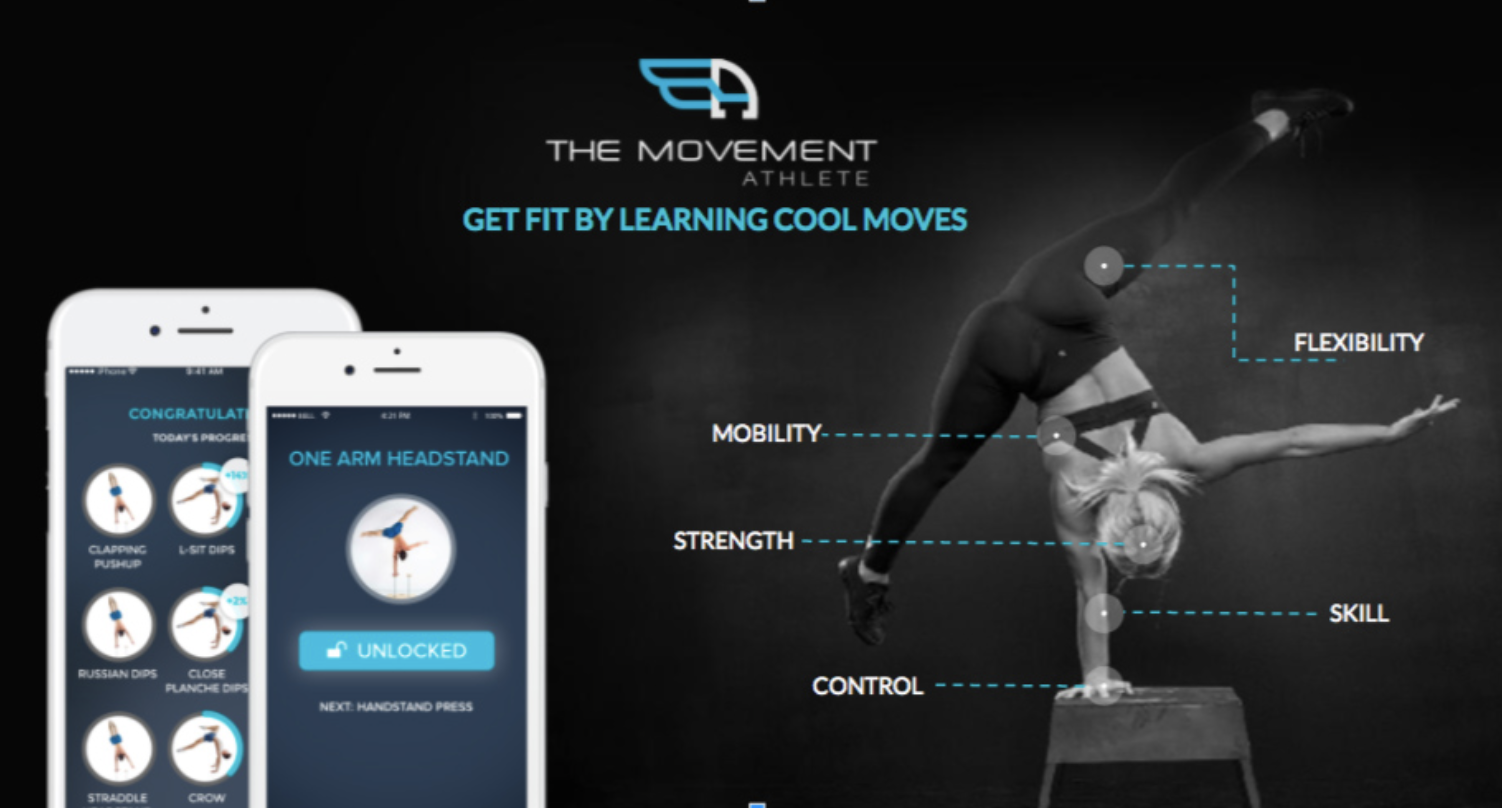
  • The Movement Athlete

Combining all of these programs creates a comprehensive training system.

Strength, movement training and mobility.   

Movement 20XX  teaches ground-based movement, locomotion patterns (lizard crawl, etc),movement sequences and improvised flow work. 

The Movement Athlete will build strength using bodyweight exercises.  Strength is critical for performance and long-term health.  Pistol squats, one arm push ups, handstands, l-sits, body levers, upper body pulling, etc.  

Here’s a little more about each program. 

Movement 20XX

Screen Shot 2019-11-15 at 11.12.03 AM

Movement 20XX is a ground-based bodyweight training system that teaches many of the locomotion patterns and flow work found in Ido Portal Method.   

Locomotion mainly consists of quadrupedal ground-based exercises like crawling (lizard Crawl, etc), switches, transitions, etc.

Integrating Movement 20XX into my own workout regimen has been awesome.  

I started by supplementing my traditional resistance training workouts with a few basic crawling exercises, and built up from there.  

Over time I strung together exercises to create repeatable movement sequences.  

Movement 20XX integrates the best elements from different movement disciplines to create a hybrid system of movement training.  

Crawling, transitions, switches, flow, etc. 

I started Movement 20XX with a stiff spine, poor hip and shoulder mobility, tight hamstrings, and mediocre movement capacity.  

After about 4 weeks of dedicated movement practice, my body acclimated to the mechanics and demands of the patterns.

Using the curriculum from Movement20XX, I made more movement gains in 2 months then I had in the previous 5 years.  

Interestingly, my traditional lifts saw boosts in performance.  Deadlift, squat, pull-ups and pressing all improved, felt smoother, etc.

If you want to explore movement, this is the program to get. 

👉 Learn more: Movement20XX

The Movement Athlete  

The Movement Athlete

Strength is critical for improving movement performance.

If you get nothing else from this article, please, remember that. 

Movement Athlete Academy is a bodyweight-based strength program designed to improve performance in high powered movement patterns:

  • Muscle Ups
  • Handstand Push Ups
  • Single Arm Push Ups
  • Single Arm Body Rows
  • Pistol Squats
  • Handstands
  • L-Sits
  • Human Flags (aka: body levers)
  • Back Levers

Sadly I used to think bodyweight training was dumb.  If I wasn’t lifting weights, I was wasting time in the gym.

When I committed myself building effective bodyweight movements, my strength increased, everywhere.

The human body is adaptation machine. 


Movement Athlete Academy is a smart training system, built on the principles of:

  • Smart exercise progression.
  • Progressive overload.
  • Progressive exercise complexity and volume.
  • Rest and Recovery.

The workout design, exercise progressions and step-by-step tutorials make Bodyweight Athlete a great bodyweight-based program to invest in.    

Bottomline…

Find a program and follow the details.  

Invest the money in learning effective training techniques, commit yourself to the curriculum and you’ll get phenomenal results.

Stay Tuned 

If you’ve enjoyed this post, check out:

Cheers to the Basics of The Ido Portal Training Method…

KG

SaveSave