Beginner Lizard Crawl Exercise Variations

Ido Portal

Screen Shot 2017-06-12 at 4.02.49 PM

The goal of this article is to present several of my homemade lizard crawl regressions to get a newbie acclimated.  Most of these drills were designed to help myself better understand the mechanics of the lizard crawl, and I’d like to share them with you…  

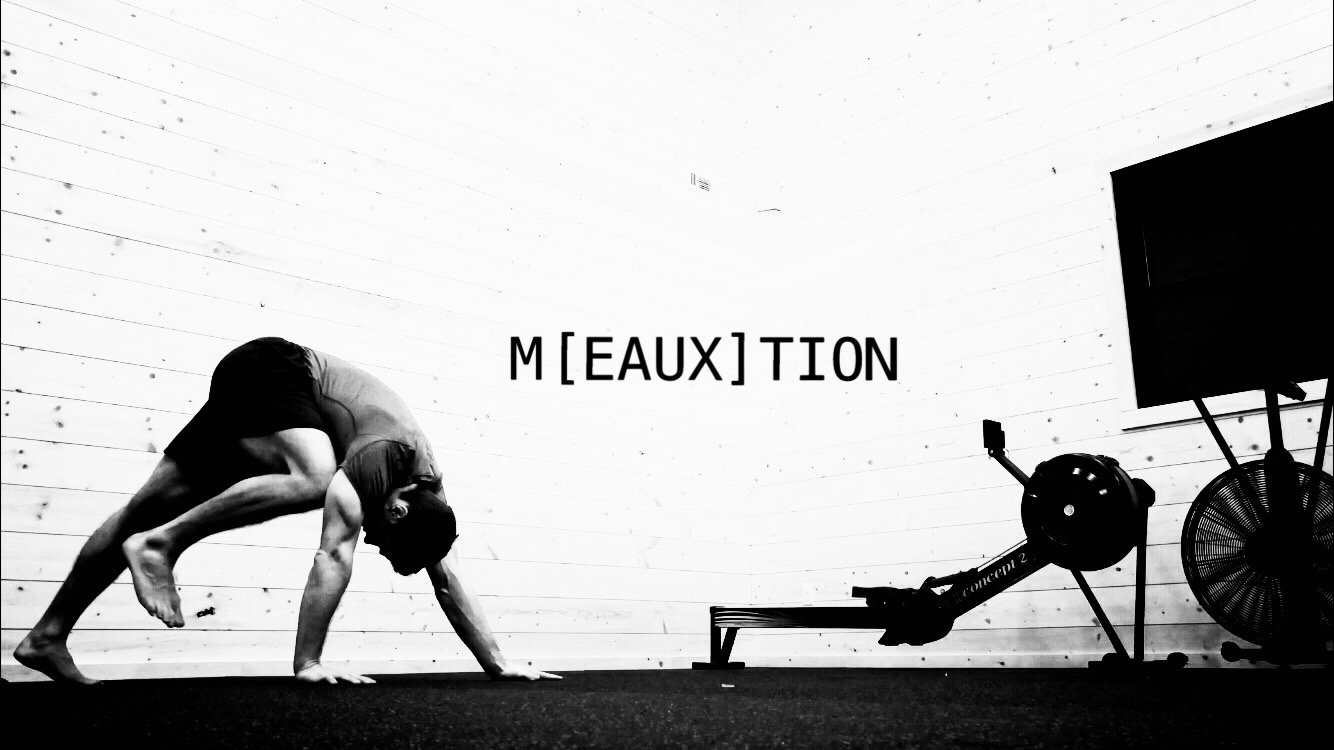
The Lizard Crawl exercise, from my point of view, is the king of the ground-based locomotion drills.  It’s a monster of an exercise, best broken down into digestible segments if you’re a beginner to such training.

Lizard crawling is jam-packed with physical benefits that spill over into all other areas of one’s physical practice.  The lizard crawl will test joint range of motion and stability, muscular endurance and strength, core strength/stability/endurance and motor control all in one shot.  

Another positive side effect of lizard crawling is conditioning.  It’s pure work when you’re inefficient and learning.  Expect to be winded with heart rate will be soaring after several yards.  

Although a successful lizard crawl is a total body effort, the upper body is tested to a great degree.  The lizard crawl elicits a similar training effect to more common crawling variations (bear, crab, etc) and progresses it a step further.  

Remaining in the low position for the duration of the crawl is what does most people in.  

A full blown lizard crawl is deceptively difficult.  Watching someone like Ido Portal lizard crawl (a world class movement practitioner), it’s easy to think, “Doesn’t look too bad, it’s just crawling, I could do that”.  And maybe you can.  If so, good on you.

But for most people, the mechanics are complex.  As mentioned earlier, joint position and range of motion, the timing of the hands and feet, core activation in difficult positions may completely foreign.  

Foreign = struggle bus.     

I do suggest you watch several of these videos and test abilities to give yourself a baseline for improvement.  

Even if you’re able to crawl several feet on both sides, the next challenge is to add some distance to the movement.  

Without further ado, here are few more lizard crawl variations to slip into your workouts demonstrated by yours truly…

Lizard Crawl Variation #1 – 2 Hands + 1 Foot

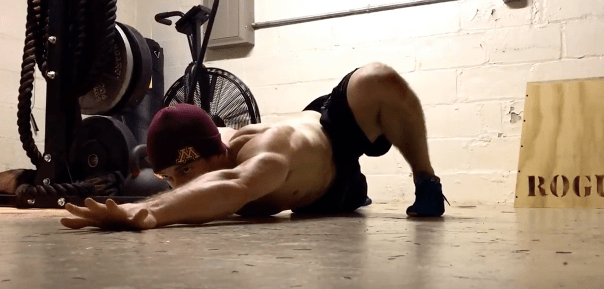
In this variation, keep two hands in contact with the floor while practicing hip range of motion and foot placement.  Softly move the knee up beyond waist height and place the ball of the foot on the floor.  Lower into the bottom of the push-up, chest hovering roughly 2 inches above the floor. Pause, looking forward, return to the start position.

Lizard Crawl Variation #2 – Soft Arm Reach

Introduction to reaching with the lead arm.  We will remain stationary for the time being.  Expect the complexity to ramped up significantly once movement is introduced.  This variation involves a soft slide of the lead arm, straight out and back in.  This also provides some sensation of what it will feel like supporting the body on one arm, another challenging aspect of the lizard crawl.  

Same exercise cues as the previous variation, lower step with the leg, plant with the ball of the foot, lower down with control, but now slide the hand out softly.  Breathe. 

Lizard Crawl Variation #3 – “Alligator” Arms and Legs

To give you a taste of some dynamic movement, here is the short-arm variation of the lizard crawl.  

I refer to it as an “alligator” progression.  The idea is to reach with a limited range of motion, keeping the elbows flexed and close to the rib cage.  This elbow position is far more manageable versus reaching out into full extension.  

Also, notice the limited range of motion on the foot placement.  Plant with the ball of the foot, stabilize and gain control, breathe, now move the hands and support.  Slowly move forward, don’t rush it.  

This variation is a humbling introductory training stimulus to the full lizard crawl.  Many will begin to understand the sheer complexity of the lizard crawl pattern after trying this.  

The path to improvement is practice.  Don’t be discouraged by your initial attempts.  It may be a frustrating experience, even if you consider yourself to well conditioned.  

It’s common to find joint mobility, stability, core strength and endurance to be lacking, all of which can be practiced using the three progressions I’ve shared.  

Practice the progression that allows for technique achievement.  

Each will lead you to the next and continual progress will be made.    

If you’re interested in learning more about the Ido Portal Method training philosophy, check out this popular article I wrote several years ago…


Cheers…

Kyle 

Useful Exercises to Help Build the Lizard Crawl Pattern

Ido Portal

FullSizeRender

The Lizard Crawl is one of the most challenging crawling patterns.  

Aggressive joint angles, timing and coordination of the limbs along with a massive muscular demand make the lizard crawl pretty brutal in the beginning.  

The challenge is far beyond standard crawling patterns.  

Not all that long ago, I was a beginner with the lizard crawl.

The pattern was pretty sloppy for a long time.  I was inefficient and felt out of control.  

Inefficiency with movement might be great for burning calories, but it’s a bumpy road when you’re trying to build the pattern.  

On the road to preparing my body for the demands of the lizard crawl, several key exercise regressions played a significant role.  and this blog post directed at the beginner looking to learn more.

The goal of this article is to provide several launch points to work up into the full Lizard Crawl.  

Each Lizard Crawl exercise progression is designed to provide a gentle introduction to the body position and loading.

A full-blown Lizard Crawl has a deceptive number of moving parts moving and requires plenty of mental processing and physical capability.  

Exercises

The full lizard crawl requires:

👉 Mobility

👉 Upper body and core strength

👉 Coordination and timing

Improving control over shoulder range of motion is important for lizard crawling and beyond.  

The shoulder is a ball-and-socket joint and should be able to move freely, but with control.  

When the shoulder joint lacks mobility or control over range of motion, problems can surface.  

Shoulder CARs

Controlled articular rotations are a mobility exercise that great for daily shoulder “hygiene”. 

I like to perform 8-10 reps per side each workout, which means every day.  Yes, every single day.  

Mobility training is a critical component of fitness, yet, training mobility like you would strength or endurance is a relatively new to a lot of people.  

My friends over at MyDailyMobility created daily mobility workouts to introduce people to effective mobility training that’ll expand your range of motion and help control what you’ve already got.  Check it out

Upper body strength is essential for the lizard crawl.  If you lack upper body strength, the full lizard crawl will be impossible.  

Regular push-ups are a great place to start.  You should be able to perform 15-20 bodyweight push-ups without rest.

From there, progress the bodyweight push-ups by adding weight.  The weight can be in the form of a weight plate, sandbag, chains, weightvest, backpack loaded iwth gear, etc.  Whatever you’ve got. 

Weighted Push-Ups

You’ll have to reduce the reps per set once you add weight, and consider lengthening the rest periods to recover from each effort.  

Start with 10-20lbs of additional weight and work up from there.  Stay rigid from head to heel.  

Sets/Reps:  3-5 sets of 5-6 reps.  (the last rep should suck)

Next, it’s time for a gradual transition into single-arm push-up variations.  

Single-arm push-ups are an incredible exercise for building pressing and core strength.

I really like this carpet slide push-up variation.

Carpet Slide Push-Up w/ Reach

Carpet Slide Push-Ups increase the load on the working arm, provide practice of reaching the non-working hand out to move forward (as you would in the full lizard crawl) while introducing a less stable position for the core to sort out.

Your mid-section will probably be sore after a carpet slide push-ups.

Gradually decrease hand pressure on the carpet slide, eventually removing the slide completely, just lightly sliding the hand across the floor surface.

Sets/Reps: 2-3 sets of 5-8 reps.  

*** The rep range is pretty broad, but keep pressing until you feel posture begin to break down. At that point, end the set and rest. 

Core Training

The lizard crawl will put your core strength, endurance and function to the test.  

Here are 3 different exercises to integrate into your workouts.

Core Rolling Patterns

Rolling patterns are exercises you have to try to truly understand how draining they can be.  When you take most of the momentum out of rolling, you’re rolling over with subtle movements from your mid-section.  

Very humbling drills. 

Sets/Reps:  Roll 360 degrees, than roll back to the start.  Go by feel here, this exericse can be self-limiting, as in you’ll burn out won’t be able to complete a full revolution. 

Hollow Body Rocks

Turn yourself into a banana and keep that position while you rock like a rocking chair.  

Sets/Reps:  3-4 sets of 12-15 reps. 

Dragon Flag Variations

Dragon flags are one of the best core strengtheners I know.   

Sets/Rep:  3 sets of 5-8 reps.

Lizard 🦎  Looking Exercises

For beginners, breaking the lizard crawl up into sections and training each section works well.

I like to start introducing the coordination and timing aspect of the lizard crawl by practicing non-moving variations. 

First, become familiar with what the low position feels like, because it is different. 

Push-Up with Alternating Foot Placement

The goal of this first drill is to practice the feel of the lizard crawl while reducing the amount of strength needed to do so.  

Using two arms into the descent accomplishes this.  

👉 Step the foot up to the outside of the hand and plant.

👉 Lower down into and out of a push-up.  

👉 Return to high plank position.

Don’t forget to relax the jaw and breathe.

Sets/Reps:  3-4 sets of 6-10 per side

Alternating Lower-Body Step and Reach

👉 Starting in a high plank position, step one foot to the outside of the same side hand.  (The side you step to will be opposite of the working arm)

👉 Slowly lower your chest to 1-2 inches above the floor.

👉 With feather light pressure, slide the unloaded hand out into full extension. 

👉 Pause for a moment, breathe, feel the position.

👉 Slide the hand back in, return the foot and press up to the high plank.  

Sets/Reps:  3-4 sets of 8-10 reps on each side. 

Dynamic Crawling Variations

The next step in the process is to start moving around.  

Building up strength is important, but it’s time to dive into crawling.  

Crawling can be a humbling activity, especially for adults.  

We think of it as something exclusive to babies or when your TV remote slides underneath the couch, but crawling is a great coordination and conditioning activity.  

Check out this post to learn more about some great crawling patterns. 

Final thoughts…

Quiet foot and hand contacts with the floor surface is a pretty good indication you own a movement.  

Breathing is another good indicator.  Clenched jaw, holding the breath?  I’d bet you don’t own that position yet.  Ask any Yoga instructor.  

Give each of these exercises a shot and be mindful of what’s taking place as you practice.  

The secret sauce to progress is disciplined effort and consistency.  

Practice hard and in time you’ll get the results you’re after.