cable lifts

Functional Cable Chops vs. Lifts: What’s the Difference?

Motion

Discover the Benefits of Dynamic Core Training

Motion

Dynamic core training is essential for functional fitness because it mimics our daily movements and sports and improves our ability to perform lifting, bending, twisting, and reaching more efficiently. A strong and stable core also helps to improve posture, reduce the risk of injury, and enhance athletic performance.

What is Dynamic Core Training?

Dynamic core training aims to improve core strength, stability, and function in real-life movements, such as bending, twisting and reaching. Unlike traditional static core exercises, which involve holding a position for a time, dynamic core exercises involve movement patterns that engage multiple muscle groups in the core and often other areas of the body.

Multi-planar dynamic core training is a type of core training that involves movements in multiple planes of motion rather than just in a single plane (such as up-and-down or side-to-side). This type of training focuses on developing core strength and stability using movement in all three planes of motion: sagittal (forward and backward), frontal (side-to-side), and transverse (rotational).

Multi-planar dynamic core exercises challenge the body to stabilize and control movement in multiple directions, which can improve overall athleticism, coordination, and balance. They can also help prevent injury by strengthening the muscles and joints in the core and improving overall body mechanics.

Examples of dynamic core exercises include diagonal cable chops and lifts, macebell swings, rotational medicine ball throws, and deadbugs.

Is Dynamic Core Training Different than Traditional Core Training?

Traditional core exercises, on the other hand, typically involve isolated movements that focus on strengthening individual muscles within the core, such as crunches, sit-ups, and planks. While these exercises can be effective in building core strength and stability, they often neglect the vital role that the core plays in dynamic movements. Traditional core exercises may not translate as well to real-life movements and may not provide the same functional benefits as dynamic core training.

3 Examples of Dynamic Core Training Exercises

Macebell 360 Swings

Macebell 360 swings are a unique circular strength training exercise that requires the use of the entire body, focusing on the core muscles to generate power and momentum as the macebell is swung around the body in a circular motion.

The swinging motion of the macebell creates a rotational force that challenges the core muscles to maintain stability and control. This exercise strengthens the core muscles and improves the body’s ability to transfer force from one movement to another, which is vital for sports and other activities.

Deadbugs

Deadbugs are bodyweight-only dynamic core exercise. Deadbugs involve movement and coordination, requiring the core and hip muscles to work together to maintain stability and control. The alternating motion of the arms and legs challenges the body to maintain balance and control, which improves overall movement efficiency and enhances the body’s ability to transfer force from one movement to another.

The benefits of deadbugs include:

  • Improves core strength and stability
  • Develops neuromuscular control and coordination
  • Promotes better posture and spinal alignment
  • Helps prevent and alleviate lower back pain and injury
  • Enhances overall athletic performance
  • Targets specific muscles, including rectus abdominis, obliques, transversus abdominis, hip flexors, and hip adductors
  • Corrects muscle imbalances
  • Low-impact exercise that is easy on the joints
  • Can be modified to accommodate different fitness levels and goals
  • Improves breathing mechanics and oxygen delivery
  • Deadbugs can be done almost anywhere without equipment

Half-Kneeling Diagonal Cable Lift

Half-kneeling diagonal cable lifts are a rotational and diagonal movement pattern that challenges the body to maintain balance and control, improving overall movement efficiency and enhancing the body’s ability to transfer force from one movement to another. The added resistance from the cable or resistance band makes the exercise more effective in developing strength and power.

Notice the cable moving across the body from the hip to the opposite side shoulder. This creates a unique challenge for the body to navigate.

Benefits of the diagonal cable lifts include:

  • Develops rotational power and coordination
  • Enhances balance, stability, and coordination
  • Increases range of motion and flexibility in the hips and shoulders
  • Reduces the risk of lower back pain and injury
  • Enhances overall athletic performance
  • Challenges the nervous system and enhances neuromuscular control
  • Can be done using a variety of equipment, including cables, resistance bands, or dumbbells
  • Helps improve posture and alignment
  • Improves proprioception and body awareness

The diagonal movement pattern of cable lifts also helps engage the obliques and transversus abdominis, essential muscles for stabilizing the spine and improving overall core strength and stability.

The Perfect Combination: Kettlebell Training and Rowing Machines for a Total-Body Workout

Motion

Are you looking for a powerful full-body workout?

Combining kettlebell training and rowing offer incredible benefits, including increased cardiovascular fitness, improved muscular endurance, and enhanced core strength.

Kettlebells are the ideal fitness equipment for a home gym because they have a small footprint (space efficient) and offer hundreds of different exercises ranging from squats, pressing, pulling, carrying and ballistic movements. Rowing machines are a incredible tool for building cardio conditioning while sparing the joints from impact.

Kettlebell exercises like snatches, swings, and cleans can help you build explosive power and functional strength, while rowing machines provide low-impact, high-intensity cardio that targets your entire body.

MetCon Kettlebell & Rowing Workout

Kettlebell Snatches Combined with the Rowing Machine
  • Perform 8 kettlebell snatches on each side.
  • Row 250-300 meters.
  • Rest for 45-60 seconds.
  • Complete 8-10 rounds.

Whether you’re a fitness enthusiast looking to take your training to the next level or a beginner looking for an effective and efficient workout, kettlebell training and rowing machines can help you achieve your goals.

Keep your metabolic conditioning workouts simple and effective. There is ZERO need for the intense exercise portion of a high-intensity metabolic conditoning portion to be longer than 20 mintes.

In less than 40 minutes you should be able to warm up, train mobility, strength and cardio, cool-down.

Push-Up Combinations: Benefits of the Push-Up to Cross-Body Knee Touch

Motion

The push-up to cross-body knee touch is a compound exercise that combines the benefits of a push-up and a core exercise. 

Here are some of the benefits:

  1. Strengthens the chest: The push-up portion of the exercise targets the chest muscles, including the major and minor pectoralis, triceps, and shoulders.
  2. Builds core strength: The cross-body knee touch portion of the exercise targets the core muscles, including the rectus abdominis, obliques, and transverse abdominis.
  3. Improves balance and stability: The movement of bringing the knee across the body while in the push-up position challenges your balance and stability.
  4. Increases cardiovascular endurance: Doing multiple reps of this exercise can increase your heart rate and improve your cardiovascular endurance.
  5. Requires no equipment: The push-up to cross-body knee touch can be done anywhere and requires no equipment, making it a convenient and effective exercise for those who don’t have access to a gym or workout equipment.

The push-up to cross-body knee touch is a challenging and effective exercise that can help you build strength, improve your balance and stability, and boost your cardiovascular endurance.

Build Your Foundation: Why Goblet Squats Are the Perfect Exercise for Beginners

Motion

Goblet squats are a great squat variation for beginners because they are a relatively simple and safe exercise that can help individuals learn proper squatting before progressing to more advanced squat variations.

What is a Goblet Squat?

A goblet squat is lower body strength-training exercise that targets the quadriceps, hamstrings, and glutes. The weight is held at chest level in front of the body, with the hands wrapped around one end of the dumbbell. The dumbbell, positioned on end, resembles a goblet.

Kettlebells are a fantastic weighted tool to use with goblet squats. If using a kettlebell, the hands grip the “horns”.

How to do a Perfect Goblet Squat

1. To perform the exercise, stand with your feet shoulder-width apart, holding the dumbbell vertically against your chest.

2. Bend the elbows and point them downward.

3. The dumbbell should be held securely with both hands, and your fingers should be wrapped around the top of the weight to ensure it doesn’t slip.

4. Lower into the squat, keeping the dumbbell close to the chest, spine in a neutral position.

5. For sake of this blog post, aim to keep your knees in line with your toes.

6. At the bottom of the squat, reverse the motion and stand up by driving the hindfoot/midfoot into the floor.

The weight of the dumbbell in the goblet position can help to counterbalance your bodyweight and promote proper form throughout the movement.

Goblet squats are popular for beginners because they are relatively simple to learn and can help individuals develop proper squatting form before progressing to more advanced variations.

Don’t let this exercise fool intermediate or advanced fitness enthusiasts. High repetition sets of goblet squats will crush your soul. 15-20+ repetitions will remind you how brutal moderate weight can be when the reps are increased. The goblet position can be utilized for rear-foot elevated single-leg squats and added to metabolic conditioning circuits as a lower body killer. 

Here are some reasons why goblet squats are a great option for beginners:

  1. Goblet squats are easy to learn: Unlike other squat variations that may require more technical skill or mobility, goblet squats are a relatively straightforward exercise that can be learned quickly. The movement is simple and intuitive and requires minimal equipment.
  2. Goblet squats are a low-impact exercise: Goblet squats are a low-impact exercise, meaning that they put minimal stress on the joints. This makes them a good option for beginners with joint pain or injuries.
  3. Goblet squats can help improve squat form: They can help beginners learn proper squatting form by encouraging them to keep their torso upright, maintain a neutral spine, and engage their core muscles. By learning these key components of proper squatting form, beginners can reduce their risk of injury and build a solid foundation for more advanced exercises.
  4. Goblet squats build strength: While goblet squats may be a beginner-friendly exercise, they can also be used to build lower body strength and muscle mass. By gradually increasing the weight of the dumbbell, beginners can challenge themselves and gradually progress to more advanced squat variations.
  5. Goblet squats are compound exercise: Goblet squats engage multiple muscle groups, including the quadriceps, glutes, and core muscles. This makes them an efficient exercise for beginners who may not have much time to spend on exercise.

How Single Leg Squats Can Help You Achieve Better Balance, Stability, and Strength

Motion

Single-leg squats, also know as unilateral squats, involve working the squat pattern using one leg at a time. Single-leg squats offer several benefits over bilateral squats, where both legs are used simultaneously.

Here are some of the benefits of unilateral squats:

  1. Increased stability and balance: Unilateral squats require more stability and balance than bilateral squats. When you work one leg at a time, your core and stabilizing muscles have to work harder to keep you balanced.
  2. Correcting muscle imbalances: Unilateral squats can help correct muscle imbalances between your legs. If one leg is stronger than the other, unilateral squats can help bring the weaker leg up to speed and create more balance in your lower body.
  3. Reduced risk of injury: Unilateral squats require less weight than bilateral squats and can reduce th strain on the lower back and knees. Improving balance and stability is a great way to reduce unwanted injuries.
  4. Improved sports performance: Many sports require unilateral movements, such as running, jumping, and cutting. Incorporating unilateral squats into your workout routine can help improve your performance in these activities.
  5. Greater variety in your workout: Unilateral squats can add variety to your workout routine, which can help keep you motivated and engaged.

While bilateral squats are an excellent exercise for building lower body strength, unilateral squats offer unique benefits that can help improve your balance, stability, and overall lower body strength.

Supported vs. Unsupport Single-Leg Squats

Supported single-leg squats and unsupported single-leg squats are unilateral exercises that focus on the lower body, but there are some key differences between the two.

Supported single-leg squats, also known as assisted single-leg squats, are performed with external support to help maintain balance and stability. This support can come from a wall, a bench or chair, a resistance band, or a TRX suspension trainer, among other tools. Using a support, it’s easier to maintain proper form and technique. The support can also be used to provide additional resistance by pushing against it (for assistance) during the concentric phase of the movement.

Unsupported single-leg squats are performed WITHOUT any external support, relying entirely on your balance and stability. Pistol squats are one of the most popular unsupported single-leg squat exercises. During a Pistol Squat, you must maintain a stable base of support on one leg while lowering their body into a deep squat position, then rising back up to the starting position.

* Note: You may need to modify the exercise by holding onto a support or reducing the squat depth.

Beginners should start with supported single-leg squat variations to limit the complexity often associated with maintaining balance. Split squats and rear foot elevated split squats are two options that beginners will find challenging and manageable.

How Many Workouts Per Week Should Include Single-Leg Squats?

This is a great question and one that you should be asking. But here’s the unpopular, middle of the road response…

The frequency of performing single-leg squats to improve strength and performance can vary depending on individual fitness level, goals, and other factors such as recovery time.

Start with 2 days per week and separate training days by 48-72 hours, to allow for recovery from the stress. Give your body an opportunity to recover properly before the next workout. You’ll reduce muscle soreness, increase peformance in the next session (because your body isn’t depleted from the previous workout) and you’ll maintain a higher level of enjoyment.

How Many Sets & Reps of Single-Leg Squats Should I do?

For beginners, start with 2-3 sets of 6-8 reps of supported single-leg squats, gradually increasing the number of sets, reps or adding weights as you become stronger and more comfortable with the exercise. The rep scheme is generalized, and you may find lower reps are more appropriate.

The number of sets and reps you utilize can also be tailored to achieve different goals. Increasing the reps and each works at lens itself well to work capacity and endurance. However, if your goal is to build strength, keep the repetitions low and the weight high.

Supported single-leg squat variations (split squats, rear foot elevated split squats or assisted pistol squats) allow for acclimation to the balance and stability demands. The goal is to groove the pattern and create a training stimulus, not spend the whole workset hopping around or falling over.

Transform Your Home Gym with PowerBlocks: Space-Saving, Versatile, and Cost-Effective Adjustable Dumbbells!

Motion

PowerBlock adjustable dumbbells are a type of adjustable dumbbell that can be customized to fit a wide range of weight-lifting needs. Here are some of the benefits of using PowerBlock adjustable dumbbells:

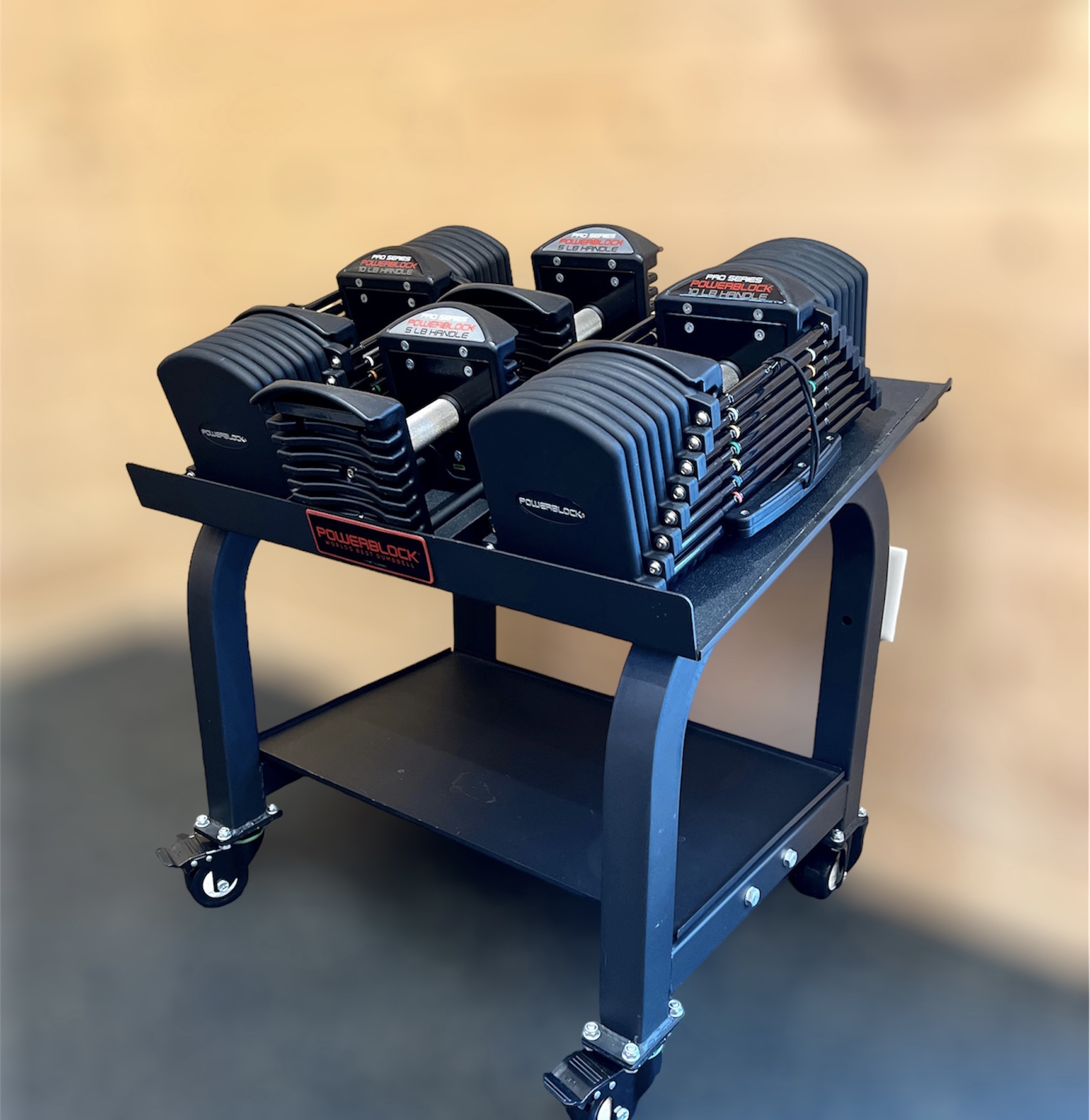
PowerBlock Commercial 5-90lb Dumbbells and Stand

Space-saving design: Instead of buying and storing multiple sets of traditional dumbbells, PowerBlocks take up significantly less space than a full set of traditional dumbbells, making them an ideal choice for smaller home gyms or workout spaces. If you’ve made the transition to a home gym workout regimen, chances are you lack the space to accommodate an entire rack of dumbbells. The minimal footprint of PowerBlocks is arguably their greatest benefit. With a 5-90lb set, you have an entire rack of dumbbells in a 21.5″x25″ inch space on the commercial stand. This is an absolute game-changer for home gyms. Personally, I am not a fan of converting a garage into a full time gym, where your cars no longer fit. Some people don’t mind this, I do. I invested hard-earned cash in my vehicles and I prefer to have them protected.

Quick customizable weight adjustments: PowerBlocks can be adjusted to many weight settings, making them versatile for various exercises and fitness levels. Depending on the model, some PowerBlocks can be adjusted in increments as small as 2.5 pounds, allowing for precise weight selection. The weight selector pin is easy to use and allows for FAST increases or decreases in weight. In my experience, moving between weights with PowerBlocks is quicker than returning traditional dumbbells to the rack to grab a different pair. The color coding and numbering on the top of the dumbbell makes it easy to identify where the pin needs to go.

Convenience and efficiency: The ability to easily adjust the weight of PowerBlock dumbbells makes it easy to switch between exercises and weight levels during a workout, saving time and improving workout efficiency. This point builds off of the space-saving design and customizable weight options previously discussed, but it’s worth sharing nonetheless. A while back I was hesitant about the hassle of wrestling the weight selector pin up and down the side of the PowerBlock (to change weight), but it’s a breeze. Watch the video above, where I change weight from 10-90lbs doing goblet squats, re-racking the dumbbell each time. Changing weight is fast, which allows for smooth/quick transitions between exercises in my metabolic conditioning workouts.

Durability: PowerBlock dumbbells are made from high-quality materials, including heavy-duty steel and urethane coating, making them durable and long-lasting. There are several other adjustable dumbbells on the market, but the durability of those brands is questionable. Reach closely, most are manufactured from plastic. No offense to NuoBells, but there are made of plastic. Plastic, in the fitness setting is no bueno. To be blunt, when it comes to resistance equipment, plastic is a terrible choice, one that’s destined to fracture and break.

Cost-effective: PowerBlocks are a cost-effective option for people who plan to use a wide range of weight options but don’t want to invest in multiple sets of traditional dumbbells. I encourage you to do your homework here. You’ll find, as I did, that Powerblocks are surprisingly cost-effective. It makes sense, since traditional dumbbells involve a lot more manufacturing and material to make 28 pairs of dumbbells (5-50lbs). PowerBlocks are far less expensive than buying an entire rack of traditional dumbbells. I purchased the commercial 5-90lb Powerblocks for $1,539 and it included a mobile commercial stand for storage. In most cases, traditional dumbbells that are sold in pairs are thousands of dollars more expensive. Take the money you save and invest it into other purposeful gym equipment!

Can you drop PowerBlocks on the floor?

No, you really shouldn’t.

Some people might view this as a drawback, but I personally don’t. There isn’t an adjustable dumbbell on the market durable enough to be dropped from a height of 2-3 feet repetitively. There’s a distinct difference between lowering a dumbbell to the floor with a little impact at ground contact, and fully letting go to drop them. In the home gym setting, dropping anything of considerable weight has the potential risk of destroying your equipment and the floor.

Overall, PowerBlock adjustable dumbbells offer a range of benefits for individuals looking to build strength and improve fitness, including space-saving design, customizable weight options, convenience and efficiency, durability, and cost-effectiveness.

I cannot recommend them enough. Full endorsement here.

Rev Up Your Workouts with Power Training: Why You Should Incorporate Power Moves into Your Fitness Routine

Motion, Power Training

As we age, we typically experience a gradual decline in both power and strength. Power and strength are related but different concepts. Power is the ability to generate force quickly, while strength is the maximum force that can be generated.

Research has shown that the decline in power is more rapid and pronounced than the decline in strength. One reason for this is that power is more dependent on the ability of the muscles to generate force quickly, which declines more rapidly with age.

In contrast, strength is more dependent on the size and number of muscle fibers, which decline more gradually with age.

Studies have found that power declines by approximately 3-4% per year after the age of 50, while strength declines by approximately 1-2% per year after the age of 50. However, these rates of decline can vary depending on various factors such as genetics, physical activity level, and overall health.

Kettlebell swings are fantastic for preserving and building power.

It is important to note that regular exercise, particularly resistance training, can help slow down the age-related decline in both power and strength. By engaging in regular physical activity and strength training, older adults can maintain their muscle mass, improve their physical function, and enjoy a better quality of life.

Power training involves explosive movements. These exercises are essential for maintaining the ability to perform everyday activities such as lifting and carrying groceries, climbing stairs, and getting up from a chair or the floor.

Why Add Power Training to Workouts?

Here are some compelling reasons why aging adults should incorporate power training into their workouts:

  1. Improves Functional Ability: Power training exercises simulate the movements that we use in everyday life. As we age, our ability to perform these movements declines, leading to a loss of independence and quality of life. Power training can help older adults maintain their ability to perform everyday activities, improve balance, and prevent falls.
  2. Slows Down Muscle Loss: As we age, we experience a decline in muscle mass and strength, known as sarcopenia. Power training has been shown to slow down the rate of muscle loss, which can help maintain muscle function and reduce the risk of disability.
  3. Increases Bone Density: Power training has been shown to increase bone density, reducing the risk of osteoporosis and fractures in older adults.
  4. Enhances Cardiovascular Health: Power training has been shown to improve cardiovascular health, reducing the risk of heart disease and stroke.
  5. Boosts Confidence and Self-Esteem: Power training can boost confidence and self-esteem in older adults by helping them feel more capable of performing everyday tasks and improving their overall physical function.

Exercises such as kettlebell swings, box jumps, medicine ball throws, and plyometric push-ups are effective power training exercises that can be modified to meet the needs of older adults.

Best Power Exercises for Adults

The best power exercises for adults are those that are explosive yet have a quick learning curve and require the use of multiple muscle groups.

Here are some examples of effective power exercises:

  1. Hang Cleans: This exercise involves lifting a barbell from just above the knees to the shoulders in one fluid motion. Hang cleans work, multiple muscle groups, including the legs, hips, back, shoulders, and arms.
  2. Box Jumps: This exercise involves jumping onto a box or platform from a standing position. Landing softly and with control is critical to getting the most benefit from box jump training.
  3. Medicine Ball Throws: Throwing weighted objects is the equivalent of Olympic lifting for the core musculature. Medicine balls are an ideal gym tool for all sorts of throw variations. Slams, scoops, rotational tosses, and chest passes are a few of the most common medicine ball throws. Throws can be performed from a static lower body stance or may incorporate footwork for an added dynamic challenge. The goal is to throw the bar as far/hard as possible, generating power from the ground up.
  4. Plyometric Push-Ups: This exercise involves pushing off the ground with enough force to lift the hands off the ground. Plyo push-ups target the chest, shoulders, and triceps while improving explosive upper body power.
  5. Kettlebell Swings: This exercise involves swinging a kettlebell using the hips to propel the kettlebell from between the legs forward and up to shoulder height. Swings are one of the best alternatives to barbell cleans. The learning curve is shorter.
  6. Standing Broad Jump: This exercise involves jumping forward as far as possible from standing. Much like box jumps, landing with control is critical.

Incorporating power training into your workouts can take your fitness journey to the next level. Training explosively will improve your strength and boost your speed, agility, and balance, making everyday movements easier and more efficient. Additionally, power training has been shown to provide a range of health benefits, including improved bone density, increased metabolism, and enhanced cognitive function.

Power training is a valuable addition to any fitness routine, whether you’re a seasoned athlete or a beginner looking to get in shape. Take the first step towards a stronger, fitter, and more functional you by incorporating power training into your workouts today!

Workout Finisher: Push-Ups and Kettlebell Swings

Motion

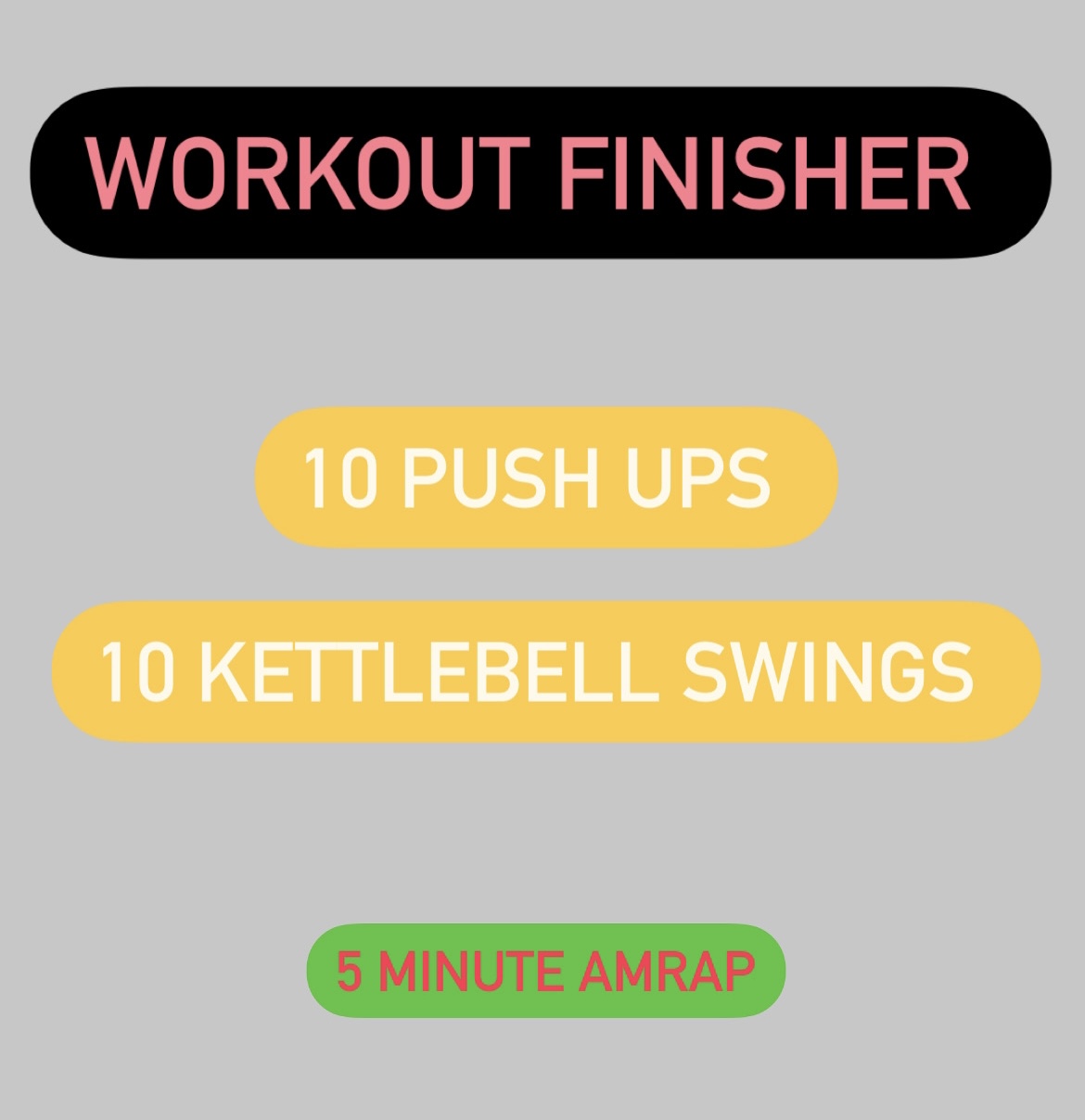
Today’s workout finisher combines two non-competing exercises:Β  kettlebell swings and push-ups.

The simplicity of a two exercise workout finisher might lead you to believe it’ll be easy.

Wrong.

Bouncing between these two exercises non-stop for 5 minutes is exhausting. By the 3rd round, you’ll understand. The training effect is massive. Β 

Push-Ups

Push-ups on an upper body horizontal pushing exercise.Β  Push-ups build strength and condition the chest, arms and core.Β  Bodyweight push-ups can be performed virtually anywhere.Β  Long before I started this blog, people were leveraging push-ups to build strong bodies. Long after I’m gone people will still be using push-ups to build muscle and improve performance. Do not underestimate push-ups.

Push-ups (and the progressions) are one of the most under-progressed movement patterns. People stop at 2-arm push-ups and opt for high reps using a sub-maximal exercise variation. Explore the progressions that exist beyond 2-arm bodyweight push-ups. Carpet slide push-ups, archer, typewriter and single arm push-ups are worth your time.

Kettlebell Swings

Kettlebell swings are an explosive hip hinging exercise. On every repetition, the kettlebell travels through a arc of motion, hiking between the leg, pulling through out and up to the sternum height.  Kettlebell swings have a pendulum-like look to them.  Kettlebells are incredibly resourceful tools for building fitness.  Swings are a great exercise to train the β€œgo” muscles of the body, the posterior chain.  For people that want to train power but don’t want to mess around with Olympic lifts (snatches, cleans, etc), swings are the exercise.  

Workout Finisher:  Push-Ups and Kettlebell Swings

Perform as many rounds as possible (AMRAP) in 5 minutes. Β 

Take rest if you need it. There’s zero reason to injure yourself because you were chasing a personal record with horse-sh*t technique brought on by fatigue.Β  Stay disciplined with technique. Β 

Conditioning yourself to move well when tired takes time. Lots of personal trainers act like fatigue does not exist out in the real world, or high intensity (machine free) conditioning is “dangerous”. I’ve developed an opinion that it’s dangerous not to do it.

If you’re living a physical life, conditioning your body to move with integrity when you’re exhausted will serve you well.

Fatigue is a technique killer, yes, but the gym is a controlled environment where we can practice demonstrating technique when fatigue creeps in.

Like I mentioned above, take rest if you need it. There’s no shame. Β 

30 Minute Total Body Macebell Workout

Motion

This macebell workout will take 30 minutes of your time (more if you add in mobility and a progressive warm-up)

The workout is divided into 6 x 5 minute sections.

Each round, you’ll be performing either a macebell 360 swing or macebell gravedigger in addition to one other exercise.

The “other” exercises are organized to be as non-competing as possible.

  • Round 1: Upper body push
  • Round 2: Squat
  • Round 3: Horizontal Pull
  • Round 4: Lunge
  • Round 5: Deadlift
  • Round 6: Core Strength and Anti-Rotation

In this workout, you’ll be getting up close and personal with two staple macebell exercises: 360 swings and gravediggers.

If you want to learn more about Macebell 360 Swings, check out this blog post here.

Here’s the rep scheme I went with for the Macebell exercises:

  • 360 Swings x 10 per side
  • Gravediggers x 5 per side

I didn’t want to have type out the reps for each round, it’d be redundant.

Reps can and probably should vary from person to person. This will depend on your familiarity with the exercise, macebells and current fitness level.

Also, I do use specific equipment in this workout. Suspension trainer, barbell and landmine trainer. You don’t need this exact equipmetn to participate. Leave a comment below and I can help with substitutions.

Round 1 – Macebell 360 Swings + Push Ups

Round 1 of this workout kicks things off with a bang: 360 swings and push-ups.

10 reps of push-ups.

Keep each burst of exercise brief, constantly alternating between exercises.

Push-ups, are undefeated for building upper body pushing strength and muscle mass.

Many people stop exploring push-ups at the basic 2-arm variations. Progressing into single arm push-ups builds pushing strength, core stability and total body tension.

Round 2 – Gravediggers + Alternating Pistol Squats

Round 2… fight!

Gravediggers are the gym version of exaggerated shoveling. You’re “scooping” the macebell from low to high, up and overhead. While shoveling dirt, you’d never do this, but the gym isn’t the back yard.

5 reps of pistol squats per side.

A pair of 5lb dumbbells in each hand acted as counterweight. The tempo of each repetition was quick, yet controlled.

There’s a time and place for SUPER strict single leg squat practice, and this workout isn’t it.

Round 3 – Macebell 360 Swings + Inverted Rows

Round 3… back to macebell 360 swings for the second time, plus some pulling.

8-10 repetitions for inverted rows.

Inverted Rows

Inverted rows are one of my favorite horizontal upper body pulling exercises. They’re resourceful, demand total body tension and can effectively balance out the pushing in one’s workouts.

Gravity creates the resistance. I stuck with bodyweight loading for this workout, but feel free to add or decrease weight to tailor the difficulty to you.

Round 4 – Gravedigger + Landmine Grapplers

Round 4… time to toss the barbell.

8 reps of landmine grapplers per side.

Landmine grapplers are a side to side, midline crossing exercise, and one of my favorite landmine exercises ever.

The landmine apparatus creates a whole new dimension of exercises and training options. I highly recommend looking into getting one if you’re curious. Great piece of equipment.

Round 5 – Macebell Swings + Deadlift

Round 5… deadlifts?

6 reps of traditional barbell deadlifts.

Yes, pre-fatigued, sub-maximal barbell deadlifts in round 5.

I’ll take the walk of shame. Shame…. shame… shame…

Know thyself, worry about thyself, not your neighbor. I know that I can handle 225lb barbell deadlifts x 6 reps handedly while under fatigue. Can you? If the answer is no, dial it back, use a kettlebell or consider an exercise like hip thrusts for this round.

Kettlebell deadlift variations are fantastic to groove hip hinging and learn how to lift dead weight from the floor.

* Note: Deadlifting under fatigue is not ideal, but will be something you’ll have to do at some point in your lifetime.

Beginners πŸ‘‰ Learn and train your deadlifts while fresh. Seek guidance from a professional.

Round 6 – Gravedigger + Modified Dragon Flags + Pallof Press

Round 6… digging more graves and core training.

8 reps of modified dragon flags and 6 reps of Pallof Press.

Modified dragon flag:

I used my sexy new Ancore Trainer to add resistance to the Pallof Press. The Ancore Trainer is an amazingly versatile and genius piece of home gym equipment. It’s a functional trainer shrunk down into a portable unit weighing about 5lbs. Attach it to almost anything and start training. Game-changer.

Assuming you don’t have an Ancore Trainer, use resistance bands or a cable machine.

Pallof Press is an anti-rotation core exercise, and a good one. Press the hands out, avoid any rotational deviation. Bring the hands back in.

You thought I was going to skip core exercises? Not a chance.

Summary

30 minutes of movement using the macebell and a variety of other exercises.

Very little rest and lots of work being performed in a relatively short amount of time.

I did this workout on a Saturday, where I knew Sunday was a non-exercise rest day. The volume of macebell 360 swings and gravediggers fried my grip and arms. I actually felt this workout for a few days after.

Any of the exercises can be adjust/modified to suit your space, equipment and know-how.

Leave a question in the comments section and I’ll help you with ANY questions.