Use These 5 Exercises While Traveling

Motion
A picture of dogs, not traveling.

Traveling can make sticking into an exercise routine difficult.

For those that travel frequently for career, your ability to stay fit is hinged on staying active once you arrive at your destination, and managing calories (and quality of those calories).

While traveling, never forget the POWER of bodyweight based exercises.

Yoga, bodyweight strength training or an exertion focused workout, bodyweight fitness requires no equipment, minimal time investment, while delivering a potent dose of physical activity when you need it the most.

Spend time getting familiar with “minimalist” fitness techniques. You never know when you’ll need to put those resourceful methods into action.

If you know how to design a workout for a small space, with little to no equipment, in a varying time frames, you can stay fit for life.

And I’m telling you, getting a daily dose of exercise, no matter how small and insignificant it might feel, is worth the effort.

Here are 5 exercises for busy travelers:

1. Crawling

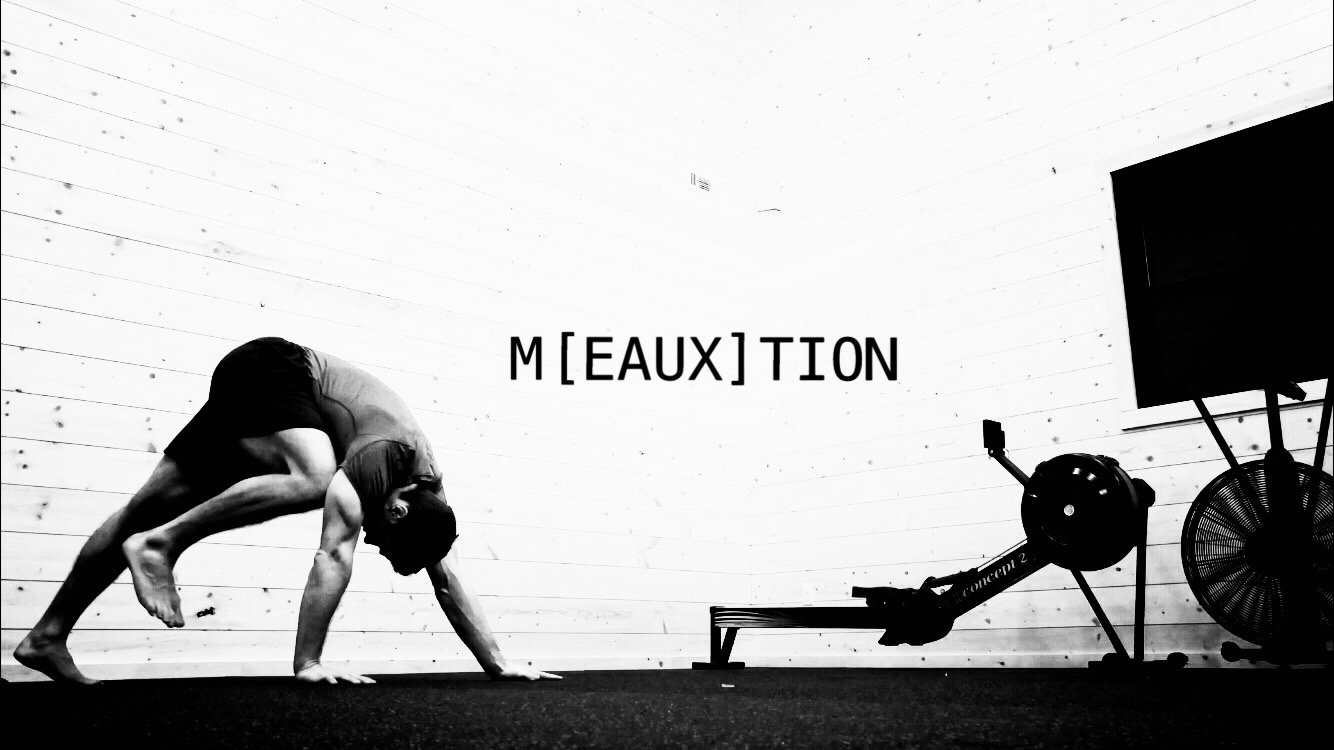
Crawling is the one of the most underutilized bodyweight-based exercise. Basic forward and backward crawling provides a ton of benefits that you’d just don’t get with other exercises. There are hundreds of crawling variations and combinations I can deliver a great workout and keep things fresh and interesting.

Sideways, Lizard🩎 , BearđŸ» , Amoeba 🩠 crawling patterns are all kick ass crawling variations.

Crawling can serve as a a reminder that fitness shouldn’t be all about up and down repetitions.

Movement is life, and it comes in many different forms.

Read more about crawling here

2. Kick-Throughs

Kick-throughs are a ground based movement pattern that challenge your core, upper body strength, timing, balance and coordination. These exercise variations, for many people, will be a much needed departure from traditional exercise.

Kick-throughs can be performed to the side or front.

Workouts can really benefit from incorporating MORE dynamic, free flowing movements like this.

Tip: Perform reps at slow tempo. Control every inch. Breathe.

Multi-planar, “quirky” movements like kick-throughs are an exceptional exercise to push movement training outward from the cookie cutter stuff.

If you find kick-throughs interesting, here’s an online program that specializes in coaching clients through multi-planar movement training techniques.

3) Flow Combinations

Flow combinations are a great option for minimalist travel workouts. Flows can include common bodyweight exercises into a 2-3 exercise mini circuit, or multi-planar (less definable, yet movement rich) drills into movement sequence. Either way, a flow adds a whole new dynamic to a travel workout.

Here are some examples:

Cossack Warm Up Flow

Push Up+ Cross Body Knee + Scorpion + Side Kick Through Flow

And I can’t forget about this really challenging low lizard crawl flow.

Dodging the furniture in a small space hotel room adds another level difficulty to the flow.

4) Push-Ups, Squats, Lunges

No article related to staying fit while traveling would be complete without mentioning 3 of the most effective exercises: push-ups, squats and lunges.

Over the years, one of my biggest regrets is not documenting the hundreds of the workouts I’ve done inside of sh*tty hotel rooms and Airbnbs. The best workouts almost always include variations of push-ups, squats and lunges. I’m not talking about a fancy pants variations either, just grinding HARD using the basic push-up, air squat and lunge.

Fitness trends remind me a lot of fashion trends. They come, they go. People get hooked onto “new” exercises, methods, etc… and in time forget about the pillar exercises and the principles that should be applied to those exercises (progressive loading, tempo, etc) that deliver predictable results.

Here’s a classic workout for you to try.

Perform the following, in cyclical order, for 10-15 minutes without stopping:

10 push-ups

10 squats

10 jumping jacks

10 lunges

Too easy? We can make it harder by ramping up the exercise complexity:

5 carpet slide push ups (per side)

5 pistol squats (per side)

10 no jump/push-up burpees

5 alternating lunge jumps (per side)

5) Burpees

“You son of a bitch! Burpees are the worst exercise ever created! Rot in hell, bastard!”

Few other topics get people upset like burpees.

Burpees have a bad reputation because many (not all) personal trainers mindlessly plug them into client workouts using super high rep ranges, without giving thought to the clients readiness to perform a burpee with reasonable technique.

A decent base of strength and mobility is required before diving into a full burpee workout.

If you can’t squat, don’t burpee. If you can’t push-up, don’t burpee.

Personal trainers have a tough gig because clients knock on sign up for training sessions often expecting to get beaten into a pulp.

It doesn’t have to be like that. Especially if you’re chasing body transformation (weight loss, fat loss, etc). Put less calories in your mouth if you’re wanting to lose weight. Versus injuring yourself doing an exercise your body isn’t suited to tolerate. As if the 100 calories burned during the beat down will offset the 500 calories the client ate on the way home. You dirty clients!

The benefits of having a blog is I get to write about whatever… Z-Fack… I want. And on that note, I love burpees. Actually, I don’t love them, but do I use them and see value in using them from time to time.

Burpees can elicit one hell of a training effect.

I don’t use burpees every day, or every week for that matter. I do frequently use them while traveling because they create a total body training effect with a minimal time investment. And, most hotel gyms suck, so if there’s no equipment available, burpees kick ass.

The key to having a healthy relationship with burpees is remaining mindful of the following:

  • Burpee variations and modifications (select a variations to suit your abilities)
  • Volume: reps/sets
  • Rest periods for recovery
  • Frequency throughout the week
  • Current fitness Level

It’s all about expectations. Burpees aren’t the end all be all of fitness. They are difficult, but difficult doesn’t mean they are good for you.

Here are some other difficult exercises: kettlebell swings, rear foot elevated split squats, chin-ups, rowing or deadlifts.

Fact is, burpees deliver a WHOPPING punch when it comes to cardio. A shit ton of total body work can be performed in a really short amount of time.

Like any other exercise, be mindful of HOW burpees are being used in a workout. Don’t bite off more than you can chew with regard to volume and the ability to handle fatigue.

Burpees are a tool, use them sparingly, pay attention to your movement quality while doing them, keep a reasonable perspective about their purpose.

If you’re not ready to engaged in a burpee workout, don’t! Skip it. Use other exercises and mobility techniques to build a solid base first.

Or, give this burpee variation a try:

5 Quick Benefits and Ideas About Push-Ups

Motion

Push-ups are one of the best all around upper body exercises.

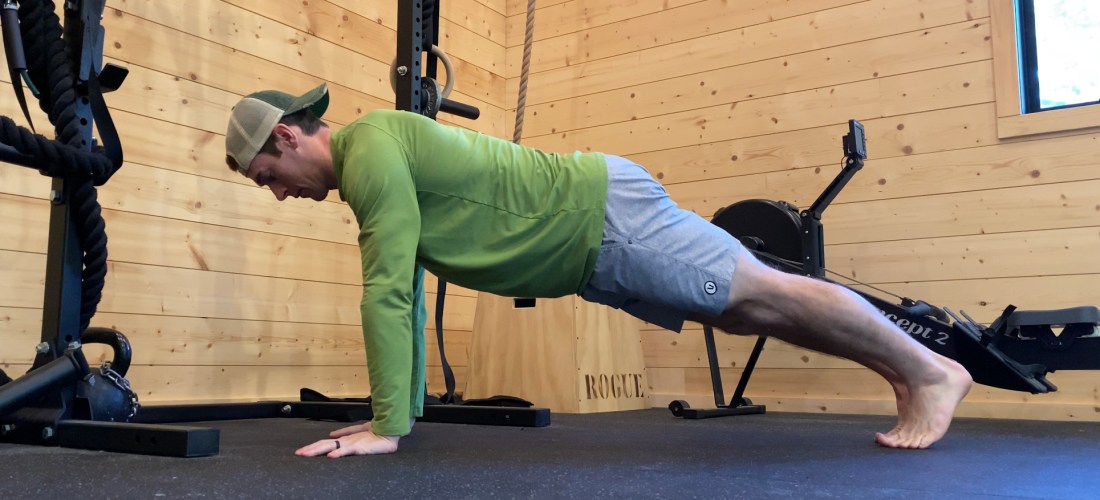
You can do push-ups anywhere, anytime, using hundreds of different variations branching out from the standard push-up that you see me performing above.

Push-ups are an effective muscle, strength and endurance builder for the anterior (front side) muscles of the upper body.

In absolutely no order whatsoever, here are a 5 quick benefits and ideas about push-ups…

Moving Planks

Push-ups are essentially dynamic (moving) planks that require whole body tension. Maintaining body tension provides benefits far beyond defining the chest and arms. From the armpits down to the heels, nothing is changing position while the arms/chest push up and lower down. The muscles of the core have to participate or technique will slip.

The practice of creating whole body tension will spill over into other movements that also benefit from body tension.

In fitness, everything seems to help everything else. Some thing more than others, but still.

Regarding the reference to push-ups being “moving planks”, try holding the bottom/middle/upper position of a push-up during each for 5 or 10 or 15 seconds, each position. See what you think. đŸ”„

Free the Scapulas

Push-ups are a great exercise choice for shoulder health, because the scapula are free to move. For this reason, push-ups can and should be mixed in with traditional bench press type exercises. It’ll help balance out the pressing exercise variations and add more flavor to your workout.

I’m not a push-up junkie, nor am I a bench press hater. I value all exercises. That being said, it’s important to be informed about the benefits of push-ups and how effective they are. Push-ups take a backseat to bench pressing, and they should’t. Don’t get fixated on it.

Add Weight for Strength and Muscle

If you’re able to perform 40 to 50+ continuous reps of push-ups without feeling much fatigue, it’s time to consider increasing the load progression somehow, someway. To increase the challenge, add weight to your back using a weight plate, weight vest, sandbag and or rubber variable resistance band is effective to attack load progression. Don’t get fancy here… just add weight and start pushing.

I prefer to use a sandbag because it’s easier to balance and less likely to slide off.

People forget push-ups can be progressed (just like any other exercise by adding weight), and how far the load progression can go. You can execute 3-5 reps of grinding push ups or even 1-rep max type efforts. Doing so will build strength and muscle using a different type of pressing exercise.

No weight?

Slow down bodyweight push-up tempo going down and up. Perform one repetition that last 60 seconds. 30 seconds down, 30 seconds back up. Even if a push-up only requires around 70% of bodyweight, 60 seconds for a single rep is brutal.

I also put together a blog post that helps shed light on the topic, “How to Make Bodyweight Push-Ups Harder”

Push-Ups. Everyday.

Push-ups don’t seem to create an insane amount of body fatigue. Beginners tread lightly here. A lot of people perform a fairly high number of push-ups almost daily without issues. I’ve gone in spurts where I’ll perform quick 20 rep sets throughout the day, around 5-6 times per day. 5 sets of 20 rep = 100 push-ups. Done daily for a year, that’s 36,500 reps of push-ups in a year. If you’re into aesthetic make-overs, doing 36,500 reps of push-ups per year would impact looks dramatically.

The simplicity of push-ups make them a brilliant exercise. A hidden gem. The 100 push-ups per day idea reminds me of the 10,000 steps per day target.

How would you feel (and look) if you stayed disciplined to walking 10,000 steps and performing 100 push-ups every day?

Don’t underestimate the power of doing the little things regularly.

People might think you’re wasting your time until they see what consistency looks like across 365 days. đŸ’Ș

Push… AND PULL

Like anything, too much of a good thing could become a bad thing. A balanced workout regimen will include a fair amount of pulling exercises to balance out the pushing. Including an adequate amount of pulling exercises will help avoid creating cranky shoulders and imbalances. I’d suggest at least a 1:1 pull-to-push ratio in a workout regimen, if not a 2:1 pull-to-push ratio.

  • Inverted Rows (aka body rows)
  • Bent Over Rows
  • Cable Machine Rows
  • Macebell Swings (wait, really? Yup!)

The basic message here is do not become infatuated with pushing, engage in pulling also. Backside muscles of the body, both upper and lower body, are extremely important.

For more push-up variations, head over to my YouTube channel and search “push-ups”. I do a pretty good job organizing and cataloging exercise videos for convenience.

Just as push-ups are similar to moving planks, the lizard crawl is a leveling up dynamic variation of push-ups.

Learn more about the lizard crawl exercise, technique and info.

How to Improve Your Single Leg Pistol Squat at Home Using a Door

bodyweight training

When you’re training at home, anything can be used for a workout.

Dowels, brooms, countertops, tables, chairs, sofas, coffee tables, stairs, etc.

Use it all, you’ll get the exact same training stimulus as you would in a fully outfitted gym.

Home gym workouts thrive from being resourceful, especially if you don’t have a lot of equipment on hand.

Fortunately, a door (or door frame) can be used to help learn and progress a number of different exercises.

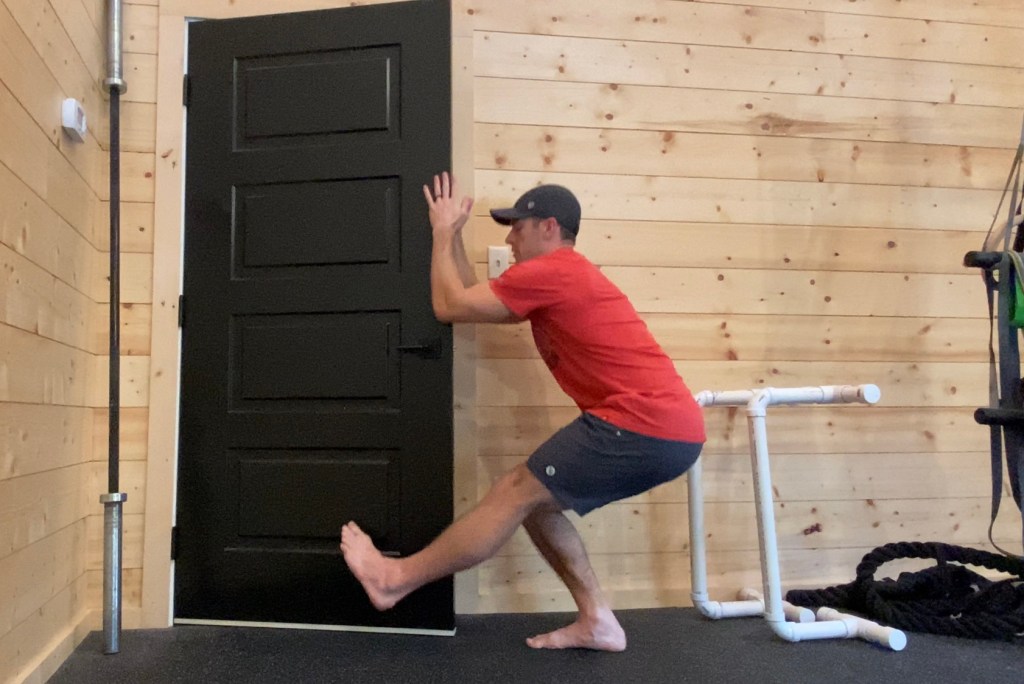
In this video, I discuss how to use a door to work through a variety of single leg pistol squat progressions.

https://youtu.be/d4Okl_f23zw

Decreasing or increasing the demands of an exercise doesn’t always be related to subtracting or adding load, but it’s a really simple adjustment to make, and also nice for quantifying progress.

Here’s a series of single leg pistol squat variations, covering beginner, intermediate all the way to advanced.

I hope you find these instructions to be simple, yet effective. Single leg squats are an incredible exercise to practice on a regular basis. Single leg squats can be trained 2-3 days per week, leading to impressive gains over time.

Beginner| Fully Assisted On the Way Down and Up

Grab the door itself, or ideally the door handle, using both hands. Use upper body to help guide you into the bottom of the squat and back up to the top. This beginner variation allows for decreasing weight moved, more stability and balance.

3-5 sets of 5-6 reps

Intermediate| Slow Lowering with Limited Assistance, Full Assistance on the Way Up

Use minimal upper body assistance on the eccentric (lowering phase), really slowing down the descent as much as possible. Once you’re at the bottom, the upper body can assist with standing back up.

Eccentric focused exercises can increase muscle soreness significantly in the days that follow, just a heads up.

3-5 sets of 5-6 reps

Intermediate| Lower down with NO Assistance, MINIMAL Help on the Way Up

Time to let go of the door and lower to the bottom of the squat without assistance. You feel shaky, wobbly and maybe even weak. This is normal. You’re building strength, control and coordination with this pattern!

Slow down the descent as much as you can.

3-5 sets of 5-6 reps

Once at the bottom, use minimal assistance to stand up. Challenge yourself here, you dictate the intensity of the exercise, make a choice to ramp up the intensity. Go for it.

Intermediate/Advanced| Pancake Hands on the Door for Balance Only

Slide the hands along each side of the door, stabilizing the motion. The hands are there to prevent you from falling to one side or the other, NOT to reduce the load.

If having two hands on the door feels unnatural, and it may, try using one hand, thumb on one side and the other fingers on the opposite side. Use a feather light touch on the way down and up.

3-5 sets of 5-6 reps

Advanced| Freestanding, Unsupported Single Leg Pistol Squat

Congratulations, you made it. A freestanding, unsupported, zero help single leg pistol squat.

People like to joke about pistol squats being a circus trick, but there a demonstration of single leg strength, stability, mobility and athleticism.

Once you own a single leg squat, you’d be surprised how often use it stand up from the floor. It’s quick and efficient.

Lastly, single leg training is back-friendly.

This is not a recommendation to ignore researching corrective strategies to address the back pain and train around it forever.

In a world where every other person has suffered some sort of back tweak or injury, single leg training is extremely forgiving and often a great option for people.

Some folks may need to limit the range of motion to acclimate to this freestanding single leg squat, and that is ok. Grab a chair and lower down until your butt contacts the seat. Touch and stand back up.

Weighted Single Leg Pistol Squat

https://youtu.be/FW-Qj-aSPiI

Increasing the load beyond bodyweight is the next logical progression.

I’ve added weight by using kettlebells, dumbbells, barbell, sandbag, weight vest, and so on.

Whatever you choose as weight really doesn’t matter. Weight is weight. Gravity doesn’t discriminate. What’s important is that it’s comfortable to hold onto.

Adding weight to exercises is trial and error at times. You want to add enough to challenge each rep in the set, but not too much that you’re unable to control the movement or find yourself compensating/cheating to complete the reps.

We’re always toeing the line here.

Hope you enjoyed this… give the blog a follow and certainly check out the Meauxtion YouTube channel.

Bodyweight Push Up

How to Make Bodyweight Push-Ups HARDER (and less boring)

Motion

Here’s simple guide on how to making bodyweight push-ups harder, and less boring.  

Boredom in the gym is a tragedy because there’s SO MUCH you can do. Boredom often leads to an unraveling of discipline and in extreme cases, an eventual abandoning of physical exercise altogether.

A few of the push-up variations listed below require the use of a resistance band, a towel, and something to elevate the feet.  

Other than few simple gym props, you shouldn’t need much to attack these exercises.  

Push-ups are a time-tested upper body pushing pattern. They’ve played a role in building strong bodies for centuries and will continue to be one of the main components of building fit bodies for centuries to come.

Push-ups are about as resourceful they come (bodyweight-based) and ALWAYS there for you.  

Some of the best workouts I’ve participated in involve little to no equipment, which is funny because I’ve invested quite a few dollars assembling a nice home gym.

Attacking progressively difficult bodyweight progressions can be a humbling experience and a lesson in how simple training can be.

At the very least, exploring new exercise variations can breathe new life into a workout regimen. It’s really easy to fall into the trap of doing the same thing over and over, and over and over.

Push up, squat, lunge, pull and core.  Like a square meal, the structure of this workout is as simple as it get, yet delivers results.  The only other thing I’d add is a quick jolt of cardio to finish off the workout. 

But, we humans gravitate toward the fancy stuff, don’t we?  😉 

Anyways, push-ups if practiced on a regular basis and with a progressive mindset, can be deadly effective for improving upper body strength and building lean muscle.  

There are hundreds of bodyweight-based push-up variations.  A subtle tweak here and there, a little shift of body position, and you’ve got yourself a new push-up variation.  

The curated list of push-up variations below was created to give you ideas on how to upgrade your current push-up to the next level of difficulty, or, simply inject some creativity if you’ve worn out traditional variations. 

All exercises demonstrated by yours truly. 

If I can’t do it, I shouldn’t be sharing it.  

Basic Bodyweight Push-Up

The basic bodyweight push-up is ground zero for this time-tested exercise. Get tunnel vision with push ups (off-setting with plenty of pulling exercises) and chase improvement here.

If you’re struggling to maintain form with a basic bodyweight push-up, elevate the hands onto a chair, couch or stairs.  Raising the reduces the weight being pushed on each rep and makes holding body position (from hips to shoulders) easier.  

Don’t be afraid to take a step back, do the exercise right, then move forward.  

Feet Elevated Push-Up

It’s amazing how different an exercise feels when you change height of the hand or foot position.

Raising the feet above the hands not only changes the angle of the push, but also increases the load on each repetition. 

It’s a really simple way to vary body position and increase loading, which is key to continuous progress.  

Trunk Twisted Push-Up

Put yourself in a trunk twisted position with feet staggered…. and push up.

*** Be careful with the lower back here. You’ll know exactly what I’m talking about once you getting the starting position.

Band Assisted Plyo Push-Ups

Power training. 

The band decreases the amount of weight you’re pushing, which means you have an opportunity to get off the floor faster.

I love this exercise for upper body power development.  

Owning the “landing” phase of this exercise is key. Pay attention to landing quietly and with control.

Hands hit the floor and you’re right into the next repetition. This happens quickly.

The band assisted plyo push-up is basically plyometrics for the horizontal push pattern.

A great alternative to traditional medicine ball power training.  

Slow Eccentric Push-Up

Embrace the suck.

Lowering your body super slow to the floor places emphasis on the eccentric phase of the exercise.  

Try lowering down for 60 seconds.  3 sets of 5 reps will be humbling.  

Do you have full ownership over the two arm eccentric variation?  Great! 

Time for assisted single-arm push-up or full single-arm push-up.  

Slow Concentric Push-Up

Slow down the upward phase of the movement. 

Do the opposite of the eccentric push up described previously.

This is a sick twist to a simple exercise. 

Most people get hyper-focused on slowing down the eccentric phase of exercises, but the concentric can be slowed to create a new challenge. 

Carpet Slide 1-Arm Push Ups

Grab a towel, carpet slide or dolly to perform this push-up variation.  

In this clip, I’m on a sticky rubber gym floor.  Because of this, nothing slides across the surface.  So, adapt the exercise and lightly slide the non-working hand over the floor.  TOUGH.  

This is the most under-utilized push-up variation and one of my all-time favorites.  I love carpet slide push-ups as a stepping stone into the world of single arm push-ups.  The working arm is faced with pushing more weight, the core is introduced to a limited base of support, and it’s a right/left side exercise.  

Nothing wrong with bilateral exercises (where you’re using both limbs to complete the movement equally), but moving your training toward unilateral (or right and left side only) exercises is beneficial.  

This variation also serves as a great strengthener and and lead-in to low-to-ground dynamic crawling patterns. 

When the arm reaches full extension and you’re at the bottom of the rep, it’s resembles the infamous Lizard Crawl (king of crawling exercises).   

Band Assisted 1-Arm Push-Ups

Anchor a resistance band overhead, wrap it around your chest and perform these assisted single arm push-ups. 

The resistance band will assist your effort out of the toughest part of the exercise, the bottom of the push-up.

This is a fantastic way to introduce your body to the demands of a full single arm push up, yet decrease the load to make each repetition manageable.  

Progress this exercise by using a smaller band over time.  Eventually, eliminate the band and and opt for eccentric-only one arm push ups, or the full monty.  

Lateral Push-Ups

Get into a deep squat, rotate and lean to one side, allowing yourself to tip into a push up.  While this isn’t going to building world class strength, it’s a great variation to train pushing from a unique position.  

I generally include lateral push ups into flow sequences, but they can be practiced in isolation.  

High reps on these.  Anywhere from 8-15 reps alternating side to side.  

Push-Up Combinations 

Training should include several movement woven into a sequence, or a combination. Combining exercise and working to create seamless transitions between each. 

Push Up to Cross Body Knee-to-Elbow

Fitness experts love to blab about “making sure workouts having functional carry-over into the real world”, yet often forget to include combination movements that mimic real life.  

Push Up + Step Through + Pistol Squat + Skater Squat

Few real life situations involve just one isolated movement pattern.  

Push Up and Rolling Flow

Think about it. You’re laying on the floor. To stand up, you might perform a push-up, but then what? What’s the next move to stand up?

Push up + step through + hybrid lunge + stand and walk.

Combinations I tell you.

We can combine 2 exercises, or we can get wild and crazy and string together 3, 4 or 5+ exercises into a sequence.

Build strength using isolated exercises… but don’t be afraid to branch out and create combinations. 

Home Gym| 3 Exercises and a Movement Game to Build Useful Muscle and Body Control

Motion

Fewer words, more videos.

From a usefulness perspective, video CRUSHES the written word.  

I could write 800 words about an exercise, or show you a :30 second video and deliver more clarity. 

I hope you view each video below and think, “Shit, that exercise looks fun/effective/challenging/engaging/different or applicable to my situation, I’ll try that next workout”.

Exposure to new ideas can change your attitude and enthusiasm about working out. 

Equipment needed for these exercises:

  •  Yoga blocks (hockey puck, shoe box, etc)
  •  Weight (kettlebell, dumbbell, etc)

I used yoga blocks for the upper body Yoga Block Game in the video below, you don’t have to.  

Use what you’ve got lying around the house (yoga blocks are extremely versatile, inexpensive and have a lot of uses).

Weight.  Any object of weight will work to load these exercises. Common household items can be substituted in place of dumbbell or kettlebell.  Use what you’ve got.  If the weight is challenges the movement pattern without compromising safety, go for it.  

In the meantime, look into getting yourself an adjustable kettlebell or dumbbell (adjustable fitness equipment are economical and space savers)

Quick Advice on Reps/Sets/Weight

Let’s address the two most common questions I get about most of my exercise videos:

“How many reps and sets do you recommend?

“What weight should I use?”

Good questions… but here’s the deal, only you know the answers to those questions.

I can suggest reps all day long.  

But if you’re cheating the exercise on rep 3 of a 10 rep set because your ego wants to practice the exercise variation from my video, but what you really need is a variation 2-3 steps back in difficulty… well…

Same goes for weight selection.  

Avoid the temptation to chase the “burn” during each work set and select a weight you can control every step of the way.

The Goldilock’s Rule for selecting weight:

Not too heavy, not too light… juuuuusssssstt right. 

Take a step back and take an honest assessment of your strength and fitness level, movement quality, and familiarity with the exercise(s).

Ego-Free Guidelines to Apply to any exercise:

  •  Start with lighter weight (move up in weight as needed)
  •  Quality reps only 
  •  Get to know fatigue and what it doesn’t to movement quality
  •  Move slow, move with control
  •  Patience
  •  Be in the moment, feel everything, remain mindful

Enough lead in.  

Here are a 4 (home gym approved) exercises and a movement game worth experimenting with in your next workout.

Split Stance Cross Body RDL

Have you ever had to lift an object from the floor without being able to get into a picture-perfect deadlift stance/position?

Me too.

Stagger your stance and shift weight onto the front leg.

Lower the weight (kettlebell, dumbbell, etc) along the outside of the front shin bone until it touches the floor outside of the foot.  

Pause briefly.  Stand back up.  

You should feel the bulk of the work from the front working leg hamstring up into the glute.

Slipping a little rotation into common movement patterns (hip hinge) is a good thing.  (So is rain to make whiskey).

Aim for 3-5 sets of 6-8 reps per side. 

Single-Leg Deadlift + Row

Coordination, balance, and timing are all put to the test with this exercise.

Grab the weight, hinge forward while balancing on one leg, row.

People get pleasure from bashing combinations like this because neither the deadlift or the row is “optimized”.

Interestingly, the same folks who poo-poo these exercises struggle to balance on one leg, sooooo….?

The purpose of this exercise is to be a movement challenge.  

Balance on one leg, maintain shape and control while rowing an object of weight.  

For perspective, this exercise variation isn’t my top pick to deadlift 500lbs from the floor.  There are better variations.

Also for perspective, performing a row with a challenge amount of weight while holding a single leg hip hinge is a difficult little maneuver.  

And how about the foot conditioning here?

Balancing on one leg is fantastic for strengthening the tiny little muscles underneath and surrounding the foot/ankle.  

If you can, remove your shoes while you workout.  Barefoot training is a really simple way to strengthen the feet.  

Hybrid/non-traditional movements like this one offer up something different for your body unpack and navigate, which IS the benefit in and of itself.

Aim for 3-5 sets of 6-8 reps per side. 

Yoga Block Game (Upper Body)

Objective: Push each yoga block out as far as possible.

I suggest going around the circle a few times because you’ll notice you’re able to push each block a few millimeters further on each attempt.

From my experience, when a normal linear set of an exercise transitions into a task or a challenge, people get competitive and the effort given increases.  

The entire front side of your body is going to be burning like a bonfire on this one.

Arms, chest, core, etc.  All of it… on đŸ”„Â 

Aim for 2-3 attempts, either during the warm-up or workout.

Hollow Body Rock + Single Leg Squat

Hollow Body Rocks and Single Leg Squats (aka pistol squats) are two fantastic exercises on their own.  

Here are links to each exercise:

Single leg squats are my go-to squat pattern.  I get a phenomenal training effect without needing a lot of equipment (for added weight) and there are bunch of progressive variations to further challenge mobility (ex:  dragon squats).

Single leg squats transition well into everyday tasks.  So much is done on one leg, it’s beneficial to train for it in the gym.

Hollow Body exercise variations link the upper and lower body together and might look easy from afar, but they‘re actually quite difficult.  

As an introduction to Hollow Body work, try holding a Static Hollow Body position for 30 seconds x 4-5 rounds (1:1 work to rest periods).

Good luck. Â đŸ‘đŸŒ  

Fusing Hollow Body Rocks and Single Leg Squats creates a whole new movement challenge.

The goal here is to make two exercises look like one exercise by creating smooth transitions.

Aim for 5 sets of 6 reps per leg. 

Isolated Exercises into Movement Combinations

If you’ve checked out my YouTube or Instagram pages, you’ll notice how often I fuse 2, 3 or maybe 4 exercise together to create movement sequences and hybrid movements.  

You can take simplest of exercises and morph them into a difficult movement combinations.

Always start by learning a movement pattern in isolation.  

Give your body a chance to understand the exercise.  

Your body will gradually make gains in strength, control and work capacity.

From there, explore fusing several exercises together, creating combinations, etc.

Down the road, play around with speeding up the tempo, change angles, twist/turn, change levels, use different training surfaces, add weight, etc.

Exercises like this is can provide a simple introduction to movement training and create a renewed interest in gym work.  

Which exercises are you going to try out today?  

Any of them?  All of them?  

Give them a try and leave me a comment down below.  


T’is all for today.

KyleÂ