Benefits of the Crab Reach Exercise

Motion

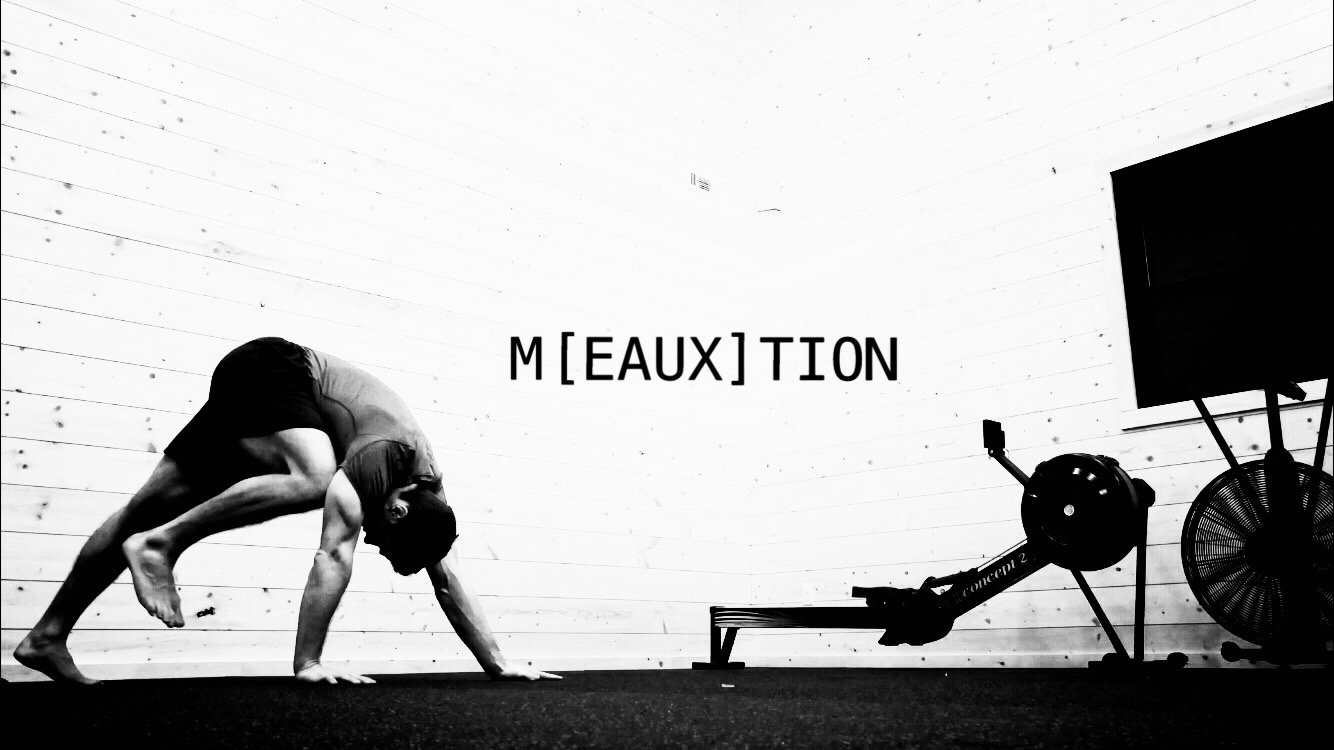
The Crab Reach is a great bodyweight exercise with a whole bunch of options of use before, during and after a workout.  

For a simple bodyweight move, this exercise offers a lot of benefits. 

Benefits of the Crab Reach

  • Posterior chain activation and hip extension
  • Active Thoracic Mobility
  • Anterior body stretch (hip flexors, quads, torso)
  • Shoulder stability/endurance emphasis in loaded shoulder
  • Trunk rotation
  • Right and Left Side 
  • Low-impact

Combat Sitting 

The Crab Reach is a great exercise to battle/off-set the negative effect of long duration sitting. 

It’s not “the cure”, the only tool or the “best” tool, but it’s a good one to implement on a regular basis.   

Reversing aches and pains caused by primarily long duration sitting requires dedication, discipline, and volume.  There is no quick fix.  

A quick hip flexor stretch, thoracic mobilization, and glute bridge are not going to cancel out 8+ hours of sitting in the same turtle-like, wound up position.  

Body restoration takes time, effort, consistency and volume.  Lots of repetitions, likely lots of time and an aggressive mindset.  Assuming you’re doing everything right, expect improvements over time.

Most people slump like a turtle while sitting.  Sitting like a slouchy turtle for 8-10 hours per day, 5 days per week isn’t good for our bodies.

We become the positions we use most.  

Fill in Gaps with Movement Training

Strength and conditioning built from traditional resistance training can benefit greatly from practicing multi-planar movements like the crab reach.   

Deadlifts are great.  Chin-ups are great.  Rows, push-ups and rotational core training are all great.

These are fundamental movements to build a strong body.  

But there are movement gaps leftover from each of these exercises.  

Once you’re on the floor crawling, transitioning between locomotion exercises, you find out pretty quick there’s a difference between squatting up and down with lots of weight on the bar and moving gracefully through space.  

It’s humbling. 

Exploring bodyweight oriented movement is a key piece of the fitness puzzle that will improve your movement IQ and create a well-functioning body.  

What’s a well-functioning body?

Strong (proportionate to what a person needs to thrive in daily life), mobile, confident in many different postures/positions/patterns, conditioned, free of aches and pains. 

Ground-based conditioning is a great way to backfill any gaps resistance training is not designed to address.  

Free-flowing, multi-planar fitness. 

Practicing postures and movement patterns less common to daily life. 

Improving strength, mobility and stability in uncommon movements make everyday exercises feel easy. 

Rotation

Looking at the average person’s exercise favorites, it’s usually a shortlist made up of linear resistance training and a sprinkling of cardio. 

Break out of the linear matrix. 

Every repetition of Crab Reach moves the body through a multi-planar, active range of motion.  

Through the range of motion, the body will extend and rotate.  

The twist is visible from the hip flexor, moving diagonally through the mid-section to the loaded shoulder.  

How to Use Crab Reach in Workouts

Ground-based bodyweight movement is extremely versatile.   

Keeping it simple, here are a few different options to integrate the crab reach into daily fitness:

  •  In the warm-up
  •  Filler exercise during a lifting session
  •  As part of a flow sequence

Crab Reach can be practiced in isolation or as a combination. 

I recommend practicing new movements in isolation to increase focus on technique. 

Practicing an exercise in isolation is better to understand the mechanics and demands is best. 

Isolating the exercise will give you the opportunity to focus on the mechanics of the movement and spatial awareness.

Warming Up with the Crab Reach

Movement flow exercises are perfect for pre-workout warm-ups. 

These movements are generally dynamic, full range of motion exercises that require movement into and out unique body positions, angles and tempo.  

Crab reach can serve as a valuable movement prep before exercises like deadlifts or kettlebell swings.

Crab Reach as Part of the Workout


Positioning the Crab Reach as part of a Tri-Set is a great way to isolate and practice the exercise while staying active/productive during a strength training session. 

Here’s an example a simple Tri-Set:

Exercise A) Front Squats

Exercise B) Chin-Ups

Exercise C)  Crab Reach

Crab Reach acts as a non-competing exercise with the front squats and chin-ups. 

Flow Training

Crab Reach can be used to create a simple bodyweight flow.

Start with two exercises separated by a switch to keep it simple.  Here’s an example:

The video above is an example of a simple movement sequence.

For an added challenge, increase the number of exercises in the sequence to 4, 5, 6 and beyond. 

Adding more exercises to create longer flows is great for the mind-body connection. 

The ultimate goal of movement training is improvisation, which is essentially moving without a plan.

Improvisational movement is an idea I plucked from Ido Portal’s movement hierarchy, which looks like this:

Isolation —> Integration —>  Improvisation

Read more about Ido Portal Method here.

Reps/Sets/Time 

In the beginning, keep the reps low.  

6-8 reps per side is a good place to start.

Focus on a slow and controlled tempo through the fullest range of motion you can make happen.

After you are feeling good about the mechanics, increase the volume. 

Don’t be shy about bumping up the reps to 15-20 reps per side.  Setting a timer can be a nice option.  

Not interested in counting reps?  

Set a timer and go.  Alternating right and lefts for 2-5 minute timed sets can free’s you up from having to count reps. 

Summary…

  • Bodyweight ground-based movements are effective for building strength, mobility, endurance, and movement IQ
  • Crab Reach is a versatile exercise that can be performed anywhere and anytime.  
  • Benefits of the Crab Reach include posterior chain activation, anterior body lengthening, thoracic mobility, body awareness in space.
  • The Crab Reach is great to include in warm-ups, during the workout or as flow training.  
  • The Crab Reach is an effective exercise to help mitigate aches/pains from sitting, restore function.

Want to Go Deeper? Check This Out…  

Vahva Fitness has created a fully streamable bodyweight-based movement program called Movement20XX.

The movement curriculum in Movement20XX is progressive, challenging, and scalable for beginners, intermediates and all the way up to people seeking movement mastery.   

Movement training is easily scaled to suit each person’s skill level.

Movement20XX is one of a small number of hand-picked online fitness programs I support. 


Turkish Get-Ups: “Press at Every Step” Variation

Kettlebell Training

Turkish Get-Ups (TGU’s) are one of the great kettlebell exercises.   Nevermind kettlebell exercises, they are one of the great movement training drills we’ve got.

When I am asked, “What are the best exercises I should be doing?”

Turkish Get-Ups are always a part of my answer.

This is a heavy question to ask and even heavier to answer.  Responses will differ depending who you’re asking but generally speaking, there is too much movement value, low risk and high reward with Turkish Get-Ups to leave it out.

Few other exercises provide the total body training effect of Turkish Get-Ups.  

Like any exercise, TGU’s have an infinite amount of variations, add-ons, and programming option (sets, reps, time, weight, etc).  Practicing variations is a nice way to introduce a movement challenge and avoid the onset of boredom.

Make no mistake, keeping training fresh is important across the long-term.

One of those variations is the “press at every step”.

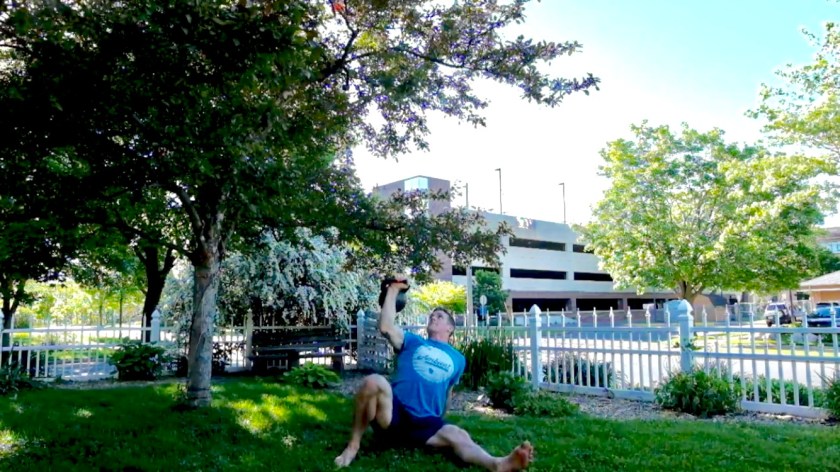
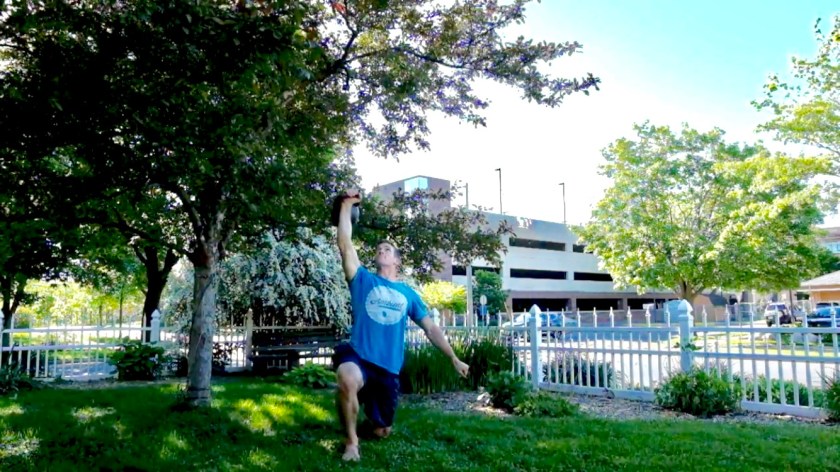
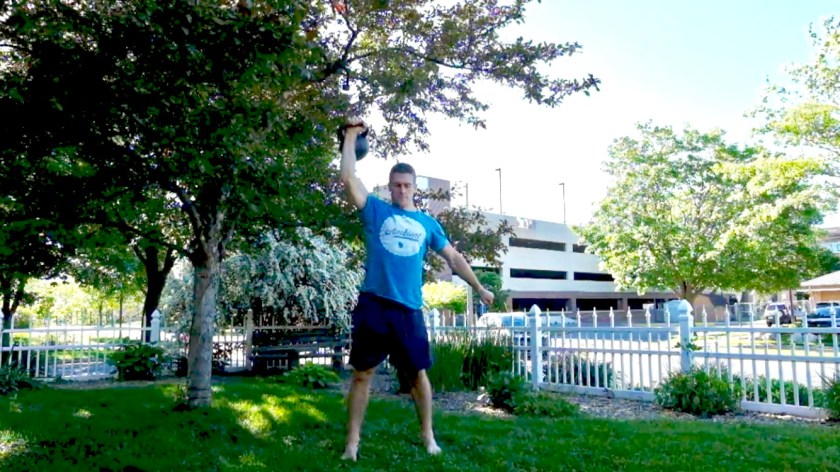
This TGU variation involves performing five presses in the following positions:

  1.  Lying position.
  2.  Elbow support.
  3.  Hand support.
  4.  Half-keeling.
  5.  Standing.

Press #1:  Lying Position

FullSizeRender 3

This is the only true horizontal press of the five listed.  “Horizontal”, meaning you’re pressing from the back of the body to the front of the body (anterior to posterior then back to anterior again), similar to the mechanics of a traditional bench press.  Lower the weight down until the elbow makes light contact with the ground, pause, press back up.

Press #2: Elbow Support

FullSizeRenderPressing from the elbow support position will be a new experience for a lot of people.  Expect this to feel unnatural and use cautionary judgment with weight here.  The trajectory of the kettlebell is slightly different than any traditional pressing exercise. 

Press #3:  Hand Support

FullSizeRender

This body position will likely be the most awkward press of them all.  Remain rigid from waist to shoulder.  Naturally, your body is going to want to crease or your ribs are going to flail.  Avoid letting either happen.  Stay rigid and press! 

Press #4:  Half-kneeling

FullSizeRender 2

Training in the half-kneeling narrow stance position is a natural core blaster and can reveal side-to-side differences in symmetry.  You might be steady with the left knee up, but hardly maintain the position with the right knee up.

Turkish Get-Ups aside, half-kneeling pressing is a natural overhead pressing progression into the standing press.

Press #5:  Standing

FullSizeRender 5

Finally, standing at last.  In the world of “functional training”, this is as functional as it gets.  Pressing objects overhead is a common task in life.  Unfortunately, most of the objects pressed overhead in life aren’t evenly weighted with nice handles.

Here is a video of a full “Press at Every Step” Turkish Get-Up…


Whether you’re craving a movement challenge or simply a new variation of a timeless exercise, give this one a shot.  Be prepared for sore shoulders and core in the days that follow.  Five presses inside of each TGU repetition accumulates a lot of work for the upper extremities.  

For more great kettlebell exercise variations, I recommend two resources.  The first is a landmark book from the modern day Godfather of kettlebell training, Pavel Psatsouline.  There isn’t a kettlebell professional who hasn’t read Pavel’s ongoing work with kettlebell training.  

The second resource is a full training system from Chris Lopez designed to improve body composition using kettlebells, more specifically fat loss.  Kettlebells are unique in their ability to burn fat when used systematically.  Chris has published a number of kettlebell training programs focused on how to  “lean out” using kettlebells for quite some time.   

Screen Shot 2017-06-04 at 10.17.51 AM


Most importantly, let me know how you made out with this TGU variation…


Cheers, 

Kyle

Basics of The Ido Portal Training Method

Ido Portal

Ido Portal

{Photo Credit:  http://www.idoportal.com}

Ido Portal Method training is taking off like rocket and growing in popularity every single day.  

There’s a moutain of Ido Portal movement videos and articles all over the internet describing his techniques and teaching. 

[I do not speak for Ido Portal in any way.  Ido is a man with his own original thoughts and ideas.  Anything I write or discuss on this blog is my interpretation of information he’s published on his social media page, his old blog, Youtube interviews and various other sources.]

My background…

I have an extensive background in strength and conditioning, but it’s traditional in every sense of the word.  

It took years for me break away from deadlifts, squats, pushing, pulling, and core work… and expand into movement training.

Old habits die hard, but eventually, I dove head first into movement training.  

Gradually, I rebuilt my body, peeling away layers of stiffness, improving range of motion, coordination and newfound strength.

Thousands of people have done the same, many through the information in this article.

It’s amazing to see the feedback of those who’ve decided to take actionable steps toward building up their movement arsenal. 

The first time I encountered Ido Portal Method, I knew I was watching something different.  This was a much different approach to building fitness.  The training tactics were unlike anything I’d seen. 

Crawling, sprawling, twisting/turning, reaching, flowing, strength movements paired with Capoeira, gymnastics, hand balancing, dance, gymnastics, etc.

Ido Portal Method was like an open platform for many differnet styles of movement.  

Just when you think you’ve got it figured out, it changes shape, moves in a different direction.  

Since my initial exposure, I’ve spent a significant amount of time reading, watching, practicing and digesting Ido’s methodology.

This article is my translation of the basics of the Ido Portal Method. 

IMG_4167 

Ido Portal Training Methodology…

If you’re looking to get the summarized view of what drives Ido Portal’s movement methodology, the formula looks something like this:

Isolation—> Integration—> Improvisation

Step 1:  Isolation

Step 2:  Integration

Step 3: Improvisation

What I currently comprehend, the movement paradigm is a series of transitioning from phases.  

Isolation to integration to improvisation.

Ido Portal Method raised the bar with movement standards.

Most systems teach isolation (do this squat, then do this deadlift, then run up that hill, then do a pull-up) and stop there.   

Ido Portal Method takes it a step further.

Here are details on each phase.

Isolation

In the Ido Portal Method, Isolation based movement is essential for making progress.  

This is the base of the hierarchy.

Strength is a prerequisite for movement.

Being strong enhances movement capacity because you OWN every position.  

Isolation = building strength with movement patterns.

Movement patterns:  

  • Squats
  • Deadlifts
  • Lunges
  • Carrying
  • Crawling
  • Vertical Pulling
  • Vertical Pressing
  • Horizontal Pulling
  • Horizontal Pressing
  • Bent Arm and Straight Arm Upper Body Training
  • Glute-ham raises
  • Rotational patterns
  • Core training
  • Power Training (cleans, snatches, jerks, kettlebell swings, etc)
  • Stabilization drills

This is isolation.

You might be familiar with these exercises.  

There’s also a heavy emphasis on high tension bodyweight-based strength training exercises.

Body levers, hanging and climbing, dips, muscle ups, parallette work such as L-Sits, and Tuck Planches, single leg squats, single arm pressing, handstand push-ups and various locomotion patterns (crawling, rolling, etc.)

Gymnastics strength training.

Mixing traditional strength training with body-weight based exercise is a potent combination.  

These are time-tested, proven strength builders essential to physical development. 

Improving athleticism with Isolation style training opens doors to building movement sequences (performing several movements in a row) and evnetually fully improvised movement flow.   

Multi-planar strength and movement freedom.

The bottom rung of Ido’s movement classification system is often the highest rung for other training systems.  

HIGH. STANDARDS.

There’s a realm of physical expression that exists beyond getting fixated on sets, reps, putting more weight on the bar, numbers numbers numbers, or racing the clock to set new P.R.’s in a WOD.  

Handstands, leg-less rope climbing, ground-based movement flow training packed with locomotion patterns and bodyweight movement patterns are here.  

Our bodies are designed to move freely.   

 Flow

Ido Portal Method combines the best of many movement disciplines.

Integration

Integration is the point where movement sentences are formed from the words (isolation).  

A squat, is no longer just a squat.  

A squat is a stepping stone to another movement, and another, and another.  

The practice is evolves into a seamless flow, moving about.

More movements are integrated, creating series of movement patterns formulating a “sentence” of movement.  

  • Sidenote: There’s a heavy Capoeira influence. 

The ground conditioning (locomotion patterns, Capoiera, etc) combined with gymnastics/bodyweight/traditional strength training, fused with flexibility and mobility work is NOT NEW, but since it’s being repackaged and people are seeing incredible results, it’s definitely creating a paradigm shift in fitness.  

“Fitness” is less about who can build the best looking body or lift the most weight (both respectable pursuits), it’s about moving and how your body can perform when confronted with the known and unknown.

The shift is on and people are taking notice.

Nike has…

Ido Portal Nike

More Integration…

Integration builds on the physical preparation from isolation training.  

Pre-planned movement sequences make up part of the Integration phase.  This is similar to a dancer demonstrating a choreographed routine.  Just because the routine has been practiced for months doesn’t make it any easier to execute.  

I’ve watched the “Locomotion Research” video 50+ times.  Watching someone move like water is inspiring.  The movement sequences demonstrated in the video are deceptively difficult.  

Ground-based locomotion is a multi-planar movement requiring a level of body awareness, joint range of motion and on again/off again body tension most people rarely practice.  

Many of these dynamic patterns are animal-like.

People are often humbled by the amount of mobility and strength needed for locomotion patterns.

After the first few sessions, locomotion practice will leave you sore.  

The Lizard Crawl bridges the gap between “lifting weights” and putting those gains toward challenging movement patterns.

Crawling is difficult.  

If you’re not yet crawling, get into it.

Crawling patterns are effective for building coordination, spatial awareness, strength and movement capacity.  

Improvisation…

Ido has commented on numerous podcasts that improvised movement represents the highest form of human movement.  I couldn’t agree more.

Dominating isolation exercises makes the transition to integration significantly easier.  

With consistent practice of Isolation and Integration, one will arrive at the final progression of Ido’s movement philosophy… improvisation.

World-class gymnasts (pound for pound the strongest people on the planet) are rarely expressing improvised movement.  Competition routines are all pre-planned, practiced and choreographed prior.  

Improvisation is the combination of isolation and integration.  You’re essentially making it up as you go, or “flowing”.  Though it will likely take years of dedicated practice, improvised movement flows are achievable.  

This is where progression becomes important.  

Flowing like Ido Portal doesn’t happen overnight.  

Practice is king.  

I’ll spend less time describing the Improvisation phase of the Ido Portal Method because most folks need to focus on nailing down the elements of Isolation and Integration.  

In interviews, Ido has mentioned several times he thinks there is a dimension to be explored beyond Improvisation.  

Isolation and Integration Progress

The Ido Portal Method represents an incredible shift with how we view and define fitness.  

Humans are made to move (climb, run, jump, roll, carry, etc) and I think there is an emerging sector of people who want to experience the thrill of moving in this way.  

It’s important to clarify that traditional physical fitness modalities aren’t obsolete.  Nor should they be.  

A person should spend a great deal of time gaining ground in the Isolation phase, grooving technique, building strength, improving joint control throughout a range of motion.  

Hammering away on the basics (squats, pulling, pressing, etc) is fundamental to progress.  

The goal is to build strength, stability, mobility (the missing link of fitness), conditioning and constantly expand movement capacity.  

Conditioning is also important, and should never be overlooked.  

Train Like Ido Portal Method without the Pricetag

Several years ago, I started looking for alternatives to the Ido Portal Method for several reasons.

  1.  Ido Portal doesn’t offer programs through his website.
  2.  Training privately with Ido and his team is EXPENSIVE ($2500+)

Like many of you, I couldn’t afford $2500 for a workout program, no matter how spectacular. 

I started researching alternative programs with the belief that similar results could be achieved while investing less money.

With enough research, I found what I was looking for, and what I felt other people could benefit from as well.

Here are two amazing programs to check out:

  • Movement20XX
  • The Movement Athlete

Combining all of these programs creates a comprehensive training system.

Strength, movement training and mobility.   

Movement 20XX  teaches ground-based movement, locomotion patterns (lizard crawl, etc),movement sequences and improvised flow work. 

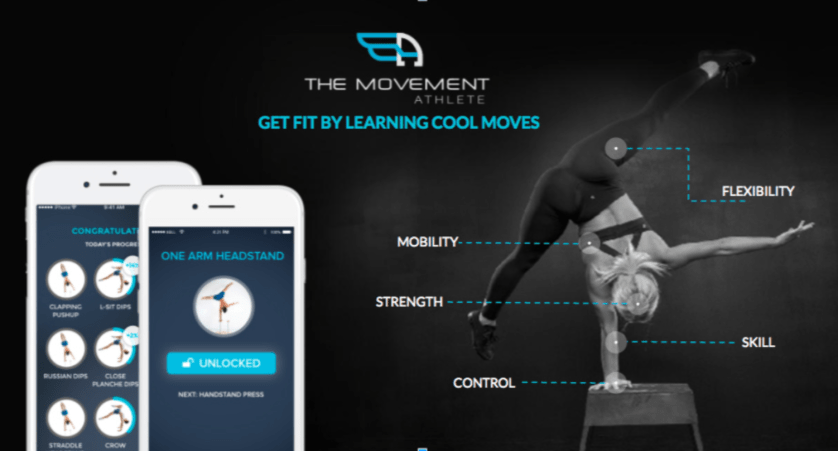
The Movement Athlete will build strength using bodyweight exercises.  Strength is critical for performance and long-term health.  Pistol squats, one arm push ups, handstands, l-sits, body levers, upper body pulling, etc.  

Here’s a little more about each program. 

Movement 20XX

Screen Shot 2019-11-15 at 11.12.03 AM

Movement 20XX is a ground-based bodyweight training system that teaches many of the locomotion patterns and flow work found in Ido Portal Method.   

Locomotion mainly consists of quadrupedal ground-based exercises like crawling (lizard Crawl, etc), switches, transitions, etc.

Integrating Movement 20XX into my own workout regimen has been awesome.  

I started by supplementing my traditional resistance training workouts with a few basic crawling exercises, and built up from there.  

Over time I strung together exercises to create repeatable movement sequences.  

Movement 20XX integrates the best elements from different movement disciplines to create a hybrid system of movement training.  

Crawling, transitions, switches, flow, etc. 

I started Movement 20XX with a stiff spine, poor hip and shoulder mobility, tight hamstrings, and mediocre movement capacity.  

After about 4 weeks of dedicated movement practice, my body acclimated to the mechanics and demands of the patterns.

Using the curriculum from Movement20XX, I made more movement gains in 2 months then I had in the previous 5 years.  

Interestingly, my traditional lifts saw boosts in performance.  Deadlift, squat, pull-ups and pressing all improved, felt smoother, etc.

If you want to explore movement, this is the program to get. 

👉 Learn more: Movement20XX

The Movement Athlete  

The Movement Athlete

Strength is critical for improving movement performance.

If you get nothing else from this article, please, remember that. 

Movement Athlete Academy is a bodyweight-based strength program designed to improve performance in high powered movement patterns:

  • Muscle Ups
  • Handstand Push Ups
  • Single Arm Push Ups
  • Single Arm Body Rows
  • Pistol Squats
  • Handstands
  • L-Sits
  • Human Flags (aka: body levers)
  • Back Levers

Sadly I used to think bodyweight training was dumb.  If I wasn’t lifting weights, I was wasting time in the gym.

When I committed myself building effective bodyweight movements, my strength increased, everywhere.

The human body is adaptation machine. 


Movement Athlete Academy is a smart training system, built on the principles of:

  • Smart exercise progression.
  • Progressive overload.
  • Progressive exercise complexity and volume.
  • Rest and Recovery.

The workout design, exercise progressions and step-by-step tutorials make Bodyweight Athlete a great bodyweight-based program to invest in.    

Bottomline…

Find a program and follow the details.  

Invest the money in learning effective training techniques, commit yourself to the curriculum and you’ll get phenomenal results.

Stay Tuned 

If you’ve enjoyed this post, check out:

Cheers to the Basics of The Ido Portal Training Method…

KG

SaveSave