The Gym is Dead to Me

Quick Tips

It’s not really, and it never will be, but the point here is that the gym reminds me of a jail cell.

When I first started training, it was very traditional.  Barbells, cable machines, stationary bikes and treadmills were the ticket.  It was how people stayed “fit”, strong and athletic.

Again, these tools still work, but the deeper you go into the rabbit hole, the more you question why building high functioning bodies has to be such a cookie cutter process.

Barbells will never go away.  Why?  Because a barbell’s design is perfect for lifting heavy things off of the ground, loading up the squat pattern and building explosive power through exercises like the clean, snatch and push press.  We need tools like barbells.  Barbells are safe.  A quality barbell isn’t going to break mid-rep, and there are a series of checks that a person can run through to make sure that  replicate their technique every single time.

But what I am beginning to question- and the better term might be “explore”- is why movement should be so cookie cutter.

Because that is how I am seeing it these days.  It’s cookie cutter.  We preach posture, we preach exercise technique, we preach moving within manageable ranges of motion.  But how about this… let’s get out of the gym and move.  Forget about all of the in-depth information, get off of the couch and out of the house.  It’s sunny and 80 degrees outside and it’s a prime opportunity to use your god-given right to move yourself around.

If you’re a newer to training , and you cannot handle your bodyweight… the load that you carry around with you 24/7/365… forget about barbells, cable machines and kettlebells.  You have bigger fish to fry than worrying about the next great exercise.

When I left the gym I started to LOVE training again.  When you’re done with organized athletics, working out just for the sake of working out is a sure-fire way to burn out.  Boredom sets in and you start to wonder what all of the effort is for?  A six-pack?  Honestly, who cares.

Six packs are nothing without function.

You can have a rippled six-pack and blow out your back in a heart beat, tear a rotator cuff, etc.

It’s like, “Congratulations, you can see your stomach muscles through your skin, but you can’t run a mile or pull yourself up to a bar or pull yourself out of Quasimodo posture”.

In fact, these days, I think that dedicating your training to achieving a six-pack is comical.

Once you get in this “I’m training for a six-pack” mindset, you’ll go insane trying to get it or attempting to maintain.  It will elude most people not because their workout program sucks, but because their eating habits suck.  You wouldn’t believe how hard that is for people to swallow (no pun intended).  If you want a six-pack and don’t have it despite insane physical efforts, it’s most likely because your eating is not conducive to having a six pack.  Ok?

It would be like if you started a business only with the goal of getting uber-rich and but ignored your customer service.

It’s short-sighted.

Get yourself out of the gym and start moving more.  What do parents tell their kids when they are inside for way too long?… “Go play outside”.  Adults should take their own advice.

Once you’re outside bodyweight training is an amazing method to leverage when you use the correct formula.  Climb some stairs, hills or jog flat ground.  Get your heart rate up and get the blood circulating rapidly.  Mix in some squats.  If you cannot squat, grab onto a pole, hinge your hips down and back, keep your chest tall without folding at the lower back and feel the movement.  Use the pole to help groove that squat pattern, and what it should feel like.  Gradually let go of the pole and continue to “feel” the movement.
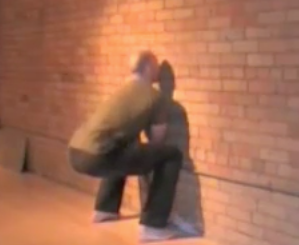
Face the wall squats

“Face the Wall” squats are great for learning technique.

If you cannot perform a certain movement- and I use the squat as a common example because it seems to give people the most trouble- you have got to practice it.  Occasionally, you’re going to find that your internal wiring is all mixed up.  In this case, you need to implement corrective exercises, which I why I promote The Functional Movement Screen so much.

Everyone should be able to squat, among other things.  This isn’t a circus move that is exclusive to fitness buffs, this is exclusive to all humans.  If you cannot squat, you need to figure out why and restore your ability to squat.

Screen Shot 2013-08-04 at 1.32.21 PM

Gym memberships.  We seem to think that just because we buy a gym membership we have just bought ourselves a fit body.  But you haven’t.  What you did is you bought yourself a gym membership, a contract that says you can walk into a brick and mortar structure where a bunch of fitness equipment resides, waiting for the next person to pick it up, push it, pull it or run on it.

But most people who purchase memberships never go.  Buying the membership is the easiest part of the process.  Anyone can hand over a credit card, swipe it and feel great about their decision.  Especially credit cards, because when you don’t physically see the money being handed over, the impact of the purchase is dampened.

The real work begins when you make it a priority to go that gym over and over again.  Daily.  Every other day.  Or at least on some kind of consistent schedule.

But most people burn out or never commit from the beginning.  Out of the gates hard and fizzle, or they purchase the membership and never go in the first place.  But they have the membership, so they will go “someday”.  The membership is comforting because they always have it in their back pocket, never to be used… but it’s “there”.
Ido Portal

In the back of my mind, I have long thought movement should be explored.  We should be able to execute movements that require power and strength, yet exhibit a stable full range of motion and gracefulness regardless of the environment or the obstacle.  And let me tell you something flat-out, one brief glimpse at how life happens in real-time when you are actively engaged in movement (outside of the confines of the gym) will reveal that you need to be able to adapt to the unknown.

However, I also believe that exploring movement should be done unloaded.  External loading in really awkward positions can cause injury, and that erases any ground that you’ve made.  Move with your body, and your body only.

Unknown stress, unknown range of motion, etc.

You’ll never be running on a trail and find a barbell neatly loaded with a chalk container sitting next to it.  You’ll find a rock with shitty hand holes for gripping that is weighted heavier on one side than it is on the other, and wet.  Or maybe that rock isn’t on the running trail, but it’s a part of the magnificent landscaping in your yard.  Maybe you’re gripping 40lb bags of mulch carrying for 30 yards up an incline, shoveling gravel or raking a 2 acre yard.

You cannot train for this stuff.  You can prepare, and barbell training and other more traditional forms of gym work can aid in your completing of these tasks, but we have to develop succeed in raw movement.  It’s life.  Movement is part of life.  So I have embarked on my dabbling of increasing my ability to move, mixing in Ido Portal-like methodology (logo seen above, great logo).

I believe that there is something to be learned here.  Getting out of the cookie cutter mindset and into the movement mindset.  Exploring the bear crawl, moving into a lateral lunge flowing into a crab crawl, gorilla hops and then into single leg pistol followed by a pull up to a bar where you pike out and lower yourself with a graceful strength.

Got that?  🙂

I value the building of systematic strength.  I value programs that are geared toward making damn sure that strength progress and conditioning progress can be measured and evaluated.  We call this “periodization”.  We move through 3-4 week phases where focus is placed on building a certain quality, such as strength or hypertrophy.  But all of this work needs to transfer over into the unknown, into life.

Systematic strength building and conditioning will always have a place for every human, and I will never stop promoting that to athletes, Mom’s and Dad’s and the elderly.  We should place some focus on this method of building physical fitness.

But once we leave the gym, we have to realize that movement is more than bending over to pick up a piece of iron, grunting, standing up with it, then dropping it back on the floor.

Blip on the fitness map

Fitness is a blip on the movement map.

Fitness doesn’t mean that you can move.  

In fact, I really don’t know what fitness means?  Who’s considered fit?  The powerlifter who can pick up 1,000lbs in a deadlift?  The marathon runner who can win the Boston marathon?  The UFC fighter?  Usain Bolt?  The kettlebell guru?  The Crossfit Games champ?

I know this might not make sense right now, but fitness does not mean that you can move.

Ah, the gym.  It’s really dead to me at this point.  I value the tools found in the gym, particularly cable machines that can be used for movements that cross the midline, such as chops and lifts, but not the gym itself.  I think there are better places to train.  Places that inject an energy into your sessions.

With the evolution of  training equipment that is capable for training outdoors, I’ve never been more motivated to explore movement in different environments, using different tools and lately with others who value the same approach.  It’s a great bonding experience to train outside with someone else and finish the workout together, just as it is to climb a 14,000 foot mountain, bike 100 miles or complete a marathon.

SUP ATX Stand Up Paddleboard

With the popularity of unique outdoor activities like stand up paddleboards on the rise, I’ve never felt more justified about my decision to leave the gym in my rearview.

Come join me out here.

Cheers to movement and your ability to do it anywhere!

KG

Assess Yourself Often, Decide What’s Next

Quick Tips

Image

Assessment is an essential element of physical improvement.

Ideally, frequent assessments are made not only to your body aesthetics (weight, fat, muscle, etc) but also to your ability to move freely with stability and strength (mobility, stability, strength, etc).

After all, it is completely possible to look great and move like shit.

It’s also possible to move great and look like shit.

*** I should clarify what I mean when I say “look great”… it’s in the eye of the beholder.  Our perception of what a great body looks like is grossly skewed by mainstream models, magazines and media.  Obviously, carrying higher levels of body fat can raise health concerns, but “looking great” doesn’t have to mean visible muscle striations and the almighty six-pack.  If you’re body type allows you to feel confident in your own skin in any situation, good for you, you’re there.***

Besides, most magazine models, movie actors, and testimonials from famous workout programs like P90X and Insanity are manipulated and photo shopped to amplify their physiques.  Did you know that?

Check out this great article recently published in the Huffington Post describing how fake testimonials for workout programs really are…

Having looks without movement or movement without looks both carry their negatives.

The best approach might be to meet in the middle.  It’s more than possible to improve both at the same time without sacrificing one or the other.

If you look great but you cannot move without encountering restriction or pain, life’s activities become a hassle and certain movement patterns might be avoided altogether.  No one enjoys feeling pain, so we tend to avoid moving in ways that cause it.  I’m not referring to that burning sensation felt in your arms and legs when executing push-ups or squats, but rather the debilitating lower back pain experienced while you attempt to pull up a pair a socks.  Or maybe it’s the pinch in your shoulder when you reach overhead for a clean glass in the cupboard.

Looking great isn’t the only qualifying element to health.

The advances in made in assessing (and correcting) movement over the last 10 years or so have been tremendous.  The physical therapy world and fitness world are beginning to bridge gaps to one another, with ancient practices like indian clubs, yoga and martial arts adding value to the mix.

Image

We have a much clearer understanding of joint function, breathing and soft tissue health and how it all ties together to create a highly functioning body.

We understand that six-pack abs, bulging biceps and a set of trapezious muscles big enough to scratch your ear lobes may not mean a damn thing if movement dysfunction is present.

On the other hand, maybe you move really well but you pay little attention to your body composition.  I know a lot of people who are extremely athletic but don’t pay much attention to what they put in their mouths food-wise.  Ironically, poor eating can case inflammation and pain in and around your joints also.  Here are some common foods that are worth re-considering.  Eliminating most of these foods, or at the very least reducing and substituting with more nutrient dense options can work wonders.

In the operating room, it is obvious that a lack of attention to body composition will eventually restrict joint range of motion.  Many of the patients in need total joint replacements are also overweight/obese.  The increase in body fat literally prohibits the patient from achieving a healthy range of motion in the knee joint.  The additional weight combined with the lack of range of motion earns them a trip to the operating room where a surgeon hacks, cuts and pounds his way to an artificial knee.

This is an extreme end of the spectrum, but it’s worth mentioning none the less.

Image

Both scenarios described have solutions.  But it requires that you take a step back and assess what your next move is.  Just like a chess match, there is a next move, unless you’ve waited too long.  Then it’s checkmate.

If you desire the lean body, assess your training habits while simultaneously assessing your eating habits.  I’ve tried to out train my diet before, and it’s a pain in the ass.  Once my eating was in check, my body appearance improved but ironically so did my performance, skin and quality of sleep.

If you want to improve the quality of your movement, learn a few simple assessment tests give you feedback as to what’s going on.  If you cannot squat with arms extended overhead or perform a push up without breaking at the midsection, you’ve got some work to do.  Film yourself while you test out.  You don’t have to show anyone the video, it’s for your reference and education only.  Watch yourself, compare it with other folks, preferably a fitness professional that moves effortlessly and do some research on how to fix your hang ups.

I would start with the Functional Movement Screen, and someone who knows how to conduct such as test.

Consistently assessing yourself gives you important information on you where you are, your progress thus far, and allows you to decide on the next course of action.  It gives you focused direction.  It creates a clear and simple route from point A (where you are now) to point B (where you want to be in the future).

Assess and make the next move.


Cheers to assessing, correcting and building non-photo shopped bodies!

KG

Be A Perfectly Golden Marshmallow: Toying w/ BJ Gaddour’s Fat Loss Workout

Quick Tips

Screen Shot 2013-07-18 at 8.56.17 AM

BJ Gaddour

BJ Gaddour is the new Craig Ballantyne.

Craig Ballantyne created Turbulence Training back when it was personal trainers were not publishing material on the internet the way that they are now.  Now everyone has a product.

Hey, if you can write and you have the drive to stay motivated after working 9-10 hour days, why the hell not?  Everyone is selling something, product or self.  Doesn’t matter, it’s how we succeed.

BJ Gaddour currently works with Men’s Health as a consultant.  Essentially that means that he made enough noise doing his own thing that Men’s Health contracted him to write workouts, articles and programs for them.

BJ’s claim to fame is fat loss and boot camp style workouts.

A while back he posted a free PDF titled “The Seven Deadly Workout Sins”.

Pretty solid little article.

In it, he describes a general outline on how to design effective fat loss workouts.

When I read the article, it was a wake up call that I should have WAY more confidence in my writing and methods.  It was nearly identical to my training philosophy at the present time.  It was a great moment for me to realize that what I am cooking up here in Eau Claire (the mecca of the Midwest) is well seasoned (nice play on words) and spot on for what’s current in the training world.

Total body workouts, timed efforts and rest, 3-4 days a week.  No cardio.  Cardio is obtained as byproduct from the unique blend of incomplete rest periods and resistance based exercises.  

Again, this is a STYLE of training.  It’s not the law, but this kind of training gets results quickly.  If you buttoned up your eating habits, you would shed unwanted layers in very little time.

I enjoy giving other trainer’s workouts a run through, as it can get a little monotonous writing your own programs all of the time.  Sometimes, it’s nice to have someone else do the designing for you.  I just follow along for once.

BJ’s workout looked something like this:

Image

I talk about movement patterns on this blog all of the time, and a closer look at BJ’s template shows that he thinks along similar lines.  Hip hinging, squat, pressing, pulling, total body movements are all represented in this workout.  It’s a recipe that has endless variations and keeps your workouts interesting and effective.  The systemic effect of a workout like this is fantastic.

Most people will probably find that they are unable to keep moving all of the way through some of the 30 second work bouts with certain exercises.  Chin-ups continuous for 30 seconds doesn’t sound that hard, but talk to me about that in round 3 of the workout when your eyeballs are teetering on your orbitals.  It’s a different ballgame at that point of the workout.  You’re in the eye of the storm in round 3.

What I like about this workout is that is manageable.  The movements can be scaled up or down depending on a person’s training level and age.  Manageable fatigue is the key to successful fat loss workouts.  If you cannot control and OWN every movement in every rep, every round, every workout, you’re putting yourself at risk.  Posture collapses in a matter of a rep.  I’ve seen it in both my own training and others.  That’s all it takes to slip a disc, tear a rotator cuff or and break bones.  It’s a long, painful and expensive ride to the emergency room.

Injury during training is a tragedy.

Overall, this is a great workout.  The rest periods can be frustrating if you have to adjust your equipment in between exercises.  I was using my suspension trainer for a variation of this workout.  I found that adjusting the straps was a nightmare.  15 seconds is not a lot of time to gather yourself and set up for the next movement, especially when your hands are shaking like crazy.  The nervous system is on full alert.

The 60 second rest periods at the end of each round is also well thought out.  One minute gives adequate time to gather yourself, get a drink and towel off before entering into the next round of work.  In the later round, one minute feels like a blink of the eyes.

Successful work capacity based fat loss workouts seem to have peaking point with regard to exertion, whether in the middle of the circuit itself or as gradual accumulating fatigue that reaches a high point at the end of a workout.  The goal is to manage your output, giving an effort that challenges your body steadily in the early and later rounds.  Early burnout makes for sloppy exercise technique in later rounds and a serious lack of enjoyment.  The workout should be challenging but fun and engaging.  Purposeful.

Lately, I’ve been drawing similarities between the perfect “golden marshmallow” and a fat loss driven workout:

The golden marshmallow

When you cook a marshmallow for a s’more, some people enjoy perfectly cooked golden marshmallows and some people like the torched black marshmallows.  Cooking a perfectly golden marshmallow is a campfire art.  If the marshmallow gets too close to the fire it will burn.  If you don’t get it close enough it’s just a warm white marshmallow.

Peaking after the final rep of a workout (while still being able to own your movement) is an art.  We are all at different fitness levels so this is largely a judgment call by YOU, the trainee.  You need to make the decision on when to pull the plug on a set, a workout, or when it’s necessary to add more.

This is what a smart personal trainer can monitor for a client, and why good personal trainer add value to person’s fitness endeavors.  Personal trainers can take a client close to that edge, that fine line, without pushing them over.  The entire workout remains in control, yet impactful in its training effect.

The goal of a great workout is to be a perfectly golden marshmallow at the end.

BJ’s workout accomplishes this.


Cheers to golden marshmallows and better workouts!

KG

Basic Movements Can Be Leveraged to Produce a Massive Training Effect

Quick Tips

Sometimes the best choice of exercise is the basic one.

Basic movements that are executed with proper resistance and shortened rest periods can produce a massive training effect that can re-shape a person’s body.

Most of my training sessions are as uncomplicated I can possibly make them.

I have talked about perfecting the kettlebell complex for fat loss in the past, but the “complex” is nothing more than a series of simple exercises crammed together without rest.

The reward is an extremely large metabolic training effect.

You cannot deny that complexes will strip fat and build a resistance to fatigue.  If you do have an argument that simple movements don’t produce effective results, I’ll have you know that my performance outside of the gym with activities like trail running, cycling, obstacle course races and hockey has not slipped a bit since I began my self-experimentation with kettlebell complexes.

And I have been working the complex for about a year now.

Moving on…

One of my favorite training methods are tri-sets using basic exercises and incomplete rest periods.  

A tri-set means that you’ll group three different exercises together, moving from one to the next until you complete the number of sets of each exercise for that day.

It would look something like this:

A1)  Dumbbell Bench Press 3×8

A2)  Deadlift 3×8

A3)  Anti-Extension Roll Outs 3×10

All of the movements within this cluster are basic exercises.  It’s the resistance used and the shortened rest periods that is going to produce such a large training effect.

As you can see, once you finish a set of bench press (A1), you rest for a set amount of time, usually somewhere between 30-60 seconds (depending on your fitness level) before moving on to the deadlift (A2).

When I use a workout that is structured like this, I always incorporate at least two different tri-sets.  I prefer my training efforts to be total body versus a split type approach.

The second would look something similar to the following…

B1)  Chin Up 3×8

B2)  Front Squat 3×8

B3)  Anti-Rotation Press 3×8

Organizing a workout with tri-sets using basic movements is a fantastic method for getting in and out of the gym.  The rest periods will keep the workout moving along.  No time will be wasted.

Also, because of the shorter rest periods, your fatigue level won’t overpower your ability to give effort.  By the time you hit the 3rd round of the tri-set, you’ll experience manageable fatigue.

Managing fatigue during a workout is important.  If you drain yourself too early in the session, you won’t have anything left to give later in the workout, leaving a lot of benefit from exercises scheduled in the second tri-set on the table.

This style of training is really popular with athletes.  Strength coaches use tri-sets to make sure that a program is time efficient and balanced for the athlete’s body and development.  You’ll notice that most athletes tend to be quite lean (notice I said most, not all).  Transitioning your training to reflect that of an athlete’s can do wonders for fat loss, strength and power increases and overall performance.

The movements, as you can see from my example tri-sets above, work best if they are non-competing movements.  This means that you’ll be exhausting different muscles for the exercises grouped within a tri-set.  A perfect example of this is pairing a squat (lower body pushing) with a chin up (upper body pulling)

This is an important feature of this particular workout structure.

Tri-sets also represent a total body training session.  I would recommend using a workout like this 3-4 times a week max.  You’ve got to give your body a chance to recover and regenerate in between training days.

The decrease in training frequency during the week is great for a person that is pressed for time, whether with family or career.

Lastly, notice that all of the movements listed a basic exercises.  There is no real reason to complicate your training with complex exercises in my opinion.  Adding complexity to a training session can actually take away from effort aspect and add an element of risk that just isn’t necessary.  The reward is rarely worth the risk.

Pick movements that take very little set up and thought during the set.  Place your focus on exercise technique, breathing and moving more weight than the workout before rather than squatting on a physio-ball while attempting to juggle three tennis balls.

The video makes my point…

Cheers to basic movements organized to produce large training effects…

KG

Is Planking Worth It?

Quick Tips

Some headlines from a recent Los Angeles Times article caught my eye…

Planks

As I read through the article, some decent points were made.  I have to say that I have learned a lot from Stuart McGill.  He really is a back expert.  It’s an area that a lot of health professionals didn’t understand until rather recently.

Check out the full article here.

In my opinion, hell yes planking is worth the time.

Will I have the same opinion 5 years down the road?  Who knows.  Our industry is constantly reshaping itself.  But right now, planks are a must do exercise.

I believe in progression with exercise.  Planking is a part of my progression to more challenging movements.  Therefore, I can justify it.  Will I be able to justify planking in 10 years?  I don’t know.  But right now, planking is an impactful exercise that gives benefit to the trainee while giving me information about how they handle (or cannot handle) that stress.

For a certain population.  If you can’t hold a technically perfect plank for say… 30-60 sec, we might have some work to do.  I have personally worked with some people who could not hold a rigid plank for 5-10 seconds without collapsing or moving into a body position that made the drill easier.  The body commonly resorts to the path of least resistance.

cartoon plank

Not a bad plank here… I would straighten the legs out a bit.

I love planks for beginners who are learning how to stabilize their body progressively, and also for intermediate and advanced trainees to reinforce body stabilization.  Sitting kills the normal function of the torso musculature.  Core muscles lay dormant all day long.  It is important that we make a conscious effort to wake them up and get them firing appropriately during training sessions.

Doing so will aid in preventing unnecessary injury not just in the gym, but in life.  When the muscles of the core shut down or begin firing out of sequence, other muscles get involved to help get the physical labor done.  This mis-firing can lead to serious injury.  Think lower back injuries here.

We all know someone who has fought or is currently fighting a lower back injury.

Screen Shot 2013-02-06 at 2.17.27 PM

I don’t think that many movements are over-rated.  From my eyes, I see safe and unsafe exercises

Movement selection is dependent on your goals.  

One of the reasons that I am so fond of the functional movement screen is that it allows us to perform routine maintenance checks on our body’s ability to move.  The human body is vulnerable to malfunctions.  Our wiring gets mixed up, muscles fire when they shouldn’t, joints get sticky ,etc.

Nobody is going to move perfectly and pain-free for their entire life.  We must perform these check ups to verify that we are functioning appropriately.

—>  No hail mary please…

Don’t throw a hail mary for any exercise.  Planking does engage the core, yes.  However, how you incorporate planking (if you need it at all) in your program is going to be different than the next person.  It’s all based on your needs you see.

The thought that holding long duration planks to “burn out” the core and get those wash board abdominals is ludicrous.

Abdominals are made in the kitchen.

Vegetables dominate planks in race to the almighty six-pack.

Never forget that.

Cheers to planks and keeping it simple…

KG

We Are So Messed Up (Movement VS. Aesthetics)

Human Performance Discussion, Injury Prevention

Aesthetics, not athletics.

It is important to make the distinction and not allow your eyes to trick you.  Why?  Because true athletes know how to move and care very little about aesthetics.

However, have you ever noticed that most athletes are about the leanest people on the planet?  The leaness  that an athlete has is simply a by-product of their training efforts, and the demands of their sport.  Sport is movement.  Athletes move more than average people.  You get it, right?  Movement and being lean have a strong connection.

Ahemmm… and nutrition.

There is a massive shift coming in the way that we look at fitness.  In fact, this shift has been going on in the “underground” for quite some time.  The shift is this:

Get people moving at a higher level.

By higher level, I am talking about a higher level of quality.  Pouring high volumes of exercise onto low quality movement is like driving your car until your oil is depleted and your engine blows up.  Trust me, it is going to happen.  Injury lurks around us all day everyday.  Some is accidental, but most is completely preventable.  Taking the proactive approach keeps your healthy.  Injury will show its ugly face to those who ignore their aches/pains and poor movement quality.

Nice introduction, right? Ha.  My mind is a blender of thoughts, so as always, be patient with me as we waddle through another article.

Let’s see if I can’t make some kind of point to you all…

Movement versus Aesthetics.

I have slowly watched as the fitness industry takes a turn for the better.  Fixing movement before fixing body fat (aka: aesthetics)

If you want to talk about sustainability, this is a sustainable model to follow, and I encourage all of you to drop your current habits and follow it.  Movement first, exercise second.

Gray Cook led the charge, years ago.  Mike Boyle helped to bring his theories to other trainers who believe Coach Boyle is sub-human (he really is a pioneer) in this training industry.  And Boyle is sub-human, he is the perfect blend of common sense, reality and knowledge.

The basics are this:  Don’t put fitness (exercise) on top of pre-existing movement dysfunction.  

In even simpler terms:  Don’t ignore your poor functioning hips, ankles, knees, back and shoulders while still attempting to force an intense workout, just for the sake of aesthetics (aka:  looking good in the mirror).

Because that is why most of us workout right?  Aesthetics?  I mean, we have piles and piles of research showing the internal and external health benefits of exercise, but come on… get real… are you actually running to increase your body’s rapid circulation for disease prevention?

Or are you running to keep yourself fitting in those jeans you’ve had since entering college?

I really don’t care why you choose to exercise, whatever is going to get you to take action is what I am interested in.  If you have a solid “why” behind your daily training regimen, keep it.  I like it.

But, now that you have the motivation to take action, let’s shift your thinking to quality of movement over just… exercise.

Let’s get your movement patterns dialed in, THEN AND ONLY THEN… let’s go and have one hell of a workout.

You see, our view of fitness is skewed these days.  We have come to associate someone with low body fat and six-pack abs as someone who is truly fit.  Sure, it is definitely aesthetically appealing to be lean and muscular.  To have that athletic look so to speak.

But at what cost?  How are you achieving those results?  Are you piling tons and tons of dysfunction on top of your movement quality?

Are you 2 weeks into Insanity with your anterior knee pain at a 10 out of 10? (anterior=front)  What are you really achieving at that point?  Pain?  Should exercising hurt?

I am getting you to think here.  I will even answer my last question for you.  No, exercising should not hurt.

(Note that the burn felt from a muscular contraction and pain are quite different sensations)

Working hard and working smart are very different.  

We need to start looking for sustainable, life long methods for maintaining physical and mental health.  Maintaining physical health requires a person to stay active and remain injury free.  Injuries crush people in this life.  One bad injury can set a person off course for years, maybe even for a lifetime.  It is a sad occurrence that happens all too often.  We all know someone who is virtually disabled due to injury (think lower back here).  Do I even need to talk about the $$$cost$$$ of an injury?  Yikes.

The shift to the movement based model is the solution.  I believe this.  I have listened and read enough work from guys like Gray Cook and Mike Boyle. Cleaning up your joint mobility, improving the balance and  function between your left and right sides, your front and back, along with the upper and lower parts of your body is the ticket.  Every. Single. Time.

Balance.

The elimination (“improvement” might be a better choice of word) of asymmetries (differences) between these halves of the body will catapult your performance, I guarantee it.  Most folks don’t know they are operating a body at about 75% of their potential.

The difficult part about all of you to start assessing and correcting your movement patterns is that it has very little entertainment value.  I know this.

Humans these days need entertainment or we become bored.  We enjoy complex over simple.  We have adult ADD.

It isn’t as fun to roll around on a foam roller or lacrosse ball to smash your hip musculature, mobilize your thoracic (mid-spine) or perform cable chops and lifts until you’re blue in the face.

I’m no dummy.  I know that you would rather pay your sign up fee at a Cross-Fit gym and have someone put you through a puke producing training session.  That is what your friends are doing, and they are dropping pant sizes, right?  I know the influence of peers on decision-making.  I get that.

But, trust in me, just invest that 10-15minutes to find the information about why you can’t perform a body weight squat, or step over a hurdle, or reach your arms overhead without going into dangerous lumbar extension.  Then, invest 10-15 minutes more daily to work through your corrective movements, and re-test your problem areas.  Re-test your squat.  Re-test your lunge.  Re-test.

Just take a few minutes, that’s all.

In closing, make your movement last a lifetime.  Yes, age is inevitable.  But we have the choice to continue moving freely and without restriction well into our life.  Don’t be fooled by the instant gratification that some programs and people are promising.

—> Healthy movement for a lifetime is more important than a six-pack for next summer.

KG

***  Today is 9/11.  I hang my hat to everyone that has given me the chance to sit at my computer in peace and write something like this.  You are true heroes in every sense of the word. Thank you. ***

The Evolution of Man: Monkey to Desk Jockey

Injury Prevention, Quick Tips

Don’t fall victim to the negative effects of sitting.

Take a proactive approach to offsetting the hours upon hours of the hunching that is done in your cubical.

Sitting makes creates a situation where your muscles commonly become long and weak in the back (posterior) and short and tight in the front (anterior).

Simple solution:

  • Foam roll and stretch the quad and hip flexors (front) to lengthen.
  • Perform glute bridges, deadlift variations (1-leg & 2-leg), x-band walks, sliding hamstring curls, etc… to strengthen.
  • Gain some lost mobility in the mid-spine region (thoracic spine)
  • Learn how to breathe properly (Westerners are chest/neck breathers)
  • Be consistent and patient for change.

It kind of reminds me of:

The 23 and 1 Rule…

  • In one hour I can offer you the greatest training session in the world. I believe this. I am confident in my abilities.
  • Then I can watch as you destroy everything that we accomplished in the 23 hours that you have away from me.
*** The greatest opponent to a die hard advocate of movement is their own client, the person that pays them good money for their advice.  So weird.

The Shoe Get-Up

Quick Tips

Shoe get-ups are the most effective and safe way to teach traditional turkish get-ups.

Bret Jones has brought the phrase “Kathos Sthenos” to the fitness industry, which essentially translates to “Beautiful Strength”.

You don’t have to get all emotional to enjoy turkish get-ups, but it is a movement that requires grace and tension.  A flawless turkish get-up with a huge amount of weight in hand is something that the average person will find interesting.  Well, here is an example:

I still think that it is the most effective was to move a heavy object from the ground to a position over the head, in full shoulder extension.

The turkish get-up, although valuable, is a one of the most complicated movements in the training world today.  Many trainers shy away from it because of the number of steps there are within a successful turkish get-up.

To teach it, you have to break it up into pieces, and you most certainly have to start without any load.


The Shoe Get-Up is just the ticket…

What you’ll need:  One flat soled shoe or sandal and at least a 8×8 clear space.


YouTube Instructional Video Coming!!!

Move More, Sit Less

Pure Fat Loss, Quick Tips

The original title of this blog was going to be “Move More, Sit Less”.

For some odd reason, I had a lot of trouble trying to come up with a “clever” name for my little space on the internet, even though I have an OK understanding of how SEO (search engine optimization) works, and the title isn’t going to automatically get my information out to the masses.

So what is the purpose of this blog?  

I had to ask myself that before I started up another blog.  It is so easy to for me to sit in front of my computer and bang out post after post about movement, food, and everything else that has to do with maintaining or regaining control of your mind and body.

I don’t know why, but I am just fascinated by how simple fat loss really can be, yet how complicated we make it.

One interesting thought came up in conversation one weekend while I was up in “God’s Country” (aka:  Hayward, WI).  I was sitting on the deck at my girlfriend’s parents house when the conversation swung to health (for some weird reason everyone wants to talk about health when I am around).  Tom, my girlfriends Dad, mentioned that he felt that people who write about self-help are just in it to make a buck ($$$).

Isn’t she adorable? I think so.

I felt a little weird once her Dad mentioned this (even though I know he didn’t mean anything harm by saying it) as I am currently working on a book that incorporates time tested solutions for fat loss, along with a manual for hockey players (strength and conditioning).  I am not writing the books because I feel that my target audience needs to hear more about health and nutrition, I am writing it because, well, god dammit I want to write it.

For me, it is an accomplishment sort of deal.  I feel like I have a lot to say and I need some sort of avenue to get all of my thoughts out.  What better vehicle than writing a book?  If a business develops because of it… great!  I am an entrepreneur at heart.


What qualifies me to write a book?  

I will be blunt here.

I am well read and I have a shit ton of experience working with athletes of all levels, Mom’s, Dad’s, high-profile business owners, low profile average Joes and everyone in between.  I worked with young kids in Detroit during my tenure at a training facility.  That was a true experience in patience and learning to communicate on a whole other level.  I have even trained the trainer on a number of occasions.

If you are someone who really cares about credentials, I have those too (CSCS- Certified Strength and Conditioning Specialist).  This certification is through the NSCA (National Strength and Conditioning Association) which is corrupted and supposedly the best in the industry right now, but honestly, I think credentials are bogus.  You either have experience and continue to grow your knowledge and passion for your field or you don’t.  Don’t let someone fool you with their long list of credentials.  It might not mean shit.

More than anything, I am a walking/talking example of everything that I write about.  That is why I feel comfortable teeing off on methods that I may disagree with or supporting methods that I agree with.  I always used to tell my athletes that I would never ask them to do something in the gym or on the ice that I wouldn’t do or haven’t done as a player myself.

The same goes for fat loss.


Why would I recommend someone do something that I haven’t done or would be willing to do myself?

Yea, I have done the 10 minute ice-cold shower to test its effect on fat loss.  Held on for dear life during a legitimate Tabata Protocol.   I have worked through grueling escalating density training sessions… and on and on.

I have tested out intermittent fasting and its effect on my own bodily appearance.

There is more and more buzz about the impact of intermittent fasting on fat loss and improving body composition, potentially even extending life (not entirely sure about this claim just yet).

While I don’t doubt that intermittent fasting is probably effective as hell, I found that it simply isn’t for me.  I cannot function without food.  Mentally, I go to hell.  I gave it an honest chance, and am willing to do so again, but my mental performance suffered greatly.  I’m not implying that I am a food addict, I am saying that I treat food as fuel for energy, which helps me stay focused mentality and prepared physically.

Put simply, intermittent fasting is just not for me.  I eat awesomely nutritious meals and I love it…

Image

Eat. Real. Food.

But that is not to say that it cannot be for you.

This is just an example of many of the interesting topics that you are going to find on this SIMPLE blog.

I am all about simple and effective.

You’ll find that to be true if you continue to stop in and read what I have to say.

If you like what I have to say, by all means continue to come back and visit me.

Add me to your RSS feed so that you can get updates on new blog posts.  Sometimes they will be relevant to your personal situation and sometimes they won’t be.  Regardless, I will always do my best to pump out good information supported by plenty of pictures, videos and links to other resources that I have found helpful over the years.


Cheers to squeezing more out of life…

Kyle Garner