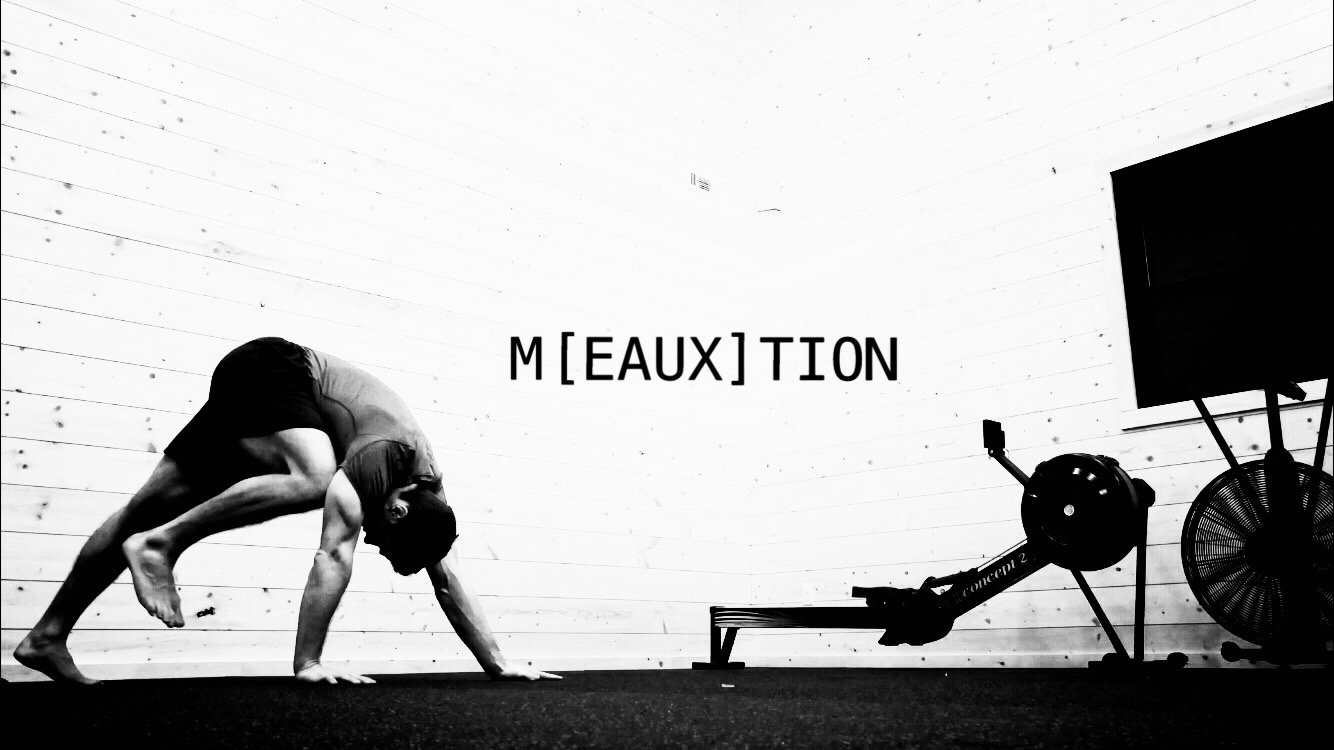
Saturday always provides adequate time to explore different combinations of work capacity style circuits.

I like to take the governor off and push myself on Saturday mornings.

This past Saturday didn’t disappoint.

The goal was to accumulate 25-30 minutes of a work:rest style circuit.  I didn’t feel like being monotonous with the exercise selection so included 10 different exercises, stringing them together strategically so that I could give an honest effort to each exercise without sacrificing anything (mostly due to fatigue) to the next exercise in the circuit.

It really worked out well and challenged a number of movement patterns.

The equipment that I used:  24kg kettlebells x2, jump rope, Jungle Gym Suspension Trainer

Here is how the workout was structured…

—> 20 seconds of work: 20 seconds of rest of the following:

24kg kettlebell snatch right hand

rest

24kg kettlebell snatch left hand

rest

Bodyweight Chin Up

rest

Double 24kg kettlebell squat-to-press (aka: Thrusters)

rest

Mountain Climbers

rest

Kettlebell Figure-8 (advanced and technical, but great drill)

rest

Bodyweight Push Ups

rest

Double 24kg Lunge (alternating sides)

rest

Hand-to-Hand 24kg Swings (alternating every rep)

rest

Burpees (jump and push up)

rest

Jump Rope (combination of two foot bounce and running)

—-> Repeat 4 complete cycles of the above…

The best part about this workout is that you don’t have to worry about keeping track of reps.  When I am doing work capacity style training, counting reps can be a major pain.  It’s really the last thing I want to be doing while I am huffing and puffing.  Instead, the work starts on the buzzer and ends on the buzzer.  It’s really convenient.

Know thyself… If you’re a beginner, this workout might not be scaled to suit you.  If you’ve been working out for a while, this might work great for you.  If you’re a tough guy or gal, bump up the weight for kettlebell exercises, add a weight vest to chin ups and push ups, use a weighted jump rope, etc.  I can provide exercise progressions to bury anyone if that is what you are seeking, hopefully that isn’t the case though.  Smart training reigns supreme.

You might see a lot of volume in a workout like this, and you’re absolutely right, so nice observation.  However, I preach workouts that can be managed.  I managed this one nicely.  Notice how explosive work is ordered first in the workout.  That is on purpose.  People tend to get hurt when they attempt to move weight quickly under fatigue and will poor form.  I am not foolish enough to place a highly technical lift at a place in the workout when I am most fatigued.

Also notice that all of the exercises are non-competing, and ordered in such a way to respect that.  In fact, look at the kettlebell figure-8 + bodyweight push ups + double 24kg lunge… sequence.  Very different muscles are being taxed there.  Figure-8’s are combination of squats with rotational power where the kettlebell moves from a high front to low back to side and finally diagonally across body to high position (hybrid movement).  Push ups are an upper body push dominant exercise, and lunges are mainly a lower body hip dominant exercise.  This allows for an increase in heart rate and work, without gassing out the body for the next exercise.  You tax one movement pattern, than move on to the next.

Different movement patterns, different muscles, quality technique, short rest, big training effect.

Now I don’t own a calorimeter or a metabolic analyzer, but I would guess that the calorie burn from a workout like this was quite high.  Maybe 650-800kcals total, and that doesn’t include the residual calories that are burned post-workout.  Shortened rest periods combined with resistance based lifts that leverage a sub-maximal muscle contraction are notorious for creating an after-burn effect, it’s been studied quite extensively in the last few years as the concept of fat loss slowly gains momentum versus weight loss.

Metabolism can stay elevated for several days leveraging workouts like this.

If you leverage some quality eating habits during that period of elevated metabolism, you’ll burn some fat no doubt.  Rinse and repeat the process and you’re going to end up burning a bunch of fat.

I should also note that I designed this workout knowing that the coming days were going to be either complete rest (no workouts) or at the very most, a short yoga/static stretch session.  It’s important to rest, recover and let your body heal in between workouts.  Your body can only handle so much stress before adverse events begin to occur.  You really don’t want to play chicken with overtraining or chronic fatigue in general.  The point of recovering in between workouts is to give your body the best possible chance to leverage the work done in the previous workout, while allowing enough time to enter the next training session and make gains.

I think that a lot of people could lose greater amounts of body-fat (faster) while boosting performance if they decreased the amount of cumulative stress from workouts.  You want your body to recover in full.  Always entering a workout in a state of recovery is bad for business.  If you haven’t acquired a full taste for physical activity, this is good news for you, as each dedicated workout can be used to accelerate

Instead, choose fewer weekly workouts that create a larger (but quality) training effect.  Make them count.

Focus on accelerating other areas of life while you recover in between sessions.  Focus on establishing quality eating habits.  Re-think your water intake.  Read more books on success and self-growth.  Calm the mind with yoga, foam rolling and a long static stretch session.  Get more sleep.

Learning how to workout is great, and building fitness is empowering.  But keep your training efforts sustainable.  Win the war, not just the battle.

Give this workout (or a variation of it) a go.

Cheers to kettlebell and bodyweight workouts!

KG

30 Minute Workouts, Bodyweight Workouts, Kettlebell Training, Quick Tips

Over-training for Performance and a Brief Word on Exercise Addiction

Quick Tips

Good morning kids…

It’s a beautiful Friday morning here in Wisconsin, and for once, the sun is out and it looks like it could break 70 degrees.  Thank the big man above for that, because we have just about had all of the rain, snow and flooding that we can handle up here.  I was starting to think that movies like “End of Days” or “The Day After Tomorrow” was movie from the big screen to reality.  Yikes.

Summer in Wisconsin

Summer in Wisconsin 2013

Anyways, I wanted to touch a few things this morning, most of which have to do with over-training, working out excessively and body image.

Over-training.  I cannot be certain, but I think I walked a fine line this week between taking my training to the edge of over-training (but not crossing) and doing a cannonball into the over-training swimming pool.  Yesterday was a struggle for me fatigue wise, and my mood was up and down all day.  Without any real noticeable stress to attribute to this, it is plausible to think that I may have pushed it too hard in the days prior.

What caused it?

Well, the workout that sent me over is one that I have leveraged for quite some time. Let’s just say that it involved a couple of 10 minute sets, a lot of squats, chin ups, lunges and kettlebell swings.  I don’t blame the workout itself because I have been using this particular workout for 4-5 years. It’s a staple in my training regimen.

What I do blame, is my lack of judgement leading into the workout.  The days leading up to this workout were filled with tough training sessions.  Over-training is a cumulative scenario.  I always picture it like a traffic jam of volume, intensity and a lack of sufficient recovery.  What starts as a traffic jam ends up being a 50 car pile up.

Screen Shot 2013-06-14 at 7.16.14 AMThe over-training 50 car pile up.

I’ve over-trained only a handful of times in my life.  All of those times, I felt ridiculously lethargic, tired and real drifty mind-wise.  Physical movement of any kind seemed like a real chore.  I’m talking about simple physical tasks like walking out to get the mail.  It seemed like climbing a mountain to climb stairs or lift basic household objects.

I recently read a neat little article about over-training on Runner’s World website.

To be honest, I don’t know what I was doing on Runner’s World, but I enjoy getting information from a wide variety of sources, not just kettlebells, fat loss and strength training.  Running is a major part of the body transformation equation.  My past comments about running on this blog were not taking shots at running itself.  There were intended to state that running delivers poor results to people who are seeking fat loss.  It’s a classic example of using the wrong tool for job.

—>  Check out this article from Rachel Cosgrove to help make my point:  The Final Nail in the Cardio Coffin

Alex Hutchinson is the writer over at Runner’s World, and I would encourage you to read through some of his older posts.  There are quite good.  He’s one of those writers that can break down research into terms that everyone can understand.  He also adds a bit of his own knowledge to his articles which makes his writing that much more applicable.

In the article, Alex describes a study where researchers took two groups:

1) a normal training group

2) an over-training group

… and measured their heart rates in the morning along with their performance measures based on scheduled training of different intensities and duration.

The “functionally over-trained” group had a big drop off in performance throughout the 3 week  training phase, but after a taper in training, they produced far better performance in the run-to-exhaustion test than the normal training group did.

A study like this shows that purposely over-training or over-reaching might have some performance benefit if you can get a handle on when and how to apply it to your own training.

Personally, I say that something like “functionally over-training” is a slippery slope.

Image

The last two sentences are the most important pieces of information to be passed on to the general public.  Go ahead and read or re-read them… I’ll wait.

My fear after an article like this is that Johnny Dad or Susie Mom (both are new or relatively new to running) is going to read an article like this and try pushing it to the limit unsuccessfully.  I like that Alex makes mention that functional over-training like this may be best reserved for elite athletes.  The interesting thing is that the amount of physical effort that it takes to over-train- at least in my opinion- will vary from person to person.  The amount of effort that takes me to enter an over-trained state is different from my next door neighbor, which is different that the neighbor on the other side of them.  We all react to the effects of training in different ways.

I’d like to think that one quality that I have is an ability to get a handle on what’s going on with my body.  Pre-workout, peri-workout and post-workout I am good at staying in touch with the effects of my physical efforts.  I’ve rolled out of bed on some days and known instantly that it was not going to be a day to train hard (or at all for that matter) but rather spend the day focusing on sufficient hydration, good nutrition, rest and recovery.

My fear is that I don’t think that everyone has a gauge to determine when it is right to push, and when it is not.  Some people come off of the assembly line with only gas pedals installed, no brakes and no speedometer.  Some people only have brakes and no gas pedal.  The latter probably doesn’t need to read much further. 🙂

Over-training for the sake of body image.  Just like we have addicts with food and drugs, we have addicts with exercise.  The difference is that exercise addicts often get the benefit of the doubt because a lot of people perceive excessive physical effort as a positive thing.

“Oh, Johnny Dad, you exercise so often.  You’re just so healthy and fit!  I admire your effort! Amazing!”

Little to most people know that Johnny Dad is flat-out addicted to exercise because he has a deep fear if he doesn’t burn off every single calorie that he consumes, that he will get fat.  Body image.

There are a lot of people who feel that they need to push their exercising to the limit in order to look good in a swimsuit, look good with their shirt off or fulfill some magazine model fantasy look.  Some feel that excessive exercising will help fight age.

If you’re one of these people, guy or girl I do not care… take a moment and read this article:

—>  It’s Hard Out Here for a Fit Chick

If you’re a person that just cares about increasing their 5K, 10K or “Fran” time, my simple advice to you is this:

Spend some time getting to know your body inside and out and BE CAREFUL.

Over-training is really not well understood compared to other studied sectors of fitness, but it is real.  I believe this based on experience, so I am not sure that anyone could convince me otherwise.  There definitely is a point in time where excessive physical exertion creates a long-lasting fatigue, series of mood swings, shift in appetite and decrease in performance.

The effects of over-training are not fun.  If you’re planning on pushing your daily workouts to the limit, make sure that at the very least you are consuming adequate amounts of water and post-workout nutrition.  If you’re over-training and not eating, you’re heading for a dark place.  A very dark place.

That is all.  I’m off to fish the Great Lakes…

Cheers to managing your workouts and feeling comfortable in your skin!

KG