

Credit: http://www.readyfordoomsday.com
Dental health is highly impacted by the food that we eat.
Again, what we eat plays an important role in the upkeep of our dental health.
Unfortunately, not many of us fully grasp how much food impacts not just the aesthetic appeal of our smile, but also our ability to chew (assuming you lose teeth or experience pain) and early signals of systemic problems such as:
- Cardiovascular disease
- Celiac disease
- Diabetes
- Sinus infection
- Alcoholism
- …etc
To quote a phenomenal article from Precision Nutrition,
“If the eyes are a window to the soul, our teeth and gums are a window to our bodies”.
Pretty powerful statement actually, because keeping your mouth happy is important. A happy mouth could increase the chances that you have a healthy body.
It’s funny how many warning signals the body gives us before complete self-destruction.
If we over-extend current physical limits or over-do high impact exercise, we often end up aches/pains or even limping to prevent further damage. Or take the Iron Man competitor who’s body shuts down prior to experiencing internal damage from “system-overload” physical exertion.
The body knows when enough is enough, and it appears that the mouth provides another source of warning signals to keep us in check.
If you’re not giving your body the vitamins and minerals that it needs, or possibly consuming excess sugary or highly process foods, cavities and periodontal disease can be the result. But I think we all know this right?
Sure, basic tooth care like brushing and flossing is essential to combat any mouth damage, this should go without saying.
So what role do nutrients play in establishing a solid foundation of mouth health (teeth and gums)?
Here is a kick ass chart created that I borrowed from Precision Nutrition:
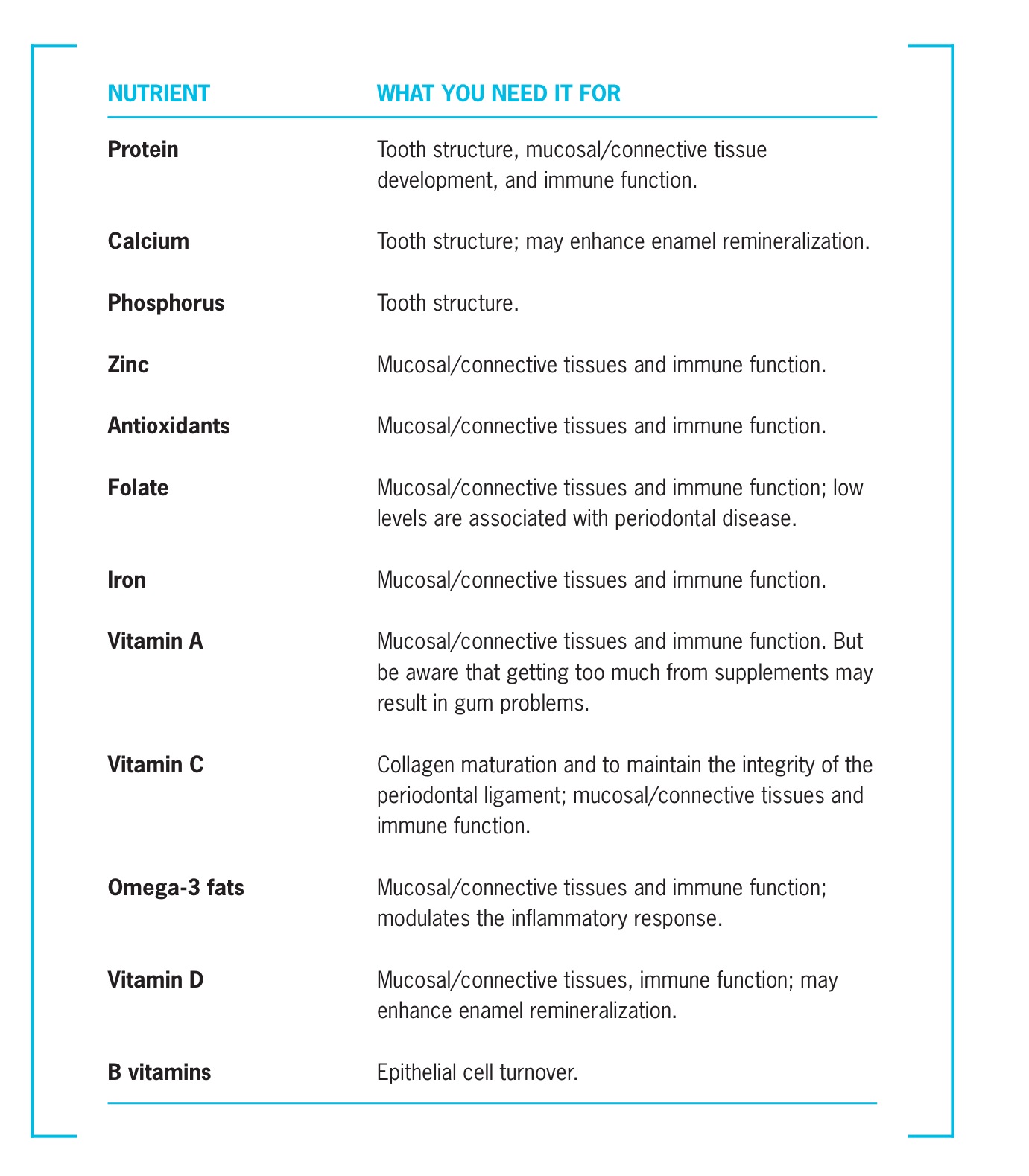
Credit: Precision Nutrition
You’re probably thinking, “Great, another chart sharing nutrients, but what in the hell do I actually have to eat to leverage the benefits of the above nutrients?”
Well, the answer (minus the jargon) is whole food. That may come as a disappointment to my readers, but its the hard truth.
Something similar to this picture:
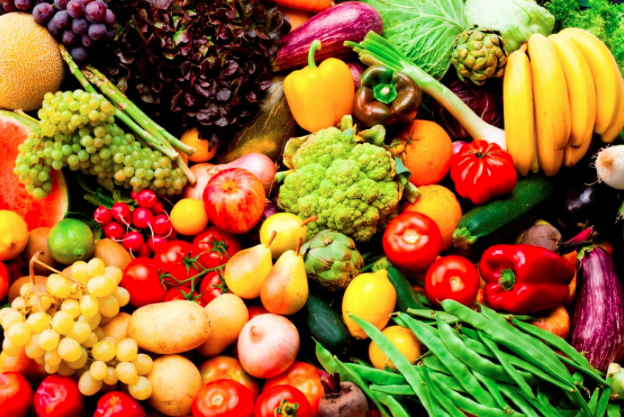
Credit: http://www.acneeinstein.com
… that plus lean protein.
A diet heavy in veggies and lean protein is the “secret”. (Yes I used the word “secret”).
There are no secrets. Only information that you know or you don’t know, and actions you take or you don’t take. Secrets are what people use to lure you into throwing $$$ at products. But we’ve covered this extensively in other posts haven’t we?
I wouldn’t want to beat a dead horse now, noOOOOOoooooo. 🙂
Referencing the same “Dental Diet” article from Precision Nutrition, author Ryan Andrews goes on to share some of bonus tactics to promote a healthy mouth, which include:
- Probiotics
- Cranberries (interesting)
- Green tea
- Chewing gum with pycnogenol
- Soy (I would avoid at this point)
- Arginine
- CoQ10
- Echinacea
- Fluoride (prevents decalcification)
- Whole foods
As Ryan comments, it is important to first seek all of the above nutrients from whole foods first. Supplements should be treated as an addition to the whole. In other words, supplements can be extremely beneficial for filling any nutritional gaps left by your current diet. Supplements are plan B when plan A (your diet) isn’t enough.
Ok?
One point from the article that peaked my interest was that certain studies have shown “that the sheer amount of sugar we eat may be less harmful to dental health than the the frequency of consumption”.
So, drinking those 2-3 Mountain Dews daily is giving your teeth an sugary injection that is taking it’s toll on your tooth health. Too many refined and processed carbohydrate-type foods and you’re heading for tooth decay and gingival inflammation.
Not good.
So what’s the game plan?
- Brush!
- Floss!
- No smoking
- Sip some tea
- Whole foods baby
- Eat raw, crunchy fruits and veggies daily!
- Limit your sugar intake, especially added sugars.
- Stay lean… excess body fat can promote poor health
- Exercise! (a great defense against periodontal disease)
Good game plan uh? Notice that this game plan is essentially the same game plan used to help with hundreds of other ailments. Healthy eating is healthy eating. You can tailor it to promote dental health, but chances are quite high that the same diet that is going to save your teeth is also going to reduce your body fat, lose unwanted weight and fuel your body during performance based endeavors.
Eating is eating.
If you’re not executing the fundamentals, you’re missing out. If you don’t know what the fundamentals are, I suggest you hire out and get some solid support to get your understanding of meal timing, essential vitamins and minerals and eating for performance and bodily leanness up to speed.
It’s more simple than you think but it takes practice to become habitual.
Cheers to the dietary tactics that can preserve and prevent your teeth!
KG
(I reference a lot of information found in this post that came from this article)


 M(eaux)tion Fitness