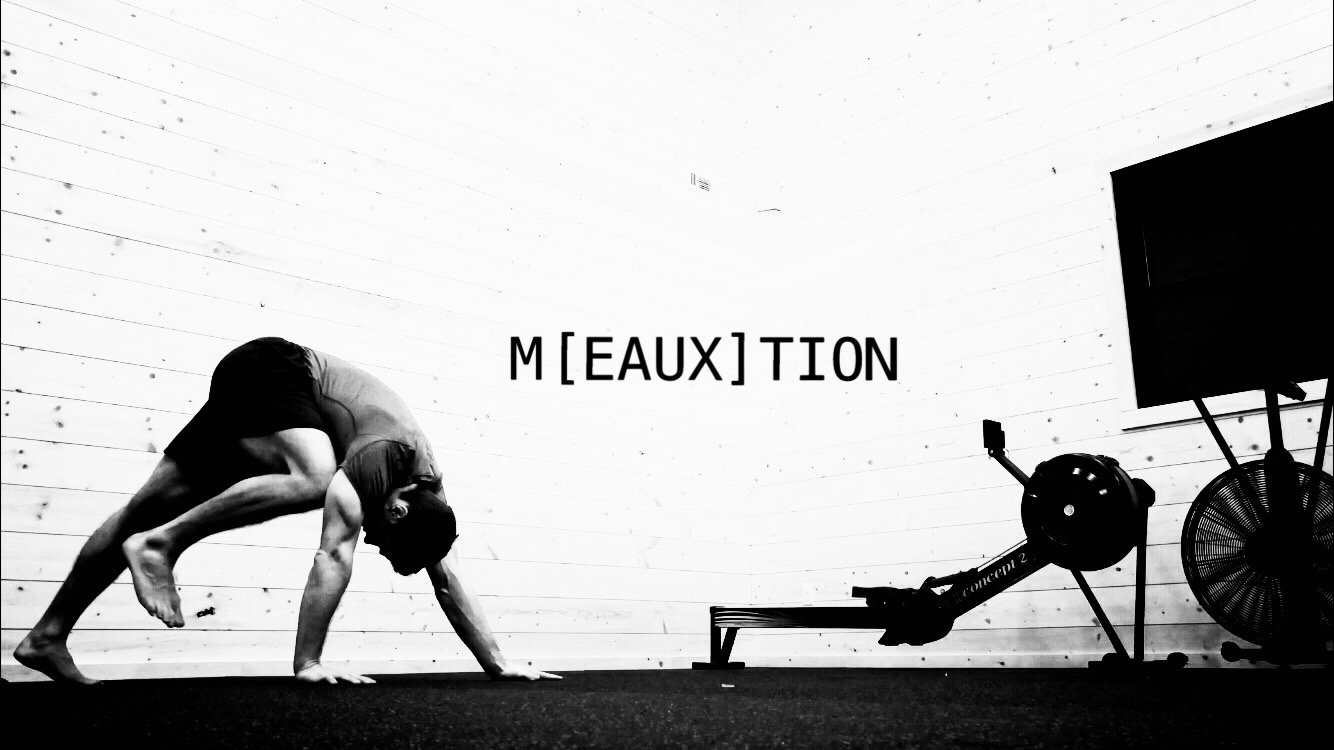
Saturday always provides adequate time to explore different combinations of work capacity style circuits.

I like to take the governor off and push myself on Saturday mornings.

This past Saturday didn’t disappoint.

The goal was to accumulate 25-30 minutes of a work:rest style circuit.  I didn’t feel like being monotonous with the exercise selection so included 10 different exercises, stringing them together strategically so that I could give an honest effort to each exercise without sacrificing anything (mostly due to fatigue) to the next exercise in the circuit.

It really worked out well and challenged a number of movement patterns.

The equipment that I used:  24kg kettlebells x2, jump rope, Jungle Gym Suspension Trainer

Here is how the workout was structured…

—> 20 seconds of work: 20 seconds of rest of the following:

24kg kettlebell snatch right hand

rest

24kg kettlebell snatch left hand

rest

Bodyweight Chin Up

rest

Double 24kg kettlebell squat-to-press (aka: Thrusters)

rest

Mountain Climbers

rest

Kettlebell Figure-8 (advanced and technical, but great drill)

rest

Bodyweight Push Ups

rest

Double 24kg Lunge (alternating sides)

rest

Hand-to-Hand 24kg Swings (alternating every rep)

rest

Burpees (jump and push up)

rest

Jump Rope (combination of two foot bounce and running)

—-> Repeat 4 complete cycles of the above…

The best part about this workout is that you don’t have to worry about keeping track of reps.  When I am doing work capacity style training, counting reps can be a major pain.  It’s really the last thing I want to be doing while I am huffing and puffing.  Instead, the work starts on the buzzer and ends on the buzzer.  It’s really convenient.

Know thyself… If you’re a beginner, this workout might not be scaled to suit you.  If you’ve been working out for a while, this might work great for you.  If you’re a tough guy or gal, bump up the weight for kettlebell exercises, add a weight vest to chin ups and push ups, use a weighted jump rope, etc.  I can provide exercise progressions to bury anyone if that is what you are seeking, hopefully that isn’t the case though.  Smart training reigns supreme.

You might see a lot of volume in a workout like this, and you’re absolutely right, so nice observation.  However, I preach workouts that can be managed.  I managed this one nicely.  Notice how explosive work is ordered first in the workout.  That is on purpose.  People tend to get hurt when they attempt to move weight quickly under fatigue and will poor form.  I am not foolish enough to place a highly technical lift at a place in the workout when I am most fatigued.

Also notice that all of the exercises are non-competing, and ordered in such a way to respect that.  In fact, look at the kettlebell figure-8 + bodyweight push ups + double 24kg lunge… sequence.  Very different muscles are being taxed there.  Figure-8’s are combination of squats with rotational power where the kettlebell moves from a high front to low back to side and finally diagonally across body to high position (hybrid movement).  Push ups are an upper body push dominant exercise, and lunges are mainly a lower body hip dominant exercise.  This allows for an increase in heart rate and work, without gassing out the body for the next exercise.  You tax one movement pattern, than move on to the next.

Different movement patterns, different muscles, quality technique, short rest, big training effect.

Now I don’t own a calorimeter or a metabolic analyzer, but I would guess that the calorie burn from a workout like this was quite high.  Maybe 650-800kcals total, and that doesn’t include the residual calories that are burned post-workout.  Shortened rest periods combined with resistance based lifts that leverage a sub-maximal muscle contraction are notorious for creating an after-burn effect, it’s been studied quite extensively in the last few years as the concept of fat loss slowly gains momentum versus weight loss.

Metabolism can stay elevated for several days leveraging workouts like this.

If you leverage some quality eating habits during that period of elevated metabolism, you’ll burn some fat no doubt.  Rinse and repeat the process and you’re going to end up burning a bunch of fat.

I should also note that I designed this workout knowing that the coming days were going to be either complete rest (no workouts) or at the very most, a short yoga/static stretch session.  It’s important to rest, recover and let your body heal in between workouts.  Your body can only handle so much stress before adverse events begin to occur.  You really don’t want to play chicken with overtraining or chronic fatigue in general.  The point of recovering in between workouts is to give your body the best possible chance to leverage the work done in the previous workout, while allowing enough time to enter the next training session and make gains.

I think that a lot of people could lose greater amounts of body-fat (faster) while boosting performance if they decreased the amount of cumulative stress from workouts.  You want your body to recover in full.  Always entering a workout in a state of recovery is bad for business.  If you haven’t acquired a full taste for physical activity, this is good news for you, as each dedicated workout can be used to accelerate

Instead, choose fewer weekly workouts that create a larger (but quality) training effect.  Make them count.

Focus on accelerating other areas of life while you recover in between sessions.  Focus on establishing quality eating habits.  Re-think your water intake.  Read more books on success and self-growth.  Calm the mind with yoga, foam rolling and a long static stretch session.  Get more sleep.

Learning how to workout is great, and building fitness is empowering.  But keep your training efforts sustainable.  Win the war, not just the battle.

Give this workout (or a variation of it) a go.

Cheers to kettlebell and bodyweight workouts!

KG

30 Minute Workouts, Bodyweight Workouts, Kettlebell Training, Quick Tips

Completely Un-Organized Kettlebell Training For Fat Loss and Athlete-Like Conditioning: Part 1

Quick Tips

I am a huge believer in following a system.  Sticking to the game plan if you will.

There is nothing like a well executed game plan.  If you have ever played sports you know what I am referring to.  If you are fortunate enough to have a career with an employer (or as an entrepreneur) that preaches game plan for success and then the entire company comes together and follows through on executing it, well, it feels damn good.  

Sticking to your systems is the best way to measure your progress.  A system can tell you where you have been and also points you in a focused direction of where you are going.  For a beginner or even a novice aspiring to reach new levels of health and wellness, there is nothing more effective at creating change than executing a system to perfection.  

I love systems.  Did I say that already? 

But let me ask you something that I often think about in my own life…

  • What’s wrong with being sporadic about your exercise selection, sets, reps, interval length, rest periods, etc?
  • Does everything have to follow a set system?
  • Can I still maintain strength and conditioning levels and leanness improvising workouts?

I know those seem like a silly questions, some that most people will never think about, but after you make so many visits to the gym, work through workout after workout following a set progression to an end goal, systems get boring.  

Once I took a step back to get a deeper understanding of how and why we humans move, what our movement options were once we choose to train movement and what seemed to be the most effective at creating total body change… I realized that building high functioning lean bodies can be achieved in a completely un-organized way.  System-less if you will.  Cross-Fit does it in every single workout.  Besides following their two days on, 1 day off (rinse and repeat) training schedule, they seem to be building some pretty resilient humans.  I can’t say that I agree with everything that they are teaching and coaching, but the system-less approach seems to work pretty well for them.

If I can ever focus long and hard enough to put the final touches my books (they are coming I promise), you’ll find that I love simple advice.  Once you become more than a recreational exerciser and decide to invest time in learning about more serious forms of fitness and nutrition, topics can get really complicated, confusing and blurry.  The fitness and health pool is really deep.  There is a lot of conflicting advice, methods and even research.  

But it doesn’t have to be complicated, confusing and blurry.  At least I don’t think it does personally.

I spent years (and still do) reading heavy literature for no other reason than I enjoy reading it. I have a major chip on my shoulder from years and years of personal athletic endeavors that had no real guidance in strength and conditioning.  I didn’t know what a power clean was until Senior year of high school.  That sucks, because I no know what a dramatic difference a simple program can make a young athlete.  It’s incredible.

Sorry, sidetracked for a second there… Where was I?

Oh, I know…  I was just about to finish discussing the title of this post.

I love systems and I love simple training and eating advice.  Give me the meat and potatoes of what I need to know and I can figure the rest out as we move forward.  “Learn by doing” kind of thing.

I have also found that I love the concept of physical preparedness and completely un-organized kettlebell training.  I love heading to the basement, drawing up the workout based on my goals, and getting after it.  Sometimes there is good flow to the training session and sometimes it is full of sticking points, causing a much choppier workout.  Either way, I really never know what I am going to be doing until I get down there.  

However, that being said… I do stick to some key guidelines that help me get away with this un-systematized approach.  Here they are:

1)  Train big movements with challenging resistance

2)  Multi-planar core training

3)  Mobility Mobility Mobility

4)  Conditioning using many different methods

5)  Rest and recover harder than I workout


1)  When I say big movements, I am talking things like squats, kettlebell swings, snatches, presses, pulls, etc.  Stop messing around with tricep extensions and bicep curls, you have to eat your main course before you can have dessert.  

2)  I train my torso region in all directions and planes of movement.  I train my core for force production and force absorption.  I train my core to reinforce stability I can transfer as much force with any energy leaks from my lower extremity to my upper extremity.  

3)  Mobility.  I train mobility so that I can experience life as it should be experienced physically.  Loss of mobility is a prerequisite to pain through faulty movement  Loss of mobility is loss of life to me.  

4)  I condition myself with as many methods as I have resources.  When I was an athlete, I conditioned myself using set methods.  Running early in the off-season, slide boarding and then biking as the season drew closer.  It was scheduled and systematic because that was what my sport (hockey) demanded.  It made sense.  But, now I don’t have a sport.  I simply want to be physically prepared for anything.  It feels damn good to go for a 50 mile bike ride, run a 10k or play hockey 3-4 nights a week without feeling like a slug.  I use many methods to achieve both aerobic and anaerobic-like qualities.  I want to be able to endure long duration activities as much as short burst activities that get my heart rate sky high.

5)  I rest and recover much harder than I train.  Sleep, tissue work, hydration and nutrition are all important to me.  I am what I eat, drink and how I recover from my training sessions.  The green light isn’t always on.  You have to learn how to sit at the red light patiently until it is time to accelerate once again.  Rest, recovery and regeneration.  

Do you see what I am getting at?

I can train myself using a simple set of rules to keep myself lean and athletic, without experiencing the boredom of a system.  Training smart and slightly sporadic will keep me athletic for the rest of my life.  Sure, age will catch up with me as it does everybody at some point, but each training session will be fresh and purposeful.  Movement longevity is something that I am fully invested in, and I encourage you do invest in the same. 

I will say this however, I HIGHLY recommend systems to everyone.  You’ll never get better results as you will when following a system step by step.  My books leverage systems.  Systems get results.  They keep the main thing… the main thing.  Following a system takes discipline, and discipline is something worth developing throughout life.

I treat myself like test rat for variations of time tested methods.  I enjoy seeing if my 5-mile Airdyne ride for time improves or suffers after I train high repetition kettlebell snatches for 3-weeks versus metabolic body-weight circuits.  That kind of comparison scenario is interesting to me, but it isn’t for everyone.

(Any strength coach that reads this is going to grind their teeth)


Cheers to moving more and with purpose,


KG