
The Secret Service Snatch Test, which I’ll refer to as the SSST (so I don’t have to keep spelling it out) is a brutal workout.
More of a test of will power, really.
The SSST is a test of how many snatch reps can be accumulated inside of a 10 minute time limit usig a 24kg (53lb) kettlebell.
That’s it.
Set the timer for 10 minutes… and go.
Achieving your best finish in the SSST will require a combination of:
- Kettlebell Snatch Technique
- Work capacity
- Conditioning
- Luck with skin integrity (if the skin rips, it’s painful)
- Courage to suffer, and keep suffering, and keep…
The courage aspect of conditioning tests like this is a huge determining factor of your score.
Are you able to center yourself, refocus your thoughts when the fatigue and discomfort pile on?
When I say “discomfort”, I’m primarily referring to the hand discomfort.
The micro motion between the palm of the hand and kettlebell handle gets worse sensitive as the minutes pass by.
Chalk helps, but only to a point. The more you stop to re-chalk the hands, the more time you’re losing where snatch reps could be completed.
Some people will crack because of the fatigue. Hitting 200+ snatch reps in such a short timeframe is aggressive.
There’s little… wait… likely no rest to be taken.
For those who have tested their conditioning in competition or periodicially in a training cycle, you know what redlining your engine’s capacity feels like.
Achieving a personal best with the SSST is going to require redlining.
Ideal for removing callouses…
If you’ve been wondering how to remove built up hand callouses, you’ve come to the right place. The SSST will remove skin in less than 5 minutes or your money back.
From a hand care standpoint, this isn’t a workout you’d want to try that frequently. Probably not even monthly. Testing your toughness 2-3 times per year is probably more than enough.
When I was really heavy into kettlebell training, I was testing my SSST 2-3 times per year at very sporadic times.
It’s not like you’re going to wake up and feel the desire to snatch hardcore for 10 minutes. I’d pick a day, maybe 7-10 days out where I knew I would be giving the SSST another attempt. Then I’d section off 1-2 days after for rest, recovery and hand caudling.
Best case scenario, you’ll have some juicy blisters on both hands. Worst case scenario, you can expect to rip plenty of skin.
This attempt shows approximately 238 repetitions. I say “roughly” because counting slow to 238 can cause your eyes to play tricks on you. So if you have 10 minutes to spare to watch the video, feel free to call me out if I did less or throw me a bone if I did more.
It’s an “approximation” because I’m too lazy to keep double checking the reps. Counting to 238 across 10 minutes is something I don’t have the attention span to do 3-4 times.
Some of the top dogs in the kettlebell community are snatching get around 270+ reps, documented through video.
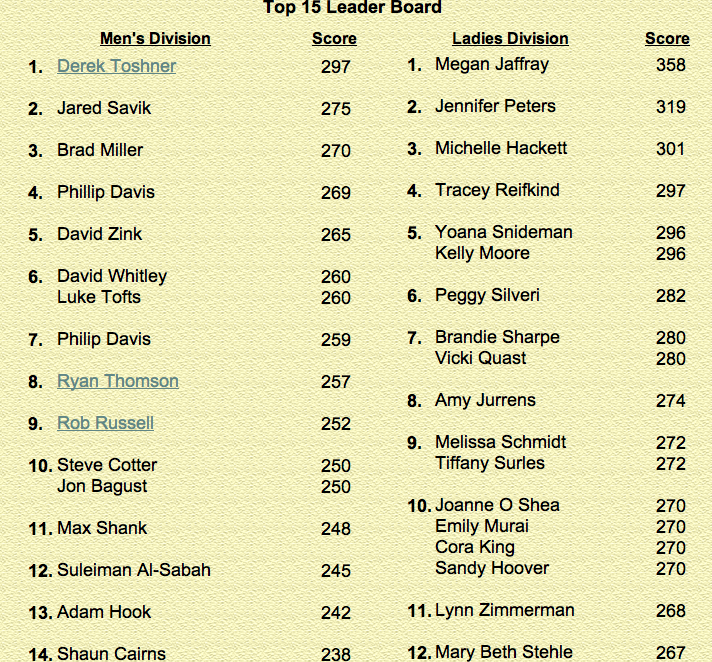
If you want to paste your name amongst the leaders, film it. It’s important to document your performance with un-edited video. No one cares about word of mouth reporting. Prove it.
Breaking down my SSST attempt….
In the early minutes of the test, I typically aim for 10 snatches per arm before switching.
Honestly, this is for counting reasons only. After watching the video, I start miscounting the number of snatches per arm pretty quickly.
The biggest mistake in this attempt was taking a break. It’s obvious why. When you’re timing and aiming for most reps, taking a break doesn’t help anything.
A combination of boiled over physical stress and mental conflict led me to resting for a brief time. Getting to the root of the why I stepped away, it’s purely mental. My body could have tolerated the pain, my mind talked me stopping.
Based on tempo, I’m guessing it cost me 5-10 reps at least.
It get’s hard to get your thoughts in order during a conditioning test like this. The mental governor is begging you to quit, your hands are pleading you to quit.
I could feel the skin loosening up, blisters forming and eventually the ripping on my hands towards the end. The impact of this impacted my outcome.
Critiques…
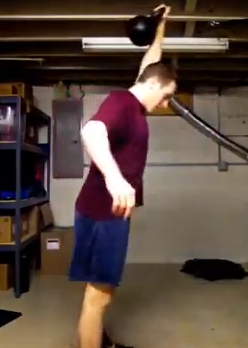
My posture at the top of the snatch is not great.
But, I’m going to cut myself some slack on this because the ceiling in my basement is exactly 7 feet 4 inches high at the lowest point of the trusses. When snatching indoors, I make sure I’m locking out in between the beams, just in case.
My personal decision to green light kettlebell snatches in my basement at this ceiling height were made based on snatch technique. The kettlebell turns over the hand prior to reaching full shoulder extension which the highest my hand will be.
Check out this post for a freeze frame depiction of the snatch.
My worst fear is bouncing the kettlebell off the trusses and losing control. Lord knows what comes next, but I have an idea.
The fatigue is so high during an SSST, it wouldn’t be good.
The forward body lean is a counterbalance to the kettlebell, but I also think it’s a precautionary measure to avoid impact with the ceiling. The kettlebell is not traveling straight up and down, it’s traveling in an arc.
Counterbalance like this is because the kettlebell is not traveling straight up and down, it’s traveling in a subtle arc.
I’m counterbalancing to avoid being thrown backward. On the downward descent, a slow motion video or a keen eye at full speed should show an opposite reaction, where I’m leaning back slightly as a counterbalance.
The obvious: Later in the SSST, technique erodes to ugliness and it’s survival time.
I accept the risk in this.
BODY FATIGUE IS A TECHNIQUE KILLER.
If you’re training MetCon, you must be able to look yourself in the mirror and accept the risk of doing so.
To my knowledge, it hasn’t been directly pinpointed in studies but injuries become more predictable as fatigue alters the control you have over your movement.
Performing a box jump when 100% fresh is a lot different than the same box jump after you’ve done 25 thrusters and a 500-meter row.
Plain and simple. If you accept the risk of your actions, then you’re taking ownership for the injury.
Decreasing the number of times I switch hands with the kettlebell would get me more reps. Every hand transition is essentially a lost repetition to the final tally and wasted energy in doing so.
If I was working longer sets per arm before switching, say 15-20 reps, I could gain an additional 10-15 snatches across the 10 minutes.
Years ago, the first time I attempted the SSST, I was hovering around 180-185 reps.
Kettlebell training was relatively new, snatch technique wasn’t as great and I was unfamiliar the demands of 10 minutes of torture.
The repetitions gained is progress. Progress is always the goal, no matter how small or large. A step forward is a step in the right direction.
Make sure you subscribe to my YouTube channel, where I detail the kettlebell snatch along with many other exercises discussed on this blog.
Cheers to The Secret Service Snatch Test,
Kyle


 M(eaux)tion Fitness