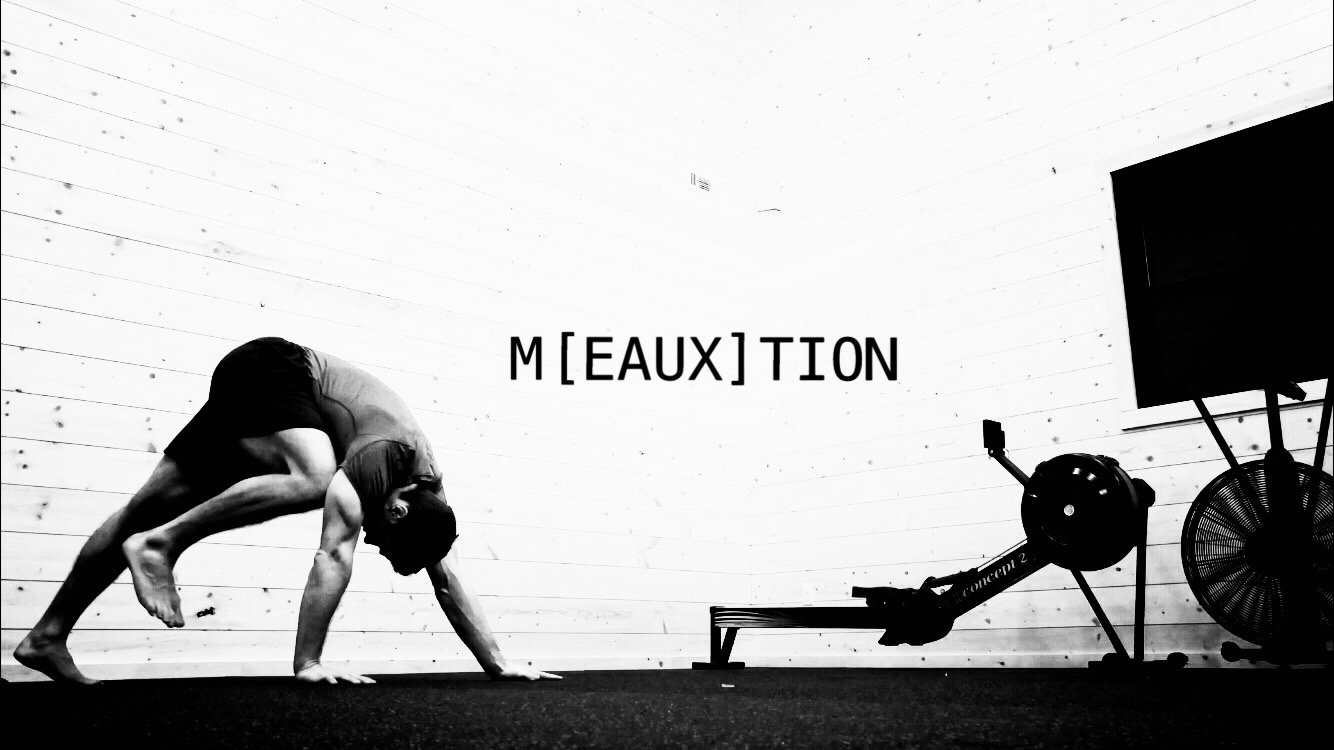
Bodyweight Training Works, Go To The Next Progression!

bodyweight training

Just when you think bodyweight training is worthless, let me quickly restore your faith.

I know what you’re missing.  It’s the same thing most people are missing when they are looking to leverage bodyweight exercise to boost strength, boost power or burn fat.

It’s called progression.

Progression can mean a few different things:

1)  Load progression (increase in weight)

2)  Skill progression (increase in motor skill demand)

I chose to limit the progressions to loading and skill.  Could you say volume is a progression?  Of course, but I am convinced that MORE VOLUME IS NOT WHAT MOST PEOPLE ARE LACKING WITH BODYWEIGHT TRAINING PLATEAUS.

Just the thought of marathon sets of exercises that you are already good at makes me cringe.  I’m guilty of avoiding essential increases in loading or skill in favor of more volume also.  It’s soothing to your ego knowing that you can dominate a bulk set of push ups or squats.  I’ve been there, I know first hand.  Comfort feels good.

But comfort doesn’t get your stronger, leaner or more athletic.  Especially if you’ve got lofty strength or aesthetic goals and you’re attempting to leverage bodyweight training to get there.

So, progression is probably what you are lacking, but the great news is that once you have identified that proper progression is the missing link, the solution becomes rather simple.

Take the push up for example.  If you can rip out 20-30 bodyweight push ups no problem, you need to take the next step to either a)  rear foot elevated push ups, b)  externally loaded push ups c) 1-arm push ups.

In some instances, I am going to suggest going straight to 1-arm push ups to restore that faith.

Why?  Because the first time you set up and lower yourself into the bottom of a 1-arm push up, your eyeballs are going to feel like they are going to pop out of your skull, catching on your orbital bones.  Seriously, you’ll feel like a weakling.  The point of sending you to the 1-arm push up gallows is to expand your thought process to how effective bodyweight training can be if you’re willing explore new realms.

Generally, a lot of people who are great at strict 1-arm push ups also have incredible upper body strength and as a byproduct, a decent physique.

The junction where functional performance meets physique is an ideal point for most people.  It really stinks to be all show and no go or all go and less than ideal show.  But who am I to make that statement, because if you enjoy either one of those scenarios, it is your prerogative to embrace that happiness.

So as I mentioned, 1-arm push ups aren’t necessarily where I want you to start working your progressions, because the point of exercise progressions is to make one’s way from one challenging movement to the next, progressing as fast as your strength, stability and motor control can tolerate.

In school, most people don’t go straight into Calculus, right?  They have to work through the progressions of basics of mathematics before they earn the right to tackle Calculus.

Bodyweight training, heck, all forms of physical effort work in the same way.

The above example involved upper body pressing, more specifically the push up.

However, progressing the lower body, particularly the squat can be just as simple.

As a beginner, you might start with improving your technique, strength and work capacity in the basic bodyweight squat.  After improving the aforementioned qualities, you will need to move on to higher level variations of the squat.  If you’re adamant about staying true to a minimalistic fitness approach like bodyweight exercise only, the next progression might be to elevate one leg onto a bench or other form of support, and perform what many call Bulgarian split squats, or rear foot elevated-single leg squats.

RFE split squats remove one foot from the base of support while simultaneously increasing the loading on the working leg.  Instead of two legs contracting to move your body up and down, you’ve now got one leg doing the work, an obvious increase in loading.

The next progression from the RFE split squat are either assisted bodyweight pistol squats or full bodyweight pistol squats.  I mentioned assisted bodyweight pistols because it might be helpful to hold on to something while you allow your body to “feel” the mechanics of an unsupported squat.  There’s no shame in assisting yourself until you’re physically read to let go and go for the fully unsupported bodyweight pistol.

As it stands right now, bodyweight pistol squats are the greatest lower body strength exercise known to man.  That’s a big and bold statement, but I cannot dream up another exercise that accomplishes as much as the free-standing pistol squat.  A bodyweight pistol is just the beginning, because adding load and varying duration of time under tension dropping into and out of the “hole” can both work to advance your performance.

It can be quite interesting to observe the right side/left side differences in balance, strength, stability and skill acquisition.

For me personally, I have found that my right side, which is my non-dominant leg, is much stronger than my left side.

So the bottom line is this… bodyweight training is phenomenal.  Just because you don’t have access to weights or you’re simply looking to switch up your training routine, doesn’t mean that you have to sacrifice results.  The key is to understand your current performance, your goals and then choose the right progression to accelerate your arrival at the next level of performance and goal achievement.

Make sure that you are tracking your performance from workout to workout.  It’s important for tracking progress and creating the next plan of attack.


Cheers to bodyweight movement…


KG


You Watch! Crawling Is Going to Be All the Rage in Fitness

Quick Tips

20140114-172621.jpg

You wait, just wait, crawling is going to be all of the rage in the fitness industry. It’s going to spread through the websites, blogs and then infect it’s way into print media like Men’s and Women’s Health, etc.

It’s coming, and there is probably little that anyone can do to stop it.

Why? Because it is NEW, and as consumers, we love ideas that are NEW. We are fascinated and engulfed by new ideas, trends and material goods. The editors of big magazines know this quite well. They know that we get weak in the knees for what is perceived as the latest and greatest.

But, does crawling actually hold up? Or is it just another “new” trend that will temporarily satisfy the thirst of the average fitness enthusiast.

My personal opinion…

… crawling is going to hold up for the long-term.

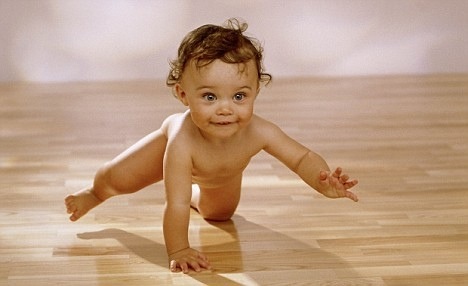
Why? Well, because crawling is a ground based, deconstructed and completely stripped down activity that is fundamental to a young human being’s (infant’s) progression to more advanced activities like walking and running.

As infants, we literally had to crawl before we could walk. We had to learn how to walk before we could run, etc.

Tim Anderson has recently coined a term that he calls “reset”. I love the term, because by calling for a “reset” he is asking for humans to re-establish lost function by going back to our roots, ground based movement. Crawling, rolling and planking are all forms of ground based movement. Tim is asking for us to leverage our body’s natural interaction with gravity and the ground surface.

Ironically, shortly before finding out about Tim and his efforts to endorse low load ground based movement done properly, I got on the same kick.

I started to notice how physically challenging it was to perform what are normally fast paced exercises, slow. Slowing it down and moving through a full range of motion was- and still is- extremely difficult, and it seemed to be very effective at highlighting weak points throughout range of motion of any given exercise. Identifying these weak points gave me some valuable insight about what I was missing in my training by blasting through all of my exercises and workouts.

The world is stuck in an “extreme”, “high tempo”, “explosive power” and “fast paced” vortex of fitness right now. Except for “extreme”, I believe in the three other phrases. They have a valuable place in a workout and a program, at the right place and the right time. Everything has some value it seems, it just a matter of how it (and when) it is applied. If you apply the world’s greatest exercise to a person that isn’t ready for it, you’re putting them at risk. If they are ready for it, you’ll take there performance to the moon.

We trick ourselves into thinking that we are moving properly when we rush through exercises. Even if the exercise is being executed technically sound at a fast pace, that DOES NOT mean that you are going to be able to execute it in a technically sound manner at a slower, more controlled tempo.

Watch a pro football player work through a session of yoga, many of them cannot hold positions longer than a split second. They are all fast twitch with very little stability and grace. Gray Cook proved it when he made a bunch of NFL guys perform a 50lb/50yard slow and controlled overhead carry. Most of the players involved failed to complete the challenge, yet can overhead press 1-1.5x their bodyweight without batting an eyelash.

The mountain climber was the lightbulb moment for me. I’ve done my fair share of mountain climbers. I greatly value the mountain climber in my work capacity training sessions, using it primarily as a “filler exercise” to actively recover in between two more demanding movements. Before, I had hardly paid attention to anything but how fast I could whiz through 30-50 reps of mountain climbers, driving my knees to my elbows without breaking at the lower back junction in the process.

One day, I slowed it all down. I attempted to “pull” my knees through to my elbows as opposed to violently driving them forward.

You know what I found? I was ridiculous weak once I flexed my hips beyond the prone/horizontal 90 degree mark in the range of motion. I was weak, and I could pinpoint the exact point in the movement where I was weak. The only way that I could complete the movement in full was to compensate, and I wasn’t about to stroke my ego by cheating the movement.

After my run in with mountain climbers, I really started to gain interest in dabbling with other low load movements that are primarily ground based. These movements were typically isolated to a lateral, supine or prone position. Sometimes the movements were transitional/segmented, moving from a supine to prone to lateral all in one shot. This, to me, is the progress of things. You start working isolated movements, gaining control of these movements in an isolated fashion and then you slowly begin to integrate the patterns to work more complex movements.

More complex movements require a greater recruitment of muscles, dynamic stability and mobility and thought. Integrated movement takes integrated thought, which is a rarely spoken of benefit of complex movement training. We exercise our mind as much as we are exercising our bodies.

So, the movements slowly evolve from isolated to complex, all the while we must learn to turn our muscles on and off gracefully as we maneuver our bodies through space.

Gymnasts have mastered this type of movement expression, and I am growing to value practicing it more and more every single day. Movement is second nature for a gymnast. They have established high level movement through consistent repetition.

Drills like crawling, dynamic planking, slow frog hops and turkish get ups make me feel more like a human capable of executing 3-dimensional movement and less like a robot lifting weights to no end. I enjoy knowing that my traditional weight lifting is translating to something more valuable than six-packs and bulging biceps. Both of which mean absolutely nothing in the real world. Well, I guess you’ll look cool in those Summer time still shots, but it doesn’t mean you can move.

All of that weight lifting should translate into something greater than, well, lifting more weight.

Translating isolated resistance training into improving your ability to move with grace, strength and unwavering stability is a noble endeavor. It can be hard to stay on this path, especially when our society provides so much temptation to build the perfect body, or what we perceived as the perfect body.

This is obviously my personal opinion, don’t let it stop you from leaning out.

Crawling is a reset movement activity. The first time I really started to employ crawling patterns into my own training and encourage others to do the same, it was about 4 years ago. We used to have our group athlete training sessions crab walk and high crawl as a fun warm up. I saw it as a time to get the core, shoulders, and hips firing all at once. The crab walk would be performed with forward motion until I said “stop! hold!”, at which point the athletes would drive their hips to the ceiling, effectively creating a “human table-top”. Creating a level table top required that the athlete actively contract their glute muscles while actively stretching their pecs and anterior shoulder. There is some core activation hidden in their also, as the torso muscles work to protect the spine.

Quite honestly, I think that the crab-walk+tabletop combination is one of the best warm up drills out there. Crab walking, to me, is a supine variation of a prone crawl. Infants move around frequently on their butts. They push with their arms while pulling with their heels, supporting the weight of their body with both upper and lower as they “scoot” across the floor surface. There is value in training this movement pattern in adults who have lost the ability to do so.

Sometimes we have to take a developmental step backwards to regain control and start to take steps forward in present day.

We’ve discussed- almost at nauseating length- that sitting causes a lot of metabolic and structural issues with humans. The longer and more frequently we sit, the more our body seems to take on the shape of the sitting position, even in the standing position. We start to hunch our shoulders, our hips remain tilted forward and our lower back gets creased like a bi-folded letter home to Mom.

Once in this position, we attempt to walk, run and do other physically demanding activities while being confined to these un-ideal postures.

Is it more complicated than this? Of course it is, but what most people really need to know is that sitting is slowing breaking our bodies down to nothing, sometimes beyond the point of any ability to repair. One day you might even find that surgery is the final intervention to fix years of poor alignment and compensation.

Attempting to express athletic-like qualities such as strength, explosive power through forced ranges of motion with poor posture many times requires compensatory movement be present as a temporary solution to completing such activities. If you remember, compensatory movement compounded with high reps and high load can rip a person to shreds over the long term.

It been said that workout injuries are just “unfortunate”, when in reality, they were staring us in the face from the beginning, looming in the darkness waiting to be identified. Obviously, those who feel the pain of that disc exploding in their back will one day wish they would have taken the time to identify movement flaws. But the damage is done.

The next time you engage in a warm up prior to a workout, try prone crawling for 1 minute straight with ideal crawling posture. Shake it out for 30 seconds and then complete that 3-5 more times. It might scare you how challenging crawling really is. The stress placed on the upper body is tremendous, especially if it is a new stimulus. It’s easy to fatigue quickly from the waist on up while crawling, in my experience.

Not to be gross, but if you’re someone who gets off on working the core muscles to exhaustion and that “deep burn”, crawling is definitely for you. Keep your back flat and your belt line zipped up and tight, and you’re going to feel every synchronized step of the hand and foot ripple right through your torso.

In fact, I would recommend trading that marathon abdominal training session for about 10 minutes of dedicated crawling. If you’re rolling your eyes, stop. Try it and report back to me. Let me know what you think.

I recently watched a video where Tim Anderson crawls an entire mile without breaks, in a low crawl position. That’s incredible, as you’ll soon find out when you give it a shot. If you make it to the end of his video, he remarks that his ipod shut off right from the start but he was too mentally focused to quit and reset it. Nothing like crawling for nearly an hour straight listening to yourself wheezing from fatigue.

My cues for ideal crawling posture are simple:

– Keep back parallel to the ceiling, stomach parallel to the floor.
– Keep eyes looking down or roughly 12 inches forward toward direction being travelled.
– Keep spine in a neutral, braced position, pulling your stomach out of anterior tilt.
– Simulate a full glass of water on your back as you crawl, preventing any spillage.
– Make each hand and foot contact as quiet, soft and graceful as possible.
– Have fun and work at it.

Start crawling. Use it as a tool not an entire workout.

Leverage it’s ability to be a safe alternative to core training, and a important developmental step to restoring your body’s desire to move without compensation and pain.

Start slow, build from there, and remember that it is process.

Cheers to crawling around like an infant!

KG

Hand Walking/Crawling Exercises: Demanding More From Your Upper Body

Quick Tips

6 years ago I watched Jon Hinds strap his LifeLine Power Wheel to his feet and proceed to walk on his hands 100 yards down entire length of a football field.

I have to admit I thought the entire sequence was pretty badass.  The feat also seemed like something I could achieve… wrong.  It’s way harder than it looks.

The LifeLine Power Wheel boasts that it’s core activation is top notch, and that is supported with a study composed by CSU-Sacramento students.  The two other training tools that were compared to the Power Wheel were quite weak in my opinion (Ab Revolutionizer, ab straps).  

However, it appears that based on muscle activation (through surface electromyography (EMG), the Power Wheel performed extremely well.

When you watch YouTube videos, especially how-to exercise videos, it can be hard to find value in what the performer is showing you.  You watch it, roll your eyes and move on the the next suggested video.

I did exactly that with Jon’s hand walking video 6 years ago.

It’s a damn shame.

But, fast forward 6 years and I am an advocate spending more time loading the upper body via static/dynamic various of crawling, handstands and hand walking.  I think we need to stress our upper extremities in a similar fashion that we do our lower extremities.

Battling ropes are an example of a tool have added tremendous value to the average trainee’s tool box.  Battling rope drills are primarily executed in a standing position, involving timed (or rep based) work sets that are highly metabolic, recruit a ton of muscle for completion and train the upper body to produce repeated effort force in a way that is extremely unique.

But, battling rope drills don’t require our upper extremities to support the weight of our body.

Sure, the shoulder is not a load bearing like the hip or the knee, but we should be able to support and stabilize a percentage or even our entire body with our hands and arms.  Please don’t ask me to give “functional” examples of how drills such as handstands transfer over into real world activities until you yourself perform a series of 1-minute inverted holds yourself.

Doing so might make you feel like you like a weakling whether you are an avid exerciser or not.  I sure did.

—> What can you attribute to the difficulty of a hand walking/crawling/stands?

New stimulus?  Yes.  Very challenging regardless?  Absolutely, every single time.

The average workout just doesn’t stress the upper body in the same way that it tends to stress the lower body.  It makes sense since humans are bipedals.  Keeping our lower extremities strong, mobile, stable, and capable of sustained and high level repeated physical effort serves us very well.

But we need to be strong, stable and mobile movers in many different positions, not just with walking and running.

Hand walking, crawling, handstands and other upper body support drills stress the upper body much differently than push ups, overhead pressing, Turkish Get-Ups.  In the past, most hand walking drills were exclusive to gymnasts and other tumblers.  It’s amazing that it has taken so long for this type of training to leak out to the general population.

But, it’s here now and we need to leverage it.  It’s a tool (or maybe a strategy is a better description), and like all training tools, it serves a purpose in our physical development.

Handstands.  I have been a huge fan of hand walking and crawling for years, but have more recently begun to see amazing value in practicing handstands.  Simply kicking your feet up to a wall and holding that position with assisted support from your feet is extremely challenging and beneficial for overall physical improvement.

Ido Portal Handstand

Try it for yourself.  Go.  Now.  Try it.

It feels unnatural to support yourself vertically and I believe this is a good thing (unless you are experiencing pain).  You’re acclimating yourself to a new movement skill.  I am all about safety in training because it keeps us moving for life, but exploring uncharted territories of movement will bring you back to your childhood roots, where exploring is encouraged and crucial for overall development.

Fast forward to our adult years.  People who are hesitant to participate in certain physical tasks haven’t exposed themselves to that stimulus before.  They haven’t explored, so the movement seems risky, difficult or in some cases unfathomable.

Much of this handstand talk is probably coming from Ido Portal’s training philosophy, which is fine because I love the tenacity that Ido is bringing to the movement community.  He doesn’t dabble with movement, he is movement.  That’s pretty cool.  Devoting your life’s work to becoming the best mover possible, and then teaching the progressions on how to get to that level to others, is pretty amazing when you think about it.

Kudos to Ido Portal.

In my own training, I have divided my hand walking/crawling into two different categories:

  • Horizontal walking/crawling
  • Vertical walking/crawling

Both of these have two sub-categories that can be broken down even further:

  • Static (not moving)
  • Dynamic (moving)

I haven’t felt the need to progress any further than the bulleted points to be honest.  Hand walking/crawling is a supplement to my current training regimen, not the entire training regimen itself.  It’s a skill that I am looking to develop starting from ground zero.  The decision to keep hand walking/crawling as a supplement to the whole is based on my current goals.

My warm-ups have proven to be prime time for practicing and experimenting with various progressions of hand walking/crawling.  80% of the time I am crawling, which is what I would consider to be a horizontal-dynamic drill.  Something like this…

If you slow down while performing a basic bear crawl and do it properly, you may notice that you aren’t as connected as you thought you were.  Timing and an upper/lower body connectedness are two main keys to crawling properly.  The core serves as the conduit between the upper and lower body.  You’ll also notice that crawling isn’t as easy as it looks, as it can be extremely taxing even at shorter distances.

If you’re looking for a core workout, start crawling.  Start with a basic static hold.  You’ll find that  supporting yourself in this position activates your torso musculature like the 4th of July.  Progress to dynamic crawling slowly, working on the the timing of your opposite hand/foot.  Again, feel the burn in your stomach.

Here is Dewey Nielsen working through the ladder of crawling progressions…

—> Why should you incorporate more crawling and hand walking into your training?

1)  It’s fun.

I never thought that I would tout “it’s fun” as the top reason for crawling and hand-walking, but it really is.  Both provide a unique challenge that we can look forward to.  Pursuing specific goals in your training will keep the fire going in your belly.  Otherwise, it’s easy to begin flaking out on training.

I have recently dropped a few barriers with regard to my viewpoints on training, and what it means to “workout”.  For sometime, I felt unfulfilled in my workouts.  It seemed there was a piece that was missing.  I felt like a robot going through the motions.  Start a set, do the reps at a particular tempo using a particular weight, stop, rest, rinse, repeat.  It was nauseating.

Crawling and hand-walks scratched that itch.  Now intentionally incorporate warm-ups packed with plenty of crawling and hand walks.  It’s open new doors for me as I know it will for you.

2)  Loading the upper extremities uniquely

Moving yourself around using your hands/arms is a new training stimulus for many.  Even holding yourself against a wall for a brief period of time puts a valuable stress on your upper body to support the weight of your body.

3)  Balance

Horizontal or vertical crawling/walking are activities that require constant body correction.  Reflexive stability is a hot topic right now, and crawling/walking works reflexive stability nicely.  Keeping the hands connected to Mother Earth is advantageous, creating a closed-chain training scenario.  Crawling is both simple and more complicated than we think, especially when we realize how dysfunctional we have become from our lack of movement.  Holding a wall supported handstand requires stability, strength and balance.  A free-stranding handstand is the perfect expression of balance.

4)  Connecting the core

Not six-pack abs.  Chasing six pack abs should be furthest down on most people’s list.  The torso musculature’s main job is to protect the spine.  Our core is supposed to activate when it senses that the spine might be in jeopardy.  Our torso lights up (activates) to keep our bodies stabile and in control during these movements.  Lightly palpate (touch) your stomach while in the assumed basic bear crawl position, tell me what you feel.

5)  Primal movement

We had to crawl before we could walk.  Crawling isn’t a fitness progression, it’s a human life progression.  Regressing back to crawling can help to restore lost movement patterns from which we can build a bulletproof body.  The body’s wires can easily become crossed, don’t make the mistake of blowing a fuse by skipping the crawling section of the progression book.

6)  Low impact

Crazy is the craze right now.  Extreme, hardcore, tenacity and intensity!  But not everyone wants crazy workouts, and crawling fits the bill nicely for those who seek a bodyweight challenge without the risk of injury.  Although it’s possible to hurt yourself doing just about anything, crawling/handwalks are extremely low on the injury potential ladder.  Your joints will applaud your choice.

7)  Movement

To take an unofficial idea from Ido Portal’s training philosophy…  Just start f’ing move people.  Stop over thinking it and engage in full fledged movement.  Explore what your body can do in space.  If you’re embarrassed to do it in the public gym, do it behind closed doors in your basement or garage.  As I have said before, movement is the benefit of moving.  So keep moving every which way.  Caution… be prepared to be humbled at first… you might need to lubricate your joints and blow off the cobwebs for a few sessions before it starts flowing and feeling natural.

So there you go, the most un-organized 1600+ word article ever written on crawling/handwalking.

Stay tuned for how to get started with crawling/walking and where to slip it into workouts…


Cheers to exploring the upper body’s ability to move!

KG

A Quick (and effective) Kettlebell Swing + Bodyweight Movement Workout

Quick Tips

I’ve started to trend some of my posts toward topics that people are searching for in Google, which I am informed of on my blog.  You cannot see these stats and search terms, but I can, so advantage to me!

I won’t sell out and write what I think will drive more traffic to this blog (a lot of fitness bloggers do), but I am interested in what kind of traffic numbers will arrive if I direct some of my posts toward the needs of the people.  My goal has always been to write authentically and reach as many people as possible.  We will see how it turns out.

Ha, listen to me… “The needs of the people”.

Photo Credit:  tv.com

Photo Credit: tv.com

I sound like I should run for city office, or city treasurer on Boardwalk Empire.

Anyways, I put myself through what I would consider an intermediate workout tonight.

This workout was heavily centered around kettlebell swings, and supplemented with various other bodyweight movements.  I feel like “supplemented” is the proper terminology in this particular situation, as you’ll see from the workout below.

The bodyweight movements that separate the kettlebell swings are nothing more than filler exercises used to keep my heart rate elevated in between bouts of swings.  More muscles worked, more calories burned during and after training.

I tend to choose both upper and lower body bodyweight movements to disperse the training stress to  more of a total body approach.  Splitting the movements to upper and lower allows for a brief period of training stress directed at a specific movement pattern (horizontal push, squat, vertical pull, etc) without exhausting that pattern completely.  This allows for intelligent fatigue management during other bodyweight movements and more importantly during kettlebell swings.

When fatigue sets in, technique gets ugly, people are exposed to bad habits and injury.

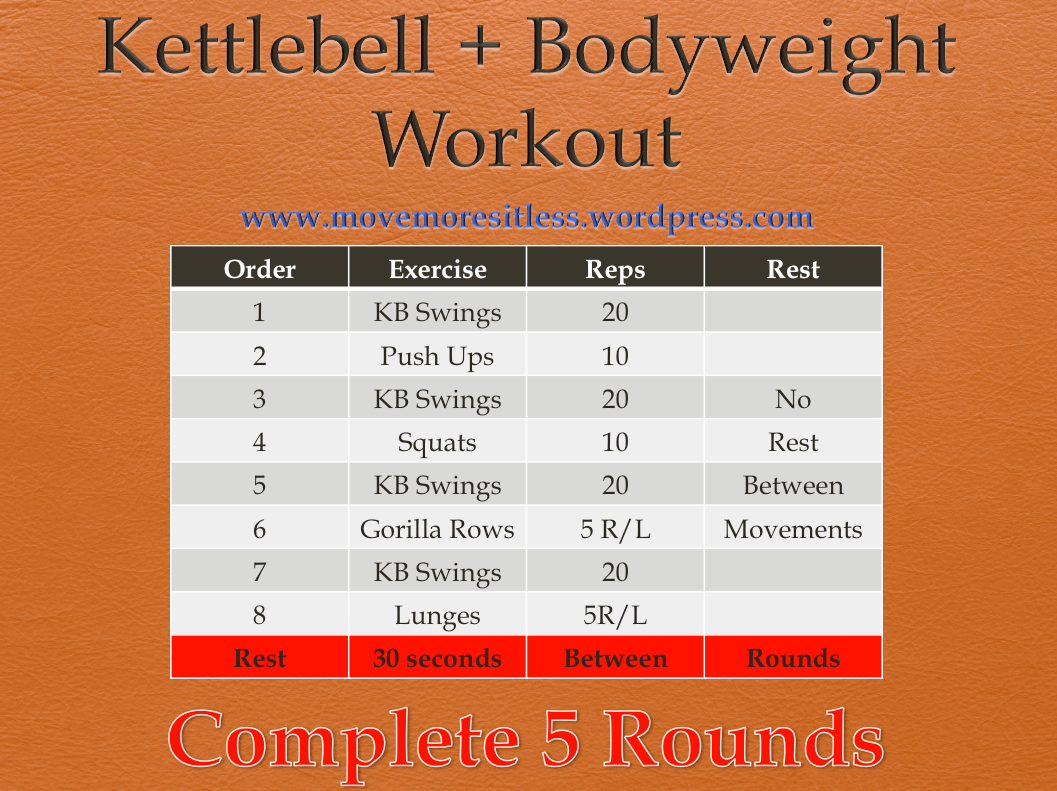
So, without blabbing any further, here is the structure of the workout, please notice that it is very similar to the multi-method cardio approach:

sample kettlebell and bodyweight workout

A couple of points…

First, there is a lot of work being done here, as you can see.  There is a lot of muscle being stressed and the rest is light.  A workout like this could be a complete training session for a beginner or an intermediate, or scaled up for an advanced lifter.  Scaling up for an advanced trainee might involve a bump up in bodyweight exercise progression or adding a weight vest to those movements.  It’s all a matter of tweaking the variables based on your unique situation and needs.

Second, I kept the reps to even numbers, 10’s and 20’s.  Why?  Because it is annoying having to check your notebook after every movement.  I want you to be focused on what you’re doing during the training session not counting reps like people count food calories.  Focus on your movement, your breathing, your recovery.  Forget about complicated rep schemes… I have plenty of those that I will post in good time.

Third, go sub-maximal but not too light on your kettlebell swings.  Grab a bell that you could swing for 30 reps and focus on hip snap during those suggested 20 reps.  Guys you might grab a 24kg or a 28kg, gals you might grab a 16kg or a 20kg.  Both guys and gals, you’re allowed to grab more or less than that, but on average, males and females will use those weights.

Remember, don’t gauge your energy expenditure on the first set of swings because you’ve got 3 more sets of swings and 4 different bodyweight movements lying ahead.  Manage your fatigue appropriately.  If you have a heart rate monitor, I would suggest using it to check you heart rate.  Of course, you’d want to already have an idea of the beats per minute that separate you from exhibiting crappy movement technique.  When you reach that heart rate, you can back off, rest for a few seconds, then get back into the workout once you can control and OWN the movement.

Why 20 reps of swings?  Because I personally feel that anything more than that really doesn’t provide much benefit other than poor technique (lack of finishing in full hip extension, slouching, etc) and a rising risk of losing the bell on the backswing or at the highest point of the arc.  One slip will kill your pet or put a hole in your wall, and the other will destroy your brand new LED TV.

20 reps (or less depending on your conditioning level) seems to allow for a sufficient elevation in heart rate without making the swings pointless from lack of load and endless volume.  There will be plenty of work performed in this training session, it doesn’t all need to be accomplished with kettlebell swings.

If you’re bored with your typical cardio routine, I would highly recommend giving a workout like this a real shot.  You will be pleasantly surprised at how hard your cardiovascular is taxed during a training session like the one described below.  20 minutes seems to be the sweet spot for me.  I have tested up to 30+ minutes of work like this, and it just doesn’t work for a couple of reasons…

1)  I feel like I am just going through the motions with regard to loading (aka weight used).

2)  I feel like I am adding  volume for an unjustified purpose.

These days, workouts like this serve as a great follow-up to my 2-day on/1-day off training schedule.

Day 1 is a heavily focused on strength work with a splash of jump rope or Airdyne cardio work, while day 2 (this workout) is dedicated to sub-maximal movements strung together to work cardio-strength (traditional strength moves with incomplete rest periods).

Ultimately, the goal is to stay physically prepared until I shift my training toward a particular goal.

Also, although the 20-25 minutes of work being completed in a workout are definitely stressful and draining, I feel as though it’s a short enough bout that allows for adequate recovery between training sessions, avoiding over-training.  The full 24+ hours of rest is also a motivating factor to work hard during this type of training session.  The rest day is just that… a rest and recovery day.

Be a perfectly golden marshmallow at the end, not a crusted black scabby marshmallow.

Give it a shot and let me know how you make out!

Cheers to short effective bouts of exercise!

Kyle

Look! Movement is the Benefit :)

Quick Tips

Screen Shot 2013-08-22 at 6.59.07 PM

Non-traditional movement has been the name of the game lately.

Pure ground based locomotion and flow.

It’s not that I don’t have time for more mainstream forms of movement, because I believe in that also,  but I am becoming increasingly intrigued with other methods of movement training.  I almost used the term “time-tested” instead of mainstream.  It might have been a better description, but admittedly, 95% of my personal workout habits and the habits which I recommend to others seeking movement regimens are in fact, mainstream.

A simple blend of squats, lunges, hip dominant hinging, upper body pushing and pulling in a vertical and horizontal fashion will set you up for success.  Add in some chops and lifts and you have got yourself a damn good routine.  It’s all in how you organize it and tweak the variables to best fit your goals.

A squat is a squat, but with a few tweaks here and there, you can make the squat conducive to building a number of different human physical qualities (strength, endurance, power, etc), all completely different from each other.

Always remember, in the beginning… establish mobility, establish stability in that new-found range of motion, then begin the process of building strength.

It’s a layering effect.

This is a recipe that works every single time for the person that is willing to be diligent in their training efforts.

Are you that person?

Because here is the reality:  Movement works every single time.  100% effective.  It’s people that fall short.

Movement works.  People don’t do the work.  Shame on us.

Over the past few weeks, I have progressively integrated more and more Ido-style movements into my pre-work training block.  Maybe I shouldn’t refer to these movements as “Ido-invented” (after watching some of his videos he probably would deny they are his but were there from the beginning of time), but he was one of the first (and still the best that I’ve seen) to make sense of less mainstream forms of movement.

He is a mover, in every sense of the word.

From one-arm hand stands and other hand balancing, single arm chin ups, planches and twice bodyweight back squats, Ido can move with flow and move load if necessary.

Planche training

Planche

I keep referring to Ido’s teachings as “movement”, and that’s because it is.  He neither specializes nor generalizes.

I guess I never really stopped and thought about it, but most of what is published and preached today is purely about fitness.  Even Yoga, with it’s cult like following, doesn’t necessarily make a person MOVE better.  It might help a person increase flexibility and improve range of motion, but it doesn’t guarantee that you will move better.

You have to practice movement to improve your ability to move.

Now, I will say that I don’t necessarily believe that the mere act of practicing movement is going to grant you access to better movement.  It may open a few doors to becoming a better mover, but I also think that each person needs to be real with themselves and their own situation.  Some folks have got some real compensations, imbalances and dysfunction going on.  Who knows where or how these issues manifested themselves (a lot are from sitting too long) but they are there, so it may be completely necessary to address these movement restrictions before you’ll ever be a great mover, or even an average mover.

The Functional Movement Screen is a great system for evaluating yourself, and your ability to move.  Why?  Because it is systematic.  You grade your movement quality, and lesser quality scores in any given movement pattern has a roadmap of corrective drills that you can use to clean up that movement pattern.  In essence, you can correct faulty movement rather quickly.

Realistically, you can perform a poor man’s movement screen at home on yourself.  It will always be better to have a knowledgeable FMS certified trainer evaluate you, but hey, we can DIY.

Use a big mirror or better yet film yourself performing the tests from the movement screen.  Don’t feel dumb filming, you can delete it immediately.  The filming of your movement capabilities is extremely valuable.  What you “think” you’re doing isn’t always what you actually doing movement-wise.

Take your video and compare it to some perfect screens (which you can easily find on YouTube) and take note of the differences.  Most people will notice that their overhead squat is a lacking, rotational stability nearly impossible to complete and the inline lunge makes you feel like you’re balancing on a tight rope.

Cleaning up these patterns will make you a better mover, and probably decrease the likelihood that your dysfunction manifests itself into an injury.

However, cleaning up the screen doesn’t mean that you’ll all of the sudden be a great mover.  You have to practice moving to be a great mover.  Are you sick of me saying move?  Mover?  Movement yet?  Sit tight I’ll drop those terms a bunch more in the coming paragraphs.

In many cases, I have substituted ground based crawling variations (supine and prone) and walks in  place of my go-to dynamic warm up.  I haven’t felt like I am sacrificing anything by doing so.  My joints still move through a full range of motion and my muscles are activated in a low-impact fashion.  I would even argue that my time is being maximized by practicing my movement flow using Ido’s training drills versus my standard cookie cutter warm up.

I’ve actually exited many of these warm-ups in a pool of sweat, even before beginning what I would consider to be the “work” portion of my session.  Interesting.

I’ve quickly found that I am ridiculously weak in certain positions, uncoordinated and all around uncomfortable as I work in some of the Ido Portal warm-up drills and ground based training.  It’s an ego check for sure, especially since he refers to many of these flow-like drills as being “beginner”.  Ha!  Soreness has also been a product of the unfamiliar movements, although it’s never a goal.  Unfamiliar movements almost always produce soreness because your body hasn’t experienced it yet.

I am reminded – as I continue to force myself to become more vulnerable by the day with Ido’s training idealogy- of how a newbie to the workout scene feels at first.  It’s an emotional uppercut showing up to a personal training session or a group class (even training by yourself behind closed doors) knowing that you’re going to struggle to complete what is being asked of you.

But the key is to keep coming back.  Keep grinding.  Keep learning.  Realize that it’s a process, just like everything else.  And as a process, you’ve got to work at it, consistently and in a focused manner.  Leave your feelings at the door and work.

We’ve become detached from our bodies and desensitized to our physical abilities.  In fact, many of us no longer have a relationship with our body, and our physical abilities.  Things that we could easily do as kids are now foreign and seemingly impossible.  But all of that can be regained.

One major takeaway from the my small bit of reading Ido’s work is this:  We’ve got to establish a lifelong relationship with our movement.  Every one of us.  We will all start at different points and need different adjustments along the way- and this makes sense because we are all individually unique- but you’ve got to make sure that you start and find a way to make it stick.

Enjoy the challenge of learning new physical skills.  Embrace the frustrations and work out the solutions on your own.  If you find yourself stuck, hop on the computer or tablet and search out a solution.  The internet is packed with incredible free information that can get you where you need to go.

I suck at many of Ido’s locomotion drills right now.  I’ll admit that.  I filmed myself and I look stiff and the opposite of gracefully.  But that will change with time and practice.  It’s frustrating to know that I am practicing something that I am not good at (yet).

I think many people may find that they actually like dedicated workouts more when you a aiming to develop a certain movement skill.  Pursuing skills transforms a person’s daily workouts into a journey instead of a dreaded 60 minutes of robotic physical activity that we feel we need to participate in to chase the idea of “fitness”.

A movement journey may not have an end point.  But that is the beauty of it.  You achieve a goal and begin planning and preparation for the next goal.  One day you look back and realize that over the course of time you hopped over barriers that you never imagined you would hurdle.  That’s an incredible feeling to evaluate significant forward progress, especially when looking at where you started.

People often ask me what the benefit of an exercise is, or which exercises will best target a specific area of the body…

For a long time I couldn’t find the exact words to answer this question in a way that felt true to myself… but try this one out because I think this might be where I stand…

Ido Portal Movement


Cheers to getting uncomfortable in your movement endeavors…


KG

My Philosophy: Great Point Alwyn Cosgrove!

Quick Tips

Image

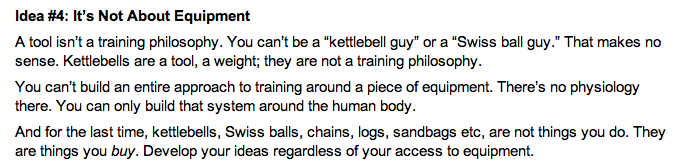
When I initially read  Alwyn Cosgroves post (shown above) I immediately felt that it was too good not to share. 

Once I established my training philosophy, I was set for life.  I was set to teach others and also to execute for my own benefit.  

It doesn’t matter what equipment is around, what I have access to or what I don’t have access to.  

I can accomplish something even though I don’t have everything.  

Sure, my ideas and preferences will evolve, but I think that much of what I believe makes a great program and workout is solidified.  I am not sure (at this point) how it can get much better, without sacrificing certain things that I morally cannot consciously sacrifice.  One of those being safety of myself, or the you guys.  

I write about kettlebells and suspension trainers on this blog A LOT.  

But it’s not for any other reason than I believe whole heartedly that the combination of kettlebells and suspension trainers make for insanely effective workouts, especially since they fit into my training philosophy so well.  

Kettlebells provide loaded (resistance), ground based movements that are primarily (not all) completed in a vertical standing position.  The bold print is a part of my training philosophy.  I could substitute “kettlebells” for a whole host of other fitness equipment, and things would be just fine.  

Movements like kettlebell swings and turkish get ups are world class for building a variety of qualities, at the same time.  

Suspension trainers are an entire gym in a box, weighing in at less than 2lbs tops.  Equipment-free bodyweight training is great, but suspension training makes it better.   Suspension trainers allow for the leverage of a person’s bodyweight against gravity.  My favorite benefit of the suspension trainer is the fact that you can PULL!  Inverted rows (aka: body rows) and chin ups (supinated and neutral grip) are all made possible by two straps with handles.  

Get rid of that shoddy kitchen chair set up that you’ve been using for so long…

But as stated in Alwyns commentary above, kettlebells and suspension trainers are just tools that I use to to implement my philosophy of what makes a great workout, program, etc.  I am not exclusive to any piece of equipment.  That’s not my style.

The fact is that most equipment works wonderfully.  

It’s the user (aka: you) that has the opportunity to make the magic happen.  

I know a lot of people that own a complete set of kettlebells and the best suspension trainer money can buy, but they don’t have a philosophy, or any sort of guidance on how to use it.  In turn, they are stalemate in their efforts, or on to the next fashionably trendy workout tool.

For most people who are beyond their days of athletics, the total body approach to training is probably best.  I know that there are upper body/lower body splits and a thousand other ways to organize your weekly training, but total body is effective in short windows of time.

Time is probably our most precious commodity.  We can never get time back.  Once a minute passes, that minute is gone.  Same with days, weeks, and months.  Time keeps moving forward at the same steady pace regardless if we want it to slow down or stand still.

That being said, leveraging a total body workout, using a smart philosophy to structure the workout is (in my personal opinion) the best approach for accomplishing goals of fat loss, building all around strength and many other athletic qualities using time management.

But, it must also be said that paying attention to your nutrition, specifically what you shove into your mouth and drink, is the most time effective way to stay lean.  

My advice to all of you is this:  Treat tools are tools, not philosophies.

Gravity decides what an object is going to weigh, humans decide how the object will be shaped, how the weight is distributed and to some degree how the tool should be used best.  An example of how a tool should be used best is in fact, the kettlebell.  You can swing a dumbbell, sure.  But your first time swinging a kettlebell will lead you to believe that dumbbell shouldn’t be swung.  

Kettlebells are the standout choice for swings and many other exercises.  

But I can in fact swing a dumbbell.  I can also perform a turkish get up with a dumbbell, or a sandbag, or a filled milk carton, or a loaded backpack, etc.  It might not feel the greatest, but I can do it because it has weight and a handle to grip.

The tool is not the philosophy.  It is an augment to the philosophy.  A supplement to your training philosophy.  

Again, I can perform a squat with any tool, or no tool.  If I don’t have a two, it’s bilateral air squats or for an added loaded and challenge, it’s pistol squats.  

Therefore, pay attention to more important aspects of your workout such as:

–  Consistent progression of loading.

–  Rest

–  Time under tension

–  Range of motion

–  Sets/Reps

–  Heart Rate

–  Movement patterns

–  Exercise progression

–  Your goals, needs, abilities and dysfunction

-etc…

These are things that can you can use to imprint your own philosophy of how an effective training session or long-term program should be designed, regardless of what equipment you have or don’t have.

Very simple thought pattern yet often overlooked.  Thanks Alwyn…


Cheers to philosophies and sticking to them…


Kyle

The Gym is Dead to Me

Quick Tips

It’s not really, and it never will be, but the point here is that the gym reminds me of a jail cell.

When I first started training, it was very traditional.  Barbells, cable machines, stationary bikes and treadmills were the ticket.  It was how people stayed “fit”, strong and athletic.

Again, these tools still work, but the deeper you go into the rabbit hole, the more you question why building high functioning bodies has to be such a cookie cutter process.

Barbells will never go away.  Why?  Because a barbell’s design is perfect for lifting heavy things off of the ground, loading up the squat pattern and building explosive power through exercises like the clean, snatch and push press.  We need tools like barbells.  Barbells are safe.  A quality barbell isn’t going to break mid-rep, and there are a series of checks that a person can run through to make sure that  replicate their technique every single time.

But what I am beginning to question- and the better term might be “explore”- is why movement should be so cookie cutter.

Because that is how I am seeing it these days.  It’s cookie cutter.  We preach posture, we preach exercise technique, we preach moving within manageable ranges of motion.  But how about this… let’s get out of the gym and move.  Forget about all of the in-depth information, get off of the couch and out of the house.  It’s sunny and 80 degrees outside and it’s a prime opportunity to use your god-given right to move yourself around.

If you’re a newer to training , and you cannot handle your bodyweight… the load that you carry around with you 24/7/365… forget about barbells, cable machines and kettlebells.  You have bigger fish to fry than worrying about the next great exercise.

When I left the gym I started to LOVE training again.  When you’re done with organized athletics, working out just for the sake of working out is a sure-fire way to burn out.  Boredom sets in and you start to wonder what all of the effort is for?  A six-pack?  Honestly, who cares.

Six packs are nothing without function.

You can have a rippled six-pack and blow out your back in a heart beat, tear a rotator cuff, etc.

It’s like, “Congratulations, you can see your stomach muscles through your skin, but you can’t run a mile or pull yourself up to a bar or pull yourself out of Quasimodo posture”.

In fact, these days, I think that dedicating your training to achieving a six-pack is comical.

Once you get in this “I’m training for a six-pack” mindset, you’ll go insane trying to get it or attempting to maintain.  It will elude most people not because their workout program sucks, but because their eating habits suck.  You wouldn’t believe how hard that is for people to swallow (no pun intended).  If you want a six-pack and don’t have it despite insane physical efforts, it’s most likely because your eating is not conducive to having a six pack.  Ok?

It would be like if you started a business only with the goal of getting uber-rich and but ignored your customer service.

It’s short-sighted.

Get yourself out of the gym and start moving more.  What do parents tell their kids when they are inside for way too long?… “Go play outside”.  Adults should take their own advice.

Once you’re outside bodyweight training is an amazing method to leverage when you use the correct formula.  Climb some stairs, hills or jog flat ground.  Get your heart rate up and get the blood circulating rapidly.  Mix in some squats.  If you cannot squat, grab onto a pole, hinge your hips down and back, keep your chest tall without folding at the lower back and feel the movement.  Use the pole to help groove that squat pattern, and what it should feel like.  Gradually let go of the pole and continue to “feel” the movement.

Face the wall squats

“Face the Wall” squats are great for learning technique.

If you cannot perform a certain movement- and I use the squat as a common example because it seems to give people the most trouble- you have got to practice it.  Occasionally, you’re going to find that your internal wiring is all mixed up.  In this case, you need to implement corrective exercises, which I why I promote The Functional Movement Screen so much.

Everyone should be able to squat, among other things.  This isn’t a circus move that is exclusive to fitness buffs, this is exclusive to all humans.  If you cannot squat, you need to figure out why and restore your ability to squat.

Screen Shot 2013-08-04 at 1.32.21 PM

Gym memberships.  We seem to think that just because we buy a gym membership we have just bought ourselves a fit body.  But you haven’t.  What you did is you bought yourself a gym membership, a contract that says you can walk into a brick and mortar structure where a bunch of fitness equipment resides, waiting for the next person to pick it up, push it, pull it or run on it.

But most people who purchase memberships never go.  Buying the membership is the easiest part of the process.  Anyone can hand over a credit card, swipe it and feel great about their decision.  Especially credit cards, because when you don’t physically see the money being handed over, the impact of the purchase is dampened.

The real work begins when you make it a priority to go that gym over and over again.  Daily.  Every other day.  Or at least on some kind of consistent schedule.

But most people burn out or never commit from the beginning.  Out of the gates hard and fizzle, or they purchase the membership and never go in the first place.  But they have the membership, so they will go “someday”.  The membership is comforting because they always have it in their back pocket, never to be used… but it’s “there”.

Ido Portal

In the back of my mind, I have long thought movement should be explored.  We should be able to execute movements that require power and strength, yet exhibit a stable full range of motion and gracefulness regardless of the environment or the obstacle.  And let me tell you something flat-out, one brief glimpse at how life happens in real-time when you are actively engaged in movement (outside of the confines of the gym) will reveal that you need to be able to adapt to the unknown.

However, I also believe that exploring movement should be done unloaded.  External loading in really awkward positions can cause injury, and that erases any ground that you’ve made.  Move with your body, and your body only.

Unknown stress, unknown range of motion, etc.

You’ll never be running on a trail and find a barbell neatly loaded with a chalk container sitting next to it.  You’ll find a rock with shitty hand holes for gripping that is weighted heavier on one side than it is on the other, and wet.  Or maybe that rock isn’t on the running trail, but it’s a part of the magnificent landscaping in your yard.  Maybe you’re gripping 40lb bags of mulch carrying for 30 yards up an incline, shoveling gravel or raking a 2 acre yard.

You cannot train for this stuff.  You can prepare, and barbell training and other more traditional forms of gym work can aid in your completing of these tasks, but we have to develop succeed in raw movement.  It’s life.  Movement is part of life.  So I have embarked on my dabbling of increasing my ability to move, mixing in Ido Portal-like methodology (logo seen above, great logo).

I believe that there is something to be learned here.  Getting out of the cookie cutter mindset and into the movement mindset.  Exploring the bear crawl, moving into a lateral lunge flowing into a crab crawl, gorilla hops and then into single leg pistol followed by a pull up to a bar where you pike out and lower yourself with a graceful strength.

Got that?  🙂

I value the building of systematic strength.  I value programs that are geared toward making damn sure that strength progress and conditioning progress can be measured and evaluated.  We call this “periodization”.  We move through 3-4 week phases where focus is placed on building a certain quality, such as strength or hypertrophy.  But all of this work needs to transfer over into the unknown, into life.

Systematic strength building and conditioning will always have a place for every human, and I will never stop promoting that to athletes, Mom’s and Dad’s and the elderly.  We should place some focus on this method of building physical fitness.

But once we leave the gym, we have to realize that movement is more than bending over to pick up a piece of iron, grunting, standing up with it, then dropping it back on the floor.

Blip on the fitness map

Fitness is a blip on the movement map.

Fitness doesn’t mean that you can move.  

In fact, I really don’t know what fitness means?  Who’s considered fit?  The powerlifter who can pick up 1,000lbs in a deadlift?  The marathon runner who can win the Boston marathon?  The UFC fighter?  Usain Bolt?  The kettlebell guru?  The Crossfit Games champ?

I know this might not make sense right now, but fitness does not mean that you can move.

Ah, the gym.  It’s really dead to me at this point.  I value the tools found in the gym, particularly cable machines that can be used for movements that cross the midline, such as chops and lifts, but not the gym itself.  I think there are better places to train.  Places that inject an energy into your sessions.

With the evolution of  training equipment that is capable for training outdoors, I’ve never been more motivated to explore movement in different environments, using different tools and lately with others who value the same approach.  It’s a great bonding experience to train outside with someone else and finish the workout together, just as it is to climb a 14,000 foot mountain, bike 100 miles or complete a marathon.

SUP ATX Stand Up Paddleboard

With the popularity of unique outdoor activities like stand up paddleboards on the rise, I’ve never felt more justified about my decision to leave the gym in my rearview.

Come join me out here.

Cheers to movement and your ability to do it anywhere!

KG

Kettlebell Training Research Studies

Quick Tips

Kettlebells are probably one of the most effective workout tools on the planet.  

They are also one of the most under-researched on the planet.  

So, this post was sparked by my own interest.  

Kettlebells have proven time and time again to blow fat off of people’s bodies, most notably without losing much muscle in the process since all of the movements are loaded, both strength and ballistic exercises.

This makes kettlebell great for ditching fat without sacrificing any valuable lean muscle tissue.

And that my friends, is a win-win situation. 

So what studies exist?  

Let’s take a look at a few:

1)  Kettlebell Swings, Snatch and Bottoms Up Carry Impact on Back and Hip Muscle Activation

Excerpt:  “Some unique loading patterns discovered during the kettlebell swing included the posterior shear of the L4 vertebra on L5, which is opposite in polarity to a traditional lift. Thus, quantitative analysis provides an insight into why many individuals credit kettlebell swings with restoring and enhancing back health and function, although a few find that they irritate tissues.”

This is mostly good.  Stuart McGill is a world leader in spine research as it relates to exercise.  His work is cited and quoted in a lot of publications.  Kettlebell training, like any style of training, can be detrimental to your body if you choose to ignore technique.  Skip the learning the basics and you make yourself susceptible to injury.

Chalk one up for kettlebell swings, snatches and bottoms up holds.

Here is a video clip of the bottoms up kettlebell hold:

Your mid-section will light up like the Fourth of July while stabilizing the kettlebell in this inverted fashion.  Very challenging move.  Stay tight, tall and braced.

Protecting the spine while training is of utmost importance, and the most important role of the abdominal musculature.  Despite what mainstream projects the abs to be important for.  Protect your spine people.  

2)  Oxygen Cost of Kettlebells

This little study looked at the oxygen cost of kettlebells, more specifically the two-handed kettlebell swing.  

The metabolic challenge delivered during a kettlebell workout is large.  Part of the maximizing this challenge is selecting the proper weight bell.  It should be heavy, but not so heavy that you cannot finish the workout.  Swinging light bells encourages poor technique and decreases the impact of the overall workout.  

I’ve talked about leveraging kettlebell swings on this blog over and over again.  I cannot say enough about a properly performed swing, and what it can do for you body, performance and posture.  Preserving muscle while eliminating fat is such a desirable route when you’re seeking body transformations.  

Simple workouts can achieve big results.  Here is a recent post where I diagram some classic kettlebell workouts.  

3)  Kettlebell Swing Training Improve Maximal and Explosive Strength

Strongfirst Kettlebell Swing

The kettlebell swing is an explosive deadlift.  The extension of the hips out of the hinge is aggressive as you drive the hips forward, standing yourself up vertically.  

This hip snap is the same hip snap that athletes use for putting large amounts of force into the ground as they accelerate across the field, court or ice.  

This hip snap is not just for athletes, its beneficial for the working male or female, Mom and Dad and even physically able elderly populations.  The hips are designed to be the power source of the human body.  We spend most of our time on our feet, so having powerful hips is a great thing.  

Will you be able to dunk a basketball?  I can’t promise you that, but it will get you closer to the rim according to this study.  

Will you boost your strength and explosive strength when you call upon it?  This little study thinks so.  

*** Again, choose to swing heavy kettlebells over light kettlebells to reap the full benefits, but not so heavy that you cannot fully extend the hips or move the bell quickly.  


Cheers to the kettlebell and the emerging research behind its use…


KG

The Devil’s Ass Crack is Sitting on Wisconsin and There’s Nothing Wrong with Working Out Indoors

Quick Tips

Image

Blog post title is inspired by this viral “It’s Hot As Hell” YouTube video

(you can find the link to the video at the end of the post)

All of my Apple devices say that it’s 89 degrees in the EC (Eau Claire, WI), but there is no way in hell it is 89 degrees.  I could cook an egg on the sidewalk and I nearly lost skin to the seat of my Volkswagen Jetta (TDI I might add).  Just for clarification, TDI means diesel:)  It’s got to be closer to 94-95 degrees at least.

In a nutshell, it is stupid hot in Wisconsin at the present moment.   It’s down right suffocating outside.

***  Please grant me this moment to bitch about the weather… I am well aware that it is hotter elsewhere.

I preach about how refreshing it is to get take your workouts outside, but not in this kind of heat and humidity.  You’ll bury yourself in the first ten minutes.  Plus, if you’re a sweater like I am, any movements that require grip become annoyingly unsafe.  When I say sweater, I mean wet.  Not damp or slight lower back sweat stain, I’m talking about ring out my t-shirt wet.  Squeaky sneakers wet.

Swinging a kettlebell with sweat sliding between the palms of your hands and a heavy cast iron cannonball is nerve-racking.  It’s not fun to re-grip at the apex of your swing.  Also, if the bell slips, it’s going to slip on the backswing, where gravity is re-introduced and the hands are taxed to maintain grip.  Smashing the bones in your feet would not be fun.  I’ve been swinging for a while, and I’ll still grind through a few extra swings with wet hands despite knowing better.  It’s not good practice, but I’ll commonly pull the plug on any ballistic kettlebell movements (snatches, cleans, swings, etc) when the sweat is really pouring out of me.

So, the game plan today is an indoor workout.  No question about it.

My sacrifice for training indoors is that my ceilings are not of the ideal height for a select few kettlebell exercises.  If I was working in max effort squat jumps (which I never do) or snatches (which I love to do but can’t), I would have to find alternatives or take my workout outside.  But not today.

Today is going to be totally improvised.

Image

  • Continuous movement for 15 Minutes
  • No rest between movements, reset back to squat jumps after finishing the Schwinn Airdyne ride.
  • Monitor heart rate for effort.
  • Monitor exercise technique for muscular fatigue/breaking of form.

*  I don’t claim to have invented this, and I don’t typically mix multiple movements together that take a great deal of thinking, but this seemed like a nice combination.  I wanted a total body movement combination, and this seems to serve that purpose.

First, I put this workout together using my same general template that I use for all of my program/workout design.  All movement patterns are represented in the workout, including a cardio effort with the 60 second Schwinn Airdyne ride (in honor of the Tour de France).  Nothing is maximal effort.  That would ruin the point of the workout.  Burning out in the first round does little for you.  By monitoring my heart rate, I can verify that I am in fact working as hard as I think I am.  It’s not a perfect gauge effort, it has it’s flaws, but it works extremely well for me and a lot of other people.

Second (and to my last point), I chose sub-maximal reps and sub-maximal loading on all exercises.  This decision was influenced by the duration of time that I targeted for the session (15 minutes).  Again, the point is to move a pace that allows for:

1)   Quality technique in each rep of every exercise.

2)   The accumulation of an afterburn-like effect that will lend itself to staying lean, maintaining strength, improving work capacity through various exercise variations and while leveraging my body’s reaction to the training stimulus (calories expended post-workout). 

Third, all movements are bodyweight based the entire way through.  I have fallen back in love with bodyweight training.  Bodyweight training goes wherever you go, has simple progressions and leverages the most effective movement patterns in a brutally effective manner.  Bodyweight training is the foundation of all other modes of training, so it’s probably best be capable of executing sound technique using just bodyweight against gravity’s pull.

Also, I enjoy having and building strength as much as the next person, but at the present time, the strength that I have developed and maintained through bodyweight based exercise progressions is more than enough to meet my daily needs.  If I ever want to develop higher levels of strength, I will have to move heavier loads and adjust other training variables.  Simple as that.

Fourth, the entire workout takes 15 minutes.  Now, I won’t con you (yes con you) into thinking that the whole ordeal takes 15 minutes only, because it doesn’t.  I typically spend 10-15 minutes before the actual effort driven portion of the training session hammering home joint mobility, soft tissue restrictions and activation of weaker muscles.  I also whip through a series of staple dynamic flexibility drills that prepare my body for what’s ahead.

You can argue that warming up doesn’t prevent injuries, but in reality, why risk it?  Do you really want to find out through experience?  It’s just not worth it.

Lastly, take a look at the final two bullet points above.  Here is a snapshot so that you don’t have to scroll up (the things I do for my readers):

Image

What’s going to burn out first?  Lungs or muscles.  It will vary from person to person depending on what your past training regimen was and current fitness status is.  In other words, will your cardio or your ability to successfully and repeatedly execute each rep of each exercise (muscular contraction) give way first?

For me, it’s a combination.  Muscles seem to go first, especially when I am toying around with higher volume training sessions.  Some of you may find that you haven’t open up your lungs aggressively for quite some time, so the feeling of not getting enough air may cause you to tap out first.  In this case, focus on relaxing your neck.  Push your oxygen through your neck and chest down to the lowest part of your stomach.

Breathe deep.

So there you have it, a simple yet effective training session for all the land to enjoy.  Feel free to substitute your favorite or most accessible cardio alternative for the Schwinn Airdyne sprint.  Some days, low impact/high reward conditioning tools are the ticket.  High impact all of the time may mean high risk for some of you who have not yet adapted.  Jumping rope would fit the bill nicely, so would a treadmill sprint set to an incline.  Your choice.

Cheers to training inside when it’s Image outside!

KG

(As promised:  “It’s Hot As Hell”)

A Simple Kettlebell Drill to Light Up Your Mid-Section

Quick Tips

Screen Shot 2013-04-01 at 5.37.26 PM

My interest in kettlebells is quite obvious on this blog.  They are such a great training tool.  I pump the kettle bell’s tires regularly because I think that they are the perfect representation of what multi-dimensional movement can and should be.  Paired with a suspension trainer, you’ve got a complete home gym.  That’s cool.  Doing more with less.  The future of training.  Simplicity.

Speaking of simplicity, the kettlebell drill that I describe in this post is about as complicated as my training gets.  It doesn’t need to be complicated when you are paying attention to the details, your technique, your movement.

Well, actually there is one movement that might top this for complexity, but it isn’t that crazy.  I’ll write about it soon.

Multi-dimensional movement is something that most gym goers have never experienced, which is something that I am working to change… post by post.

Image

The ability to move with stability, mobility and strength in all 3 possible planes of movement (shown above) is important.  It keeps our bodies balanced and capable of handling physical stress in many different postures, both statically (not moving) and dynamically (moving).

Part of multi-dimensional movement is not only being able to initiate movement in all 3-planes (create force), but to be able to resist forces acting upon us in all 3-planes.  The ability to absorb force without sacrificing posture- vulnerable positions where injury may lurk- is important.

One of the ways to train the body to resist external forces is to mix in a healthy amount to carrying, both dynamic and static.  Carrying refers to loading either one side or both sides of the body with a challenging amount of weight, staying rigid with upright posture, and either holding the position without moving or walking for a specified distance.  I suppose if you were not moving, you wouldn’t refer to the drill as a “carry”, but more of a “hold”.

There are many different variations of carrying which are phenomenal for building a body that functions as good as it looks, but touching on each will have to wait for another post.

For the purpose of this post, the kettlebell drill that I am learning to love involves a static posture (no movement) and one kettlebell.  So as you can see, it’s simple.  Simple is good.

The drill is can be referred to as a “Bottom’s Up Waiter Hold” (with kettlebell).

Screen Shot 2013-04-01 at 5.34.06 PM

Kettlebell Bottoms Up Waiter Hold

1)  Grab a kettlebell of a challenging weight (experiment with what “challenging” is for you)

2)  Clean the kettlebell to chest height, or use both hands to position the kettlebell upside down (bottoms up)

3)  Hold the kettlebell just lateral to your midline/in front of your working arm’s shoulder, upside down, and balance for a specified amount of time.

4)  Grip the bell hard with your hand, pull your elbow in tight to your side, and create total body tension.

5)  Brace your core musculature and breathe through pursed lips

Time of hold:  15-45 seconds

Sets per side:  3-4 per arm

Where in the workout?:  After the warm up, before the workout, when you are fresh.

Front view

Lateral view


Fitness thoughts

Flipping the kettlebell upside down will instantly make everything in your world unstable.  Not quite “massively destabilized”, but you’ll quickly feel the need to stay rigid in order to keep the bell balanced.  During this time, your entire body is fighting to maintain an upright posture.

The mass of the kettlebell is typically located underneath the handle in most kettlebell exercises, so inverting the bell moves the mass above the handle.  It’s the arms equivalent of putting your feet on a balance beam.  (I hope this makes some kind of sense, I’m going with it)

As for coaching cues of staying tight and rigid… there is no other way to do this drill successfully.  If you’re loose, you fail.  You can’t fake it till you make it with this drill, which is why I love what it re-enforces.  Tension.  Don’t forget to learn how to breathe against that tension that you’ve created.  That is important also.

Anytime you load one side of the body and not the other, the core fires in an effort to off-set the loading and protect the spine.  It’s a natural reaction that should happen in most healthy functioning people, although our sitting epidemic is really hurting this.  Pick up a suitcase, milk jug or anything else that has some decent weight, put your fingers into your stomach on the opposite and tell me what happens.  Do you see now?  The opposite side should feel noticeably contracted, hard.

Screen Shot 2013-04-01 at 5.50.55 PM

One other fantastic benefit of flipping the kettlebell “bottom’s up” is the stability and packing component that the shoulder receives during the hold.  Again, gripping the bell tight and packing the shoulder sends signals to the rest of the body, particularly the shoulder which is located in close proximity to the hand grip.  The hand grip relays information that “something” is going on and it’s time to go to work.

Lastly, the move is completed in a standing position.  What does that remind you of?  Real life.  I am ALL for re-training people on how to fire their core in sequences (rolling patterns, etc), but life happens on your feet.  Training your body in the standing position, with feet firmly dug in, posture tall and rigid, is invaluable to me.

**  Train on a surface that allows you to ditch the kettlebell if it falls or slips.  I prefer grass or a thick rubber floor.  Your nice hardwood or new tile in your home is not the place for this.  Be careful in your attempt to catch the bell if it falls at any point.  Attempting to save the bell is like catching a 40+ lb basketball with a handle, which can be disastrous.

***  If you use a dumbbell or anything other than a kettlebell for this, you’ll receive SOME benefit, but it will be watered down significantly compared to using a kettlebell.  The challenge of balancing the kettlebell in the bottoms up position is what makes this drill effective.  It will be hard to re-create that unstable environment with a dumbbell.

Give it a shot.  Tell me what you think.


Cheers to going vertical with your core training!

KG