Just a Turkish Get Up and Rowing Workout

Motion

Two exercises, 1 workout. Rowing and Turkish Get Ups.

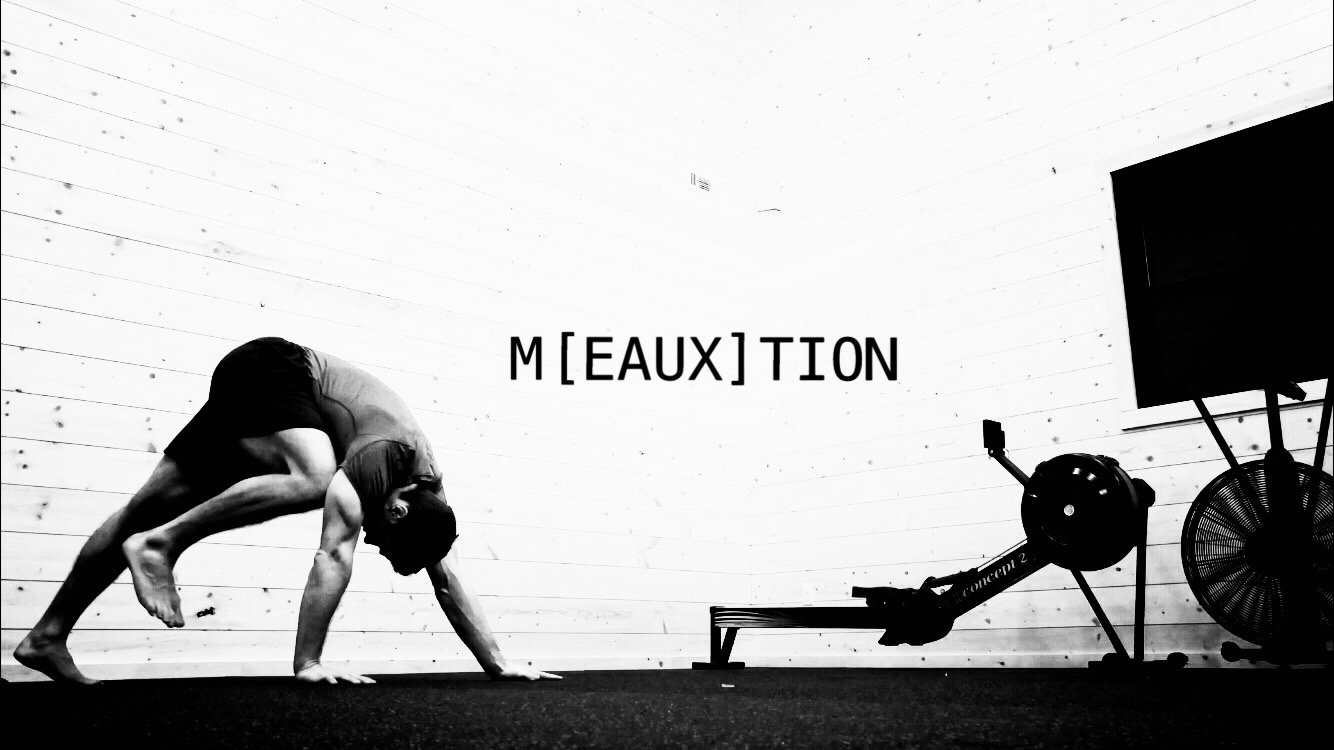
Today’s workout incorporates my favorite cardio machine, the rower, and an exercise which has become one of my all-time favorite total body strengtheners, Turkish Get Ups.

The rowing machine is a cardio machine that I have a true love-hate relationship with. Rowing provides a tremendous low-impact, high reward workout, regardless of the distance or intensity, therefore I love the training stimulus. I also hate rowing because it sucks my soul out of my body each and every time I use it.

Rowing is hell wonderful.

Turkish Get Ups show up on the Meauxtion blog in a lot of other posts. I love Turkish Get Ups. You should learn to love Turkish Get Ups.

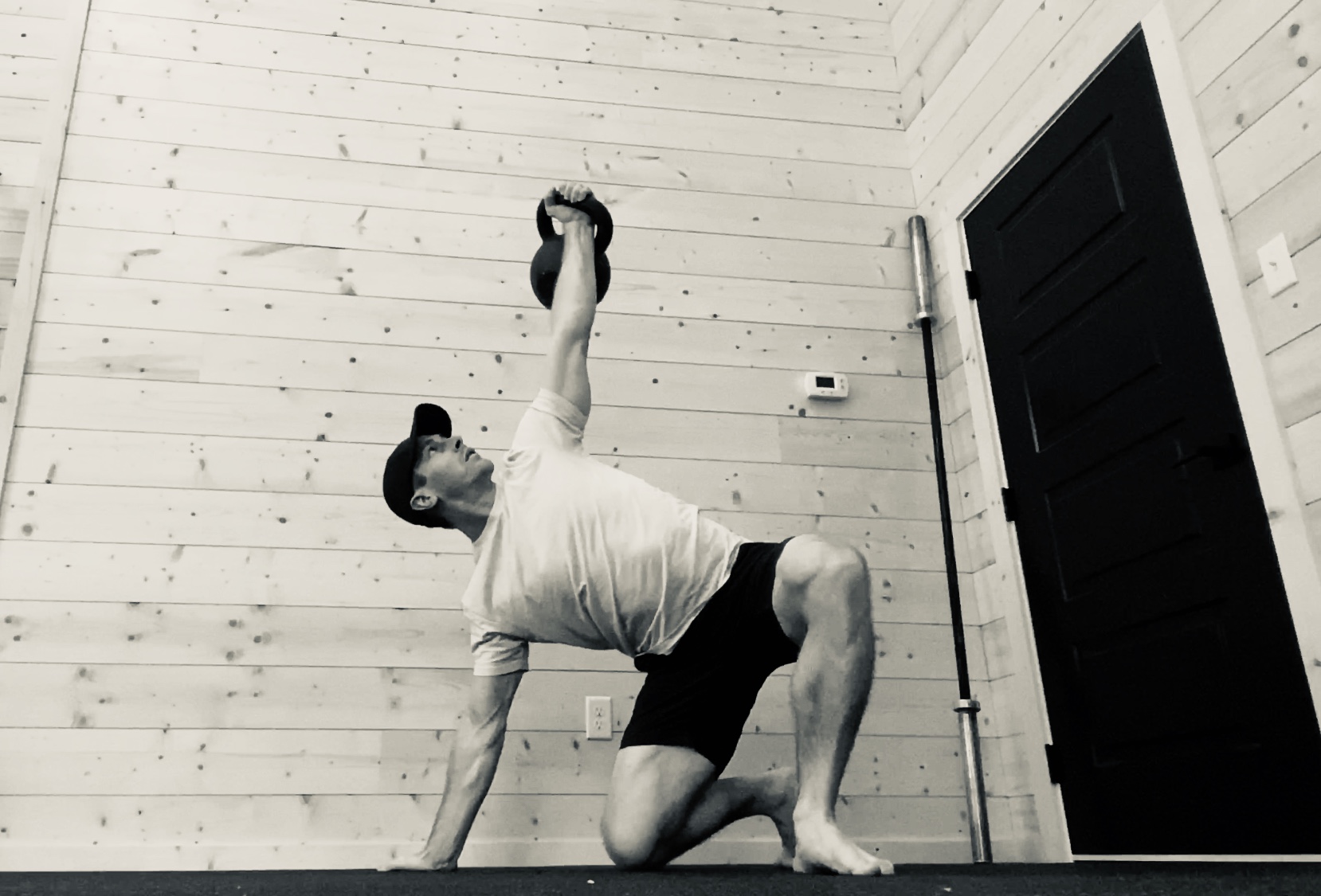
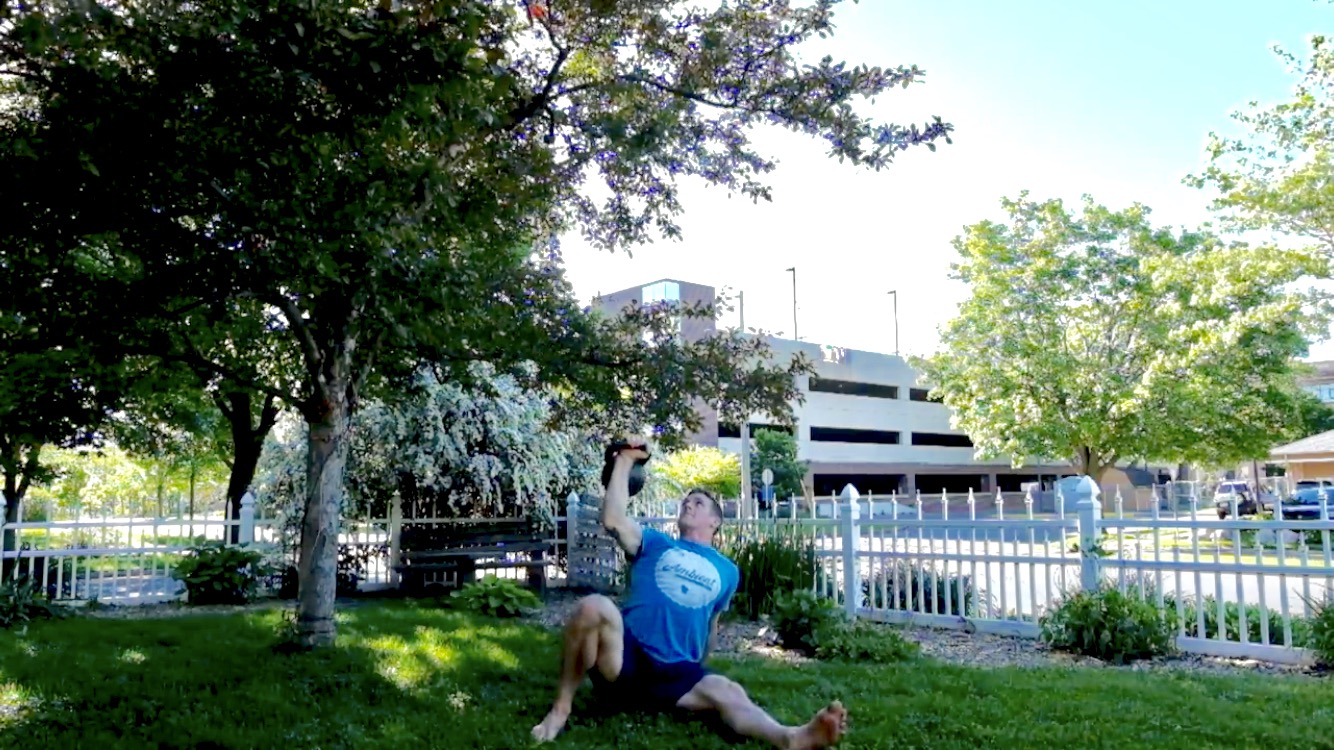
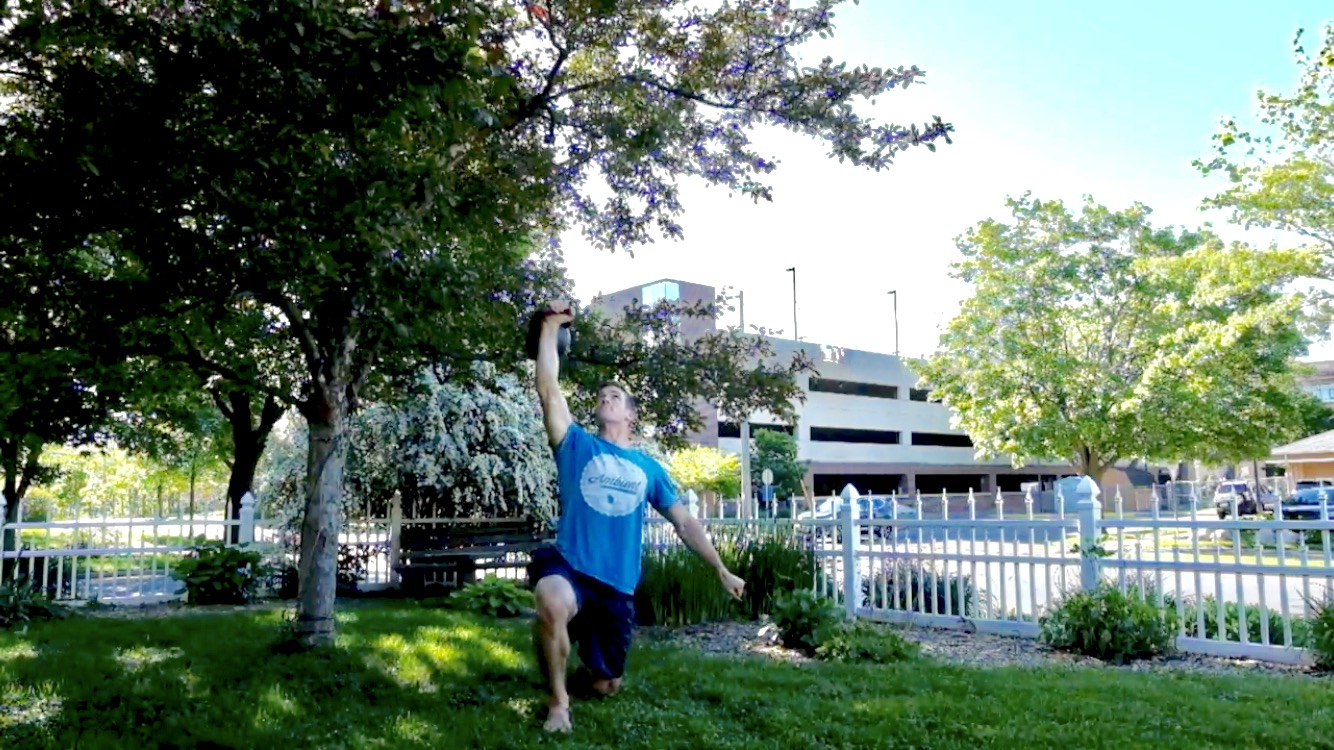
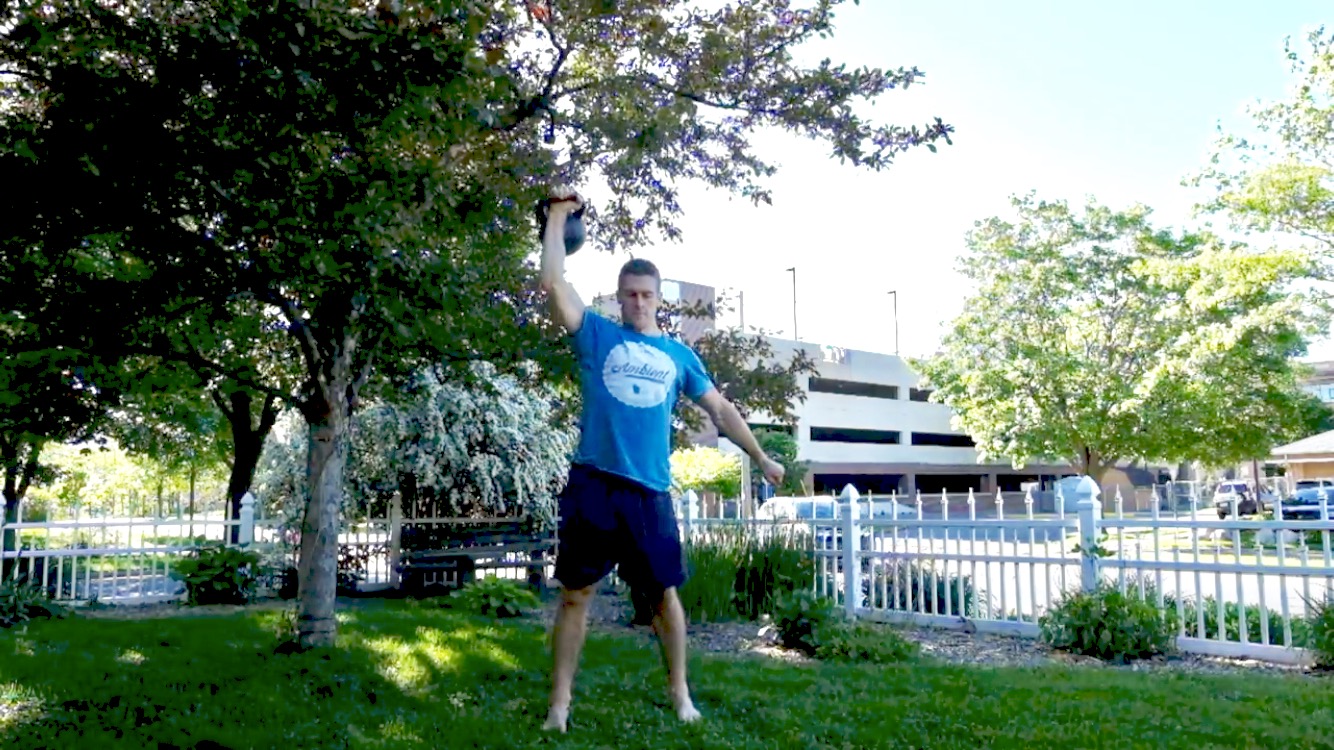
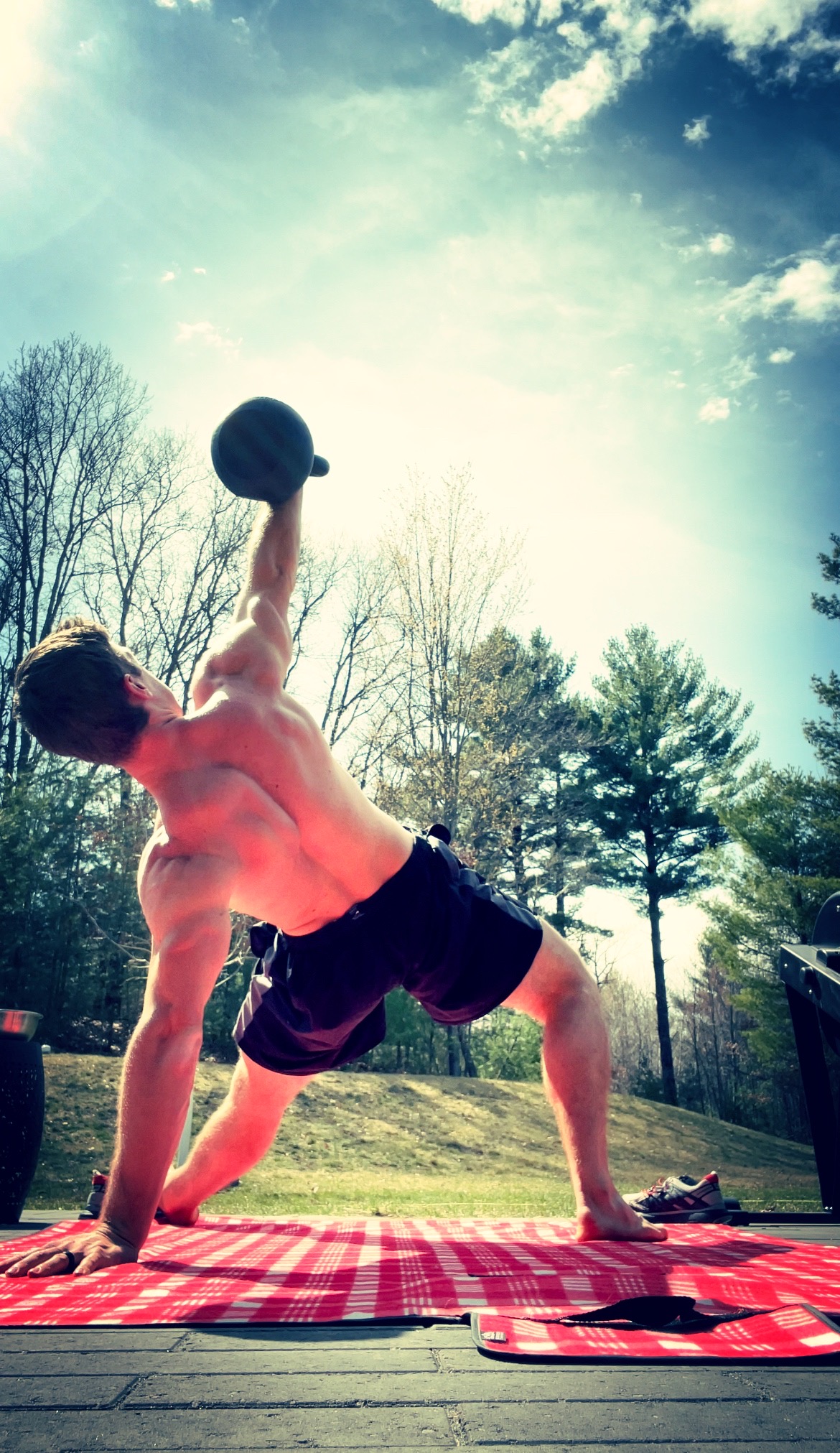
The gist of Turkish Get Ups is to move from a laying position to a standing position, returning to back to the original laying position. While you’re moving, a shoe or weight (kettlebell, dumbbell, etc) is being supported using one arm. The weight starts out over the chest, but eventually ends up vertically overhead.

Turkish Get Ups build tremendous total body movement strength, and are great for reinforcing shoulder stability.

(At the bottom of this post I’ll share a link to other challenging Turkish Get Up variations worth exploring.)

Combining Turkish Get Ups and rowing into the same workout creates a total body training stimulus that is time efficient (30 minutes and you’re toast).

Note: The great part about mixing rowing with Turkish Get Ups is that it fills in a gap. Upper body pulling. Pulling is one motion not included in a traditional Turkish Get Up. One of the main features of rowing is the pulling. Match made in heaven.

Turkish Get Ups tax the legs to some extent, but not horribly. The lunge to stand up and down is the primary lower body movement in a Turkish Get Up (along with lifting the hip lift), and the overall volume of lunges performed is really low. If you’re performing 10 Turkish Get Ups on each side for a workout, that’s 10 reps of lunges per side.

For most people the lunge is not going to be the weakest link in the chain when selecting weight for Turkish Get Ups. The lunge is going to be challenging, especially stabilizing the weight overhead, but a sub-maximal effort. You can likely lunge quite a bit more weight compared to what you’ll use for TGUs (slang for the in-crowd).

Rowing is lower body intense, yet low impact. It’s low impact in comparison to activities like running or jumping rope. Low impact does not means it’s easy. Each stroke requires a big effort from the legs as you unhinge at the waist, extending the knees and hips (along with upper body pull). You’re driving hard with the legs to push away from the flywheel, creating powerful strokes.

Rowing experts might cringe at this statement, but I like to think about rowing strokes as being similar to a repetitive horizontal barbell clean, if such an exercise existed.

Anyways…

The main message is: Turkish Get Ups and rowing make a great pairing for a total body workout, without needing much time.

Cardio and strength in 30 minutes.

The Workout

Set a timer for 15 minutes, start performing Turkish Get Ups, alternating each side. Do not stop until the timer sounds. Of course, grab a drink and towel off the sweat, but keep moving.

Next, hop on the rower. You have a few options with the rowing portion of this workout:

  • 10 sets of 250m distance
  • 6 sets of 500m distance

No matter what distance you choose (or a mix of both) follow a 1:1 work to rest ratio for rest periods. If it takes 1:45min/sec to row 500m, you’re resting the same amount of time before starting the next round. If it takes you 55sec to row 250m, you’re resting 55sec before starting the next round.

Make no mistake, a 1:1 work to rest ratio is intense. Round 1 might easy, but rounds 4-5 definitely will.

Fatigue breaks people in half.

  • Note: If you need to take more rest in between rounds, you make that call and you take the rest that you need. I am only making the suggestion of 1:1, this is not the law.

Bonus Points: Vitamin D 🌞

Doing this workout outside, under the sun, will earn you bonus points.

Much has been written about the importance of maintaining adequate Vitamin D levels.

I live in Wisconsin. We are a translucent, see-through, pale skinned people coming out of Winter. The first 50+ degree day, we flock outside like it’s Summer. Brats, beer and completely underdressed, yet feeling comfortable and happy.

Warmer temperatures and the sun lifts moods in the Spring.

Moving the workout outside, limiting the clothing you’re wearing to allow the sun exposure to as much skin as possible is a nice little bonus.

Attempting to kill too many birds with one stone can create headaches, but this is a seamless tweak to the workout. Just get outside.

In general, if you can transition a portion or all of your workouts from inside to outside, you have an opportunity to reap the benefits of sunlight and the benefits of exercise.

That’s powerful stuff.

Equipment-wise, Concept2 is my rower of choice. It’s bulletproof and used by Olympians, so it’ll be good enough for the average Joe/Jane.

What I’m about to say regarding kettlebells isn’t completely true, but to some extent, weight is weight. Especially now, with the pandemic decimating most of the fitness equipment inventory, find what you can and buy it. I also have a responsibility to be sensitive to everybody’s financial situation. These kettlebells bridge the gap between cost and quality.

Remember, companies will charge you for shipping weights. So now your $1.50 per pound kettlebell is suddenly $2.75 per pound after shipping. Even heavier kettlebells (up to 70lbs) from Amazon bypass shipping costs with Amazon Prime.

Explore: Turkish Get Up Variations

Earlier in the post, I promised you Turkish Get Up Variations.

Get after it today… win the day. 💪 👊

How to Make Turkish Get Ups More Challenging

Kettlebell Training

The Turkish Get Up is not only one of the premier kettlebell exercises, but one of the best exercises on the planet.

In the past, I’ve done my best to avoid playing favorites with exercises, but if I could only choose one exercise, it would be Turkish Get Ups. 

Blending total body strength, joint range of motion, movement transitions, functionality and options to modify for a cardio training effect, the Turkish Get Up exercise checks a lot of boxes all in one shot.  

In this article, I’m going to share how to add exercises to an already complex exercise, to make it, well, more complex.  

Many Exercises Rolled Into One

Boiled down, a single repetition of Turkish Get Up is made up of a diagonal crunch, modified lateral plank, hip lift, kneeling windmill, lunge, and static overhead carry.

Every pattern listed is performed concentrically and eccentrically.   

Start in a lying position.  Roll up to the elbow, then the hand.  Lift the hips, bring the leg underneath, windmill up to kneeling.  Lunge to stand up.  Reverse the flow.  

The only major movement pattern Turkish Get Ups don’t really address is upper body pulling.  

Non-issue.  

I’ll show you how to include bent-over rows to get your pulling work in.  

There is an infinite number of ways to reorganize traditional Turkish Get Ups without losing the incredible benefits of the exercise.  

Since the main positions of Turkish Get Ups include lying, kneeling and standing, we can slip exercises into each of these positions to create a brand new movement challenge.  

Here are some examples of exercises that can be added to the traditional Turkish Get Up pattern to increase the movement complexity.

Turkish Get Ups w/ Cleans, Pressing, Squats and Z-Press

Once in a standing position, the exercise options are limitless.  

The kettlebell clean and press is a staple combination.  Descending down to the floor with an offset loaded kettlebell front squat gives the body a dose of asymmetric loading.  

Once seated, get tight and press the kettlebell overhead.  

Expect the Z-Press to be the limiting exercise with regard to weight selection.  

Pressing from this position is far more strict compared to other overhead press variations.   


Turkish Get Ups w/ Cossack Squats and 1-Arm Swings

I place a high value on being able to squat in different ways.  

People have beaten the mechanics of the basic bilateral squat to death.  

Cossack Squats require pretty aggressive hip mobility and strength in an uncommon pattern that a lot of people just don’t train.  The adductors will be singing.  

Once standing, the hand-to-hand 1 Arm Swings deliver a short burst dose of loaded conditioning and indirect core training.

Turkish Get Ups w/ Squats

Normally, Turkish Get Ups are performed with a lunge to stand and return to the lying position.  This variation removes the lunge completely, using squats instead.

Caution:  Must have sufficient shoulder/t-spine mobility and stability for this.  


Turkish Get Ups w/ Bent Rows

One knock against calling Turkish Get Ups a “total body exercise” is the lack of upper body pulling.  This variation provides a solution by including bent over rows.


Turkish Get Ups w/ Pistol Squats and Z-Press

Pistol squats, the slang description for unsupported single leg balance squats, are one of the best squat variations I know.

Improving single leg performance is great for sport and daily living.

At the halfway point, it’s time to return to the floor.  This variation leverages an overloaded eccentric pistol squat for the descent mechanism, which is pretty challenging and effective way to return the ass to the ground.

Once settled, press the kettlebell overhead with a strict Z-Press.

In my own training…

… I engage in exclusive Turkish Get Up workouts several days per week.  

To be clear, the “work” part of these workouts ONLY includes Turkish Get Ups, nothing else.  

Mobility exercises come first to prime my body.  

I pull out the kettlebells, set the timer, turn on the music and start moving.  

These sessions start with a lighter weight kettlebell, gradually bumping up in weight every 4-5 minutes.  

I like to finish the session with a heavy kettlebell, testing my will, focus and ability to stay organized physically while the fuel tank runs low.

Controlled movement while under fatigue is an underlying goal of most of my training.  Explore new movements while fresh, morph the basics for conditioning and mental tests. 

Yes, these sessions can be monotonous, but they are free of bullshit and any unnecessary exhaustive decision making in the gym.  

The work is non-stop.  I’ll take rest for a sip of water and to towel off the sweat, but always getting right back into the work.

Fatigue is going to set in as time passes.  This is understood and accepted.  

When the body becomes fatigued, movement quality degrades.  

Maintain awareness about how fatigue impacts movement, blurs the mind-body connection and also how to continue moving with quality.

If rest is needed, it is taken.   

Expanding movement capacity is best done while fresh.  But don’t forget how to program your body to move well when tired.  

The key is to know thyself, which means knowing your current fitness level and when you’re about to overstep your capacity to exercise safely.  


General Tips/Insight/Common Sense

The question of “how many reps should I do” varies greatly from person to person.

I prefer to set a timer (anywhere from 10-20 minutes) and begin working.  You might only be able to go for 5 minutes.  Who cares.  Celebrate the effort and build on it.  

Focus on QUALITY repetitions.  Take breaks as needed to execute quality reps.

Despite the soul-sucking marathon workouts found in at-home DVD’s, magazines and on social media, it’s unnecessary to beat yourself into a pulp every single workout.  

Deliver a potent dosage of movement, get on with your day.  Rest, recover, regenerate, grow stronger. 

Learn each add-on movement in an isolated fashion.  Do not Z-Press in the middle of a Turkish Get Up having never performed a Z-Press before.  Do not attempt swings, cleans, rows, etc… having not practiced each of these exercises in isolation.

Make sense? 

Always dabble with light weight first.  Playing with new movement combinations while flinging a heavy kettlebell increases the risk of disaster.  We can mitigate the risk of injury by using lighter, more manageable weight.   

Again… move with quality.  There’s a time and place for high intensity, balls to the wall, aggressive exercise with a little less emphasis on precise movement.  

Turkish Get Ups are not an exercise to rush through. Embrace the slow, meticulous grind.  Move with purpose, grace, soft hand/foot touches and strength in transitions.  

Breathe. 

Don’t forget to breathe. 

Turkish Get-Ups: “Press at Every Step” Variation

Kettlebell Training

Turkish Get-Ups (TGU’s) are one of the great kettlebell exercises.   Nevermind kettlebell exercises, they are one of the great movement training drills we’ve got.

When I am asked, “What are the best exercises I should be doing?”

Turkish Get-Ups are always a part of my answer.

This is a heavy question to ask and even heavier to answer.  Responses will differ depending who you’re asking but generally speaking, there is too much movement value, low risk and high reward with Turkish Get-Ups to leave it out.

Few other exercises provide the total body training effect of Turkish Get-Ups.  

Like any exercise, TGU’s have an infinite amount of variations, add-ons, and programming option (sets, reps, time, weight, etc).  Practicing variations is a nice way to introduce a movement challenge and avoid the onset of boredom.

Make no mistake, keeping training fresh is important across the long-term.

One of those variations is the “press at every step”.

This TGU variation involves performing five presses in the following positions:

  1.  Lying position.
  2.  Elbow support.
  3.  Hand support.
  4.  Half-keeling.
  5.  Standing.

Press #1:  Lying Position

FullSizeRender 3

This is the only true horizontal press of the five listed.  “Horizontal”, meaning you’re pressing from the back of the body to the front of the body (anterior to posterior then back to anterior again), similar to the mechanics of a traditional bench press.  Lower the weight down until the elbow makes light contact with the ground, pause, press back up.

Press #2: Elbow Support

FullSizeRenderPressing from the elbow support position will be a new experience for a lot of people.  Expect this to feel unnatural and use cautionary judgment with weight here.  The trajectory of the kettlebell is slightly different than any traditional pressing exercise. 

Press #3:  Hand Support

FullSizeRender

This body position will likely be the most awkward press of them all.  Remain rigid from waist to shoulder.  Naturally, your body is going to want to crease or your ribs are going to flail.  Avoid letting either happen.  Stay rigid and press! 

Press #4:  Half-kneeling

FullSizeRender 2

Training in the half-kneeling narrow stance position is a natural core blaster and can reveal side-to-side differences in symmetry.  You might be steady with the left knee up, but hardly maintain the position with the right knee up.

Turkish Get-Ups aside, half-kneeling pressing is a natural overhead pressing progression into the standing press.

Press #5:  Standing

FullSizeRender 5

Finally, standing at last.  In the world of “functional training”, this is as functional as it gets.  Pressing objects overhead is a common task in life.  Unfortunately, most of the objects pressed overhead in life aren’t evenly weighted with nice handles.

Here is a video of a full “Press at Every Step” Turkish Get-Up…


Whether you’re craving a movement challenge or simply a new variation of a timeless exercise, give this one a shot.  Be prepared for sore shoulders and core in the days that follow.  Five presses inside of each TGU repetition accumulates a lot of work for the upper extremities.  

For more great kettlebell exercise variations, I recommend two resources.  The first is a landmark book from the modern day Godfather of kettlebell training, Pavel Psatsouline.  There isn’t a kettlebell professional who hasn’t read Pavel’s ongoing work with kettlebell training.  

The second resource is a full training system from Chris Lopez designed to improve body composition using kettlebells, more specifically fat loss.  Kettlebells are unique in their ability to burn fat when used systematically.  Chris has published a number of kettlebell training programs focused on how to  “lean out” using kettlebells for quite some time.   

Screen Shot 2017-06-04 at 10.17.51 AM


Most importantly, let me know how you made out with this TGU variation…


Cheers, 

Kyle