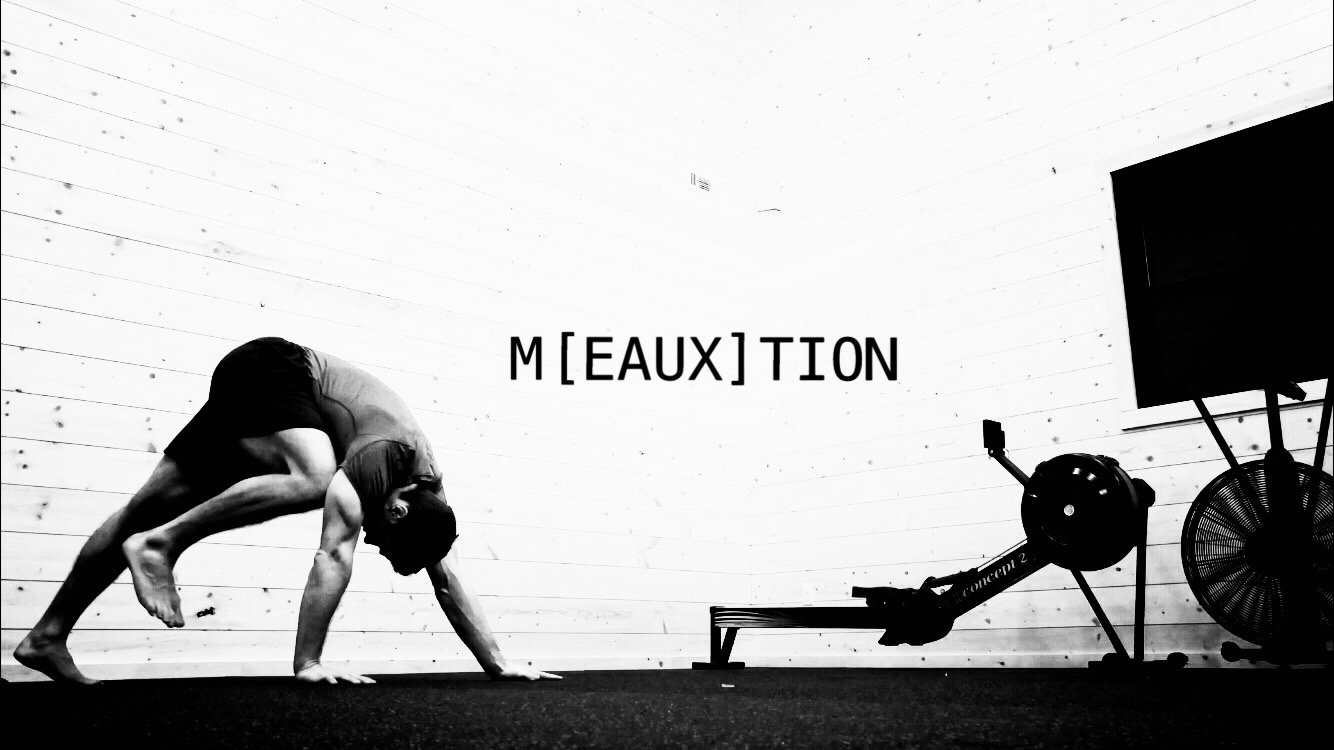
Cossack Squats are single leg loaded exercise (mostly) that require a fair amount of mobility and strength.
Cossack Squats can be used as a warm up or a strength exercise depending on your preference. I use them both ways. Bodyweight-only reps during the warm-up is a nice way to grease up the hips before lifting. Adding weight increases the difficulty and will build strength.
The internets love to bicker about exercise technique, and Cossack Squat technique is no exception.
Here’s my two cents on body position of a Cossack Squat:
- Outside shoulder-width stance (get the feet wide!)
- Glute drops down INSIDE the working knee and foot
- Chest tall, head up!
- Foot stays flat on the floor for as long as possible (before going onto the heel)
Tar and feather me.
The front view of the working leg is in a similar position as a bilateral squat.

Adding Weight to Cossack Squats
Weight can be added to Cossack Squats exactly as you would any other exercise.
The opening video was to showed how to go about doing this.
After the bodyweight repetition, the weighted Cossack Squat incorporated using 12kg kettlebell.
From there, the load increased by roughly 4kg in each video clip. I finish the video using a front racked double 24kg kettlebell repetition.
If I were to go beyond 106lbs of added load, I’d take the following approach:
- 60lb weight vest + 24kg kettlebell
- Loaded barbell (back squat or front racked position)
My loading options are based on the equipment I have available in my home gym. Use what you have!
The good news? Weight is weight. The body doesn’t care what you’re using for added weight.
To give you an idea on how to hold the barbell, check out this lower body mobility flow.
Swipe left for the full flow (and subscribe to my Instagram while you’re at it 😉)
The barbell rests on the shoulders while the lower body performs the work.
Bailing Out of a Rep
If you’re adding external load to any exercise, it’s important to know the “outs” should you need to bail on a difficult rep.
You can easily “ditch” a kettlebell being held in the goblet position. Just give it a little push forward and drop it on the floor. Make sure the floor you’re training on can handle the impact!
Using a barbell supported on the shoulders or in the front racked position, you’ll perform a similar maneuver. If the barbell is on the shoulders, allow the barbell to roll off of the shoulders while you move forward away from it. Using a front racked position, have the barbell roll forward and give it a little shove in the same direction as you move away from it backward.
You never know.
Alternatives to load the Cossack Squat
A heavier sandbag being held bear hug style increases the difficulty 10x. Bear hug sandbag exercises increase the difficulty of most exercises.
In general, heavy sandbag training is a brutally effective strength builder because you’re fighting to hold onto the sandbag as much as you are grinding through the lift.
Dumbbells can be used in the goblet style position. Palms together, one of the dumbbell resting on the hands. It’s a very comfortable position and a great way to add weight to the exercise.
Why practice Cossack Squats?
Expanding your arsenal of squatting variations will only help to make you a more skilled mover in daily life. The more control you have over movements and body positions, the more you’ll tap into those movements whenever you need them.
The more important Cossack Squat rep I’ll ever do. 👶
When you own a movement, you’ll use it. If you don’t, you’ll avoid it.
I use a bottom-up Cossack Squat variation almost daily with my kids. I’ll be playing with them on the floor and when it’s time to stand up, I grab them and WHAMMO! Cossack squat. It’s become an efficient and effective maneuver.
The more movements you own, the more freedom of movement you have.
This is hard for some folks to grasp, but trust me, it’s a really liberating pursuit and well worth your time. Especially as you get older. Preserving movement capacity as you age will keep you doing the things you love for longer.
Few things are more powerful.
Consistent practice will improve your Cossack Squat technique. Don’t expect to drop your ass to the floor on the first rep. Lowering to parallel might be difficult.
Start with a modified range of motion, or possibly assistance lowering down using a door, chair, couch, etc. Take note of where you feel tight, where body position begins to degrade, etc.
On each rep, move yourself through the largest range of motion that allows for sound technique.
Gotta start somewhere.
Mobility Training Accelerates the Process
In addition to practicing the Cossack Squat exercise, adding mobility exercises will strengthen and improve control in your hips and other joints that contribute to the exercise.
Hip articulation drills like CARs and internal and external work from the 90/90 position will further building strength and control that accelerates the achievement of exercises.
Mobility training is not promoted nearly enough. And when it is, it’s by trainers spitting jargon that most people cannot translate into “What’s in it for me?”
You don’t have to commit the entire workout to mobility drills, just a portion.
Adding 10-15 minutes of mobility focused exercises most days of the week will do wonders over time. I’m living proof of what micro-dosing mobility work will do. I rarely ever train mobility longer than 15 minutes in a workout.
At risk of sounding like a broken record, taking steps to improve active range of motion, strength and control improves EVERYTHING movement-wise. Including learning how to do new movements.
For me, mobility training makes new movement patterns feel like I’ve been there before. It decreases the learning curve. When you’re grooving new exercises, that’s a great thing.
MyDailyMobility is a follow-along mobility program I highly recommend for quality coaching in an easy-to-follow format.
Muscle Soreness to be Expected
Any new exercise has the potential to make you sore afterward.
It’s neither good nor bad, but a sign you did something you haven’t done before.
If this is your first time trying Cossack Squats, you can expect to be sore.
The muscles used might be getting stimulus they haven’t experienced before.
DOMS might be in your near future.

 M(eaux)tion Fitness