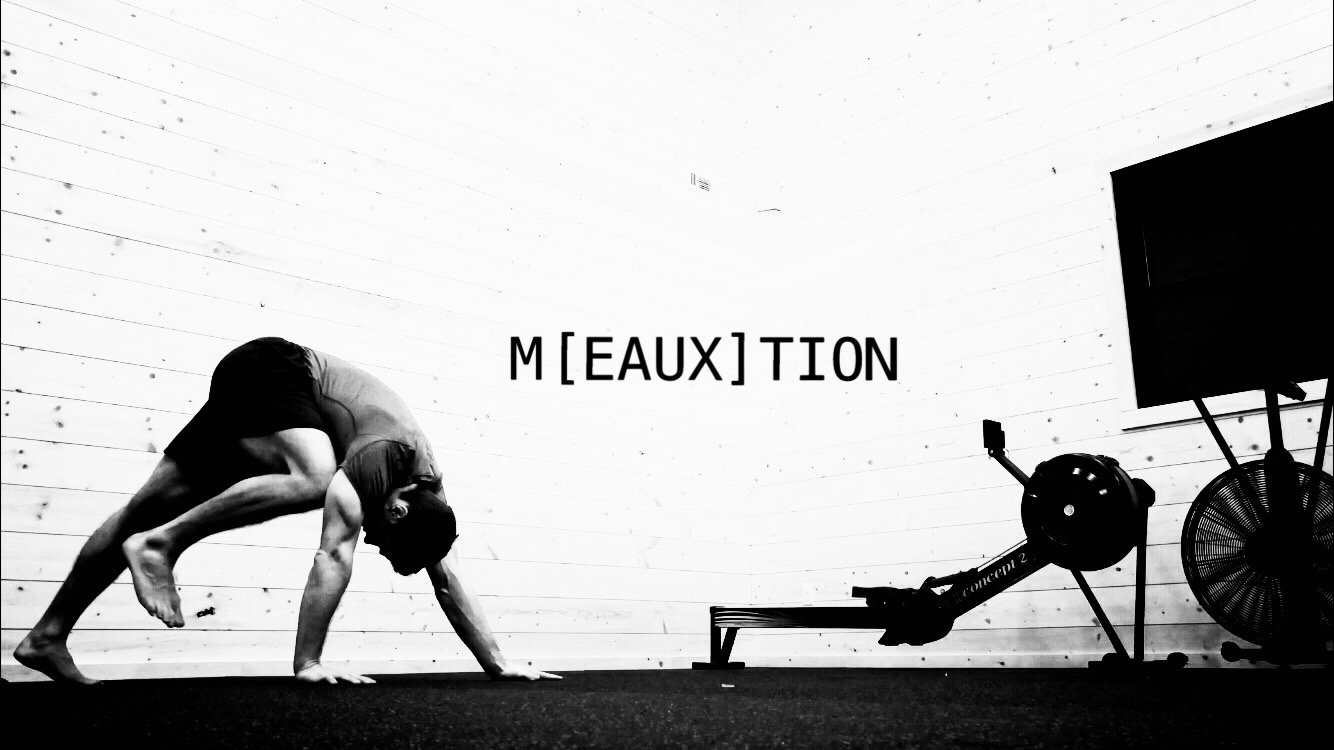
Is Sitting is the New Smoking? Is Strong is the New Skinny?

Quick Tips

Spend a few minutes scrolling through your news feed on Facebook, you’ll inevitably come across someone posting spirited words of inspiration.

Diagram A:
Image

Diagram B:

Image

Very spirited posts indeed.

Let’s start with “strong is the new skinny”…

I recently read a Huffington Post article that made a great number of points about the concept that “strong is the new skinny”.  I have to say that I agree with many of the points made in the article.  I felt that the author made some really good points that seemed to be deeply tied to her preferences.

I’ve never preached skinny.  I actually think that “thinning out”, “getting skinny”, “slimming down” are all as annoying as “strong is the new skinny”.  Strong definitely is strong.

What’s even cooler than saying that “strong is strong” is building up a person’s confidence to the point that they are about to explode with ambition, drive and the pursuit of their own form of greatness.  Whether “getting skinny” or “getting strong” is the path to jump starting a person’s legacy, it doesn’t matter to me.  Use whatever fuel gets you moving.

I once trained a 12-year old hockey player in Detroit, MI, who will remain nameless.  At 12 years of age, most males are just starting to figure out their bodies, muscles, etc.  They are on the brink of puberty, so this makes sense.

This young man was one of my favorite training sessions of the week, by far. I always looked forward to working this kid because I could tell that he didn’t have much confidence, and his Mom- after a few training sessions- praised my efforts by telling me that her son really looked up to me as a coach.  I praised him every chance I got.  High-five’s, knuckles, shouting and clapping when he succeeded was my formula.    As with any enjoyable client, his strongest trait was that he listened.  He was coachable.  He may have been smaller and weaker than other kids his age, but he was willing to listen to my advice and follow through with my suggestions.

A few months down the road, after never missing a scheduled training session, he walked into our training center smiling from ear to ear.  “I made the Peewee A team (hockey), I am the strongest on the team and a girl at school said I have big muscles”.

Naturally, I laughed, particularly at the end part of his comments.  I was ridiculously proud of this kid.  His entire demeanor had changed over a course of months.  Not necessarily from an introvert to an extrovert, but definitely from a kid that lacked confidence to a kid that realized he could accomplish whatever he wanted if he stuck to the recipe and did the work.

Strong may not be the new skinny, but building strength, both physically and mentally can change a person in a matter of weeks.  You’d be surprised at home many people, kids or grown-ass adults have displayed a new-found confidence from improving that strength, ability to move, performance and most recently… their composition of their body.

So, I really don’t care what you choose to refer to “it” as,  but in this situation, strength is confidence.


Next, “Is sitting the new smoking”?

Kelly Starrett thinks that it is, and while Kelly Starrett isn’t god, he is certainly a massively influential face in the movement world right now.  Right up there with Ido Portal.

The truth is that I don’t think that comparing sitting to smoking is really a good comparison.  I understand the message that people are aiming to convey by saying that over-indulging in sitting is kind of like smoking, but sitting is sitting, and smoking is smoking.

Everyone needs to sit at some point.  Quite honestly, I enjoy sitting.  It usually means that I am reading a book, listening to music, watching the waves roll in on a lake, watching NHL hockey (as I am right now) or writing.  All great activities that I thoroughly enjoy.

I don’t punish myself for sitting and nor should you.  However, I also don’t sit 8+ hours day for my career.  That fact, makes me consciously accepting of times that I sit.  I feel that I earned the right to sit, rest my feet, relax and reboot.

The magnitude of the negative effects that sitting has on a person should be related to each person and their unique situation.

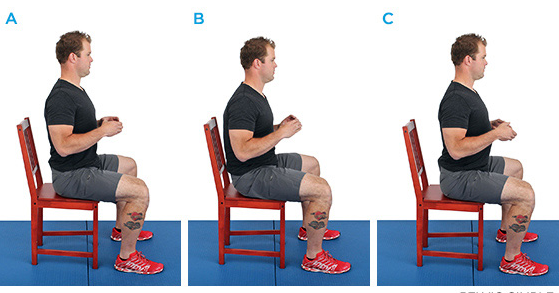
If you’re a person that remains seated and stationary during most of the waking day, you probably need to be more conscious of your sitting.  You probably need to move more.  You probably need to consciously focus on an improved posture for sitting.
Image

Photo credit: bodybuilding.com

You probably need to consider a standing desk (if you can have one where you work or at home), you probably need to take more walking breaks throughout the day.  You also probably need to be more aware of the structural changes taking place with your body as a result of such prolonged periods of sitting.

If you sit too much, you just need to be aware.  Don’t get compulsive about it, just be aware of the events that are taking place as a result of sitting so much.

Also, if you are sitting for prolonged periods, understand that you need to be consistently diligent about off-setting the effects of sitting.  Here are some simple things that you can do:

1)  Open up your thoracic spine using the tennis ball peanut.

2)  Yoga (donate 30-60 minutes of your time, you’ll feel great after)

3)  Rapid circulation (aka:  exercise)

4)  Foam roll aggressively and then hold this stretch…

Although sitting affects us all differently (just like getting punched in the head affects us all differently), the rules of unwinding and off-setting the negative adaptations of sitting can be somewhat generalized and still provide tremendous benefit and relief.  As I have said in the past, our bodies are extremely complicated and yet at the same time, extremely predictable.

So is sitting bad?  For some people, yes, it’s a slow road to a whole host of future issues.  But sitting is not evil and there is no need to pull your hair out if you sit down for a while.  Just be aware of how much you are moving around, and do you best to increase it or sustain that movement for the long haul.

Smoking, on the other hand, is terrible.  I cannot think of one benefit that anyone receives from bucking a dart.  I have an orthopedic surgeon colleague that was telling me a story not too long ago about a patient that he saw in his clinic.  This particular patient was in severe pain from bone on bone knee articulation.  Obviously, the average person is supposed to have nice lubricated cushion of meniscus, but this lady had worn through her cushion.  So, bone on bone grinding was taking its place.

Surgeons do extensive health checks for any patient that is a candidate for total joint replacement.  Upon conducting a health check on this lady, it was identified that she was a heavy smoker.  By heavy, I am talking about a pack of cigarettes per day, if not more.  This is common for orthopedic surgeons to see during consults.

After taking this patient’s knee through range of motion tests, exhaustive questioning about symptoms and an evaluation of her x-rays, the doctor told the patient that she was in fact over-due for a knee replacement.

“I would like to see you again in a week for another series of tests so we can properly schedule your surgery”, the surgeon told her.

“Another visit?!  I can’t afford that!”, the patient responded.

“Why is that?  It’s important to make sure that you’re able to make it through the surgery, it’s in your best interest ma’am”, said the doctor.

“I won’t be able to buy my cigarettes if I have to drive down to the clinic again”, the patient said.

The irony in this story is that the patient had terrible bone quality from smoking, diabetes and no meniscus in her knee from her lack of activity and her weight.

But she just couldn’t give up those cigarettes.

Sitting is not smoking and smoking is not sitting.


Cheers to moving more, sitting less and the pursuit of your greatest self!

KG

What is Ido Portal’s Training Philosophy Doing To Me?

Quick Tips

Ido Portal

I’ve been following Ido Portal for nearly 2 months and I’m starting to question how we “practice” fitness, what it means to be “fit”, how we get to the point of being considered fit, what humans should be able to do movement-wise, and on and on  and on.

I have to admit, thought process-wise, I am going through a shift.

Ido makes incredibly great points about movement and body control.  It’s a raw thought process, completely stripped down to just… movement.

The point that Ido conveys time and time again is that we should be able to move freely.  He references movement patterns, but I know from reading through his blog and watching his YouTube videos that he isn’t referring to the “safe” movement patterns that we fitness professionals beat into the ground.  He’s expanding far beyond that thought process.

Here are some snapshots of Ido-style movement…

I realize now, more than ever, that the modern-day human really doesn’t know how to handle their body.

We are slaves to sitting in chairs, cubicles, in front of the television and in cars.  If you really stop and think about how much we sit on any given day, it’s nauseating.  Even if we have no choice but to sit for our careers, when the weekend comes we still choose to grab a lawn chair and sit, sit at the bar, sit at restaurant.  Sit.

I can partially throw myself into this group also because I have to sit down to write on this blog.

I consider myself to be an athletic dude, but watching some of these videos leads me to believe that I have handicapped my own movement performance.  I am not even in the same realm as some of the people that have been under the Ido Portal tutelage for as few as a few months.

I can squat (ass to grass) and rest in the squatting position for long periods of time, elevate my arms overhead without breaking at the low back, and exhibit rotational range of motion at my thoracic spine when it’s required… but integrating of all of these elements into a free-flowing long sequence without making it look painfully difficult was humbling for me.

The low lizard crawl is a basic locomotion pattern in the Ido Portal Training Method, and it’s basically used as warm-up!  I am here to tell you that it is humbling how difficult it is to crawl 10-15 yards like this (fast forward to 1:56)…

Are the followers of the Ido Portal Method been practicing different techniques than I am?

Yes, of course.  They are following strict progressions that allow for a appropriate movement education.  A repetitive approach to learning movement in a progression-friendly manner will ensure that no fundamental steps were skipped along the way, all while achieving desired results.

The human body will adapt and increasingly better how we ask to move, or how we don’t it to move.  That is why a lot of people have back pain, poor hip mobility and loss of muscle activation from sitting.  But humans naturally want to stand up straight, so in order to make this possible, we compensate to achieve.

So I think that over time my movement will begin to flow like some of his videos, but it is going to take some work, some practice, dedication and time.

Many of Ido’s students YouTube videos display what I would consider to be “test-outs” or results from following his teachings, so I think that it’s important (when watching these videos) to keep in mind that there was an incredible amount of dedication and work put in prior to shooting each person’s testimonial of the Ido Portal Method.

It didn’t happen over night, in a week or in a month.

The other night, I was trying to find the words to describe my perception of how we pursue health and wellness, and where I stand on the matter.  It’s a difficult topic to discuss because there are so many elements that combine to form, health.

I continue to find myself veering away from “safe” more and more.  Now, I don’t mean that I am moving toward “unsafe” and negligent, but I really am questioning why we do what we do in the gym or outside of the gym (wherever we train).  It’s cookie cutter and robotic in nature.  It’s lacking exploration.  Reps, sets and rest cannot be the pot of gold at the end of the movement continuum.

Who established these rules that we follow so closely?  Science?  Industry leaders?

Do we continue to teach and preach these methods because that is what the masses want?  Or are we lacking in our own understanding of more complex movement patterns, integration and improvisation?  Are we aiming for the wrong target?  What does fitness mean anyways?

We aim for reproducible results- and I don’t think that we should be aiming for anything different- but we have become robots in our pursuit of fitness.  The entire idea is skewed.  Everything that we preach for people to do is cookie cutter and safe.

There is very little room for anyone to stray from the path, and if you do (as I am exploring currently), you’re branded and thrown out to the wolves.

We preach moving within our means, avoiding compromising body positions and alignment, moving weight safely, employing safe rep and set ranges for maximizing our goals, adequate rest to perform that work safely, etc.  Safe, safe, safe.

Before you label me a hippocrate, let me say that I actually also believe in safe.

Ido Portal’s methods of movement might be right for everyone at some point, but maybe not at this moment.

The human race have never moved less or eaten worse.

We sit more, we move less. We are walking time bombs with regard to our ability to move effectively or for any duration (endurance, etc).  We eat food created in factories, food that has never seen the earth’s soil, food that contains ingredients that we cannot pronounce much less identify… and because we eat so much of this food, our body’s have become a reflection of these poor choices.

Make no mistake, we are what we eat.

But the problem is that we don’t even know we are heading down a path of self-destruction.  Eating crap has become the norm, and we don’t even know it.  But food chatter is outside of the scope of this blog post.  I’m not a nutritionist nor do I really want to be.  I’ll end the nutrition talk here.

We walk around commenting that a person is “in shape” if they don’t cast a bubbly shadow on pavement on a sunny day.  Not everyone needs to have a six-pack, but we are desensitized to what health looks like.  “Lean” is almost taboo is some areas of America, and the world.  One look back in history will show that most of civilization is getting bigger.  And by bigger, I am not referring to taller.

In many instances, our body shape is actually limiting our ability to move.  Yes, the amount of tissue that we are carrying on our bodies are preventing us from moving the way that we are supposed to move.

Studies like this support my bantering…

I started thinking like this a few years ago, and I thought I was crazy, because my background is strength and conditioning.  Strength and conditioning workouts and programs are EXTREMELY structured, and EXTREMELY safe.  There is very little room for movement exploration in the eyes of strength coach.  Strength based programs, as I mentioned, are extremely structured.  You work through phases that place focus on building different athletic qualities (hypertrophy, strength, power, work capacity, etc).  The reps and sets are calculated, training days, rest, etc.

I got trapped in that way thinking for everyone, athlete or otherwise.  More like handcuffed.  To the point that I felt like if I explored anything outside of a 4-phase workout program, a barbell squat or a systematic approach to “core training”, then I was a Looney Tune.

Then I picked up a kettlebell for the first time.  Kettlebells had been around for a little while, but they were still considered taboo by some of the leaders in the strength and conditioning industry.  After executing some kettlebell swings and some turkish get ups in a hotel room after a performance conference, I realized that movement was different from exercise.

Movement is different from exercise.

This is movement:

This is exercise:

I was strong, but my integrated movement was shit.  In fact, I wasn’t graceful at all.  My muscles were powerful and my joint were mobile and stable, but I had zero grace in pure movement.  I was powerful, strong and stable within the confines of identified movement patterns, but when I challenged myself outside of these confines, I was at beginner level.

Again, I realized that movement is different from exercise. I was certainly moving when I exercise, but I was trapping and limiting my ability to move freely with traditional exercise.

In fact, I don’t even like the word exercise.  I use it but I don’t like it.  I use the word “movement” on this blog over and over again.  I would even prefer to say “train” or “practice” or “drills” over the word exercise.  Exercise makes me cringe.  “Exercise” makes me think of automated robots on a treadmill.  I don’t want to be an automated robot.  I want to move.  I want to move because I enjoy moving, and seeking out new methods of movement is challenging.  I want to move in an unrestricted 3-dimensional manner.

I’m not going to discard structured movement training using such drills as push ups, squats, and lunges, because they have their place.  But I am damn well going to explore un-traditional forms of movement from here on out.  Climbing, hanging, swinging, etc.  Full integration of movement play and practice starts now.

We fitness professionals think that we know movement and that we are teaching people how to be “functional”, shame on us.  We stop our teachings at “flat back”, “shoulders down and back” and “pressurize your core”!

I learned a long time ago, after crumpling up and throwing away probably 2-3 books worth of writing material that I should trust my thinking.  I feel that I should trust my thinking now.  I have grown to appreciate being exposed to new ideas that initiate an evolution in my own thinking.

Why be trapped?  Go explore, go move…

Oh and here is that picture that I promised some 910 words ago…

Screen Shot 2013-08-17 at 12.01.58 PM


Cheers to stumbling onto ideas that open our minds!

KG

Building Yourself Through Experimentation and Experience

Quick Tips

[This blog post has ZERO pictures.  Straight written word kids]

I’ve read a lot of books on health and wellness.

Nutrition, biomechanics, fat loss, athletic development, psychology of sport, anatomy and physiology, Orthopedic volumes and so many more.

I cruise through blogs that are maintained by some of the brightest and most innovative on the planet.

While I do feel that all of my reading has been for something, I also feel like at the end of the day… you’ve got to continue self-experimenting.

Some of the biggest names in the industry frown about self-experimentation, but I look at the concept as being no different from playing as kids.  You live, you experience,  you learn.

Obviously, don’t dabble around with something that could potential harm your life permanently, but don’t be afraid to… just… try stuff.

Try it.  See if it fits in your program.

The truth is that almost anything that you do exertion-wise is going to move you closer to your goals, especially if those goals are aesthetically based goals.

If you want to trim down, create less of a shadow, decrease your pant size, drop lb.’s on the scale, flatten that stomach, develop some muscular definition…

You’ve got to make an effort to progressively move more and eat with a sense of urgency.

Exercise is simple.  Start somewhere that fits your current strength and conditioning level and training know how, and begin climbing the staircase.  Stop over thinking it, just put on foot in front of the other and climb.  There are free resources all over the internet that can get you moving forward.

Progress yourself as quickly your body can tolerate over time.  Keep progressing.  The body is no different than the mind.  Imagine if you would have stopped learning mathematics at addition and subtraction.  Would you have understood Calculus?  No, you wouldn’t have.  You would have been lost like a puppy and miserable.  You’ve got to progress and build up to learning Calculus, at least most of us did.

Trust me on one quick thing here… you’re going to reach a point in your progressions where it feels like you’ve reached the top, but believe me, you can bust through that barrier.

There is another gear that you can drop in to.  Always another level of effort.

If you disagree with me, ask yourself if your body is holding you back, or if your MIND is holding you back.  You might be surprised at what you find here.  The mind is the command center of your universe… get it in check.

With eating, explore everything.  I am serious with this suggestion.

Buy something, cook it and eat it.  If you like the way it tasted, right down the recipe.  If you didn’t, find a new one.  Just because something doesn’t taste good the first time you try it, doesn’t mean that it will never taste good.  Give food another chance.  It’s not all vegetable’s fault that you don’t like eating it, it might be your desensitized palate.

If your diet primarily consists of processed foods, of course most veggies and fruits are going to taste like cardboard at first!

Everyone eats differently.  What I like to eat, and can tolerate eating on a daily basis is not the same as what you can tolerate eating on a daily basis.  This is just my guess.

If you don’t like boiled broccoli, sauté it.  If you don’t like either of those options, throw it on the grill.  If you still don’t like it, season it for heaven’s sake!  I don’t even think that plain broccoli is that appetizing.

If you hate broccoli, stop complaining about how much you hate broccoli and eat something else.  Find a substitute, an alternative.  There are thousands of foods on the planet.  Choose something else that provides a nutrient load that you body can use.

Seasoning can change a food, and to be quite honest, who cares if you add some salt to your food. Just don’t be a donkey and throw a pile of it on there.  Be sensible in your approach, a pinch is more than enough.  You season foods to enhance their flavor, not drown it out.

I’ve always wondered why people drown food in condiments.  Why eat something if you have to bury it in so much ketchup, BBQ sauce or some other condiment on it to the point that you don’t even taste the meal?  Not judging, just wondering why we do it.

Eating for performance is different from eating for aesthetics.  This might be getting a bit too detailed, but when I was eating to sustain my athletic performance, I didn’t have the greatest physique.  I was lean, but only because of my daily energy expenditure.  When I finished my athletic career, I cut out a few foods that I was initially led to believe that I “needed”.  Bread was one of them.

Thanks government created food pyramid for that load of B.S.

My abdominals popped through in less than 3 weeks.  Ironically, my performance didn’t suffer a bit.  I had no idea if this elimination would work, but it seemed logical.  Pure trial and error here.

Actually it was more like trial and success.

One thing that gets beaten like a dead horse is the concept of avoiding trying to out train your diet.

I should stop telling you not to try this, and let you try it for yourself.  Go ahead, workout like a maniac and eat whatever you please.  See what happens.  It’s an experiment right?  So, go ahead and experiment with it.  Challenge the thought.  If you’re an Ironman, I don’t want to hear a word from any of you, because you’re about the only category of human that can make this work.

Experiment and experience.

Guys and gals are writing books, shooting DVD’s and maintaining blogs (just like this one) that preach a certain way of doing things in order to get results.

But how about this… learn a little something, enough to get you started, and begin carving out your own path.  Nothing about fitness is the law.  There are theories that I would prefer to follow, but if you break them, who cares!

The more you do something, despite your knowledge, know-how or skill level, the more you learn.

You develop knowledge that sticks because you experienced it.  You didn’t read about it and do nothing, you experienced it first hand.  You became an eye-witness to what works well for you and what doesn’t.

It’s important to break out of your shell… practicing and experiencing things.  My suggestion, as I have learned in my own life, is to get out and practice as many things as you can.  You’ll develop likes and dislikes, and you’ll carve your own path.

I tried not to get too specific with anything here.  This is a thought process that applies to everything.

Trial and error, self-experimentation and experience are tremendously powerful methods for catapulting a person forward toward their goals.  If you have the conviction and dedication to follow through over the long-term, you’ll find methods that are the best fit for you.

Just remember, the grass isn’t always greener on the other side.  Trust yourself…


Cheers to trial and success!


KG