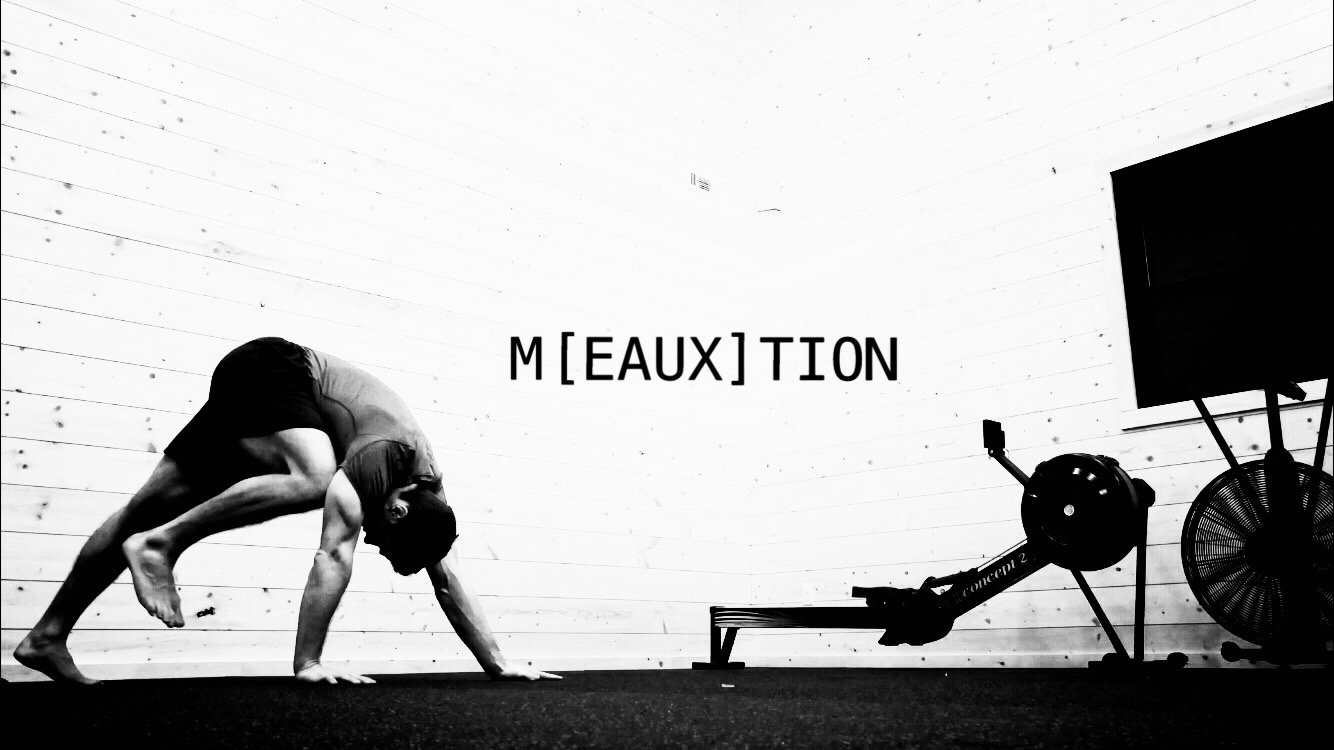
Forget Fat Loss For Now! Quality of Movement Before Quantity of Exercise

Quick Tips

Out of the gates fast here.

Two things…

1)   Gray Cook is a genius.

2)   “People would do better if they knew better”.  –Jim Rohn

If you aren’t familiar with Gray Cook, it’s quite alright.  The trickling down of human performance and corrective exercise information coming from Gray isn’t targeted to the average Joe and Jane.  Gray is the guy that teaches professionals.  You can probably guess how influential he is judging by the fact that he is the person who is teaching the people who you folks think are the experts in their field.

Gray Cook FMS

Genius.

Did you catch all of that?  Make some sense?

Anyways, Gray developed a system of assessing human movement called the FMS, or Functional Movement Screen.  Some years ago, he noticed that the movement industry lacked a protocols for assessing the quality of a person’s movement.  There was no baseline from which to build from.  Sure, you could watch a person squat and determine that it didn’t look right, but what then?  What is the course of action to fix that squat?

All we really had outside of the rehabilitation setting were “quantity” protocols.  By quantity, I am referring to the stereotypical physical assessment that you can still get in many gyms around the world. These assessments commonly included:

–       # of squats to failure

–       # of push ups to failure

–       # of chin ups/pull ups to failure

–       some assessment of cardiovascular performance (treadmill, bike, etc)

–       flexibility testing

Sit and Reach Test

I enjoyed my time in my college Kinesiology program as much as the next person, but how relevant is the data that I’m gathering from Sit and Reach Test (pictured above)?  Look at that guy!  That test is largely designed to measure lower back and lower extremity (hamstrings, etc) flexibility.  Check out the amount of spinal flexion he’s got going on that will increase his numbers.  Sit up straight son!  Even if he did sit up straight, and the test was legit, what are you going to do with the data gathered from the test?  What is your course of action?  Stretch the hamstrings?

We know that the lower back demands (primarily not only) stability for health and the hamstrings have become long, weak, and dormant in most people (from sitting all day).

So, using something like the sit and reach rewards a person that has flexibility in the hamstrings and flexibility in their lower back.  Pure tunnel-vision.

It’s not enough.  Tests like this are ancient and it’s just not enough anymore.

Quantity.  Do you see what I am talking about now?  Everything was based on physical performance qualities like strength, endurance, flexibility, etc.  I have no beef with any of these qualities, as they are definitely worth improving, I simply have shifted my thought process of what we should be assessing on people from the beginning of our relationship.

Personally, I now promote establishing quality of movement, then adding quantity of movement.  Move right and then burn tons of fat.  It’s a pre-requisite of sorts.  Adding quantity of movement with high volume methods (circuits, complexes, interval based, etc) only serves to make pre-existing movement problems worse.

Dust under the rug

 It’s like sweeping dirt underneath the rug.  Dirt is still there, you just can’t see it.

That shift led me to favor the FMS and everything that it stands for. 

It took me a while to understand what the hell the Functional Movement Screen was all about.  It’s complex.  It takes a great deal of studying, reading and experimenting to grasp the concepts.  Every single time I listen to Gray speak; it’s easy to pick up that he is on a whole other level of knowledge and understanding.  He’s a pioneer for sure.

Messing around with the FMS and the associated corrective exercises is a blast.

Why?

Because in a matter of minutes you can fix a person’s faulty movement.  You can go from testing horribly in one of the seven FMS screens, to testing near perfect from leveraging a number of highly impactful corrective movements, each designed to improve a specific movement pattern test.


The FMS to me is the pre-assessment to the assessment. 

—> Personal Trainers:  Don’t Sell Yourself and Your Clients Short…

If you an exercise professional stopping by this blog, you need to get educated on the FMS.  It is a disservice to ask a client to perform bodyweight squats to failure when they can’t even squat properly in the first place.  I would also like to add that the inability of a person to squat often not a grooving problem.  In other words, having a person perform more and more ugly squats is not going to improve a person’s squat form.

Motor control definitely has something to do with movement technique, yes, but there are so many underlying issues revolving around primarily mobility and stability that need to be addressed to work out the kinks.

Personal trainers, you’ve got to establish your identity.  People come to you to lose weight and get “ripped”, but you’ve got to have standards.  Articulate the importance of moving properly and then moving to burn fat and lose weight.  We live in a world that feeds off instant gratification, but you’ve got to resist the urge to do the activities that make your clients happy at times.  You’re the professional, you’re in control.

So, my shift in thinking is from quantity to quality.  I adopted the concepts of the FMS quite a few years ago, and it’s been nothing short of fantastic.  I can’t even say that I am “drinking the Kool-Aid” anymore… I am officially doing a full-blown keg stand with the Kool-Aid.

You should to.  I’ll hold your legs while you drink.

—>  Average Joes and Janes read and watch now…

If you’re not an exercise professional, take a glance at this video from Gray.  Many of you are familiar with the Turkish Get Up, and Gray does a fantastic job describing how it fits into a training program.

Wrapping it up for now… address your movement quality and the ramp up your training regimen to burn fat, build muscles and all kinds of crazy athleticism.  Sustainable movement is more important than some rapid flash in a pan fat loss training program.  You’ve got the rest of your life to strip fat off your body.  Literally, years I tell you.  Habits are made over time and broken over time.  Stay dedicated and consistent in your workouts and fat loss with lean muscle gain will be pleasant reward.

*** If it feels like I only provided a hazy glimpse into what the FMS is and why we should apply it right now to our own situations, you’re accurate in with that feeling.  As I mentioned, the FMS is complex and articulating it’s importance and application to your own workouts is something that I want to address over time and multiple articles, not in one shot.

All in good time friends, all in good time.

—> Speaking of friends… if you like anything that you read or see on this blog, subscribe to it.  All subscribing does is notify you of a new posting when it drops.  I have stated that I want to build a community using this blog as my vehicle.  Humble beginnings, yes, but it will grow.  Let’s connect and move mountains together.<—


Cheers on this Superbowl Sunday 2013!


KG


Completely Un-Organized Kettlebell Training for Fat Loss and Athletic-Like Conditioning: Part 2

Quick Tips

Part 1, if you made it through that novel, was me thinking out loud about systems.  Part 2, right here, is what I actually did to spark that post.

Here we go…

Using my trusty jump rope, I started the training session with a 10 minute jump session.  I always start slow with two-foot jumps and work into more progressive drills like running, single foot, etc.  I keep the rope moving continuously, only stopping to change a shitty song, scratch or grab a swig of water.

Last night, this is where the un-organized part comes in.  In the kettlebell training world, there is a world-famous tough guy test called the “SSST”.  The “SSST” stands for “Secret Service Snatch Test”.  Initially, I thought it was another gimmick workout but I later learned that there was actually a story behind it.  Interesting.

So, here is what the SSST entails:

  • Perform as many snatches as possible in 10 minutes using a 24kg (53lb) kettlebell.
  • Record your score while trying to hold your lungs and eyeballs from shooting out.

That’s it.  

My best score with the SSST is 226 repetitions respecting the perimeters of the test bulleted above.   

I haven’t attempted a full SSST for about 2 years, and I would like to think that I could get 250 reps in the 10 minute time frame.  Who knows.  I tend to not have a governor when it comes to pursuing competitive type stuff.  All or nothing.  

The kettlebell snatch is a technical move just like the dumbbell snatch, so there is a method to the madness.  Grip, arc of the bell, hip snap, etc… all make a HUGE difference in your numbers.  The first time I tried the SSST I ripped all of the skin off of both of my palms.  It’s important to note that a “rep” in the SSST is counted only if the elbow is locked out overhead.  

Back to last night…  

Initially, last night was scheduled to be a recovery style training session because of the intensity of the previous day’s workout.  Typically I would just jump rope and bike while keep my heart rate in specific BPM zones, then call it a day.  Nope, I decided to try something different.  I decided that I would mess around with mini-circuits using my kettlebells.

Here is what I did:

5 minutes each of:

1)  Kettlebell snatches (alternating hands every 10 reps)

2)  2-Hand Kettlebell swings (30 reps then rest until ready)

3)  Intense jump rope (not sure of the revolutions per minute)

Done.

For the snatches, I completed 110 repetitions and for the swings I completed 120 repetitions.  My heart rate stayed where I wanted it and I felt great during the session.  The jump rope at the end was a bear.  

All in all, the workout lasted about 30 minutes, which was perfect because that is roughly how long I would have biked for had I gone that route.  

Soreness today was not bad and overall the workout was a success.  

Is it possible to train improvised in every session?  Of course, but I am still not convinced that it is superior to an organized, progressive training system.  Attempting to train too many qualities at once seems to make a person “average” in all of those qualities.  However, for fat loss efforts and general athletic-conditioning, I think training sporadic will work just fine assuming you are using big movements with solid technique and load.  

Again, at this point I would look to stay within a system.

Also, be realistic about the SSST.  If you aren’t qualified to be snatching a kettlebell, don’t attempt the SSST.  Honestly, this is high level stuff.  I don’t mean to make myself or anyone else sound superior in any way, but injury prevention is important to me.  Snatching a 53lb kettlebell for 10 minutes straight is not for the average person.  Don’t be a hero.  If you don’t have the technique or the conditioning, stay away from it.  Building your technique, strength and conditioning and then give it a go when you are capable.  Make sure your hands are prepared, you won’t want to grab your steering wheel for a week if you don’t rough those hands up first.  


Cheers to the improvised workout…


KG

Red Table Round Table #1

Quick Tips

Good Saturday morning from the little Red Table in Eau Claire, Wisconsin.

Part of the fun of keeping a blog is being able to write whatever you want, whenever you want to write it.  It’s your own personal space to release thoughts and ideas on this massive beast we call the Internet.  That is a pretty cool thing.

I decided that I really wanted to develop a blog posting series where I could just discuss whatever topics happened to come to mind during that writing session.  

Basically, I am talking about just putting my fingers on the keyboard and having at it.  

Creatively, I think this will help me regurgitate some of the interactions, questions and experiences that I had from the previous week.  

A recap of sorts from the past week.

Here we go…


—> Fat loss isn’t an ongoing process, it ends eventually<—

The concept of losing fat has to end at some point.  You cannot forever be in “fat loss” mode with your training and your eating.  You have got to have some kind of end goal to attain.  Whether you choose a certain body fat % or a performance related goal, it doesn’t much matter to me.  Although I suppose that if you are partaking in a full-fledged fat loss program you should probably be measuring the amount of fat you lose.  Skin calipers are a simple and relatively effective way to do this, otherwise hydro-static weighing or a BodPod will give some fairly accurate numbers also.

I was talking with my girlfriend Amanda about the whole concept of fat loss.  I told her that in my experience, sometimes people end up taking the fat loss concept to the extreme.  They literally attempt to walk around with 0% body fat.  They engage in extreme eating habits (calorie restriction and the like) and sign up for extreme workouts.  It becomes just as addictive as eating sugar or smoking cigarettes.  

At some point, you have to realize that you are going to enter a maintenance phase.  You’ve reached  your goals and you’re content with your body figure and your physical abilities and now you’re in what we call:  Maintenance. 

Fat loss ends at some point and maintenance begins.  You decide when that happens.  

Fat loss is a war and it is a lot more mental than physical in my opinion.  Habits need to be broken and new habits need to be hardwired.  Mentally you’ve got to prepare yourself for fighting off your old self-talk.  You’ve also got to get your head in the right place to endure your training schedule.  Physically, the human body is incredibly resilient.  You can handle a lot more physical stress than you think.  (Just keep it manageable physical stress)


I often go back and forth between favoring two approaches fat loss, and I think both depend on the personality of the person.  

Here they are:

  • Aggressive training and eating for 4-6 weeks, followed by a tapering process.
  • A consistent, not overly aggressive effective training regimen paired with a smooth transition into concepts of clean eating.


The first bullet point is an approach that is my definition of a fat loss war.  It’s pedal to the metal. You go crazy in your training and you stay brutally strict with your diet.  You get results quickly and then you turn back the dial a bit and continue pushing on at an effective yet much more manageable pace with regard to training and nutrition.  

The second bullet point is an approach that is quite popular also.  This is the “lifestyle” approach.  I am sure you’ve heard that a million times… “It’s not a diet… it’s a lifestyle”.  Puke.  

Anyways, this approach is a gradual climb.  There is a lot of acclimation to this approach.  I enjoy this approach to losing fat because fat loss is inevitably going to happen if you are eating clean and training purposefully.  I love the research and the highly technical information that the experts put out, but they complicate topics in an effort to sell products.

Eat clean and drink water, learn how to lift weight using big movements, ramp up your cardiovascular training from aerobic to higher effort intervals, then move into a more cardio-strength style training regimen and you’re going to experience a reduction in overall bodyfat.  

Measure your fat loss progress on the cheap.  Use a snug fitting pair of jeans and a tighter fitting shirt to gauge your progress.  Remember, you’re after fat loss and lean tissue gain… not weight loss. (I lose up to 3-5lbs just from sleeping, it doesn’t tell me anything useful).

 —> Again, I encourage you all to set your sights a goal.  A goal is a target.  Once you have the target, set the timeline.  Once you have the timeline, you can assess what kind of effort is required to achieve that goal in that timeline.  It’s simple.  We over-complicate what should be simple.   


Cheers to keeping it simple…


KG


I’ll Train Anywhere, Man

Bodyweight Workouts, Quick Tips

There was a song a number of years ago by Johnny Cash, “I’ve Been Everywhere”.

As I sit outside on a gorgeous Fall day here in Wisconsin, I got to thinking about how fitness has evolved over the years. It wasn’t all that long ago that a workout only took place inside of a commercial gym.  Sure, there were some outlying people here and there, maybe some underground gyms that were doing some really great stuff, but for the most part, a membership style big box gym was the only place to get your hands on some equipment and train.  At least that is what most people thought.

Gone are those days.

I haven’t trained in a big box gym for 5 years running.  

At first, it was hard.  Looking back, I have to assume that it was a far more mild withdrawal than what a smoker experiences when they go cold turkey, but it really was difficult.  I felt lost trying to figure out how I was going to create a sustainable training plan without all of the equipment that I had become so accustomed to using.

I think that a lot of people go through these feelings when they think about organizing a training plan that doesn’t involve a gym.  I can assure you that the thought that you need thousands of dollar worth of equipment to get a quality workout is a myth.

Does equipment help?  Yes, absolutely.

At some point, it is nice to have access to a traditional barbell, some dumbbells and a nice cable machine.  But you can survive and progress for a really long time without it.

I had 4 kettlebells, a first generation suspension trainer, some resistance bands, a foam roller, a Tiger Tail, chin up bar, and a jump rope.  That was my gym.

After thinking things through, I realized that I really wanted to try and create a training regimen that I could use to preserve the muscle, strength/power, soft tissue health and solid quality of movement that I had built over the years.

My training really went to another level once I took my training wheels off and left the gym. I came to the conclusion that if a person clings hard to the fundamentals and principles that really great programs are built on, you can get an unreal training effect no matter what equipment you have available, or your environment.

I’ve trained everywhere.

Outside in backyards, parks, school tracks, football fields, etc.  Inside in a room that’s slightly larger than a small bathroom, a guest bedroom, a hotel, etc.  If you have a few feet of room in all directions from where you currently stand, you can make it happen.  Trust me, I have done it.

Not on purpose or as a topic to brag about in conversation, but out of necessity.  I have made the commitment to a physical lifestyle.  It makes me happy and keeps me challenged to see what I can do next.  When I travel or when we are away from the house, I feel comfortable knowing that I can engage in some quality physical activity no matter what the environment is.

Winter in Wisconsin is a bitch.

But even then, you have options to get a training session in.

So when I start ranting on and on about people’s lame excuses for not getting a sweat in on any given day and how weak that this, now you can understand where that is coming from.  You can train anywhere with anything, you just have to WANT to.

I aim to always be a resource for all of you.  Sometimes you what I write about will really hit home for you and your situation, sometimes you may be offended by my tone or sometimes you may think my article is so boring that you hardly make it through the initial few paragraphs.

Either way, I aim to create change and get you to think…

KG

Is a Rep Just a Rep?

Brain Training

The small details in life are often what seem to separate poor from average, average from good, and good from great.

So when I get the question of whether it is ok to miss/skip a rep in a work set, I have changed my tune quite a bit over the years.  On the surface, one might say, “Who gives a shit, it just a workout and it is just one rep”.

Is it?

I think that it is more than that.  I think that physical activity, and a person’s ability to finish a training session according to plan, is a clear indicator of someone’s behavior and habits.  The brain is so heavily connected to whether or not you get off the couch for a training session, run that extra 100 yards or finish that last set or rep.

So, if you consciously skip that last rep when you could have finished it, it would be interesting to see if you are doing the same thing in other areas of your life.

–      Are you missing opportunities to make that sale in your career?

–       Are you avoiding continuing to pursue your goals?

–       Are you eating processed foods because it takes work to cook a meal?

I am not an expert on behavior, but I observe everything.  I enjoy observing and trying to understand why humans do what they do.  I often think about why I do the things that I do in my own life.  Habits are hard to break, there is no doubt about that, but they can be broken.  It is never too late to create new and improved habits, it’s just a decision.  It’s uncomfortable to call yourself out, but sometimes that type of irritation can create a world of change.

I know this is a deeper way to think about exercise, but I also think that thoughts like this can stick and help to create change.  I believe that habits carry over into everything that we do.

So yea, I think that finishing that last rep can make you a better person. I think that having the conviction to complete your workout exactly as it is drawn up for that day can push you over barriers that may be holding you down in other areas of you life.  Absolutely.

It’s not just a rep.

We Are So Messed Up (Movement VS. Aesthetics)

Human Performance Discussion, Injury Prevention

Aesthetics, not athletics.

It is important to make the distinction and not allow your eyes to trick you.  Why?  Because true athletes know how to move and care very little about aesthetics.

However, have you ever noticed that most athletes are about the leanest people on the planet?  The leaness  that an athlete has is simply a by-product of their training efforts, and the demands of their sport.  Sport is movement.  Athletes move more than average people.  You get it, right?  Movement and being lean have a strong connection.

Ahemmm… and nutrition.

There is a massive shift coming in the way that we look at fitness.  In fact, this shift has been going on in the “underground” for quite some time.  The shift is this:

Get people moving at a higher level.

By higher level, I am talking about a higher level of quality.  Pouring high volumes of exercise onto low quality movement is like driving your car until your oil is depleted and your engine blows up.  Trust me, it is going to happen.  Injury lurks around us all day everyday.  Some is accidental, but most is completely preventable.  Taking the proactive approach keeps your healthy.  Injury will show its ugly face to those who ignore their aches/pains and poor movement quality.

Nice introduction, right? Ha.  My mind is a blender of thoughts, so as always, be patient with me as we waddle through another article.

Let’s see if I can’t make some kind of point to you all…

Movement versus Aesthetics.

I have slowly watched as the fitness industry takes a turn for the better.  Fixing movement before fixing body fat (aka: aesthetics)

If you want to talk about sustainability, this is a sustainable model to follow, and I encourage all of you to drop your current habits and follow it.  Movement first, exercise second.

Gray Cook led the charge, years ago.  Mike Boyle helped to bring his theories to other trainers who believe Coach Boyle is sub-human (he really is a pioneer) in this training industry.  And Boyle is sub-human, he is the perfect blend of common sense, reality and knowledge.

The basics are this:  Don’t put fitness (exercise) on top of pre-existing movement dysfunction.  

In even simpler terms:  Don’t ignore your poor functioning hips, ankles, knees, back and shoulders while still attempting to force an intense workout, just for the sake of aesthetics (aka:  looking good in the mirror).

Because that is why most of us workout right?  Aesthetics?  I mean, we have piles and piles of research showing the internal and external health benefits of exercise, but come on… get real… are you actually running to increase your body’s rapid circulation for disease prevention?

Or are you running to keep yourself fitting in those jeans you’ve had since entering college?

I really don’t care why you choose to exercise, whatever is going to get you to take action is what I am interested in.  If you have a solid “why” behind your daily training regimen, keep it.  I like it.

But, now that you have the motivation to take action, let’s shift your thinking to quality of movement over just… exercise.

Let’s get your movement patterns dialed in, THEN AND ONLY THEN… let’s go and have one hell of a workout.

You see, our view of fitness is skewed these days.  We have come to associate someone with low body fat and six-pack abs as someone who is truly fit.  Sure, it is definitely aesthetically appealing to be lean and muscular.  To have that athletic look so to speak.

But at what cost?  How are you achieving those results?  Are you piling tons and tons of dysfunction on top of your movement quality?

Are you 2 weeks into Insanity with your anterior knee pain at a 10 out of 10? (anterior=front)  What are you really achieving at that point?  Pain?  Should exercising hurt?

I am getting you to think here.  I will even answer my last question for you.  No, exercising should not hurt.

(Note that the burn felt from a muscular contraction and pain are quite different sensations)

Working hard and working smart are very different.  

We need to start looking for sustainable, life long methods for maintaining physical and mental health.  Maintaining physical health requires a person to stay active and remain injury free.  Injuries crush people in this life.  One bad injury can set a person off course for years, maybe even for a lifetime.  It is a sad occurrence that happens all too often.  We all know someone who is virtually disabled due to injury (think lower back here).  Do I even need to talk about the $$$cost$$$ of an injury?  Yikes.

The shift to the movement based model is the solution.  I believe this.  I have listened and read enough work from guys like Gray Cook and Mike Boyle. Cleaning up your joint mobility, improving the balance and  function between your left and right sides, your front and back, along with the upper and lower parts of your body is the ticket.  Every. Single. Time.

Balance.

The elimination (“improvement” might be a better choice of word) of asymmetries (differences) between these halves of the body will catapult your performance, I guarantee it.  Most folks don’t know they are operating a body at about 75% of their potential.

The difficult part about all of you to start assessing and correcting your movement patterns is that it has very little entertainment value.  I know this.

Humans these days need entertainment or we become bored.  We enjoy complex over simple.  We have adult ADD.

It isn’t as fun to roll around on a foam roller or lacrosse ball to smash your hip musculature, mobilize your thoracic (mid-spine) or perform cable chops and lifts until you’re blue in the face.

I’m no dummy.  I know that you would rather pay your sign up fee at a Cross-Fit gym and have someone put you through a puke producing training session.  That is what your friends are doing, and they are dropping pant sizes, right?  I know the influence of peers on decision-making.  I get that.

But, trust in me, just invest that 10-15minutes to find the information about why you can’t perform a body weight squat, or step over a hurdle, or reach your arms overhead without going into dangerous lumbar extension.  Then, invest 10-15 minutes more daily to work through your corrective movements, and re-test your problem areas.  Re-test your squat.  Re-test your lunge.  Re-test.

Just take a few minutes, that’s all.

In closing, make your movement last a lifetime.  Yes, age is inevitable.  But we have the choice to continue moving freely and without restriction well into our life.  Don’t be fooled by the instant gratification that some programs and people are promising.

—> Healthy movement for a lifetime is more important than a six-pack for next summer.

KG

***  Today is 9/11.  I hang my hat to everyone that has given me the chance to sit at my computer in peace and write something like this.  You are true heroes in every sense of the word. Thank you. ***

My Real Issue With Devoting Less Time to a Workout

Angry Rants, Quick Tips

The real issue that I have with cutting a workout short is this…

I see a direct correlation between the length of a workout and the intensity level needed to accelerate fat loss and lay down lean muscle tissue, positive hormone changes, etc.

What’s the problem?

Well, as a professional, my right mind has issues with telling a beginner to go blast themselves through a high work capacity style training session in 20 minutes.  You have to earn the right to train like that.  You have to prove to me that you are technically proficient in your exercise technique.  You have to prove to me that you can lift heavy things (db’s, kb’s, bb’s, etc) while under fatigue.


I have other criteria but I think you get the idea.

To be honest, this is my current beef with Cross-Fit.  It’s cookie cutter for everyone.  Very little assessing of movement quality before being thrown into a 15 minute high intensity work capacity training session (this is just my experience around these “extreme training” style trainers and gyms).  From beginner to advanced, you are going to perform the workout of the day despite your training age, abilities, technical proficiency in high risk lifts, etc…

Some of these people are not even close to being ready for the kind of intensity and work needed to create change in that short of a time span.  Sure, I could write-up a workout for anyone that could bury them in less than 5 minutes.  That’s no joke.  But anyone can do that.  That’s just making someone else tired.  That isn’t training them for the long-term or educating them on the process of what it takes to lose fat and keep it off.

I can’t advocate that.

It’s mindless and it isn’t safe.

So at some point I have to draw the line.  A person needs to be realistic with themselves, especially someone new to resistance training and some of the modalities that we coaches are finding the biggest return on. You have to be willing to find the time or adjust your schedule to make the time to train.  You have to be willing to learn and groove things like the squat, hip hinge, core stability, etc.

Are your weekends open?  Saturdays and Sundays?  Don’t forget the weekend doesn’t discriminate 🙂

I design short training sessions as a solution, not an easy out.

There are people out there who are legitimately pressed for time for themselves.

Example:  A lot of the surgeons who I work alongside are seriously hard pressed for time.  They get up crazy early, make rounds on patients, operate, go to clinic, then get out of the office around 6-7pm (commonly later) and have a family to come home and spend time with.  This is a common issue for a lot of people who are entrepreneurs, businessmen and women, etc.

They need solutions.

Time effective workouts are their effective solution.

Just remember, there is a trade off for a short workout.  

That’s all…

Have an AWESOME WEEKEND.


-KG

The Secret to Fat Loss…

Pure Fat Loss

I love all of the programs out there on the internet that claim to have the secret to rapid fat loss.

Guess what?

I am here to fully disappoint you…

There is no secret.

Yup, there is NO SECRET TO FAT LOSS.

In fact, fat loss is so incredibly simple that it would blow your mind.

Well, ok, there may be one little trick to fat loss…

Ready for it?

MASSIVE ACTION.


All you have to do is take massive action.  You don’t need to read 100 books about working out and how to eat.  Most of us know how to eat.  It’s not a secret.  Maybe you don’t know how to train smart, but hey, that is what blogs like this are for.

All you need is the courage to take MASSIVE ACTION.

I am talking about doing something out of your comfort zone and completely crazy.

Go home and throw away all of the shitty processed foods you have in your cupboard.  Then go through your refrigerator and do the same thing.  Don’t forget to dig through your freezer too.

After you have done that, go to the grocery store and shop the hell out of the perimeter.  The perimeter is where you will find most of the earth grown foods and meat.  That’s right… food comes from the earth (fruits/veggies).  If it has a mother… eat that too (meat).

Clean eating is the one constant throughout nearly every legitimate fat loss program in the world.  Eat clean and you have just put yourself in the top 75%.

Eat clean and you won’t have to workout for 6-8 hrs per week.  How is that for being time effective?  The thought of training 6-8 hrs per week stresses me out!  And I love training.

I would even argue that the more time you have to train, the more time you are going to find to waste.  Less time means you have to focus your efforts.  Do what works.  Get in and get out.  Get on with your life.

Exercising isn’t life, it simply a vehicle to help improve our life and create healthy bodies that are less likely to fall victim to preventable diseases, build strength and endurance for physical activities that we enjoy and partake in daily, and even psychologically to give us confidence in our daily lives when we interact amongst other people.

Everyone always assumes that I train for 2 hours per day.  WRONG.

30-40 minutes for 4-5 days per week.  That includes a complete warm-up.

I eat clean and drink the heaviest craft beer in the world.  I love it.

9.0% pure bliss


I am on a schedule.  My schedule keeps me honest.  Some days I train, and some days I rest.

My massive action is now a daily habit.  I have repeated my massive action so much that it is now a natural lifestyle.  It is what I am committed to.

Less is more people.

Stop complicating a problem that has a simple solution.  

You have to get your mind in the game.  You have time to workout.  You have time to cook.  You have time to drink more water.

Take massive action. 

But it has to be a priority.  If it isn’t important enough to you to become a priority, or you don’t create you “why” for creating healthy habits… nothing with ever stick.  Ever.

You will end up on another 60-day crash-course liquid cleansing diet before beach season.

Take massive action.

“If it’s important, do it everyday”.

-Dan John

MASSIVE ACTION

This is the secret to fat loss… (Don’t tell anyone)

KG


A 10 Minute Non-Traditional Treadmill Workout

10 minute Workouts, 15 minute Workouts

If I absolutely had no choice but to run on a treadmill, which I have been forced to do before, I have a plan.

But there are some important things I would do before, rather than just jumping on cold.  They are:

1)  I would self massage using a foam roll and lacrosse ball on my feet thoroughly.

2)  I would work my corrective exercise and pre-hab

3)  I would mobilize the hell out of my joints to deliver nutrients.

4)  I would turn on (activate) on musculature that will be engaged in my running efforts.

5)  I would work through a series of dynamically oriented stretches.

6)  I would make sure my inexpensive heart rate monitor is properly placed around my torso and the watch is reading the signal clearly.

7)  I would begin at  a slow running pace focusing on arm swing, breathing and smooth strides.

8)  I would begin jogging on the treadmill, progressively increasing the speed of the treadmill until I reached about 80-85% of my max run speed (about 5 min), then I would step off and get ready for the following workout…


Heart Rate Based Treadmill Conditioning:

Details/Rules

  • Set the treadmill at speed and incline that requires a full stride (7.5-9.5mph @ 2.0-8.0 incline)
  • I prefer increasing incline over speed.  Reason? Increased heart rate and forced knee drive and emphasis on arm mechanics.
  • Practice stepping off a couple of times, face plants are hurt and are embarrassing.
  • Get a heart rate monitor. I use the Polar FS1, the most simple/inexpensive model they make.
  • Stay tall when you sprint.  Core engaged and vertically tall.
  • “Cheek to cheek” on arm swing (butt cheek to face cheek).


Procedure

*  Complete 8-15 rounds depending on your current conditioning & peri-workout fatigue level.

  • Sprint 30 seconds.
  • Step off and rest until your heart rate recovers to 130 bpm (beats per minute).
  • Sprint 30 seconds.
  • Step off and rest until your heart rate recovers to 130 bpm (beats per minute).
  • etc…

Why so much emphasis on heart rate?

Let your heart rate monitor, your body’s natural physiology, tell you when you are ready to go again.

How hard are you working?  Let your heart rate monitor tell you.


A few words on treadmills…

I have to admit that I am not completely anti-treadmill.

What bothers me about treadmills is that they remind me of hamster wheels, and people use them like hamster wheels.  Same workout, same speed, same incline, same distance, same music, reading the same magazine… Same same same.  “Same” is the enemy of progress.  Trust that.

image credit: movnat


Also, recognize that there is an incredible difference between:

1)  Running on a treadmill where you are simply keeping up with the speed of the belt and

2)  Running on a real world landscape where you are having to put true force into the ground to create movement.

If it is nice outside, and right now it is, get your ass outside and perform a similar workout.

If you do head outside, be prepared for the intensity to be jacked up ten-fold if you are shooting for the same structured workout as I described above.  Real world sprinting is fatiguing, especially when organized as a timed effort combined shorter than normal rest periods.


Is aerobic training bad?

There is nothing wrong with aerobic training assuming you are progressing, moving toward your goals and avoiding overuse injuries.

But why not challenge yourself a bit, melt some fat, preserve the lean healthy tissue you worked so hard to develop, and increase aerobic AND anaerobic pathways all in one shot?

Did I mention how time effective this type of training is?

Here is a great visual depiction to support my case…


What is so non-traditional about my workout you ask?

Well traditionally, a)  Most people don’t use heart rate monitors (they guess) and b)  Most people coast or “relax” on the hamster wheel for a few miles for a light sweat.

That being said, my workout is non-traditional.  I am asking you to let your heart be your rest/work indicator along with requesting that you put forth an effort that is unfathomable for a lot of the population.


See you soon…


Just getting warmed up.


(P.S. As an end thought… if you are able to read any book or magazine comfortably while training, you aren’t working nearly hard enough)

Turkish Get-Up and Kettlebell Swing ONLY Workout

20 minute Workouts, Kettlebell Training

This workout includes two foundational kettlebell exercises (Turkish Get-Ups and Kettlebell Swings) and is perfect for a home gym workout.

Who doesn’t love a home gym workout these days?  Time-efficient and minimalistic workouts are PERFECT proving the superiority of the home gym workout experience.

Clearly, I’m an outspoken advocate for creating a home gym space.

In the kettlebell training world, turkish get-ups and swings are two of the best exercises a person could learn, practice, and improve on.

I stand firm on this statement.  Call it “my truth” or whatever.  I’ve spent years working these two movements and the benefits of my efforts include sustained power, strength, and a consistently lean and muscular physique.

Aesthetics might seem superficial, but no one trains hard to stay fat.

There are HUNDREDS of other great exercises, I support them all, but going full-on minimalistic mode, I know that attacking turkish get-ups and swings would make a lot of people happy with the time investment.

It’s a powerful combo.

Kettlebell swings are a ballistic hip hinging exercise that’ll improve power, train fast-twitch muscle fibers and if organized accordingly, build conditioning in a really unique way.

Turkish Get-Ups are a pure loaded movement-rich exercise.  Few other exercises are as humbling, addicting, total body, and rewarding as practicing turkish get-ups on a regular basis.

You feel less like a Lego exercising while doing turkish get-ups, and more human.  

Equipment needed:  Timer and kettlebell

15 minutes Alternating Turkish Get-Ups

+

2-Hand Kettlebell Swings (24 rounds of 15sec on/15 sec off)

The TGU’s

15 minutes of continuous turkish get-ups is a lot of work, so if the duration needs to be decreased a bit, please do it.

Start with 5 minutes, see how you feel.

If 5 minutes is a breeze, add 2 more minutes and see how that feels.

There are very few secrets to fitness.  Actually, there are none.  Only what you know, and what do you don’t know… and how consistently and effectively you are at practicing what you know.

The key to building fitness safely, is auditing and be honest with your fitness level, and adjusting any pre-formatted workouts (like this one) to match your abilities.

Turkish get-ups, like any other exercise, are not supposed to be sloppy.

A full turkish get-up is a marathon of an exercise, multi-segmented, with many steps/moves/transitions on the way up and down.

The technique, timing, hand and foot placements, breathing and coordination are just a few key things to pay attention to while performing Turkish get-ups.

Poor technique… can result in tweaks, strains and injuries, which is not the point of exercising in the first place.

We exercise to improve our lives, not make it worse.

Regressions may be necessary, and the person who acknowledges they need to scale back a workout is a person I RESPECT!

The Swings

24 rounds of 15 seconds on (swinging) and 15 seconds off (rest) equates to 12 total minutes.

6 out of 12 minutes are spent performing kettlebell swings.

Pausing to think about how potent kettlebell swings are for fat loss (among other benefits), it’s pretty amazing a measly six minutes can have such a dramatic impact on body composition over time.

When I first started shaping this workout years ago, I used a 24kg kettlebell.

Today, I like to use a 32kg or my 40kg for the swings.

Exercise Variations for the Workout

Establish familiarity with both turkish get-ups and kettlebell swings BEFORE diving into a workout like this one.

Here are the recommended variations of each exercise:

Turkish Get-Ups

Kettlebell Swings

Give this workout a shot and leave a comment.